

Commercial Hard Landscaping: Top Features in 2025

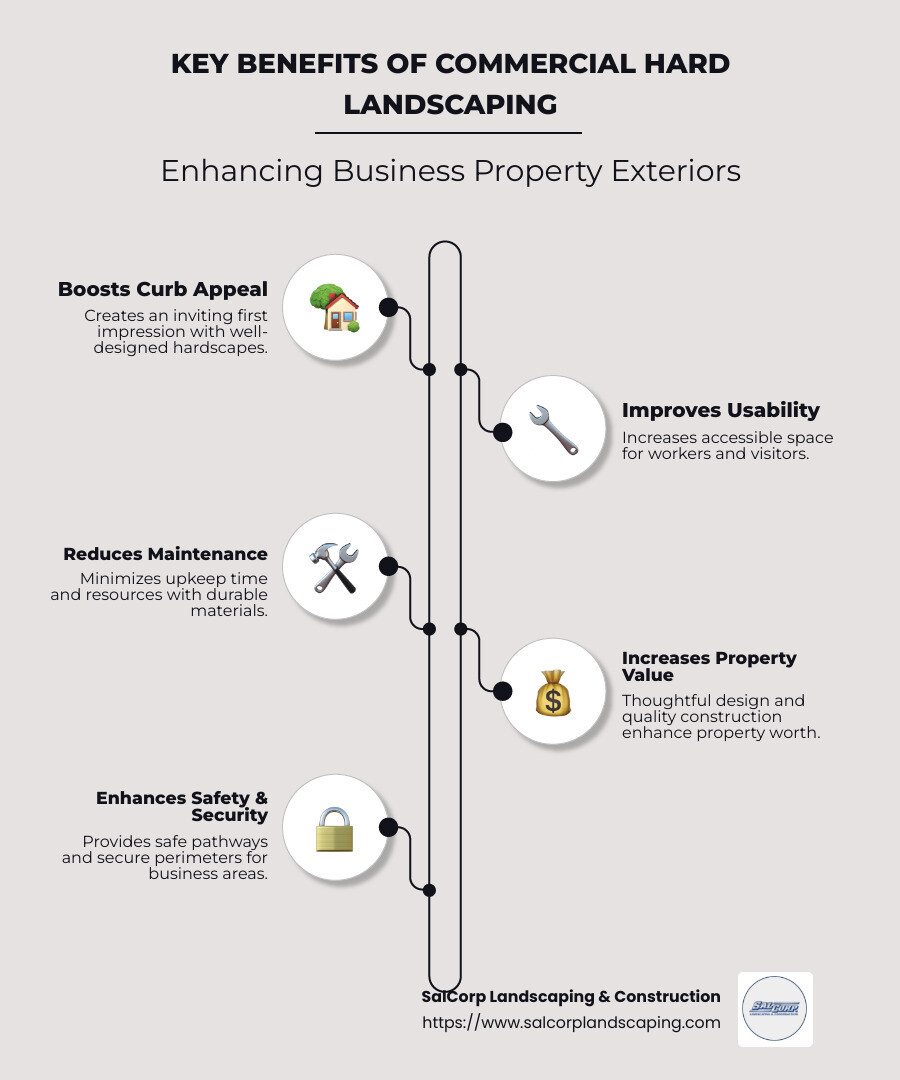
Commercial hard landscaping plays a vital role in upgrading the aesthetic appeal and functional aspects of a business property’s exterior. It not only improves first impressions but can also significantly increase the property’s value. Here’s why it’s important:
- Boosts curb appeal, making the property inviting
- Improves usability with increased accessible space
- Reduces maintenance needs, saving time and resources
- Increases property value through thoughtful design and durable materials
As a business owner or property manager, these elements are crucial in presenting a professional image and maximizing the use of outdoor space.
I’m Sal Musto, and with over two decades of experience in commercial hard landscaping, I specialize in changing outdoor areas into beautiful, functional spaces. At SalCorp Landscaping & Construction, we pride ourselves on delivering high-quality, reliable services custom to our clients’ unique needs.
Basic commercial hard landscaping glossary:
– commercial landscape design
– commercial landscaping equipment
– commercial edging for landscaping
Understanding Commercial Hard Landscaping
Commercial hard landscaping is all about changing outdoor spaces using non-plant materials. Think of it as the backbone of landscape design, providing structure and function.
Hard vs. Soft Landscaping
In landscaping, there are two main components: hard and soft. Hard landscaping involves non-living elements like pathways, patios, and fences. These are the solid features that define the space. Soft landscaping is all about the living parts—trees, flowers, and grass. Together, they create a balanced, inviting environment.
Non-Plant Materials
When we talk about non-plant materials, we’re referring to things like:
- Concrete: Durable and versatile, perfect for pathways and patios.
- Stone: Offers a natural look, great for rockeries and decorative features.
- Metal: Used in fences and benches for a modern touch.
- Wood: Traditional and warm, ideal for decks and some benches.

Large-Scale Planning
Commercial hard landscaping is more than just choosing materials. It requires large-scale planning to ensure everything fits together. This involves:
- Designing pathways that guide visitors smoothly through the space.
- Creating seating areas with benches for relaxation.
- Incorporating water features like ponds for a calming atmosphere.
- Planning for durability to withstand heavy use and weather conditions.
With careful planning, these elements not only improve the property’s aesthetic but also its functionality and value. This makes commercial hard landscaping an invaluable investment for any business looking to impress clients and create a welcoming environment.
Key Hard Landscaping Features for Commercial Properties
When it comes to commercial hard landscaping, certain features stand out for their ability to transform spaces into functional and appealing environments. Let’s explore some key elements that can lift your commercial property.
Pathways
Pathways are crucial in guiding foot traffic and enhancing the flow of your outdoor space. They can be made from various materials such as:
- Concrete: Known for its durability and low maintenance.
- Stone: Offers a natural and neat look.
- Gravel: A cost-effective option with a rustic charm.
- Pavers: Available in numerous designs, providing flexibility in aesthetics.
Choosing the right material depends on factors like budget, desired look, and expected foot traffic. It’s important to note that the costs for these materials can vary widely, with high-end options potentially costing up to three times more than average estimates found online.
Ponds and Rockeries
Adding ponds and rockeries can significantly improve the visual appeal and tranquility of a commercial area. They often use:
- Natural Stone: For a seamless integration with the environment.
- Concrete: Provides a sturdy foundation for larger water features.
- Pond Liners: Essential for maintaining water retention.
These elements not only attract visitors but also support local wildlife. As with other features, the cost can vary greatly, with premium installations being significantly more expensive than average online estimates.
Benches
Seating areas are essential for creating inviting spaces. Benches can be crafted from:
- Wood: Offers warmth and a classic appearance.
- Metal: Durable and often used for modern designs.
- Recycled Materials: An eco-friendly choice gaining popularity.
Strategically placing benches around your property encourages social interaction and relaxation. Prices for benches can also vary, with high-end options potentially costing much more than average online prices.
Decking
Decking provides a versatile platform for various activities. Common materials include:
- Wood: Traditional and natural, though it requires regular maintenance.
- Composite: A low-maintenance, durable alternative to wood.
- Plastic: Resistant to weather and insects, ideal for high-traffic areas.
A well-maintained deck can be a central feature for gatherings and events. As with other materials, decking costs can range widely, with the most luxurious options being significantly more expensive than average online estimates.
Fencing
Fencing defines boundaries and adds security. Consider materials like:
- Wood: Offers a timeless look but needs upkeep.
- Metal: Provides strength and a modern appearance.
- Vinyl: Low-maintenance and long-lasting.
- Composite: Combines the best of wood and plastic.
The right fence improves privacy while complementing the overall design. Fencing costs can vary, with high-end materials potentially costing much more than average online prices.
Patios
Patios create outdoor spaces perfect for dining and socializing. They can be constructed using:
- Concrete: A versatile and affordable choice.
- Stone: Adds a touch of luxury and natural beauty.
- Brick: Offers a classic look with durability.
- Pavers: Allow for creative patterns and designs.
Regular maintenance ensures patios remain inviting and safe for use. As with other features, patio costs can vary widely, with premium options being significantly more expensive than average online estimates.
Driveways
A well-designed driveway makes a strong first impression. Common materials include:
- Asphalt: Cost-effective and quick to install.
- Concrete: Long-lasting and low-maintenance.
- Pavers: Offer aesthetic flexibility with various patterns.
- Gravel: A budget-friendly option with a rustic appeal.
Keeping driveways in good condition is crucial for maintaining the property’s curb appeal. Driveway costs can also vary, with high-end options potentially costing much more than average online prices.
Each of these features plays a vital role in the overall design and functionality of a commercial property. By carefully selecting materials and planning their placement, you can create an outdoor space that not only looks great but also serves its intended purpose efficiently.
Next, let’s dive into how to choose the right materials for your hard landscaping project.
Choosing the Right Materials for Your Hard Landscaping Project
When starting on a commercial hard landscaping project, selecting the right materials is crucial. This choice affects not only the appearance but also the durability and maintenance of your outdoor spaces. Let’s explore the best material options for various hardscape features.
Pathways
Pathways guide visitors through your landscape, making material choice essential:
- Concrete: Offers best durability and requires minimal upkeep. It’s perfect for high-traffic areas.
- Stone: Provides an neat, natural appearance. However, it may require more maintenance to keep it free of moss and weeds.
- Gravel: A budget-friendly option that adds rustic charm. It requires occasional raking and replenishment.
- Pavers: Available in countless designs, they offer aesthetic flexibility. Pavers are durable and easy to repair.
Ponds and Rockeries
These features improve the visual and ecological value of your space:
- Natural Stone: Blends seamlessly with the environment, offering a timeless look.
- Concrete: Ideal for creating sturdy, large-scale water features.
- Pond Liners: Essential for water retention. They come in various materials like rubber and plastic, each with different longevity and cost considerations.
Benches
Benches provide comfort and encourage social interaction:
- Wood: Offers warmth and a classic look but needs regular maintenance to prevent decay.
- Metal: Durable and often used for modern designs. Metal benches can withstand harsh weather with minimal maintenance.
- Recycled Materials: An eco-friendly choice that is gaining popularity for its sustainability and varied design options.
Decking
Decking creates versatile outdoor spaces for gatherings:
- Wood: Traditional and attractive, but requires regular sealing and staining to maintain its appearance.
- Composite: Combines wood fibers and plastic, offering a low-maintenance, durable alternative.
- Plastic: Resistant to weather and insects, making it ideal for high-traffic areas. However, it may lack the natural look of wood.
Fencing
Fencing defines boundaries and provides security:
- Wood: Offers a timeless, natural look but requires regular treatment to prevent rot.
- Metal: Provides strength and a sleek, modern appearance. Often used for security purposes.
- Vinyl: Low-maintenance and long-lasting, available in various styles.
- Composite: Combines the beauty of wood with the durability of plastic, reducing maintenance needs.
Patios
Patios are perfect for dining and socializing outdoors:
- Concrete: Versatile and affordable, suitable for various designs.
- Stone: Adds luxury and natural beauty, though it can be more costly.
- Brick: Offers a classic, durable look but may require professional installation.
- Pavers: Allow for creative designs and are easy to replace if damaged.
Driveways
Driveways create the first impression of your property:
- Asphalt: Cost-effective and quick to install, though it may require periodic sealing.
- Concrete: Long-lasting and low-maintenance, offering a clean, polished look.
- Pavers: Provide aesthetic flexibility with numerous patterns and colors.
- Gravel: A budget-friendly option with a rustic appeal, though it needs regular maintenance to keep it level.
Each material has its unique benefits and considerations. By evaluating factors like durability, cost-efficiency, aesthetic appeal, and maintenance requirements, you can make informed decisions that align with your project’s goals.
Next, let’s explore the benefits of hard landscaping for commercial properties.
Benefits of Hard Landscaping for Commercial Properties
Commercial hard landscaping offers numerous advantages that go beyond just visual appeal. Let’s dig into the key benefits that make hardscaping a smart choice for any commercial property.
Practicality and Regular Use
Hardscape elements like pathways, patios, and driveways create functional spaces that are used daily. They guide foot traffic, provide areas for social gatherings, and ensure smooth vehicle access. This practical aspect of hard landscaping is crucial for maintaining order and efficiency in busy commercial settings.
Boosting Property Appearance
First impressions matter. A well-designed hardscape improves curb appeal, making your property more inviting to clients and visitors. Features like neat stone pathways or a stylish patio can transform a bland exterior into a welcoming space. This visual upgrade can be a powerful tool in attracting more customers and clients.
Safety and Security
Safety is a top priority for any commercial property. Hardscaping plays a vital role in ensuring this by reducing trip hazards with even, well-maintained pathways. Additionally, features like retaining walls can prevent soil erosion and manage stormwater, reducing the risk of flooding. Fencing adds an extra layer of security, deterring unauthorized access and protecting your assets.
Increasing Property Value
Investing in hardscaping can significantly boost your property’s market value. According to the National Association of Realtors, outdoor projects like patios and walkways can offer an average return on investment of 100% to 102%. This makes hardscaping not just an aesthetic improvement but a financially sound decision.
Enhancing Durability
The materials used in hardscaping, such as concrete and stone, are designed to withstand harsh weather and heavy use. This durability ensures that your outdoor spaces remain attractive and functional over time, minimizing the need for frequent repairs or replacements.
In summary, commercial hard landscaping not only beautifies your property but also adds practical value, improves safety, and boosts market worth. It’s a strategic investment that supports both operational needs and aesthetic goals.
Next, let’s address some frequently asked questions about commercial hard landscaping to further clarify its role and impact.
Frequently Asked Questions about Commercial Hard Landscaping
What is a hard landscaper?
A hard landscaper is a professional who specializes in designing and constructing the non-living elements of a landscape. These experts focus on the installation of features like pathways, patios, retaining walls, and water features that require precise planning and skilled execution. Hard landscapers work with materials such as stone, concrete, wood, and metal to create durable and functional outdoor spaces. Their projects can range from simple pathways to complex urban plazas, all aimed at enhancing the usability and aesthetics of commercial properties.
What are the disadvantages of hard landscaping?
While hard landscaping offers many benefits, there are some potential drawbacks to consider:
- Cost: Hardscaping can be expensive due to the materials and labor involved. However, it’s important to view this as an investment that can increase property value over time.
- Permits and Planning: Many hardscaping projects require permits and careful planning to ensure compliance with local regulations. This can add time and complexity to the project.
- Potential Eyesores: If not designed thoughtfully, hardscape features can become eyesores that detract from the property’s appearance. It’s crucial to balance aesthetics with functionality.
Despite these challenges, the benefits often outweigh the disadvantages when hardscaping is executed with careful planning and design.
What’s the difference between hard and soft landscaping?
Hard landscaping and soft landscaping are two sides of the same coin, each playing a crucial role in creating balanced outdoor environments.
- Hard Landscaping: Involves non-plant materials like stone, brick, and concrete. Examples include pathways, patios, fences, and water features. These elements provide structure and functionality to outdoor spaces.
- Soft Landscaping: Focuses on living elements such as plants, trees, and shrubs. This aspect adds color, texture, and life to a landscape, contributing to its natural beauty and ecological health.
Together, these two components create a harmonious and functional outdoor space that meets both aesthetic and practical needs. By understanding the distinct roles of hard and soft landscaping, property owners can make informed decisions that improve their commercial landscapes.
Conclusion
In the field of commercial hard landscaping, the right materials and design choices can transform an ordinary outdoor space into a dynamic asset. Hard landscaping not only lifts the aesthetic appeal of a property but also boosts its functionality and long-term value. By incorporating features like pathways, patios, and water elements, businesses can create inviting environments that attract clients and improve their brand image.
Choosing the right materials is crucial. Durability, cost-efficiency, and aesthetic appeal should guide your decisions. For instance, while concrete and stone offer longevity and strength for pathways and patios, materials like wood and metal can add warmth and character to benches and fencing. Balancing these elements ensures that the landscape is not only beautiful but also practical and easy to maintain.
At SalCorp Landscaping & Construction, we pride ourselves on our expertise in commercial hard landscaping. With over 20 years of experience, our team is dedicated to crafting outdoor spaces that reflect your vision and meet your operational needs. Our comprehensive approach—from design to construction—ensures that every project we undertake is executed with precision and care.
Our commitment to quality and customer satisfaction sets us apart. We understand the intricacies of landscape design and the pivotal role outdoor spaces play in shaping a business’s image. By choosing SalCorp, you’re opting for a partner who values meticulous planning, sustainable practices, and innovative solutions.
Ready to improve your commercial property with expert hardscaping services? Find how SalCorp Landscaping & Construction can bring your vision to life. A well-executed hardscape is a wise investment, ensuring your property stands out and serves its purpose for years to come.
