

Retaining wall installation cost: 7 Powerful 2025 Insights
Why Understanding Retaining Wall Installation Cost Matters for Your Property
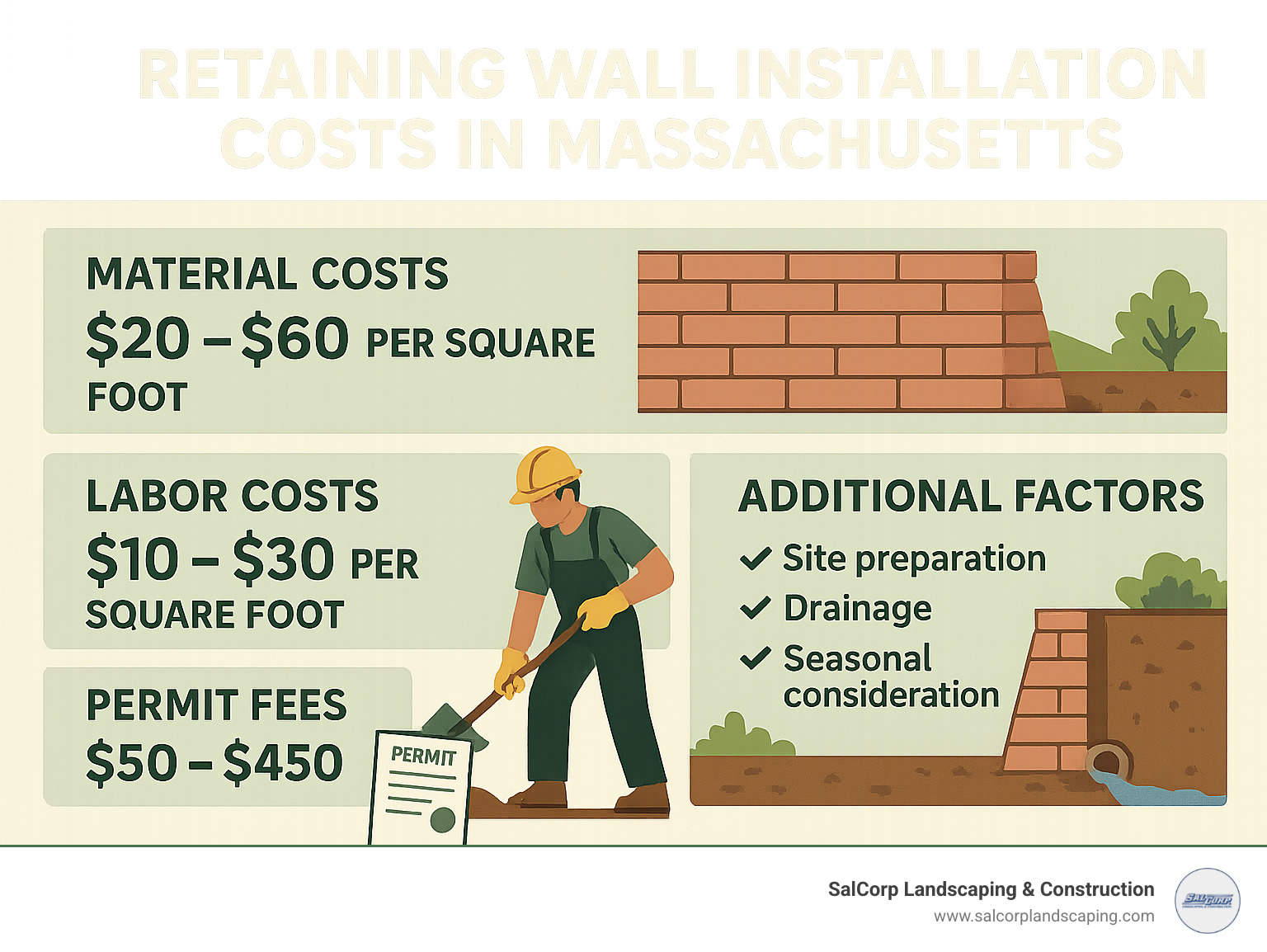
Retaining wall installation cost varies significantly based on materials, size, and site conditions, but understanding these factors helps you budget effectively for this essential property improvement. Here’s what you need to know:
Quick Cost Overview:
- Average total cost: $3,500 – $12,000 for most projects
- Per square foot: $20 – $60 (can reach $150+ for premium materials)
- Per linear foot: $40 – $300 depending on height and complexity
- Labor costs: $10 – $30 per square foot
- Permits: $50 – $450 in Massachusetts
Whether you’re dealing with erosion issues, need to level a sloped yard, or want to create usable outdoor space, retaining walls serve multiple purposes beyond just holding back soil. They manage drainage, prevent costly foundation damage, and can boost your property value by up to 15%.
Massachusetts property owners face unique challenges with freeze-thaw cycles, heavy snow loads, and strict building codes that affect both design requirements and costs. The investment in a properly built retaining wall often pays for itself by preventing expensive erosion damage and creating valuable usable space.
I’m Sal Musto, owner of SalCorp Landscaping & Construction, and I’ve been helping Massachusetts property owners steer retaining wall installation cost decisions for over two decades. My hands-on approach to every project gives me deep insight into what drives costs and how to deliver lasting value for both residential and commercial clients.
Explore more about Retaining wall installation cost:
Retaining Walls 101: Purpose, Types & Heights
Before diving into retaining wall installation cost, it’s important to know what these structures do and how they’re built. They must withstand pressure from soil, water, and Massachusetts’ brutal freeze-thaw cycles, so the basics matter.
Key Purposes of a Retaining Wall
Soil retention and slope stabilization keep foundations safe and landscapes in place, especially on the rolling hills common around Greater Boston.
Flood prevention and drainage management go hand-in-hand with wall design. Proper drains relieve hydrostatic pressure so the wall lasts.
Creating usable yard space lets homeowners transform steep slopes into patios, gardens, and play areas that boost property value.
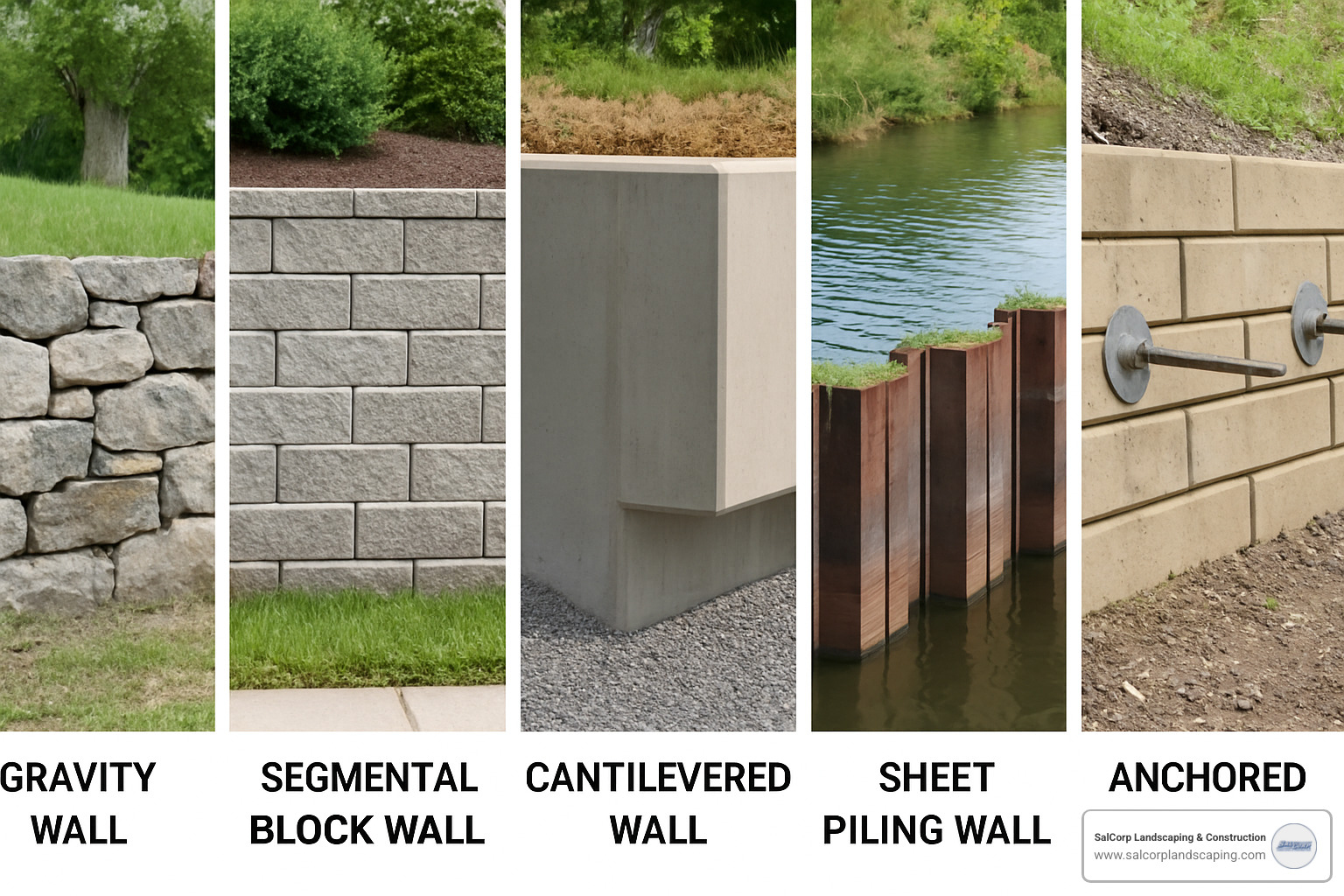
Popular Wall Types Explained
Gravity walls rely on their own weight and are ideal for walls under 4 ft.
Cantilever walls use an L-shaped concrete base that leverages the retained soil for strength and work well on taller installations.
Segmental block walls employ interlocking concrete units that curve easily and offer many finishes; they’re a staple of residential work.
Sheet piling walls (steel, vinyl, or wood) are perfect for tight footprints or waterfront sites but require specialized equipment.
Anchored walls add cables or tie-backs for extra support on very tall walls or poor soils, increasing complexity and cost.
Massachusetts building codes tighten once a wall exceeds 3-4 ft, so permits and engineered plans are usually required above that height.
Retaining Wall Installation Cost in 2025
When I talk with homeowners about retaining wall installation cost, I always start with the big picture before diving into specifics. The investment you’ll make depends on so many factors that giving you a single number would be misleading – and frankly, not very helpful for your planning.
Based on current market data and industry research, the national average for retaining wall projects typically falls between $3,500 and $12,000 for most residential installations. However, these figures can swing dramatically based on your specific situation. In Massachusetts, we often see costs run higher due to our strict building codes, challenging freeze-thaw conditions, and the skilled labor required to handle our unique soil conditions.
The $20 to $60 per square foot range you’ll see quoted online represents the middle ground, though premium materials and complex sites can push costs to $150 or more per square foot. Linear foot pricing offers another useful perspective, typically ranging from $40 to $300 per linear foot depending on wall height and site complexity.
Labor costs alone account for $10 to $30 per square foot, reflecting the skilled craftsmanship required for proper installation. This isn’t just about stacking blocks – it’s about understanding drainage, soil mechanics, and engineering principles that ensure your wall stands strong for decades.
Don’t forget about permits, which in Massachusetts typically range from $50 to $450 depending on your wall height and local jurisdiction. Walls over 4 feet almost always require permits and engineered plans, which can add another $350 to $750 to your project cost.
Please note: These are average costs based on internet data and market research, not actual costs for SalCorp Landscaping & Construction. Every project is unique, and we provide detailed estimates based on your specific site conditions and requirements.
Cost Per Square Foot & Linear Foot
Understanding both pricing methods helps you budget more accurately and compare quotes fairly. Square foot pricing accounts for the wall’s face area (height × length), while linear foot pricing considers the wall’s length at typical height ranges.
For retaining wall installation cost planning, budget-conscious projects typically fall in the $20 to $40 per square foot range for basic installations with standard materials. Mid-range projects using quality materials on moderately complex sites usually run $40 to $80 per square foot. Premium installations with natural stone or challenging site conditions can reach $80 to $150+ per square foot.
When you’re dealing with rebuilding or repairing existing walls, expect costs between $30 and $70 per square foot. This depends heavily on whether you’re doing spot repairs or complete reconstruction. Demolition of old walls typically adds $20 to $30 per linear foot to your project, though sometimes we can incorporate existing materials into the new design to help manage costs.
Cost by Wall Size & Height
Wall height creates the biggest impact on your investment, and not just because of the additional materials. Taller walls require deeper footings, more complex engineering, and often trigger permit requirements that shorter walls avoid.
4-foot walls represent what I call the “sweet spot” for many homeowners. They provide significant soil retention and visual impact while staying within simpler permitting requirements. These walls typically need footings 12 to 18 inches deep and can often be built without extensive engineering studies, keeping costs more manageable.
6-foot walls step into more complex territory. They require deeper footings (typically 2 feet or more) and almost always need engineered plans and permits. The additional height increases material costs significantly and requires more sophisticated installation techniques to ensure long-term stability.
8-foot+ walls and terracing often require a completely different approach. Rather than building a single tall structure, we frequently recommend terracing with multiple shorter walls. This approach is often more cost-effective and provides better long-term stability, though it does require more total materials and labor.
The footing depth rule we follow is that footings should be buried to a depth equal to 1/3 of the wall height, with deeper requirements in Massachusetts due to our frost heave conditions. This foundational work is invisible once complete, but it’s what separates walls that last from those that fail within a few years.
What Drives Retaining Wall Installation Cost?
Understanding what pushes your retaining wall installation cost higher helps you plan better and avoid surprises. After two decades of building walls across Massachusetts, I’ve learned that the same wall design can cost dramatically different amounts depending on these key factors.
Site Access and Excavation Surprises
Limited access or unexpected underground obstacles—ledge, buried debris, wet soils—can force us to use smaller equipment or hand-carry materials. What should be a two-day job can stretch to a week when every block moves by wheelbarrow.
Drainage Is Non-Negotiable
Perforated pipe, gravel backfill, and filter fabric relieve water pressure and extend a wall’s life. Skipping drainage might trim costs now but almost guarantees an expensive failure later, especially after a New England winter.
Engineering, Permits & Timing
Walls over 4 ft generally need stamped plans and local permits. Delivery charges and seasonal conditions (frozen ground, mud season) also affect your bottom line. We typically recommend scheduling work for spring or fall when conditions are ideal.
For insights into design considerations that affect costs, check out Belgard’s design resources.
How Height, Length & Thickness Affect Retaining Wall Installation Cost
Retaining wall installation cost doesn’t scale evenly with size. A wall that’s twice as tall doesn’t just cost twice as much – it often costs three times more due to engineering requirements and deeper foundations.
Height Changes Everything
Wall height affects every aspect of construction. Taller walls need deeper footings, thicker bases, and stronger materials. The footing depth rule means a 6-foot wall needs footings twice as deep as a 3-foot wall, which means much more excavation and concrete.
Length Affects Planning
Longer walls require more materials and labor, but they also might need soil testing at multiple points. If soil conditions vary along your wall’s length, we might need different construction methods for different sections.
Thickness and Reinforcement
Thicker walls handle more pressure but use more materials. Walls supporting driveways, patios, or other structures need extra reinforcement. These surcharge loads can increase your investment significantly over basic soil retention walls.
Labor Rates & Retaining Wall Installation Cost Breakdown
Labor represents the largest portion of most retaining wall projects, typically 40-60% of your total investment. Understanding why helps you appreciate the value of professional installation.
Skilled Work Requires Skilled Workers
Retaining wall construction isn’t entry-level work. Our crews understand soil pressure, drainage requirements, and proper construction techniques. We typically run crews of 2-4 experienced workers, with larger teams for complex projects.
Equipment Makes the Difference
Our investment in proper equipment – excavators, compactors, and material handlers – reduces labor time and improves quality. Owner-operated means I’m involved in equipment decisions that affect both efficiency and your final results.
The Value of Experience
Professional contractors carry insurance, licensing, and warranties that protect your investment. We also handle permits, inspections, and code compliance. While this adds to project costs, it provides essential protections and peace of mind.
Note: Labor rates and project costs vary based on site conditions, materials, and project complexity. These are average market observations, not specific pricing for SalCorp Landscaping & Construction.
For more information about our comprehensive approach to hardscaping projects, visit our hardscaping services page.
Material Cost Comparison & Lifespan
Material selection represents one of your most important decisions, balancing upfront costs with long-term value and maintenance requirements. Each material offers distinct advantages and challenges that affect both initial investment and lifecycle costs.
Wood and Timber Options
Wood remains popular for its natural appearance and relatively low initial cost. Pressure-treated lumber, railroad ties, and engineered timber products offer different price points and lifespans. However, wood requires regular maintenance and has the shortest lifespan of common materials.
Concrete Block Systems
Interlocking concrete blocks provide excellent value, combining reasonable costs with good durability. They’re available in numerous styles and colors, making them versatile for various aesthetic preferences. Installation is relatively straightforward, helping control labor costs.
Natural Stone
Natural stone offers best beauty and longevity but comes with premium pricing. Granite, limestone, and fieldstone each have different characteristics and costs. While expensive initially, natural stone walls can last 50-100+ years with minimal maintenance.
Metal Systems
Steel and aluminum retaining walls offer strength and durability, particularly for challenging applications. Corten steel develops an attractive rust patina but costs significantly more than other options. Sheet piling is excellent for waterfront applications.
Vinyl Panels
Vinyl provides a low-maintenance, cost-effective option for smaller walls. While not suitable for tall or heavily loaded walls, vinyl works well for decorative applications and areas where maintenance access is limited.
Gabion Baskets
Wire baskets filled with stone offer a unique aesthetic and excellent drainage characteristics. They’re relatively inexpensive and can adapt to ground movement, making them suitable for challenging soil conditions.
Note: Material costs mentioned are average market prices based on internet data and not specific to SalCorp Landscaping & Construction pricing.
Pros & Cons of Common Materials
Wood Advantages and Challenges
Wood offers natural beauty and lower initial costs but faces rot risk, insect damage, and regular maintenance requirements. In Massachusetts’ climate, even pressure-treated wood may need replacement every 10-20 years.
Concrete Block Benefits
Concrete blocks provide good structural strength, reasonable costs, and numerous aesthetic options. They’re relatively DIY-friendly and don’t require specialized tools. However, they can be affected by freeze-thaw cycles if not properly installed.
Natural Stone Considerations
Stone offers best longevity and beauty but requires skilled installation and higher initial investment. The weight requires substantial footings, and repairs can be challenging if damage occurs.
Metal System Characteristics
Metal walls offer excellent strength-to-weight ratios and can be installed in tight spaces. However, they’re susceptible to corrosion in coastal areas and may require specialized installation techniques.
Durability & Maintenance Requirements
Inspection and Preventive Care
All retaining walls benefit from annual inspections to identify potential issues early. Look for cracks, settling, drainage problems, or vegetation growth that could compromise structural integrity.
Drainage System Maintenance
Keeping drainage systems clear is crucial for wall longevity. This includes flushing drainage pipes, clearing weep holes, and ensuring proper grading to direct water away from the wall.
Sealing and Protective Treatments
Concrete and stone walls may benefit from periodic sealing to prevent water penetration and freeze-thaw damage. Wood walls require regular staining or sealing to prevent rot and insect damage.
Vegetation Control
Controlling vegetation growth on and around retaining walls prevents root damage and maintains proper drainage. This is particularly important for natural stone walls where roots can displace stones.
For more information about garden retaining wall applications, visit our garden retaining wall page.
DIY vs Hiring a Pro, Savings Tips & FAQs
The choice between rolling up your sleeves for a DIY project and hiring professionals can make or break your retaining wall investment.
The Reality of DIY
Tool rentals often start at $150–$300 for basic machinery, and that’s before you add a plate compactor, laser level, or disposal fees. Retaining walls also require drainage design and soil calculations—one misstep can cause failure, property damage, and safety hazards. We’ve rebuilt plenty of well-meaning DIY walls that collapsed within a few winters.
Why Pros Save Money Long-Term
Professional installation bundles engineering expertise, efficient equipment usage, insurance coverage, and workmanship warranties. Most crews finish standard walls in 2-5 days, while DIY timelines can drag across several weekends and weather windows. The higher upfront bill is usually offset by durability and fewer headaches.
DIY vs Professional Retaining Wall Installation Cost
Understanding the True Cost of DIY
DIY projects save on labor costs but require tool rental, material purchase, permit fees, and disposal costs. Don’t forget potential mistakes that require material replacement—I’ve seen homeowners spend more on their second attempt than they would have paid for professional installation initially.
The retaining wall installation cost for DIY projects includes hidden expenses like time off work, physical strain, and the stress of managing a complex project. Professional installation reduces these risks through proper design, quality materials, and skilled installation techniques.
When DIY Makes Sense
For simple, low walls under 3 feet with good site access and stable soil, experienced DIYers can sometimes achieve good results. However, anything taller, more complex, or in challenging conditions really benefits from professional expertise.
Smart Ways to Reduce Your Budget Without Sacrificing Quality
Work with Your Site, Not Against It
Reusing excavated soil for backfill or landscaping elsewhere on your property reduces disposal costs and material purchases. We often help clients plan projects that maximize use of existing materials.
Think Strategic About Height
Keeping walls under 4 feet eliminates permit requirements and reduces engineering costs. Consider terracing instead of single tall walls—it often looks better and costs less while providing superior long-term stability.
Choose Materials Wisely
Select materials that balance cost, durability, and maintenance for your specific situation. Gabion baskets or vinyl panels might provide excellent value for appropriate applications, while natural stone makes sense for high-visibility areas where longevity matters most.
Timing Can Save Money
Scheduling projects during contractors’ slower seasons can sometimes reduce costs. However, avoid winter installation in Massachusetts—ground conditions and weather challenges usually make it more expensive, not less.
Bundle Projects for Better Value
Combining retaining wall installation with other hardscaping projects reduces mobilization costs and provides better overall value. We often see significant savings when clients combine walls with patios, walkways, or drainage improvements.
Frequently Asked Questions
How long will my retaining wall last?
Wall lifespan depends heavily on materials, installation quality, and maintenance. Wood walls typically last 10-20 years in Massachusetts weather, while concrete blocks can go 50-100 years. Natural stone walls can last over 100 years with proper installation and care—I’ve worked on century-old stone walls that are still going strong.
Do retaining walls add property value?
Absolutely. Properly designed and installed retaining walls can increase property value by up to 15% by creating usable space, preventing erosion, and enhancing curb appeal. The actual value increase depends on the wall’s size, materials, and how well it integrates with your overall landscaping.
Are permits required in Massachusetts?
Most Massachusetts communities require permits for retaining walls over 3-4 feet high. Some areas have additional requirements for walls near property lines or in flood zones. Always check with local building officials before starting your project—it’s much easier to get permits upfront than to deal with violations later.
What happens if my retaining wall fails?
Wall failure can cause property damage, safety hazards, and expensive repairs. This is exactly why proper design, quality materials, and professional installation are crucial investments in your property’s protection. I’ve seen failed walls cause foundation damage, flooding, and landscape destruction that cost far more than the original wall would have.
How do I choose the right contractor?
Look for contractors with proper licensing, insurance, and specific experience with retaining walls. Check references, view completed projects, and ensure they understand local building codes and soil conditions. A good contractor should be able to explain the engineering behind their recommendations and provide detailed written estimates.
For certification standards, refer to the Mason Contractors Association for qualified professionals in your area.

Conclusion
Making smart decisions about retaining wall installation cost starts with understanding what drives pricing and how different factors affect your investment. While every project is unique, the benefits of proper soil retention, drainage management, and expanded usable space typically make retaining walls one of the most valuable improvements you can make to your property.
After helping Massachusetts property owners steer these decisions for over two decades, I’ve learned that the most successful projects happen when homeowners understand both the costs and the long-term value. That’s why we take an owner-operated approach at SalCorp Landscaping & Construction – I personally oversee every project to ensure you get the quality and efficiency that comes from experienced hands-on supervision.
Every retaining wall tells a story about the unique challenges of your property. Maybe you’re dealing with erosion that threatens your foundation, or perhaps you want to transform that steep slope into a beautiful terraced garden. Whatever your situation, we believe in providing detailed, project-specific estimates that account for your site’s soil conditions, drainage needs, and aesthetic goals.
Our comprehensive approach means we handle everything from initial site assessment through final cleanup. We understand Massachusetts’ freeze-thaw cycles, building codes, and permitting requirements, so your project moves smoothly from concept to completion. More importantly, we build relationships with our clients that last long after the final stone is set.
The investment in a properly built retaining wall pays dividends for years to come. Beyond preventing costly erosion damage, you’re creating valuable outdoor space and enhancing your property’s curb appeal. Many of our clients tell us their retaining wall project became the foundation for years of outdoor enjoyment with family and friends.
Ready to explore what’s possible for your property? I’d love to walk your site with you, discuss your options, and provide a transparent estimate custom to your specific needs. Every consultation starts with understanding your goals and ends with a clear plan for achieving them.
Remember: All pricing information in this article represents average market costs based on internet data and industry research, not specific pricing for SalCorp Landscaping & Construction services. We provide customized estimates based on your specific project requirements and site conditions.
For more information about our retaining wall services, visit our retaining wall contractor page to learn how we can help transform your property with professional retaining wall installation.
