Why Your Parking Lot is a Flood Risk (And What It’s Costing You)
Commercial parking lot drainage systems are essential for preventing water damage, protecting pavement, and avoiding costly repairs. Here’s what you need to know:
Key Commercial Parking Lot Drainage Solutions:
- Catch Basins – Collect water at low points before it enters underground pipes.
- Trench Drains – Long, grated channels that handle high-volume surface water.
- Slot Drains – Modern, grate-free systems with high flow rates.
- French Drains – Perforated pipes in gravel trenches for groundwater management.
- Permeable Pavers – Allow natural drainage across the entire surface.
Critical Design Requirements:
- Minimum 1% slope for asphalt/concrete.
- Minimum 2% slope for gravel.
- Proper grading to direct water away from buildings.
- Regular maintenance to prevent clogs.
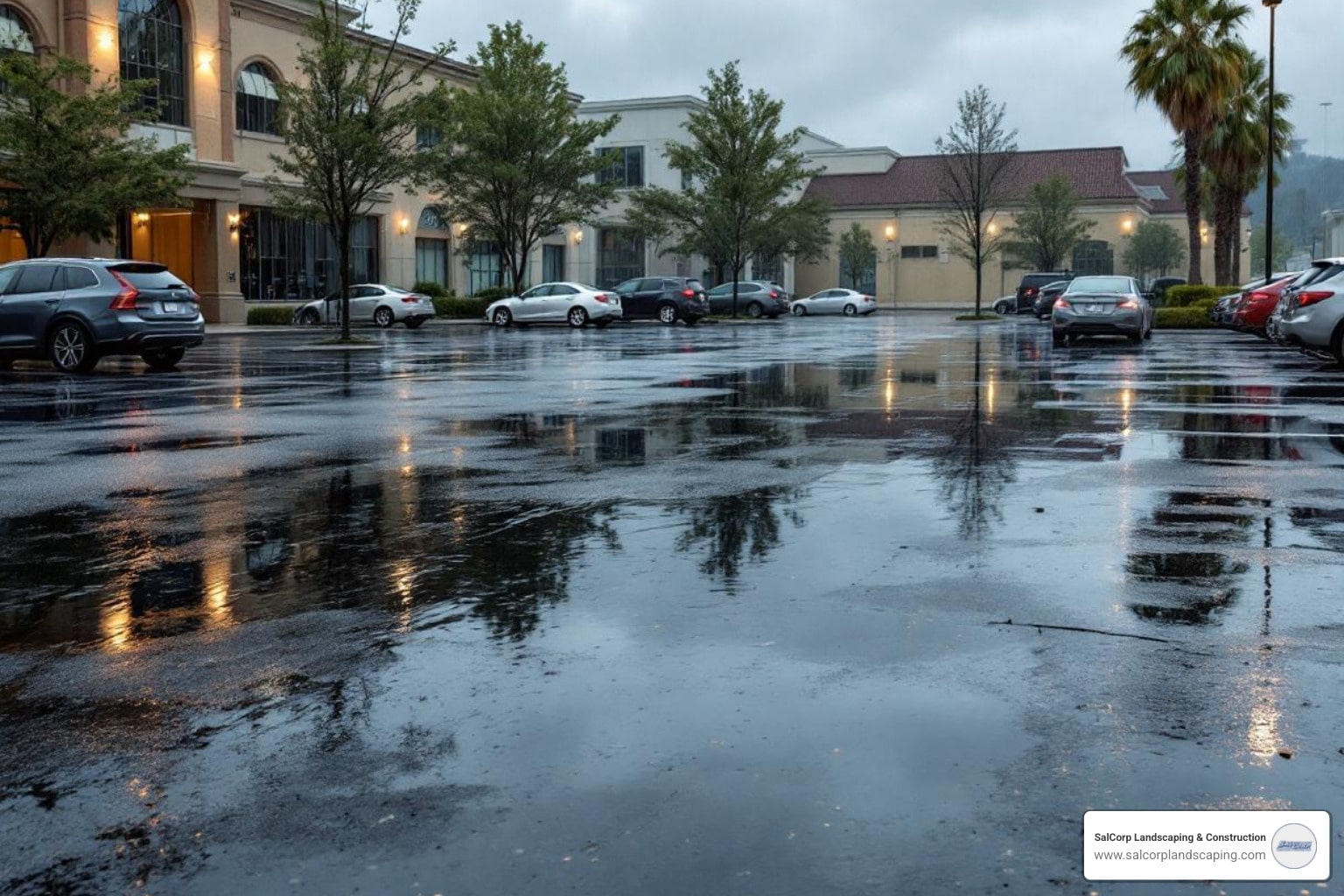
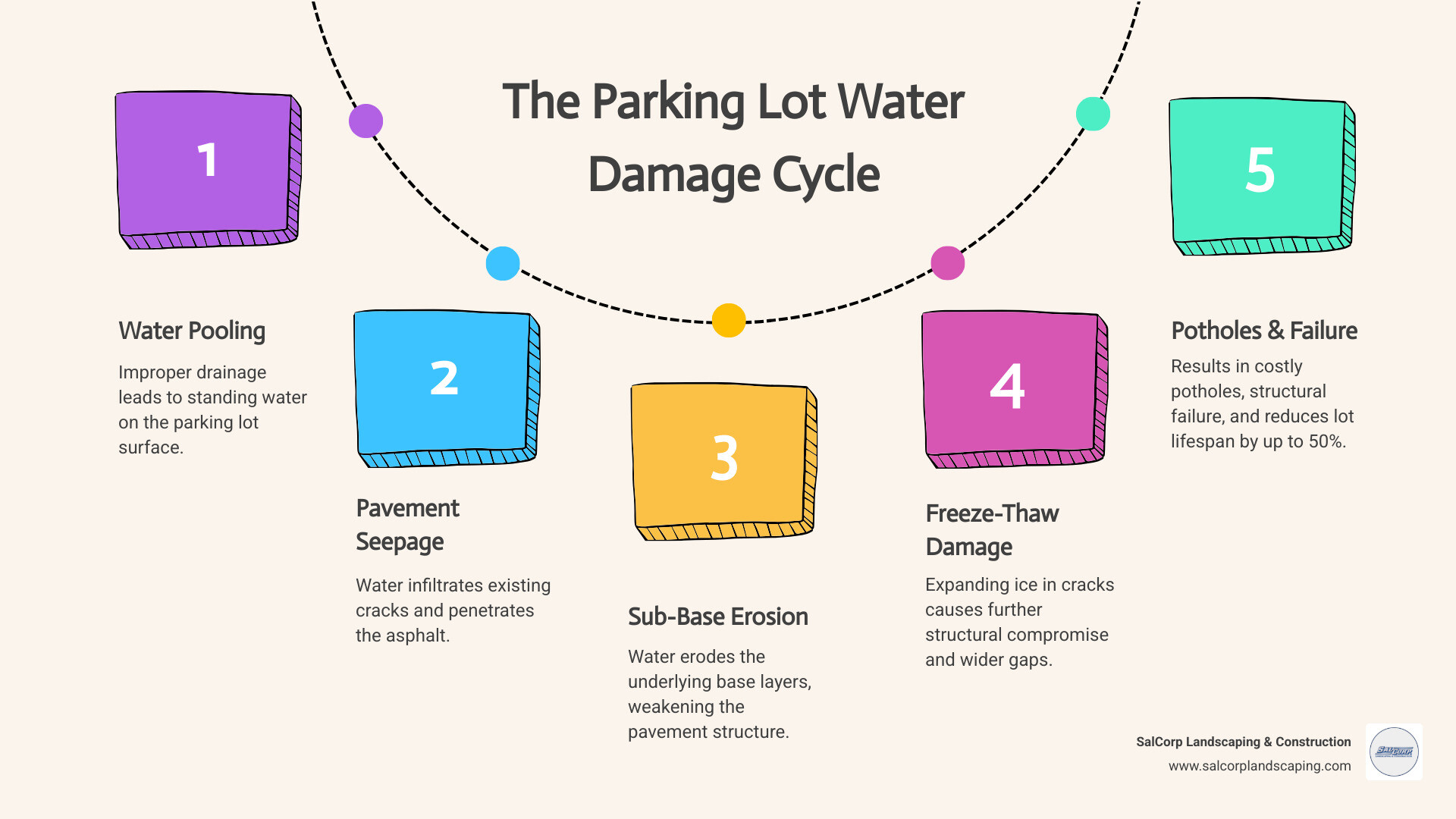
Ankle-deep puddles in your parking lot are more than an inconvenience; they’re a sign of a costly problem. Standing water strips protective layers from asphalt, seeps into cracks, and expands when it freezes, compromising your pavement’s structure. Improper drainage can reduce a parking lot’s lifespan by up to 50%, and repairs can cost 10 times more than installing a proper system from the start.
This damage leads to erosion, potholes, and liability risks that can drive customers away. A well-designed drainage system can prevent an estimated 90% of water-related damage, protecting your investment.
I’m Sal Musto, and for over two decades with SalCorp Landscaping & Construction, I’ve seen how effective commercial parking lot drainage systems transform properties across Massachusetts. The right strategy protects your pavement and your bottom line from heavy rains and winter snowmelt.
Designing Effective Commercial Parking Lot Drainage Systems
An effective commercial parking lot drainage system is a water management strategy designed to control stormwater runoff and protect your investment. Proper drainage safeguards your property, improves visitor safety, and extends the life of your pavement.
Without it, standing water weakens pavement, leading to cracks and potholes that create safety hazards and liability risks. Erosion can undermine the subgrade, accelerating deterioration and creating an unprofessional appearance that may deter customers.
At SalCorp Landscaping & Construction, we help you implement a robust water management strategy custom to your site and local climate. We are experts in Outdoor Water Drainage Solutions that keep your property dry and secure.
Comparing Common Commercial Parking Lot Drainage Systems
When it comes to commercial parking lot drainage systems, the best solution often involves a combination of methods customized to your needs. Let’s explore the most common options:
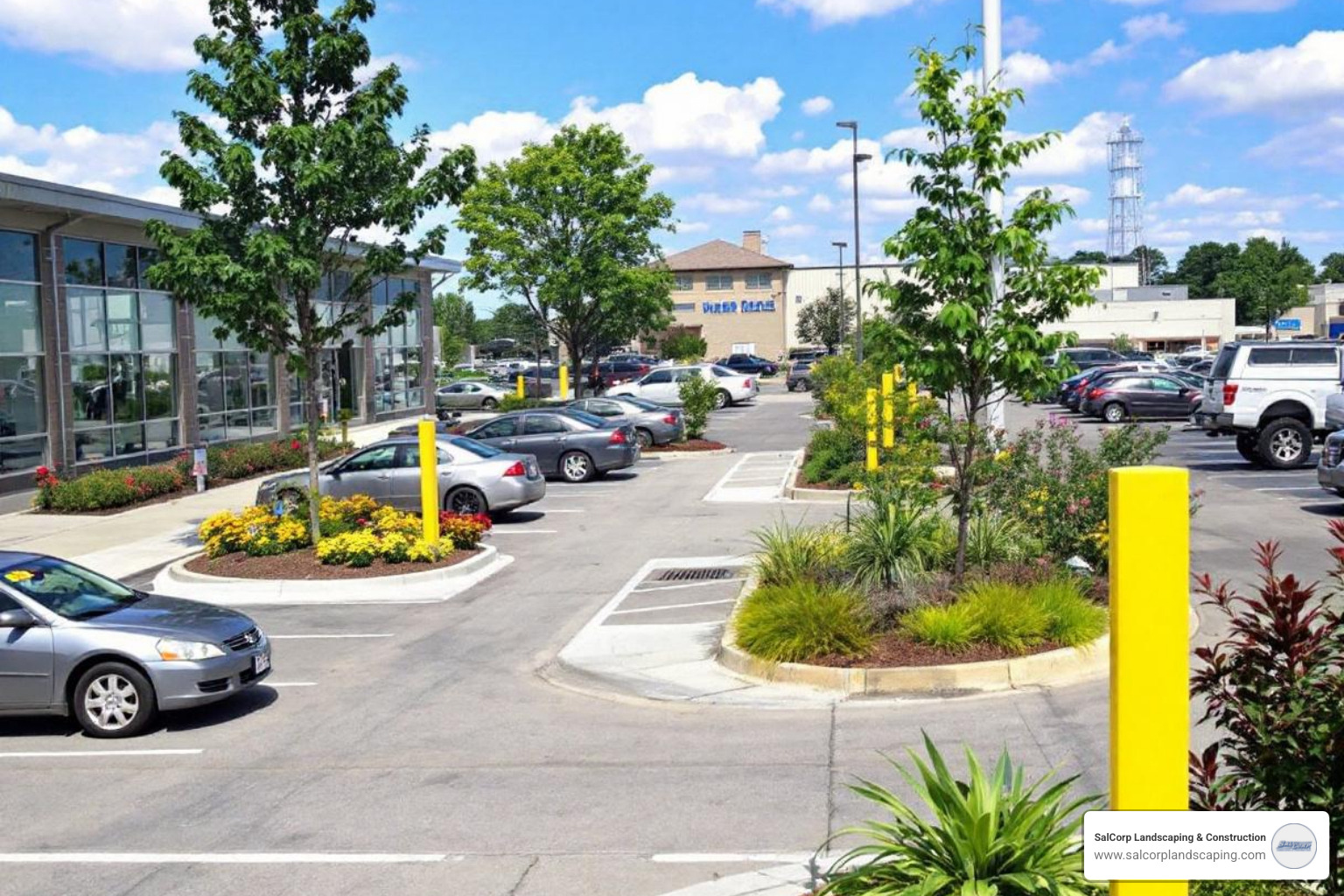
- Catch Basins: These grated inlets collect surface water at low points and direct it into an underground pipe system.
- Advantages: Effective at collecting large volumes of water from specific low spots and can include debris baskets to prevent clogs.
- Disadvantages: Can be overwhelmed by heavy rainfall, require regular cleaning to prevent clogs, and may deteriorate over time.
- Trench Drains: These linear systems use a long, grated channel to collect water over a larger area.
- Advantages: Excellent for intercepting sheet flow across large paved areas. They offer high flow rates suitable for large parking lots.
- Disadvantages: Installation is more extensive, and grates require regular cleaning to prevent debris buildup.
- Slot Drains: A modern, minimalist take on trench drains that blend seamlessly into the pavement without a visible grate.
- Advantages: Aesthetically pleasing, high flow rates (11-27 GPM per foot), and made from durable stainless steel. Cleaning is often simpler than with grated drains.
- Disadvantages: Higher initial investment and may require specialized installation.
- French Drains: A subsurface system consisting of a perforated pipe in a gravel-filled trench to manage groundwater.
- Advantages: Effective for managing subsurface water to protect the pavement’s base layers. Can be hidden under landscaping. Our guide on Home French Drain provides more details.
- Disadvantages: Not designed for heavy surface runoff; installation requires significant excavation.
- Permeable Pavers: Innovative surfaces that allow water to filter through the paving material into a subsurface storage system.
- Advantages: Provides natural drainage over the entire surface, eliminating standing water. They help filter pollutants and reduce runoff. Options like TRUEGRID PRO PLUS are made from recycled materials and rated for heavy use.
- Disadvantages: Higher initial installation cost and requires a specialized sub-base and occasional vacuuming to prevent clogging.
Here’s a quick comparison of some of these systems:
| System Type | Installation Cost | Maintenance | Aesthetics | Flow Capacity |
|---|---|---|---|---|
| Catch Basins | Moderate | Regular grate cleaning, debris removal | Visible grates | High point collection |
| Trench Drains | Moderate to High | Regular grate cleaning, debris removal | Visible grates | High linear collection |
| Permeable Pavers | High | Occasional vacuuming, minimal surface cleaning | Natural, integrated | Distributed across surface, high infiltration |
Please note: The installation costs mentioned in this table are average estimates based on internet data and not actual costs for SalCorp Landscaping & Construction. Actual costs can vary significantly based on project complexity, materials, and site-specific conditions.
Key Design Factors: Slope, Surface, and Climate
Effective drainage design hinges on the slope, surface material, and local climate.
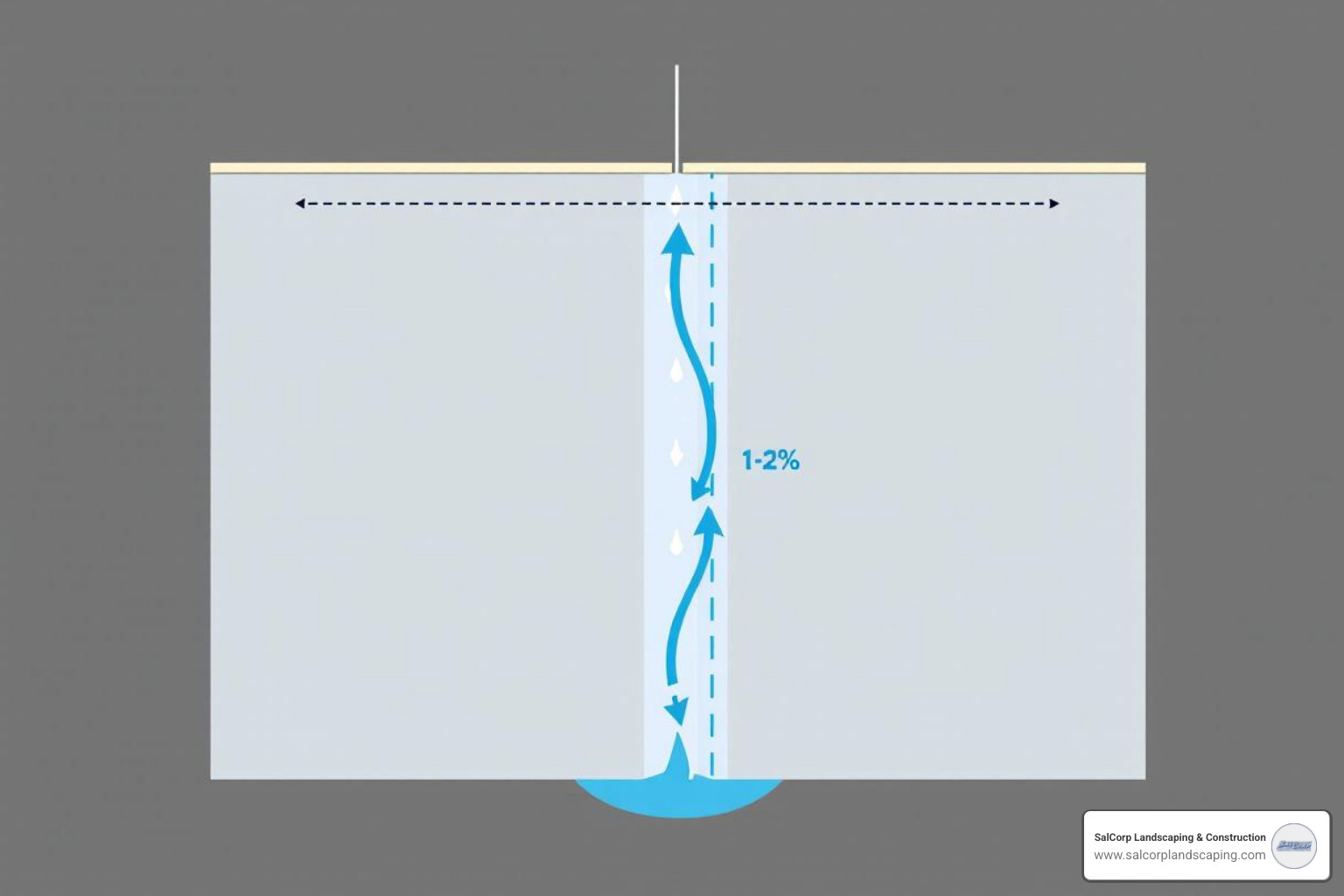
First, proper grading (slope) is paramount. For optimal drainage, a minimum slope of 1% is recommended for asphalt and concrete, while gravel surfaces need a steeper 2% slope. Without this pitch, water will pool. Ensuring proper Sloped Yard Drainage is a fundamental principle we apply to all projects.
Second, the surface material dictates the approach. Impervious asphalt and concrete require surface solutions like catch basins, while permeable surfaces manage water infiltration directly.
Finally, climate considerations are vital in Massachusetts. Your system must handle heavy rainfall and significant spring snowmelt. A system that quickly moves water away is essential to prevent destructive freeze-thaw cycles.
The Role of Permeable Paving and Advanced Solutions
Beyond traditional drains, modern commercial parking lot drainage systems increasingly incorporate sustainable, environmentally friendly solutions.
- Geocellular Storage: Systems like ACO StormBrixx or StormTech chambers can be installed under parking lots to store excess water for detention, retention, or reuse, often creating usable space above.
- Bioswales and Rain Gardens: These are shallow, vegetated channels that collect and absorb runoff. Planted with native vegetation, they naturally filter pollutants and add aesthetic value.
- Stormwater Treatment Systems: Advanced filters like the BayFilter system are designed to remove pollutants (solids, metals, hydrocarbons) from runoff before it re-enters the environment.
These solutions offer significant environmental benefits, including groundwater recharge and improved water quality.
Choosing the Right Drainage Grates
For systems with grates, like catch basins and trench drains, selection is crucial for safety and performance.
Load rating is the top priority. Commercial lots need grates that can handle heavy vehicles. An H-20 rating is the standard for traffic areas, ensuring the grate can support a highway truck without failing.
Grate materials also matter:
- Cast Iron: The most durable and robust option for high-traffic zones, but also the most expensive.
- Steel: A strong, durable, and more affordable alternative to cast iron.
- Plastic: Best for pedestrian areas or low-impact zones, as it’s not suitable for heavy traffic.
Finally, grate design affects water flow and safety. Openings must be large enough for water but small enough to block large debris. For pedestrian safety and ADA compliance, openings must not trap canes, crutches, or wheelchair wheels.
Protecting Your Investment: Maintenance and Professional Guidance
Properly designed commercial parking lot drainage systems are an investment requiring proactive management to ensure longevity. The average cost of parking lot repair due to water damage can range from $500 to $5,000, but extensive damage can be much higher than the cost of installing proper drainage initially. These ranges are average estimates based on internet data and not actual costs for SalCorp Landscaping & Construction.
A well-maintained drainage system extends the life of your parking lot, reduces the need for expensive resurfacing, and keeps your property safe and appealing.
Best Practices for Maintaining Your Commercial Parking Lot Drainage Systems
Regular care ensures your commercial parking lot drainage systems perform optimally and protects your pavement.
Here are our best practices:
- Regular Inspections: Periodically inspect all drainage components for damage, cracks, or pooling water. Early detection prevents costly repairs.
- Debris Removal: Regularly clear grates and inlets of leaves, litter, and sediment to prevent clogs. Slot drains can be cleared with a simple cleaning paddle.
- Pipe Jetting: Schedule periodic pipe jetting (hydro-jetting) to clear stubborn blockages and accumulated sludge from underground pipes, ensuring smooth water flow.
- Pothole and Crack Repair: Promptly repair any cracks or potholes. Sealing these entry points prevents water from seeping into the sub-base and causing further damage.
- Snow and Ice Management: In winter, promptly clear snow and ice. This prevents meltwater from overwhelming your system or seeping into pavement cracks, which leads to freeze-thaw damage.
Here’s a seasonal maintenance checklist to help you stay on top of things:
- Spring:
- Inspect for winter damage.
- Clear debris from all grates.
- Schedule pipe jetting if needed.
- Summer:
- Monitor for pooling after rain.
- Clear debris.
- Repair new cracks.
- Fall:
- Perform a thorough cleaning of all grates before winter.
- Check for potential blockages.
- Winter:
- Manage snow and ice effectively.
- Keep drainage outlets clear of snow piles.
Navigating Regulations and Ensuring Longevity
Complying with local regulations is crucial for responsible property management. In Massachusetts, stormwater management is governed by comprehensive standards.
The Massachusetts Stormwater Handbook outlines regulations under the Wetlands Regulations (310 CMR 10.00) and Water Quality Regulations (314 CMR 9.00). Projects impacting stormwater runoff, like parking lot construction, must adhere to these rules, often requiring a formal Stormwater Report. SalCorp Landscaping & Construction is well-versed in these local requirements and can help you steer compliance.
If you would like to learn more about how stormwater is managed on a broader level, the U.S. Environmental Protection Agency provides an overview of stormwater management and best practices that municipalities and property owners across the country follow.
A proper drainage system is a long-term investment with a high ROI. It extends your parking lot’s life, reduces repair costs, and improves property value. Professional consultation is invaluable to ensure your system is designed and maintained to the highest standards. With two decades of experience across Massachusetts, we understand the local climate and regulatory challenges.
Don’t let water damage wash away your investment. Explore our expert outdoor water drainage solutions to protect your commercial property and achieve effective, compliant drainage that lasts.