Planning and Designing Your New Patio
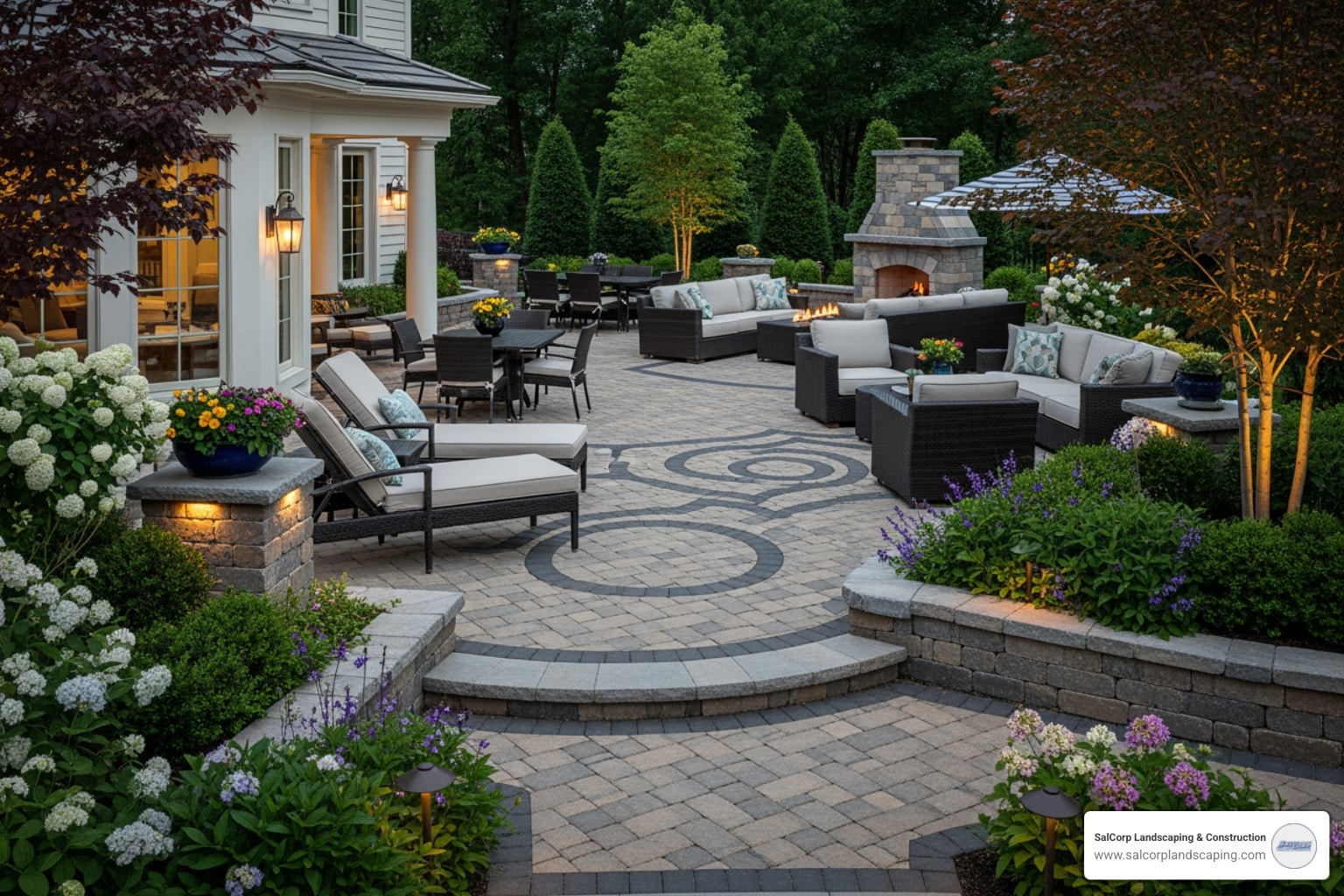
When we sit down to plan a New Patio, we aren’t just looking at a patch of dirt; we are looking at the potential for a “room without walls.” The planning phase is where the magic happens, and it requires a balance between what you want and what your land allows. In Massachusetts, we have to be particularly mindful of our geography. Whether you are in the coastal environment of Barnstable or the suburban landscapes of Needham and Newton, your land has a story to tell about drainage and sun exposure.
Functionality and Zoning
The most successful designs treat the backyard like an interior floor plan. We recommend “zoning” your New Patio based on activity. You might have a dining zone near the back door for easy access to the kitchen, a lounging zone centered around a focal point like a fire pit, and perhaps a quiet “nook” for morning coffee in a corner that catches the early sun.
Sun and Shade
Before we break ground, we always ask: where does the sun hit at 4:00 PM in July? If your patio is a South-facing slab in Wellesley, it’s going to be a furnace without a pergola or umbrella. Conversely, a patio shaded by heavy tree cover in Concord might stay damp and prone to moss. We help you steer these elements to ensure your space is usable throughout the day.
Drainage: The Silent Patio Killer
In our region, drainage is non-negotiable. Water must move away from your foundation. A professional New Patio requires a minimum 1/8-inch slope per foot. Without this, you’re looking at standing water, which leads to ice patches in the winter and premature material failure.
| Material Type | Durability | Maintenance Level | Slip Resistance | Best For |
|---|---|---|---|---|
| Natural Stone | High | Low to Medium | Excellent | Luxury, natural looks |
| Concrete Pavers | High | Low | Good | Modern designs, versatility |
| Brick Pavers | Medium-High | Medium | Fair | Traditional, historic homes |
| Gravel/Crushed Stone | Low-Medium | High | Good | Rustic paths, budget zones |
Selecting the Best Materials for a New Patio
Choosing the right material is about more than just color; it’s about science. Because we deal with intense freeze-thaw cycles in Massachusetts—from the cold nights in Framingham to the humid summers in Quincy—your materials must be “weather-hardy.”
Natural Stone vs. Concrete Pavers
We often guide homeowners toward natural stone or high-quality concrete pavers. Natural stone, like bluestone or granite, is inherently suited to our Northeast conditions because it was formed here. It is incredibly strong—often up to 10 times stronger than standard concrete slabs.
When selecting pavers, we look for products that meet ASTM C140-15 standards. This testing ensures the material can handle high compressive strength (how much pressure it takes to break) and has a low absorption rate. Why does absorption matter? If a paver soaks up too much water, that water freezes, expands, and cracks the stone from the inside out. By choosing materials with low absorption and high freeze-thaw resistance, we ensure your Patio Design lasts for decades.
The Beauty of Porcelain and Brick
For a contemporary look, porcelain pavers are becoming a favorite for a New Patio. They are nearly impervious to water and stains. If you prefer a classic New England aesthetic, Brick Paver Patio options provide a timeless charm. High-quality bricks can last over 100 years if installed correctly. You can learn more about the fundamentals of these spaces in this guide on All About Patios.
Design Inspiration and Collections for Your New Patio
Your New Patio should be a reflection of your home’s architecture. We love exploring different collections to find the perfect match for our clients.
- Classicstone Collections: These offer hand-cut edges and natural cleft surfaces, perfect for a rustic or farmhouse look in places like Dover or Sherborn.
- De Terra/Aged Collections: If you want your patio to look like it has been there for a century, these tumbled stones provide an “old-world” texture that feels incredibly cozy.
- Contemporary Minimalism: For modern homes in Boston or Brookline, large-format smooth pavers in charcoal or silver grey create a sleek, “clean-line” appearance.
Beyond the Stone: Amenities
A patio is just the floor; the features are the furniture. We specialize in integrating Patio Ideas like:
- Fire Pits and Fireplaces: These extend the “patio season” into the crisp Massachusetts autumn.
- Outdoor Kitchens: From built-in grills to full pizza ovens, we can turn your backyard into a five-star restaurant.
- Lighting: Low-voltage landscape lighting not only adds safety but creates a magical evening ambiance.
Professional Installation and Maintenance Guide
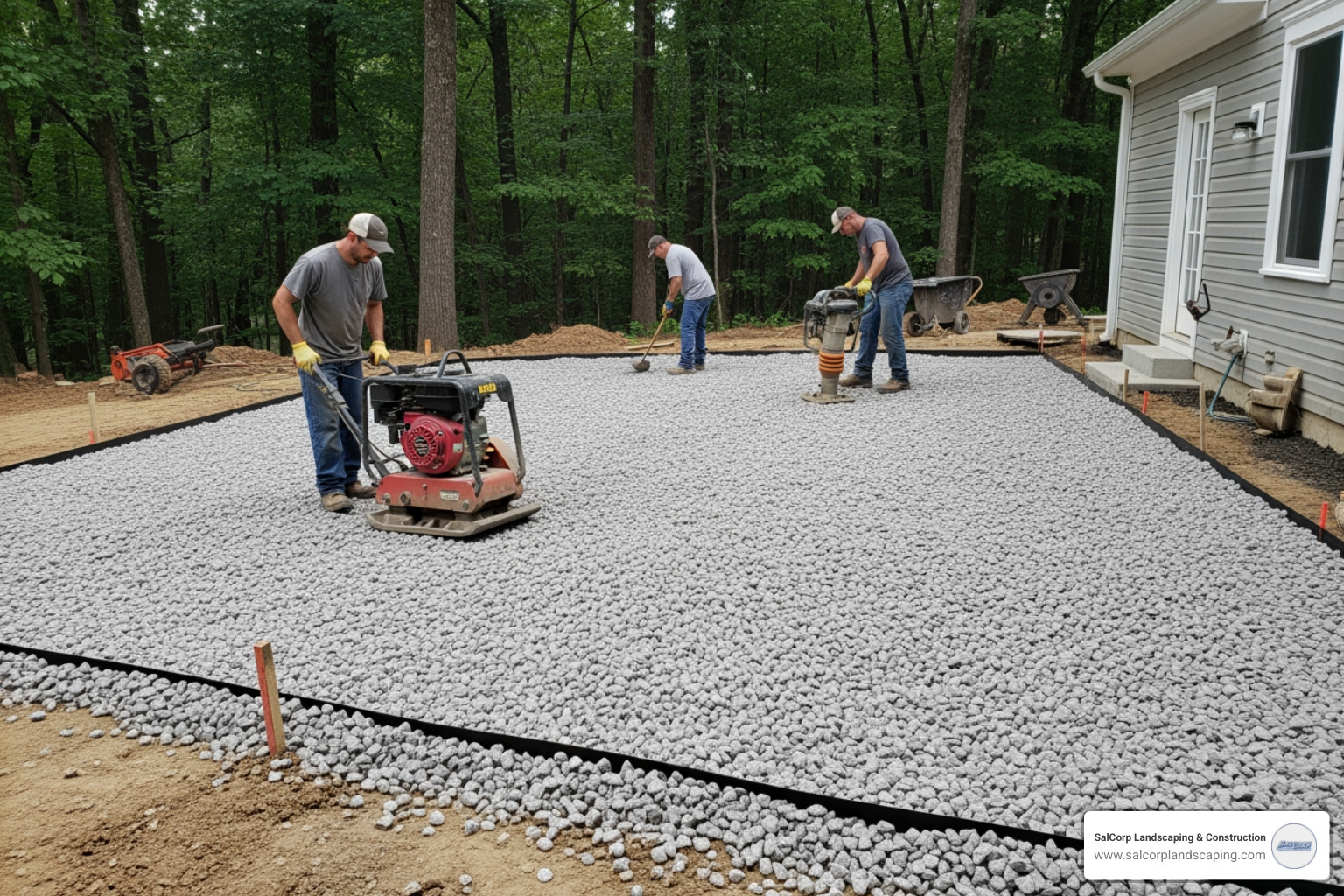
A beautiful New Patio is only as good as what lies beneath it. Many DIY enthusiasts make the mistake of focusing on the top layer, but at SalCorp, we spend the majority of our time on the “invisible” parts of the project.
The Step-by-Step Installation Process
When we begin a project in Walpole or surrounding towns like Norwood and Canton, we follow a rigorous process to ensure longevity.
- Site Preparation and Excavation: We don’t just “dig a hole.” We excavate to a depth of roughly 7–8 inches. This allows for a proper subbase while ensuring the final paver height sits exactly where it needs to be relative to your lawn and doorways.
- The Subbase (The Foundation): This is the most critical step. We use Recycled Concrete Aggregate (RCA) or crushed stone, compacted in “lifts” (layers). We use professional-grade plate compactors to ensure the base is rock-solid. A poorly compacted base is why you see patios with “dips” and “waves” after a few years.
- The Bedding Layer: A thin layer (usually 1 inch) of coarse sand is screeded over the base. This acts as the “cradle” for your pavers.
- Laying the Pavers: We lay the stones according to your chosen pattern—be it herringbone, basket weave, or running bond. We always use edge restraints (concrete or heavy-duty plastic) to prevent the pavers from “creeping” outward over time.
- Jointing with Polymeric Sand: Once the pavers are down, we sweep polymeric sand into the joints. When misted with water, this sand hardens, locking the pavers in place and significantly reducing weed growth and ant hills.
For those curious about the heavy lifting involved, you can read more about Building a Patio or check out this Planning a Patio guide for a broader perspective.
Avoiding Common Mistakes and Maintenance Pitfalls
We’ve seen it all—and usually, we’re called in to fix it. One of the most common mistakes is using pea gravel as a joint filler or base for pavers. Pea gravel is round and acts like “marbles” underfoot; it never truly compacts, leading to a wobbly, unstable New Patio.
The Utility Trap
Before we dig, we always check for underground utility lines. There is nothing worse than finishing a beautiful Patio Drainage system only to realize you’ve buried a cable line that needs repair.
Maintenance and Efflorescence
You might notice a white, powdery substance on your new pavers a few weeks after installation. Don’t panic! This is “efflorescence,” a natural salt that rises to the surface. It usually washes away with rain. We generally recommend waiting one full year before applying a sealant. This allows the stones to “breathe” and the efflorescence to dissipate. Once sealed, your patio will be more resistant to oil stains and UV fading.
Understanding the Cost of a Professional Build
When planning for a New Patio, budget is always a top priority. It is important to understand that every property is unique, and “site conditions”—like a steep slope in Hingham or rocky soil in Medfield—can influence the final price.
Internet Data and Average Pricing
Based on general internet data, the average cost to install a patio can range anywhere from $5 to $60 per square foot. However, these are broad national averages and not actual quotes for SalCorp Landscaping. In the Massachusetts market, where labor and high-quality materials are premium, a standard professional installation typically falls into a wide range:
- Basic Concrete Slabs: $10 to $25 per square foot.
- Standard Paver Patios: $25 to $45 per square foot.
- High-End Natural Stone or Multi-Level Designs: $50 to $150+ per square foot.
The size of the project, the choice of material (e.g., imported Italian porcelain vs. local gravel), and the need for retaining walls or Patio Steps Stone will all play a role. For a deeper dive into the numbers, check out our page on the Cost to Install Concrete Paver Patio.
Why Choose a Professional for Your Outdoor Change
At SalCorp Landscaping & Construction, we believe that your New Patio should be built to last a lifetime. Based in Walpole, we have over 20 years of experience navigating the specific challenges of Massachusetts landscapes.
The SalCorp Advantage:
- Owner-Operated: When you hire us, you’re working with a team that takes personal pride in every stone laid. We aren’t a giant corporation; we are your neighbors in the Norfolk and Middlesex County areas.
- In-House Machinery: We own our equipment, which means we don’t have to wait on rental schedules to get your project moving. This allows us to maintain a clean, efficient job site.
- Comprehensive Solutions: From the initial Hardscaping/Patios design to the final landscape lighting and plantings, we handle the entire “outdoor living” ecosystem.
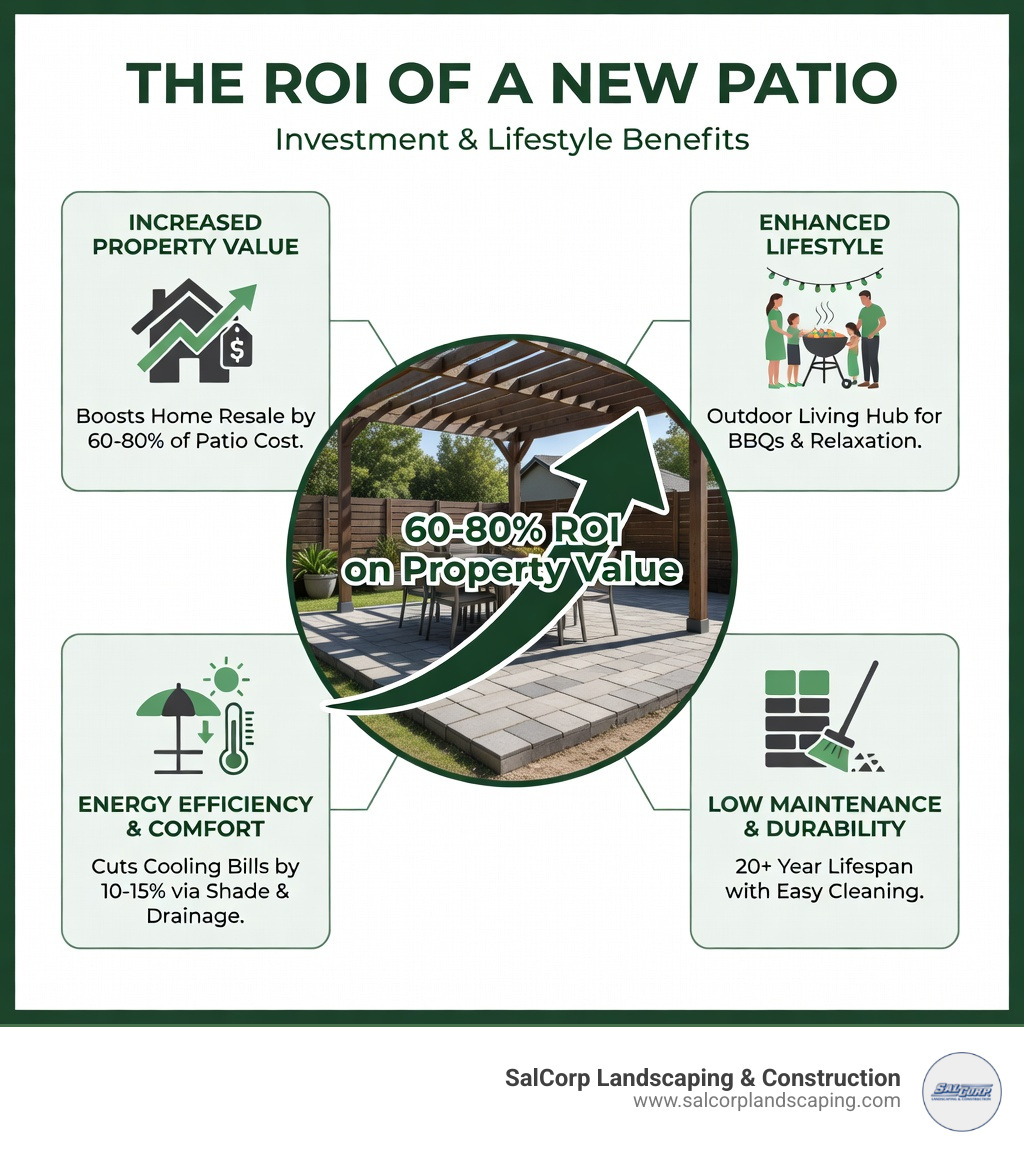
Whether you are in Braintree, Weymouth, or any of the 60+ communities we serve, we are ready to help you move beyond the basic backyard. A New Patio is an investment in your home and your quality of life. Let’s build something together that you’ll be proud to show off at your next summer barbecue.
Ready to start your project? We invite you to explore our Patio Installation Companies resources or contact us directly to discuss how we can bring your vision to life. From the first shovel in the ground to the final sweep of polymeric sand, we are with you every step of the way.