Above Ground Irrigation Hose: Ultimate Guide 2025
Why Choose an Above-Ground System?
Above ground irrigation hose systems are a practical, affordable alternative to complex in-ground pipes. Here’s why they are worth considering:
Key Benefits of Above Ground Irrigation Hoses:
- Affordable – Basic setups often cost under $100, a fraction of the price of in-ground systems.
- Easy DIY Installation – Simply connect to an outdoor faucet and place sprinklers where needed.
- Flexible and Portable – Easily move hoses and sprinklers as your watering needs change.
- Quick Setup – You can be watering your lawn in minutes.
- Simple Maintenance – Visible components make for easy and inexpensive repairs.
The main trade-off is visibility; these systems sit on the surface, making them vulnerable to damage and prone to water loss from evaporation. However, for seasonal watering, small yards, or those not ready for a permanent system, they offer an excellent balance of convenience and cost.
I’m Sal Musto, owner of SalCorp Landscaping & Construction. With over 20 years of experience, I’ve helped many Massachusetts property owners find the right watering solutions. Understanding your options is the first step, whether for a small garden or a large commercial property.
Choosing Your Ideal Above Ground Irrigation Hose System
Choosing the right above ground irrigation hose and sprinkler is about matching the tool to your yard. A small patio has different needs than a large lawn. Let’s review the options to keep your landscape thriving.
Types of Hoses for Your Watering Needs
Your hose is the foundation of your system. Understanding the different types will help you make the best choice for your watering routine.
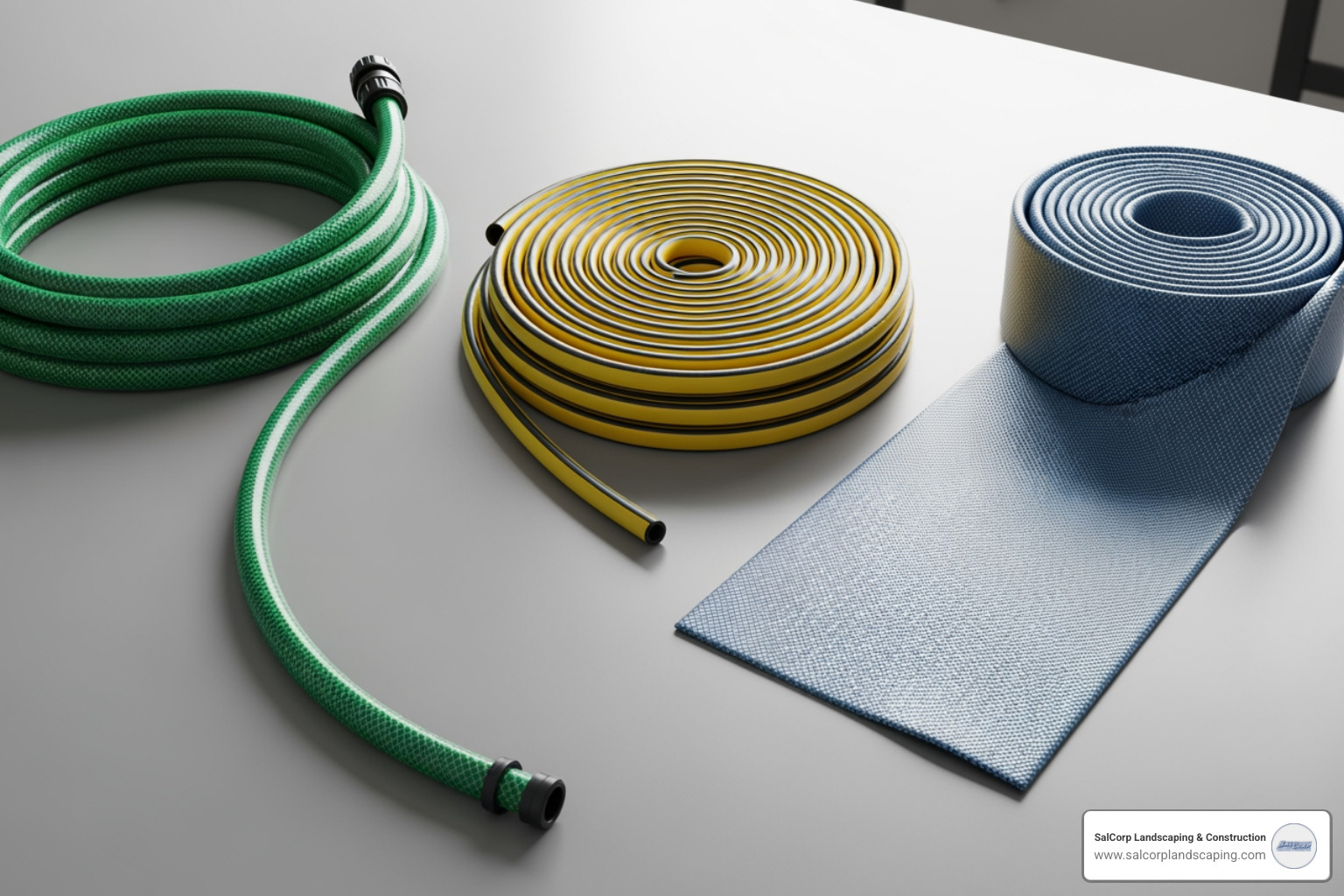
- Standard garden hoses come in rubber or vinyl. Rubber is more durable, flexible in the cold, and kink-resistant, while vinyl is lighter and more affordable but less durable.
- Soaker hoses have tiny pores that let water seep directly to plant roots, making them highly efficient for garden beds and hedges with minimal water waste.
- Sprinkler hoses feature larger holes that create a gentle spray. They are inexpensive and ideal for new lawns or areas needing light coverage, even with low water pressure.
- Expandable hoses are compact and lightweight when empty, expanding with water pressure. They are great for storage but require careful handling to avoid punctures.
- Coiled hoses retract for easy storage, making them perfect for small spaces like patios and balconies.
- Flat hoses are another space-saver, lying flat when empty and rolling up compactly for storage.
For regular, heavy use in New England, a durable rubber hose is often worth the investment. Vinyl works well for lighter, occasional tasks.
Selecting the Right Above Ground Irrigation Hose and Length
Diameter and length directly affect your system’s performance.
- Hose diameter affects water flow. The 5/8-inch size is a good all-purpose standard for most homes. A larger 3/4-inch hose delivers more water for high-flow sprinklers, while a smaller 1/2-inch hose is lighter but provides less volume, suitable for small gardens.
- Hose length should be chosen carefully. Measure the farthest distance from your spigot and add about 10 feet. Common lengths are 25, 50, 75, and 100 feet. Avoid excessively long hoses, as they can reduce water pressure and be cumbersome.
- Water pressure varies by home. If you have low pressure, choose sprinklers designed for it, such as oscillating or stationary models.
- Storage solutions like a hose reel or hanger protect your hose from kinks and sun damage, extending its life. Coiled, flat, and expandable hoses are excellent for tight storage spaces.
Sprinklers and Attachments for Hose-End Systems
Pairing your hose with the right sprinkler completes your system.
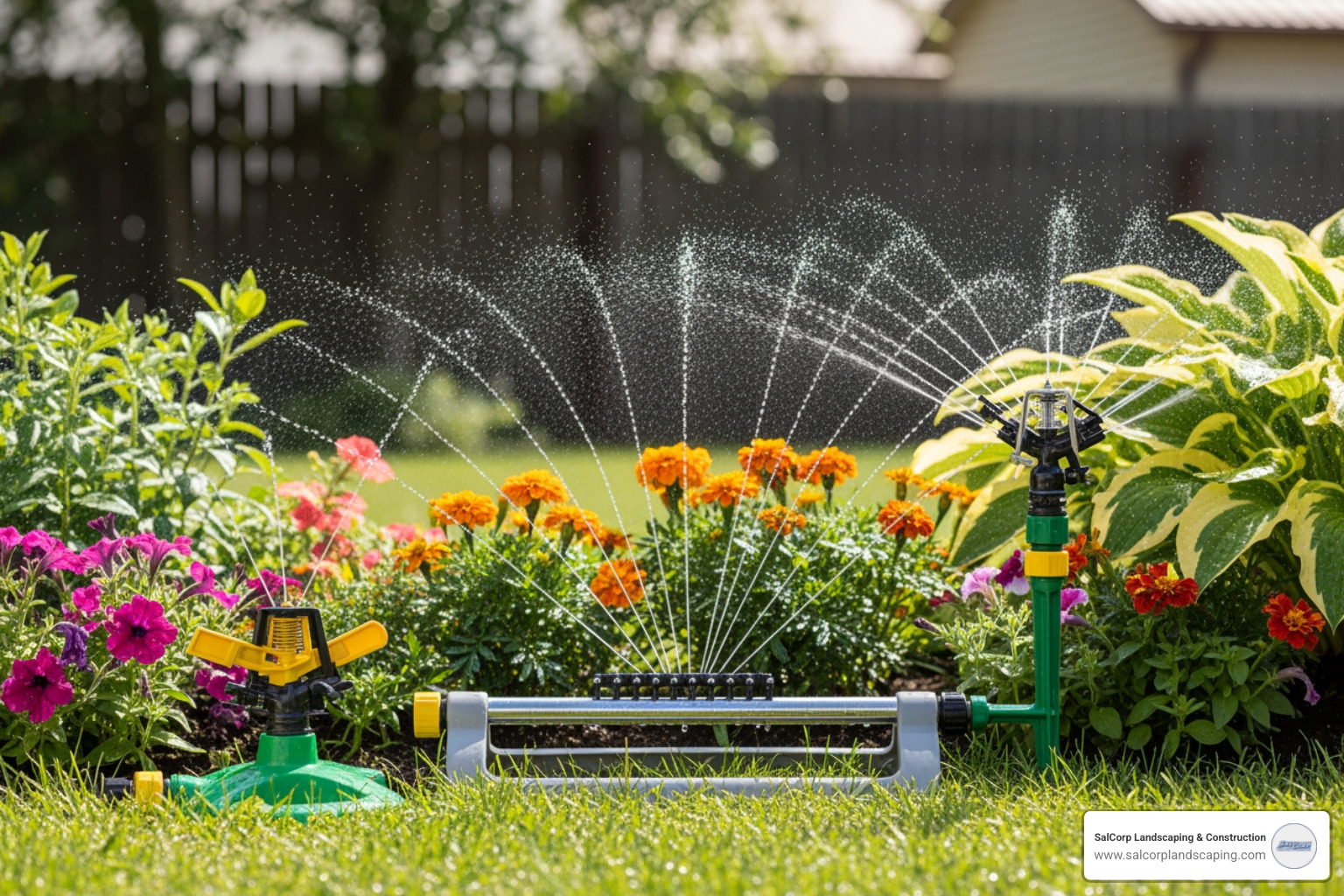
- Oscillating sprinklers move back and forth, watering in a rectangular pattern ideal for small to medium-sized lawns.
- Stationary sprinklers water a fixed area (circular or square) and are great for garden beds or spot watering. Many work well with low water pressure.
- Rotary sprinklers, including durable impact sprinklers, cover large circular areas. Their patterns are often adjustable, making them effective for bigger lawns.
- Misting systems provide a fine spray for delicate seedlings or creating a humid environment.
- Sprinkler hose watering systems are all-in-one units that are simple and inexpensive for watering small or narrow areas.
Sprinklers are superior to hand-watering for lawns because they provide more even coverage over a larger area in less time. This even distribution is key to a uniformly healthy lawn.
Installation, Maintenance, and Water Conservation
The beauty of an above ground irrigation hose system is its simplicity.
Installation is easy: connect the hose to a spigot, attach a sprinkler, and place it in your yard. For best results, position sprinklers so their spray patterns overlap slightly to avoid dry spots.
Proper storage and maintenance extend the life of your system. Coil hoses after use to prevent kinks and store them out of direct sunlight to avoid UV damage. Regularly inspect all components for wear and tear.
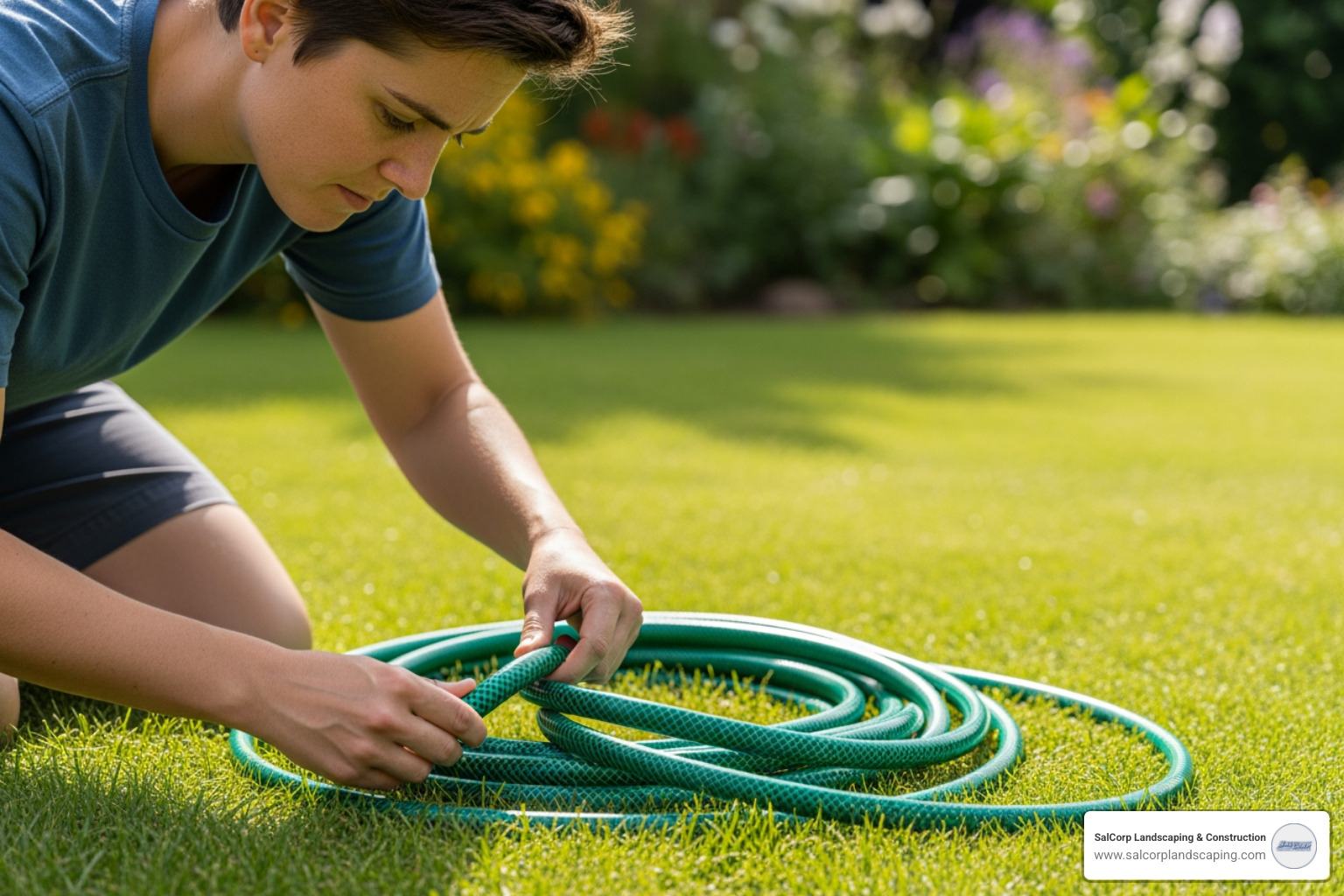
Common problems are easy to fix:
- Kinks: Straighten them immediately to prevent hose damage. Kink-resistant hoses are a good investment.
- Leaks: At connections, check for worn washers. Punctures in the hose can be fixed with a simple repair kit.
- Low Pressure: Check for kinks, ensure the spigot is fully open, and avoid running too many sprinklers at once.
- Physical Damage: Be careful when mowing to avoid running over hoses or sprinklers.
For water conservation, use soaker hoses for targeted watering and water in the early morning or evening to reduce evaporation. Always follow local Massachusetts watering restrictions; check out Greenscapes’ lawn watering tips. Connecting your hose to a rain barrel provides free, chlorine-free water for your plants. For more efficiency, use a WaterSense-labeled timer that adjusts schedules based on weather. You can find more information from the EPA’s Water-Smart Landscapes Start with WaterSense. A key advantage of above-ground systems is that leaks are immediately visible, allowing for quick fixes that save water.
Cost and Professional Landscaping Solutions
Understanding the financial commitment and knowing when to seek expert help are key to achieving your perfect landscape. At SalCorp Landscaping & Construction, we believe in empowering our clients with knowledge.
Comparing Costs: An Above-Ground Irrigation Hose vs. In-Ground Systems
Cost is a major factor when choosing a watering system. The financial difference between an above ground irrigation hose setup and an in-ground system is significant, both upfront and long-term.
- Above-ground systems are the budget-friendly choice. A basic setup can cost under $100, and since installation is DIY, you save on labor. Components are affordable to replace.
- In-ground systems are a long-term investment requiring professional design and installation. The process involves trenching, specialized parts, and significant labor, making it a complex project.
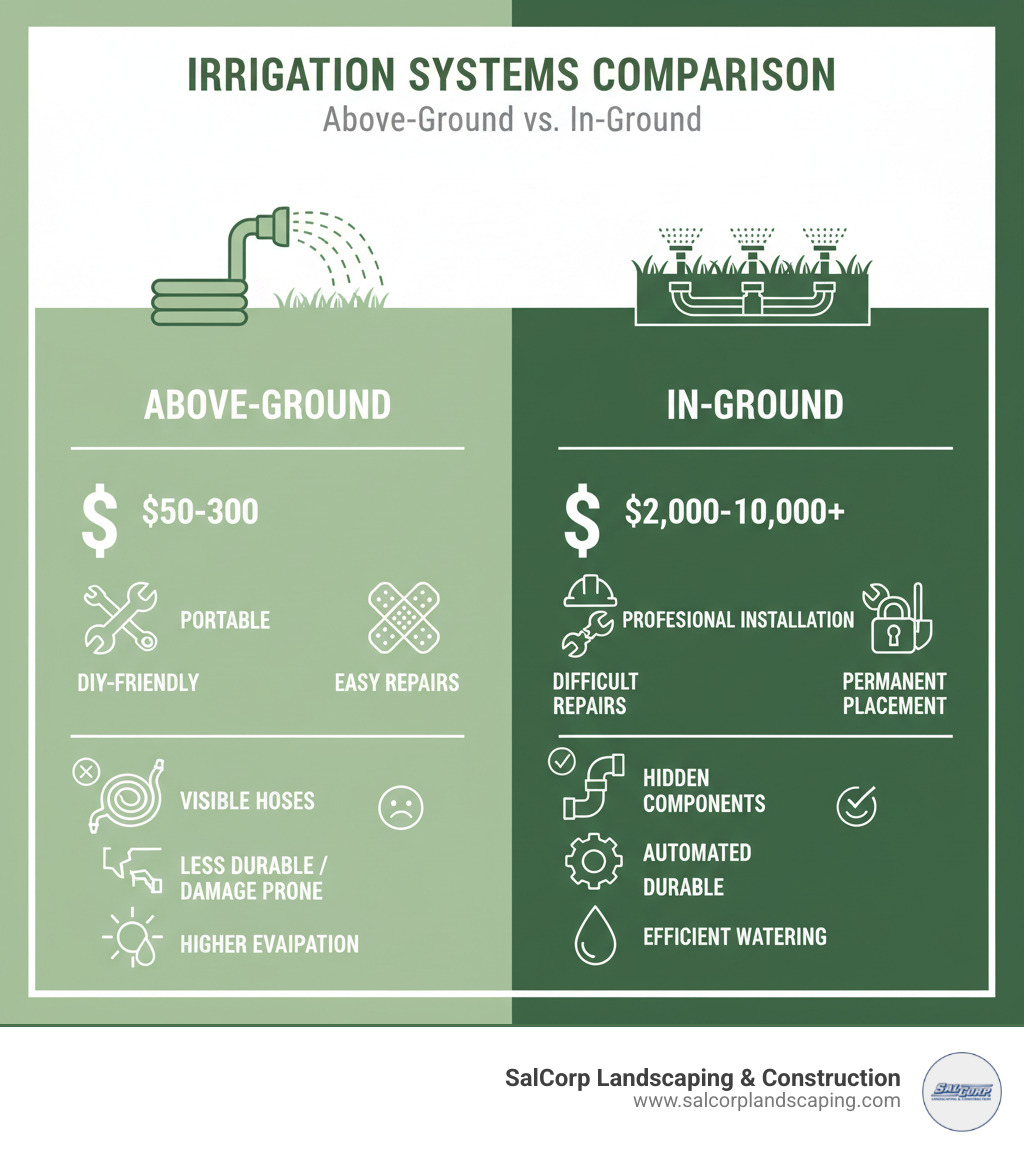
Here’s how the two approaches compare:
| Feature | Above-Ground Irrigation Hose System | In-Ground Irrigation System |
|---|---|---|
| Initial Setup Cost | $50 – $300 (DIY-friendly, basic components) | $2,000 – $10,000+ (professional design, installation, complex components) |
| Installation | Quick, simple, DIY | Complex, requires professional installation (digging, plumbing) |
| Repair Costs | Inexpensive (visible components, easy to replace) | More expensive (requires digging, specialized parts, labor) |
| Maintenance | Easy (visible for inspection, simple seasonal setup/takedown) | Moderate (winterization, spring startup, occasional professional checks) |
| Durability | Less durable (exposed to elements, damage) | More durable (protected underground) |
| Aesthetics | Visible hoses and sprinklers | Hidden components, seamless landscape |
| Water Efficiency | Can be less efficient (evaporation, wind drift) but manageable with care | Generally more efficient (direct root watering, less loss) |
| Flexibility | Highly flexible, portable, easy to reconfigure | Permanent, difficult to alter once installed |
A note on pricing: These costs are averages based on internet data and not actual costs for SalCorp Landscaping. A basic above-ground setup can range from $50 to over $300, while a professionally installed in-ground system can range from $2,000 to $10,000+ depending on property size and complexity.
While an above-ground system is cheaper upfront, an in-ground system can be a worthwhile investment for larger properties or for those who want a seamless, automated solution.
When to Call the Pros for Your Irrigation Needs
While a simple above ground irrigation hose system works for many Massachusetts homeowners, DIY solutions have their limits. It may be time to call a professional if you have:
- A large property where moving hoses becomes a time-consuming chore.
- Complex watering zones with different needs (e.g., lawn, gardens, shrubs).
- A desire for clean aesthetics without visible hoses and sprinklers.
- The need for true automation that adjusts for weather and can be managed remotely.
This is where SalCorp Landscaping & Construction’s 20+ years of experience makes a difference. We design and install optimally efficient irrigation systems custom to Massachusetts soil, plant needs, and local water regulations. We custom-design every system to your property’s unique layout, serving communities like Walpole, Canton, and Dedham.
Our in-ground systems are aesthetically pleasing and virtually invisible, with pop-up sprinkler heads that retract when not in use. We offer automation and convenience with smart controllers that adjust watering based on weather and can be managed from your phone. We use commercial-grade components for a durable, reliable system. As an owner-operated business with our own equipment, we ensure quality installation for projects of any size.
Understanding your options is the first step to a thriving landscape. Whether you choose a DIY above ground irrigation hose or a professional in-ground system, we can help. For more details on lawn sprinkler systems, explore our resources at More info about lawn sprinkler system setup.