

Average Cost of Sodding a Yard: Top 2024 Insights
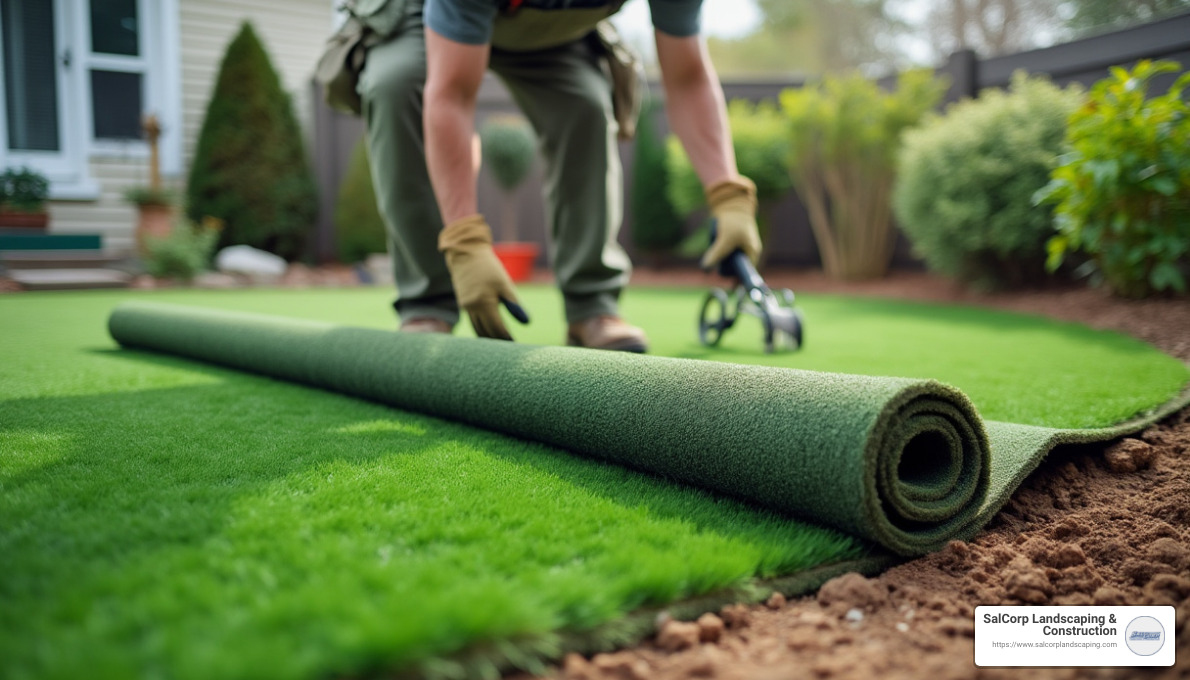
The average cost of sodding a yard varies based on several factors, including sod type, yard size, and soil preparation. As many homeowners look forward to lush, green lawns without the wait of seeded grass, understanding the 2024 costs associated with sod installation becomes paramount. Here’s a quick snapshot to guide you:
- Quality sod can transform your yard almost instantly, unlike seeded lawns, which take longer to mature.
- Prices for sod installation depend on yard size, sod variety, and prep necessities.
- Professional sod installation costs differ by location and expertise.
As we dive deeper into this article, we’ll explore these elements to help you budget for your sod project efficiently.
I’m Sal Musto, with over two decades of experience in landscaping management. Throughout my journey with SalCorp Landscaping & Construction, I’ve guided countless clients through the process of determining the average cost of sodding a yard, ensuring they make informed decisions. Let’s explore what affects these costs and how you can achieve a stunning lawn in 2024.
Find more about average cost of sodding a yard:
– sod installation cost per square foot
– lawn service sod installation
– lawn installation services
Average Cost of Sodding a Yard
Looking to transform your yard with a lush, green carpet of grass? Understanding the average cost of sodding a yard is essential to planning your budget effectively. In 2024, here’s what you can expect when it comes to sod installation costs.
Cost Per Square Foot
When considering sod installation, the cost per square foot is a crucial factor. For materials alone, prices range from $0.31 to $0.82. If you’re opting for professional installation, which includes both labor and materials, the cost increases to $0.86 to $1.75 per square foot. This range reflects the varying costs of different sod types and installation complexities.
Cost by Lawn Size
The size of your lawn significantly impacts the overall cost of sodding. Here’s a breakdown of what you might expect to pay based on different lawn sizes:
- 1,000 sq. ft.: Sodding a smaller yard can be a more budget-friendly project. Costs can vary widely depending on the type of sod and the level of ground preparation required.
- 2,000 sq. ft.: As the lawn size doubles, so does the amount of sod needed, which directly influences the total cost. It’s essential to consider any additional expenses, such as soil preparation and delivery fees.
- 3,000 sq. ft.: Larger lawns require more labor and materials. This size is common for suburban homes, and the cost will reflect the increased demand for resources.
- 4,000 sq. ft.: For even more extensive areas, the price continues to rise. Larger projects may benefit from bulk pricing or discounts, but the complexity of installation can add to the cost.
- ⅛ acre (5,445 sq. ft.): At this size, the project becomes substantial. Costs will vary based on the sod type and any additional landscaping needs.
- ⅙ acre (7,260 sq. ft.): This size requires careful planning and budgeting. Consider the long-term benefits of a professionally installed lawn.
- ⅕ acre (8,712 sq. ft.): As you approach this size, the cost efficiency of purchasing sod and hiring professionals often becomes more apparent.
- ¼ acre (10,890 sq. ft.): For the largest residential yards, expect a significant investment. However, the immediate change of your outdoor space can be well worth the expense.
As you plan your sod installation project, consider these factors to ensure you’re making the best choice for your lawn and your budget. In the next section, we’ll explore the various factors affecting sod installation costs, so stay tuned!
Factors Affecting Sod Installation Costs
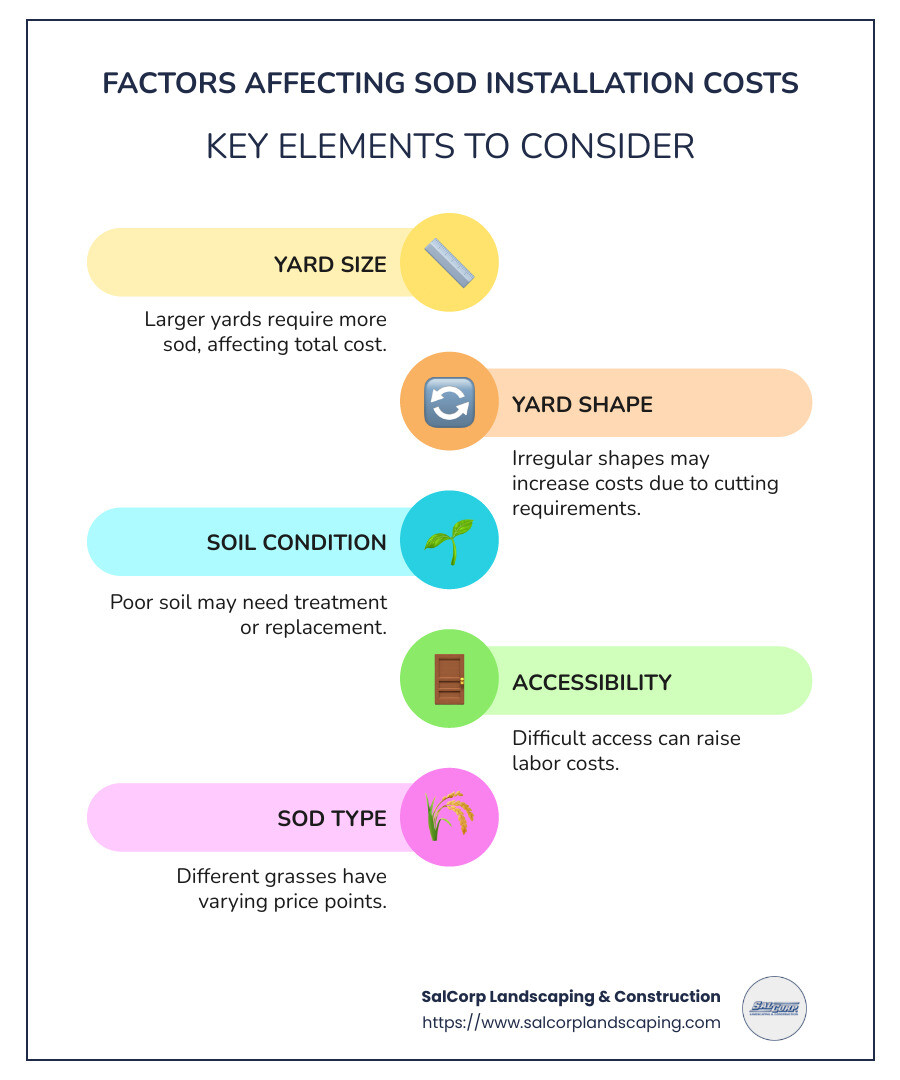
When planning to sod your yard, understanding the factors that influence the cost is crucial. Let’s break down the key elements that can affect your budget.
Type of Sod
Choosing the right type of sod is essential for a healthy lawn and can significantly impact costs. Here are some popular sod types:
- Bermudagrass: Known for its durability and heat tolerance, this grass is ideal for sunny areas.
- Kentucky Bluegrass: Offers a lush, dense look but requires more maintenance.
- Zoysiagrass: Great for drought-prone areas due to its low water needs.
- St. Augustinegrass: Prefers warm climates and provides a thick, green lawn.
Each type of sod has different characteristics, such as drought tolerance and maintenance needs, which can affect the price.
Ground Preparation
Proper ground preparation ensures your sod takes root effectively. Here are some prep tasks you might consider:
- Soil Testing: Knowing your soil’s pH and nutrient levels can guide you in choosing the right sod and amendments. Soil testing kits range from $12 to $30 per sample.
- Land Leveling: Ensures a smooth surface for sod installation, preventing water pooling and uneven growth.
- Aeration: Helps reduce soil compaction, improving root penetration and drainage. Aeration costs can range from $82 to $251 per visit.
Investing in good ground preparation can lead to a healthier lawn and fewer problems down the road.
Yard Size and Shape
The size and shape of your yard are fundamental in determining costs:
- Yard Size: Larger yards require more sod, increasing both material and labor costs.
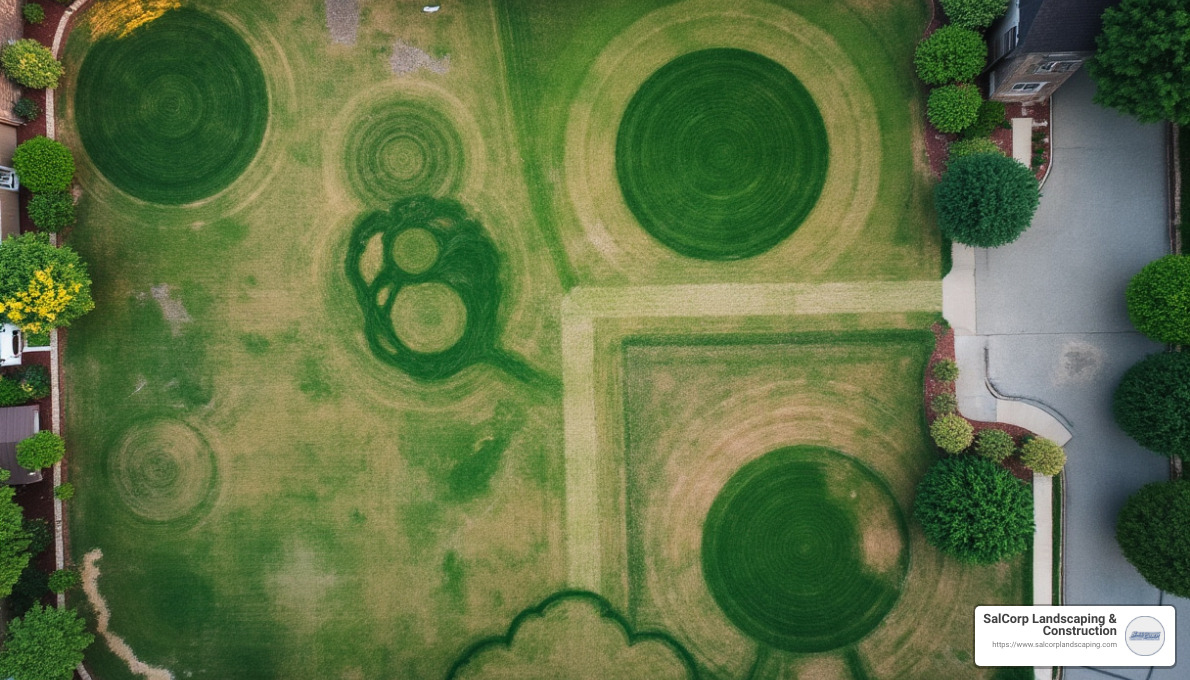
- Yard Shape: Irregularly shaped yards may need extra cuts and adjustments, leading to higher labor charges.
Accessibility and Obstacles
Easy access to your yard can lower labor costs, while obstacles like trees or rocks can increase them:
- Accessibility: If your yard is hard to reach, expect higher labor costs.
- Obstacles: Features like gardens or pathways may require additional work to lay sod around them.
Delivery Fees
Delivery fees can vary based on your location and the amount of sod you order. Expect to pay between $60 and $259 for delivery, depending on distance and quantity.
By understanding these factors, you’ll be better equipped to budget for your sod installation project. In the next section, we’ll dig into a cost estimator by lawn size to help you plan more effectively.
Cost Estimator by Lawn Size
When planning to install sod, the size of your lawn is a major factor in determining the overall cost. Here’s a breakdown of how costs can vary based on different lawn sizes, from 1,000 square feet up to a ¼ acre.
1,000 Square Feet
A modest-sized lawn of 1,000 square feet is a common choice for many homeowners. This size allows for a cozy outdoor space without overwhelming maintenance. Costs for this size can be relatively manageable, especially if the area is easily accessible and free of obstacles.
2,000 Square Feet
Doubling the size to 2,000 square feet means you’ll need twice as much sod. This size is ideal for families looking for more space for activities or gardening. With more square footage, consider the type of sod carefully, as some varieties may require more maintenance.
3,000 Square Feet
At 3,000 square feet, your yard offers ample room for landscaping features like flower beds or a small patio. The increased size means more sod and potentially higher labor costs, especially if the yard has complex shapes or features.
4,000 Square Feet
A 4,000 square foot yard provides a generous area for expansive gardens or play areas. With this size, professional installation may be more cost-effective given the labor involved. The type of sod chosen can also impact the cost significantly.
⅛ Acre
An ⅛ acre lawn is approximately 5,445 square feet. This size is popular for suburban homes, offering plenty of space for outdoor activities. The cost here will depend heavily on the type of sod and any additional landscaping features you want to incorporate.
⅙ Acre
A ⅙ acre, or about 7,260 square feet, offers a large canvas for creative landscaping. At this scale, ground preparation becomes even more crucial to ensure the sod roots properly across the entire area.
⅕ Acre
At ⅕ acre, roughly 8,712 square feet, you have significant space for extensive landscaping projects. The cost per square foot might decrease slightly due to bulk purchasing, but total costs will increase. This size often requires more strategic planning in terms of sod type and layout.
¼ Acre
Finally, a ¼ acre lawn, which is about 10,890 square feet, provides a vast area for creating a lush, green landscape. This size is typical for larger properties and may involve significant investment in both materials and labor. Professional installation is recommended to handle the complexities of such a large area.
Understanding how costs scale with lawn size can help you budget effectively for your sod installation project. Next, we’ll look at the differences between professional installation and a DIY approach, so you can decide which option suits your needs best.
Pro Cost vs. DIY Cost
When it comes to sodding your yard, you have two main options: doing it yourself (DIY) or hiring a professional. Each has its own set of benefits and costs, and the right choice depends on your budget, time, and skills.
DIY Equipment and Materials
Taking the DIY route can be a rewarding experience and may save you some money—especially if you have a smaller lawn. However, it’s important to consider all the tools and materials you’ll need.
Here’s a list of essential equipment for DIY sodding:
- Soil Test Kit: Before laying sod, it’s crucial to test your soil. This helps determine if you need to add nutrients or adjust the pH. A home soil test kit is affordable and can guide you in preparing the ground.
- Shovel and Garden Knife: These basic tools are necessary for digging and cutting sod pieces to fit around obstacles.
- Tape Measure: Accurate measurements ensure you buy the right amount of sod and minimize waste.
- Tamper and Wheelbarrow: A tamper helps compact the soil, providing a firm base for the sod. A wheelbarrow is handy for transporting materials around your yard.
- Granular Fertilizer and Handheld Fertilizer Spreader: Fertilizing before laying sod gives it a healthy start. A handheld spreader ensures even distribution.
- Sod Cutter Rental: Renting a sod cutter can make removing old grass much easier, saving you time and effort.
- Rototiller Rental: A rototiller helps prepare the soil by breaking it up and mixing in any necessary amendments.
- Lawn Roller Rental: After laying the sod, a lawn roller is used to press it firmly into the soil, promoting good root contact.
The DIY cost for sodding ranges significantly, depending on your lawn’s size and the tools you need to rent. However, it’s usually more cost-effective for smaller areas.
Professional Cost
Opting for professional installation can save you a lot of time and effort. Professionals come equipped with experience and all the necessary tools, ensuring the job is done efficiently and correctly. They can handle complex yard shapes and large areas with ease.
Labor costs for professional installation vary, but they often include soil preparation, sod delivery, and installation. While hiring professionals may be more expensive upfront, it can prevent costly mistakes and ensure a high-quality finish.
In summary, whether you choose DIY or professional installation largely depends on your personal circumstances. For smaller, straightforward areas, DIY might be the way to go. For larger or more complicated projects, professional installation could be worth the investment.
Next up, we’ll dive into related services that can complement your sod installation, such as aeration and fertilization.
Related Services
When considering sod installation, there are several related services that can improve the health and appearance of your lawn. These services not only support the initial installation but also ensure long-term success.
Aeration
Aeration is crucial for reducing soil compaction and improving air and water flow to the roots. It involves perforating the soil with small holes to allow nutrients to penetrate deeper. This service can be particularly beneficial before laying new sod, as it helps the roots establish more quickly. Aeration costs vary but typically range from $82 to $251 per visit.
Fertilization
Proper fertilization provides the nutrients your new sod needs to thrive. Fertilizing before and after sod installation helps develop a strong root system. On average, homeowners spend between $103 and $343 on fertilization services.
Grass Removal
Removing old grass is essential for a smooth sod installation. It ensures that the new sod has direct contact with the soil, promoting better nutrient absorption. This process can be labor-intensive, but it’s a critical step for a successful lawn change.
Mowing
Once your sod is established, regular mowing is necessary to maintain its health and appearance. Mowing costs can range from $36 to $105 per visit, or you can choose to do it yourself to save money. That sod grows faster than seeded lawns, so be prepared to start mowing 2 to 4 weeks after installation.
Dethatching
Over time, debris and dead grass can accumulate on your lawn, forming a layer known as thatch. Dethatching removes this layer, allowing water and nutrients to reach the roots more effectively. This service can cost between $146 and $246 per hour, but it’s essential for maintaining a healthy lawn.
Sprinkler System Installation
A sprinkler system can simplify watering and ensure your sod receives the right amount of moisture. Installing a system before laying sod saves time and effort. If you already have a sprinkler system, regular maintenance is key to keeping it in good working condition.
Weed Control
Weed control is vital for preventing weeds from competing with your new sod for resources. Hiring professionals to manage weeds before sod installation creates an ideal environment for your new lawn to flourish.
These related services not only complement sod installation but also contribute to the longevity and beauty of your lawn. Whether you’re considering aeration, fertilization, or any other service, each plays a role in creating a lush, vibrant outdoor space.
In the next section, we’ll answer some frequently asked questions about sod installation costs to help you make informed decisions.
Frequently Asked Questions about Sod Installation Costs
What is the best time of year to install sod?
The ideal time to install sod is during the spring or early summer. These seasons offer moderate temperatures and increased rainfall, providing a nurturing environment for sod to establish roots. Avoid installing sod in extreme temperatures, as scorching summer heat can dehydrate the sod, while winter cold can hinder root growth. Proper timing ensures that your new lawn gets the best start possible.
How long does it take for sod to root?
After installation, sod typically takes 10 to 14 days to establish shallow roots. During this period, it’s crucial to water regularly—1 to 2 times daily in the first week—to encourage root growth. By 4 to 6 weeks, the sod should have a stable root system. You’ll know the sod is well-rooted when it becomes difficult to lift a corner of it. Consistent watering and care are key to successful root establishment.
Can you lay sod over existing grass?
Laying sod over existing grass is not recommended. For the best results, it’s important to prepare the soil properly. This means removing the old grass to ensure the new sod has direct contact with the soil. A proper soil base level is essential for the sod’s roots to penetrate and access nutrients. Skipping this step can lead to poor root development and an uneven lawn. Always start with a clean, well-prepared surface for optimal results.
Conclusion
At SalCorp Landscaping & Construction, we take pride in offering comprehensive outdoor space solutions custom to the unique needs of Massachusetts communities. With over 20 years of experience, our owner-operated business is dedicated to changing your yard into the lush, green oasis you envision.
Why Choose SalCorp?
We understand that creating a beautiful lawn is more than just laying sod. It involves careful planning, expert execution, and ongoing care. Our team specializes in landscape design, hardscaping, and commercial snow management, making us a one-stop solution for all your outdoor needs.
Our approach combines expert knowledge with innovative techniques to ensure your lawn not only looks great but also thrives. We use our own machinery to provide efficient and reliable services, ensuring that every project meets our high standards.
Serving Massachusetts Communities
Whether you’re in Canton, Dedham, or right here in Walpole, MA, we are committed to serving our local communities with integrity and excellence. Our team is familiar with the local climate and soil conditions, allowing us to recommend the best sod types and installation practices for your area.
Transform Your Space
Ready to improve your outdoor space? Let us help you achieve the lawn of your dreams. From the initial consultation to the final installation, we work closely with you to ensure your vision is realized. Our focus on customer satisfaction means we’re not just building lawns; we’re building lasting relationships.
For more information on how we can assist with your lawn installation needs, visit our Lawn Installation Services page. Let’s create a beautiful, sustainable landscape that you can enjoy for years to come.
