

Transform Your Outdoor Space: A Complete Guide to Back Yard Landscaping
Have you ever stood at your back window, coffee in hand, imagining what your yard could become? That patch of green holds incredible potential as an extension of your home—a place for making memories, finding peace, and expressing your personal style.
Back yard landscaping transforms ordinary outdoor spaces into vibrant, functional retreats that reflect who you are and how you live. It’s about creating a personal oasis that works for your specific needs, whether that’s hosting summer barbecues, growing vegetables, or simply having a quiet spot to unwind after a long day.
When approaching your yard change, start by assessing your goals. Do you dream of entertaining guests under the stars? Need a safe play area for energetic kids? Or perhaps you’re envisioning a serene garden sanctuary? Your unique priorities will shape every decision that follows.
Next, take time to analyze your yard’s characteristics. Measure its dimensions, observe how sunlight moves across the space throughout the day, get your hands dirty testing the soil, and understand your climate zone. These natural factors are your canvas—working with them (rather than against them) leads to more successful, sustainable results.
Thoughtful back yard landscaping creates distinct “outdoor rooms” that serve different purposes. By dividing your space into functional zones—perhaps a dining area near the house, vegetable beds along the sunniest edge, and a cozy fire pit in the corner—you’ll maximize usability and create visual interest even in modest spaces.
The most inviting yards strike a beautiful balance between hardscape and softscape elements. Patios, walkways and retaining walls provide structure and usability, while trees, shrubs and flowers add life, color and seasonal change. This marriage of elements creates rhythm and flow throughout your outdoor space.
When selecting plants, think beyond just pretty flowers. Choose appropriate species that thrive naturally in your region with minimal fussing. Native plants not only look beautiful but also support local wildlife and typically require less water and maintenance—a win for both you and the environment.
The investment in quality back yard landscaping pays dividends in multiple ways. According to the American Society of Landscape Architects, homeowners typically recover 100% to 200% of their landscaping investment when selling their home. Beyond financial returns, strategic tree placement can reduce summer cooling costs by up to 50%—nature’s air conditioning at work!
I’m Sal Musto, owner of SalCorp Landscaping & Construction. For over twenty years, I’ve been helping Massachusetts homeowners transform their outdoor dreams into reality. From Boston brownstones to Needham family homes to Walpole estates, my hands-on approach ensures that each back yard landscaping project receives personal attention and meets exacting quality standards.
Ready to reimagine your outdoor space? Explore these related resources:
– outdoor living spaces
– brick patio design ideas
– patio deck designs ideas
1. Map It Out: Site Analysis & Master Plan
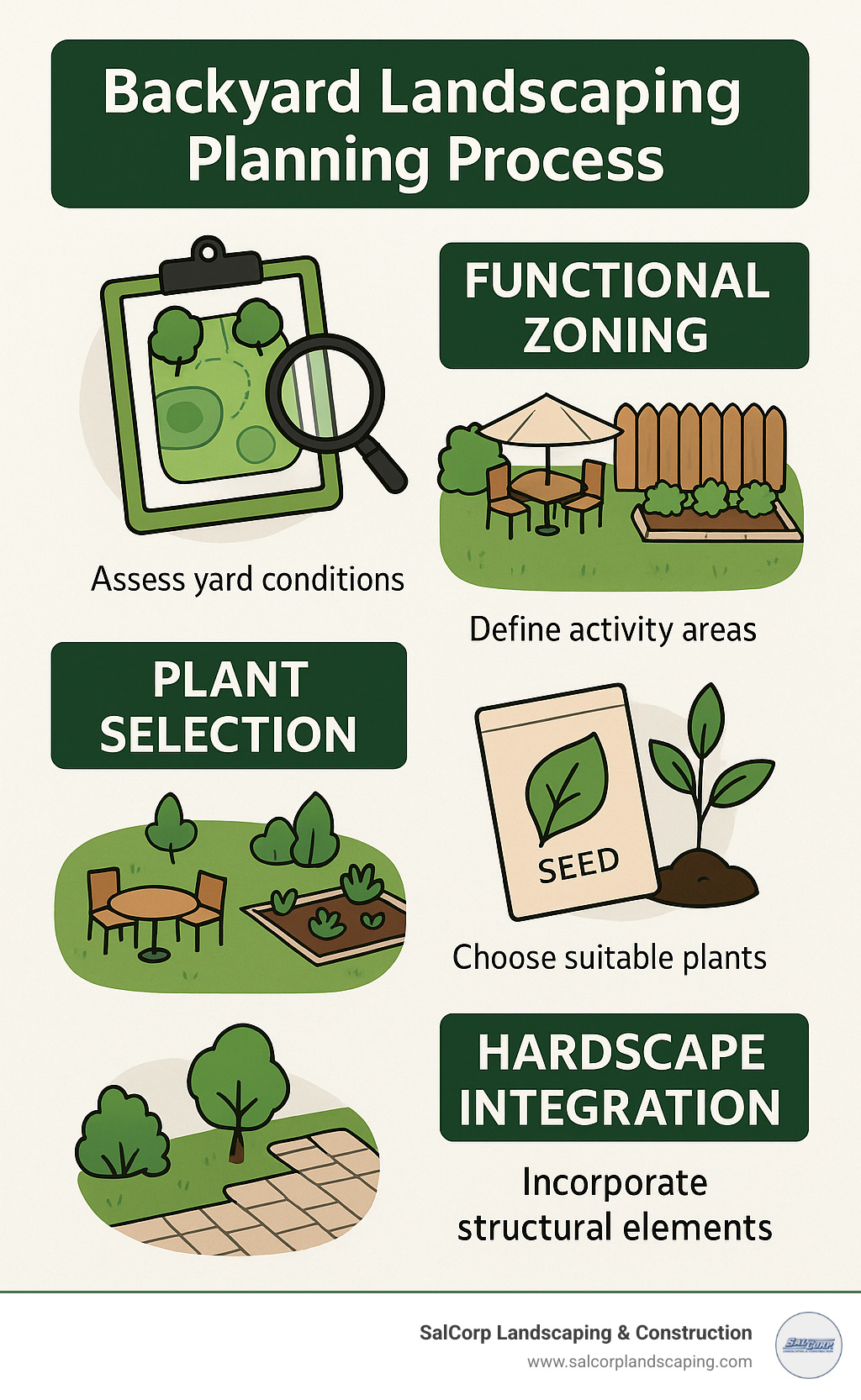
The foundation of any successful back yard landscaping project begins with a thorough site analysis and master plan. I’ve seen countless projects either flourish or flounder based on this critical first step.
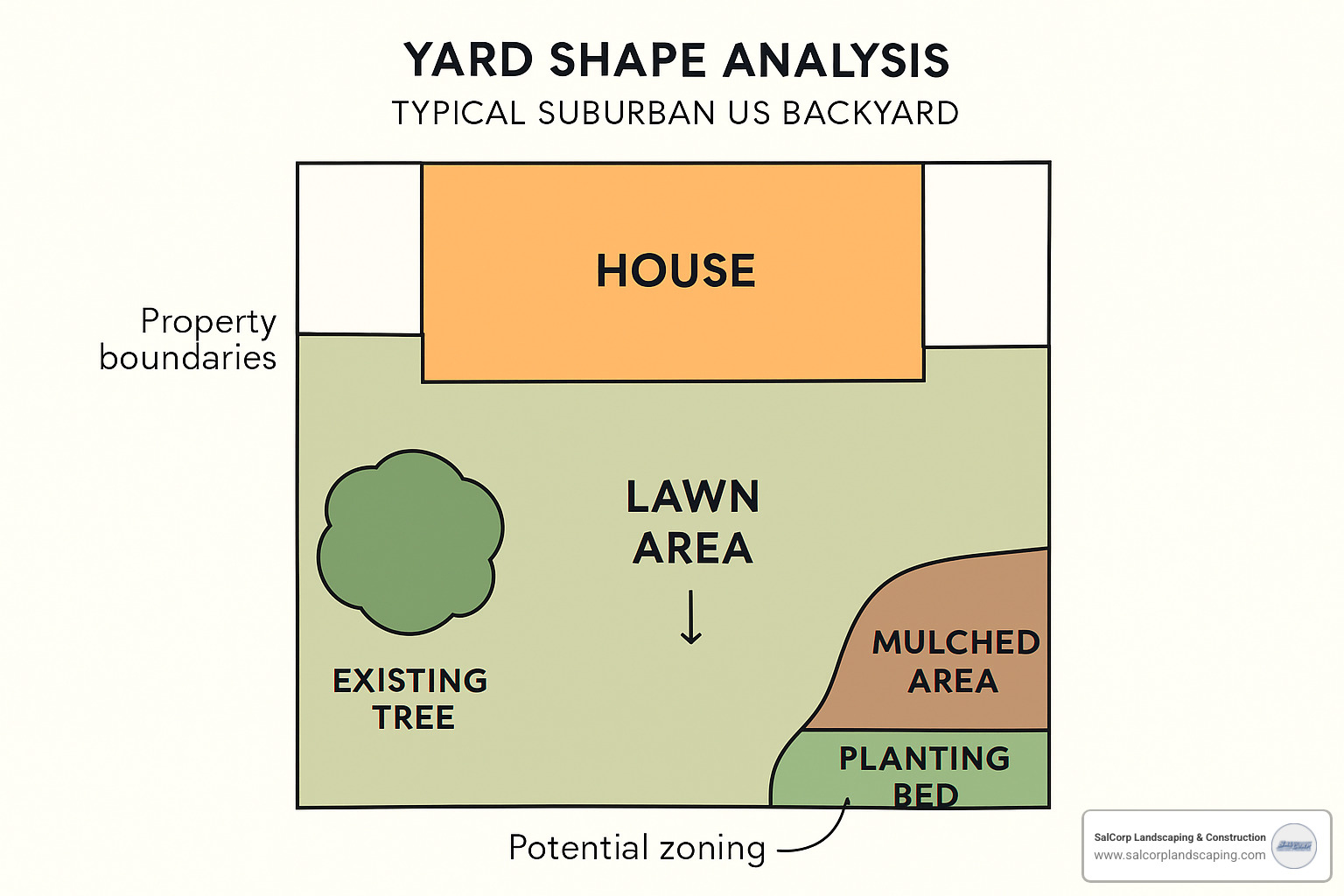
Grab some graph paper and start sketching your property. Use a tape measure to document the exact dimensions of everything—your home’s footprint, existing trees, utility lines, and property boundaries. A good rule of thumb is to use a quarter-inch on your paper for every foot of actual yard space. This keeps your drawing proportional and makes planning much easier.
Now it’s time to get to know your yard’s personality. Check the slope by using a level to identify high and low points. If any areas have more than a 5% grade, you might need terracing or retaining walls to make those spaces usable. Massachusetts yards often have challenging slopes, but these can become distinctive features with the right approach.
Soil testing is next on your checklist. Our Massachusetts soils vary tremendously—from sandy coastal compositions to dense clay inland. Collect samples from different areas and have them tested to learn about pH and nutrient levels. This small investment will save you from plant disappointments down the road.
Track the sun patterns throughout the day and across seasons. Make note of full sun areas (6+ hours), partial sun spots (4-6 hours), and shaded nooks (less than 4 hours). This sun map will be your guide for proper plant placement.
Most Massachusetts properties fall within USDA hardiness zones 5b to 7a. Knowing your specific zone helps narrow down plant choices to those that will actually thrive in your climate.
Observe how people naturally move through your space to plan sensible traffic flow. Those worn paths in the grass? They’re telling you something important about how the space wants to be used.
As landscape designer Ellen Bardelot wisely advises, “Plant trees first but plan ahead. Privacy around the edges. Tall shade near the center.” This approach encourages thinking long-term from the very beginning.
When creating your master plan, consider breaking your project into phases to spread out costs. At SalCorp, we typically recommend installing foundational elements first—proper drainage solutions, major hardscaping, and trees—followed by shrubs, perennials, and finishing touches in later phases.
More info about Landscape Design Services
Budget-Friendly Back Yard Landscaping Hacks
Creating your dream backyard doesn’t have to empty your bank account. Smart planning can stretch your landscape dollars further.
Consider which tasks you might DIY versus hiring professionals. Simpler jobs like planting and mulching are perfect for weekend warriors, while technical work like retaining walls and irrigation systems often benefit from professional expertise.
Phased installation is a homeowner’s best friend. Break your master plan into manageable stages spread over several seasons or years. I worked with a Needham family who completed their dream yard over three years—starting with a patio, then adding garden beds the following spring, and finally crowning it with a pergola in year three. Their patience was rewarded with both a beautiful space and a manageable financial approach.
Look for opportunities to use repurposed materials. Salvaged stone, reclaimed wood, or recycled pavers add character while reducing costs. One of my favorite Newton projects incorporated weathered fieldstone from an old foundation into new garden walls—saving thousands while preserving a piece of the property’s history.
When it comes to plants, starting smaller often makes sense. One-gallon perennials and shrubs typically establish almost as quickly as larger specimens but cost significantly less. The patience pays off both in your wallet and in watching your garden mature naturally.
For lawns, consider seed rather than sod. Yes, establishing a lawn from seed takes longer, but it costs a fraction of sod installation and often results in stronger, more resilient turf.
Remember the landscape designer’s golden rule: “Budget for twice what you initially estimate.” This buffer accounts for unexpected challenges and those irresistible improvements that inevitably present themselves once you’re in the midst of the process.
2. Functional Zones: The Heart of Back Yard Landscaping
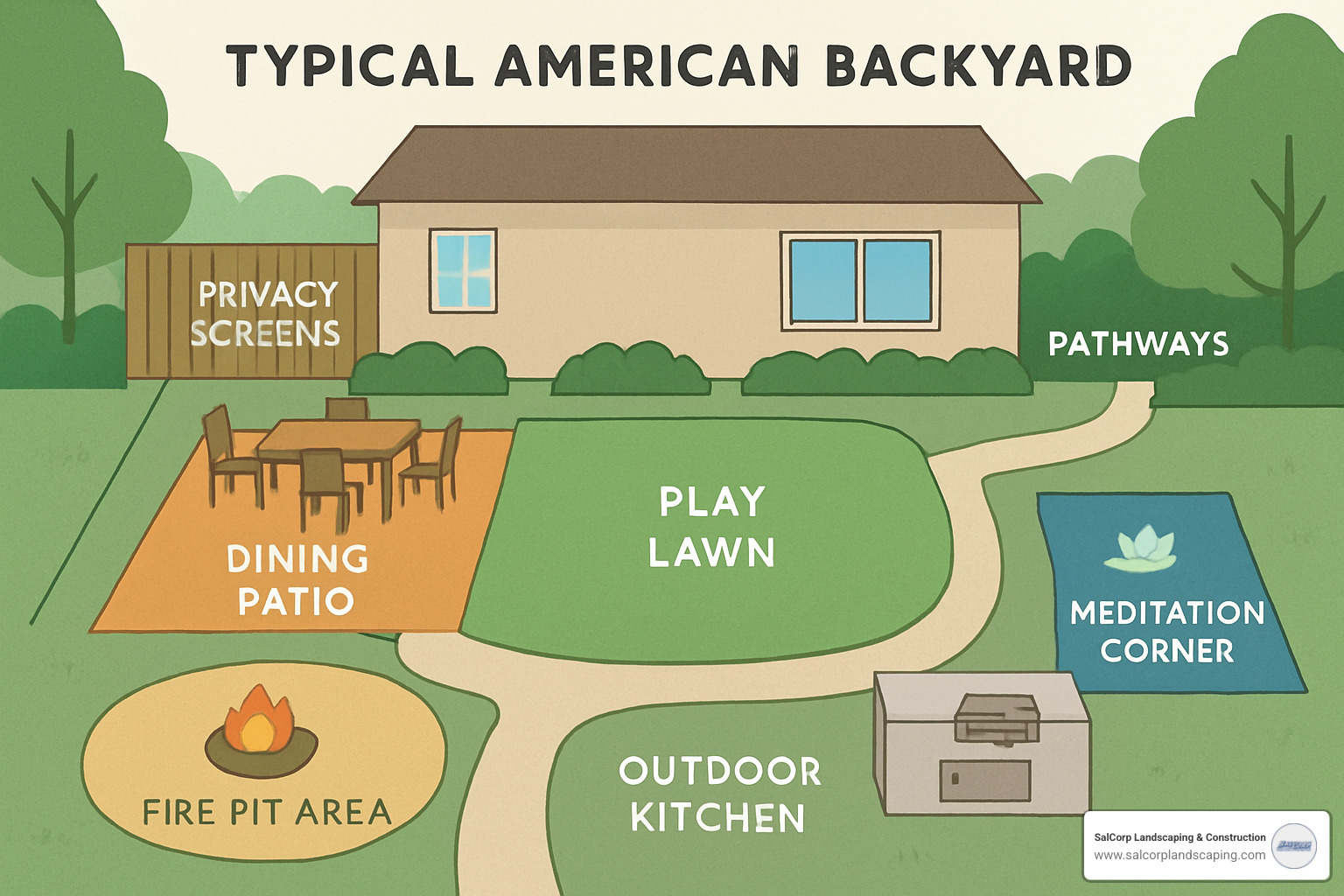
The magic of effective back yard landscaping happens when you transform a flat, open space into distinct “outdoor rooms” that invite different activities while still feeling connected. After helping hundreds of Massachusetts homeowners reimagine their yards, I’ve found that thoughtful zoning is what turns an ordinary backyard into a personal paradise.
Think about how your family actually lives. Do you host summer barbecues? Have energetic kids or pets? Dream of growing vegetables? Love stargazing? Your unique patterns of living should guide your backyard’s layout.
A dining deck or patio becomes the natural gathering spot for most families, especially when positioned conveniently near the kitchen. Allow about 4 square feet per person when sizing this area. One Needham family we worked with created a modest 12×14 foot bluestone patio that comfortably seats eight for dinner, proving you don’t need massive space for meaningful gatherings.
The humble play lawn might seem simple, but it’s incredibly versatile. In Hingham, we designed a compact 15′ x 20′ level turf area that hosts everything from weekend cornhole tournaments to weekday sunbathing. The key is keeping it open and flexible—resist the urge to clutter this space.
There’s something primal about gathering around fire, which is why fire pit nooks have become one of our most requested features. “It’s where we end up every evening once the temperature drops below 65,” shared our Walpole client whose stone fire pit area has become their family’s favorite spot for both entertaining and quiet evenings under the stars.
For those seeking tranquility, a meditation corner tucked away from the main activity areas provides essential retreat space. A comfortable bench beneath a small flowering tree, surrounded by sensory plants like lavender or sweet fern, creates a natural sanctuary. One Needham homeowner transformed an awkward side yard into a reading retreat with a simple water feature that cleverly masks road noise.
Serious entertainers might consider an outdoor kitchen, ranging from a simple built-in grill station to a complete cooking area with countertops and refrigeration. Just remember to position cooking elements at least 10 feet from your home’s structure for safety and to minimize smoke drift through windows.
Privacy screens do double duty by defining space and blocking unwanted views. In Brookline, we created a naturalistic screen using staggered arborvitae interspersed with deciduous viburnums that provide changing seasonal interest while blocking a direct sightline to a neighbor’s second-story window.
Don’t overlook the importance of connecting pathways between your zones. These circulation routes aren’t just functional—they create rhythm and flow through your landscape. Materials should complement your home’s architecture, whether that means classic brick, natural stone, or modern concrete pavers.
Proximity to your home influences how frequently you’ll use different zones. As landscape architect Sarah Bacon explains, “Zone 1 is the area against the house… Zone 2 is the area not immediately against the house… Zone 3 is anything beyond.” The areas closest to your doors will naturally receive the most traffic and are perfect for daily-use features.
In Massachusetts, our distinct seasons demand thoughtful planning. South-facing patios extend outdoor living into spring and fall, while shaded retreats become essential during July and August heat waves. Creating multiple seating options throughout your yard lets you follow the sun or shade as the seasons change.
Common Back Yard Landscaping Mistakes to Avoid
After two decades changing Massachusetts backyards, I’ve witnessed some recurring pitfalls that can derail even the most beautiful designs.
Poor drainage planning tops the list of landscape regrets. Water always wins, especially in New England’s climate with heavy spring rains and winter snowmelt. Ensure patios slope away from structures (at least ¼” per foot), install French drains in problem areas, and consider permeable paving where appropriate. One Westwood client learned this lesson the hard way when their beautiful new patio became a shallow pond after the first significant rainfall.
Plant overcrowding happens when we forget that landscapes are living, growing systems. That adorable one-gallon shrub might reach six feet in width within a few years! Research mature sizes and space accordingly. As one disappointed Dover client told me, “I planted everything too close together, and within three years, I was constantly pruning or removing plants.”
Failing to create a future growth plan is equally problematic. The Bradford pear providing dappled shade today may cast deep shade in five years, dramatically changing conditions for plants below. Your landscape should be designed to evolve beautifully over time.
Under-budgeting remains the most common mistake I see. Quality landscaping is an investment in both your property value and quality of life. There’s wisdom in the old contractor’s rule to “budget twice your initial estimate”—it accounts for both unexpected challenges and the spontaneous improvements that inevitably present themselves during installation.
Many homeowners overlook scale and proportion, creating tiny patios beside massive homes or installing enormous water features in modest yards. Elements should feel proportional to both your house and the overall yard size to create visual harmony.
Finally, don’t neglect the view from inside. Your kitchen window should frame something beautiful, not the side of your shed! Consider sightlines from key windows when placing focal points and screening elements. After all, in Massachusetts, we spend significant time looking at our yards from indoors during winter months.
3. Plant Smart: Native & Wildlife-Friendly Choices
When it comes to back yard landscaping, choosing the right plants makes all the difference between constant struggle and effortless beauty. Here in Massachusetts, where we weather everything from snowy nor’easters to humid summer heat waves, native plants are your secret weapon for a gorgeous, low-maintenance yard.
I’ve seen countless homeowners transform their properties with smart plant choices. Native plants aren’t just beautiful – they’re practical powerhouses. Once established, they typically need up to 80% less watering than exotic varieties. They’ve evolved alongside local wildlife, providing natural food and shelter for birds, butterflies, and beneficial insects. And because they’ve adapted to our local conditions over thousands of years, they generally shrug off the pests and diseases that plague non-natives.
The most successful gardens I’ve designed use what we call the “layered approach” – mimicking how plants grow in nature rather than the artificial, flat landscapes we often create. Think of your garden as having distinct vertical layers:
Start with your canopy layer – majestic shade trees like red maples, oaks, or tulip poplars that create the overhead structure. Below them, add your understory layer with smaller flowering trees such as redbud, dogwood, or serviceberry that thrive in dappled light. Your shrub layer comes next – viburnums, native blueberries, witch hazel, and winterberry holly add mid-height structure and seasonal interest. The herbaceous layer includes your perennials, ornamental grasses, and groundcovers that fill in the lower spaces. Finally, don’t forget the often-overlooked ground layer – leaf litter and natural mulch that protect your soil and support essential microorganisms.
“Blue plants at the back make the space feel larger, whereas deep green shrubs make a space feel contained,” landscape designer Mia Miller once told me, highlighting how thoughtful color selection influences how spacious your yard feels.
For Massachusetts gardens specifically, I’ve had great success with red maple, river birch, and American hornbeam trees; inkberry holly, summersweet, and Virginia sweetspire shrubs; and perennials like New England aster, black-eyed Susan, and bee balm. Native grasses including switchgrass, little bluestem, and prairie dropseed add wonderful movement and winter interest.
A recent scientific study found that properties landscaped with native plants required 54% less water than conventional landscapes – significant savings for both your wallet and our environment. In a Wellesley project last year, we transformed a barren lawn into a layered woodland garden that now attracts songbirds year-round while requiring minimal maintenance from the busy homeowners.
Tips for Successful Garden Bed Preparation and Planting
Design a Pollinator Paradise
Creating a garden that buzzes with life isn’t just good for the environment – it brings your back yard landscaping to life with movement and sound. I still remember the look on a client’s face when a hummingbird visited her garden for the first time – pure joy!
The secret to a successful pollinator garden is thinking like a butterfly (or bee, or hummingbird). These creatures need food throughout the growing season, not just during peak summer. Plan for a continuous bloom sequence from early spring through late fall. Early bloomers like serviceberry and pussy willow support newly emerged insects in April, while late-season plants like asters and goldenrod provide critical pre-winter resources.
Don’t forget about butterfly host plants – the specific plants that butterfly caterpillars need to eat. Yes, they’ll munch some leaves, but that’s the point! Monarch butterflies famously require milkweed for their caterpillars, while black swallowtails need parsley, dill, or fennel. By including these plants, you support the entire lifecycle.
Flower shape matters tremendously. Different pollinators have evolved to feed from different flower forms – tubular flowers attract hummingbirds with their long beaks, flat composite flowers support butterflies that need landing pads, and tiny clustered blooms benefit small native bees. By including diverse flower shapes, you’ll attract a wider range of beneficial visitors.
Don’t forget about water! A simple shallow dish with pebbles provides essential drinking spots without drowning risk for smaller creatures. And please, avoid chemicals – even organic pesticides can harm beneficial insects. Accepting a few holes in leaves is part of creating a truly healthy ecosystem.
In Milton, we helped a family transform their conventional landscape into a certified Monarch Waystation. What started as a simple garden bed has become a neighborhood attraction during migration season, with dozens of butterfly species visiting throughout the summer. The children have become budding naturalists, identifying different species and learning about ecology – an educational benefit we hadn’t even anticipated when designing the space.
4. Signature Hardscapes That Wow
Nothing transforms a backyard quite like thoughtfully designed hardscaping elements. These permanent features aren’t just practical—they’re the architectural bones that give your back yard landscaping character and structure year-round, even when plants are dormant.
After two decades of creating outdoor spaces across Massachusetts, I’ve seen how the right hardscape choices can completely change how a family uses their yard. At SalCorp, we find our clients consistently gravitate toward these game-changing elements:
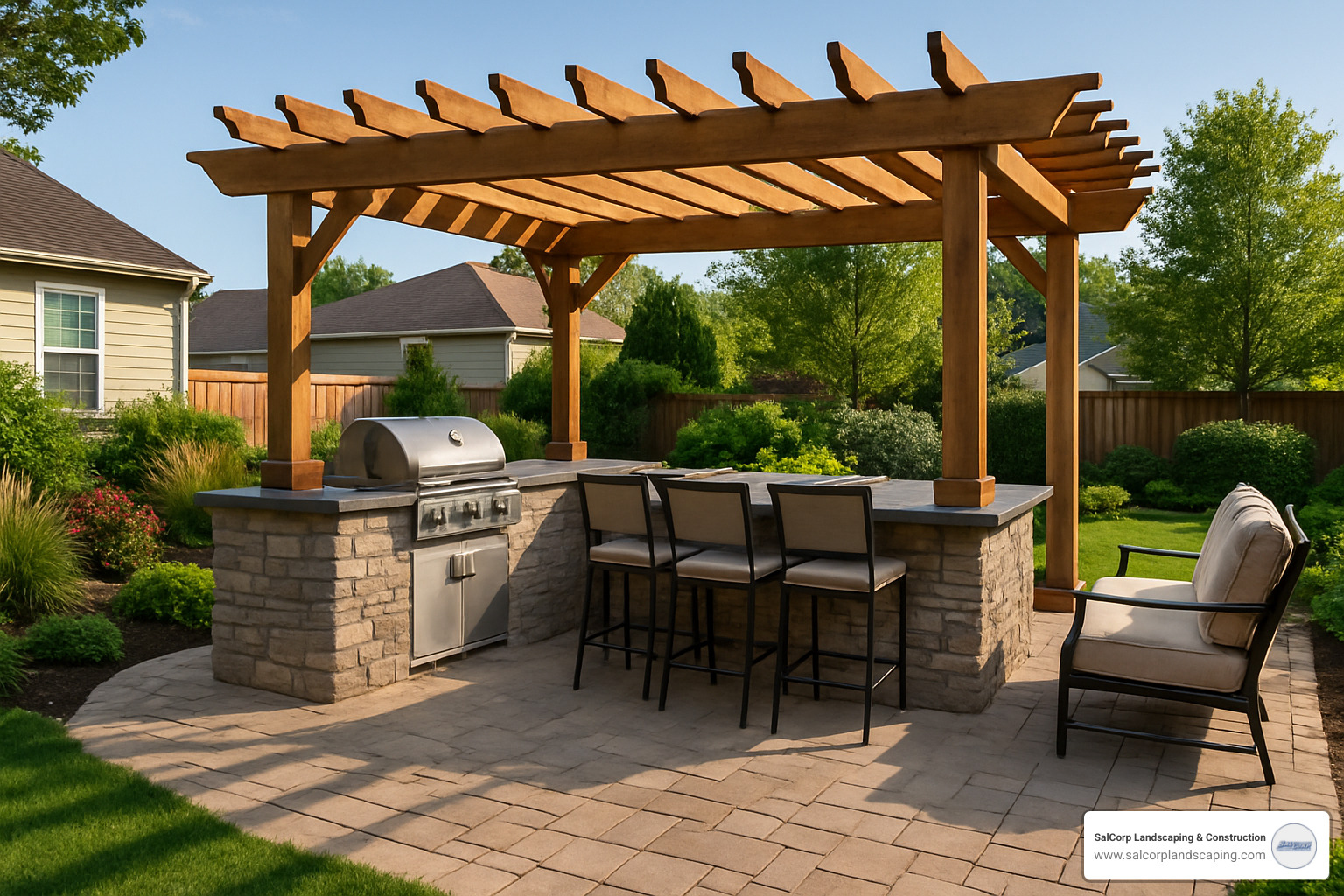
Patios serve as outdoor living rooms and are often the heart of any backyard design. Whether you prefer the timeless elegance of bluestone, the versatility of concrete pavers, or the warmth of brick, your material choice sets the tone for your entire landscape. One of my favorite recent projects in Concord featured a multi-level bluestone patio that gracefully stepped down with the natural grade, creating natural divisions between dining and lounging areas without needing walls or railings.
Decks extend your living space directly from the home, especially valuable on sloped properties or when you want liftd views of your landscape. While cedar and pressure-treated lumber remain popular, many of our Jamaica Plain homeowners are choosing composite materials that mimic wood’s beauty without the maintenance headaches. One family’s split-level deck features a pergola-covered dining space on one side and an open lounging area on the other—essentially creating two distinct outdoor rooms.
Retaining walls do much more than hold back soil. When thoughtfully designed, they add architectural interest, create planting pockets, and can incorporate built-in seating. In hilly Brookline, we often design tiered wall systems that transform challenging slopes into usable garden rooms with integrated lighting that creates dramatic nighttime effects.
Walkways and paths aren’t just functional—they’re your landscape’s narrative thread, guiding visitors through your outdoor space. Curved pathways create a sense of journey and findy, while straight paths provide efficiency and formal elegance. Materials should complement your home’s architecture while providing safe footing in all seasons—especially important for our Massachusetts winters.
Pergolas and arbors add that crucial vertical dimension that many landscapes lack. Beyond defining spaces and providing filtered shade, they create opportunities for climbing plants. A Dover client’s grape-covered pergola not only creates a Mediterranean-inspired dining area but produces a delicious annual harvest—beauty and function perfectly combined.
Fire features extend your outdoor season dramatically in our New England climate. From simple fire pits to elaborate outdoor fireplaces, these elements create natural gathering places. As one Newton client told me with a laugh, “Our fire pit has basically become our family’s second living room from April through November—it’s where everyone gravitates during parties, even when there’s a slight chill in the air.”
Water features add that magical sensory dimension that plants alone can’t provide. The sound of water masks neighborhood noise while creating a sense of tranquility. In Walpole, we installed a pondless waterfall that delivers all the visual and auditory benefits of moving water without the maintenance requirements of a traditional pond—perfect for busy homeowners or families with small children.
When selecting hardscape materials for Massachusetts properties, durability through freeze-thaw cycles is non-negotiable. The initial investment in quality materials and professional installation pays tremendous dividends in longevity and reduced maintenance headaches down the road.
Learn more about our approach to outdoor living spaces: Backyard Patios Designs and Designing a Water Feature for Your Landscape
Hardscape Materials 101
Choosing the right hardscape materials significantly impacts both the look and longevity of your outdoor spaces. After installing everything from intimate patios to expansive outdoor kitchens across Massachusetts, here’s my practical guide to the materials that perform best in our challenging climate:
Natural Stone brings timeless elegance and exceptional durability to any landscape. New England bluestone, with its rich color variations from blue-gray to subtle purples, remains our most requested material for patios and walkways. Available in irregular “mosaic” pieces or clean-cut “dimensional” formats, it suits both formal and casual designs. For steps, wall caps, and high-traffic areas, nothing beats the durability of granite, while weathered fieldstone creates authentically rustic walls with true New England character.
Manufactured Pavers offer precision, consistency, and often a more budget-friendly alternative to natural stone. Modern concrete pavers come in countless shapes, sizes, and colors with consistent dimensions that simplify installation. For homeowners concerned about staining around grills and dining areas, porcelain pavers offer exceptional resistance to spills and minimal water absorption. Traditional brick pavers remain a beautiful complement to colonial and traditional homes throughout Massachusetts.
Gravel and Crushed Stone provide permeable, budget-friendly solutions for many landscape needs. Decomposed granite compacts to form a firm yet permeable surface ideal for secondary pathways. Pea stone offers excellent drainage for patios and walkways with a pleasing crunch underfoot, while various sizes of crushed stone work beautifully for pathways, drainage areas, and decorative accents.
Wood and Composites form the backbone of deck construction and architectural elements. Cedar and redwood offer natural rot resistance for decks and structures, developing a silvery patina over time. Pressure-treated lumber provides an economical option for structural elements, while composite decking has revolutionized outdoor living with its low-maintenance benefits and impressive longevity.
To keep your hardscapes looking their best year after year, sweep and rinse patios regularly to prevent staining and weed growth. Apply joint sand stabilizer to paver installations to reduce erosion during heavy rains, and seal natural stone every 3-5 years to improve color and reduce staining. After our harsh winters, make a habit of checking for and repairing any loose stones or shifting pavers before small issues become bigger problems.
One of my favorite recent projects involved helping a Needham family select a complementary palette of bluestone, granite cobbles, and native fieldstone that beautifully harmonizes with their 1920s Colonial home while providing thoroughly modern functionality. The materials tell a story that feels both timeless and completely appropriate to the home’s architecture.
5. Low-Maintenance & Sustainable Solutions
Creating a stunning back yard landscaping masterpiece doesn’t mean signing up for endless weekends of maintenance. After two decades of changing Massachusetts landscapes, I’ve finded that the most beloved yards are often those that balance beauty with practicality.
Sustainable landscaping isn’t just easier on you—it’s kinder to our New England environment and your wallet too. The numbers tell the story: traditional lawns guzzle around 10,000 gallons of water annually, while gas-powered mowers produce as much pollution in one hour as 11 new cars. Even better, Massachusetts environmental agencies report that ecological landscaping can cost as little as one-fifth of conventional approaches over a decade.
One of my favorite changes happened in Wellesley, where we converted a thirsty, time-consuming lawn into a xeriscaped garden that thrives on rainfall alone. This water-wise approach might have desert origins, but it works beautifully here in Massachusetts when you group plants with similar water needs and emphasize drought-tolerant species.
Strategic mulching is another game-changer. A simple 2-3 inch layer of organic mulch does triple duty—conserving moisture, suppressing those persistent weeds, and gradually feeding your soil as it breaks down. For woodland gardens, we often use leaf mulch that mimics the natural forest floor, creating a self-sustaining ecosystem.
When your plants do need a drink, drip irrigation delivers water directly to the roots with minimal waste. One Walpole homeowner was thrilled when her summer water bill dropped by 40% after we installed a weather-responsive system that adjusts watering based on actual conditions rather than a rigid schedule.
Rain gardens have become increasingly popular for managing Massachusetts’ sometimes intense rainfall. These specialized plantings capture and filter stormwater runoff, reducing erosion while creating beautiful habitat areas. A Framingham family loves how their rain garden neatly handles drainage from downspouts and their driveway while attracting colorful butterflies.
For busy homeowners tired of mowing, native groundcovers like Pennsylvania sedge, creeping phlox, or wild ginger offer beautiful lawn alternatives that never need mowing and thrive with minimal attention once established.
Don’t overlook the power of shade trees in your sustainable landscape plan. Strategically placed deciduous trees can slash summer cooling costs by up to 50% while allowing winter sun to warm your home—nature’s perfect seasonal adjustment system.
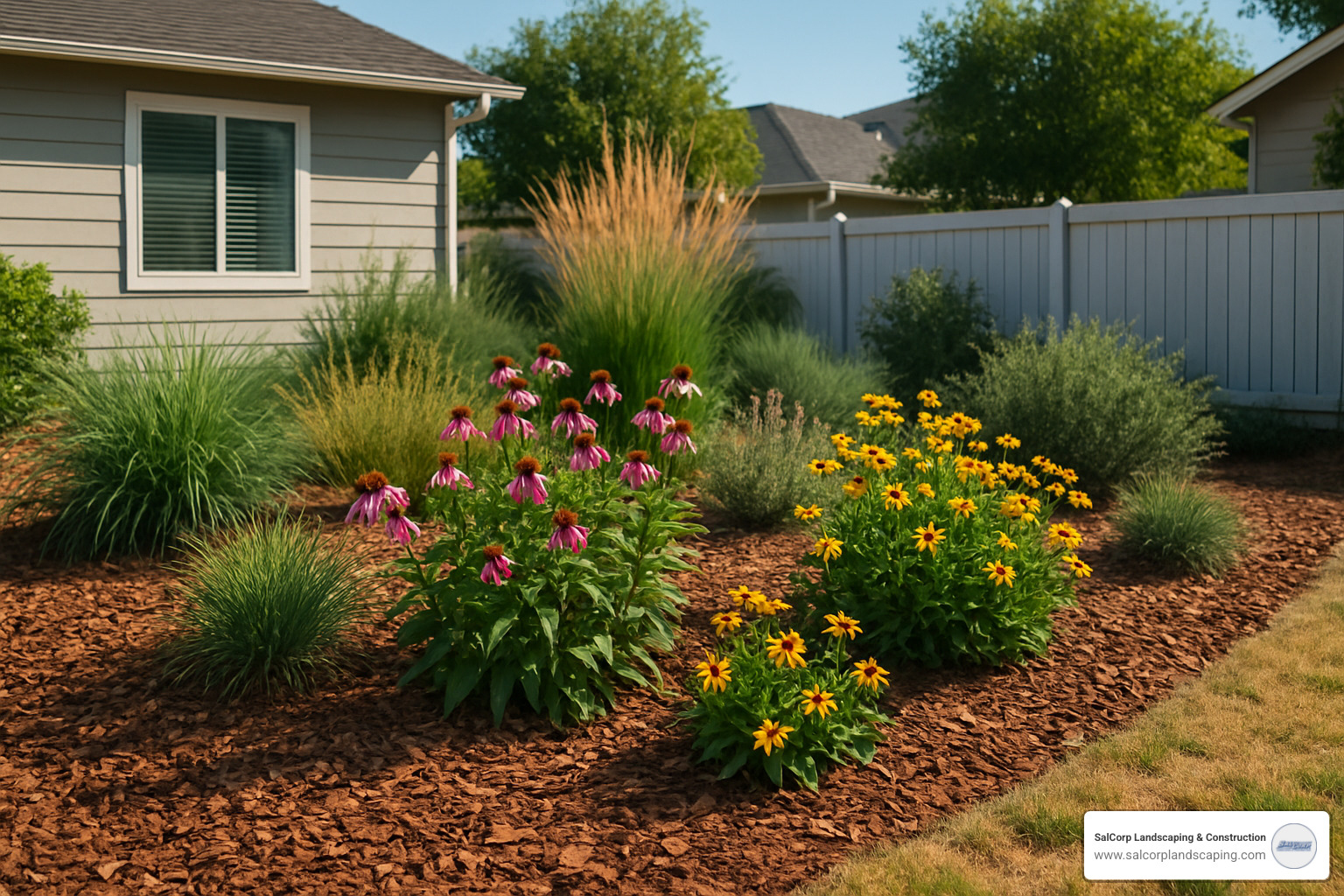
As environmental advocate Ellen Roy Herzfelder wisely notes, “Your yard can be more than just the place where you hold your barbecues… it can be part of an ecologically sustainable landscape.” I’ve seen this philosophy transform not just individual properties but entire neighborhoods as sustainable practices spread from yard to yard.
Scientific research on water-wise landscaping
Back Yard Landscaping for Busy Homeowners
Life is hectic enough without spending every free moment maintaining your yard. For my Massachusetts clients with demanding schedules, I recommend these time-saving approaches:
Focus on set-and-forget native shrubs like inkberry holly, summersweet, and Virginia sweetspire that look beautiful naturally without constant pruning. A Dedham family loves that their foundation planting of exclusively native shrubs requires just one annual cleanup—usually while they’re raking fall leaves anyway.
Consider investing in smart irrigation technology that adjusts to weather conditions and can be monitored from your smartphone. One client checks his system while commuting on the train, making adjustments before he even gets home.
Extensive mulching might be the single most effective time-saver in the garden. In Canton, I worked with a busy professional whose perennial beds need just two brief weeding sessions annually thanks to proper mulching techniques that prevent weeds from gaining a foothold.
Try grouping plants by maintenance needs, clustering any higher-maintenance specimens in easily accessible locations while reserving outlying areas for self-sufficient natives. This simple organization strategy can dramatically reduce your maintenance time.
Choose self-cleaning perennials like catmint, Russian sage, and many native grasses that continue performing beautifully without deadheading. And whenever possible, accept natural forms rather than fighting them—allow shrubs to grow in their natural shapes instead of maintaining formal hedges that demand regular shearing.
The change I’ve seen in clients is remarkable. As one Newton professional told me after her landscape renovation: “I used to spend every weekend maintaining my yard. Now I actually enjoy it instead.” That’s the ultimate goal of sustainable back yard landscaping—creating spaces that nurture both nature and people without demanding constant attention.
6. Evening Magic: Lighting & Ambiance
There’s something truly magical about a backyard that comes alive after sunset. As the sun dips below the horizon, thoughtful lighting transforms your back yard landscaping from a daytime retreat into an enchanting nighttime sanctuary. At SalCorp Landscaping, we’ve seen how the right lighting doesn’t just extend your outdoor enjoyment—it creates an entirely new experience.
Think of landscape lighting as painting with light. Each fixture serves as a brushstroke that highlights your yard’s best features while creating a warm, inviting atmosphere. A client in Walpole once told me, “I never realized how much of my garden I was missing until we added evening lighting. Now it feels like we have two completely different outdoor spaces—day and night.”
Effective landscape lighting balances multiple purposes. Safety comes first—illuminating pathways prevents trips and falls while marking potential hazards. But beyond safety, lighting extends your living space, allowing dinner parties to linger past sunset and creating cozy spots for evening conversations. The aesthetic impact can’t be overstated either—strategic lighting accentuates your home’s architecture and showcases your landscape’s best features.
Your lighting plan should incorporate several complementary techniques. Path lighting creates a welcoming journey through your landscape. I remember installing copper path lights along a winding bluestone walkway in Walpole that transformed a simple path into a moonlit trip. Uplighting adds drama by directing light upward through tree branches or against textured walls. One Milton homeowner gasped when she first saw her Japanese maple uplighted—the intricate shadow patterns cast across her patio became the yard’s signature feature.
Downlighting mounted in trees or pergolas creates a gentle, natural moonlight effect. In Needham, we installed subtle downlights in a pergola that cast a soft glow over the dining table below, creating an intimate dining atmosphere without harsh direct light. And don’t underestimate the festive charm of bistro lights strung overhead—a Jamaica Plain family tells us their string lights “instantly transform Tuesday dinners into special occasions.”
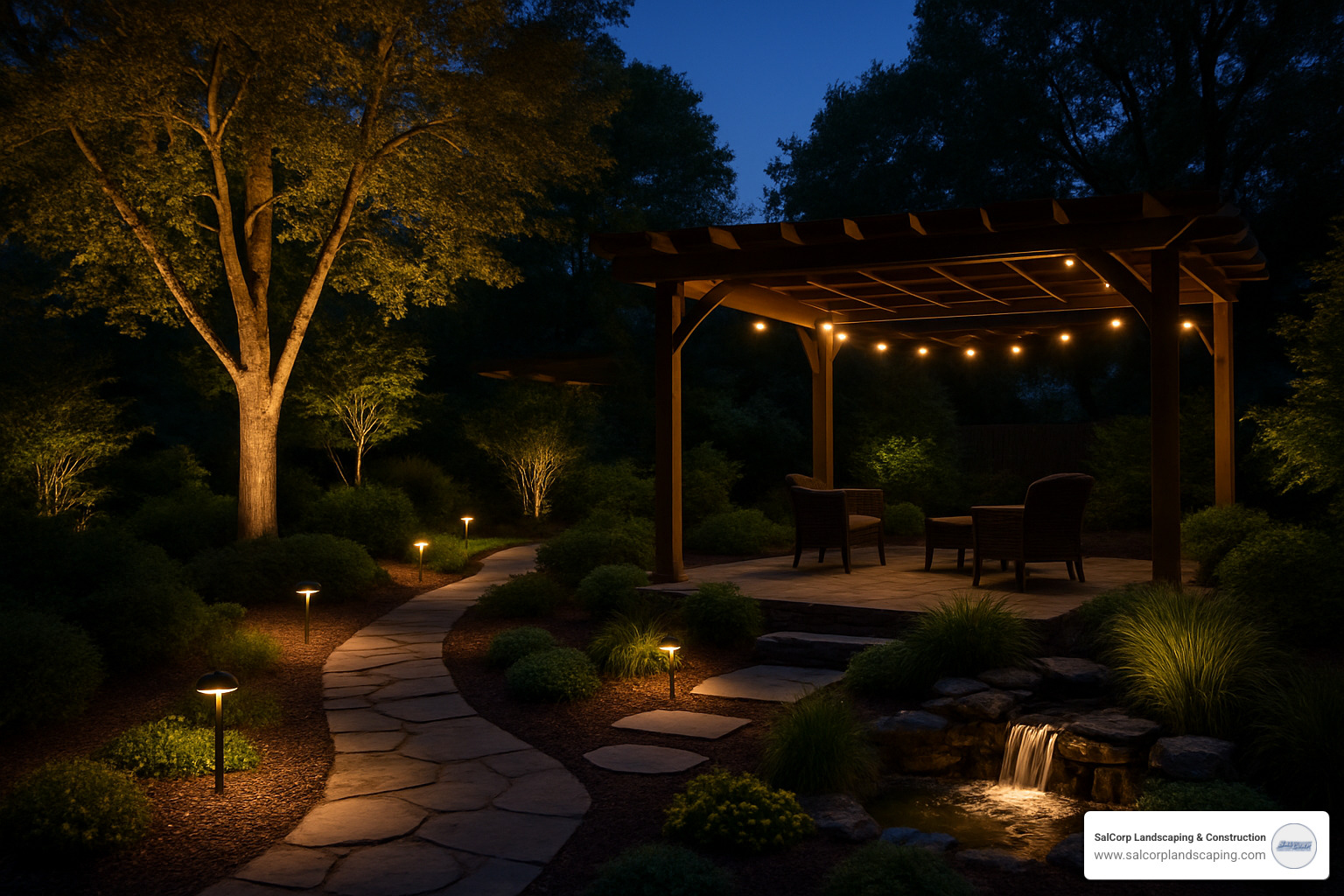
Water and fire elements become even more captivating after dark. Water feature lighting brings ponds and fountains to life with shimmering reflections. I smile thinking about a Brookline client who installed color-changing LEDs in their pondless waterfall—their grandchildren are mesmerized by the slowly shifting colors during evening visits. Fire elements like fire pits and outdoor fireplaces provide both practical light and a natural gathering point. There’s something primal about the way flames draw people together.
Today’s LED technology has revolutionized what’s possible with landscape lighting. These energy-efficient fixtures use up to 80% less electricity than older halogen systems while lasting years longer. Many now integrate with smart home systems, allowing you to control your entire outdoor lighting scheme from your phone. As lighting designer Michael Shawn notes, “Landscape lighting not only extends usable hours but also visually enlarges space,” creating the illusion of a larger property through selective illumination.
Incorporating Outdoor Lighting Into Your Landscape Design
Party-Ready Backyard After Dark
If you love entertaining, thoughtful lighting transforms your back yard landscaping into the perfect evening venue. Start with layered dining illumination that combines overhead lighting with tabletop elements. In Newton, we installed dimmable pergola lights above a dining area, complemented by hurricane candles on the table. This combination creates adjustable, flattering light that makes everyone look their best during dinner parties.
Water features become even more spectacular with proper illumination. The gentle bubbling of a lighted fountain provides both visual interest and soothing background sounds. One Wellesley client tells us their illuminated water feature becomes “everyone’s favorite conversation spot” during evening gatherings.
Smart lighting controls have revolutionized outdoor entertaining. A tech-savvy Brookline family can activate different lighting “scenes” with a single tap on their phones—bright and energetic for cocktail hour, warm and intimate for dinner, and soft and subtle for late-night conversations. This flexibility allows your lighting to evolve with the mood of your gathering.
While not technically lighting, integrated audio completes the sensory experience. Weatherproof speakers hidden among plantings fill your yard with music without visual clutter. We often incorporate discreet audio systems that blend seamlessly into the landscape design.
Don’t forget the charm of portable light sources. Rechargeable LED lanterns provide flexible illumination that can move with your guests as the party evolves. Several Massachusetts clients maintain collections of decorative lanterns they can deploy based on the size and layout of each gathering.
The change of your backyard after dark creates memorable experiences. As one Walpole homeowner shared after their lighting installation, “We used to head inside after the sun set. Now our summer evenings extend for hours in the backyard. It’s like we added a whole new room to our home—one with the best ceiling we could imagine: the stars.”
Frequently Asked Questions about Back Yard Landscaping
How do I choose plants that won’t outgrow the space?
This might be the #1 question I hear from homeowners across Massachusetts. After watching countless clients struggle with overgrown landscapes, I’ve learned that success starts before the first plant goes in the ground.
The most important step? Research those mature sizes! Plant tags aren’t just decorative—they contain crucial information about how tall and wide that adorable little shrub will eventually become. Don’t fall into the trap of thinking you’ll just “keep it pruned” to fit your space. As one Needham client finded after planting a row of Leyland cypress: “I had no idea I’d need to rent a cherry picker just to trim my hedge!”
Dwarf varieties can be absolute lifesavers in smaller yards. Many popular landscape plants now come in compact forms that maintain the beauty of their larger cousins without the constant battle for control. In Walpole, we replaced an overgrown foundation planting with dwarf inkberry holly and compact viburnum that frame windows rather than obscuring them.
Consider growth rates carefully too. Fast-growing plants fill space quickly but often demand more frequent maintenance. That river birch might look perfect now, but in five years, you could be dealing with a 30-foot giant. Slower-growing species require more patience initially but typically reward you with decades of low-maintenance beauty.
One technique we love at SalCorp is succession planting. In a new landscape in Brookline, we included quick-growing perennials that provided immediate impact while slower-growing shrubs established themselves. As the permanent plants matured, we gradually removed the temporary fillers.
The hardest advice to follow? Respect spacing recommendations. I know those tiny plants look lonely with all that mulch between them, but resist the urge to squeeze in “just one more.” Your landscape will look sparse initially but will develop into a balanced composition without constant intervention.
Should I DIY or hire a professional?
After 20+ years in the landscaping business, I’ve seen the full spectrum of DIY successes and… well, let’s call them “learning experiences.” The right approach really depends on your skills, available time, and the complexity of your project.
DIY makes perfect sense for many aspects of back yard landscaping. Simple plantings, container gardens, mulch application, and routine maintenance are all tasks that motivated homeowners can handle beautifully. One Walpole client maintains her perennial gardens herself while leaving the heavy lifting to us—a partnership that works wonderfully for her budget and enjoyment.
However, some projects really benefit from professional expertise. When I see homeowners tackling complex drainage issues or building retaining walls without proper engineering knowledge, I get concerned. These seemingly straightforward projects can create expensive problems down the road if not done correctly.
Technical elements that typically warrant professional help include:
Comprehensive design plans that consider mature plant sizes, seasonal interest, and long-term maintenance
Drainage solutions to prevent water damage to your home and hardscapes
Retaining walls over 2 feet tall, which require structural knowledge and often permits
Irrigation systems that deliver the right amount of water exactly where it’s needed
Large tree installation that requires specialized equipment and knowledge
Hardscape construction like patios and walkways that need proper base preparation
Many of my happiest clients take a hybrid approach. In Dover, we recently installed a bluestone patio and pergola while the homeowner handled the container plantings and furniture selection. This collaboration created a gorgeous outdoor living space that reflected her personal style while ensuring the structural elements were built to last.
When choosing a landscape professional, look beyond price. Check for proper licensing and insurance, experience with similar projects, knowledge of local conditions, and references from past clients. The right professional partnership adds value while helping you avoid costly mistakes.
What are average patio installation costs in MA?*
When discussing patio costs with Massachusetts homeowners, I always emphasize that the range is incredibly wide—like comparing a basic sedan to a luxury sports car. Both will get you where you’re going, but the experience (and price tag) differs dramatically.
Based on publicly available data, professional patio installation in Massachusetts typically falls within these ranges:
A basic concrete patio might run $8-25 per square foot. This straightforward option provides durability but limited design flexibility.
Standard concrete pavers generally cost $15-30 per square foot. These manufactured units offer more design options and easier repairs than poured concrete.
For premium pavers or natural stone, expect $25-70 per square foot. These materials provide distinctive character and often increase property value.
Bluestone or granite installations typically range from $30-100+ per square foot. These premium natural materials create showstopping patios with exceptional durability and unique character.
These figures usually include the complete installation: excavation, base preparation, materials, installation labor, and basic finishing. However, several factors can significantly impact your final cost:
Site access challenges can increase labor costs substantially. A backyard with narrow access might require materials to be brought in by hand rather than machinery.
Proper drainage solutions might seem like an unnecessary expense initially, but they prevent costly damage later. In Needham, we installed a subtle drainage system beneath a patio that has protected the homeowner’s foundation through countless New England downpours.
Multi-level designs with steps create visual interest but require additional engineering and materials. A terraced Brookline patio cost about 40% more than a similar-sized single-level installation would have.
Integrated features like built-in seating, fire pits, or planters add functionality but increase complexity. In Walpole, adding a natural stone fire pit to a patio design added approximately 15% to the overall project cost.
Landscape lighting extends usability into evening hours but requires additional expertise and materials. However, many homeowners find this investment transforms their outdoor living experience.
For perspective, a typical 300-square-foot patio in Massachusetts might range from $4,500 for basic materials to $15,000+ for premium natural stone with additional features.
*Average cost ranges are based on publicly available internet data and do not represent quotes from SalCorp Landscaping & Construction.
Conclusion
Creating a beautiful, functional back yard landscaping design is both an art and a science. It requires careful planning, thoughtful material selection, and consideration of both immediate desires and long-term maintenance realities. But trust me, the rewards are absolutely worth it—you’ll gain extended living space, boost your property value, contribute environmental benefits, and enjoy countless hours of outdoor relaxation and entertainment.
At SalCorp Landscaping & Construction, we’ve spent over two decades changing Massachusetts backyards into personal paradises. As an owner-operated business, we bring something special to every project—a genuine personal investment and meticulous attention to detail that larger companies often can’t match. When I work with clients, I approach each yard as if it were my own, considering how the space will function not just today, but for years to come.
What truly sets us apart in the landscaping world is our comprehensive in-house capability. We don’t rely on a patchwork of subcontractors who might not share our vision or standards. Instead, our own experienced crews use our own machinery, allowing us to maintain tight quality control throughout your entire project. This integrated approach isn’t just more efficient—it results in noticeably superior craftsmanship and a smoother experience from start to finish.
Whether you’re dreaming of a simple patio refresh or envisioning a complete backyard change, the principles we’ve explored in this guide provide a solid framework for success. The most satisfying landscapes aren’t static—they evolve over time, developing character and maturity with each passing season, much like a good friendship.
Your backyard is just waiting to become the outdoor sanctuary you’ve always wanted—a place where memories are made, where nature connects with your daily life, and where you can truly feel at home under the open sky. We’d be honored to help you take that first step toward realizing your green dreams.
More info about our Hardscaping services
*Average cost ranges are based on publicly available internet data and do not represent quotes from SalCorp Landscaping & Construction.
