

Cape Cod deck design: 6 Stunning Ideas for Amazing 2025 Results
The Timeless Appeal of Cape Cod Deck Design
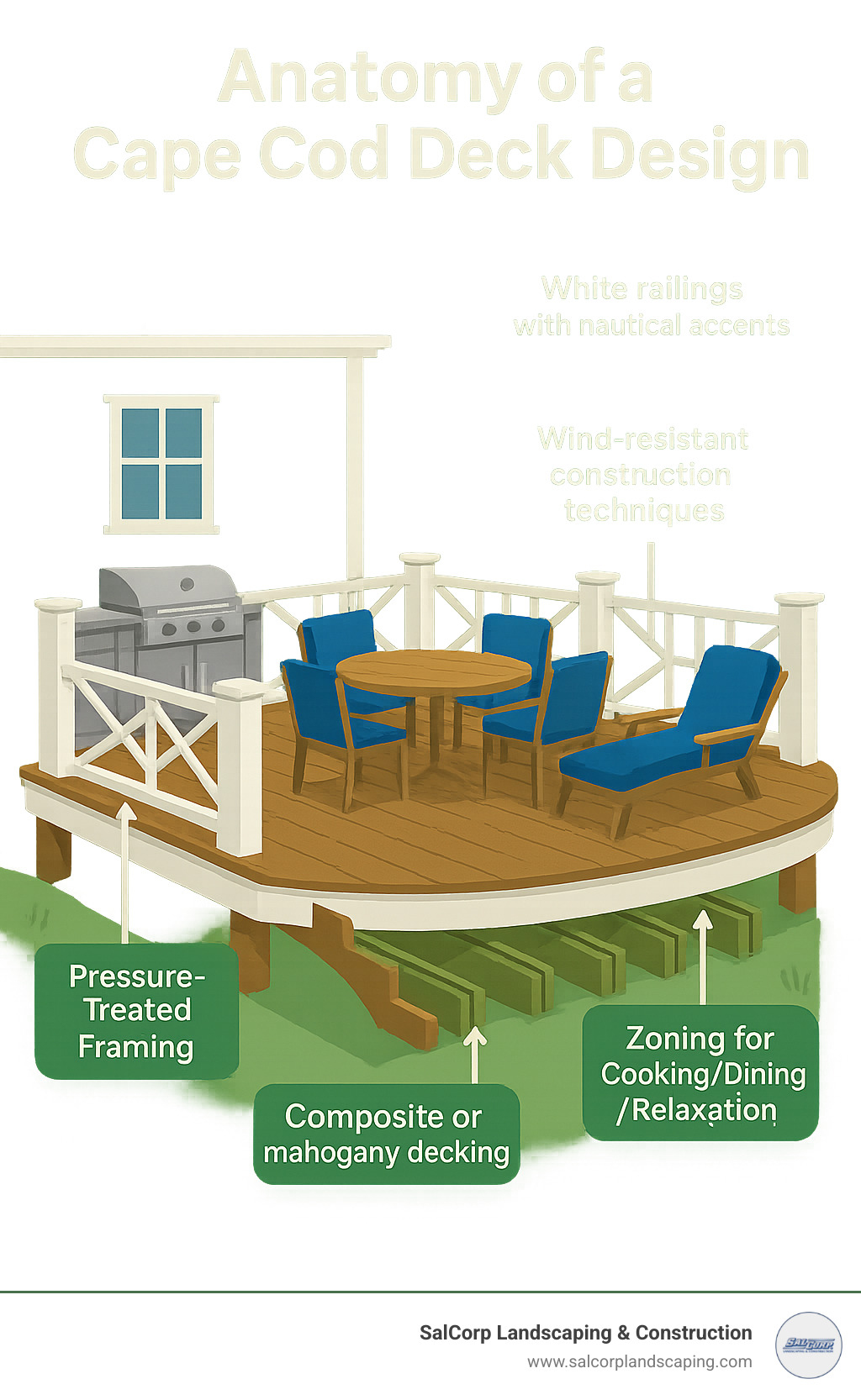
Cape Cod deck design combines functionality with coastal charm to create outdoor spaces that withstand harsh Northeastern elements while enhancing your home’s character. If you’re looking for inspiration for your next deck project, here are the key elements that define authentic Cape Cod deck design:
- Weather-resistant materials – Pressure-treated mahogany or composite decking like Azek®
- Coastal-inspired features – White railings, nautical accents, blue fabric tones
- Structural integrity – Built to withstand 120 mph winds and salt air exposure
- Functional zones – Cooking areas, screened sections, conversation spaces
- Architectural harmony – Designs that complement Cape Cod home aesthetics
The perfect Cape Cod deck isn’t just a platform attached to your home—it’s an extension of your living space that serves as the signature piece of your property. Whether you’re looking to entertain guests during summer cookouts or create a peaceful retreat for enjoying ocean breezes, a well-designed Cape Cod deck balances durability with timeless coastal elegance.
Unlike decks in other regions, Cape Cod decks must withstand unique environmental challenges including salt air, fierce coastal winds, heavy snow loads, and dramatic temperature fluctuations. This demands thoughtful material selection and construction methods that prioritize both longevity and style.
I’m Sal Musto, and with over two decades of experience in outdoor space improvement, I’ve designed and built countless Cape Cod deck designs that seamlessly blend coastal aesthetics with the practical demands of New England’s challenging climate.
1. The Signature Cape Cod Deck Design Wraparound
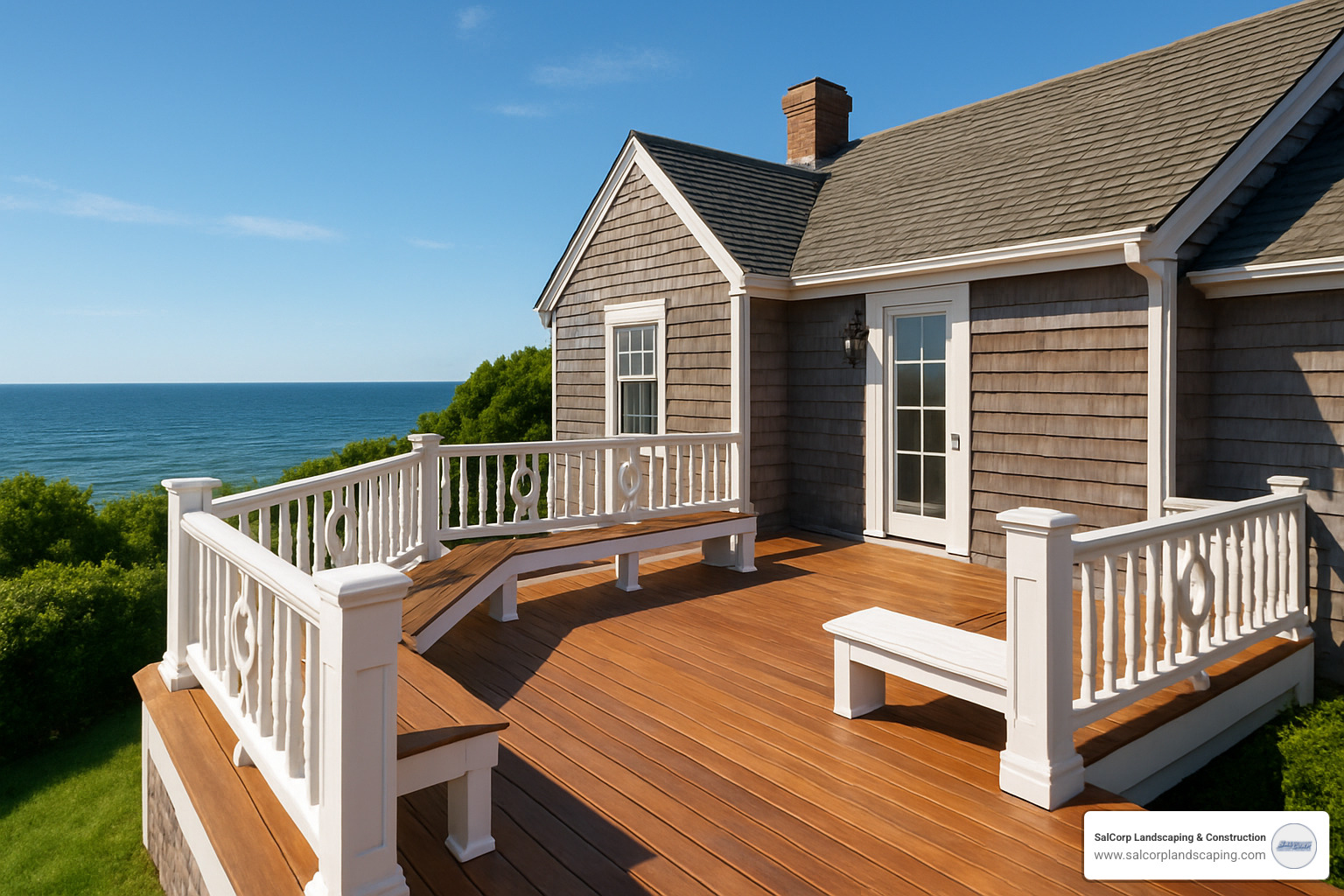
There’s something magical about a classic wraparound deck that perfectly captures the essence of coastal living. This iconic Cape Cod deck design isn’t just an addition to your home—it’s a celebration of the Atlantic landscape that surrounds it, extending gracefully around two or more sides of your property to create a seamless indoor-outdoor experience.
As I’ve strolled countless Cape properties over my years with SalCorp, I’ve heard locals say it best: “A Cape Cod deck is the signature piece of any home on the Cape. If you have to ask what makes it different from decks elsewhere, you’re probably enjoying your first visit to the Cape.”
What makes these wraparound designs so special? It starts with the materials. Pressure-treated mahogany boards have proven themselves time and again against the relentless salt air that would quickly deteriorate lesser woods. The crisp white railings with their nautical-inspired balusters aren’t just decorative—they’re part of the Cape’s architectural language, speaking to generations of maritime history.
I love how these decks naturally create corner seating areas that capitalize on those refreshing ocean breezes. There’s nothing quite like watching the sun set over the water from your own personal lookout point. And while you might not see it, beneath that beautiful surface lies serious engineering—reinforced structural elements designed specifically to withstand those 120 mph coastal winds that occasionally remind us of nature’s power.
Over time, these decks develop character, weathering to a gorgeous silvery-gray patina that only improves their coastal charm. It’s not just about aesthetics—every board, fastener, and support is chosen with Cape Cod’s challenging environment in mind, ready to face decades of harsh winters, salt spray, and summer sun.
Why This Cape Cod Deck Design Works
The enduring popularity of wraparound decks isn’t just about tradition—there are practical reasons these designs have stood the test of time along the Massachusetts coast.
These decks connect deeply with the historical vernacular of the region. They echo the practical porches that have adorned Cape homes since the 1700s, when they served as transitional spaces between indoor work areas and the outdoor world. Today’s designs honor that heritage while incorporating modern comforts.
I’ve heard countless homeowners describe their wraparound deck as the social hub of their summer life. One Falmouth client told me, “Our deck has become the heart of our summer social life—we can have drinks on one side watching the sunset and dinner on the other without feeling crowded.” The natural flow creates distinct conversation zones that work for both intimate gatherings and larger social events.
Perhaps most importantly, these designs offer superior weather resistance in a region that demands it. The traditional materials and construction techniques we use at SalCorp have evolved specifically to handle Cape Cod’s unique climate challenges. Pressure-treated mahogany has proven particularly effective at withstanding heavy snow loads and preventing rot when prompt snow removal isn’t possible.
For homeowners who love to entertain, the multiple access points of a wraparound design allow guests to flow naturally between indoor and outdoor spaces. As the sun moves across the sky, different sections of the deck offer either welcome sunshine or cooling shade—nature’s own climate control system for your outdoor living space.
2. Poolside Composite Oasis
There’s something magical about stepping out onto a deck from your pool on a warm Cape Cod afternoon. For homeowners with swimming pools, a Cape Cod deck design that can handle constant moisture and chlorine exposure isn’t just nice—it’s essential. This is where composite decking shines, particularly Azek® and other high-quality PVC-based products that have become the gold standard for poolside applications.
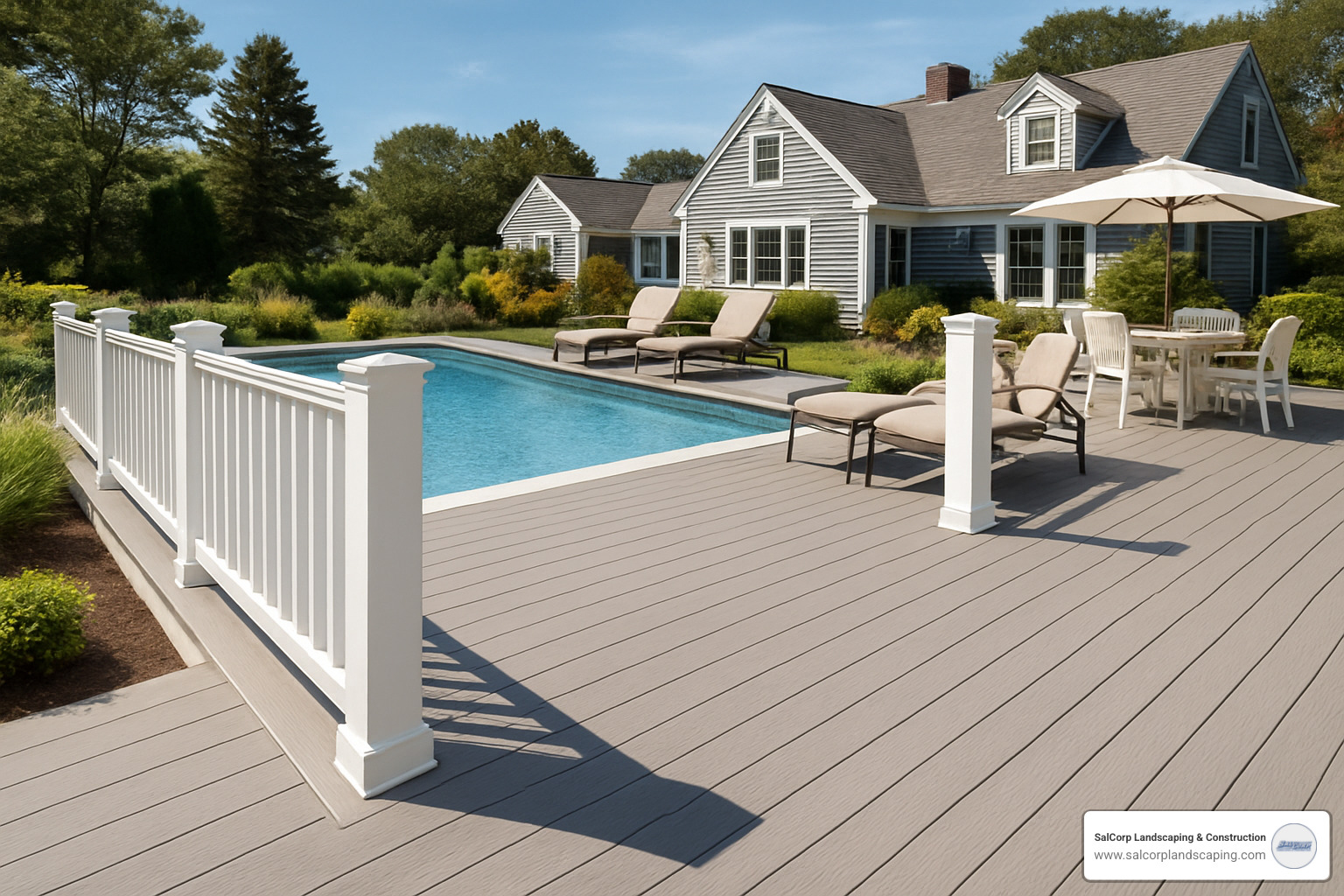
“I recommend composite decking like Azek® around pools without hesitation,” shares Sal Musto. “Not only does it stand up beautifully to chlorine and constant moisture, but the splinter-free surface is a genuine blessing for bare feet. Your grandkids will thank you!”
These modern poolside havens typically feature cool-to-the-touch Azek® boards that won’t scorch your feet even on the hottest July days. The hidden fastener systems create a seamless surface with no nail heads to catch on swimsuits or tender feet. Many homeowners appreciate the slip-resistant texturing that provides sure footing even when the deck is wet from pool splashes or summer showers.
The UV stability of quality composites means your deck won’t fade to an uneven patchwork after a few seasons of intense Cape Cod sunshine. And thoughtfully designed integrated drainage systems prevent those annoying puddles that somehow always form right where you want to place your lounge chair.
Comparing Wood vs. Composite for Cape Cod Decks
| Feature | Pressure-Treated Wood | Mahogany | Composite/PVC |
|---|---|---|---|
| Initial Cost | Lower ($15-45/sq ft) | Medium ($25-65/sq ft) | Higher ($30-120/sq ft) |
| Lifespan | 15-20 years | 20-25 years | 25-50 years |
| Maintenance | Annual cleaning, staining every 2-3 years | Annual cleaning, oiling every 2 years | Occasional cleaning only |
| Salt Air Resistance | Good with proper maintenance | Excellent | Excellent |
| Splinter Risk | Moderate to high | Low | None |
| Heat Retention | Low | Medium | Can get hot in direct sun |
| Environmental Impact | Treated with chemicals | Sustainable if FSC-certified | Contains recycled materials |
| Wind Resistance | Good with proper construction | Excellent | Excellent |
For more inspiration on integrating your pool deck with other outdoor features, check out our Deck and Patio Ideas.
Quick Permit & Cost Snapshot
Before you start dreaming about those poolside margaritas, let’s talk permits and practicalities. Cape Cod isn’t just any location—it has specific requirements that reflect our unique coastal environment.
Almost every Cape Cod town requires a certified plot plan for new deck installations. This becomes even more important around pools, where setback requirements can be stricter to ensure safety and compliance.
“Working in these coastal communities means understanding their unique regulatory landscape,” notes Sal. “We’ve been navigating Cape Cod building codes for decades, so we know exactly what’s needed for your specific town.”
Cape Cod’s zoning considerations include minimum distances from property lines (typically 15-25 feet depending on the town), maximum lot coverage percentages (often 15-25% of your property), and height restrictions for raised decks. Properties near wetlands or directly on the coast face additional environmental regulations that must be carefully addressed.
Based on internet data and industry averages (not SalCorp pricing), Cape Cod deck projects typically range from $35-$120 per square foot. The wide range reflects variations in materials, complexity, and site conditions. Poolside installations often land on the higher end due to additional waterproofing requirements and structural needs to support wet foot traffic and pool equipment.
At SalCorp Landscaping & Construction, we handle all permitting paperwork as part of our comprehensive service. We’ve developed relationships with building departments across the Cape, ensuring your project moves forward smoothly from that first exciting concept discussion to the moment you dive into your pool from your beautiful new deck.
3. Screened-In “Mosquito-Free” Lounge
Nothing improves the Cape Cod outdoor experience quite like a screened-in deck section where you can enjoy the ocean breeze without unwelcome insect visitors. These hybrid spaces have become increasingly popular among homeowners who want to maximize their enjoyment of the Cape’s perfect summer evenings.
“Screened-in sections can extend deck usability by keeping out mosquitoes,” shares a local deck specialist. “It’s a game-changer for evening enjoyment during summer months.”

The beauty of a Cape Cod deck design with a screened section is how it seamlessly transitions between indoor comfort and outdoor living. These spaces typically feature marine-grade screen panels specially selected to withstand the corrosive effects of salt air—a must-have for coastal properties. The structural elements include reinforced framing to support both the roof and screen components, creating a sturdy sanctuary that stands up to Cape Cod’s notorious coastal winds.
Many homeowners opt to install ceiling fans to keep air moving on those still summer evenings when even the ocean breeze takes a break. The screens themselves are typically stormproof rated, designed specifically for coastal conditions where sudden squalls can appear with little warning.
Smart design also includes designated grill zones positioned just outside the screened area, allowing you to cook without trapping smoke while still keeping food prep and dining protected from insects. Inside, weather-resistant flooring handles the inevitable tracked-in moisture from swimsuits and beach towels.
One Cape Cod homeowner told us: “Our screened deck has become our favorite room in the house from May through October. We have dinner out there almost every night, and it’s where we end up with a glass of wine after the kids go to bed.”
These screened sanctuaries do more than just keep bugs at bay—they significantly extend your outdoor living season, often by several months. Families find themselves enjoying these spaces from early spring well into the fall, long after traditional open decks have been abandoned due to insects or evening chill.
Maintenance Tips for Cape Cod Deck Design Longevity
The unique challenges of Cape Cod’s coastal climate demand thoughtful maintenance to ensure your investment remains beautiful and functional for decades to come.
Snow Removal becomes crucial during those harsh New England winters. “Without prompt snow removal, deck boards can rot, break or develop mold and mildew,” cautions a local deck builder. Always use a plastic snow shovel—never metal—to clear accumulation after storms, taking care not to scratch or gouge your decking surface.
The combination of salt air and humidity creates perfect conditions for mold prevention challenges. Quarterly cleaning with cleaners specifically formulated for your decking material helps prevent the unsightly and potentially damaging buildup that can occur in Cape Cod’s unique environment.
Setting a calendar reminder for an annual inspection can save thousands in potential repairs. During this yearly check, look for loose fasteners or popped nails, early signs of wood rot (especially at board ends where moisture collects), test railing stability, verify proper drainage is functioning, and examine screens for tears or stretching.
Before winter arrives, implement proper seasonal preparation by removing and storing furniture, thoroughly cleaning all surfaces, and applying appropriate protectants based on your specific decking material. This is especially important for screened sections, where the combination of roof, screens, and decking creates more potential vulnerability points than a standard open deck.
These maintenance practices are particularly important for screened-in sections, which have more complex construction than open decks. With proper care, your mosquito-free lounge can remain the heart of your outdoor living space for many years, providing countless evenings of comfortable enjoyment in Cape Cod’s spectacular coastal setting.
4. Lifted Widow’s Walk Viewing Deck
For the ultimate Cape Cod deck design statement, nothing captures coastal elegance quite like a rooftop deck or widow’s walk. These liftd platforms aren’t just stunning architectural features—they’re living connections to Cape Cod’s rich maritime heritage while offering breathtaking panoramic views that simply can’t be matched.
“On Cape Cod, rooftop decks are traditionally called widow’s walks,” explains a design professional. “The name comes from the wives who would watch for their seafaring husbands’ return. Today, they offer the most spectacular vantage points for ocean views and sunset watching.”
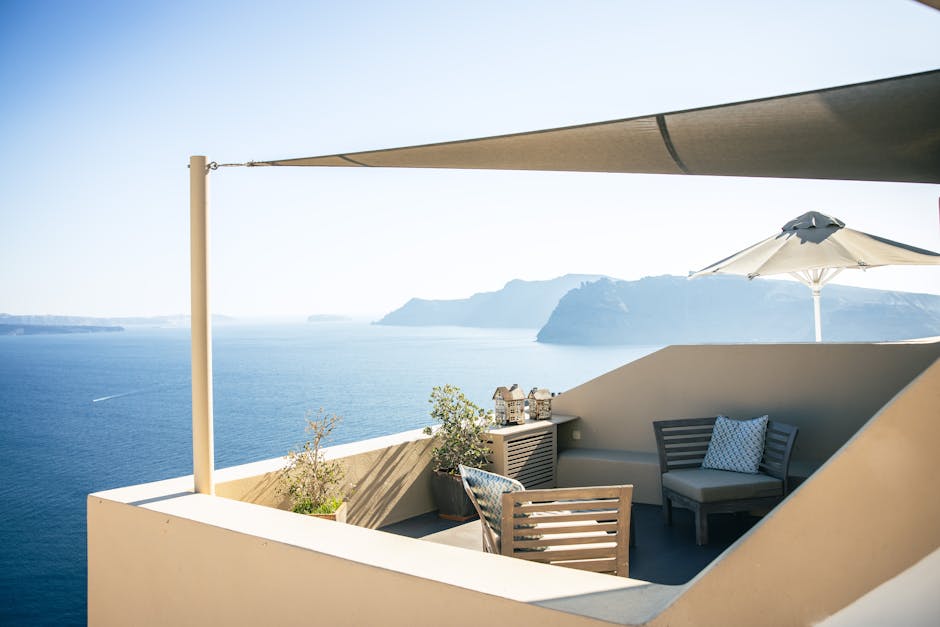
These distinctive deck designs typically incorporate charming nautical elements like spiral staircases or ship’s ladders for access. Behind their seemingly simple appearance lies complex engineering—reinforced structural support systems that invisibly ensure safety while hurricane-rated railings provide security without sacrificing those precious views. The best designs use weather-resistant, lightweight decking materials and often integrate seamlessly into the architectural roofline.
Building these liftd retreats isn’t a typical weekend project. The construction demands specialized expertise, particularly along the coast where wind loads can test the limits of standard building practices. Working with professionals who understand Cape Cod’s specific building requirements isn’t just recommended—it’s essential.
“We had to consult with a structural engineer to ensure our widow’s walk could withstand our location’s 120 mph wind rating,” shares a Chatham homeowner with a smile. “The extra steps were worth it—the views of Pleasant Bay are absolutely breathtaking. It’s where we have our morning coffee and evening cocktails now.”
For specialized design assistance with these sophisticated projects, you might want to explore Suggested Professionals who have specific experience with coastal widow’s walks.
Safety & Code Focus on Cape Cod Deck Design
When it comes to lifted decks, safety isn’t just a consideration—it’s the foundation of everything. Cape Cod’s building codes reflect the unique challenges of our coastal environment.
Guardrail Requirements are particularly strict for liftd decks. While standard decks typically need 36″ railings, rooftop decks demand a minimum 42″ height—a critical difference when you’re several stories up with Atlantic winds swirling. The spacing between balusters can’t exceed 4″, and the entire system must withstand at least 200 pounds of lateral force—imagine someone leaning firmly against the rail during a gusty day.
The Load Calculations for these liftd spaces require careful engineering. Your deck must support not just its own weight (dead load), but also people, furniture, and those heavy New England snow accumulations (live loads). Factor in our famous coastal winds, and you’ve got a complex structural puzzle that needs proper solving to transfer all these forces safely to the main structure.
Hurricane Ties and Fasteners might not be the glamorous part of your deck design, but they’re absolutely critical. “Never use galvanized hardware in coastal areas,” warns a local contractor with decades of experience. “The salt air will corrode it faster than you’d believe.” Instead, stainless steel hurricane ties, through-bolts rather than lag screws for critical connections, and marine-rated joist hangers are the gold standard for these liftd retreats.
“Working within Cape Cod’s strict building codes isn’t just about passing inspection,” notes another experienced local builder. “It’s about ensuring your family’s safety and your investment’s longevity in our challenging coastal environment. When you’re enjoying sunset cocktails on your widow’s walk, the last thing you want to worry about is structural integrity.”
5. Multi-Level Entertainer with Outdoor Kitchen & Fire Pit
For homeowners who love to host, a multi-level Cape Cod deck design with integrated cooking and dining features transforms your ordinary backyard into a coastal entertainment paradise. These sophisticated designs aren’t just decks—they’re outdoor living rooms that extend your home’s personality into the landscape.
“Replacing an older deck is an opportunity to create exactly the deck you want,” explains a Cape Cod deck specialist with a smile. “I’ve watched countless homeowners’ eyes light up when they realize they can have not just a picnic table, but an entire outdoor kitchen and living space that rivals indoor comfort.”
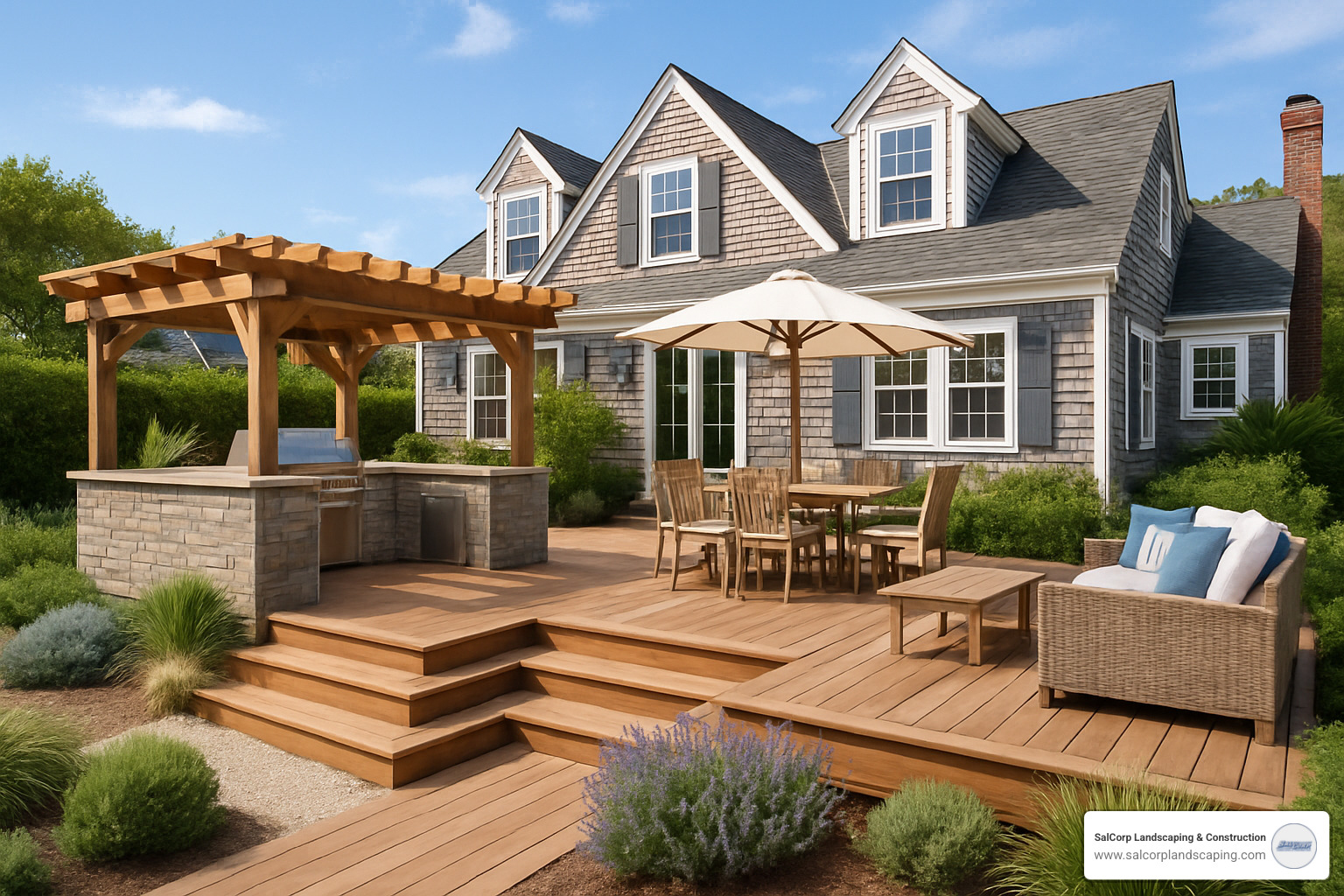
The beauty of these entertainment-focused decks lies in their thoughtful zoning. The cooking area stays convenient to the indoor kitchen while dining spaces capture the best views. Conversation areas with comfortable seating invite lingering long after dessert is served.
What makes these spaces truly shine are the distinctive Cape Cod touches: bluestone or flagstone inlays that add visual interest while standing up to coastal weather, custom pergolas that filter harsh summer sun while defining spaces, and built-in seating that eliminates furniture that might blow away in coastal winds.
Many homeowners are incorporating pass-through windows connecting indoor and outdoor kitchens—perfect for handing out drinks without tracking sand inside. Strategic lighting transforms the space after sunset, while fire features extend enjoyment well into those cool Cape Cod evenings when temperatures drop but stars fill the sky.
The multi-level approach works brilliantly with Cape Cod’s often challenging topography. Different elevations create natural transitions between spaces—perhaps a raised dining platform with steps down to a cozy conversation area around a fire pit. These level changes also help manage water runoff during those notorious Nor’easters.
For more inspiration on integrating these features harmoniously, our guide to Backyard Patio Designs Ideas offers plenty of creative approaches.
Custom Features Checklist
To lift your entertainment deck from ordinary to extraordinary, consider these Cape Cod-specific additions that address our region’s unique challenges and opportunities:
A wind-blocking backsplash behind your grill or cooktop makes cooking pleasant even on breezy evenings. “It’s the little details that make all the difference,” notes a design professional. “That raised countertop backsplash not only blocks crosswinds but creates the perfect spot for power outlets and a shelf for spices.”
Marine-grade refrigeration eliminates trips back to the house during gatherings. One Chatham homeowner laughs, “The built-in fridge was my husband’s ‘unnecessary splurge’—until it saved our daughter’s birthday party when a summer shower hit and we could stay outside with cold drinks at the ready.”
The humble foot-wash station might be the most appreciated feature for beachfront properties. “Nothing ruins indoor floors faster than tracked-in sand,” explains a builder who specializes in coastal homes. “A simple copper spigot with proper drainage at deck entrances saves endless sweeping inside.”
Weatherproof storage cleverly disguised as bench seating with hinged tops keeps cushions, grilling tools, and beach gear protected from salt air and sudden showers. And integrated heat sources—whether stylish overhead heaters or a substantial fire pit with a bluestone cap—can extend your outdoor season from early spring well into the crisp fall evenings.
One Yarmouth homeowner shared her experience: “Our multi-level deck completely transformed our summers. The outdoor kitchen means whoever’s cooking isn’t missing the conversation, and our fire pit became the unexpected heart of our home. Even our teenage kids want to hang out there with us—that alone was worth every penny!”
For more comprehensive outdoor living solutions, explore our Hardscaping Services that can help integrate your dream deck with other landscape features.
6. Petite Cottage Courtyard Deck
Not every Cape Cod deck design needs a sprawling footprint to create a magical outdoor retreat. For smaller cottages or properties with limited yard space, a thoughtfully designed courtyard deck can transform even the most modest area into a cozy haven that feels both intimate and inviting.
“Every deck is a signature of the owner,” explains a deck specialist with a smile. “Some of our most rewarding projects have been compact spaces that perfectly suit the homeowner’s lifestyle—often these smaller decks end up being used far more than massive ones.”
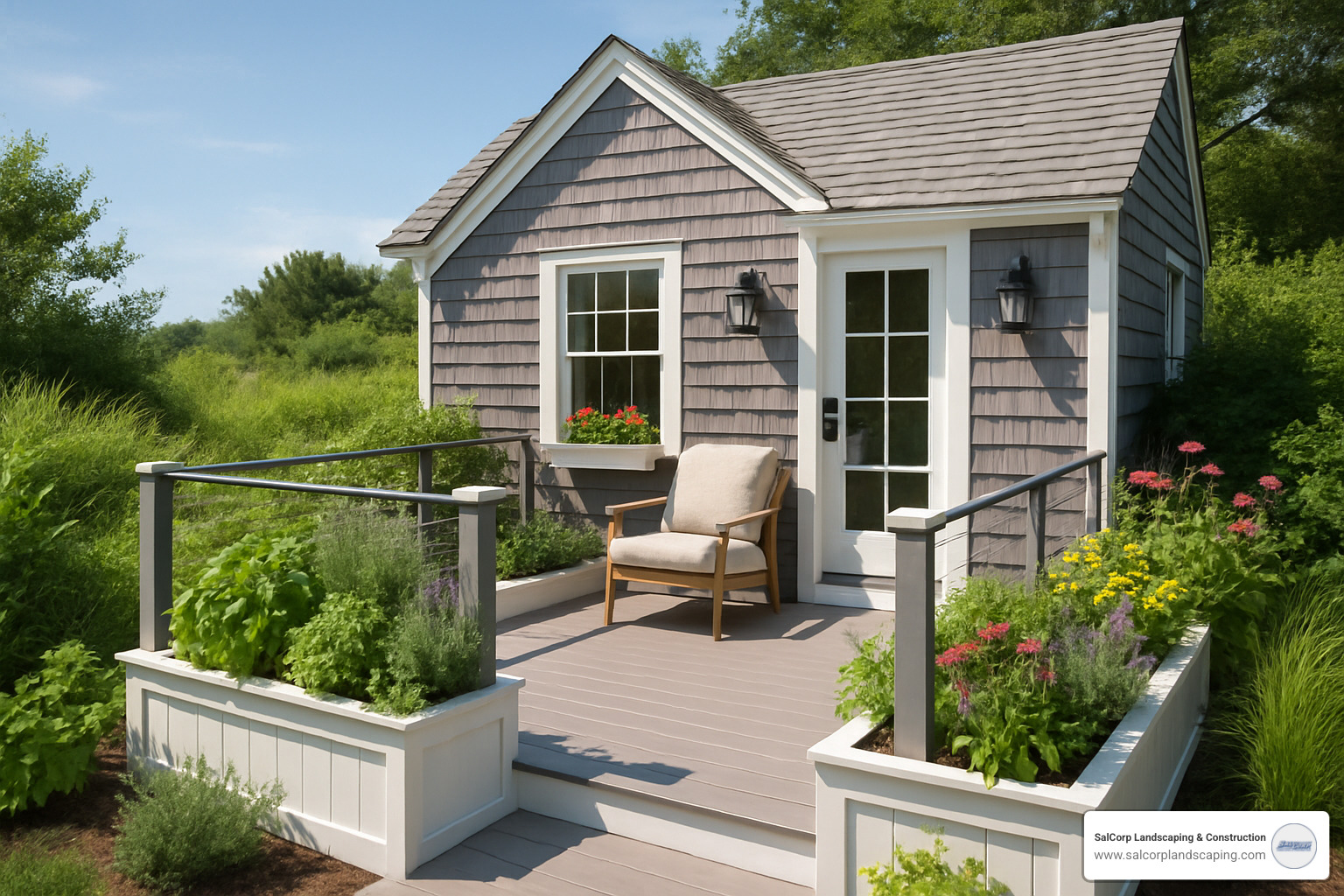
These charming, space-efficient designs make every square foot count through thoughtful features like Azek porch flooring that provides maximum durability in minimal space and cable rail systems that maintain views while creating a sense of openness. Many homeowners opt for built-in herb or flower planters that add life without consuming precious floor space, alongside multi-functional furniture that can be easily reconfigured for different uses.
Strategic privacy screens offer seclusion where needed, while vertical elements draw the eye upward, creating an illusion of spaciousness that makes these compact decks feel more generous than their actual dimensions.
“Our cottage in Dennis had very limited yard space,” shares a delighted homeowner. “SalCorp designed a compact deck that feels like an outdoor living room. The built-in planters and cable railings make it feel much larger than it actually is—it’s become our favorite spot for morning coffee.”
While the square footage may be modest, the quality of materials and thoughtfulness of design can create a space that feels luxurious and complete. Small-footprint decks often benefit from careful material selection to maximize visual impact without breaking the budget.
For more compact deck inspiration that might spark ideas for your own space, the Houzz Blog offers numerous examples of space-efficient designs that punch above their weight.
Eco-Friendly Material Choices
Today’s environmentally conscious Cape Cod homeowners have more sustainable options than ever before, allowing you to create a beautiful outdoor space while treading lightly on the planet.
Recycled PVC Decking has become a go-to choice for many coastal properties. Products like Azek® contain up to 90% recycled content, effectively diverting plastic from landfills while providing exceptional durability against salt air and moisture—a win-win for both your deck and the environment.
If you prefer the warmth and character of natural wood, FSC-Certified Cedar offers beautiful grain patterns and natural resistance to insects and decay. This responsibly harvested timber comes from forests managed according to strict Forest Stewardship Council standards, ensuring your deck doesn’t contribute to deforestation.
For those choosing wood decks, Low-VOC Finishes provide essential protection without harmful emissions. Water-based stains and sealers with minimal volatile organic compounds give you the look you want while being gentler on air quality.
Many small deck designs now incorporate clever Rainwater Collection systems that direct roof and deck runoff to rain barrels or rain gardens. These subtle additions reduce stormwater impact while providing free water for your deck planters.
“Sustainability doesn’t have to mean compromise,” notes a green building specialist with a chuckle. “Today’s eco-friendly decking options often outperform traditional materials in longevity and maintenance requirements. Your conscience and your weekend relaxation time both benefit.”
Some forward-thinking homeowners are even incorporating Solar-Integrated Elements like railing post caps with built-in solar lights or small solar panels to power outdoor refrigerators—perfect additions for small spaces where every feature needs to pull double duty.
Frequently Asked Questions about Cape Cod Decks
How much does it cost to build or replace a deck on Cape Cod?
When planning your Cape Cod deck design, budget considerations are naturally top of mind. Based on internet data and industry averages (not SalCorp pricing), deck projects on Cape Cod typically range from $35 to $120 per square foot. This wide range reflects the many variables that influence your final investment.
“I always tell homeowners to consider the long game,” shares a veteran Cape Cod deck builder with over 30 years of experience. “The investment in quality materials and proper construction techniques pays dividends in longevity and reduced maintenance costs over time.”
What drives this price variation? Several key factors come into play:
Material choices make perhaps the biggest difference—pressure-treated pine sits at the lower end, while premium mahogany or high-performance composites command higher prices. Design complexity also significantly impacts cost, with simple platform decks costing far less than multi-level entertainers with built-in features. Site challenges like steep slopes, limited access, or challenging existing conditions often require additional labor and materials. And don’t forget the extras—decorative railings, custom stairs, integrated lighting, and pergolas all add to the bottom line.
To put this in perspective, a basic 200-square-foot pressure-treated wood deck might start around $7,000, while a premium 500-square-foot composite deck with custom features could exceed $60,000.
At SalCorp Landscaping & Construction, we provide detailed, transparent estimates during our initial consultation, helping you understand exactly what drives costs in your specific project.
Do I need a certified plot plan for every new deck?
In short—yes, most likely. Cape Cod municipalities typically require certified plot plans for new deck installations, though there are occasional exceptions.
“Cape Cod has strict local, regional, and national standards,” explains a local builder who’s steerd the permitting process hundreds of times. “A certified plot plan is typically the first step in getting your project approved.”
These plans verify critical compliance factors including property line setbacks, lot coverage percentages, wetland buffer zone compliance, and utility easement avoidance. Without this documentation, your permit application will likely be rejected, delaying your project.
Some limited exceptions might apply if you’re doing a direct replacement that doesn’t expand the existing footprint, installing a very small ground-level platform, or (rarely) building a temporary structure. But it’s always safer to check with your local building department before proceeding.
At SalCorp Landscaping & Construction, we handle all permitting requirements—including securing plot plans when needed—as part of our comprehensive service. This removes a major headache for homeowners and ensures your project moves forward without unnecessary delays.
Should I choose wood or composite for a coastal environment?
This question sparks lively debate among Cape Cod deck owners, and the right answer depends on your priorities. Let’s break down the considerations that should guide your decision:
Cape Cod deck design materials must withstand harsh coastal conditions, and both quality woods and modern composites offer viable solutions. Wood—particularly mahogany—delivers best natural beauty that weathers to a distinctive silvery patina over time. “Pressure-treated mahogany boards are recommended for Cape Cod decks to withstand the harsh Northeastern climate, especially for larger decks,” advises a deck replacement specialist with deep experience in coastal builds.
Meanwhile, composite materials like Azek® offer remarkable durability with minimal maintenance. “Around pool areas, composite decking is often preferred for added stability and longevity,” notes the same expert. “The material stands up exceptionally well to chlorine exposure and constant moisture.”
Budget considerations tend to favor wood initially, with a lower upfront cost but higher lifetime maintenance expenses. Composite materials represent a larger initial investment but minimal ongoing costs—an equation that often favors composite over a deck’s lifetime.
Your tolerance for maintenance should also factor heavily in your decision. Wood requires regular cleaning, staining, and occasional board replacement, while composite needs only periodic cleaning with appropriate products.
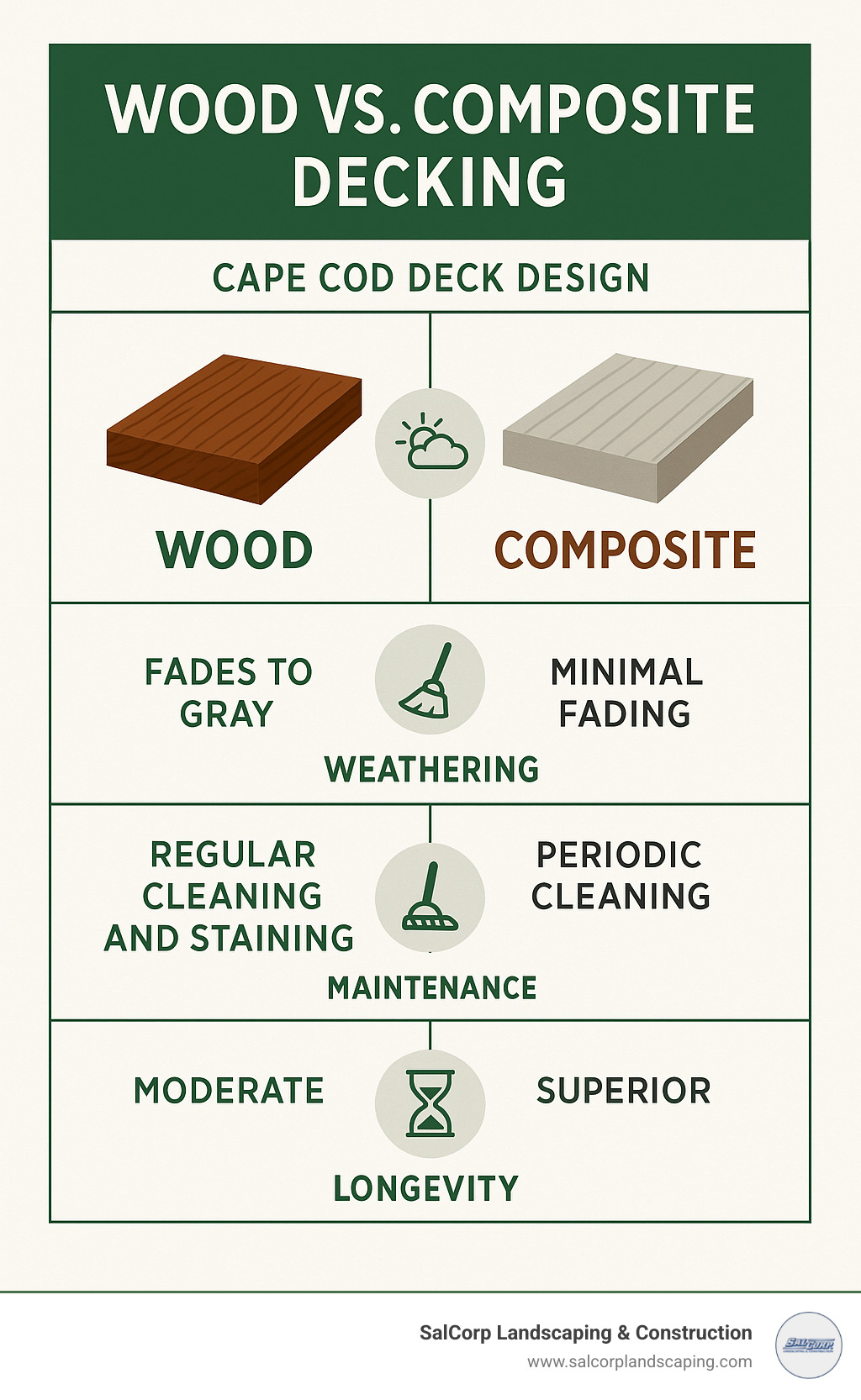
For homeowners who prefer the warmth and character of wood, we recommend selecting premium grades with fewer knots, using only marine-grade stainless steel fasteners, committing to annual maintenance with appropriate cleaners and sealants, and addressing any damaged boards promptly before problems spread.
If you’re leaning toward composite, focus on higher-end products with proven coastal performance, hidden fastener systems for a cleaner appearance, color choices that complement your home’s exterior, and proper installation that accounts for the material’s expansion and contraction properties.
Either way, your Cape Cod deck design deserves materials that can stand up to our unique coastal challenges while delivering the aesthetic and performance you expect.
Conclusion
A thoughtfully designed Cape Cod deck is more than just an addition to your home—it’s a change of how you live, entertain, and connect with the natural beauty that makes this region so special. From the classic charm of a wraparound design to the modern convenience of a composite poolside retreat, the perfect Cape Cod deck design creates a space where memories are made for years to come.
Throughout this guide, we’ve explored how successful Cape Cod decks must address unique regional challenges that simply don’t exist in other parts of the country. Your deck needs to stand strong against 120 mph coastal winds while resisting the corrosive effects of salt air. It must meet some of the strictest building codes in the nation while still capturing the timeless aesthetic that makes Cape Cod architecture so beloved.
“Your deck should tell your story,” as one of our longtime clients put it. “It’s where summer dinners stretch into sunset conversations, where grandkids learn to play cards, where you finally finish that novel you’ve been meaning to read.”
The right deck becomes the heart of your home during the precious warm months—a place that seamlessly blends indoor comfort with outdoor beauty. Whether you’re hosting a Fourth of July gathering or enjoying a quiet morning coffee with ocean breezes, your deck sets the stage for life’s meaningful moments.
At SalCorp Landscaping & Construction, we bring our passion for craftsmanship to every Cape Cod deck design we create. Our owner-operated approach means you’ll work directly with experienced professionals who understand the unique demands of building in Massachusetts coastal communities—no middlemen, no communication gaps, just straightforward expertise from start to finish.
We handle every aspect of your deck project, from the initial consultation through design development, permitting navigation, construction, and final walkthrough. Our team’s comprehensive approach ensures that your new deck integrates beautifully with your existing landscape and home architecture.
Ready to transform your outdoor living space with a Cape Cod deck design that balances timeless style with modern durability? Let’s create something special together—a deck that not only improves your property value but also enriches your daily life with new possibilities for relaxation, entertainment, and connection.
For more information about our comprehensive approach to outdoor living spaces, visit our Hardscaping Services page.
