

Commercial Grounds Maintenance Costs: 7 Smart Savings

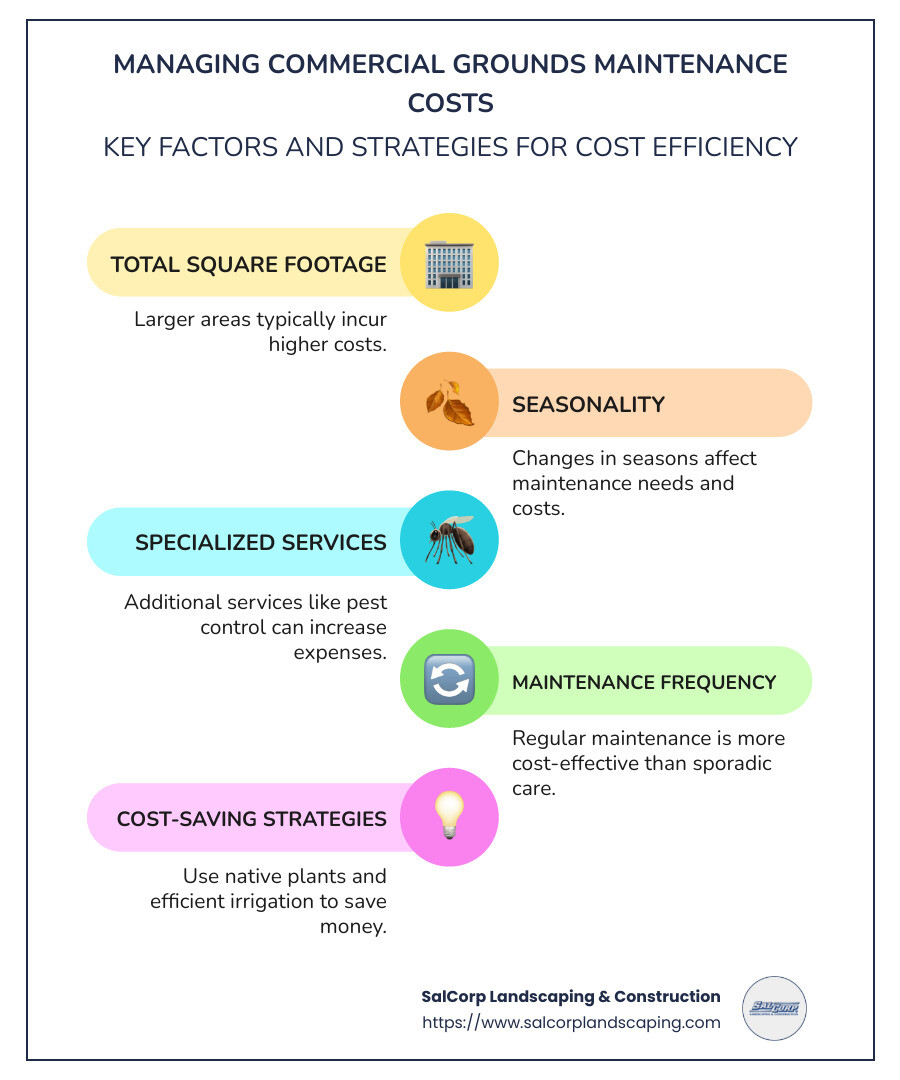
When it comes to commercial grounds maintenance costs, understanding what you’re paying for is key to effective budget management. Here’s a quick overview:
- Total Square Footage: Larger areas typically incur higher costs.
- Seasonality: Maintenance needs change with the seasons, impacting costs.
- Specialized Services: Additional services like pest control can increase expenses.
- Frequency: Regular maintenance usually costs less in the long term than sporadic care.
Properly maintaining your commercial property’s landscape is crucial, not just because it keeps your property beautiful today, but because it boosts property value and improves your business image in the long run. From choosing native plants that require minimal care to implementing efficient irrigation systems, there are smart strategies to manage these expenses.
My name is Sal Musto, and with over two decades in changing outdoor spaces, I’ve led SalCorp Landscaping & Construction in offering expert landscaping solutions. Commercial grounds maintenance costs are at the heart of what we do, ensuring every step aligns with your budget and needs. Stay tuned as we dig deeper into strategies to help you manage and reduce these costs.
Understanding Commercial Grounds Maintenance Costs
When it comes to managing commercial grounds maintenance costs, it’s important to know exactly what these expenses cover. This knowledge helps you budget effectively and make smart decisions for your property.
Definition
Commercial grounds maintenance involves all the tasks needed to keep a commercial property’s outdoor space in top condition. This includes everything from mowing the lawn and trimming bushes to more complex services like pest control and irrigation system maintenance.
Examples
Here are some common examples of maintenance tasks:
- Lawn Care: Regular mowing, fertilizing, and aeration.
- Tree and Shrub Maintenance: Pruning and trimming for health and aesthetics.
- Irrigation System Checks: Ensuring efficient water distribution.
- Weed and Pest Control: Keeping unwanted plants and insects at bay.
- Seasonal Cleanups: Removing debris from fall leaves or spring blooms.
Total Maintenance Cost Formula
Calculating your total commercial grounds maintenance costs involves several factors. Here’s a simplified formula to give you an idea:
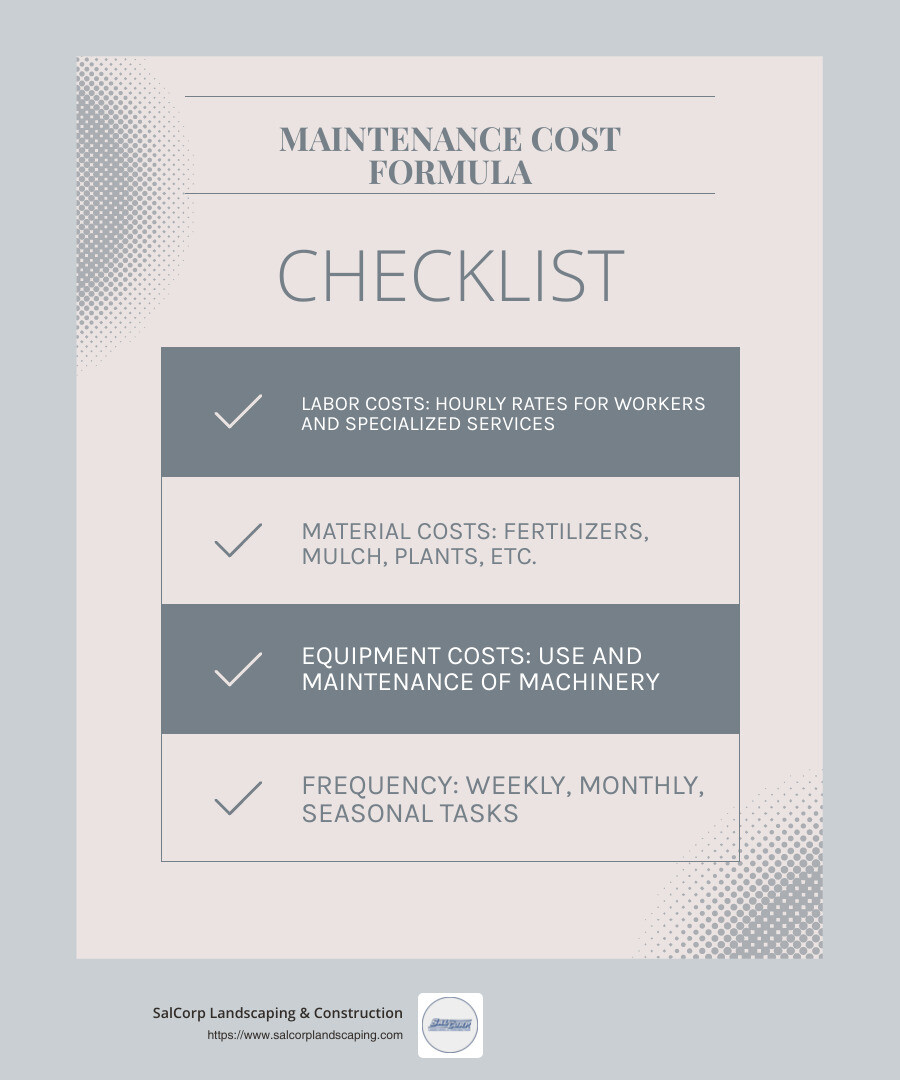
Total Maintenance Cost = (Labor Costs + Material Costs + Equipment Costs) × Frequency
- Labor Costs: Include hourly rates for workers and any specialized services.
- Material Costs: Cover the price of fertilizers, mulch, plants, etc.
- Equipment Costs: Account for the use and maintenance of machinery.
- Frequency: How often maintenance tasks are performed (weekly, monthly, etc.).
Understanding these components can help you anticipate expenses and find areas for cost-saving opportunities.
In the next section, we’ll explore strategies to help you lower these costs without compromising on quality.
Cost-Saving Strategies for Commercial Grounds Maintenance
When it comes to reducing commercial grounds maintenance costs, a few smart strategies can make a big difference. Let’s explore some effective ways to keep your property looking great without breaking the bank.
Choose Native Plants
Native plants are a win-win for commercial properties. They’re adapted to the local climate, which means they need less water, fertilizer, and care. This translates to lower ongoing maintenance costs. For example, in Massachusetts, incorporating plants like New England Aster or Switchgrass can minimize intervention and reduce costs.
Benefits of Native Plants:
– Lower Water Usage: They thrive on natural rainfall, reducing irrigation needs.
– Minimal Fertilizer Requirements: Native plants are accustomed to local soil conditions.
– Reduced Pest Problems: They have natural defenses against local pests.
Efficient Irrigation Systems
Water-efficient systems are a must for cost-effective landscape management. Drip irrigation is a great option as it delivers water directly to plant roots, cutting down on waste. Additionally, smart controllers adjust watering schedules based on weather and soil moisture, optimizing water use.
Advantages of Efficient Irrigation:
– Water Savings: Drip systems can save up to 50% more water compared to traditional sprinklers.
– Healthier Plants: Direct root watering promotes better plant health.
– Reduced Water Bills: Smart controllers ensure no water goes to waste.
Regular Maintenance
Proactive maintenance is key to preventing costly problems. Regular tasks like timely pruning, weed control, and pest management keep your landscape healthy and attractive.
Why Regular Maintenance Matters:
– Prevents Major Issues: Catching problems early avoids expensive fixes.
– Promotes Plant Health: Routine care helps plants grow strong and resilient.
– Improves Curb Appeal: Well-maintained grounds create a positive impression.
Group Maintenance Services
Consider bundling services or coordinating with neighboring businesses to receive discounted rates. Group maintenance can lead to significant savings while ensuring consistent care across multiple properties.
Benefits of Group Maintenance:
– Cost Efficiency: Shared services reduce individual expenses.
– Consistent Quality: Similar maintenance standards across properties.
– Simplified Scheduling: Coordinated efforts streamline service delivery.
By implementing these strategies, you can effectively manage and reduce your commercial grounds maintenance costs while maintaining a beautiful and sustainable landscape.
Next, we’ll explore some budget-friendly landscaping options that can further improve your property’s appeal.
Budget-Friendly Landscaping Options
When it comes to creating a beautiful landscape without overspending, a few smart choices can help you achieve impressive results. Let’s explore some budget-friendly options that can lead to long-term savings and minimal upkeep.
Artificial Grass
Artificial grass is an excellent option for businesses looking to reduce maintenance costs. While the upfront cost might be higher than natural grass, the long-term savings are significant.
Benefits of Artificial Grass:
– Minimal Maintenance: No mowing, watering, or fertilizing required.
– Long-Term Savings: Reduces water usage and eliminates lawn care costs.
– Consistent Appearance: Stays green and lush year-round, enhancing curb appeal.
By choosing artificial grass, businesses can enjoy a pristine lawn with minimal effort and expense over time.
Seasonal Deals and Discounts
Taking advantage of seasonal offers can significantly cut costs on landscaping projects. Many suppliers and service providers offer discounts during off-peak seasons, which can be a great opportunity to plan and execute projects cost-effectively.
Tips for Seasonal Savings:
– Plan Ahead: Schedule projects during slower months to take advantage of discounts.
– Bulk Purchasing: Buy materials in larger quantities during sales for future use.
– Flexible Scheduling: Be open to working around the landscaper’s availability to secure better rates.
Strategic planning around these seasonal deals can lead to substantial savings without compromising on quality.
Efficient Design and Planning
Careful and efficient planning is crucial for keeping landscaping expenses in check. By focusing on smart design choices, businesses can reduce both material and labor costs.
Key Design Strategies:
– Simplify Layouts: Opt for designs that require fewer materials and less labor.
– Use Recycled Materials: Incorporate recycled or repurposed materials for cost savings and sustainability.
– Prioritize Functionality: Ensure that every design element serves a purpose, minimizing unnecessary expenses.
By investing time in efficient design and planning, businesses can create stunning landscapes that are both beautiful and budget-friendly.
Next, we’ll discuss the various factors that influence commercial grounds maintenance costs, helping you understand where your money goes and how to manage it effectively.
Factors Influencing Commercial Grounds Maintenance Costs
When it comes to managing commercial grounds maintenance costs, several factors come into play. Understanding these can help you plan better and allocate your budget more effectively.
Size and Scope of the Project
The size of your commercial property is a primary determinant of maintenance costs. Larger areas require more time, labor, and materials. For instance, maintaining a sprawling estate will naturally demand more resources than a small office garden.
Complexity also matters. A landscape with intricate features—such as water fountains, diverse plant species, and complex garden designs—will increase costs due to the specialized care required.
Site Conditions and Accessibility
The terrain of your property can significantly impact maintenance expenses. Flat, easily accessible areas are cheaper to manage. In contrast, hilly or uneven terrains might need specialized equipment and additional labor, thus driving up costs.
Accessibility plays a role too. Properties with limited entry points or those that are difficult to reach may incur higher costs due to the extra time and effort required by maintenance crews.
Plant Selection and Materials
The type of plants and materials you choose can greatly affect your budget. Native plants are often more cost-effective because they require less water and maintenance, adapting well to the local climate and soil.
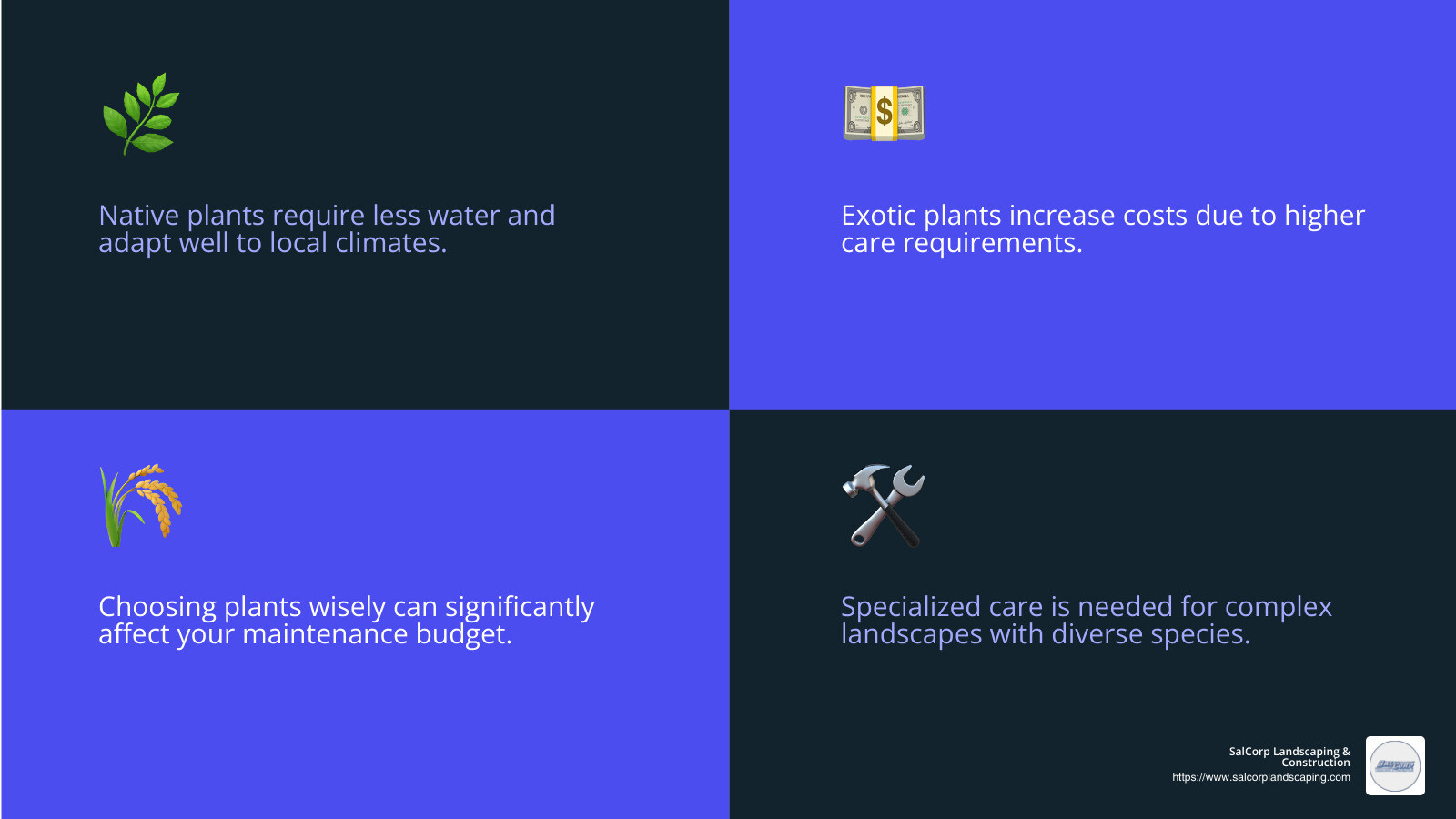
On the other hand, exotic plants, while visually appealing, tend to require more care and resources, increasing your overall maintenance expenses. Additionally, the cost of landscaping materials such as mulch, paving stones, and sod should be considered.
Irrigation Needs
An efficient irrigation system is crucial for maintaining healthy landscapes while controlling costs. Drip irrigation systems can minimize water waste by delivering water directly to plant roots, saving up to 50% more water than traditional systems.
Smart controllers further optimize water usage by adjusting watering schedules based on weather conditions and soil moisture levels. While installing these systems involves an initial investment, they lead to substantial savings over time through reduced water bills and healthier plants.
By understanding and managing these factors, you can effectively control your commercial grounds maintenance costs. Next, we’ll answer some frequently asked questions to help clarify common concerns and provide additional insights.
Frequently Asked Questions about Commercial Grounds Maintenance Costs
What are examples of maintenance costs?
Maintenance costs cover a wide range of activities to keep your commercial property in top shape. Here are some examples:
- Electrical repairs: Fixing faulty wiring or replacing worn-out components to ensure safety and functionality.
- Bulb replacement: Changing light bulbs in outdoor fixtures to maintain proper illumination and security.
- Paint touch-ups: Refreshing faded or chipped paint on buildings and structures to improve visual appeal.
- Pool cleaning: Regular upkeep of swimming pools to ensure cleanliness and water quality.
- Lawn care: Mowing, fertilizing, and aerating grass to keep lawns healthy and attractive.
What is general maintenance cost?
General maintenance cost refers to the expenses incurred to keep assets and facilities in good working condition. This includes:
- Repairs: Fixing broken or damaged parts to prevent further deterioration.
- Software maintenance: Updating and troubleshooting software systems used in facility management.
- Annual maintenance: Routine checks and servicing of equipment and infrastructure to ensure longevity and performance.
These costs are necessary to avoid more significant problems and expenses in the future.
What is the total maintenance cost?
Total maintenance cost encompasses all expenses related to the upkeep of a property. It includes:
- Repair and operation costs: The financial outlay for fixing and operating systems and equipment.
- Labor: Wages for workers performing maintenance tasks.
- Material parts: The cost of replacement parts and materials used in repairs and maintenance.
- Invoices: Documentation and billing for services rendered.
By understanding these elements, businesses can budget effectively and maintain their properties efficiently. This proactive approach helps manage commercial grounds maintenance costs and ensures a well-maintained environment.
Conclusion
At SalCorp Landscaping & Construction, we take pride in offering comprehensive solutions custom to the unique needs of our clients across Massachusetts. With over 20 years of experience, our owner-operated business is committed to delivering top-notch services in landscape design, hardscaping, and commercial snow management.
Our team is dedicated to changing commercial properties into stunning and sustainable environments. We understand that managing commercial grounds maintenance costs can be challenging, but with our expert guidance, you can achieve a beautiful landscape without breaking the bank.
We serve a variety of communities, including Canton, Dedham, Foxborough, Mansfield, Medfield, Norfolk, Norwood, Sharon, Walpole, and Westwood. Our local presence allows us to understand the specific needs of each area, providing personalized care and attention to detail.
Whether you’re looking for efficient irrigation systems, native plant installations, or group maintenance services, we have the expertise and resources to help you succeed. Our goal is to improve your property’s curb appeal while ensuring cost-effective and sustainable maintenance practices.
Partner with us to experience the difference that professional landscaping can make for your business. Visit our Commercial Landscaping Services page to learn more about how we can support your landscaping needs. Let SalCorp Landscaping & Construction be your trusted partner in creating and maintaining a vibrant outdoor space.
