

Commercial Landscaping Cost: Top 3 Shocking Facts 2025

Commercial landscaping cost is a top concern for businesses looking to improve their properties while managing expenses. It’s the price businesses pay for services like lawn care, landscape design, and ongoing maintenance. These costs can vary significantly due to several factors, including the size of the property, the complexity of the landscape design, and the specific services required.
- Key Factors Influencing Costs:
- Property Location
- Size of the Area
- Desired Level of Maintenance
- Plant and Material Choices
- Frequency of Services
Understanding the importance of well-maintained commercial landscapes goes beyond aesthetics. A well-executed landscaping plan can improve property value, attract more customers, and boost employee morale. Moreover, it plays a crucial role in delivering first impressions and showcasing the professionalism of your business.
My name is Sal Musto, owner of SalCorp Landscaping & Construction. With decades of experience in the industry, I’ve learned the intricacies of commercial landscaping cost. Our team is here to help you steer these costs effectively, ensuring your outdoor spaces improve your business image.
Handy commercial landscaping cost terms:
– commercial landscape contractors
– commercial landscape design
– does commercial landscaping increase your property value
What is Commercial Landscaping?
Commercial landscaping involves the professional design, installation, and maintenance of outdoor spaces for businesses. It’s more than just mowing the lawn or planting flowers; it’s about creating an inviting, functional, and aesthetically pleasing environment that aligns with the business’s image and goals.
Key Services in Commercial Landscaping
- Lawn Maintenance: Includes mowing, edging, fertilization, and weed control to keep lawns lush and healthy.
- Landscape Design and Installation: Professional design services to create a cohesive look, followed by the installation of plants, trees, and other elements.
- Tree and Shrub Care: Regular trimming and pruning ensure plant health and safety.
- Integrated Pest Management: Eco-friendly pest control to protect plants without harming the environment.
- Additional Services: Leaf cleanup, debris removal, seasonal color changes, and irrigation system maintenance.
Benefits of Commercial Landscaping
- Improved Curb Appeal: A well-maintained landscape creates a positive first impression, attracting customers and clients.
- Improved Employee Morale: A pleasant outdoor environment can boost employee satisfaction and productivity.
- Increased Customer Attraction: Beautiful landscapes draw more foot traffic, potentially increasing sales and business opportunities.
- Higher Property Value: A thoughtfully designed landscape can significantly boost property value, making it a wise investment.
- Environmental Benefits: Proper landscaping can conserve natural resources, improve air quality, and support local ecosystems.
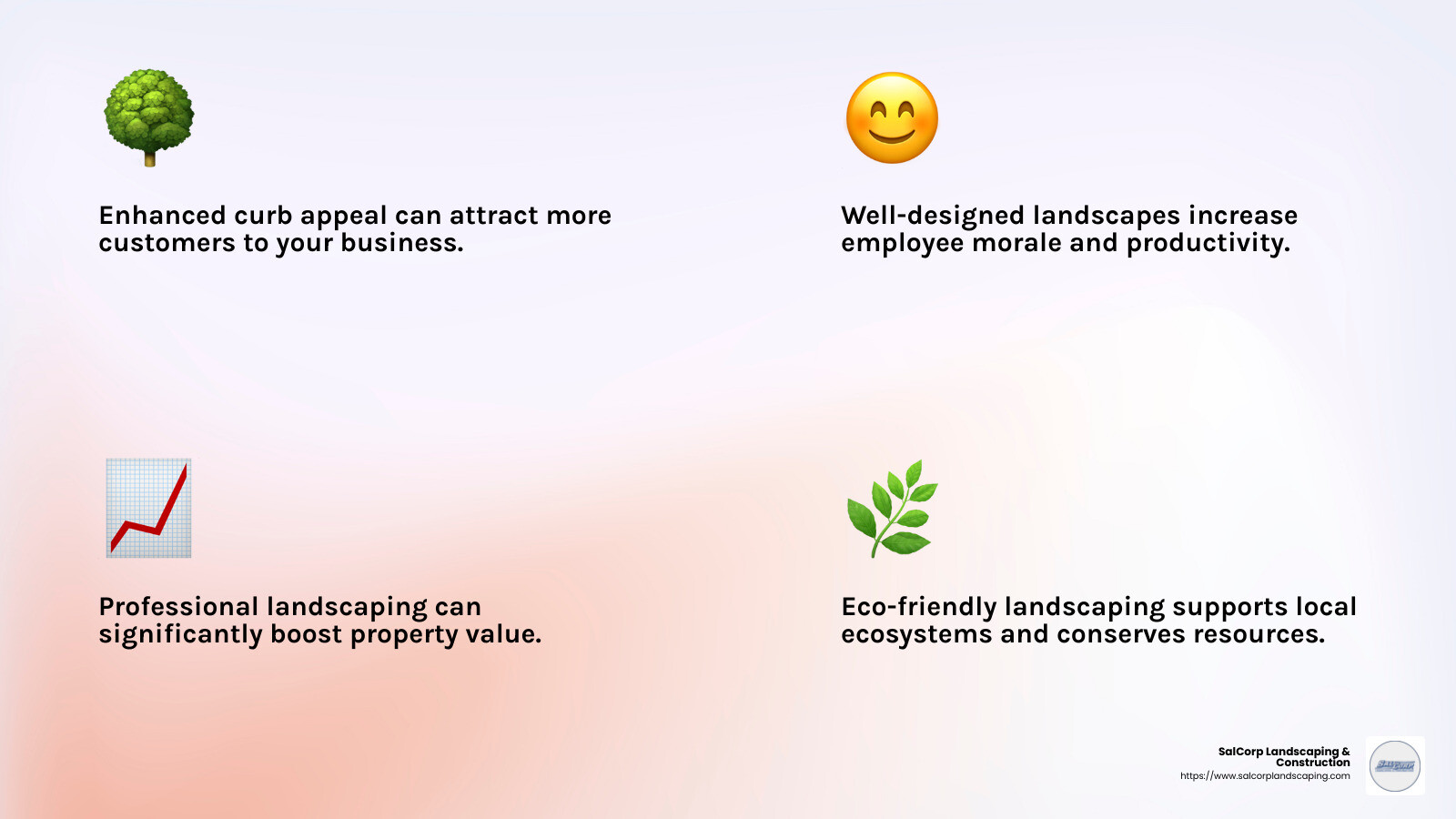
By investing in commercial landscaping, businesses can transform their outdoor spaces into assets that reflect their brand and values. The right landscape design not only beautifies a property but also improves its functionality and appeal.
In the next section, we’ll explore the factors that influence commercial landscaping costs and how businesses can manage these expenses effectively.
Factors Influencing Commercial Landscaping Costs
Understanding the factors that impact commercial landscaping cost is crucial for businesses planning to improve their outdoor spaces. These costs can vary widely based on several key elements:
Project Size
The size of the landscaping project is one of the most significant cost drivers. Larger areas require more materials and labor, increasing overall expenses. Whether you’re working with a small storefront or a sprawling corporate campus, size matters.
Site Conditions
Site conditions, such as soil quality, existing vegetation, and terrain, can heavily influence costs. Uneven terrain or poor soil might require additional preparation, such as grading or soil amendments, which can add to the budget.
Plant Selection
Choosing the right plants is essential for both aesthetics and cost management. Native plants often cost less and require less maintenance, while exotic or non-native plants might need special care and increase costs. Selecting plants that thrive in the local climate can save money on both installation and ongoing maintenance.
Materials
The materials used in landscaping, such as mulch, stone, and pavers, can vary significantly in price. High-quality materials might have a higher upfront cost but could offer durability and lower maintenance in the long run.
Irrigation Needs
Efficient irrigation systems are vital for maintaining healthy landscapes. The cost of installing and maintaining these systems will depend on the complexity and size of the area. Drip irrigation systems can be more cost-effective than traditional sprinklers, especially for larger projects.
Labor Costs
Labor is a significant component of commercial landscaping expenses. Skilled labor is essential for tasks like planting, hardscaping, and irrigation installation. Rates can vary based on the complexity of the work and the region’s standard wages.
Overhead Costs
Overhead costs include everything from equipment maintenance to administrative expenses. These costs are often factored into the pricing structure by landscaping companies to ensure they cover all operational expenses.
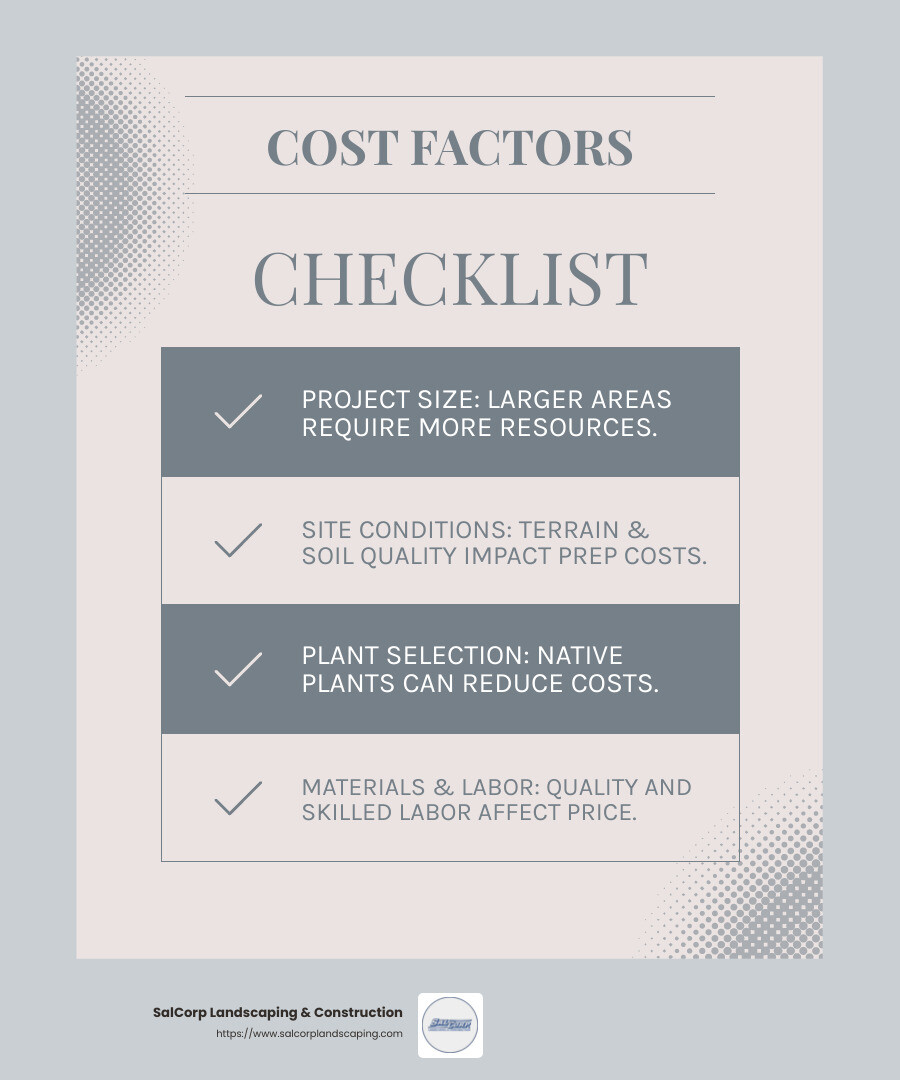
By considering these factors, businesses can better plan and budget for their landscaping projects. In the next section, we’ll break down the costs by square foot, hour, and project to provide a clearer picture of what to expect financially.
Commercial Landscaping Cost Breakdown
Understanding how costs are structured in commercial landscaping can help businesses budget effectively. Here, we’ll break down costs by square foot, hour, and project.
Cost by Square Foot
When it comes to pricing, one common method is calculating commercial landscaping cost by square foot. On average, landscaping projects might range from $5 to $20 per square foot, depending on the project’s complexity and site conditions.
- Influencing Factors: The type of plants, hardscaping elements, and site accessibility can all affect the price per square foot. For example, projects that include custom-built water features or intricate stonework will be on the higher end.
- Accessibility and Condition: Sites that are difficult to access or require significant preparation (like leveling or clearing) can increase costs. A well-maintained site with easy access will generally be less expensive to landscape.
Cost by Hour
Hourly rates are another way that landscaping services can be billed. Typically, labor costs range from $50 to $100 per hour, but this can vary.
- Average Hourly Rates: Standard tasks such as mowing or planting are usually at the lower end of the scale. However, specialized services like landscape design consultations might cost more, sometimes reaching $150 per hour.
- Labor-Intensive Projects: Projects that require more manual labor, such as installing a new irrigation system, can lead to higher hourly costs. The complexity and skill required for the job will also influence the rate.
- Extended Work Hours: If a project requires extended hours due to deadlines or weather conditions, expect additional charges. This is especially common in large-scale projects or those with tight timelines.
Cost by Project
Some landscaping tasks are priced per project rather than by square foot or hour. This approach is typical for specific installations or services.
- Project Scope and Complexity: The overall scope and complexity of the project play a significant role in determining costs. For instance, a simple lawn installation might be straightforward, while a complete landscape redesign with multiple elements (like patios, walkways, and lighting) will be more complex and expensive.
- Price Range and Examples: Examples include installing a fire pit, which could range from $300 to $2,000, or building a retaining wall, which might cost between $3,500 and $10,000. The cost varies based on materials, design, and site conditions.
By understanding these different pricing structures, businesses can better anticipate and manage their landscaping budgets. Next, we’ll explore common commercial landscaping services and their associated costs.
Common Commercial Landscaping Services and Their Costs
Commercial landscaping encompasses a wide range of services, each with its own cost factors. Let’s explore some of the most common services and what you can expect to pay for them.
Lawn Maintenance
- Mowing Rates: Regular mowing is essential for maintaining a healthy and attractive lawn. Prices can vary based on the size of the area and frequency of service.
- Trimming and Edging: This involves keeping the edges of lawns neat and trimming hedges and shrubs. It’s typically priced per hour or as part of a package with mowing.
- Fertilization and Weed Control: Fertilizing keeps grass lush and green, while weed control ensures that unwanted plants don’t take over. These services are often bundled and priced per treatment.
- Aeration and Dethatching: Aeration improves soil health by allowing air, water, and nutrients to penetrate the roots. Dethatching removes excess thatch that can suffocate grass. These are usually one-time services priced based on lawn size.
Landscape Design and Installation
- Design Services: A professional landscape designer can create a plan that improves your property’s beauty and functionality. Design fees vary based on the project’s scope and complexity.
- Installation Costs: Installing new landscapes involves planting, hardscaping, and other elements. Costs depend on materials, labor, and the intricacy of the design.
- Project Scale and Complexity: Larger projects with complex features (like water installations or custom stonework) will naturally incur higher costs.
Tree and Shrub Care
- Trimming and Pruning: Regular trimming helps trees and shrubs grow healthily and maintain their shape. Pruning removes dead or diseased branches to prevent damage.
- Fertilization: Just like lawns, trees and shrubs need nutrients to thrive. Fertilization services are typically priced per tree or shrub.
- Average Costs: These services can vary widely depending on the number and size of trees and shrubs, as well as specific care requirements.
Integrated Pest Management
- Pest Control: Managing pests is crucial for maintaining a healthy landscape. Integrated Pest Management (IPM) uses eco-friendly techniques to minimize pesticide use.
- Eco-Friendly Techniques: Methods like biological controls and targeted treatments are employed to keep pests at bay while protecting the environment.
- Average Costs: Prices depend on the severity of the pest issue and the area that needs treatment.
Additional Services
- Leaf Cleanup and Debris Removal: Especially important in fall and winter, this service keeps properties clean and tidy.
- Seasonal Color: Rotating seasonal plants ensures that landscapes look vibrant year-round. This service includes soil preparation and planting.
- Irrigation System Maintenance: Regular checks and maintenance keep irrigation systems running efficiently, saving water and reducing costs.
Each of these services contributes to the overall commercial landscaping cost. By understanding the specific needs of your property, you can choose the services that best fit your budget and goals. Next, let’s explore cost-saving measures that can make commercial landscaping more affordable.
Cost-Saving Measures for Commercial Landscaping
Commercial landscaping can be pricey, but there are smart strategies to help you save money while keeping your property looking its best. Here are some practical cost-saving measures:
Native Plants
Using native plants is a savvy choice for reducing landscaping costs. These plants are naturally adapted to the local climate, which means they require less water, fertilizer, and maintenance. By choosing plants that thrive in your area, you can cut down on ongoing care expenses and still enjoy a lush, vibrant landscape.
Artificial Grass
Consider artificial grass as an alternative to natural lawns. While the initial installation cost is higher, artificial grass requires no watering, mowing, or fertilizing. This can lead to significant long-term savings on maintenance and water bills. Plus, it stays green year-round, enhancing curb appeal without the hassle.
Efficient Irrigation
Investing in an efficient irrigation system can greatly reduce water usage and costs. Systems like drip irrigation deliver water directly to plant roots, minimizing waste. Additionally, smart controllers adjust watering schedules based on weather conditions, further conserving water. Efficient watering not only saves money but also promotes healthier plant growth.
Proper Design
A well-thought-out landscape design can prevent unnecessary expenses. By planning your landscape layout carefully, you can avoid overplanting and reduce the need for costly hardscaping features. A good design maximizes the use of space and resources, ensuring that every element serves a purpose and contributes to the overall aesthetics.
Regular Maintenance
Consistent regular maintenance is crucial for preventing costly repairs and replacements. Routine tasks like pruning, weeding, and pest management keep your landscape in top condition and help you catch issues early before they become expensive problems. Proactive care extends the life of your plants and hardscaping, ultimately saving money.
By implementing these cost-saving measures, you can manage your commercial landscaping cost more effectively while still maintaining an attractive and functional outdoor space. Next, we’ll address some frequently asked questions about commercial landscaping costs to further guide your decision-making process.
Frequently Asked Questions about Commercial Landscaping Cost
How much does commercial lawn care cost per acre?
The cost of commercial lawn care can vary based on several factors, but generally, mowing rates per acre for larger properties range from $25 to $80. The exact price depends on the complexity of the terrain, frequency of service, and specific maintenance tasks required. For businesses with extensive lawns, it’s crucial to consider these variables when budgeting for lawn care services.
What factors affect commercial landscaping costs?
Several key factors influence the overall commercial landscaping cost:
- Project Size: Larger areas typically require more materials and labor, increasing costs.
- Site Conditions: Challenging terrain or limited access can lead to higher expenses due to specialized equipment or extended labor hours.
- Plant Selection and Materials: Choosing exotic plants or high-end materials can significantly raise costs compared to native or more common options.
- Labor Costs: The complexity of the work and the expertise required can affect hourly rates, with labor-intensive projects costing more.
- Overhead Costs: These include ongoing business expenses like insurance, marketing, and equipment maintenance, which are factored into service pricing.
Understanding these factors can help businesses make informed decisions and manage their landscaping budgets effectively.
How can businesses save on commercial landscaping expenses?
Businesses looking to reduce their landscaping costs can consider these strategies:
- Choose Native Plants: Opt for plants that naturally thrive in the local climate to lower maintenance and water use.
- Invest in Efficient Irrigation: Systems like drip irrigation minimize water waste and reduce utility bills.
- Plan Properly: A thoughtful landscape design avoids unnecessary features and maximizes space efficiency.
- Regular Maintenance: Consistent upkeep prevents expensive repairs and prolongs the lifespan of plants and hardscaping.
- Leverage Group Maintenance: Coordinate with neighboring businesses to receive discounted rates on shared services.
By applying these cost-saving measures, businesses can maintain beautiful landscapes without overspending.
Conclusion
In summary, understanding the factors that influence commercial landscaping costs is vital for businesses aiming to improve their outdoor spaces without breaking the bank. From project size and site conditions to plant selection and labor costs, each element plays a crucial role in determining the overall expenses. By considering these factors, businesses can make informed decisions and effectively manage their landscaping budgets.
At SalCorp Landscaping & Construction, we specialize in changing commercial properties into stunning landscapes that lift curb appeal and boost property value. With over 20 years of experience, our owner-operated team is dedicated to providing comprehensive outdoor solutions custom to your specific needs. We pride ourselves on our attention to detail and commitment to sustainable practices, ensuring that your landscape is both beautiful and environmentally friendly.
Ready to transform your commercial property? Contact us today to schedule a consultation. Our team is eager to work with you to create a landscape that reflects your brand and leaves a lasting impression on your clients and employees. Let us help you achieve your landscaping goals with our expert craftsmanship and innovative designs.
