

Cost to Lay Artificial Turf: Ultimate 2025 Guide
The Price of a Perfect, Low-Maintenance Lawn
The cost to lay artificial turf typically ranges from $8 to $20 per square foot for professional installation, including materials and labor. Here’s a quick overview:
Quick Cost Overview:
- Materials: $3-10 per square foot
- Labor: $4-9 per square foot
- Total Project Cost: $8,000-$20,000+ for 1,000 sq ft
- Lifespan: 15-25 years with minimal maintenance
Please note that all prices mentioned in this guide are national averages based on publicly available data and do not represent actual quotes from SalCorp Landscaping & Construction. Costs in Massachusetts may vary.
If you’re tired of weekly mowing, constant watering, and battling brown patches, artificial turf is a compelling solution. While the upfront investment is significant, synthetic grass eliminates ongoing maintenance costs and delivers a consistently green lawn year-round, from harsh Massachusetts winters to hot summers.
Understanding the true cost involves more than the sticker price. Material quality, site preparation, and installation complexity all impact your final investment.
I’m Sal Musto, owner of SalCorp Landscaping & Construction. With over two decades of hands-on experience, I’ve seen that while the initial investment is substantial, the long-term value often exceeds expectations for the right property.
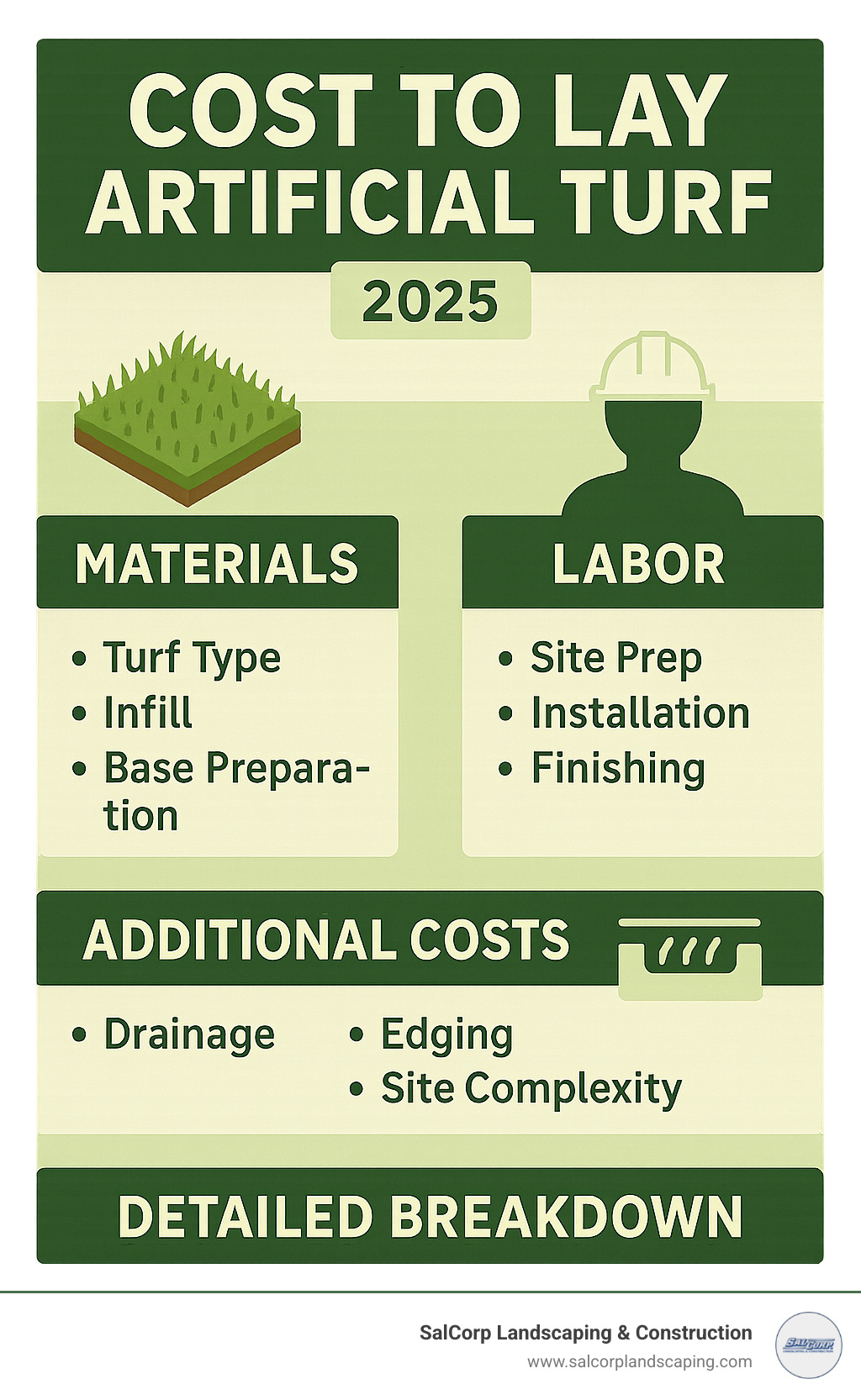
Breaking Down the Cost to Lay Artificial Turf
The cost to lay artificial turf doesn’t have a one-size-fits-all price tag. The national average for professional installation ranges from $8 to $20 per square foot, with premium projects reaching $25 or more. This means a 1,000 square foot yard could cost anywhere from $8,000 to $25,000+, depending on project complexity, material quality, and site conditions.
Please note that all prices mentioned in this guide are national averages based on publicly available data and do not represent actual quotes from SalCorp Landscaping & Construction. Costs in Massachusetts may vary.
A simple, rectangular yard will be on the lower end, while a sloped yard with drainage issues and premium materials will be on the higher end. Understanding what drives these costs is key to making informed decisions. For more details on a successful installation, our guide on artificial grass setup can help your planning.
Key Factors Influencing the Cost to Lay Artificial Turf
Several key factors influence the final cost to lay artificial turf. After two decades of installations in Massachusetts, I’ve seen how these elements impact the budget:
- Project Size and Shape: While larger areas may have a lower per-square-foot cost, the total investment is higher. Complex shapes with curves require more cutting and seaming than simple rectangles, increasing labor costs.
- Site Accessibility: Easy access for equipment keeps costs down. If materials must be hand-carried through narrow gates or long distances, labor time and costs increase significantly.
- Ground Conditions: Massachusetts soil varies greatly. Rocky or clay-heavy soils are more difficult and time-consuming to excavate than workable soil, which affects the price.
- Grading and Drainage: A flat yard may need minimal grading, but sloped properties often require extensive earthwork to ensure proper drainage. Poor natural drainage might necessitate installing additional systems beneath the turf.
- Existing Landscape Removal: Removing old sod is simple, but clearing tree roots, old concrete, or other obstacles adds to the time and disposal costs.
- Overall Complexity: Working around pools, integrating with hardscaping, or other specialized applications will increase the project’s complexity and cost.
Unpacking Material and Turf Quality Costs
The turf itself is the heart of your investment, with material costs ranging from $3 to $10 per square foot, and premium options exceeding $15 per square foot.
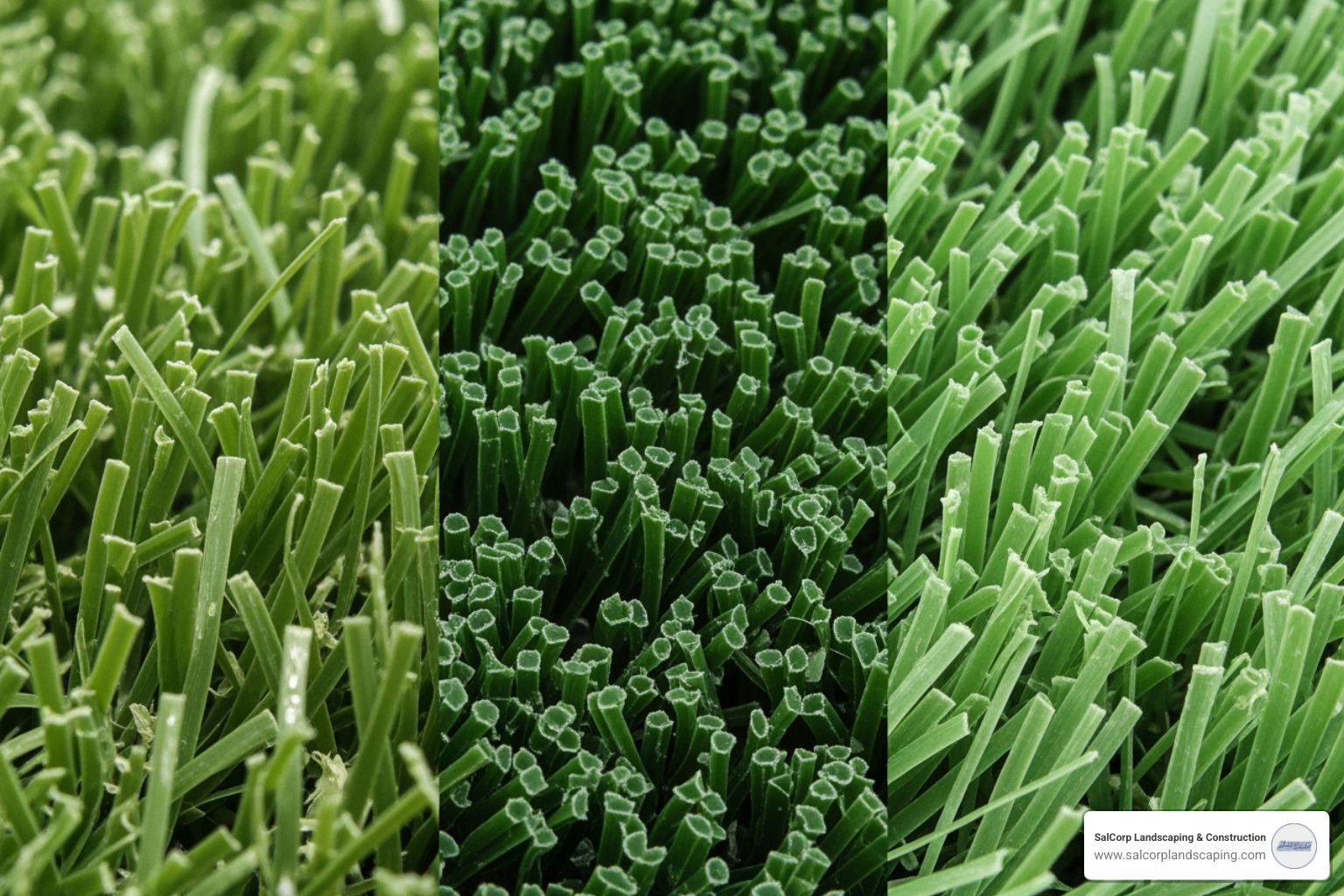
- Turf Fiber: Polyethylene is the most popular choice for residential lawns, offering a balance of softness, realism, and durability. Polypropylene is a budget-friendly option for low-traffic areas, while Nylon is the most durable (and expensive) choice, ideal for putting greens.
- Pile Height & Face Weight: Pile height (blade length) affects the look and feel, with longer blades feeling more luxurious but costing more. Face weight (fiber density) is a key indicator of durability and quality—higher is better and more expensive.
- Backing & Infill: Quality polyurethane backing is crucial for durability in New England’s freeze-thaw cycles. The infill supports the blades; silica sand is standard, while antimicrobial infill is recommended for pet areas to control odor.
- Edging: Professional edging materials create clean lines and prevent the turf from shifting over time.
Understanding Labor and Installation Expenses
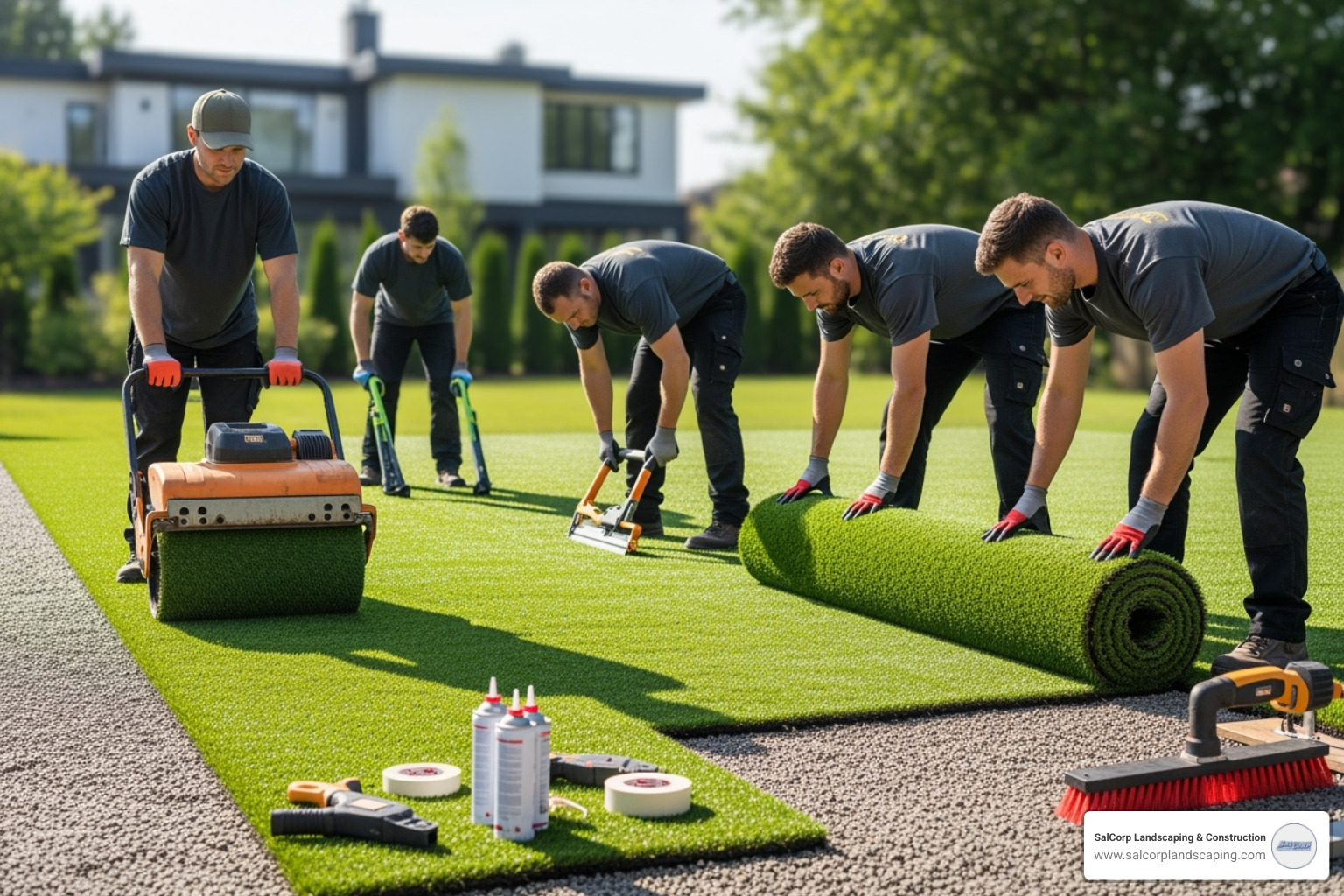
Professional installation is a multi-step process requiring specialized equipment and expertise. Labor costs typically range from $4 to $12 per square foot but can exceed $20 for complex projects. The process includes:
- Site Preparation: Excavating 3-4 inches of existing grass and soil and grading the area for proper drainage.
- Base Layer Installation: Installing and compacting a layer of crushed stone to create a stable, permeable foundation. Proper compaction is critical to prevent settling. For technical details, the HUD site work guide is an authoritative resource.
- Seaming and Securing Turf: Precisely joining rolls of turf to create invisible seams and securing the perimeter.
- Infill Distribution: Spreading infill (like silica sand) evenly and brushing it into the fibers to help blades stand upright.
- Debris Removal: Hauling away all excavated soil, old sod, and construction debris.
At SalCorp Landscaping & Construction, our experienced crew uses our own equipment to handle every step, ensuring a high-quality installation. You can learn more about our landscape installations and our comprehensive services.
Artificial Turf vs. Natural Grass: A Long-Term Cost Showdown
While the upfront cost to lay artificial turf is higher than natural sod, the long-term savings are significant. The initial investment often pays for itself within 7 to 10 years.
Consider the ongoing costs of a natural lawn that are eliminated with artificial turf:
- Water Bills: Artificial turf requires no irrigation, drastically cutting water usage, especially during Massachusetts summers.
- Fertilizer & Pesticides: Save money and keep harsh chemicals off your lawn.
- Mowing & Maintenance: Eliminate expenses for mowing services or equipment and free up your weekends.
- Time Savings: Reclaim the 120+ hours the average homeowner spends on lawn care annually.
After the payback period, your artificial lawn provides significant savings while a natural lawn continues to require time and money. For more on natural grass costs, see our guide on sod installation cost per square foot.
Here’s a 15-year cost comparison for a 1,000 sq. ft. lawn:
| Cost Category | Artificial Turf (1,000 sq. ft.) | Natural Sod (1,000 sq. ft.) |
|---|---|---|
| Initial Installation | Higher upfront investment | Lower initial cost |
| Annual Maintenance | Minimal cleaning and occasional infill | Regular mowing, watering, fertilizing, seeding |
| 15-Year Maintenance | Very low ongoing costs | Substantial accumulated expenses |
| Total 15-Year Cost | Often becomes more economical | Higher total investment over time |
Please note that all cost comparisons mentioned are based on national averages and publicly available data, not actual quotes from SalCorp Landscaping & Construction.
Over time, the math is clear: artificial turf is an investment that pays off.
The Great Debate: DIY vs. Professional Installation
The idea of a DIY installation to lower the cost to lay artificial turf is tempting, as labor is a significant expense. However, installing artificial turf is a complex job with serious risks.
Consider these common DIY pitfalls:
- Improper Drainage: An incorrect base layer can lead to pooling water, creating a swampy mess.
- Visible Seams & Wrinkles: Without proper tools and techniques, your lawn can buckle and show ugly seams.
- Specialized Equipment: The job requires heavy-duty tools like plate compactors and mini-excavators, which most homeowners don’t own.
- Voided Warranties: Many manufacturers’ warranties are voided if the turf isn’t professionally installed.
Unless you have significant landscaping experience and the right equipment, hiring a professional is the safer bet. Our guide on hiring an artificial grass installation company can help you choose wisely.
Evaluating the True Cost to Lay Artificial Turf Yourself
Before you commit to a DIY project, consider the true costs:
- Material Sourcing: You’ll pay retail prices for materials and have to handle the logistics of transporting bulky items like 15-foot turf rolls.
- Equipment Rentals: The cost of renting mini-excavators, plate compactors, and other specialized tools can quickly add up, eating into your savings.
- Time & Physical Labor: A professional job that takes days can stretch into weeks for a DIYer, involving intense physical labor like digging and hauling heavy materials.
- Costly Mistakes: A wrong cut or improper base preparation can force you to buy more materials or even start over, erasing any potential savings.
The Value of Hiring a Professional Landscaper
The difference between a professional and a DIY installation is often obvious. Here’s the value a professional landscaper brings:
- Expertise & Efficiency: Professionals know how to handle New England’s challenging soil and drainage conditions efficiently.
- Proper Site Preparation: Using professional machinery, we ensure the site is excavated, graded, and compacted correctly for a long-lasting result.
- Access to Quality Materials: We source commercial-grade turf and materials that outperform options from big-box stores.
- Guaranteed Results: A professional installation comes with warranties on materials and workmanship, giving you peace of mind.
- Long-Term Durability: A pro installation ensures your turf will perform well and last for its full 15 to 25-year lifespan.
To find qualified installers, learn more about turf landscapers and what to look for.
Pros, Cons, and Lifespan of Your Synthetic Lawn
When weighing the cost to lay artificial turf, it’s crucial to look beyond the numbers to the lifestyle benefits and potential drawbacks.
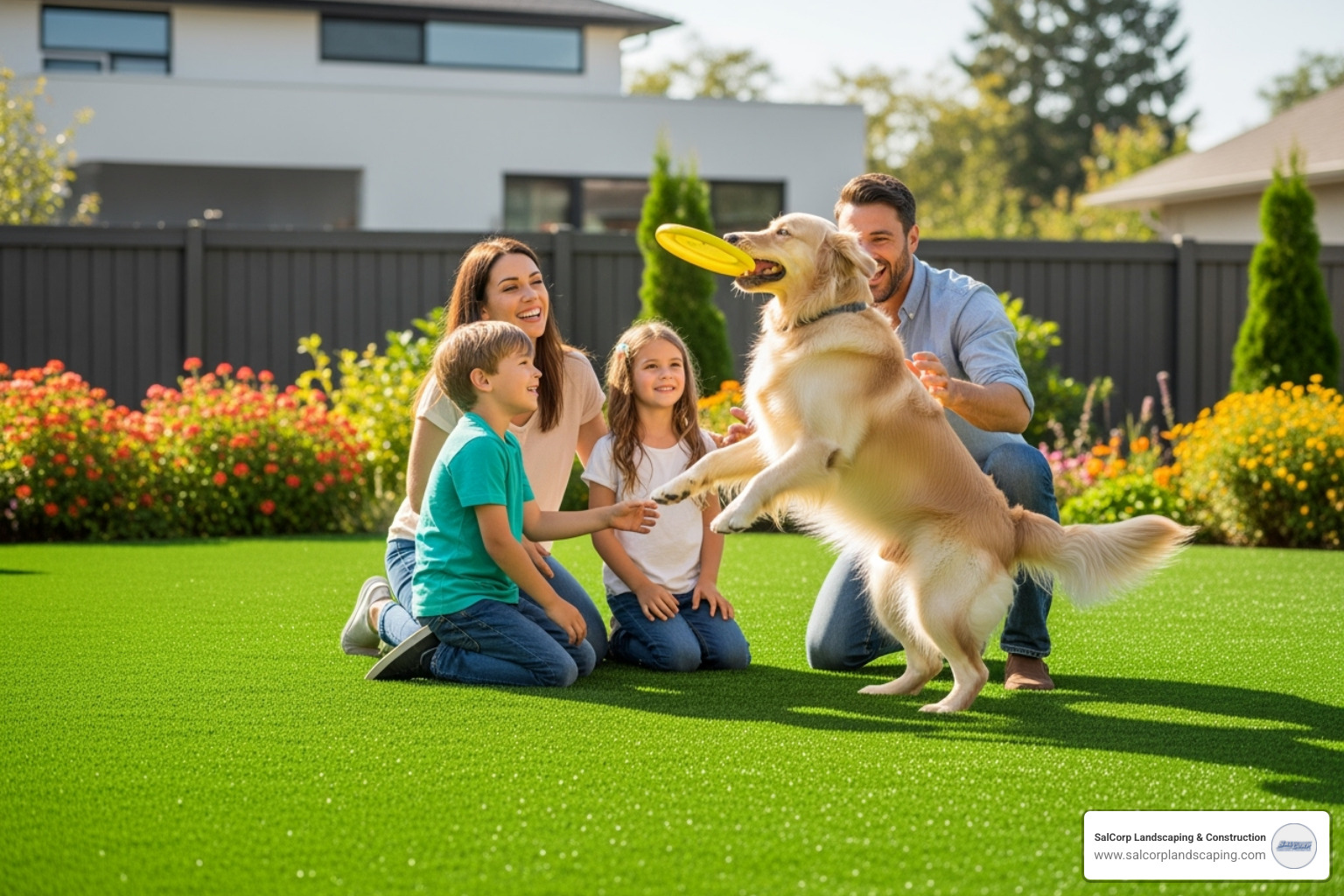
The Upside: Why Homeowners Choose Artificial Grass
Homeowners are drawn to artificial turf for several compelling reasons:
- Always Green: Your lawn looks perfect year-round, from harsh Massachusetts winters to summer droughts.
- Low Maintenance: Say goodbye to mowing, weeding, and fertilizing. Your weekends are yours again.
- Water Conservation: Drastically reduce your water bill and conserve a vital resource.
- Pet-Friendly: Artificial turf is easy to clean and stands up to pets.
- Durable for High Traffic: It withstands heavy use from kids and activities without developing worn patches.
- No Pesticides or Fertilizers: Creates a safer play area for family and pets.
The Downside: What to Consider Before You Buy
It’s also important to consider the potential drawbacks:
- Initial High Cost: The upfront investment is the biggest hurdle for most homeowners.
- Heat Absorption: The surface can get warmer than natural grass in direct summer sun.
- Not a Natural Ecosystem: It doesn’t support the biodiversity of a natural lawn, like earthworms or beneficial insects.
- Improper Installation Risks: A poor installation can lead to drainage issues and visible seams, underscoring the need for a professional.
Maintenance and Lifespan: What to Expect
With proper installation, a synthetic lawn can last 15 to 25 years. The long-term maintenance is minimal:
- Simple Cleaning: Occasionally remove leaves and debris with a leaf blower or broom.
- Brushing Fibers: Periodically brush the turf against the grain in high-traffic areas to keep blades upright.
- Rinsing Pet Areas: Clean up solid waste and rinse the area with water. Use an enzymatic cleaner for odors if needed.
- Infill Replenishment: Minor touch-ups may be needed every few years to replenish infill in heavily used spots.
Frequently Asked Questions about Artificial Turf Costs
Over the years, I’ve noticed that homeowners tend to ask similar questions when they’re considering artificial turf. These concerns are completely understandable – after all, this is a significant investment in your home. Let me address the most common questions we hear about the cost to lay artificial turf.
How much does artificial turf cost for a 1,000 sq. ft. backyard?
A professionally installed 1,000 sq. ft. artificial turf lawn typically ranges from $8,000 to over $20,000. The final price depends on turf quality, infill type, and site complexity.
These figures represent national averages based on publicly available data and do not reflect actual quotes from SalCorp Landscaping & Construction.
A basic installation on a flat, accessible yard will be on the lower end. A premium installation on a sloped yard with rocky soil or drainage issues, common in Massachusetts, will be on the higher end. This cost covers an investment that provides 15-25 years of a low-maintenance lawn.
Does artificial grass increase home value?
Yes, a high-quality, professionally installed artificial lawn can increase home value. It boosts curb appeal with a consistently perfect look year-round. It also appeals to modern buyers seeking low-maintenance solutions that save time, money, and water. A lawn that requires no mowing or irrigation is a strong selling point.
Are there hidden costs in artificial turf installation?
While a reputable installer provides a comprehensive quote, some factors can lead to additional costs if not identified upfront. These can include:
- Subsurface Issues: Finding large rocks, tree roots, or buried debris during excavation.
- Extensive Grading: Significant leveling work required for sloped properties to ensure proper drainage.
- Complex Drainage Systems: Installing French drains or other solutions for properties with poor natural drainage.
- Premium Upgrades: Choosing specialized infill for pets or sports applications, which costs more than standard options.
A thorough site evaluation from an experienced installer is the key to avoiding surprises. At SalCorp, our detailed assessments ensure our quotes are accurate and comprehensive.
Ready for a Flawless Lawn?
Understanding the cost to lay artificial turf reveals it’s more than an expense—it’s an investment in your lifestyle. You gain a consistently beautiful, green lawn and reclaim your weekends from mowing, watering, and maintenance.
While the upfront cost is substantial, the investment pays for itself in 7 to 10 years through savings on water and maintenance. However, the quality of the installation is critical to realizing this long-term value. A poor installation can negate any savings.
Proper site preparation, quality materials, and expert craftsmanship are essential. At SalCorp Landscaping & Construction, we bring over 20 years of owner-operated experience to every project. With our own machinery, we control the entire installation process to ensure the highest standards.
Every Massachusetts property is unique, from Walpole to Newton. That’s why a customized quote is so important. Ready to enjoy a flawless, low-maintenance lawn? For a precise quote for your property in Walpole or surrounding towns, explore our expert lawn installation services. Let’s create the perfect lawn you’ve been dreaming of.
