Designing Garden Steps: 5 Key Steps to a Perfect Yard
Why Well-Designed Garden Steps Matter
Designing garden steps is about creating safe, functional pathways that improve your property’s beauty and accessibility. Well-designed steps transform challenging slopes into neat connections between different areas of your landscape.
Essential Elements of Garden Step Design:
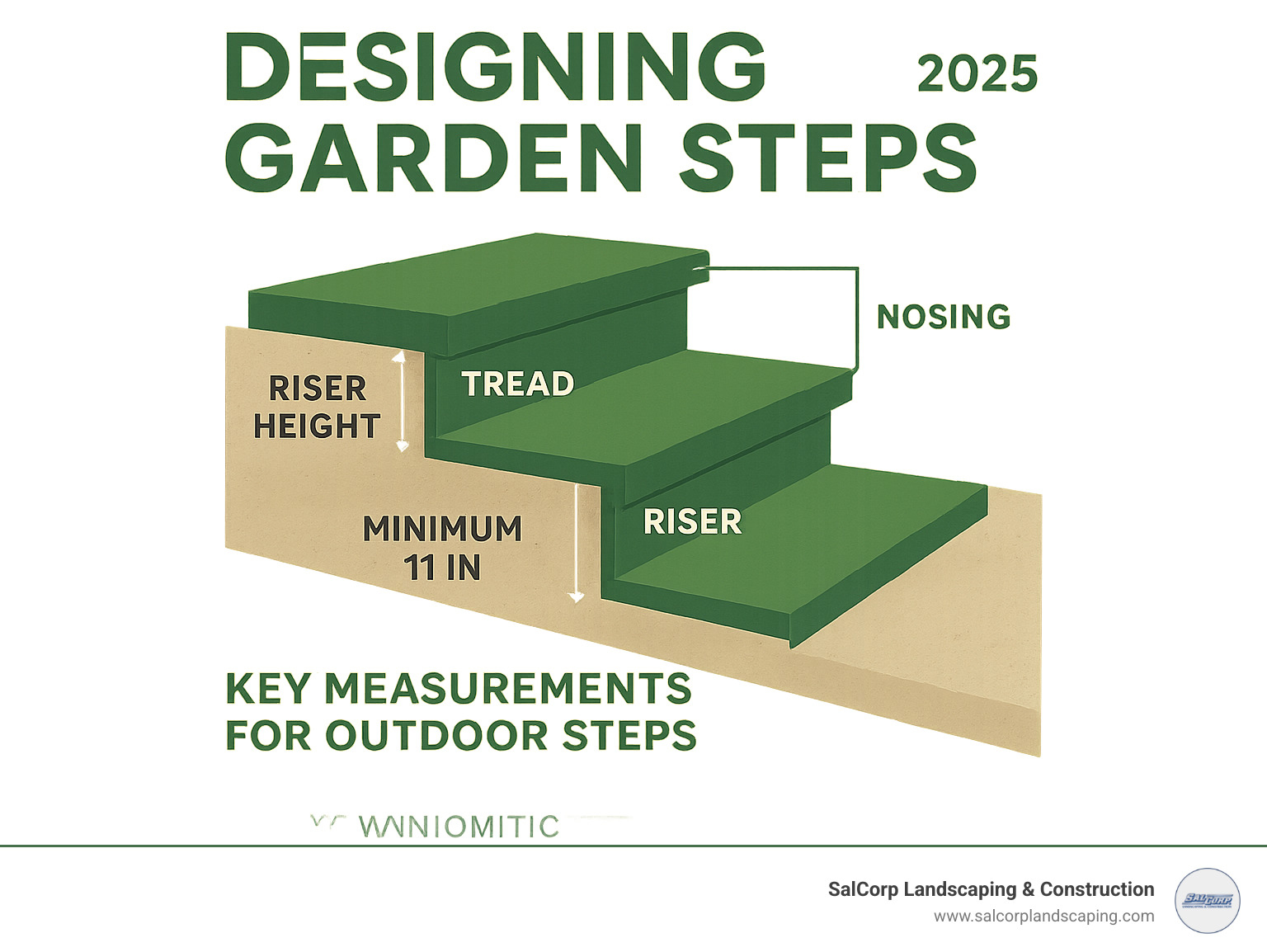
- Safety First: Consistent riser height (4-6 inches) and adequate tread depth (minimum 11 inches)
- Material Selection: Natural stone, concrete pavers, or brick based on your style and budget
- Proper Measurements: Use the 2R + G formula (twice the riser plus going equals 550-700mm)
- Integration: Blend steps seamlessly with existing landscape features
- Accessibility: Include handrails, proper lighting, and non-slip surfaces where needed
Garden steps serve multiple purposes beyond simple navigation. They create visual interest and help define different zones in your outdoor space. When designed correctly, steps can become a focal point that guides visitors through your landscape while preventing soil erosion on slopes.
The difference between indoor and outdoor step dimensions is crucial for safety. Outdoor steps require shallower risers and deeper treads than indoor stairs because users often admire views while walking and lack handrails for support. This means your garden steps need more generous proportions – typically a maximum 17cm riser height with minimum 28cm tread depth.
Property value increases significantly with well-designed hardscaping. Steps that complement your home’s architecture and integrate smoothly with patios, walkways, and plantings create a cohesive outdoor living space that potential buyers find appealing.
As Sal Musto, owner of SalCorp Landscaping & Construction, I’ve spent over two decades designing garden steps that improve outdoor spaces across Massachusetts communities. My hands-on approach ensures every step installation meets the highest standards of safety, durability, and aesthetic appeal.
Designing garden steps terms made easy:
The Blueprint for Designing Garden Steps: From Measurement to Materials
At SalCorp Landscaping & Construction, we view every project as an opportunity to blend functionality with artistic expression. When we approach designing garden steps, it’s a meticulous process that begins with understanding the terrain and culminates in a beautiful, durable, and safe outdoor feature. Our comprehensive Hardscaping Services ensure that every element, from initial calculations to final material selection, contributes to a cohesive and stunning landscape.
Getting the Measurements Right: The Foundation of Safety and Comfort
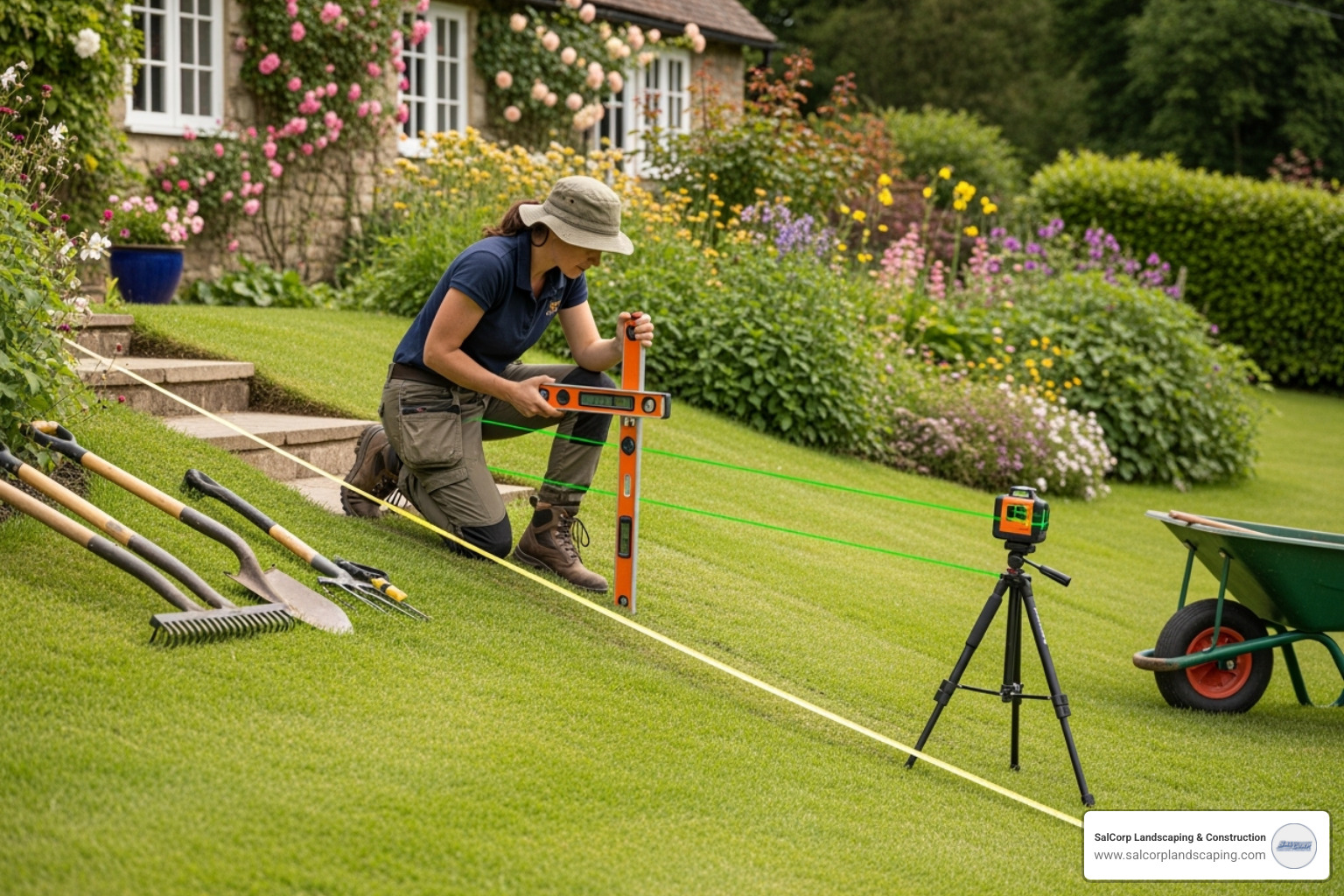
The first and arguably most critical step in designing garden steps is precise measurement. Incorrect dimensions can lead to uncomfortable, unsafe, and even hazardous steps. We focus on three essential measurements: riser height, tread depth, and step width.
- Riser Height: This is the vertical measurement of each step. For outdoor steps, we aim for a maximum riser height of 17cm (approximately 6.7 inches), though a general rule of thumb suggests a 15cm (about 6 inches) maximum. Some experts even recommend keeping it between 4 and 6 inches for optimal comfort. The absolute minimum height should be 100mm (4 inches), as anything less can be a trip hazard. Conversely, the absolute maximum height for comfort should be 200mm (8 inches). Consistency is key; all risers in a flight of steps must be the same height. An unexpected difference of only 15mm in the riser can cause people to stumble.
- Tread Depth: This is the horizontal surface where you place your foot. For outdoor steps, the tread should be a minimum of 28cm (about 11 inches), with many recommending 30cm (about 12 inches) or more for comfort. A deeper tread often accompanies a lower riser height. For instance, a 100mm (4-inch) riser might pair well with a 500mm (20-inch) tread, while a 200mm (8-inch) riser would typically have a shallower tread of around 250mm (10 inches).
- Step Width: The width of your steps should be proportionate to the area they serve. While a minimum width of 60cm (about 2 feet) might suffice for a single person in a small garden, wider steps (typically 3 feet or more) create a more inviting and spacious feel, especially for main pathways or areas with frequent use. Wider steps also offer the opportunity for informal seating or decorative elements.
The 2R + G Formula: To ensure comfortable and safe steps, we apply a classic formula: “Twice the riser (R) plus the going (G, or tread depth) should equal 26 inches” (or 550mm to 700mm). This formula helps us create a natural walking rhythm. For example, if your riser is 6 inches, your tread should be 14 inches (2*6 + 14 = 26).
Outdoor vs. Indoor Dimensions: Outdoor step dimensions differ significantly from indoor stairs. Indoors, typical dimensions are 17-18cm riser height and 22-24cm tread depth. These dimensions are too small and potentially dangerous for outdoor use. Outdoor steps need to be more generously proportioned because users are often admiring views, lack the support of walls or handrails, and generally take a longer stride.
Consistent Measurements: We cannot stress enough the importance of uniformity. Every step in a flight should have identical riser heights and tread depths. This consistency prevents the brain from having to constantly re-adjust, minimizing the risk of trips and falls.
Drainage Slope: For the longevity and safety of your steps, proper drainage is vital. We design treads with a slight downward slope, typically 1:60 or 1:100, to prevent water from pooling, which can lead to slippery surfaces, ice formation in winter, and material degradation over time.
For comprehensive guidance on outdoor step regulations, you can refer to A guide to outdoor step regulations and disabled access regulations. For a broader understanding of Stairs in general, Wikipedia offers an informative overview.
Choosing the Best Materials for Your Garden Style
The materials you choose for your garden steps significantly influence their durability, safety, and overall aesthetic appeal. They help set the mood and integrate the steps seamlessly into your garden’s design. At SalCorp, we specialize in hardscaping solutions that deliver both beauty and resilience.
| Material | Durability | Cost | Aesthetics | Maintenance |
|---|---|---|---|---|
| Natural Stone | Very High | High | Unique, timeless, and natural. Each stone is one-of-a-kind. | Low – may need occasional cleaning. |
| Concrete Pavers | High | Medium | Highly versatile with a wide range of colors, shapes, and textures. | Low – can be individually replaced if damaged. |
| Brick | High | Medium-High | Classic, traditional, and warm aesthetic. | Low to Medium – mortar may need repointing over time. |
| Wood-Look Pavers | High | Medium-High | Offers the rustic look of wood without the risk of rot or insect damage. | Low – no staining or sealing required like real wood. |
| Gravel-Look Pavers | High | Medium-High | Provides a natural, informal look with the benefit of a stable, permeable surface. | Low – offers excellent drainage. |