Edging and Mulch: 3 Steps to a Perfect Garden
Why Proper Edging and Mulch Transform Your Property
Edging and mulch are the foundation of a professional-looking landscape. They work together to protect your plants, reduce maintenance, and boost curb appeal.
Quick Benefits Overview:
- Edging creates clean borders that prevent grass invasion and contain mulch.
- Mulch retains moisture, suppresses weeds, and insulates plant roots.
- Together they reduce lawn care time and protect plants from mower damage.
- Professional results increase property value and curb appeal.
The secret to a pristine yard often lies in the careful combination of these two elements. Edging defines the space between your lawn and garden beds, holding mulch in place and preventing grass from creeping in. Mulch then insulates the soil, retains water, and keeps weeds at bay. This synergy creates a polished, finished look that is both beautiful and low-maintenance.
I’m Sal Musto, owner of SalCorp Landscaping & Construction. For over 20 years, I’ve helped Massachusetts property owners create stunning outdoor spaces. My hands-on experience has shown me that getting these fundamentals right is the key to a landscape that looks professional and stays healthy year-round.
Your Step-by-Step Guide to Perfect Edging and Mulch
Achieving a manicured look is easier when you break it down into steps. Let’s explore how to transform your outdoor spaces, starting with selecting the right materials.
Step 1: Selecting the Right Edging Material
Choosing the right landscape edging impacts cost, durability, and maintenance. Here’s a look at the options.
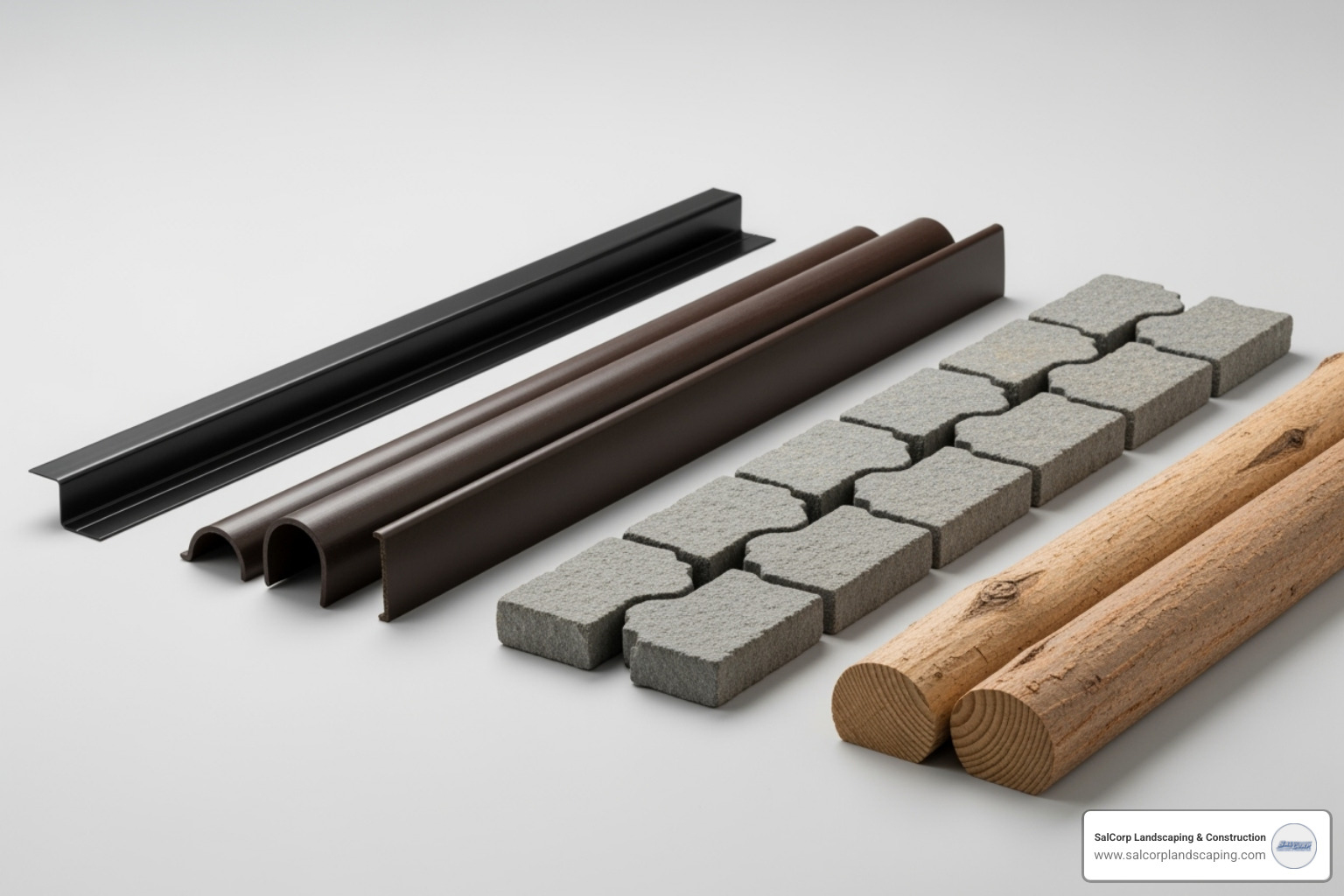
Landscape Edging Types: A Material Breakdown
- Plastic Edging: The most economical choice, plastic is flexible and ideal for curves. While easy to install, lower-quality plastic can become brittle and lift over time.
- Metal Edging (Steel and Aluminum): A sturdy, durable choice for clean, crisp lines. Aluminum is lighter, more flexible, and won’t rust, making it a great long-term solution, though it comes at a higher cost.
- Stone Edging (and Brick/Concrete): These materials offer a timeless, robust look. They are extremely durable but can be costly and require more effort to install. Mowers can’t get close, so hand-trimming is necessary.
- Wood Edging: Redwood and cedar offer a natural look and are insect-resistant. Wood is easy to work with but will eventually rot. Avoid pressure-treated wood for vegetable gardens.
- Rubber Edging: Made from recycled materials, rubber is flexible, durable, and easy to install, making it perfect for curved areas.
- Vinyl Edging: Often available in taller sections, vinyl acts as an effective root barrier. It’s long-lasting and provides a bold, defined look.
Comparing Edging Materials: Cost, Durability, Installation, and Aesthetics
| Material | Cost (Average Internet Data) | Durability | Ease of Installation | Aesthetic Appeal |
|---|---|---|---|---|
| Plastic | Low (e.g., $0.50 – $2.00/linear foot) | Moderate | Easy | Basic to Moderate |
| Metal | High (e.g., $3.00 – $10.00+/linear foot) | High | Moderate | Sleek, Modern |
| Stone | High (e.g., $3.00 – $15.00+/linear foot) | Very High | Difficult | Natural, Classic |
| Brick | Moderate (e.g., $1.00 – $5.00/linear foot) | High | Moderate to Difficult | Traditional, Rustic |
| Concrete | High (e.g., $5.00 – $20.00+/linear foot) | Very High | Difficult (Poured) | Versatile, Formal |
| Wood | Moderate (e.g., $1.00 – $5.00/linear foot) | Moderate | Easy to Moderate | Natural, Informal |
| Rubber | Low to Moderate (e.g., $1.00 – $3.00/linear foot) | High | Easy | Natural, Versatile |
| Vinyl | Moderate (e.g., $1.00 – $4.00/linear foot) | High | Easy to Moderate | Clean, Defined |
Please note: These are average costs based on internet data and not actual costs for SalCorp Landscaping. Prices can vary widely based on material quality, supplier, and regional differences.
How Climate and Soil Type Influence Your Choice
Your local environment matters. In areas with freeze-thaw cycles, flexible materials like plastic or durable ones like stone work well. Metal can corrode in salty coastal air. Soil type also affects installation; flexible edging is easier in loamy soil, while stone and concrete are more stable in hard-packed clay. For more design insights, see More info about landscape design.
Step 2: How to Install Landscape Edging Like a Pro
Proper installation is key to your landscape edging’s effectiveness and longevity.
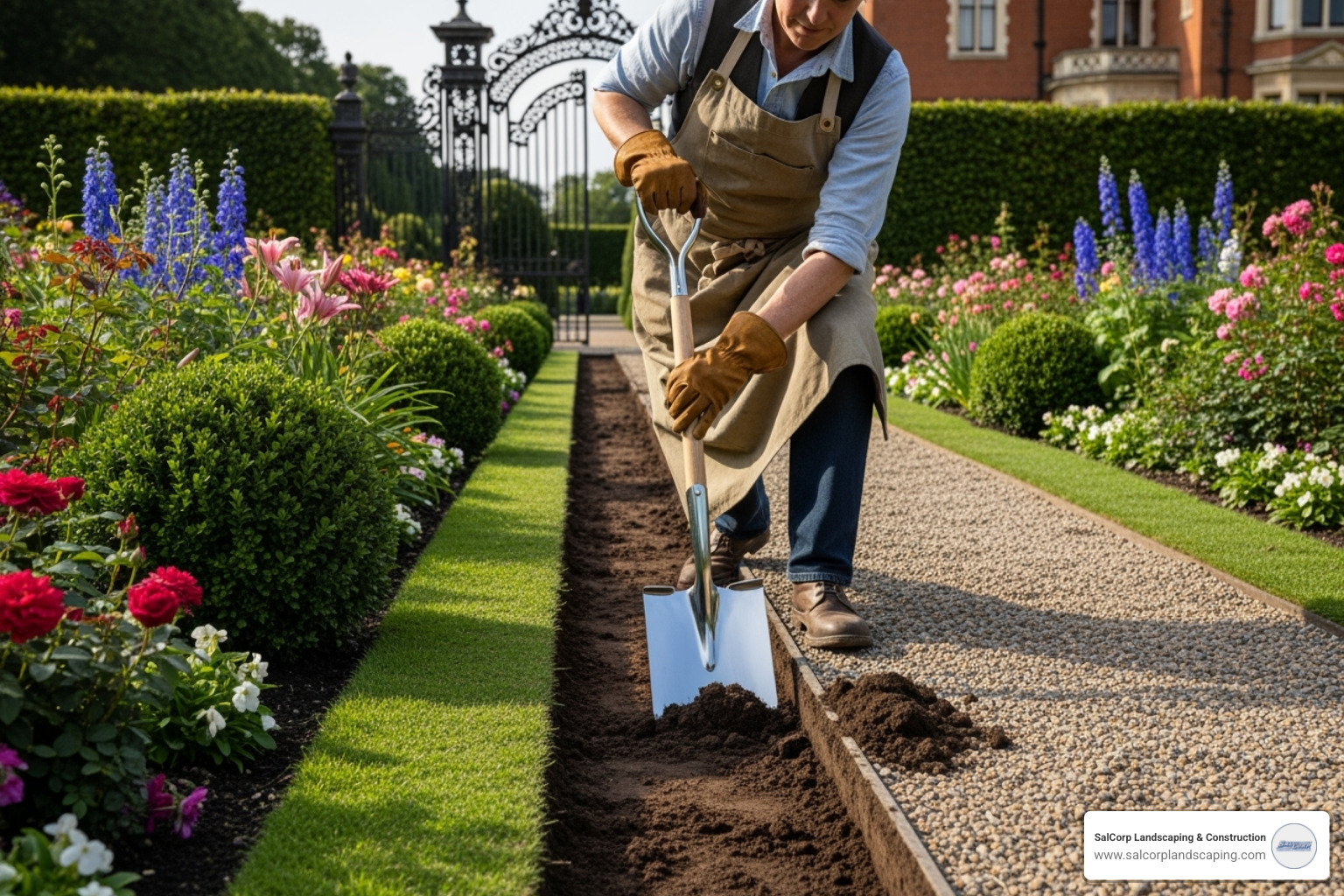
Installation Best Practices
- Plan & Mark: Sketch your design and mark the lines with a hose or paint.
- Measure: Measure the length and add 10% to account for bends and turns.
- Prepare: Clear the area of grass and weeds.
- Order of Operations: For new beds, the best sequence is: weed, trim shrubs, edge, apply weed preventer, then mulch.
The ‘Victorian Trench’ Method: A Natural Solution
For a material-free approach, dig a V-shaped trench between the lawn and garden bed. Use a flat-edged shovel to cut straight down about 3 inches, then make a second cut at a 45-degree angle into the bed. Remove the soil and fill the bed with mulch up to the new edge. This natural border requires annual re-cutting but allows mowers to trim right to the edge.
Edging’s Protective Role
A defined edge contains mulch, preventing it from washing onto your lawn. It also creates a protective barrier, keeping lawnmowers away from garden plants and string trimmers from damaging tree trunks, which can be fatal to young trees.
Common Installation Mistakes to Avoid
- Lack of Planning: Not sketching a design or considering plant growth can lead to problems later.
- Inadequate Preparation: Failing to clear weeds and grass will undermine your work.
- Ignoring Depth: A shallow edge won’t contain mulch effectively and will require more maintenance. Aim for a 2-3 inch depth for permanent barriers.
For more inspiration, see these Creative Ideas for Garden Borders and Edging.
Step 3: The Synergy of Edging and Mulch for a Healthy Garden
With your edging installed, it’s time for its perfect partner: mulch.
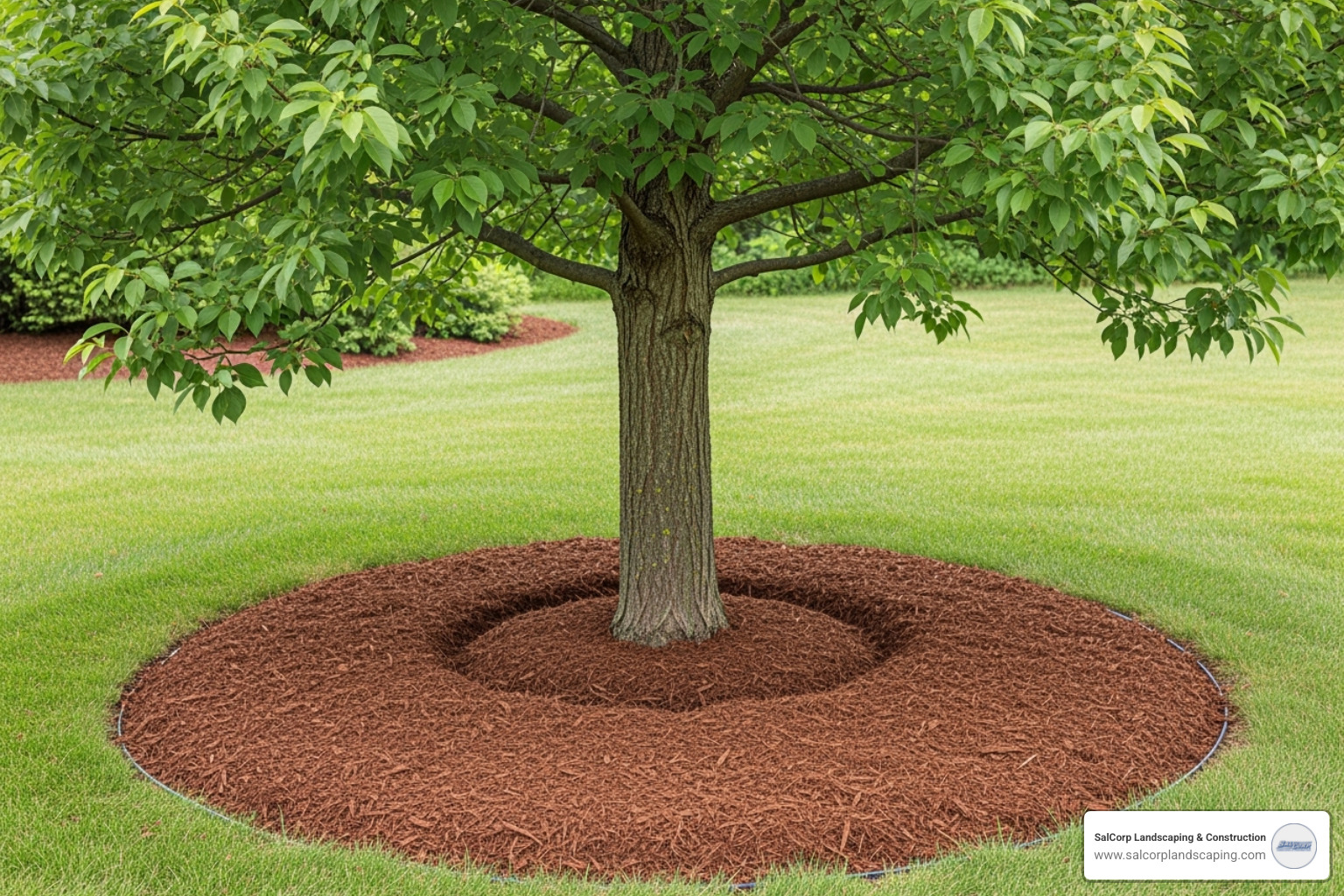
Benefits of Mulching Around Trees and Garden Beds
Mulching is vital for plant health. It insulates soil from extreme temperatures, retains moisture to reduce watering needs, and suppresses weed growth. Organic mulches also decompose over time, adding valuable nutrients to the soil.
Correct Mulch Application Around Trees
The biggest mistake is creating “mulch volcanoes” by piling mulch against the tree trunk, which can cause rot and disease.
- Clear the Area: Remove grass and weeds in a circle around the tree, extending to the “dripline” (the edge of the canopy).
- Apply Mulch: Spread a 2-4 inch layer of mulch over the cleared area.
- Create a Donut, Not a Volcano: Leave a few inches of space between the mulch and the tree trunk. This allows the bark to breathe and encourages roots to grow deep.
Common Mulching Mistakes to Avoid
- Piling mulch against trunks: This causes rot and disease.
- Applying too much or too little: Stick to a 2-4 inch depth.
- Using landscape fabric: It can prevent organic mulch from enriching the soil and make weeding harder over time.
For professional results, consider our Lawn Service Mulch Installation.
Beyond the Basics: Maintenance, Mistakes, and Making it Last
Creating beautiful edging and mulch beds is just the beginning. Proper maintenance is the secret to a lasting, magazine-worthy look.
Maintaining Your Masterpiece
Regular touch-ups keep your landscape looking sharp.
Keeping Edges Crisp
- Weekly string trimming during the growing season prevents grass from creeping over your edges.
- A monthly spade cleanup removes accumulated dirt and debris, keeping borders defined.
- For a Victorian trench, plan on an annual sprucing in the spring to re-cut the V-shape and remove any encroaching grass.
Material-Specific Care
Different materials require different attention. Keep an eye on wood edging for rot, and check that plastic edging hasn’t lifted or become brittle. Here in Massachusetts, our freeze-thaw cycles can cause frost heave in stone, brick, and concrete edging. Check these annually and reset any shifted pieces to maintain their function and appearance.
Common Pitfalls and Creative Edging and Mulch Ideas
Learning from common mistakes can save you time and money.

Avoiding Common Mistakes
The biggest pitfall is poor planning. Failing to account for mature plant sizes or prepare the soil properly by removing weeds will lead to future headaches. Also, be sure to check local regulations and HOA covenants before starting a major project to avoid potential fines or do-overs.
Creative Solutions That Work
- Living Borders: Use low-growing perennials or ornamental grasses for a dynamic edge.
- Natural Stone: Fieldstone or river rocks create a rustic, cottage-garden appeal.
- Recycled Materials: Reclaimed bricks or weathered wood add character (just avoid old railroad ties).
- Unique Styles: Consider mini wooden fences for a cottage look or bamboo edging for a zen-like quality.
For more inspiration, check out these Find more garden edging tips.
Lift Your Landscape with Professional Services
While DIY projects are rewarding, professional help is often the smart choice for larger projects or to guarantee a polished result.
The Value of Professional Results
Expertly installed edging and mulch significantly boosts curb appeal and property value. The difference lies in the details—perfectly straight lines, consistent mulch depth, and materials chosen for local conditions. This creates a landscape that looks stunning and remains low-maintenance for years.
SalCorp Landscaping & Construction: Your Massachusetts Partner
As an owner-operated business in Walpole, we bring over 20 years of hands-on experience to every project. We understand Massachusetts’ unique climate and soil, serving communities throughout the state. Our comprehensive approach means we handle everything from design to installation with our own equipment and expertise. You get personalized service directly from experienced professionals dedicated to creating an outdoor space that improves your property’s value and your daily life.
Ready to transform your landscape? Get a professional quote for mulch delivery and installation and see how our expertise can bring your vision to life.