

Edging before mulching: 1 Non-Negotiable Step
Why Proper Edging Makes All the Difference in Professional Landscaping
Edging before mulching is the foundation of professional-looking landscape beds. Here’s what you need to know:
Key Benefits:
- Creates a clean barrier – Prevents mulch from spilling onto your lawn
- Stops grass invasion – Blocks turf from growing into your garden beds
- Saves money – Keeps expensive mulch contained where it belongs
- Simplifies maintenance – Makes mowing and trimming much easier
The Process:
- Cut a clean line between lawn and bed
- Create a 3-4 inch deep trench at a 45-degree angle
- Remove grass and debris
- Apply mulch to the newly defined edge
Ever wonder what makes a professionally maintained property look so polished? The secret often lies in one crucial step many homeowners skip: edging before mulching.
Without proper edging, even the best mulch job looks messy within weeks. Grass creeps into beds, and loose mulch scatters after the first heavy rain. A clean edge creates the sharp definition that transforms an ordinary yard into a professionally maintained one.
As Sal Musto, owner of SalCorp Landscaping & Construction, I’ve seen countless properties transformed by proper edging before mulching techniques. My two decades of experience have shown me this single step separates amateur from professional results.
Why Edging Before Mulching is a Non-Negotiable First Step
Have you ever spent a weekend spreading fresh mulch, only to see it scatter across your lawn after the first heavy rain? This frustrating scenario is common for homeowners who skip one crucial step: edging before mulching.
Edging before mulching isn’t just a detail; it’s the foundation that makes everything else work. Like a house without a foundation, a landscape without a proper edge will eventually fall apart.
A proper edge establishes a sharp definition between your lawn and garden beds. This clean line is a core landscape design principle that separates a “homemade” yard from a professional one.
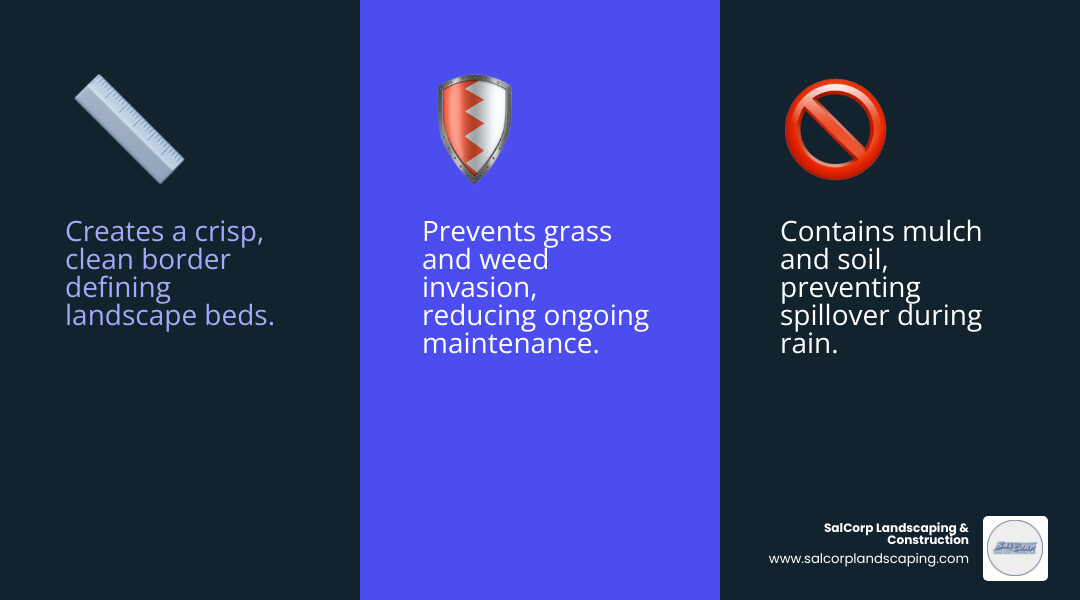
Practically, the edge prevents mulch from spilling onto your lawn and contains soil and mulch during rain. This means you won’t watch your investment wash away during Massachusetts’ notorious spring downpours.
The money-saving aspect alone makes edging before mulching worthwhile. When mulch stays put, you buy fewer replacement bags and spend less time on maintenance, as the edge creates a barrier against grass and weeds.
Surprisingly, grass grows 3-4 inches per year into garden beds. Without an edge, you’ll constantly battle this turf encroachment, pulling grass from between your plants.
A good edge also simplifies lawn mowing by giving you a clear line to follow. For comprehensive lawn maintenance that includes proper edging techniques, check out our Lawn Care Maintenance Services.
The University of Illinois Extension has an excellent resource on Edging and Mulching Landscape Beds that dives deeper into these principles.
The Functional Barrier: Containing Mulch and Stopping Weeds
A natural edge is like a fortress for your garden beds, and its secret weapon is a simple V-shaped trench.
This V-shaped trench should be 3-4 inches deep to create a real root barrier. Its angled sides catch escaping mulch and redirect it back into the bed.
Mulch retention and soil retention become automatic. During spring storms, your mulch and soil stay put instead of migrating across the lawn.
The trench also disrupts grass roots, creating a 24/7 weed prevention barrier. It stops the constant expansion of grass into your beds.
The Aesthetic Advantage: Achieving a Polished, Professional Look
What gives a home that “wow factor”? Often, it’s the clean lines in the landscaping.
A crisp edge creates visual separation, making garden beds pop. Like a picture frame, it gives a polished, manicured appearance that signals a well-cared-for property.
The impact on curb appeal is immediate. We’ve seen properties transformed into showplaces simply by adding proper edges. It’s a change that makes people take a second look.
This detail can even contribute to increased property value. Real estate professionals agree that well-maintained landscaping, including crisp edges, makes a positive impression on buyers.
At SalCorp Landscaping & Construction, we’ve been creating these stunning changes for over 20 years. Our Landscape Design Services focus on these foundational elements that make the biggest visual impact.
A How-To Guide for Creating the Perfect Natural Edge
Creating a crisp, clean edge is deeply satisfying. The technique, known as a “spade-cut edge” or “Victorian trench,” is a timeless method used by professionals for generations, proving you don’t need expensive materials for stunning results.
Natural edging is appealing because it’s adaptable. Unlike permanent materials, you can easily adjust the shape and size of your beds as your landscape evolves, accommodating changes without waste or extra expense.
The beauty of edging before mulching is its simplicity. With basic tools and effort, you can create the foundation for a professionally maintained landscape.
Essential Tools for a Clean, Natural Edge
Before you start, gathering the right tools will make the job much easier, turning a chore into a manageable project.
- A sharp, sturdy flat-edged shovel or spade is your most important tool. A sharper spade makes cleaner cuts, especially in the tough clay soils common in Massachusetts.
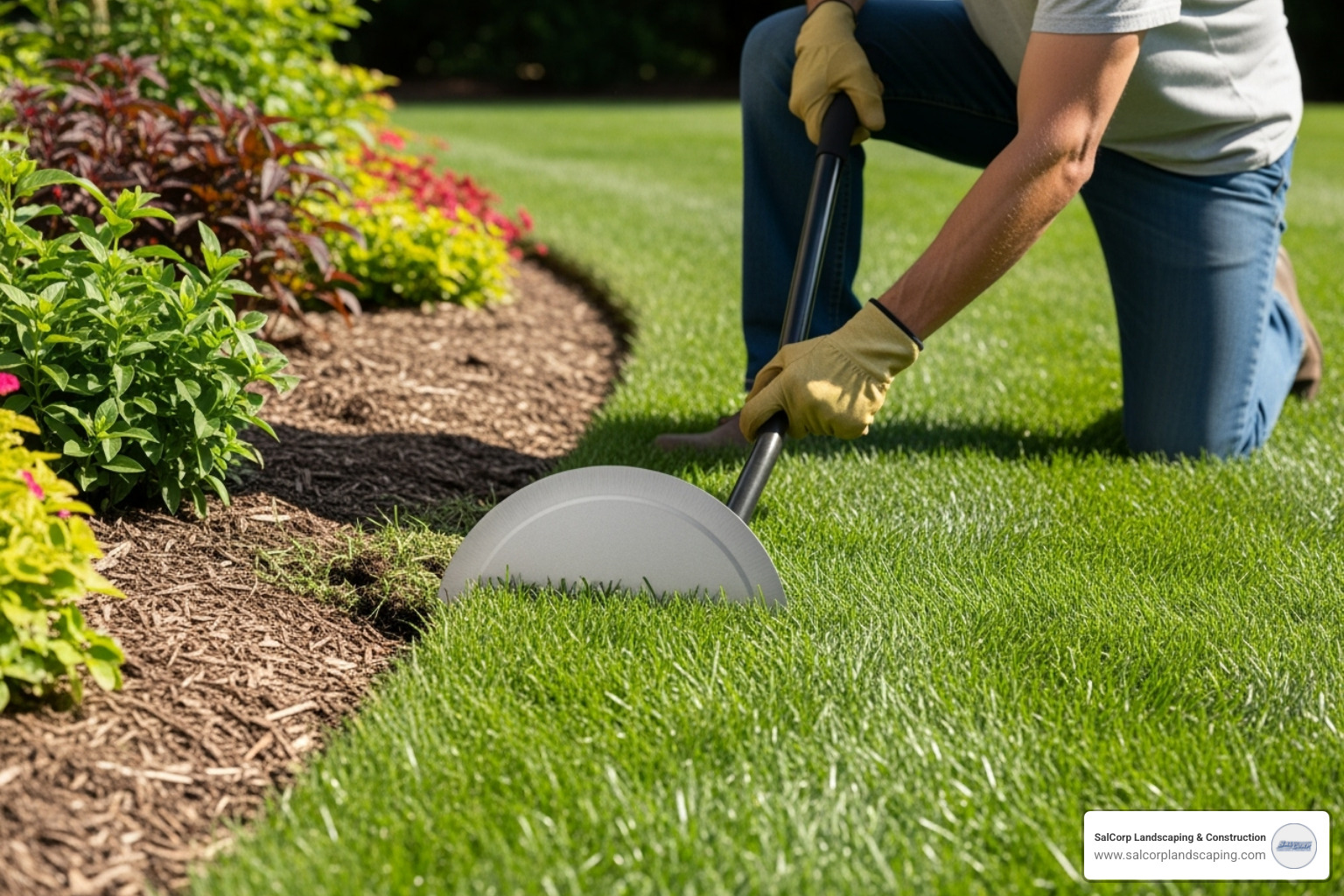
- A half-moon edger is a secret weapon for smooth, continuous lines. Its curved blade is designed for this task and glides through turf, creating a professional-looking curve.
- A good string trimmer, especially a straight-shaft model, is ideal for maintenance. Flipped vertically, it creates sharp cuts to keep edges crisp between re-edging sessions.
- You’ll also want a wheelbarrow or sturdy tarp for sod, garden gloves for your hands, and a kneeling pad to save your knees.
Step-by-Step Guide to Edging Before Mulching
Now, let’s create that perfect edge. The process is straightforward; taking your time on each step ensures professional results.
Step 1: Mark Your Line. For straight edges, use a string line between stakes. For curves, lay out a garden hose. A well-planned line is the foundation of a beautiful edge, so don’t rush this step.
Step 2: Make the Vertical Cut. Using your spade or half-moon edger, cut 3 to 4 inches straight down along your line. For longer edges, use small, overlapping cuts to maintain a continuous line.
Step 3: Dig the Angled Trench. Stand with your back to the bed and place your shovel 2 to 3 inches inside the first cut. Slice into the turf at a 45-degree angle, meeting the bottom of your vertical cut. This creates the V-shaped trench that contains mulch and stops grass.
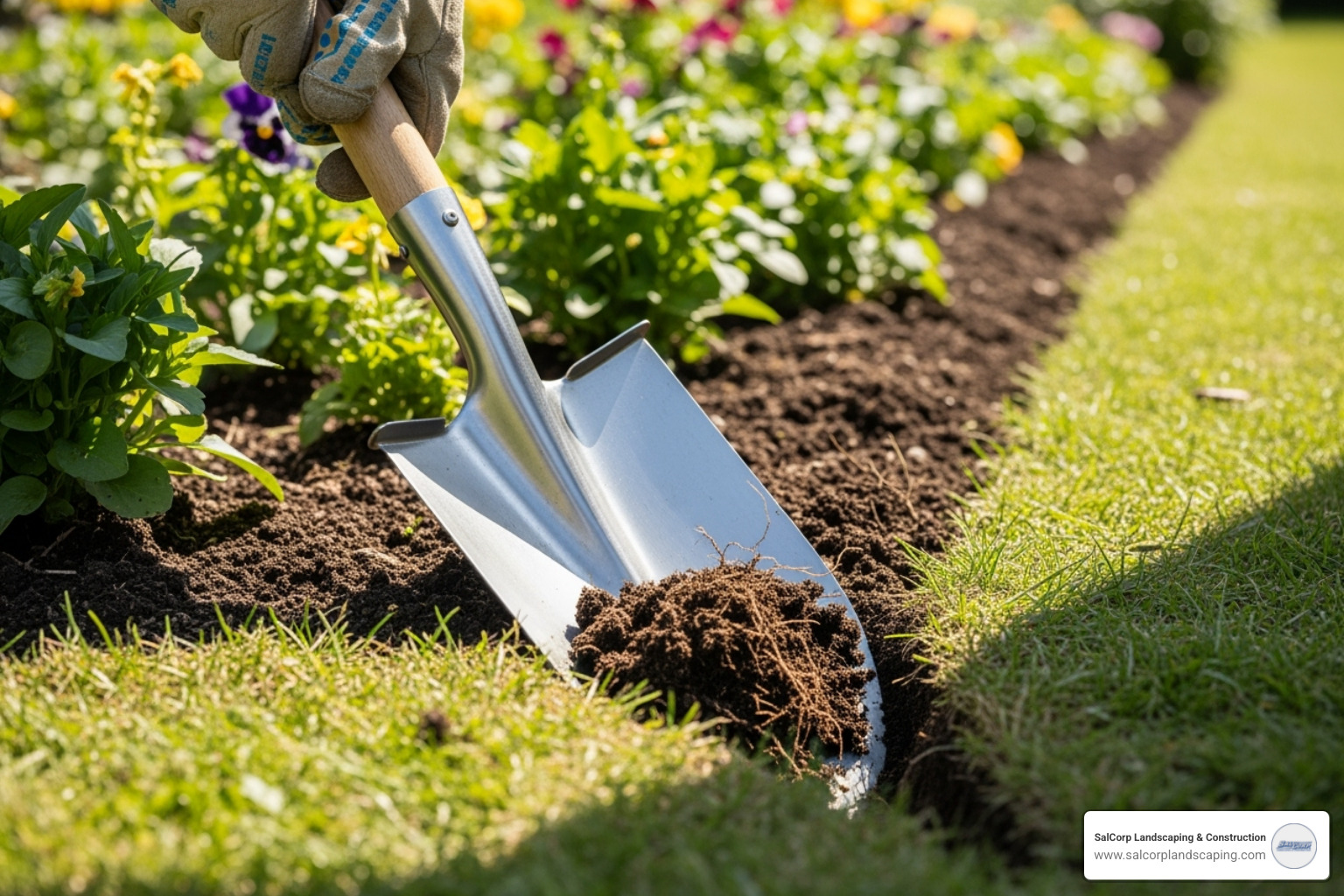
Step 4: Remove the Sod. If your cuts are good, the wedge-shaped sod pieces will lift out easily. Toss them in your wheelbarrow to compost or use for patching bare spots.
Step 5: Smooth the Bed Soil. Use a rake to pull loose soil back into the bed, creating a gentle slope into the trench. This final step ensures a professional look.
For larger commercial properties or if you’d prefer to leave this to the professionals, our team offers specialized Commercial Edging for Landscaping services.
Maintaining Your Natural Edge Throughout the Seasons
A natural edge needs regular touch-ups to stay sharp. Once the initial edge is established, maintenance is much more manageable.
Plan on annual re-edging as a baseline. Spring is the perfect time, just before you mulch. A second re-edging in the fall is also beneficial. This twice-yearly attention maintains the crisp definition and prevents grass from returning.
Between major sessions, use your string trimmer every 2-4 weeks during the growing season. A few minutes of vertical trimming prevents small grass incursions from becoming major headaches.
Consistency is key. Regular attention to your edges keeps your landscape looking professional and pays dividends in curb appeal.
The Final Touch: How to Mulch After Edging
Now it’s time to apply mulch to your beautifully edged beds. Proper mulch application is what transforms your landscape from good to stunning. Mulch acts as nature’s blanket, protecting plants, suppressing weeds, and giving your garden a rich, finished look.
But mulch isn’t just about looks. It insulates soil, retains moisture during hot Massachusetts summers, and feeds the soil as it breaks down. Applying it incorrectly can harm plants, so getting this step right is crucial.
Proper Mulch Application for Healthy Plants
With defined edges, your mulch will stay where it belongs. Successful mulching depends on getting the details right, starting with proper depth.
For new beds, apply 2.5 to 3 inches of mulch. This creates a weed barrier while allowing water to reach roots. For existing beds, 1 to 2 inches is usually enough. Your new edge will keep the mulch contained.
The most critical rule is to leave space around plant stems and tree trunks. Plants need to breathe, and a gap of a few inches allows for air circulation, preventing moisture buildup that can cause rot and disease.
Pay attention to perennial crowns, the growing points where new shoots emerge. Burying them in mulch prevents them from reaching sunlight.
After spreading, give the mulch a thorough watering. This settles the material, prevents it from blowing away, and helps it make better contact with the soil.
Wood mulches are particularly beneficial for moisture retention and natural weed suppression. You can learn more about the advantages of wood mulches and explore our comprehensive Mulching services for professional application.
Common Mistakes to Avoid After Edging Before Mulching
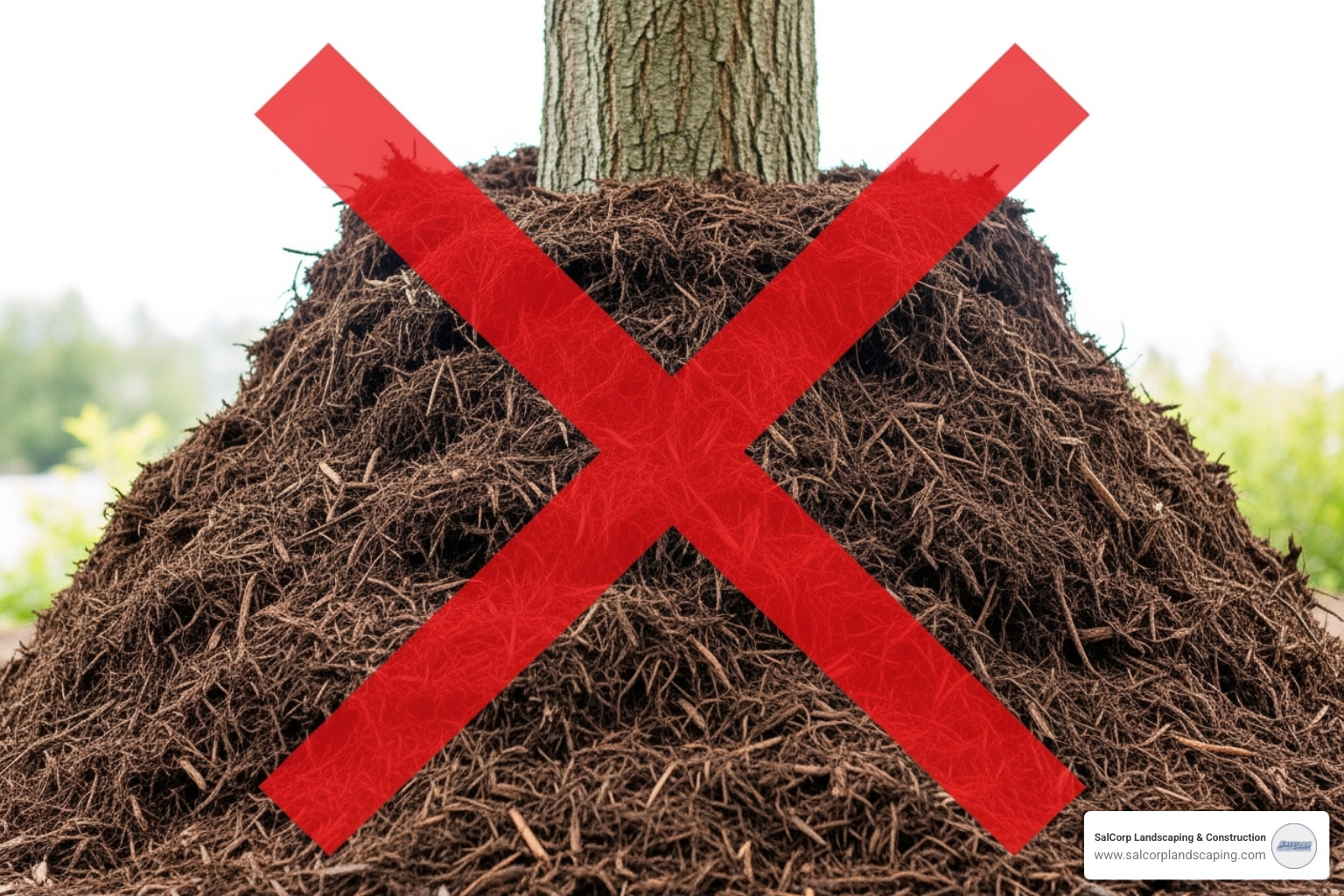
Even with perfect edging, mulching mistakes can damage your plants. The most common is “volcano mulching”—piling mulch in a cone against tree trunks. This practice suffocates trees and invites pests and diseases.
Instead, think “donut, not volcano.” Create a mulch ring around trees, leaving the trunk clear. This simple change can save your trees.
Another error is applying mulch too deeply. More is not better. Excessive depth prevents oxygen from reaching roots, suffocating them. Stick to the recommended depths.
Timing matters. Always water beds thoroughly before mulching to lock in moisture. Also, never mulch over existing weeds. Clear them first, as mulch prevents new weeds but won’t kill established ones.
Finally, when refreshing old mulch, loosen any matted layers first to improve drainage and air movement.
Natural Edging vs. Physical Barriers
When defining garden beds, a natural trench is a great option, but it’s not your only one. Some homeowners love the organic look of a spade-cut edge, while others prefer the permanence of physical barriers like plastic, metal, or stone edging.
Each approach has different maintenance needs and aesthetics. Understanding them helps you choose what’s best for your lifestyle. At SalCorp, we work with all edging materials. For more on permanent elements, explore our services related to Hardscaping.
Here’s how the main options stack up:
| Feature | Natural Edging (Spade-Cut Trench) | Plastic Edging | Metal Edging | Stone/Brick Edging |
|---|---|---|---|---|
| Cost | Low (DIY labor, minimal tools) | Low | Medium to High | High (materials & installation) |
| Durability | Low (needs annual re-cut) | Low (can break, pop up, degrade over time) | High (rust-resistant, long-lasting) | Very High (durable, can last decades) |
| Maintenance | High (frequent re-cutting/trimming) | Medium (can shift, grass grows over/under) | Low (stays in place, minimal weed intrusion) | Medium (can shift, weeds in cracks, some hand-trimming) |
| Aesthetics | Natural, fluid, blends seamlessly | Often considered less appealing, visible | Clean, modern, subtle | Classic, robust, adds architectural element |
| Installation Difficulty | Medium (labor-intensive initially) | Easy | Medium (requires precise alignment) | High (labor-intensive, requires skill) |
Advantages and Disadvantages of a Natural Edge
The natural edge has a special charm, but it comes with trade-offs.
Pros:
- Cost-effective: You’re investing time, not money on expensive materials.
- Natural look: It creates a soft, organic transition between lawn and garden.
- Adaptable: You can easily adjust the edge to accommodate an expanding garden.
Cons:
- Requires annual maintenance: It needs re-cutting to keep its crisp look.
- Labor-intensive: The work can be physically demanding, especially with clay soil.
When to Consider Physical Edging Materials
While a natural trench is great, physical barriers sometimes make more sense.
- Low-maintenance preferences: A metal or stone edge is worth the investment if you want to avoid annual re-edging.
- Aggressive grass types: For grasses that a simple trench can’t stop, a deeper physical barrier provides the necessary defense.
- Hardscape projects: For projects like our Walkway Installation or Patios, permanent edging provides a clean, structural finish.
- Long-term permanent solution: Materials like stone, brick, or quality metal can be installed once and last for decades with minimal intervention.
Frequently Asked Questions about Edging and Mulching
At SalCorp Landscaping & Construction, we get a lot of questions about edging before mulching. Here are the answers to the most common ones.
How deep should a natural edge trench be?
An effective natural edge should be 3 to 4 inches deep. This depth creates a “functional lip” that contains mulch and soil, preventing them from washing away during heavy Massachusetts rains or spilling onto the lawn.
Crucially, this depth also disrupts grass roots. Since grass can grow 3-4 inches into beds annually, a deep trench creates a significant barrier against this turf encroachment.
Can I just use a string trimmer to create an edge?
Many homeowners ask if they can use a string trimmer. The short answer is: a string trimmer is excellent for maintenance, but not for creating a new, deep edge.
To create a new edge, you need a spade or manual edger to get the crucial 3-4 inch depth. A string trimmer can’t dig deep enough to create that functional barrier.
Once the edge is established, however, a string trimmer is the best tool for maintenance. Use it vertically every few weeks to keep the line crisp and clean up stray grass.
What is the average cost for professional edging and mulching?
The cost of professional services can vary depending on your specific situation.
Based on general industry data we’ve researched, professional edging services typically range from $0.75 to $3.00 per linear foot. The variation depends on factors like soil conditions, accessibility, and the complexity of your bed shapes.
For mulch installation, including both materials and professional application, you might see costs ranging from $40 to $120 per cubic yard installed. Again, the wide range reflects different mulch types, delivery logistics, and site conditions.
Please keep in mind that these are average costs based on internet data and not actual pricing for SalCorp Landscaping & Construction services. Every property is unique, and we always provide personalized quotes that reflect your specific needs and site conditions.
Get a Flawless Finish for Your Massachusetts Landscape
After proper edging before mulching, the change to your property is remarkable. An ordinary yard gains a crisp, intentional appearance. Clean lines create definition, mulch stays contained, and your landscape looks professionally designed.
Edging first creates a foundation for a healthier, lower-maintenance landscape. Plants thrive, maintenance is simpler, and your mulch investment is protected. It’s a simple secret with dramatic results.
A crisp edge lifts your entire landscape from amateur to professional. The sharp definition between lawn and garden beds creates immediate visual impact, signaling a well-maintained property.
For homeowners in the Walpole, MA area and surrounding communities, achieving this flawless finish doesn’t have to be a DIY challenge. The expert team at SalCorp Landscaping & Construction brings over 20 years of experience to every project. As an owner-operated business with our own specialized machinery, we understand exactly how to create those perfect edges and apply mulch for long-lasting results.
Whether you’re tackling a small garden bed refresh or planning a complete landscape overhaul, professional edging before mulching services ensure your investment pays off for years to come. We serve communities throughout Massachusetts, bringing that same attention to detail and commitment to quality to every property we work on.
Ready to see what a difference professional edging and mulching can make? Get a professional quote for mulch delivery and installation and find how SalCorp Landscaping & Construction can transform your outdoor space with that perfect, polished finish your landscape deserves.
