

Garden maintenance schedule: Your Perfect 4-Season Plan
Why a Garden Maintenance Schedule is Essential for Massachusetts Properties
A well-planned garden maintenance schedule is the foundation of any thriving landscape. For both commercial properties and home gardens, timing is everything when it comes to keeping your outdoor spaces healthy and beautiful year-round.
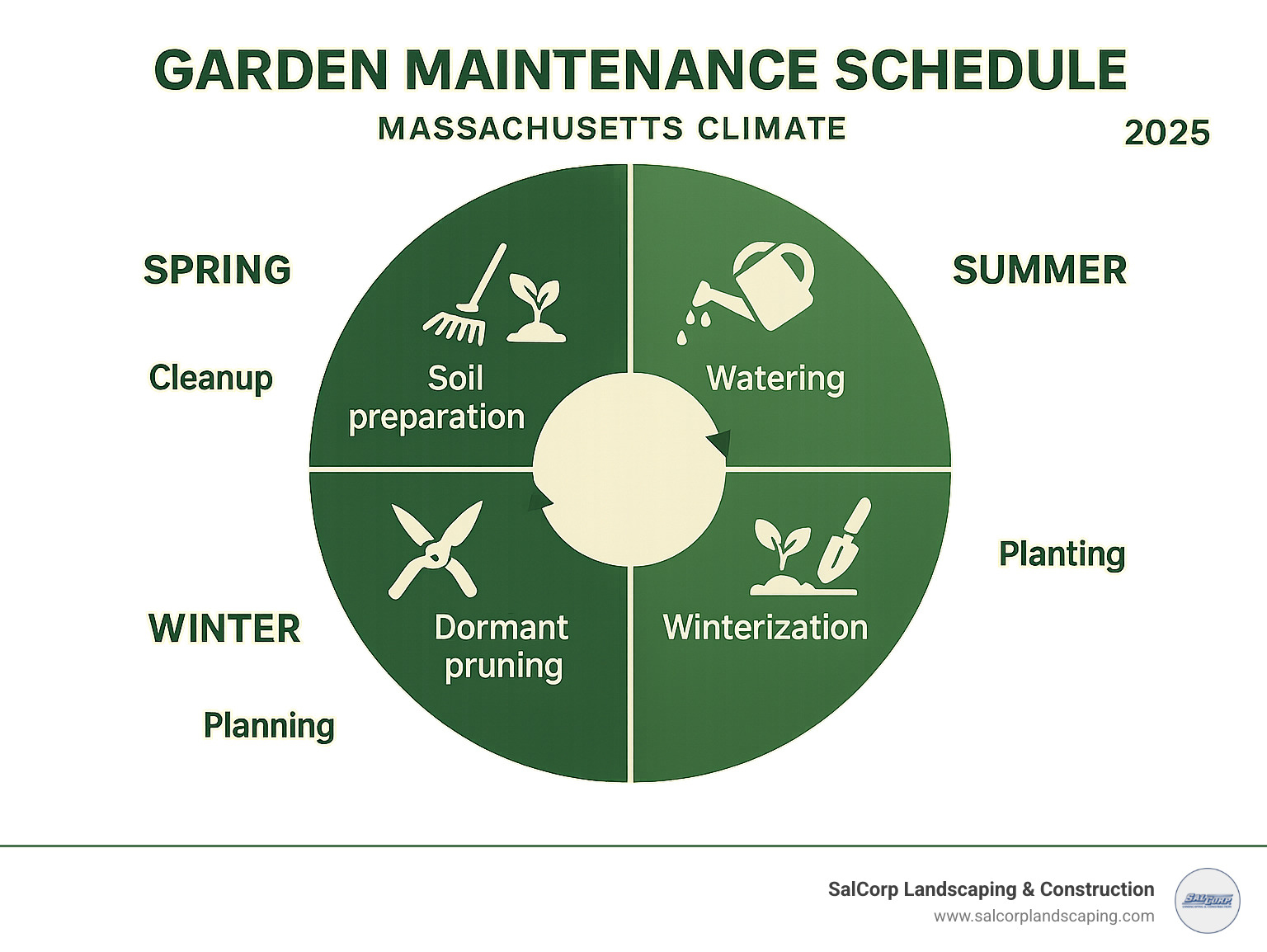
Essential Garden Maintenance Schedule by Season:
- Spring (March-May): Cleanup, pruning, soil preparation, planting, lawn aeration
- Summer (June-August): Mowing, deep watering, deadheading, pest monitoring, weed control
- Fall (September-November): Leaf cleanup, overseeding, planting, winterizing irrigation
- Winter (December-February): Dormant pruning, plant protection, garden planning
Regular maintenance keeps plants healthy and robust, preventing issues from spiraling out of control. For instance, mulching alone can reduce about 70 percent of summer yard maintenance, making garden care more efficient.
The benefits extend beyond aesthetics. A consistent schedule maximizes plant health, improves vegetable yields, and builds resilience against seasonal challenges. Well-maintained landscapes also see increased property value and create healthier ecosystems that attract beneficial wildlife.
As the seasons change in Massachusetts, so do your garden’s needs. Spring requires cleanup and preparation, summer demands watering and pest control, fall is for winter prep, and winter offers time for planning and dormant pruning.
I’m Sal Musto, and with over two decades of experience in Massachusetts landscaping, I’ve seen that a structured garden maintenance schedule is the difference between a landscape that merely survives and one that truly thrives. At SalCorp Landscaping & Construction, we help property owners develop effective plans for our unique New England climate.
The Foundation: Year-Round Garden & Soil Health
Your soil is the lifeblood of your garden, and maintaining its health year-round is what separates struggling plants from show-stopping landscapes. At SalCorp Landscaping & Construction, we’ve seen countless gardens transform when owners focus on building long-term soil health.
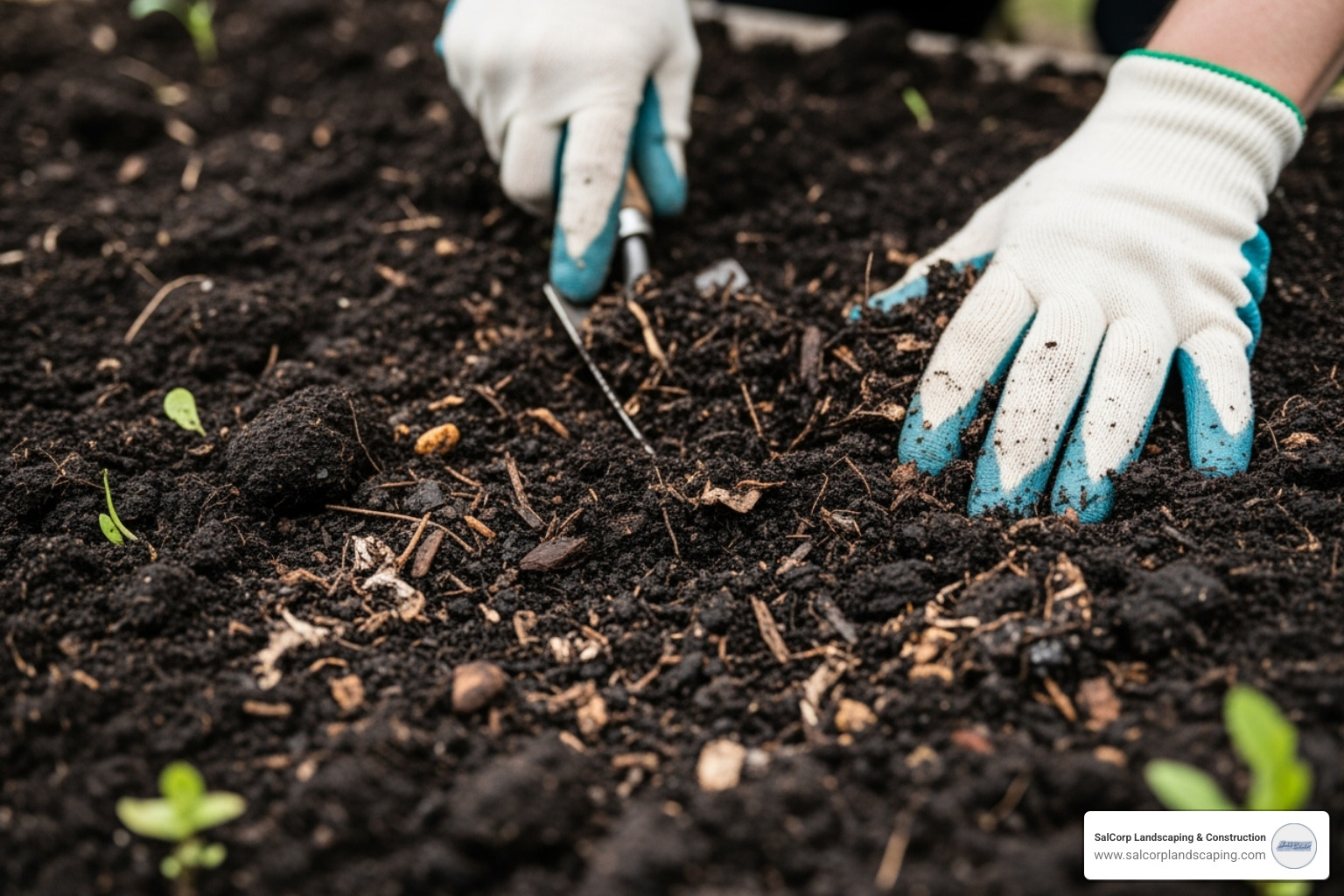
The foundation of any successful garden maintenance schedule starts with understanding your soil and giving it what it needs to support vibrant plant life. Plants depend on well-balanced, nutrient-rich soil to reach their full potential.
Preparing and Maintaining Garden Beds
Soil testing is your garden’s annual physical. A simple test reveals your soil’s pH level and shows which nutrients are missing, allowing you to amend your soil precisely instead of guessing. Fall testing is ideal, as it gives you time to make corrections before winter. Your state’s extension service offers reliable testing and recommendations.
Once you know what your soil needs, amending with organic matter is the next step. Compost is gold for garden beds—it improves drainage in clay soils, helps sandy soils hold moisture, and feeds beneficial microorganisms. Work a few inches into existing beds each spring or fall.
Proper bed edging is a maintenance game-changer. Clean edges prevent grass from invading your flower beds and simplify weeding. When designing beds, ensure you can reach the center without stepping on the soil. If you need help creating new planting areas, our planting services can bring your vision to life.
Mulching is the closest thing to magic in gardening. A 3-4 inch layer of organic mulch suppresses weeds by blocking sunlight and retains moisture by reducing evaporation. As it breaks down, it continues to feed your soil. Keep mulch pulled back about 2 inches from plant stems and tree trunks to prevent moisture and pest issues.
Watering, Weeding, and Pest Control Strategies
These three tasks are central to garden maintenance. Master them, and you’ll spend more time enjoying your garden.
Smart watering is about technique. Deep, infrequent watering encourages deeper roots, creating more resilient plants. Aim for about an inch of water weekly. Morning watering is best, as it allows foliage to dry and reduces disease risks.
Drip irrigation and soaker hoses deliver water directly to the root zone, wasting less water and keeping foliage dry. For a more automated approach, explore our irrigation system options.
Effective weed management starts early. Small weeds are much easier to remove. Hand-weeding when soil is moist makes the job simpler. For lawns, pre-emergent herbicides applied in early spring prevent crabgrass. A thick layer of mulch remains your best defense in garden beds.
Integrated Pest Management focuses on prevention. Learn to identify common pests for early detection. Encourage beneficial insects by planting diverse flowers and avoiding broad-spectrum pesticides. For small pest problems, manual removal or a strong spray from a hose often works. Always remove diseased plant material promptly to prevent problems from spreading.
A Gardener’s Calendar: Your Seasonal Garden Maintenance Schedule
Your garden moves through distinct seasons, each with its own demands. Understanding this cycle is the core of a successful garden maintenance schedule. At SalCorp Landscaping & Construction, we’ve honed our seasonal approach to ensure landscapes thrive in the Massachusetts climate. Every element, from lawns and plants to hardscapes, benefits from timely care.

Spring Awakening (March – May)
Spring demands significant effort to set your garden up for success. As temperatures rise, begin spring cleanup by removing winter debris, dead leaves, and old plant coverings. Rake up matted grass to prevent snow mold.
For your lawn, dethatching and aeration are crucial to loosen compacted soil, allowing air, water, and nutrients to reach the roots. Late April or May is the best time. Before the first cut, complete your mower maintenance and sharpen the blade for a clean, healthy cut.
Prune summer-flowering shrubs in late winter or early spring before new growth begins. March to May is also prime time for planting cool-season annuals, new perennials, trees, and shrubs. It’s also a good period to divide and replant overcrowded summer and fall-blooming perennials.
Apply a balanced, organic-based spring fertilizer to your lawn and perennials. Be proactive with weed control by removing weeds before they seed. Consider a pre-emergent crabgrass control in April or May. Finally, check your irrigation system in late April or early May, adjusting controllers for spring needs.
For help with your landscape’s spring needs, explore our landscape maintenance services.
Summer Vigor (June – August)
Summer care focuses on sustaining growth through heat and potential drought. For your lawn, mow regularly, removing only one-third of the grass height at a time. Leaving clippings on the lawn (grasscycling) returns nutrients to the soil. Aim for a grass height of 2.5-3 inches, raising it as summer progresses to help withstand heat.
Water deeply and consistently in the early morning to minimize evaporation. Aim for one inch of water per week, adjusting for rainfall. Deadhead faded blooms from annuals and perennials to encourage new flowers. If you have a vegetable garden, harvesting at their prime encourages continued production.
Stay vigilant for pests and diseases, and continue weed control. Pull weeds promptly when the soil is moist. Fertilize annuals and hanging baskets monthly to support continuous blooming.
Prune spring-flowering shrubs like lilac and forsythia immediately after they finish flowering to ensure next year’s blooms. Monitor for chinch bug activity in July and consider nematode treatments for grub control starting in late August.
To simplify your summer lawn care, our lawn mowing services can keep your grass looking its best.
Autumn Preparation (September – November)
Fall is a critical time to prepare your garden for winter and set up a successful spring. Start with a thorough fall cleanup, raking leaves from lawns and garden beds to prevent snow mold. You can compost leaves or use them as mulch.
Autumn is the ideal time to overseed your lawn to thicken the turf. Apply a “Winterizer” fertilizer in October to strengthen roots and promote early spring green-up. Also in October, deep root fertilize trees and shrubs to focus energy on root growth.
Fall is also prime planting season for trees, shrubs, and spring-flowering bulbs. For perennials, cut back dead or diseased material to about 6 inches, leaving some ornamental grasses for winter interest.
Apply a thick layer of mulch to beds for winter to insulate roots and prevent frost heave. Winterizing irrigation systems is crucial in Massachusetts. Turn off spigots, store hoses, and have sprinkler systems blown out with compressed air to prevent freezing. Clean, sharpen, and oil all garden tools before storage.
For effective fall mulching, explore our mulching services.
Winter Rest & Planning (December – February)
Winter is a time for rest, protection, and planning. Mid-November to mid-March is the best time for dormant pruning of trees, as the branch structure is clearly visible. Avoid pruning spring-flowering plants until after they bloom.
Apply anti-desiccants to broadleaf evergreens in December to protect them from winter burn. Protect tender plants from frost and wind using burlap or frost blankets. Wrap young, smooth-barked trees with tree guards to prevent rodent damage.
Use these quiet months for planning next year’s garden. Review the past year’s performance, plan new layouts, and order seeds for spring. This is also a great time to organize your shed and sharpen tools. Even in winter, newly planted evergreens may need occasional winter watering during dry spells. Ensure ponds are properly winterized by cleaning debris and storing pumps.
While the landscape rests, we plan for the next season. Winter is a great time to plan new features. Learn more about our hardscape features.
Advanced Techniques and Regional Adaptations
Mastering your landscape means adapting to your specific environment and embracing techniques that make gardening easier and more effective. It’s about moving from good to great.
Creating a Custom Garden Maintenance Schedule for Massachusetts
Our New England climate means your garden maintenance schedule needs a special touch. Our springs can be slow to warm up, and fall often brings early frosts. Knowing your average last spring frost date and first fall frost date is critical for timing the planting of sensitive annuals and vegetables.
An excellent way to adapt is by choosing native plants. They are naturally suited to our soil and weather, requiring less water, fertilizer, and overall maintenance, while also supporting local wildlife. For tender plants, you can overwinter them indoors with proper preparation.
Heavy snow can damage shrubs and trees. Gently shaking heavy snow off branches can prevent breakage. For sensitive plants, burlap wraps or temporary shelters offer protection from harsh winds and snow loads. To understand your soil’s specific needs, we recommend you schedule a soil test with your local extension.
Pro-Level Tips: Lasagna Gardening and Future-Proofing
These strategies can revolutionize how you prepare garden beds and plan for long-term success.
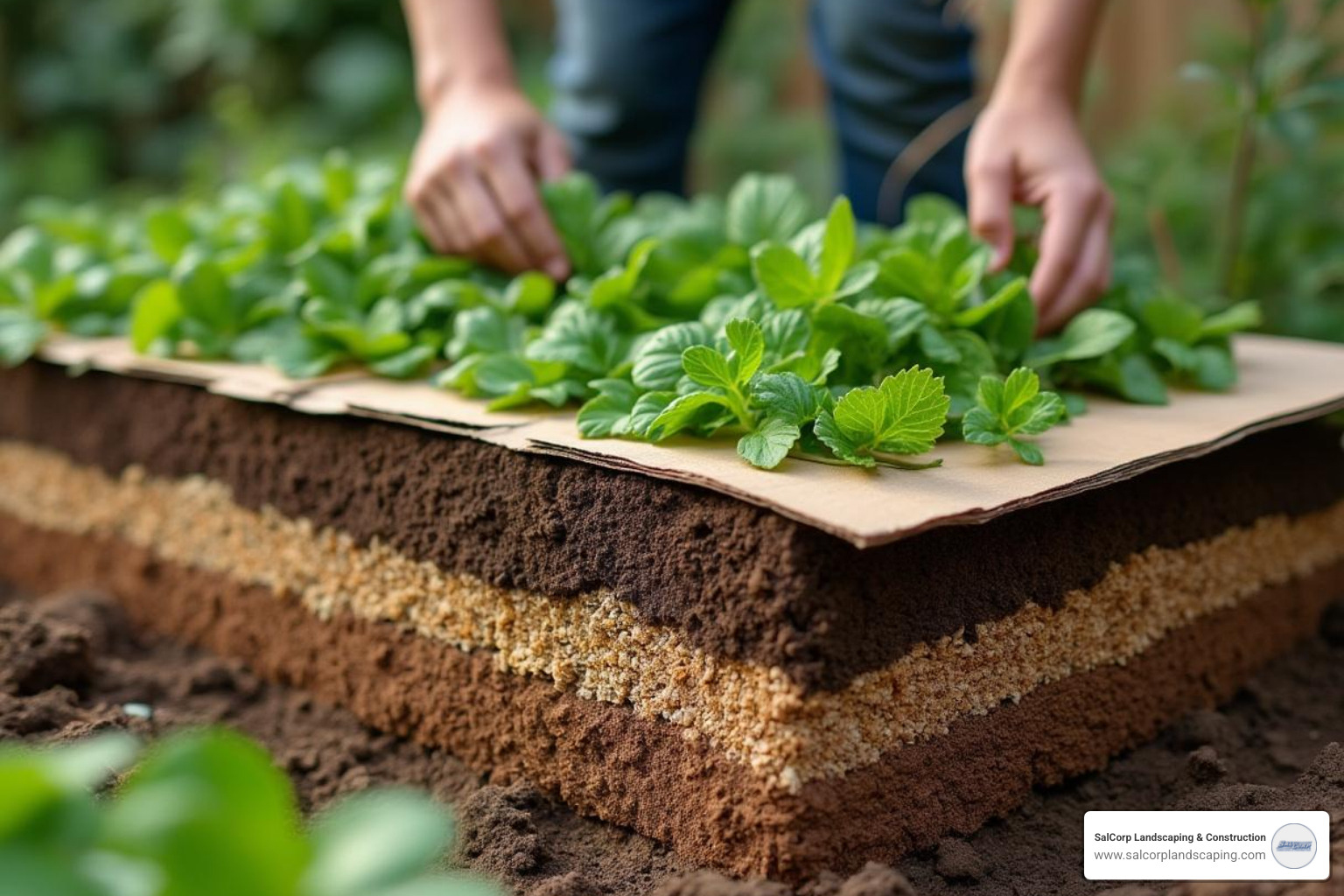
Lasagna Layering is a brilliant “no-dig” method for creating new garden beds. It builds healthy soil by layering organic materials:
- Lay cardboard directly over grass or weeds and wet it down.
- Add a layer of “greens” (nitrogen-rich materials like kitchen scraps or grass clippings).
- Add a layer of “browns” (carbon-rich materials like shredded leaves or straw).
- Repeat these layers, wetting each one, until the bed is 18-24 inches high.
- Top it off with compost or topsoil.
The benefits of no-dig gardening are numerous: it builds rich soil, conserves moisture, reduces weeds, and requires less physical labor. You can learn more about lasagna layering from trusted gardening resources.
Future-proofing your garden is about smart planning. At the end of each season, review your garden’s performance. Note what thrived and what struggled. If you have a vegetable garden, practice crop rotation to prevent nutrient depletion and reduce pests and diseases.
Use the quiet winter months for planning for the next season. A well-thought-out plan will make your spring planting and your entire garden maintenance schedule much smoother.
Frequently Asked Questions about Garden Maintenance
Over my two decades in Massachusetts landscaping, certain questions come up repeatedly. Here are the answers to some of the most common concerns for gardeners.
When is the best time to prune most trees and shrubs?
Timing is critical and depends on the plant. Getting it wrong can mean losing a season of blooms.
- Spring-flowering shrubs (lilac, forsythia): Prune them immediately after they finish blooming. They set next year’s flower buds on old wood, so pruning too late removes future flowers.
- Summer-flowering shrubs (hydrangeas, rose of Sharon): These bloom on new growth, so prune them in late winter or early spring (February-March) before they wake up.
- Most deciduous trees and non-flowering shrubs: Prune during winter dormancy (mid-November to mid-March). With leaves gone, you can easily see the branch structure and spot any dead, diseased, or crossing branches.
How can I reduce the time I spend on garden maintenance?
Smart planning can dramatically reduce your workload. Here are the most effective strategies:
- Mulch: This is your best friend. A good layer of organic mulch can reduce weeding and watering time by up to 70%.
- Choose the Right Plants: Native and climate-appropriate plants require less fuss once established.
- Automate Watering: An automated irrigation system saves time and provides consistent moisture to plants.
- Group Plants by Need: Place plants with similar sun, water, and soil needs together for more efficient care.
- Work Little and Often: Spending 15-20 minutes a few times a week on small tasks like weeding prevents them from becoming overwhelming weekend projects.
What are the most common gardening mistakes to avoid?
These common mistakes are all avoidable once you know what to watch for.
- Overwatering: This kills more plants than drought. Soil needs to dry out slightly between waterings so roots can get air.
- Planting in the Wrong Spot: Always match the plant to the location’s sun, shade, and soil conditions.
- Ignoring Soil Health: Healthy soil is the foundation of a healthy garden. Test your soil regularly and amend it with organic matter like compost.
- Planting Too Close Together: Crowded plants compete for resources, leading to weak, disease-prone growth. Always check the plant’s mature size.
- Underestimating Mature Size: That cute little shrub can grow to block windows or walkways. Research the final size and plan accordingly.
Transform Your Landscape with a Professional Maintenance Plan
Creating a thriving landscape requires understanding the dance between seasons, soil health, and the consistent care that a well-planned garden maintenance schedule provides. After two decades of working with Massachusetts properties, I’ve seen the dramatic difference professional maintenance makes. A structured plan helps a property become a healthier ecosystem that increases in value.
The benefits of a consistent garden maintenance schedule are clear. You achieve year-round beauty as each season’s tasks build upon the last. This leads to increased property value, making your maintenance a wise investment. Most importantly, you’ll create a healthy ecosystem that provides a peaceful retreat right outside your door.
At SalCorp Landscaping & Construction, we know every property is unique. Our owner-operated approach means I personally assess each landscape’s needs, from soil conditions to your family’s lifestyle. We bring over 20 years of New England expertise to every project, whether it’s spring aeration, summer pest control, or fall winterization.
Our clients often tell us that partnering with us transforms their relationship with their outdoor spaces. Instead of feeling overwhelmed, they can enjoy their gardens, knowing everything is handled by professionals who care about the results.
Ready to see what your landscape can become? Contact us for a comprehensive landscape maintenance plan and let’s create a schedule that brings out the best in your outdoor space.
