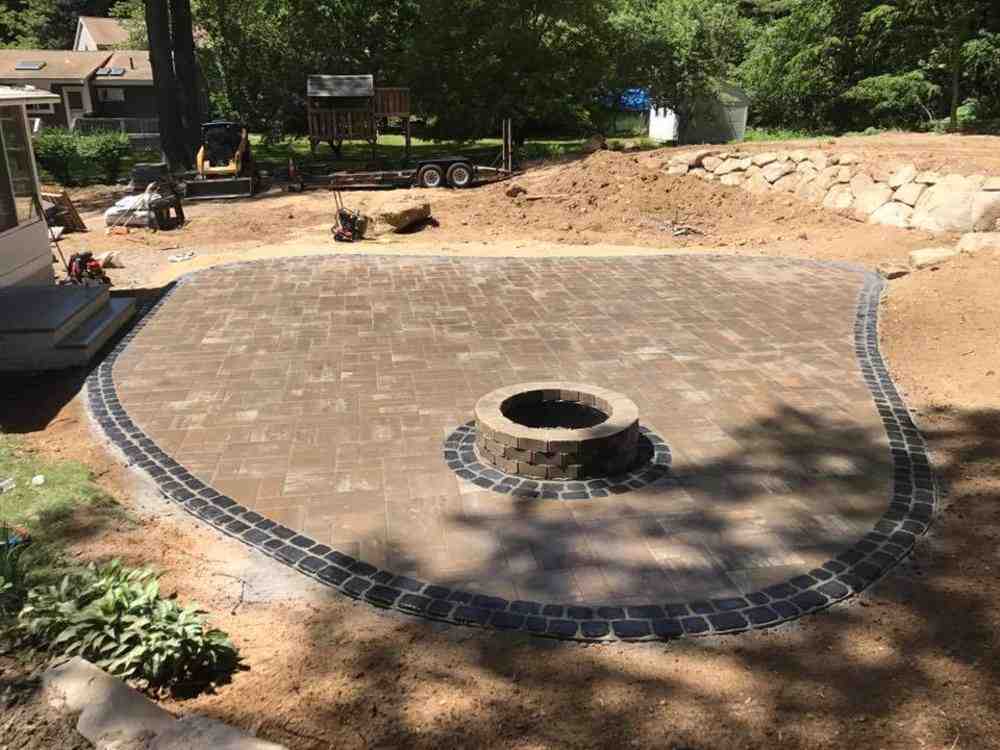
Hardscape Backyard: 10 Stunning Ideas for Perfect Outdoor Spaces 2025
Transform Your Outdoor Space with Strategic Hardscape Backyard Design
Hardscape backyard projects combine the beauty of natural materials with functional outdoor living to create spaces that work year-round. Here’s what you need to know:
Key Hardscape Elements:
– Patios & Decks – Foundation for outdoor living and entertaining
– Walkways & Paths – Guide movement and connect different areas
– Fire Features – Extend usability into cooler months
– Retaining Walls – Manage slopes while adding visual interest
– Water Features – Create focal points and mask noise
– Outdoor Kitchens – Bring cooking and dining outdoors
Popular Materials:
– Natural stone (flagstone, bluestone)
– Concrete pavers and slabs
– Brick and cobblestone
– Gravel and crushed stone
According to the National Association of Realtors, well-designed landscaping and hardscaping can increase a home’s value by up to 15%. The American Society of Landscape Architects found that 83% of respondents rated outdoor living spaces as the most popular landscape design elements.
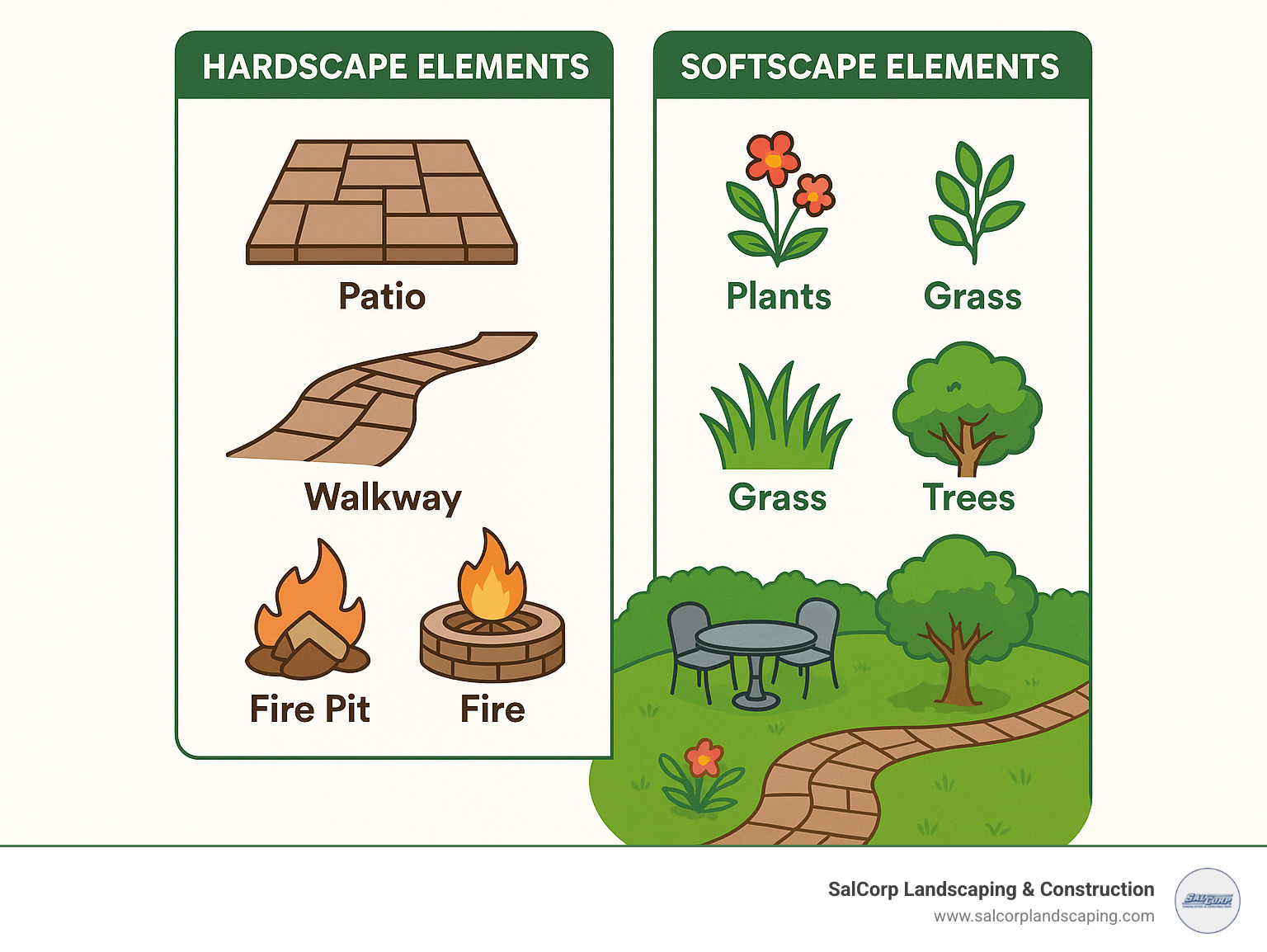
A successful hardscape backyard balances hard materials like stone and concrete with soft elements like plants and grass. The key is creating functional zones – dining areas, fire pits, walkways – that flow together while complementing your home’s architecture.
I’m Sal Musto, owner of SalCorp Landscaping & Construction, and I’ve spent over two decades changing outdoor spaces throughout Massachusetts. My team and I have designed and installed countless hardscape backyard projects, from simple patios to complete outdoor living environments that our clients enjoy year-round.
Relevant articles related to hardscape backyard:
– hardscape ideas
– hardscape installation
– landscape and hardscape design
10 Stunning Hardscape Backyard Ideas
When I work with families to design their hardscape backyard, I always start by asking one simple question: “How do you want to live outdoors?” The answer shapes everything we build together. Some families dream of hosting summer barbecues, others want a quiet retreat for morning coffee, and many want it all.
Over the past two decades, I’ve learned that the most successful hardscape backyard projects create what I call “outdoor rooms” – spaces that feel as comfortable and functional as the inside of your home. Each element we install serves a real purpose while adding beauty to your landscape.
Let me share ten ideas that have transformed yards across Massachusetts into outdoor paradises that families actually use and love.
Patio Power-Ups for a Hardscape Backyard
The patio is where the magic happens in any hardscape backyard. It’s your outdoor living room, dining room, and sometimes even your office when you’re working from home with a view.
I’ve built patios from every material you can imagine, and each has its place. Flagstone remains my top recommendation for New England homes because it handles our harsh winters beautifully while looking better with age. Concrete pavers offer incredible versatility – we can create patterns and colors that perfectly match your home’s style. For traditional homes, nothing beats the timeless appeal of brick, while porcelain slabs give modern homes that sleek, contemporary look that’s practically maintenance-free.
One technique that never fails to impress is building seating walls around the patio perimeter. These 18-inch high walls provide extra seating for parties while defining your outdoor room. We cap them with natural stone that matches your patio, creating a cohesive look that feels intentional and polished.
Here’s something I’ve learned from years of designing small Massachusetts yards: you don’t need a massive space to create impact. We often extend patios using complementary materials – maybe your main flagstone patio flows into a cozy gravel seating area with a fire bowl. This doubles your usable space without overwhelming your yard.
Research from real estate professionals shows that well-designed outdoor spaces can significantly boost your home’s value, making patio investments both enjoyable and financially smart.
Walkways & Steppers to Guide Your Hardscape Backyard Journey
A walkway in your hardscape backyard should feel like an invitation, not just a path from here to there. The best walkways I’ve built create a sense of findy – you’re excited to see what’s around the next curve.

Width matters more than most people realize. Main walkways need at least four feet of width so two people can walk comfortably side by side. But secondary paths can be narrower and more intimate – perfect for that morning stroll through your garden.
I always design walkways with gentle curves rather than straight lines. Straight paths feel institutional, like you’re walking through a parking lot. Curves feel natural and create anticipation about what’s ahead.
One of my favorite techniques uses large bluestone steppers set in crushed stone, with spaces for low-growing plants like creeping thyme. This creates a living pathway that’s both practical and beautiful. The plants soften the hard edges while filling your yard with fragrance when you walk across them.
For sloped areas, we build natural stone steps with integrated planters. These stepped walls manage elevation changes while giving you perfect spots for seasonal color displays.
Lighting integration extends your walkway’s usefulness into evening hours. LED strip lighting or small pathway lights make navigation safe while creating a magical atmosphere for outdoor entertaining.
Fire & Water Features that Wow
Nothing transforms a hardscape backyard like the combination of fire and water. These features create natural gathering spots that draw people together and extend your outdoor season well into fall.
Fire features have evolved far beyond the basic fire pit. Sunken fire pits with built-in stone seating create intimate conversation areas perfect for roasting marshmallows with kids or enjoying wine with friends. Raised fire bowls offer flexibility – they’re sculptural elements even when not in use. For larger spaces, outdoor fireplaces provide warmth and dramatic vertical interest that anchors your entire design.
Water features bring tranquility to your space while masking neighborhood noise. I’ve installed everything from simple bubbling fountains to elaborate pond systems with waterfalls. The secret is matching the scale to your space – a small bubbling boulder can be just as impactful as a large waterfall in the right setting.
The sound-scaping aspect of water features often surprises my clients. That gentle splash of a fountain can completely change how your outdoor space feels, making it feel like a private retreat even in busy neighborhoods.
Safety always comes first with fire features. We ensure proper clearances from structures and check all local codes before installation. Every fire feature we build meets or exceeds safety requirements while looking beautiful and functioning perfectly.
Outdoor Kitchens & Dining Zones
Outdoor kitchens have become the heart of many hardscape backyard designs, and for good reason. They keep the cook connected to guests while taking the heat and mess outside during summer months.
The best outdoor kitchens rival their indoor counterparts in functionality. Built-in gas grills with side burners handle everything from quick weeknight dinners to elaborate weekend feasts. Granite or concrete countertops provide ample prep space, while undermount sinks make cleanup a breeze.
Storage solutions make or break outdoor kitchen functionality. Weather-resistant cabinets and drawers keep everything organized and protected. Outdoor-rated refrigeration means fewer trips inside for cold drinks and ingredients.
Bar seating creates a natural gathering spot where guests can chat with the cook. We design raised counters with comfortable stools that encourage lingering over morning coffee or evening cocktails.
L-shaped and U-shaped layouts work best because they create natural workflow while keeping the cook engaged with guests. We build using stone or stucco for durability, paired with stainless steel appliances for professional performance.
Position matters too. We locate outdoor kitchens to take advantage of prevailing breezes for smoke management while providing wind protection for cooking flames.
Vertical Interest: Walls, Pergolas & Privacy Screens
Vertical elements in your hardscape backyard solve practical problems while adding architectural drama. They create privacy, define spaces, and provide structure for your overall design.
Retaining walls are workhorses in Massachusetts landscapes. They manage our hilly terrain while creating level planting areas and additional seating. We build them using natural stone, concrete blocks, or engineered systems, always ensuring proper drainage to prevent frost damage.
Pergolas and arbors create outdoor rooms by defining overhead space. They provide partial shade, support climbing plants, and add architectural interest that connects your landscape to your home’s style. Cedar and mahogany are traditional choices, while steel pergolas suit modern homes perfectly.
Privacy screens address one of the most common requests I receive. Living screens using evergreen plantings provide year-round privacy while supporting local wildlife. Decorative fence panels in wood or composite materials offer immediate privacy with design flexibility. Gabion walls filled with stone create modern industrial looks, while combination walls with integrated planters soften hard surfaces with seasonal color.
The key is choosing materials and styles that complement your home’s architecture while providing the privacy and visual interest you need. Every vertical element should feel like it belongs, not like an afterthought.
Choosing the Right Materials & Layout
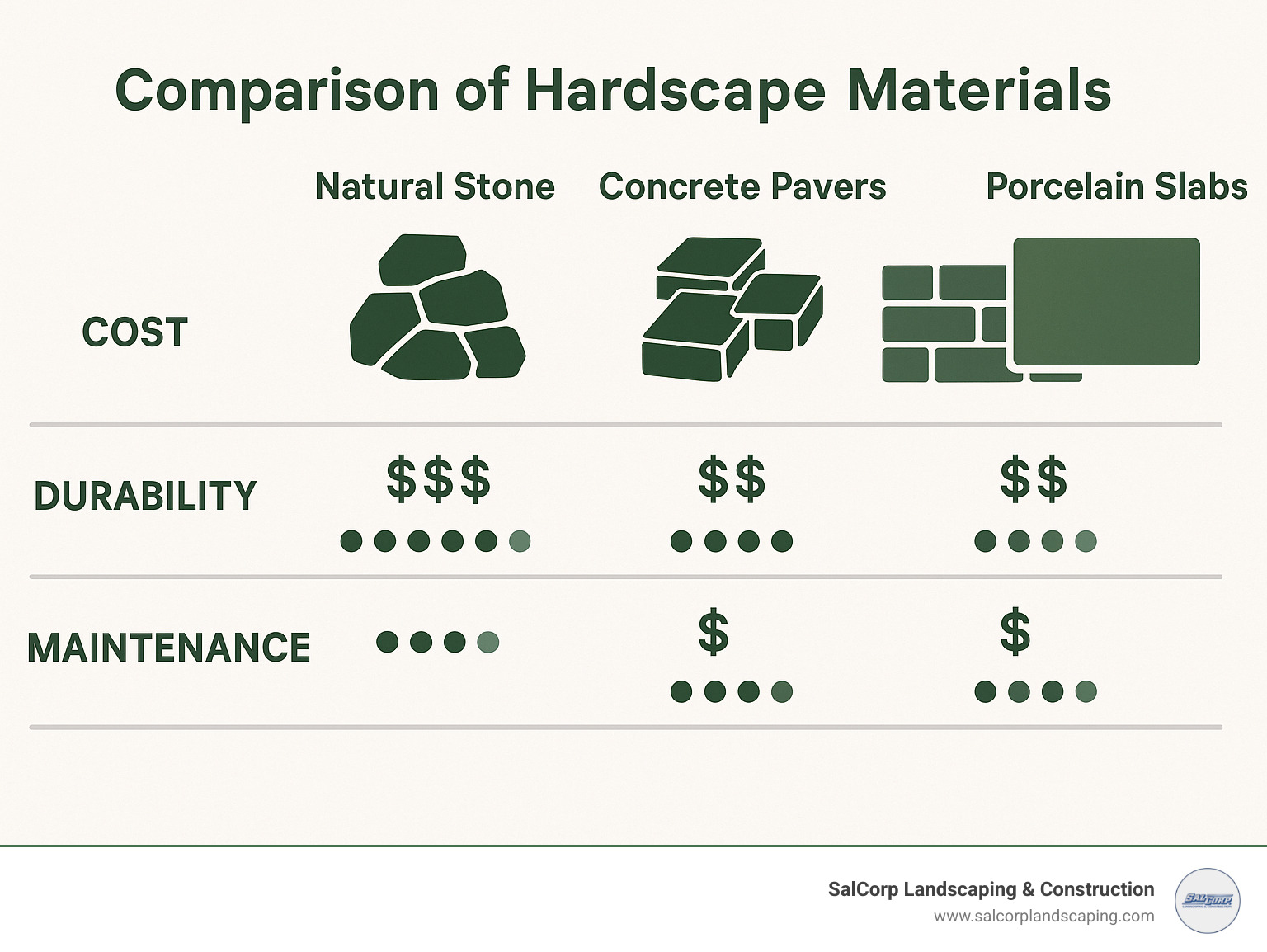
Material selection is crucial for both the longevity and appearance of your hardscape backyard. Each material has distinct characteristics that make it suitable for different applications and climates.
Natural Stone offers best beauty and durability. Flagstone, bluestone, and granite provide excellent freeze-thaw resistance, making them ideal for Massachusetts installations. The natural variation in color and texture creates visual interest that improves with age.
Concrete Pavers provide versatility and value. Modern manufacturing techniques produce pavers that mimic natural stone while offering consistent dimensions and colors. They’re easier to replace if damaged and often cost less than natural alternatives.
Brick brings classic charm and works particularly well with traditional architecture. We use clay brick for its durability and natural color variation. It pairs beautifully with natural stone accents.
Porcelain Slabs represent the newest technology in hardscape materials. These large-format tiles offer incredible durability, stain resistance, and design flexibility. They’re particularly well-suited for contemporary designs and high-traffic areas.
Layout Patterns dramatically affect the visual impact of your hardscape. Running bond patterns create movement and work well for walkways. Herringbone patterns add sophistication and work beautifully for patios. Random patterns using mixed sizes create a more natural, organic feel.
Color Coordination ties everything together. We typically select a primary material color that complements your home’s exterior, then use accent colors sparingly for borders or special features. Too many colors create visual chaos.
Design Principles: Balancing Hardscape & Softscape
The magic happens when hardscape backyard elements work hand-in-hand with living plants and green spaces. After two decades of designing outdoor spaces, I’ve learned that the most beautiful yards feel like they grew naturally over time, even when they’re carefully planned.

Think of your hardscape as the bones of your outdoor space – the patios, walkways, and walls provide structure. The softscape is like the skin and clothing – it adds color, texture, and personality. When we get this balance right, your yard becomes a place where you actually want to spend time.
Lawn islands are one of my favorite tricks for breaking up large hardscaped areas. Instead of covering your entire backyard with stone or pavers, we preserve patches of grass where kids can play and your eyes can rest. These green spaces make even the most extensive patios feel connected to nature.
Plant beds with gentle curves naturally soften the hard edges of walkways and walls. We design these beds to flow around your hardscape features, creating a sense of movement and visual interest. Sharp corners and straight lines can make a space feel commercial – curved planting beds make it feel like home.
Your home’s architecture should guide every design decision. A traditional colonial house calls for formal plantings with boxwood hedges and classic perennials alongside brick or bluestone hardscaping. A contemporary home might feature ornamental grasses and architectural plants that complement sleek concrete surfaces.
Permeable surfaces offer the best of both worlds – the functionality of hardscape with the natural beauty of plants. We love installing pavers with grass or groundcover growing between them. This technique works particularly well for driveways and secondary walkways where you want a softer, more natural appearance.
Don’t forget about vertical greening opportunities. Retaining walls become living features when we incorporate planting pockets. Pergolas and arbors support climbing vines that provide seasonal interest and natural shade. Even privacy screens can double as plant supports.
Seasonal interest keeps your outdoor space looking great year-round. We plant spring bulbs that push through groundcover, summer perennials that spill over stone edges, and evergreens that provide structure when deciduous plants go dormant. The goal is ensuring your hardscape backyard never looks bare or forgotten.
The secret is creating a design where every element supports the others. Your stone patio looks better with colorful plantings nearby. Your flower beds look more intentional when they’re anchored by hardscape features. When everything works together, you get an outdoor space that feels both polished and natural.
Practical Considerations: Drainage, Maintenance & Budget
Let me share something I’ve learned after two decades of building hardscape backyard projects in Massachusetts: the details that homeowners don’t see are often the most important ones. These behind-the-scenes elements determine whether your beautiful patio will still look great in ten years or start showing problems after the first winter.
Drainage isn’t glamorous, but it’s absolutely critical here in New England. I’ve seen too many gorgeous hardscape installations fail because someone skipped the drainage basics. Our freeze-thaw cycles are brutal – water gets into cracks, freezes, expands, and destroys even the best materials.
Every project we do starts with proper site grading. We slope everything away from your house and ensure water has somewhere to go. For larger areas, we install French drains or other drainage systems before we even think about laying the first stone.
Permeable surfaces are becoming increasingly popular, and for good reason. Permeable pavers allow water to filter through rather than running off, reducing flooding and recharging groundwater. They’re particularly smart choices for driveways and large patio areas.
The sub-base preparation is where many DIY projects go wrong. We excavate to the proper depth, install compacted gravel base, and use sand leveling courses. It’s not exciting work, but it’s the foundation that keeps everything level and stable for decades.
Maintenance requirements vary dramatically depending on what materials you choose. Natural stone needs occasional sealing and joint maintenance, but it ages beautifully and can last generations. Concrete pavers require periodic joint sand replenishment and benefit from sealing every few years to maintain their color.
Brick develops character over time but may need occasional mortar work and cleaning to remove efflorescence (those white mineral deposits). Gravel paths need regular raking and weed control, plus fresh stone every few years to maintain their appearance.
Here’s what I tell homeowners about DIY versus professional installation: simple projects like small gravel paths or basic stepping stone walkways can make great weekend projects. But anything involving drainage, electrical work for lighting, or structural elements like retaining walls really needs professional expertise.
Safety codes and permits aren’t optional – they’re there to protect you and your family. Fire features need proper clearances and gas connections. Electrical work for lighting requires permits and inspections. Retaining walls over certain heights need engineering. We handle all the permitting and code compliance so you don’t have to worry about it.
Average pricing for hardscape projects varies widely based on materials, site conditions, and project complexity. Based on industry data, simple paver patios might range from moderate costs to premium installations that cost three times as much. Complex outdoor kitchens with all the bells and whistles can range from substantial investments to luxury installations costing several times more.
The key is planning your project carefully and understanding what goes into a quality installation. For detailed information about sustainable paving options and professional techniques, scientific research on sustainable paving offers valuable insights into current best practices.
A well-built hardscape backyard is an investment that adds value to your property and joy to your daily life. Taking care of the practical details upfront ensures you’ll be enjoying your outdoor space for many years to come.
Frequently Asked Questions about Hardscape Backyard Projects
After two decades of installing hardscape backyard projects throughout Massachusetts, I’ve heard just about every question you can imagine. Here are the three questions that come up most often, along with honest answers based on real-world experience.
How much does a backyard hardscape project cost on average?
This is always the first question, and I understand why. Hardscape backyard investments are significant, and you want to know what you’re getting into before you start dreaming too big.
The truth is, costs vary dramatically based on what you’re trying to accomplish. A simple gravel path might cost a few hundred dollars, while a complete outdoor living space can run into six figures. Here’s what we typically see across the industry:
Basic projects like concrete paver patios start around $900 and can go up to $3,000 for straightforward installations. Premium patios using natural stone range from $3,000 to $15,000, depending on the stone type and size you choose.
Fire features are incredibly popular here in New England. Simple fire pits might cost $300, while elaborate outdoor fireplaces with custom stonework can reach $4,500 or more. Retaining walls vary from $3,000 for basic installations to $24,000 for complex terraced systems.
Outdoor kitchens represent the biggest range – from $4,000 for a basic grilling station to $60,000 for fully equipped spaces with all the bells and whistles. Complete backyard changes typically start around $10,000 and can exceed $100,000 for elaborate designs.
These are average costs based on internet data and not actual costs for SalCorp Landscaping & Construction. Every project is unique, and factors like site access, soil conditions, and your specific design goals all affect the final investment. That’s why we always provide detailed estimates after visiting your property and understanding exactly what you want to achieve.
Can I install hardscape features myself or should I hire a pro?
I appreciate the DIY spirit – there’s real satisfaction in creating something beautiful with your own hands. Some hardscape backyard elements are definitely DIY-friendly, while others can turn into expensive mistakes if not done properly.
You can probably handle simple gravel paths, small flagstone patios under 100 square feet, basic garden borders, and decorative stepping stones. These projects don’t require heavy machinery or complex drainage systems.
Professional installation makes sense for larger patios that need proper excavation and base preparation, retaining walls over three feet high, any fire features requiring gas lines or electrical work, drainage systems, outdoor kitchens with plumbing and electrical, and projects requiring permits.
Here’s what I’ve learned: even experienced DIYers benefit from professional consultation for design advice and site evaluation. I’ve seen too many beautiful patios that started settling within a year because the base preparation wasn’t adequate. Poor drainage is another common issue that leads to frost heaving and cracked surfaces.
The money you spend on professional installation often pays for itself in longevity and performance. Plus, you get to enjoy your new space instead of spending every weekend trying to fix problems.
What maintenance do different hardscape materials require?
One of the best things about hardscape backyard features is that they’re relatively low-maintenance compared to traditional landscaping. However, different materials have different needs.
Natural stone like flagstone, bluestone, and granite needs annual cleaning with mild detergent and sealing every two to three years for improved protection. You’ll also need to control weeds in the joints and occasionally re-point mortared installations. The good news is that natural stone actually looks better as it ages.
Concrete pavers require regular sweeping and occasional power washing. You’ll need to replenish joint sand as needed and seal every three to five years. The key is addressing stains immediately – once they set, they’re much harder to remove.
Brick installations need annual cleaning and inspection, mortar joint maintenance, and occasional efflorescence removal (those white chalky deposits that sometimes appear). Sealing helps protect against staining and weathering.
Gravel and crushed stone surfaces need regular raking to maintain their appearance, periodic weed control treatment, and occasional addition of fresh material. You’ll also need to maintain the edges to prevent spreading into surrounding areas.
The most important maintenance tip I can give you is to address drainage issues immediately. Water is the enemy of all hardscape installations, especially here in Massachusetts where freeze-thaw cycles can cause serious damage. Remove snow carefully to avoid scratching surfaces, and schedule annual inspections for complex installations.
Most homeowners find that spending a few hours each season on basic maintenance keeps their hardscape looking great for decades. It’s a small investment compared to the enjoyment these features provide year after year.
Conclusion
Your hardscape backyard dreams are closer than you might think. After two decades of changing outdoor spaces across Massachusetts, I’ve seen how the right hardscape design can completely change how families use and enjoy their homes.
The beauty of hardscaping lies in its permanence and versatility. Unlike a deck that needs annual staining or a garden that requires constant weeding, a well-built hardscape backyard provides decades of low-maintenance enjoyment. It’s an investment that pays you back every time you step outside.
Project planning is where success begins. We always start by understanding how you want to live outdoors. Do you love hosting dinner parties? A spacious patio with an outdoor kitchen might be perfect. Prefer quiet mornings with coffee? A simple flagstone terrace surrounded by plantings could be ideal. The best hardscape designs reflect your lifestyle, not just current trends.
The property value benefits are substantial, but they’re really just a bonus. The real reward comes from those summer evenings around the fire pit, weekend barbecues on your custom patio, or peaceful moments by your water feature. These are the returns that matter most.
Here in Massachusetts, we deal with challenging weather – from summer heat to winter freeze-thaw cycles. That’s why proper installation matters so much. Corners cut during construction become expensive repairs later. Our owner-operated approach means I personally oversee every project, ensuring the attention to detail that makes hardscapes last.
Whether you’re starting with a simple walkway or planning a complete outdoor living environment, the key is working with professionals who understand both design and construction. We handle everything from initial concepts through final cleanup, making the process as smooth as possible for our clients.
Ready to start your hardscape backyard journey? I’d love to meet with you and discuss your vision. Every great outdoor space starts with a conversation about possibilities.
For more information about our comprehensive hardscaping services, visit our hardscaping services page to explore our full range of capabilities and view our portfolio of completed projects throughout Massachusetts.