Hardscape Construction: 10 Powerful Ways to Boost Value 2025
What Makes Hardscape Construction Essential for Your Property
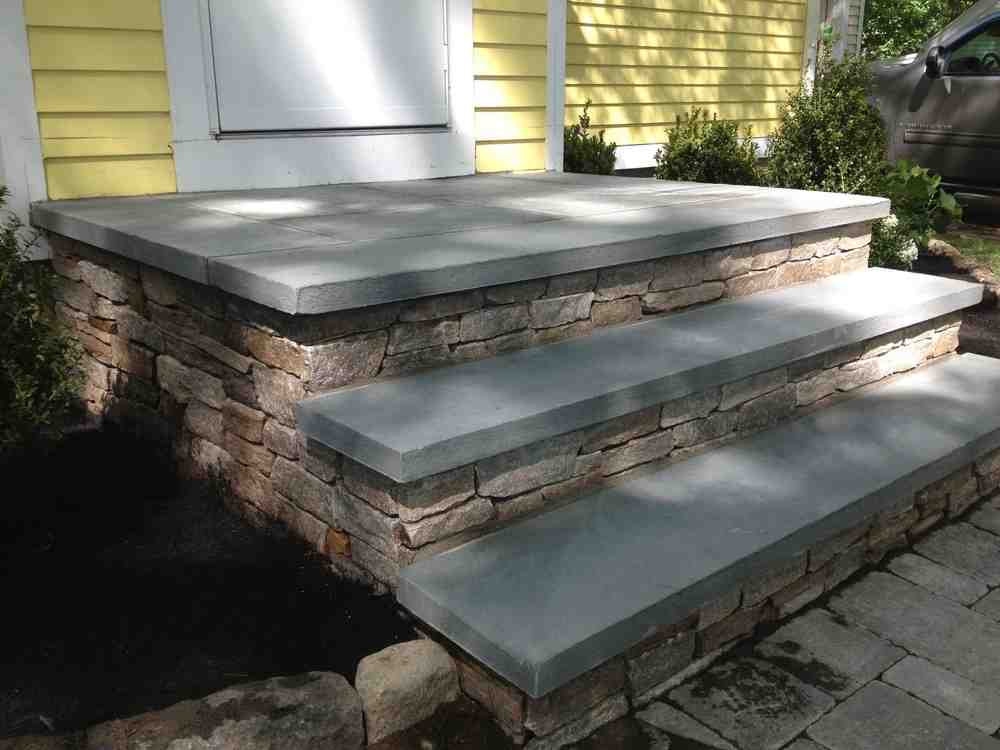
Hardscape construction involves building the non-living, structural elements of your outdoor space—from patios and walkways to retaining walls and fire pits. These permanent features form the backbone of your landscape design.
Key elements of hardscape construction include:
• Patios and decks for outdoor entertaining
• Walkways and driveways for safe navigation
• Retaining walls for slope management and erosion control
• Fire pits and outdoor kitchens for extended living spaces
• Water features like fountains and ponds
• Fencing and pergolas for privacy and structure
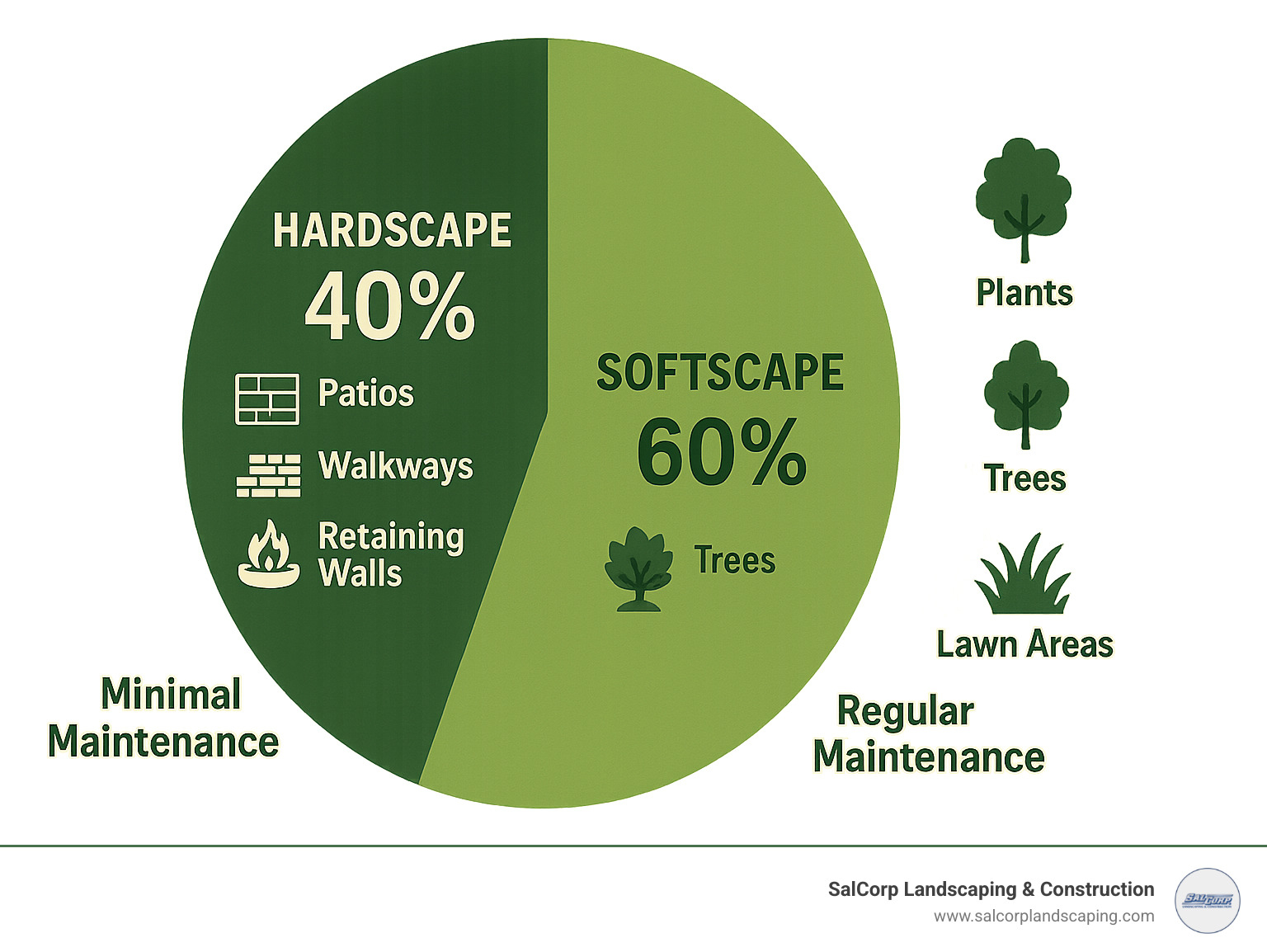
Unlike softscape elements (plants, trees, grass), hardscape features require minimal maintenance while providing year-round functionality. Research shows that investing in hardscaping can increase your home’s value by up to 20%.
The construction process involves careful site preparation, proper drainage planning, material selection, and skilled installation techniques. Whether you’re looking to create functional outdoor rooms, improve property accessibility, or improve curb appeal, hardscape construction offers lasting solutions that withstand New England’s harsh weather conditions.
I’m Sal Musto, owner of SalCorp Landscaping & Construction, with over two decades of experience in hardscape construction throughout Massachusetts. My team and I have transformed countless outdoor spaces, specializing in everything from simple walkways to complex retaining wall systems that stand the test of time.
Basic hardscape construction vocab:
– hardscape maintenance service
– landscape and hardscape design
– pool & hardscaping services
Understanding Hardscape Construction

Think of hardscape construction as building the bones of your outdoor space. These are the non-living elements that create structure, functionality, and lasting beauty in your landscape. While your garden might change with the seasons, your stone patio and walkways remain constant—providing reliable outdoor living areas year after year.
In my two decades of experience, I’ve seen how proper hardscape construction transforms properties. These built environment features typically make up about half of your overall landscape design, but they carry most of the functional weight. They’re the difference between a yard you look at and an outdoor space you actually live in.
The real beauty of hardscape lies in its permanence and low maintenance requirements. Your concrete patio won’t need weekly watering like your flower beds, and your stone retaining walls won’t require seasonal replacement like annual plants. This durability makes hardscape construction a smart investment that pays dividends in both property value and daily enjoyment.
What is hardscape construction?
Hardscape construction covers everything from planning your dream patio to installing complex retaining wall systems. We’re talking about patios where you’ll host summer barbecues, driveways that welcome guests safely to your home, retaining walls that turn unusable slopes into beautiful terraced gardens, and water features that add the soothing sound of flowing water to your evenings.
But here’s what many homeowners don’t realize—hardscape construction involves much more than just laying stones or pouring concrete. Every project starts with careful site analysis. We examine soil composition, study drainage patterns, and consider how new features will interact with existing structures.
The technical side matters too. Local building codes dictate many aspects of construction, especially for retaining walls over 4 feet tall, which typically require professional engineering. Understanding frost line depths prevents costly repairs when winter freeze-thaw cycles hit. Pergolas need proper footings, and water features require electrical considerations.
At SalCorp, we handle these complexities with our own machinery and equipment. This means we can tackle challenging installations that other contractors might walk away from—whether it’s working with difficult soil conditions or accessing tight spaces for installation.
Hardscape vs. Softscape vs. Landscaping
Here’s how I explain it to clients: hardscape is the stage, and softscape is the performance. Your stone patio provides the permanent foundation, while your flower beds add seasonal color and natural beauty that changes throughout the year.
Hardscape elements like stone, concrete, and brick create structure and require minimal ongoing care. Your walkway won’t need fertilizing, and your retaining wall won’t need pruning. Softscape elements—soil, trees, flowers, shrubs, and lawns—bring life and seasonal interest but need regular maintenance like watering, fertilizing, and occasional replacement.
The magic happens when these elements work together harmoniously. The Art and Science of Landscaping Construction: What You Need to Know involves creating this balance. Too much hardscaping can make your yard feel like a parking lot, while too much softscaping can overwhelm you with maintenance and look chaotic.
I typically recommend a balanced approach where hardscape provides the functional backbone—patios for entertaining, walkways for safe navigation, retaining walls for erosion control—while softscape softens edges and provides the seasonal beauty that makes outdoor spaces feel alive.
How does hardscape construction add value and functionality?
Hardscape construction delivers real, measurable benefits that you’ll appreciate every day. Research consistently shows that well-designed hardscape features can boost your home’s value by up to 20%. But the value goes beyond the numbers—it’s about creating outdoor spaces you actually want to use.
From a practical standpoint, hardscape elements solve everyday problems. Retaining walls prevent soil erosion and create usable space on sloped properties. Paved walkways mean no more muddy shoes after rain or treacherous ice patches in winter. Patios and outdoor kitchens extend your living space beyond your home’s walls, essentially adding outdoor rooms to your property.
The safety benefits are significant too. Properly designed walkways with good drainage reduce slip hazards. Stone steps with appropriate dimensions prevent trips and falls. Well-planned grading directs water away from your foundation, preventing costly water damage.
Forbes consistently ranks hardscaping among the top home improvements for return on investment. Our Hardscaping Services focus on creating features that not only look beautiful but also solve real problems and withstand Massachusetts’ challenging weather conditions.
The accessibility improvements are often overlooked but incredibly valuable. Properly graded walkways and strategically placed handrails make your property more accessible for family members and guests of all ages and abilities. These thoughtful touches demonstrate quality construction that buyers notice and appreciate.
Planning & Designing a Hardscape Project
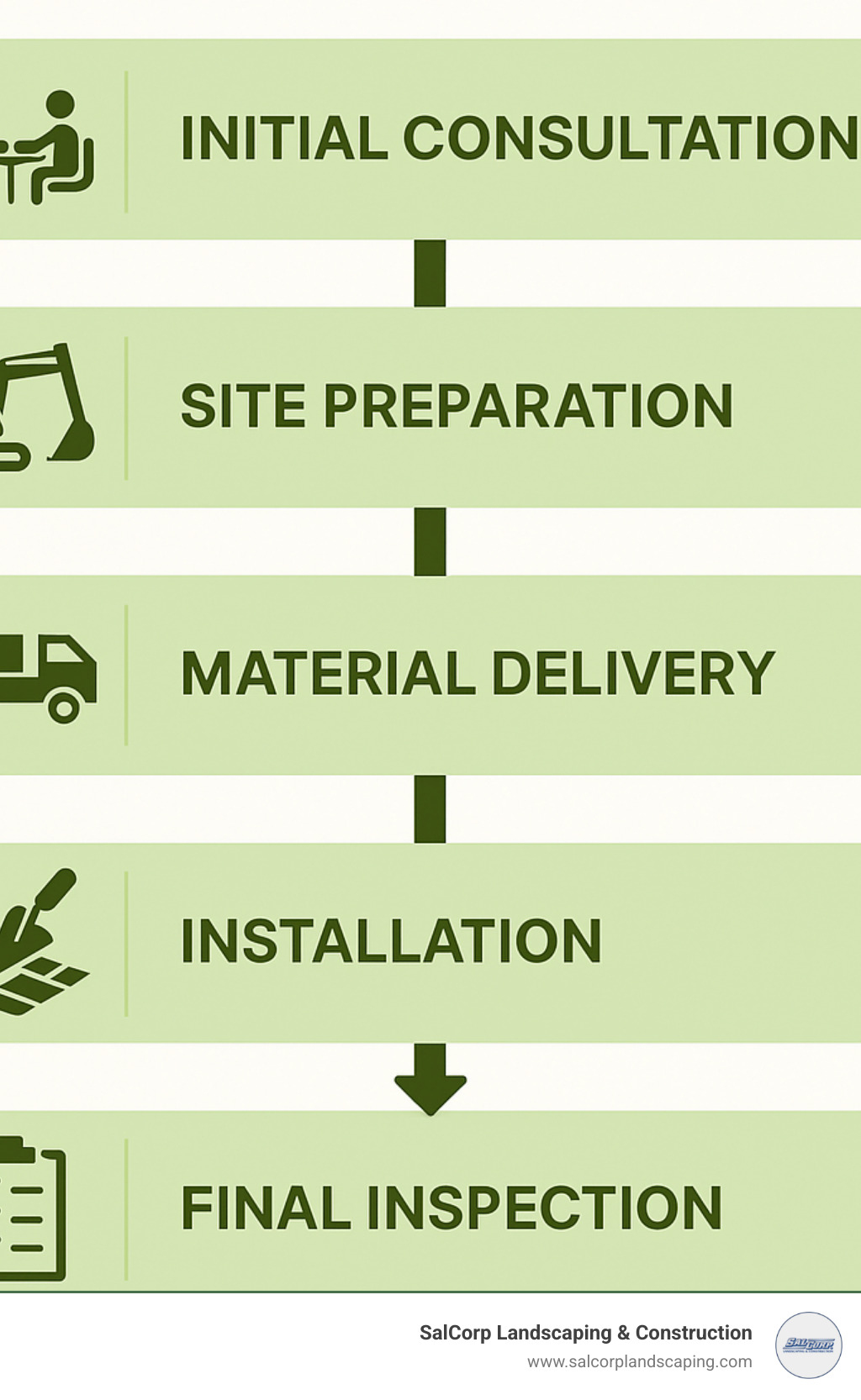
The difference between a hardscape construction project that transforms your property and one that disappoints often comes down to the planning phase. After two decades in this business, I’ve seen too many homeowners rush into installation only to find drainage problems, permit issues, or design flaws that could have been easily avoided with proper planning.
Think of your hardscape project as creating the bones of your outdoor living space. Just like you wouldn’t build a house without blueprints, successful hardscape construction requires a master plan that considers your entire property as one cohesive system. Even if you’re starting with just a patio this year, we design with your future vision in mind—maybe that walkway to a future fire pit area or retaining walls that could support additional terracing down the road.
Every property tells a story through its natural drainage patterns, soil conditions, and topography. We spend considerable time walking your space during different weather conditions, noting where water flows during heavy rains and identifying any problem areas like consistently soggy spots or erosion patterns. These observations guide our design decisions and help prevent costly water damage issues later.
Your existing landscape elements also play a crucial role in planning. That beautiful mature oak tree you want to preserve will influence patio placement and size. Existing structures like your home, garage, and utility lines create natural boundaries and connection points that smart design can leverage for both functionality and visual appeal.
Site assessment, drainage & permitting
Before any excavation begins, we conduct what I call the “property detective work”—a thorough site assessment that examines everything from soil composition to local building codes. Here in Massachusetts, we frequently encounter challenging soil conditions, particularly the silty-clay soils that hold water like a sponge. Understanding these conditions upfront allows us to design proper base preparation and drainage systems that prevent future settling and frost heave damage.
Drainage planning forms the backbone of any successful hardscape project. When we install impervious surfaces like concrete patios or stone walkways, we’re essentially changing how water moves across your property. Without proper planning, that beautiful new patio could become a skating rink in winter or cause basement flooding during heavy rains.
We map out where water naturally wants to go, then design engineered solutions to work with these patterns rather than against them. This might involve installing channel drains along patio edges, creating grading that directs runoff to planted areas, or incorporating permeable pavers in areas where traditional drainage isn’t feasible.
The permitting process varies significantly depending on your project scope and local regulations. How to Create a Successful Hardscape often requires navigating complex local codes that limit lot coverage percentages and mandate specific setbacks from property lines. Retaining walls over 4 feet typically require professional engineering and building permits—something we handle for our clients to ensure full compliance.
Utility marking through Dig Safe is absolutely mandatory and must be completed at least 48 hours before any excavation. This free service prevents dangerous encounters with underground gas, electric, water, and cable lines that could turn your landscaping project into a neighborhood emergency.
Budgeting & choosing the right contractor
Hardscape construction represents a significant investment, and understanding cost factors helps you make informed decisions about materials and project scope. Simple paver installations might range from $15-45 per square foot, while complex natural stone work can cost $25-75 per square foot or more. Retaining wall costs typically range from $20-60 per square foot of wall face, with engineered systems requiring additional investment. These are average costs based on internet data and not actual costs for SalCorp Landscaping.
Several factors influence final project costs beyond basic square footage. Site accessibility affects how easily we can bring in materials and equipment—a backyard accessible only through a narrow side yard costs more than one with direct access. Soil conditions finded during excavation sometimes require additional base preparation or drainage work. Material choices create the widest cost variations, with basic concrete pavers being significantly less expensive than imported natural stone.
Choosing the right contractor involves more than comparing bid prices. Verify that any contractor you’re considering carries proper licensing and insurance coverage. Check references on Houzz and similar platforms, but more importantly, ask to see recent local installations in person. How do projects look after a few New England winters? Are previous clients happy with both the installation process and long-term results?
Experience with your specific project type matters enormously. The skills needed for a simple walkway installation differ significantly from those required for complex retaining wall systems or intricate paver patterns. Our Hardscaping Contractor approach emphasizes matching the right expertise to each project while using our own specialized equipment to handle challenging installations that other contractors might avoid.
Be cautious of estimates that seem too good to be true—they usually are. Significantly low bids often indicate corners will be cut on crucial elements like base preparation or material quality, leading to premature failure and expensive repairs within just a few years.
Creative layout & integration with softscape
The most successful hardscape designs create natural focal points that guide visitors through your landscape while maintaining intuitive traffic flow patterns. Rather than imposing rigid geometric shapes, we typically design curved elements that feel organic and complement your home’s architecture. The goal is creating visual balance between structured hardscape features and softer planted areas that change with the seasons.
Focal points serve as destinations that encourage outdoor use and create memorable experiences. A fire pit surrounded by natural stone seating walls becomes the heart of evening gatherings. A water feature positioned where it can be enjoyed from multiple viewpoints adds tranquility throughout your property. A pergola frames garden vistas while providing defined outdoor rooms for different activities.
Practical considerations drive the best design decisions. We create walkways wide enough for comfortable two-person walking and position patios to take advantage of morning sun or evening shade based on your family’s outdoor habits. Fire pits get located away from overhanging branches but close enough to your home for convenient access to indoor amenities.
Hardscape Ideas should always consider integration with softscape elements. Stone patios need nearby plantings to soften hard edges and create visual interest. Retaining walls provide perfect opportunities for terraced gardens that add color and texture. Even narrow strips of lawn or groundcover between paved areas provide visual relief while helping manage stormwater runoff naturally.
The most appealing landscapes typically balance approximately 50% hardscape with 50% softscape, though this ratio adjusts based on your lifestyle needs and maintenance preferences. Families with young children might emphasize durable hardscape surfaces for safe play areas, while gardening enthusiasts might prefer more planted areas with hardscape providing structure and access paths.
Materials & Installation Best Practices

Choosing the right materials and using proper installation techniques can make the difference between a hardscape construction project that lasts decades versus one that needs costly repairs within just a few years. After 20+ years in this business, I’ve seen gorgeous installations fail because corners were cut during installation, while properly built features continue looking fantastic after enduring countless New England freeze-thaw cycles.
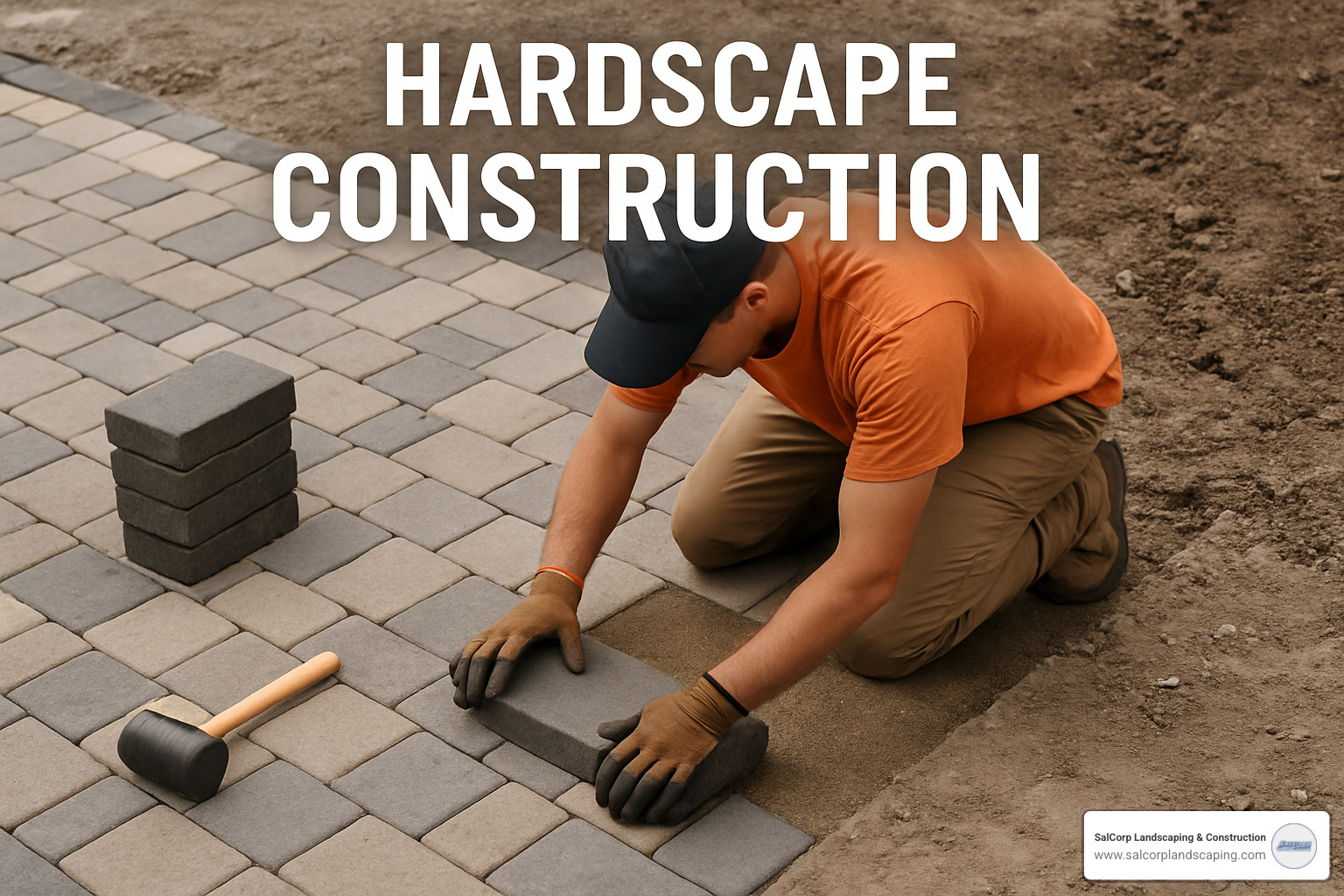
Here’s what most homeowners don’t realize: the foundation work you’ll never see represents about 60-70% of the installation effort. That hidden base preparation beneath your beautiful patio or walkway determines whether your investment will stand the test of time. We excavate to proper depths—typically 9 inches or more below your finished surface—then install and compact crushed stone in thin layers to create an rock-solid foundation.
Different materials have their own personality quirks too. Concrete pavers need different base depths than natural stone. Retaining walls require specialized drainage systems and engineered backfill. Each material expands and contracts differently with temperature changes, which affects everything from joint spacing to maintenance requirements.
| Material | Durability | Cost Range | Climate Suitability | Maintenance Level |
|---|---|---|---|---|
| Concrete Pavers | Excellent | Moderate | Excellent for freeze-thaw | Low |
| Natural Stone | Very Good | High | Good (varies by stone type) | Low-Moderate |
| Brick | Good | Moderate | Good | Moderate |
| Poured Concrete | Good | Low-Moderate | Fair (can crack) | Low |
| Permeable Pavers | Excellent | High | Excellent | Moderate |
Selecting materials for climate & style
Massachusetts weather doesn’t mess around, and your hardscape materials need to be tough enough to handle whatever Mother Nature throws at them. We’re talking serious freeze-thaw cycles, road salt exposure from winter maintenance, and the occasional nor’easter that tests everything on your property.
Concrete pavers are among our most reliable performers here. The smaller, high-density pavers resist cracking beautifully and make snow removal much easier than large format materials. Natural stone varies dramatically in performance—some granites and quartzites laugh at our harsh winters, while softer stones might show their age more quickly.
Color selection should complement both your home’s exterior and the surrounding landscape. We typically suggest sticking to two or three materials maximum to avoid that “too busy” look that can make even expensive installations appear cluttered. When your hardscape materials echo your home’s exterior finishes, you create seamless transitions that make everything feel intentionally designed together.
Sustainability has become increasingly important to our clients. Stone and concrete each offer different environmental advantages. Locally sourced materials reduce transportation impacts, and many manufacturers now offer pavers with recycled content. Permeable paving solutions help manage stormwater runoff while meeting increasingly strict environmental regulations.
Our Hardscape Material selection process considers your budget, maintenance preferences, and aesthetic goals. Stone provides natural beauty and unique character but typically costs more and may require additional maintenance. Concrete products offer consistent sizing, extensive color options, and often superior performance in freeze-thaw conditions.
Porosity matters significantly in our climate. Dense, non-porous materials shed water quickly but can become slippery when wet. More porous materials provide better traction but may absorb water that causes freeze-thaw damage. We match materials to their specific use—slip-resistant textures for walkways, smooth surfaces for formal patios, and highly durable materials for driveways.
Proven installation techniques for longevity
Proper hardscape construction follows time-tested techniques that ensure longevity regardless of which materials you choose. Base depth isn’t negotiable—we install 4-inch compacted bases for walkways, 6-inch bases for areas with occasional vehicle traffic, and 12-inch bases for driveways. These depths often increase in areas with poor soil conditions or deep frost penetration.
The base material itself makes or breaks your project. We use processed crushed stone that compacts exceptionally well while providing excellent drainage. This stone gets installed and compacted in 2-3 inch lifts, with each lift thoroughly compacted before adding the next layer. Proper compaction prevents settling that would cause pavers to become uneven or create dangerous trip hazards.
Geotextile fabric placement between the subgrade and base material prevents soil intrusion while maintaining proper drainage. This fabric extends your base’s life by preventing fine soil particles from working up into the stone base, which would gradually reduce its load-bearing capacity.
Edge restraints prevent lateral movement of pavers and maintain clean lines with proper joint spacing. We use commercial-grade plastic edging secured with steel spikes for most applications, though some installations require concrete or steel edging for maximum restraint.
Joint treatment varies by material but serves critical functions in every installation. Sand-set pavers use polymeric sand that locks joints and prevents weed growth while allowing slight movement during freeze-thaw cycles. Natural stone installations might use stone dust or mortar joints depending on the application and desired appearance.
Our Hardscapes Installation process includes final grading to ensure positive drainage away from structures, thorough cleanup, and detailed maintenance instructions specific to each material used in your project.
For retaining walls, proper drainage behind the wall is absolutely essential. We install crushed stone backfill and perforated drain pipe to relieve hydrostatic pressure that could cause catastrophic wall failure. Walls over 4 feet typically require soil reinforcement layers and professional engineering to ensure long-term stability and code compliance.
Maintenance, Mistakes & FAQs
Here’s the reality about hardscape construction maintenance—it’s surprisingly minimal compared to caring for lawns and gardens. After 20+ years of building patios, walkways, and retaining walls throughout Massachusetts, I can tell you that properly installed hardscape features mostly take care of themselves. But “mostly” doesn’t mean “completely.”
The maintenance tasks that do exist are straightforward and seasonal. Think of it like maintaining your car—a little regular attention prevents big problems down the road. Most homeowners can handle routine hardscape maintenance themselves with basic tools and products.
Unfortunately, I’ve also seen what happens when homeowners skip maintenance entirely or when contractors cut corners during installation. These mistakes can turn a beautiful investment into an expensive headache. The good news? Most problems are completely preventable with proper planning and execution.
Top 5 hardscape construction mistakes that cause major problems:
1. Skipping proper base preparation leads to settling, cracking, and uneven surfaces within just a few years
2. Ignoring drainage causes water damage, erosion, and frost heaving that can destroy entire installations
3. Choosing wrong materials for your climate or intended use results in premature wear and costly replacement
4. Improper joint spacing creates either cracking from expansion or persistent weed problems
5. Building without permits can force expensive reconstruction and create liability issues
Routine maintenance by material
Every hardscape material has its own personality when it comes to maintenance needs. Power-washing works wonders for most surfaces, removing years of accumulated dirt, algae, and organic stains that can make walkways slippery. Just remember—more pressure isn’t always better. I’ve seen homeowners damage mortar joints or etch stone surfaces by using pressure settings that were too aggressive.
Concrete pavers are probably the most maintenance-friendly option we install. Plan on resweeping joint sand annually after a good cleaning, and apply sealer every 2-3 years to keep them looking fresh and make future cleaning easier. The sealer also helps prevent oil stains from barbecue grills and protects against salt damage from winter ice melting products.
Natural stone maintenance varies dramatically depending on what type of stone you chose. Dense granite or quartzite needs little more than occasional cleaning, while more porous stones like limestone or sandstone benefit from annual sealing to prevent staining and freeze-thaw damage. Always inspect mortar joints each spring and fall—small cracks can let water in, leading to bigger problems during winter freeze cycles.
Brick hardscape requires attention to those mortar joints, which typically need repointing every 10-15 years depending on weather exposure. When cleaning brick, avoid acidic cleaners that can damage the mortar—stick with pH-neutral products designed for masonry.
Our Hardscaping/Patios installations come with detailed maintenance guides specific to the materials we used. Spring inspections help identify any winter damage early, while fall maintenance prepares your surfaces for snow removal and the freeze-thaw cycles ahead.
Permits, codes & safety considerations
Nobody wants to talk about permits and building codes, but ignoring them can create serious problems. Retaining walls over 4 feet high typically require permits and professional engineering in most Massachusetts communities. These aren’t just bureaucratic problems—they ensure your wall won’t fail and potentially cause property damage or injury.
Lot coverage limits restrict how much of your property can be covered by impervious surfaces like patios and driveways. These regulations help prevent neighborhood flooding by ensuring adequate water absorption. Before planning a large hardscape project, check with your local building department about coverage limits and any required drainage mitigation measures.
Setback requirements determine how close you can build to property lines, septic systems, wells, and other structures. Building too close can force expensive reconstruction and may complicate future property sales. NSW licensing requirements in Australia illustrate how seriously other countries take structural landscaping qualifications—Massachusetts has different specific requirements, but the principle remains the same.
Safety extends beyond building codes to practical daily use. Walkway surfaces need adequate traction when wet, step risers should be consistent height to prevent tripping, and lighting should illuminate walking surfaces without creating glare or dangerous dark spots. Hardscaping Basics include understanding utility easements—even decorative garden walls can interfere with utility access if improperly located.
Frequently Asked Questions about Hardscape Construction
After two decades in this business, I hear the same questions repeatedly. Here are the answers to the most common concerns homeowners have about hardscape construction.
What are the main benefits of investing in hardscape? The biggest advantage is year-round functionality with minimal maintenance. Your stone patio looks the same in January as it does in July, unlike your garden that goes dormant. Research consistently shows property value increases of up to 20% from quality hardscape installations. You also gain additional outdoor living space, improved accessibility and safety, and solutions to practical problems like erosion control and drainage management.
How long do hardscape features actually last? With proper installation, you’re looking at decades of service life. Concrete pavers often come with 25+ year warranties, natural stone installations can last centuries, and even wood features like pergolas provide 15-20 years when properly maintained. The key is quality installation with appropriate base preparation and drainage—which is why we emphasize those “invisible” foundation elements so heavily.
Should I attempt DIY installation? Simple projects like small walkways might work for experienced DIYers with proper tools and patience. However, complex installations involving drainage systems, retaining walls, or large areas typically require professional expertise and specialized equipment. Poor installation leads to costly failures, and some projects require permits and engineering that mandate professional involvement.
What permits do I need for hardscape projects?
Local building departments handle permit requirements, which vary significantly by location and project scope. Generally, you’ll need permits for retaining walls over 4 feet high, structures requiring footings below frost line, projects affecting drainage patterns, work within utility easements or wetland buffers, and installations exceeding lot coverage limits.
Engineering requirements typically apply to taller retaining walls or installations on steep slopes. The engineering ensures proper soil reinforcement and drainage to prevent failure. Setback requirements determine minimum distances from property lines and existing structures.
Contact your building department early in planning. Many offer online resources or preliminary consultations to clarify requirements for your specific project and location.
How often should I reseal my patio or walkway?
Material-specific timing varies significantly based on exposure conditions and product quality. Concrete pavers typically need resealing every 2-3 years for optimal protection and appearance. Natural stone varies from every 3-5 years depending on porosity—dense stones need less frequent sealing than softer, more porous varieties.
Climate impact is huge in Massachusetts. Areas with harsh freeze-thaw cycles, salt exposure from winter maintenance, or intense UV radiation require more frequent sealing. High-traffic areas also wear sealers faster than decorative areas that see minimal foot traffic.
Watch for water absorption as your guide—when water stops beading on the surface and starts soaking in, it’s time to reseal.
Can hardscape and softscape be installed together?
Sequencing matters for successful integration. Hardscape construction should generally happen first to establish the structural foundation without damaging plants during heavy construction activities. This approach allows proper soil grading around hardscape features and prevents equipment damage to landscaping.
Foundation first doesn’t mean you can’t coordinate installations. We often prepare planting beds simultaneously with hardscape work, ensuring proper drainage integration and soil preparation. The key is protecting completed work during subsequent phases and coordinating irrigation systems with hardscape drainage.
Plant integration works best when planned from the beginning. Hardscape edges look harsh without nearby plantings to soften transitions, and properly designed planting beds can actually improve hardscape drainage while adding seasonal color and natural beauty to your outdoor space.
Conclusion
Creating beautiful outdoor spaces through hardscape construction isn’t just about adding pretty features to your yard—it’s about changing how you live and enjoy your property. Whether you’re sipping morning coffee on a new stone patio or watching the kids play safely on level walkways, well-designed hardscape features become part of your daily life in ways you might not expect.
The magic happens when everything comes together properly. Timeless outdoor spaces result from thoughtful planning that considers your family’s needs, your property’s unique characteristics, and Massachusetts’ demanding climate. When we get the drainage right, choose appropriate materials, and install everything with proper techniques, you end up with features that look better with age rather than falling apart after a few seasons.
Increased property value is a wonderful bonus, but the real reward comes from actually using and enjoying your outdoor spaces. We’ve had clients tell us their new patio became the family’s favorite gathering spot, or that their retaining wall finally solved a drainage problem that had frustrated them for years. That’s the kind of impact that makes this work meaningful.
At SalCorp Landscaping & Construction, we’ve learned that every property tells a different story. Some need simple solutions like a walkway connecting the driveway to the front door. Others call for complex multi-level installations with retaining walls, patios, and integrated drainage systems. Our owner-operated approach means Sal Musto personally oversees every project, bringing over 20 years of experience to ensure your installation meets our high standards.
Expert installations make all the difference between features that last decades and ones that need expensive repairs within a few years. Having our own specialized equipment allows us to handle challenging sites that other contractors might avoid—steep slopes, tight access areas, or difficult soil conditions that require extra attention.
Ready to start planning your hardscape project? We’d love to discuss your ideas and show you how hardscape construction can solve problems and create opportunities you might not have considered. Every great outdoor space starts with a conversation about what you want to achieve and how your property can support those goals.
More info about hardscaping is available on our website, where you can see examples of completed projects and learn about our full range of services. Give us a call to schedule a consultation—we’ll walk your property with you, discuss possibilities, and help you understand what’s involved in creating the outdoor space you’ve been dreaming about.