

Home French Drain: 2025 Guide to Protection
What is a French Drain and Why Does Your Home Need One?
A home french drain is a simple, effective drainage system that redirects water away from your property’s foundation, preventing flooding, erosion, and costly water damage. If you’ve noticed standing water, a damp basement, or foundation cracks, you’re facing a drainage problem that a French drain can solve.
Quick Answer: What is a Home French Drain?
- What it is: A gravel-filled trench with a perforated pipe that collects and redirects water.
- How it works: Uses gravity to channel water from problem areas to a safe drainage point.
- When you need one: Standing water, basement dampness, foundation issues, or soil erosion.
- Main types: Exterior (around the foundation) or Interior (inside the basement).
- Key benefit: Intercepts groundwater before it can damage your home.
The concept was popularized in 1859 by Henry Flagg French, a Massachusetts farmer who used gravity and soil science to solve water problems. In our New England climate, heavy rains and snowmelt can saturate the soil, forcing water against your foundation. A French drain creates an underground channel, intercepting this water and carrying it to a safe discharge point like a dry well or storm drain.
Ignoring drainage issues can lead to foundation damage, mold growth, structural settling, and decreased property value. A well-designed system, however, can last 20-30 years with minimal maintenance, making it a cost-effective investment in protecting your home.
I’m Sal Musto, owner of SalCorp Landscaping & Construction. For over two decades, I’ve installed countless home french drain systems for Massachusetts properties. Understanding how they work is the first step to a dry, secure home.
How a French Drain Works to Protect Your Property
A home french drain creates a path of least resistance to guide water safely away from your property. Here’s how it works:
- Gravity-Fed Slope: The system is installed with a continuous slope (at least 1%), ensuring water flows downhill through the pipe.
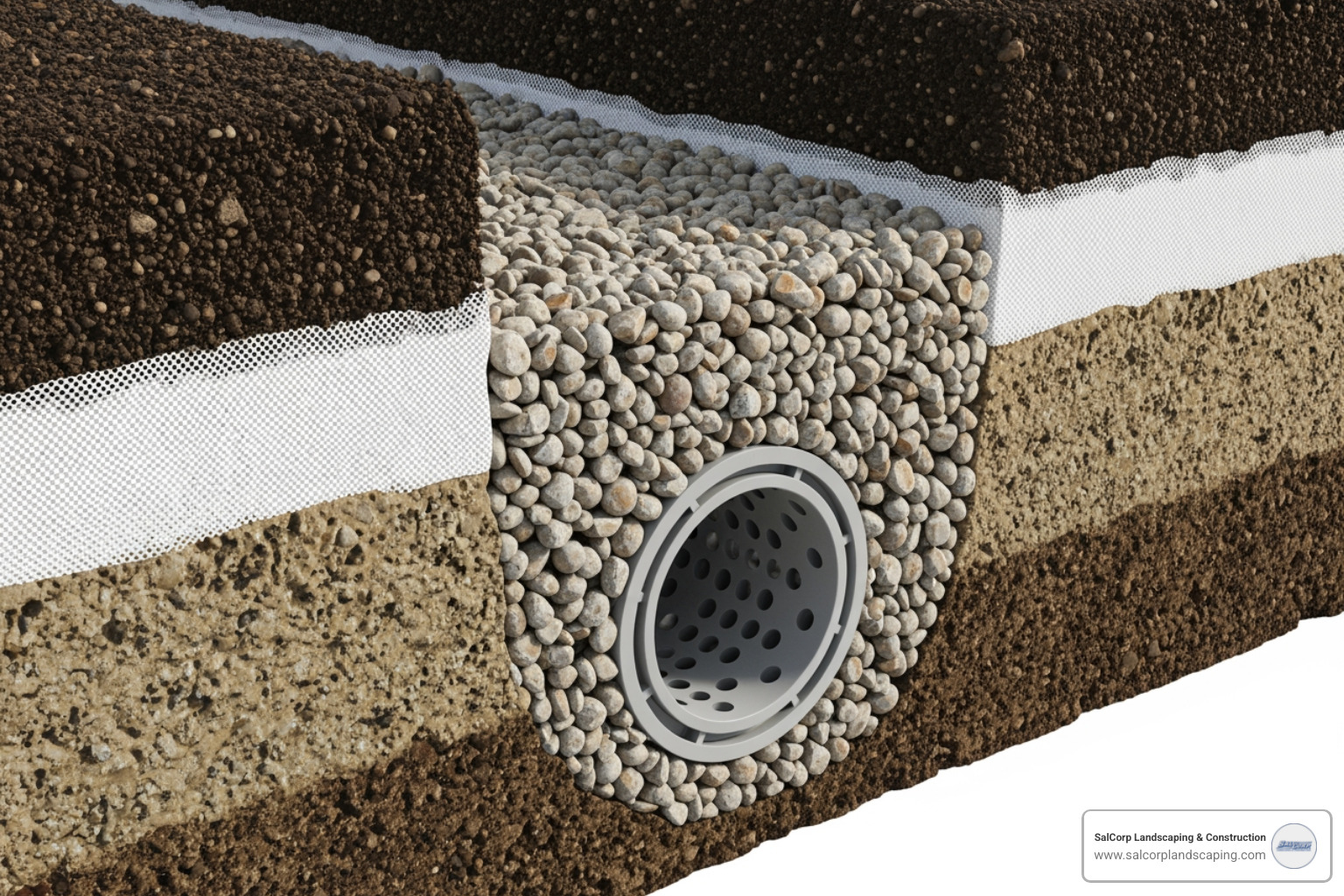
- Gravel Trench: A trench is excavated, lined with filter fabric, and filled with gravel. The gravel allows water to move more freely than it does through soil.
- Perforated Pipe: A pipe with small holes is laid in the trench. The holes face downward to collect water from the saturated gravel bed while preventing debris from clogging the pipe.
- Water Diversion: As soil becomes saturated, water seeps into the gravel trench, enters the pipe, and is channeled away from your foundation to a designated exit point.
This proactive system protects your home’s structural integrity and prevents the costly repairs associated with water damage. For more details, explore our Yard Drainage Solutions.
Signs You Need a Home French Drain
While a flooded basement is an obvious red flag, other subtle signs indicate a drainage problem. Look out for these key indicators:
- Standing Water: Puddles in your yard that persist long after rain.
- Basement Dampness: A musty smell, damp spots, visible mold, or water seepage in your basement.
- Foundation Cracks: New or widening cracks in foundation walls caused by water pressure.
- Soil Erosion: Soil washing away from your foundation, driveway, or retaining walls.
- Driveway Washouts: Water eroding the base of your driveway, causing cracks or potholes.
- Retaining Wall Failure: Walls that are bowing or cracking from water pressure building up behind them.
Addressing these issues with a French drain can save you significant expense and protect your home’s long-term value.
Interior vs. Exterior Drains: Which is Right for You?
When it comes to installing a home french drain, you have two main options: an exterior system or an interior one. The best choice depends on your specific problem, property layout, and budget. Exterior drains intercept water before it reaches the foundation, while interior drains collect water that has already entered the basement space and direct it to a sump pump.
| Feature | Exterior French Drain | Interior French Drain |
|---|---|---|
| Location | Installed around the outside perimeter of the foundation. | Installed around the perimeter of the basement floor. |
| Primary Purpose | Intercepts water before it reaches the foundation walls. | Collects water that has already entered the basement. |
| Installation | Requires significant excavation around the home’s exterior. | Involves breaking up a section of the basement floor slab. |
| Landscaping Impact | Can be disruptive to landscaping, patios, and decks. | Minimal disruption to exterior landscaping. |
| Clog Resistance | More prone to clogging from soil and roots over time. | Less prone to clogging as it’s protected indoors. |
| Cost | Generally higher due to excavation and landscape restoration. | Typically less expensive than exterior drains. |
| Sump Pump Necessity | Often drains by gravity to a lower point. | Almost always requires a sump pump to expel water. |
| Best For | New construction, severe surface water issues, high water tables. | Existing homes with basement leaks where exterior access is difficult. |
Exterior drains offer robust, proactive protection but involve major excavation. Interior systems are often a more practical, less disruptive, and cost-effective solution for existing homes, effectively managing water before it can cause damage. A professional assessment is the best way to determine the right solution for your property.
Your Complete Guide to Home French Drain Installation
Installing a home french drain looks simple, but success depends on expertise. A proper installation protects your property for decades; a poor one is just an expensive, non-functional trench. While a simple garden drain might be a DIY project, systems protecting your foundation require professional precision.
Planning Your French Drain Project
Proper planning is the most critical phase of a successful installation.
First, we identify the water’s source and flow path. Then, we map the trench route to intercept water effectively while avoiding obstacles like utility lines and tree roots. The most important decision is the outlet location—a point lower than the start of the drain, such as a dry well, a storm drain (where permitted), or a low-lying area of your property.
The drain must have a consistent downward slope of at least a 1% grade, meaning it drops one inch for every 8 to 10 feet. This is non-negotiable for proper flow and to prevent clogs.
Before You Dig: The Non-Negotiables
- Call 811: A few days before any digging, you must Call 811 or visit their website. This free service marks underground utility lines, preventing a dangerous and costly accident.
- Check Permits: Many towns in Massachusetts require permits for drainage work. We handle this to ensure your project complies with all local regulations.
For more on planning, see our Yard Drainage Solutions.
Step-by-Step Installation Process
With a solid plan, the installation can begin. Each step must be done correctly to ensure a long-lasting system.

- Excavation: We dig a trench, typically 18 inches deep and 9-12 inches wide, using laser levels to maintain the precise slope required for gravity-fed drainage.
- Lining with Filter Fabric: The trench is lined with a high-quality geotextile fabric. This material lets water in but keeps out silt and soil, which would otherwise clog the system.
- Adding a Gravel Base: A 3-inch layer of clean, coarse drainage gravel is placed in the bottom of the trench to create a stable, permeable bed for the pipe.
- Placing the Perforated Pipe: The perforated pipe is laid on the gravel bed with the holes facing downward. This allows water to enter from the saturated ground below and prevents debris from settling inside the pipe.
- Completing the System: The pipe is covered with more gravel, and the filter fabric is folded over the top to create a protective “burrito.” This encases the system, protecting it from sediment. Finally, the trench is backfilled with topsoil and can be seeded for grass or covered with decorative stone.
The process typically takes one to three days, leaving you with an invisible system that protects your property for decades.
Cost, DIY, and Maintenance Considerations for a Home French Drain
Understanding the cost, labor, and long-term upkeep is key to making an informed decision.
Note: All pricing referenced is based on internet averages and not actual SalCorp Landscaping pricing. Average home French drain installation costs can range from $1,000 to $10,000 or more, depending on project size and complexity.
What Drives the Cost?
The price of a French drain varies based on length, depth, soil type (rocky soil is more expensive to excavate), site accessibility, and whether it’s an interior or exterior system. An exterior drain may also require costs for restoring landscaping, patios, or walkways.
The DIY Temptation
While the concept is simple, the execution is demanding. Digging a long trench is hard physical labor, and achieving a consistent slope without professional tools is very difficult. Mistakes like an incorrect slope, improper fabric installation, or hitting a utility line can lead to system failure or dangerous accidents. For any drain protecting your home’s foundation, professional installation is the safest and most effective choice.
The Maintenance Reality
A professionally installed home french drain is remarkably low-maintenance, often lasting 20-30 years. Your only task is to periodically check that inlet and outlet points are clear of leaves and debris. If the drain runs near large trees, roots can be a long-term concern, but this can be mitigated during installation. This minimal upkeep makes a French drain a reliable, set-and-forget solution for most homeowners.
If you’re considering a professional installation, find a trusted local expert on our Landscape Drainage Contractor Near Me page.
Protect Your Property with Professional Drainage Solutions
In Massachusetts, managing water from heavy rain and snowmelt isn’t optional—it’s essential for protecting your home. A professionally installed home french drain is not just a trench; it’s an insurance policy against water damage, safeguarding your foundation and preserving your property’s value.
Why Professional Installation Makes All the Difference
While a DIY approach is tempting, professional installation ensures your system works correctly for decades. At SalCorp Landscaping & Construction, an owner-operated business based in Walpole, we’ve protected Massachusetts properties for over 20 years. We bring local expertise and our own heavy machinery to every job, ensuring it’s done right.
With a professional installation, you get:
- Expert Assessment: A custom-designed solution based on your property’s unique water flow and soil conditions.
- Correct Installation: Precise grading, proper materials, and the experience to handle any challenge, ensuring your drain functions flawlessly.
- Long-Term Protection: A system built to last 20-30 years, preventing basement floods, foundation damage, and soggy lawns.
- Peace of Mind: Knowing your largest investment is protected by a reliable, invisible system that works every time it rains.
Don’t wait for a damp basement to become a flooded one. Proactively managing water is far less expensive than repairing the damage it causes. Protect your home now, before a drainage issue becomes a crisis.
Ready to keep your home dry and your foundation solid? Let’s design a custom home french drain system for your property.
Get a professional French drain system quote
