

Home Made French Drain: Master 4 Easy Steps
Why Standing Water is Your Home’s Silent Enemy
A home made french drain is a DIY drainage solution that redirects water away from your property using a gravel-filled trench, landscape fabric, and a perforated pipe. Here’s what you need to know:
Quick French Drain Basics:
- What it is: A sloped trench (18″ deep, 9-12″ wide) filled with gravel and perforated pipe
- How it works: Water seeps into gravel, enters the pipe, and flows downhill via gravity
- When you need one: Soggy lawns, basement moisture, foundation pooling, or standing water after rain
- Average DIY cost: $1,500-$5,000+ depending on length and materials
- Key requirement: Minimum 1% slope (1 inch drop per 10 feet of pipe)
For many Massachusetts homeowners, pooling water near the foundation, soggy yards, and basement dampness are common issues. This standing water can cause serious damage, including foundation cracks and mold growth, leading to costly repairs.
A properly installed French drain can solve most of these problems. It’s a popular DIY project because it relies on simple physics—gravity does the work. However, “simple” doesn’t mean “easy.” Critical steps like calculating the slope and choosing the right materials are essential. One mistake can render your drain useless.
I’m Sal Musto of SalCorp Landscaping & Construction. With over two decades of experience, I’ve installed and repaired countless drainage systems, including many DIY French drains. I’ve seen what works and what fails, and this guide will help you get it right the first time.
How to Build Your Homemade French Drain: A Step-by-Step Guide
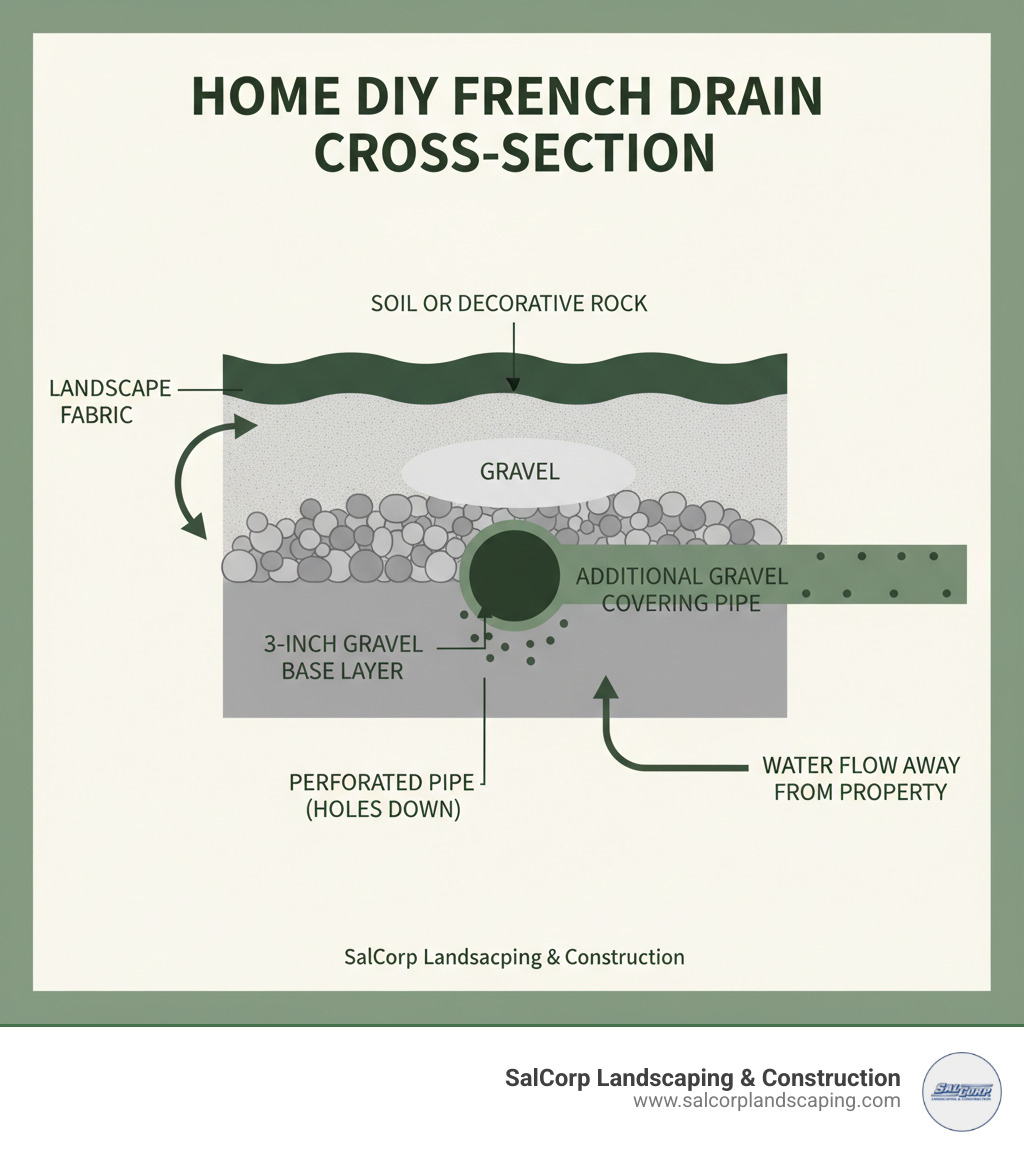
A home made french drain intercepts surface and underground water, channeling it through a gravel-filled trench with a perforated pipe. Gravity carries the water to a safe outlet, preventing soggy soil and basement moisture.
Step 1: Planning, Safety, and Gathering Supplies
Proper planning is the key to a successful home made french drain. Start by identifying where water pools on your property during or after heavy rain. This will be the starting point of your drain.
Next, map the drain’s path to a suitable outlet, like a storm drain (check local rules), dry well, or another area where water won’t cause problems. The path must have a consistent downward slope. A French drain requires at least a 1% grade—a one-inch drop for every 10 feet of pipe. Use stakes and a string level to confirm your slope. For tips on steeper inclines, see our guide on sloped yard drainage. Never drain water onto a neighbor’s property, and keep the trench at least 3-10 feet from foundations or walls.
Before you dig, call 811, the free national “Call Before You Dig” hotline, to have underground utility lines marked. Also, check with your local Massachusetts town hall for any drainage regulations, especially near wetlands, which may require a permit. More information is available on checking for underground utilities.
Essential Tools: Landscaping paint, stakes and string, a level, a trenching spade, a pickax, a wheelbarrow, utility knife, tape measure, safety glasses, and gloves. Consider renting a trencher for long projects.
Materials You’ll Need: Water-permeable landscape fabric, landscape fabric pins, 4-inch perforated plastic drain pipe, a drainage pipe cap, a drain pipe emitter or downspout catch, pipe connectors, and drainage gravel (e.g., #57 washed gravel).
Step 2: Digging and Preparing the Trench
Now it’s time to dig. For more on proper excavation, see our article on the importance of excavation in landscaping and hardscaping.

Aim for a trench that’s 18 to 24 inches deep and 9 to 12 inches wide. The depth will increase along the length to maintain the 1% slope. You can dig by hand with a spade or rent a trencher for longer runs or rocky soil. Keep the trench bottom smooth and consistently sloped, avoiding low spots where water could pool.
Line the trench with heavy-duty, water-permeable landscape fabric. This is essential to prevent soil and silt from clogging your drain. Drape the fabric so it covers the bottom and sides, with at least one foot of excess on both sides to wrap over the top later. Secure it with landscape fabric pins.
Step 3: Installing the Pipe and Gravel
This is the core of your home made french drain.
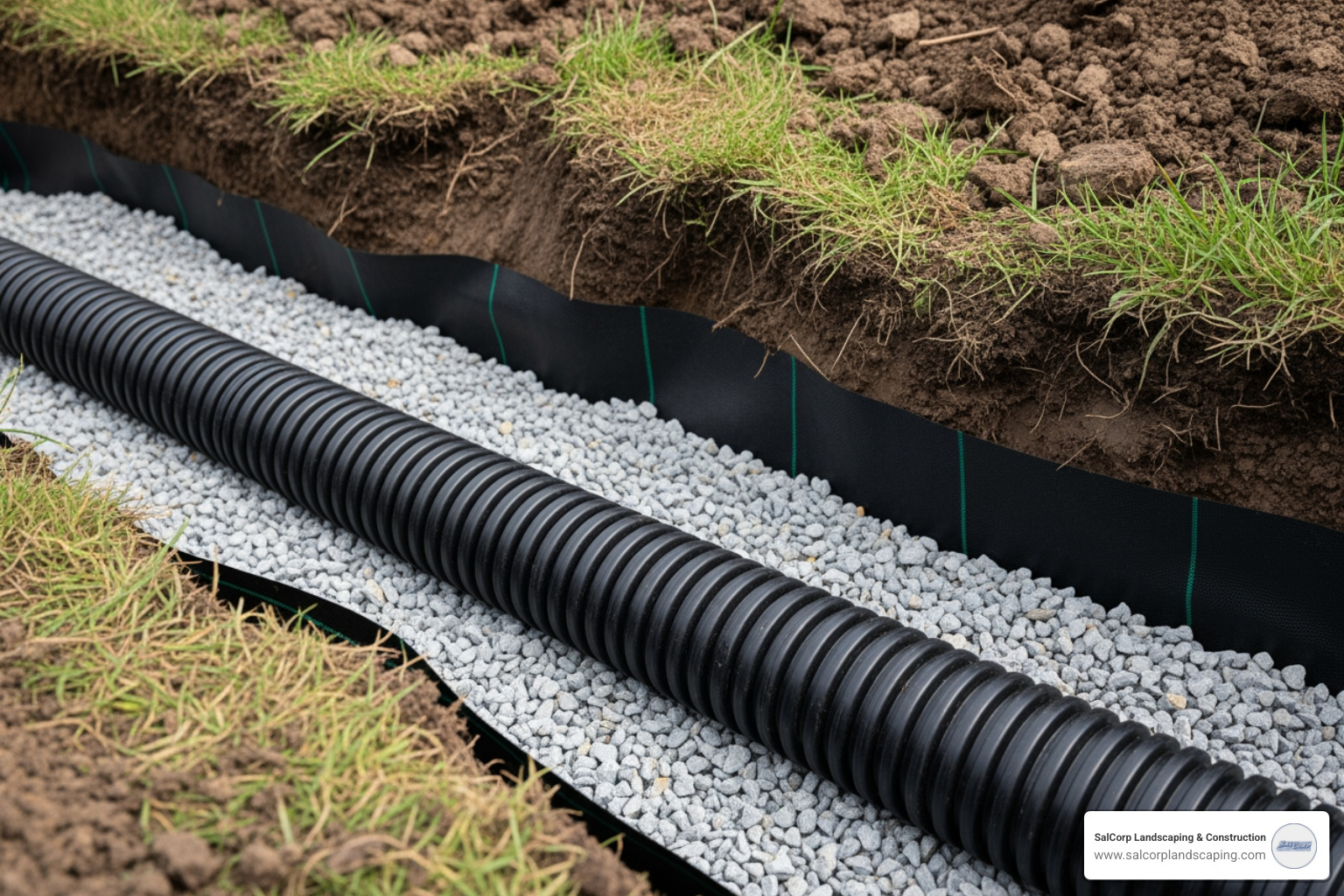
First, add a 2 to 3-inch base layer of washed drainage gravel on top of the fabric. This creates a stable, permeable bed for the pipe.
Next, lay the perforated pipe on the gravel. Crucially, the perforations must face downward. This allows water collecting at the bottom of the trench to enter the pipe efficiently. If the holes face up, they are more likely to clog with debris.
Connect pipe sections as needed. Cap the upstream end with a drainage pipe cap and attach a drain emitter at the outlet. Once the pipe is in place, cover it with another 3 to 5 inches of washed gravel.
Step 4: Backfilling, Testing, and Finishing
Now for the finishing touches on your home made french drain.
Fold the excess landscape fabric over the top layer of gravel, overlapping the pieces. This creates a protective “burrito” that keeps out soil while letting water in.
Before backfilling, test the system. Run a garden hose into the upstream end and check for steady flow at the outlet. If water drains slowly, re-check your slope before proceeding.
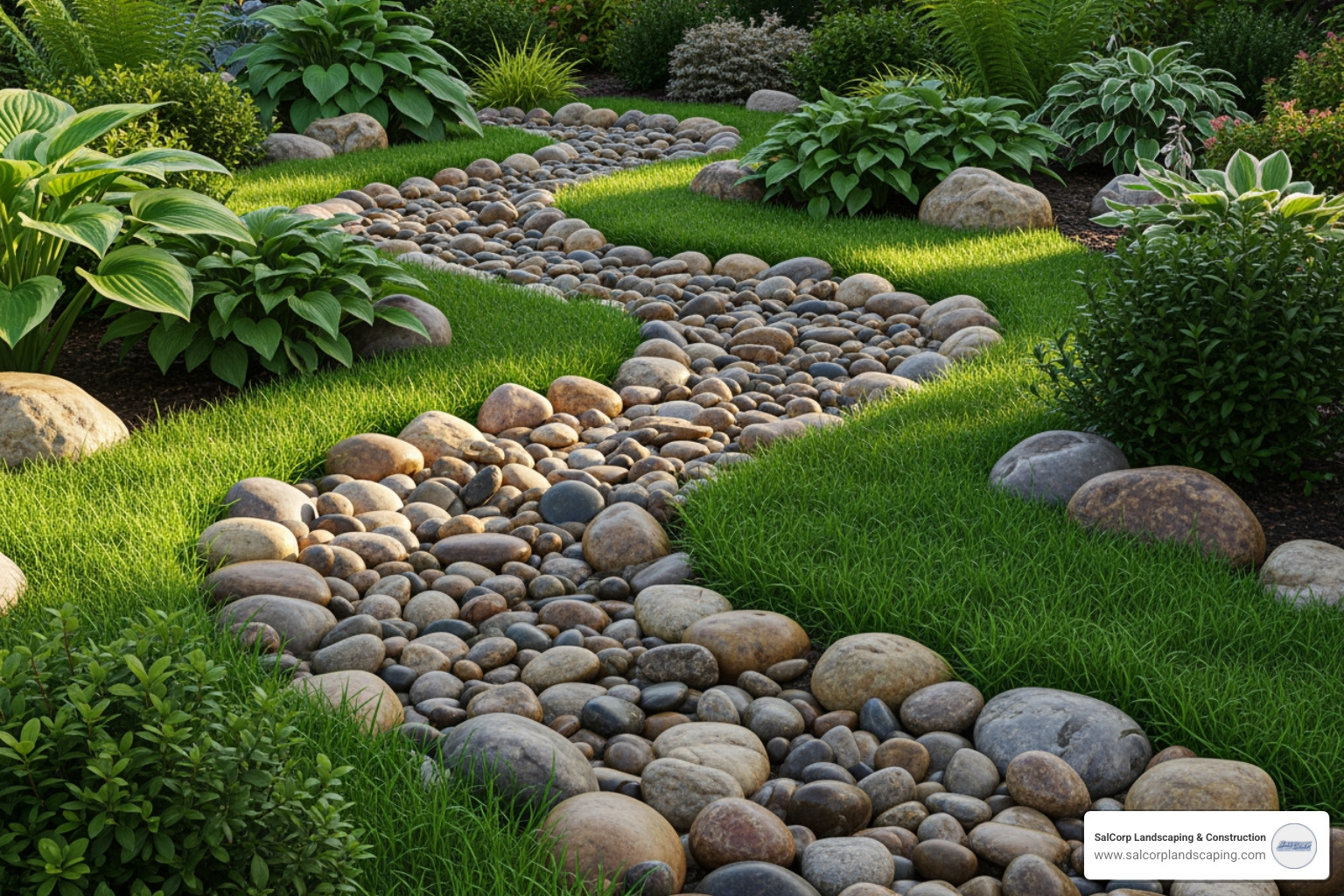
Once the test is successful, you can backfill the trench. For a seamless look, use the excavated soil and cover with sod or grass seed. For a decorative, low-maintenance finish, fill the trench to the surface with river rock or landscaping stones.
Finally, cover the outlet pipe with hardware cloth to prevent pests from nesting inside and causing blockages.
After the Build: Costs, Maintenance, and Professional Advice
Congratulations on installing your home made french drain. Now, let’s cover maintenance and when professional help might be the better option.
Maintaining Your Drain and Common Mistakes to Avoid with a Home Made French Drain
A well-built French drain can last over 20 years with minimal maintenance. Annually inspect your system, especially the outlet point, for blockages.
- Clean Grates and Outlets: Regularly clear leaves, silt, and debris from catch basin grates and the drain outlet. This is the most common and easiest fix for flow issues.
- Flush the System: Occasionally run a garden hose into the upstream end for several minutes to clear minor sediment from the pipe.
- Check for Settling: Add more soil or gravel to any depressions that form over the trench as the ground settles.
Avoid these common DIY mistakes to ensure your drain functions correctly:
- Incorrect Slope: A consistent 1% grade is non-negotiable. Without it, water will stagnate.
- Forgetting Landscape Fabric: Without fabric, soil will clog the gravel and pipe, rendering the drain useless.
- Pipe Holes Facing Up: Holes must face down to efficiently collect water from the bottom of the trench.
- Improper Outlet: Never drain water onto a neighbor’s property or create a new pooling problem elsewhere.
- Not Calling 811: Digging without marking utility lines is dangerous and can lead to costly repairs.
- Ignoring Local Codes: Check with your Massachusetts town hall to avoid fines or removal orders. Learn more about the different types of drainage to ensure you’ve chosen the right solution.
DIY Costs, Professional Help, and When to Call SalCorp Landscaping
A home made french drain is a cost-effective solution. Based on internet data (not SalCorp Landscaping pricing), a DIY project typically costs between $1,500 and $5,000+, depending on length and materials.
Professional installation offers expertise and efficiency, especially for complex jobs. Based on internet data (not SalCorp Landscaping pricing), professional services can range from $10,000 to $30,000 or more. A professionally installed system can last over 20 years, protecting your property value by preventing foundation damage and erosion.
Consider hiring a professional for:
- Large-scale projects (over 50 feet long).
- Complex terrain with difficult slopes or obstacles.
- Interior basement drains, which require cutting concrete and integrating sump pumps.
- Connecting to municipal storm drains.
If you lack the time or physical ability, or simply want the job done right the first time, hiring a professional is a smart investment.
For homeowners in Walpole, Canton, Needham, and across Massachusetts, SalCorp Landscaping & Construction provides expert French drain services. With over 20 years of experience and our own machinery, we handle everything from planning to installation. We can design and install a custom solution to protect your property from water damage.
If you’re facing drainage challenges and want the assurance of professional quality, we invite you to learn more about professional French drain system services and contact us for a consultation.
