Install flower bed edging: 2025 Game-Changer Guide
Why Edging Your Flower Beds is a Game-Changer
Learning how to install flower bed edging can dramatically transform your garden’s look and function. The essential process is:
- Choose your edging material – plastic, metal, wood, or stone based on budget and style
- Mark your border using a garden hose or string line
- Dig a trench 3-4 inches deep along your marked line
- Install the edging ensuring it sits level with proper securing
- Backfill and finish for a clean, professional look
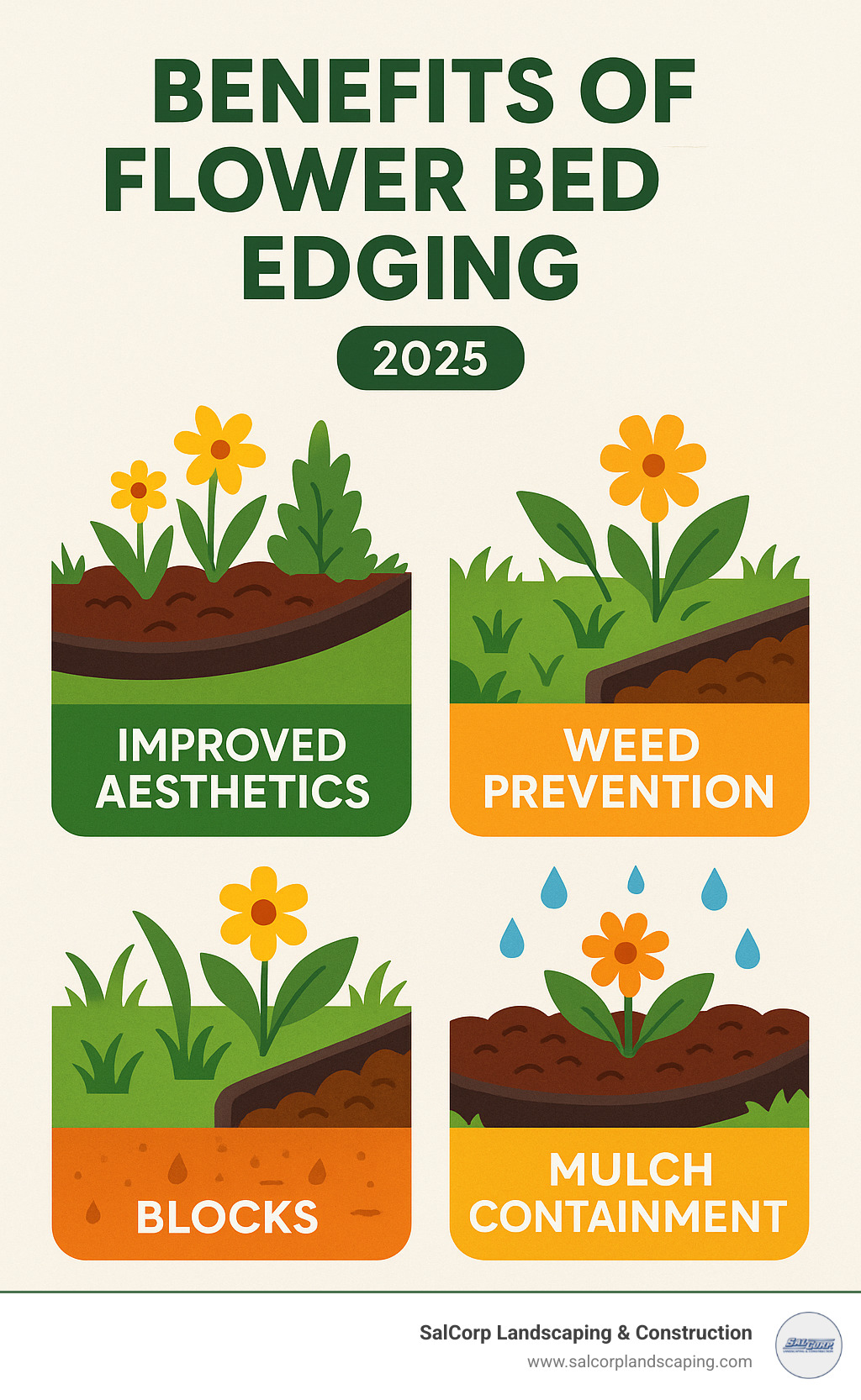
A distinct border around your flower beds creates a pristine, well-groomed look. Edging also helps keep grass and weeds from invading your carefully cultivated flowers.
Beyond aesthetics, edging is practical. It contains mulch, preventing washout during heavy rains, and creates a barrier against creeping grass. This reduces maintenance and keeps your plantings healthy.
For Massachusetts properties, edging is crucial during harsh winters. A well-installed border protects your landscaping investment by maintaining structure during snow melts and spring runoff.
I’m Sal Musto, owner of SalCorp Landscaping & Construction. With over two decades of experience in Massachusetts, I’ve helped countless clients install durable flower bed edging. Whether you’re doing it yourself or hiring a pro, understanding the process is key to achieving a polished look for your property.
Quick install flower bed edging definitions:
Planning Your Flower Bed Edging Project
A successful flower bed edging project begins with careful planning. This includes selecting materials, gathering tools, estimating costs, and prioritizing safety.
Choosing the Right Material to Install Flower Bed Edging
The material you choose for your flower bed edging will significantly impact its appearance, durability, and installation effort. Each type offers unique benefits.
- Plastic Edging: Often the most budget-friendly and easiest option, plastic edging comes in flexible rolls ideal for curves. Its lifespan ranges from a few months to a few years, depending on quality and sun exposure. While affordable, it offers a basic look.
- Wood Edging (Landscape Timbers): Landscape timbers (3- to 8-inches wide) provide a natural frame. Untreated timbers rot quickly, so we recommend pressure-treated, ground-contact rated wood, which can last 15-20+ years. Redwood or cedar are excellent, naturally resistant choices.
- Metal Edging (Aluminum, Steel): Metal edging is sleek, modern, and durable. Lightweight, rust-resistant aluminum is easy to work with, while steel offers greater strength and a rustic look. It’s excellent for clean lines and lasts for decades.
- Stone or Brick Edging: Stone or brick offers a classic, durable border. Options include natural stones and concrete pavers. Though labor-intensive to install, these materials have exceptional longevity and beauty.
- Poured Concrete Edging: Poured concrete offers ultimate customization and durability. It can be shaped, colored, and textured to match any landscape. This permanent, maintenance-free border lasts for decades.
Here’s a quick comparison of popular edging materials:
| Material | Cost (per linear foot) | Durability | Installation Difficulty | Aesthetics |
|---|---|---|---|---|
| Plastic | Low | Low-Medium | Easy | Basic |
| Wood (Timbers) | Medium | Medium-High | Medium | Natural, Rustic |
| Metal | Medium-High | High | Medium-Hard | Modern, Clean |
| Stone/Brick | High | Very High | Hard | Classic, Neat |
| Poured Concrete | High | Very High | Hard (Professional) | Custom, Permanent |
When making your choice, consider your budget, the style of your home and garden, and the time you’re willing to invest. For more in-depth information, explore our resources on hardscape material and poured concrete options.
Tools and Supplies You’ll Need
Having the right tools makes the project smoother. We recommend:
- Shovel: For digging the trench.
- Spade or Half-Moon Edger: For creating a clean, vertical trench cut.
- Garden Hose or Spray Paint: For marking your design.
- Tape Measure: To measure and cut materials.
- Mallet or Hammer: For driving in stakes.
- Level: To ensure your edging is even.
- Wheelbarrow: For moving soil, mulch, or gravel.
- Work Gloves: To protect your hands.
- Safety Glasses: For eye protection.
- Edging Material: Your chosen plastic, wood, metal, stone, or concrete.
- Landscape Stakes or Rebar: To secure edging. Use 12-inch lengths of #3 rebar for timbers.
- Landscape Fabric (optional): Commercial-grade spun fabric is best for weed suppression.
- Gravel or Sand (for pavers): To create a stable base for stone or brick.
Estimating Your Project’s Cost
Understanding costs is crucial for planning. Please note: The following costs are national averages based on internet data and do not represent actual pricing from SalCorp Landscaping. Costs can range from $1 to over $25 per linear foot depending on material and complexity.
- Material Cost:
- Plastic edging is most affordable, with 60 feet starting around $30.
- Landscape timber edging averages around $1 per linear foot.
- Higher-end materials like metal, stone, or poured concrete will increase the cost.
- Labor Estimates (if hiring a professional): Professional installation costs vary by material, design complexity, and local labor rates. Hiring a pro ensures a flawless result, especially for intricate designs.
- Additional Supplies: Factor in the cost of tools, landscape fabric, base materials like gravel, and securing hardware like rebar.
For more details on general costs, see our guide on mulching and edging cost.
Important Safety Considerations
Safety should always be your top priority.
- Personal Protective Equipment (PPE): Wear sturdy work gloves and safety glasses to protect your hands and eyes.
- Checking for Utility Lines: Before digging, call 811 (the national “Call Before You Dig” hotline) to have underground utility lines marked. This free, critical service prevents serious accidents.
- Using Tools Safely: Operate tools according to their instructions. Keep children and pets away from the work area.
- Lifting Heavy Materials: Lift heavy items like stone or timbers with your legs, not your back. Use a wheelbarrow for transport to prevent injury.
- Handling Treated Wood: Wear gloves when handling pressure-treated wood and wash your hands thoroughly afterward.
- Rebar Safety: Drive rebar slightly below the wood surface to prevent a tripping hazard. Be careful to avoid underground sprinkler lines.
Step-by-Step Guide to Install Flower Bed Edging
Now that you’ve planned, it’s time for the installation. Following these steps will help you achieve a professional look for your flower bed edge.
Step 1: Design and Mark Your Border
First, define your border’s shape and path. Taking your time on this step will prevent headaches later.
For curved borders, a garden hose is your best tool. Lay it on the ground to create your desired shape, adjusting it until you’re happy with the flow. View the design from different angles, like your front door and the street, to ensure it looks right.
For straight lines, use stakes and a taut mason’s line for crisp, precise sections. This ensures your lines are perfectly straight.
Once satisfied with the design, use brightly colored spray paint along your guide to create a clear line for digging. For more complex designs, exploring landscape design plans can offer valuable ideas.
Step 2: Dig the Trench
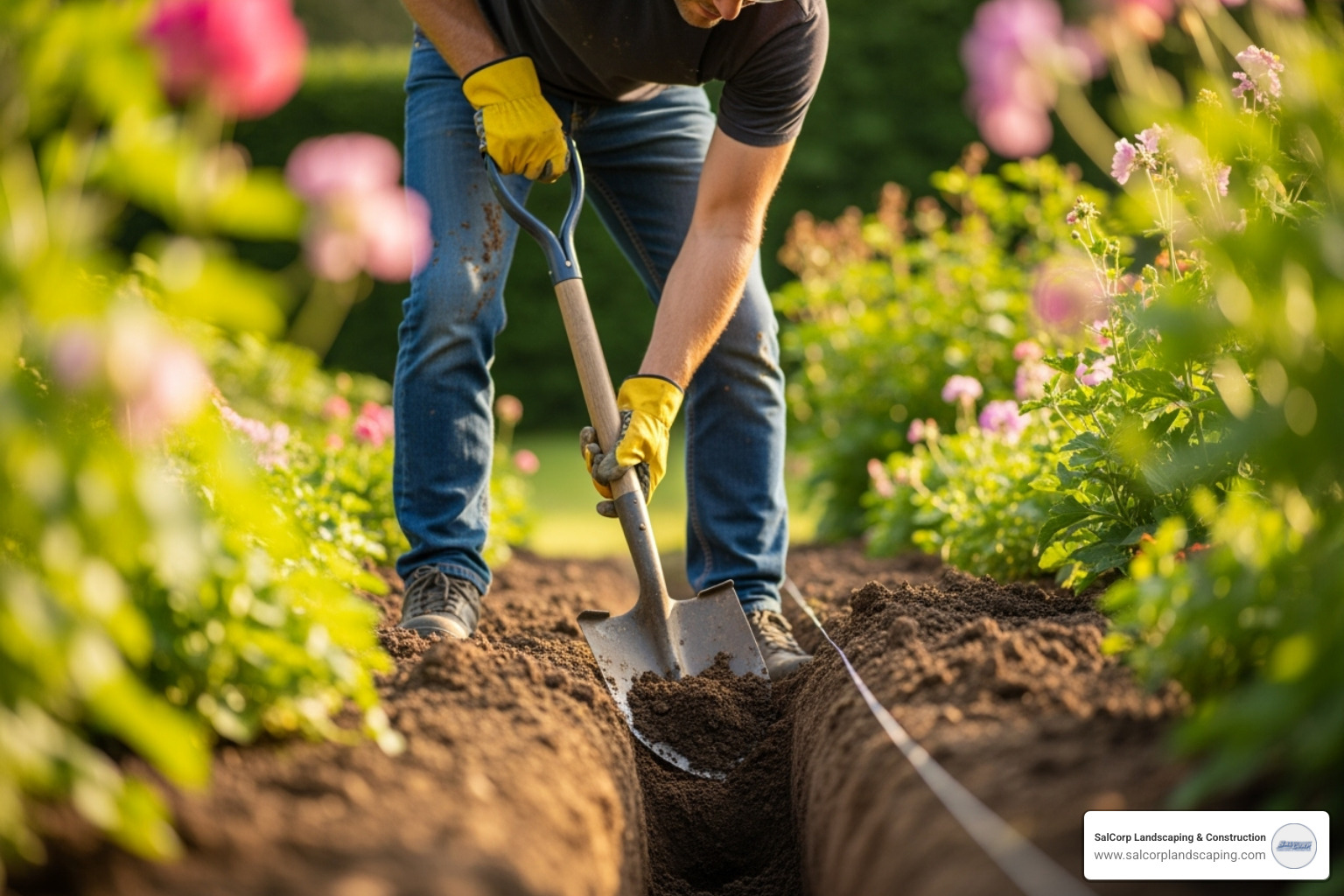
With the border marked, it’s time to dig the trench. This step is crucial for stability and containment.
The general trench depth should be 3-4 inches deep for most materials. This depth provides support and prevents shifting. Plastic edging requires at least a 3-inch deep trench, while pavers may need a deeper, wider trench to accommodate a base layer of gravel or sand.
Trench width should be slightly wider than your edging material for proper placement. For plastic edging, about 2 inches is sufficient, but heavier materials like timbers or pavers need more space.
To remove turf, use a shovel or half-moon edger to cut along your marked line at a 90-degree angle. Remove all grass and vegetation from the trench, as any remaining roots will try to grow back.
Creating a vertical wall on the lawn-facing side gives your edging a professional look and helps prevent grass from creeping underneath.
Step 3: Prepare the Base
A stable, level base is essential for your edging’s longevity and appearance. Do not skip this step, as it acts as the foundation for your project.
Level the trench bottom by compacting the soil with a hand tamper or the back of a shovel. Use a level to ensure the bottom is perfectly flat for a professional result.
Adding a base layer is crucial for pavers or stone. Spread a 2-4 inch layer of paver base (crushed stone) and compact it thoroughly. Then, add a 1-inch layer of stone dust on top for a smooth, level surface.
Installing landscape fabric is a highly recommended optional step. Lay commercial-grade spun landscape fabric in the flower bed and trench to act as a weed barrier, significantly reducing future maintenance. High-quality fabric is more durable. Scientific research on fabric and mulches for weed management supports this approach.
Step 4: How to Install Flower Bed Edging: The Core Process
Now it’s time to place and secure the edging material, bringing your vision to life.

Placing the material techniques vary by type. For plastic edging, uncoil it and leave it in the sun for at least an hour to make it more flexible. Place it in the trench with 1/2 to 1 inch showing above ground to contain mulch.
Landscape timbers are laid end-to-end. For corners, you may need to cut angles for a precise fit. Use mending plates and screws to join timber sections securely.
Bricks or pavers should be placed firmly on the prepared stone dust base. Tap them into place with a rubber mallet, ensuring they are level. Fill joints with polymeric sand to lock them in place.
Connecting sections properly prevents gaps. Use plastic coupling pieces for plastic edging and plates and screws for timber.
Securing the edging is key to a professional result. For plastic edging, hammer landscape stakes every 3 to 6 feet on the inside of the garden. For extra security against frost heave, hammer stakes at a 45-degree angle.
For landscape timbers, drive 12-inch lengths of #3 rebar through pre-drilled holes about 4 feet apart. Drive the rebar slightly below the wood surface for safety.
Backfilling the trench completes the installation. Backfill both sides with soil, patting it down firmly. Lightly watering the soil helps it settle and eliminates air pockets.
Common Mistakes to Avoid and Pro Tips
It’s easy to make small mistakes when you install flower bed edging. After two decades in Massachusetts, I’ve seen these common issues repeatedly.
A common mistake is digging the trench to the wrong depth. A shallow trench lacks stability for New England winters, while a deep one is unnecessary work. The 3-4 inch depth is ideal for a reason.
Not leveling your edging is another pitfall. An uneven edge looks unprofessional and can cause issues with mulch containment and water drainage. Take the extra time to use a level.
Choosing the wrong material for the Massachusetts climate is a frequent issue. Budget-friendly plastic often fails in our freeze-thaw cycles. Robust materials like treated wood, metal, or stone offer better long-term value here.
Forgetting to properly secure the edging is another common problem. Without stakes or rebar, materials will shift and heave, defeating the purpose of a clean border.
Unintended drainage problems are a common oversight. Edging shouldn’t act as a dam, which can cause root rot. If water pools, add small drainage gaps or slope the bed slightly.
Here are some pro tips that can make your installation smoother:
For plastic edging, uncoil it in the sun for an hour to make it more flexible and easier to work with. This simple step can save you a lot of frustration.
For timber edging, these sturdy materials aren’t just for borders. Consider their use in retaining walls for larger projects where you need to manage slopes or create raised beds.
The key to success is taking your time, following the proper steps, and not rushing through the details. A well-installed flower bed edge will serve your landscape beautifully for years to come.
Frequently Asked Questions about Flower Bed Edging
Here are answers to common questions about how to install flower bed edging, based on years of experience in Massachusetts.
How long does different flower bed edging last?
Edging lifespan depends heavily on the material and installation quality.
Plastic edging has the shortest lifespan, from a few months to a few years. Higher-quality plastic lasts longer.
Untreated wood often rots within two years in our climate, so we don’t recommend it.
Pressure-treated landscape timbers are a great value, lasting 15 to 20 years or more. The treatment makes them resistant to rot and insects.
Metal edging, like aluminum or steel, can last for decades (20-30+ years). It resists rot, warping, and damage from freeze-thaw cycles.
Stone, brick, and poured concrete offer the greatest longevity, lasting 50 years or more with proper installation. They are a permanent fixture in your landscape.
How do you keep flower bed edging straight?
Getting straight lines is key to a professional look. Here’s how to do it right.
Use a taut string line between two stakes as a visual guide for digging and laying straight sections.
For plastic edging, unroll it and leave it in direct sunlight for at least an hour. The warmth makes it pliable and easier to straighten, saving you frustration.
Secure everything firmly once in place. For plastic, hammer stakes every 3 to 6 feet inside the bed. A pro trick is to angle the stakes at 45 degrees to help prevent frost heave from pushing the edging out of place.
For timber, use rebar or landscape spikes driven deep into the ground to lock it in place before backfilling.
How deep should I bury landscape edging?
Proper depth is crucial for stability and function. The general rule is a 3-4 inch deep trench, but there are specifics to consider.
For most materials like plastic, metal, or timber, this depth provides stability while allowing the top to sit about a half-inch to one inch above ground. This slight elevation is necessary to contain mulch and stop grass.
Plastic edging needs a trench at least 3 inches deep to be secure, especially during freeze-thaw cycles.
Pavers and stone require a deeper trench, perhaps 6 to 8 inches, to accommodate the necessary base layers of stone and sand.
The goal is to create a stable foundation for long-lasting, effective edging that properly defines your garden beds.
Get a Professional Edge for Your Landscape
While DIY edging can be a rewarding project, professional installation offers peace of mind. Heavy materials like stone and concrete are difficult to work with, and complex curves require an experienced hand.
A professional finish requires understanding how materials behave in Massachusetts weather, techniques to prevent frost heave, and the right equipment for local soil conditions.
At SalCorp Landscaping & Construction, we’ve perfected landscape edging for over 20 years. As an owner-operated business in Walpole, I personally oversee projects to ensure high standards. We bring our own machinery, allowing us to handle any job, from simple plastic edging to complex poured concrete borders.
Our team serves communities throughout Massachusetts, including Avon, Barnstable, Boston, Franklin, Walpole, and Wellesley. Whether you envision neat stone borders or durable landscape timber edging that can serve as retaining wall elements, we have the expertise to bring your vision to life.
Our comprehensive approach means we consider how edging fits your overall landscape design. We ensure proper drainage, coordinate with existing hardscaping, and select materials suited for the New England climate.
Professional installation is an investment that pays off in longevity and curb appeal. A proper border improves property value and reduces future maintenance.
Ready to transform your garden with expertly installed edging? Contact us for your next landscaping project to discuss how we can create the polished, professional look your landscape deserves.