

Landscape Construction Management Software: Top 3 Essential Tools

Landscape construction management software is changing the way landscaping businesses operate, helping them streamline everything from estimating and scheduling to job costing and invoicing. By integrating such software, businesses can manage projects more efficiently, reduce errors, and increase profitability.
If you’re looking for quick insights:
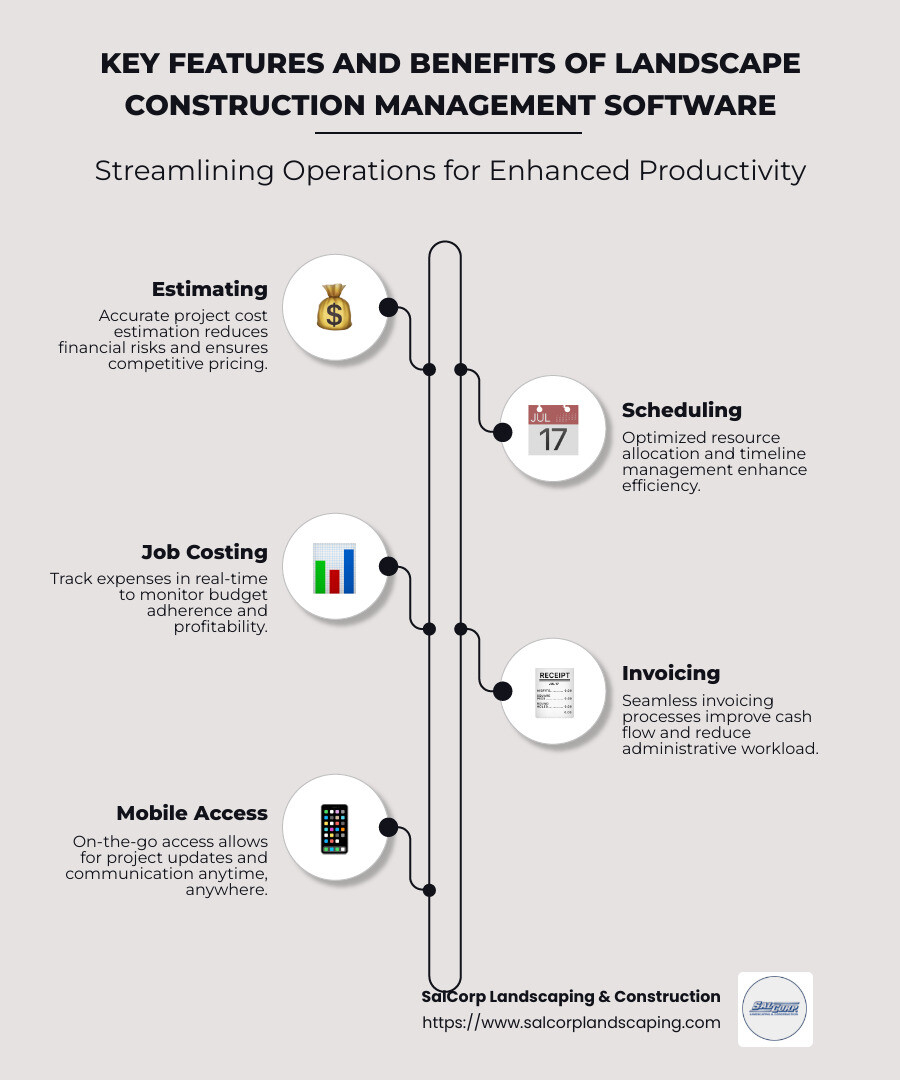
- Essential Features: Estimating, scheduling, job costing, invoicing
- Top Benefits: Improved efficiency, accuracy, and scalability
Understanding and choosing the right landscape construction management software is crucial for enhancing the productivity of landscaping operations and driving business growth.
I’m Sal Musto, owner of SalCorp Landscaping & Construction, with two decades of dedication to outdoor space improvement. My commitment to quality service brings valuable expertise in utilizing landscape construction management software to ensure seamless operations.
Landscape construction management software definitions:
– landscaping and construction
– what is landscape construction
– what is landscaping construction
Understanding Landscape Construction Management Software
Landscape construction management software is a powerful tool that can help transform your business operations. It streamlines processes like scheduling, job costing, and customer relationship management (CRM). With mobile access, you can manage your business from anywhere, ensuring you never miss a beat.
Key Features to Look For
- Scheduling: A good software should offer a flexible and intuitive scheduling interface. Look for features like drag-and-drop functionality and calendar views. Advanced options might include the ability to adjust schedules for weather delays and plan efficient routes using a map view.
- Example: A landscaping company used scheduling software to shift their entire crew’s schedule by a day due to unexpected rain. This flexibility helped them maintain productivity without losing time.
- Job Costing: Accurate job costing is crucial. Look for software that provides real-time access to budgeted vs. actual expenses. This helps prevent underestimating costs, which can lead to profit loss. The software should automatically include your markups in pricing and allow tracking of all job activities through work tickets.

- CRM: Managing customer relationships effectively is key to business success. The software should help you keep track of customer data, manage communication, and improve client satisfaction. Integration with tools like QuickBooks can also streamline invoicing and payments.
- Mobile Access: Ensure the software allows mobile access, enabling you to manage your business operations on the go. This flexibility is especially useful for field technicians who need to update job statuses or access customer information remotely.
Benefits of Integrating Software in Landscape Construction
Efficiency: By automating repetitive tasks, landscape construction management software saves time and reduces the risk of human error. This efficiency allows you to focus more on growing your business rather than getting bogged down in administrative duties.
Accuracy: The software provides accurate data for estimating, scheduling, and job costing, minimizing costly mistakes. With real-time updates, you can make informed decisions quickly.
Scalability: As your business grows, the software should grow with you. It should support an increasing number of projects, customers, and employees without compromising performance.
Integrating landscape construction management software into your business operations can lead to significant improvements in how you manage projects, interact with clients, and handle finances. By focusing on the right features and understanding the benefits, you can choose the best software to meet your needs and drive your business forward.
How Landscape Construction Management Software Transforms Business Operations
Impact on Project Management
Project Management is at the heart of any successful landscape construction business. With the right landscape construction management software, you can streamline the planning, execution, and monitoring of your projects.
Planning becomes more efficient with tools that offer drag-and-drop scheduling, route planning, and the ability to shift schedules due to weather changes. This flexibility ensures that your team is always on the right track, even when unexpected events occur.
Execution is improved through real-time updates and mobile access, allowing field teams to stay informed and make adjustments on the go. This leads to smoother operations and fewer delays.
Monitoring is simplified with dashboards that provide insights into project progress, resource allocation, and potential bottlenecks. This visibility helps you keep projects on time and within budget.
Enhancing Client Relationships
Building strong client relationships is crucial for any landscape construction business. Landscape construction management software can significantly improve communication, satisfaction, and retention.
Communication is improved through centralized client data and communication logs. This ensures that all team members are on the same page and that clients receive timely updates.
Satisfaction increases when clients see projects running smoothly and on schedule. With features like digital invoicing and easy access to project updates, clients have a seamless experience.
Retention is boosted when clients are happy and informed. Satisfied clients are more likely to return for future projects and recommend your services to others.
Financial Management and Reporting
Managing finances effectively is essential for the profitability of your business. Landscape construction management software aids in budgeting, forecasting, and profit analysis.
Budgeting becomes more accurate with tools that track expenses in real time. This helps prevent overspending and ensures that projects remain profitable.
Forecasting is improved with software that analyzes historical data to predict future trends and demands. This insight allows you to plan strategically and allocate resources efficiently.
Profit Analysis is simplified with detailed reports that compare budgeted vs. actual costs. This helps identify areas where you can improve efficiency and increase profitability.
By integrating landscape construction management software into your operations, you can transform how you manage projects, improve client relationships, and handle financial tasks. This change leads directly into the next section on selecting the right software for your business needs.
Selecting the Right Landscape Construction Management Software
Choosing the right landscape construction management software is crucial for optimizing your business operations. Let’s break down the process into three key steps: assessing your business needs, comparing different software solutions, and making an informed decision.
Assessing Your Business Needs
Before diving into software options, understand the unique needs of your business. Consider the following:
- Size and Scope: Is your business a small local operation or a larger company with multiple projects? The scale of your business will influence the features you need.
- Specific Requirements: Identify what your business specifically needs from the software. Do you require robust scheduling capabilities, or is job costing more critical?
- Current Pain Points: What are the current challenges in your operations? Whether it’s inefficient scheduling or poor client communication, knowing these will guide your choice.
Comparing Different Software Solutions
Once you’ve assessed your needs, the next step is to compare available software solutions. Here are the factors to consider:
- Features: Look for software that offers essential features like estimating, scheduling, job costing, and mobile access. For instance, software that allows you to shift schedules for weather delays can save time and money.
- Usability: The software should be user-friendly. A complex interface can slow down your team and hinder productivity.
- Support: Evaluate the level of customer support provided. Is there 24/7 support available? Can you access training resources or live assistance when needed?
Making the Informed Decision
Finally, make an informed decision by considering the following:
- ROI: Calculate the return on investment. How much time and money will the software save you in the long run?
- User Reviews: Check online reviews and testimonials from other landscape construction businesses. They can provide insights into the software’s reliability and performance.
- Trials: Many software providers offer free trials. Use these to test the software’s capabilities and ensure it meets your needs before committing.
By carefully assessing your business needs, comparing different options, and making an informed decision, you can select the right landscape construction management software that aligns with your goals. This leads us to the next step: implementing the software effectively in your business operations.
Implementing Landscape Construction Management Software
Implementing landscape construction management software is a critical step in changing your business operations. Here’s a simple guide to ensure a smooth transition.
Steps for Effective Implementation
Preparation: Start by preparing your team for the change. Communicate the benefits and how it will make their work easier. This helps in getting everyone on board.
Strategy: Develop a clear strategy for how the software will be used in your business. Define the goals you want to achieve and the processes that will be streamlined.
Integration: Ensure the new software integrates well with your existing systems. This might involve connecting it with your current CRM or accounting software to ensure seamless data flow.
Customization: Customize the software to fit your specific business needs. This could mean setting up templates for estimates or adjusting workflows to match your processes.
Deployment: Once everything is set, deploy the software in stages. Start with one department or project to test functionality and make adjustments as needed.
Training and Support
Onboarding: A successful implementation depends on proper onboarding. Provide comprehensive training sessions for your team to familiarize them with the new system.
Continuous Learning: Encourage continuous learning by providing access to online resources, tutorials, and webinars. This ensures your team stays updated with any new features or updates.
Technical Support: Choose a software provider that offers robust technical support. Whether it’s a helpline, chat support, or dedicated account managers, having access to help when you need it is crucial.
By following these steps, you can ensure a successful implementation of your landscape construction management software. This not only improves efficiency but also boosts team morale by making their tasks more manageable.
Let’s address some common questions and concerns businesses have about adopting this technology.
Frequently Asked Questions about Landscape Construction Management Software
What is the ROI of investing in this software?
Investing in landscape construction management software can significantly boost your return on investment (ROI) by streamlining operations and reducing costs. According to user testimonials, like Barney Naylor from Naylor Landscape, Inc., companies have experienced growth by as much as 36% in a year. This growth is attributed to better project management, accurate job costing, and efficient scheduling, which help in maximizing profitability. By automating these processes, businesses can reduce errors, save time, and focus on delivering quality services to clients.
How does this software integrate with existing systems?
Integration is a crucial aspect of adopting new software. Most landscape construction management software solutions are designed to seamlessly integrate with existing systems like CRM and accounting platforms. For example, many integrate with popular accounting software like QuickBooks, ensuring that your financial data is accurate and up-to-date. This integration eliminates manual data entry and reduces the risk of errors, providing a unified view of your business operations. When choosing a software, verify its compatibility with your current systems to ensure a smooth transition.
What kind of support can users expect?
Reliable support is essential when implementing and using new software. Look for providers that offer comprehensive support options, such as helplines, chat support, and dedicated account managers. Effective support ensures that any issues are resolved quickly, minimizing downtime and disruption to your business. Additionally, many companies offer training resources like tutorials, webinars, and user guides to help your team get the most out of the software. Continuous learning opportunities ensure that your staff stays updated on new features and best practices, enhancing the overall user experience.
By addressing these common questions, businesses can better understand the value and functionality of landscape construction management software. Up next, we’ll dig into the future trends shaping the landscape construction industry and how SalCorp Landscaping & Construction is leading the way.
Conclusion
As we look to the future, the landscape construction industry is evolving rapidly, driven by advancements in technology and changing consumer expectations. Landscape construction management software is at the forefront of this change, offering innovative solutions that improve efficiency, accuracy, and client satisfaction.
Future Trends
One of the most significant trends is the integration of sustainable practices. As more clients seek environmentally friendly options, software that supports sustainable designs and native plant integration will become increasingly valuable. These tools help landscape professionals plan and execute projects that are both beautiful and eco-friendly, aligning with the growing demand for sustainability.
Another trend is the rise of mobile access. With more teams working in the field, having real-time access to project data and schedules via mobile devices is crucial. This capability ensures that crews are always informed and can make swift decisions, improving overall project execution.
Data-driven decision-making is also gaining traction. Software that provides detailed analytics and reporting enables businesses to make informed choices, optimizing operations and boosting profitability. As data becomes more integral to business strategy, having robust reporting tools will be essential.
SalCorp Landscaping & Construction
At SalCorp Landscaping & Construction, we are committed to staying ahead of these trends. Our focus on sustainable design, coupled with our expertise in landscape construction, ensures that we deliver projects that meet modern demands while maintaining our high standards of quality and customer satisfaction.
We recognize the importance of leveraging technology to improve our services and streamline operations. By integrating cutting-edge software solutions, we empower our team to work more efficiently and provide our clients with exceptional results.
For anyone looking to transform their outdoor space, we invite you to explore our landscape design services. With over 20 years of experience and a dedication to innovation, SalCorp Landscaping & Construction is your trusted partner in creating the outdoor space of your dreams.
In conclusion, embracing the right landscape construction management software is key to thriving in the changing landscape industry. By staying informed about future trends and leveraging the power of technology, businesses can ensure long-term success and client satisfaction.
