

Landscape Wood Steps: Top 2025 DIY Guide
Why Landscape Wood Steps Transform Your Outdoor Space
Landscape wood steps offer the perfect solution for navigating slopes while creating stunning focal points in your yard. Whether you’re dealing with a steep hillside or need safe access between different levels of your property, wood steps provide both functionality and natural beauty that complements any landscape design.
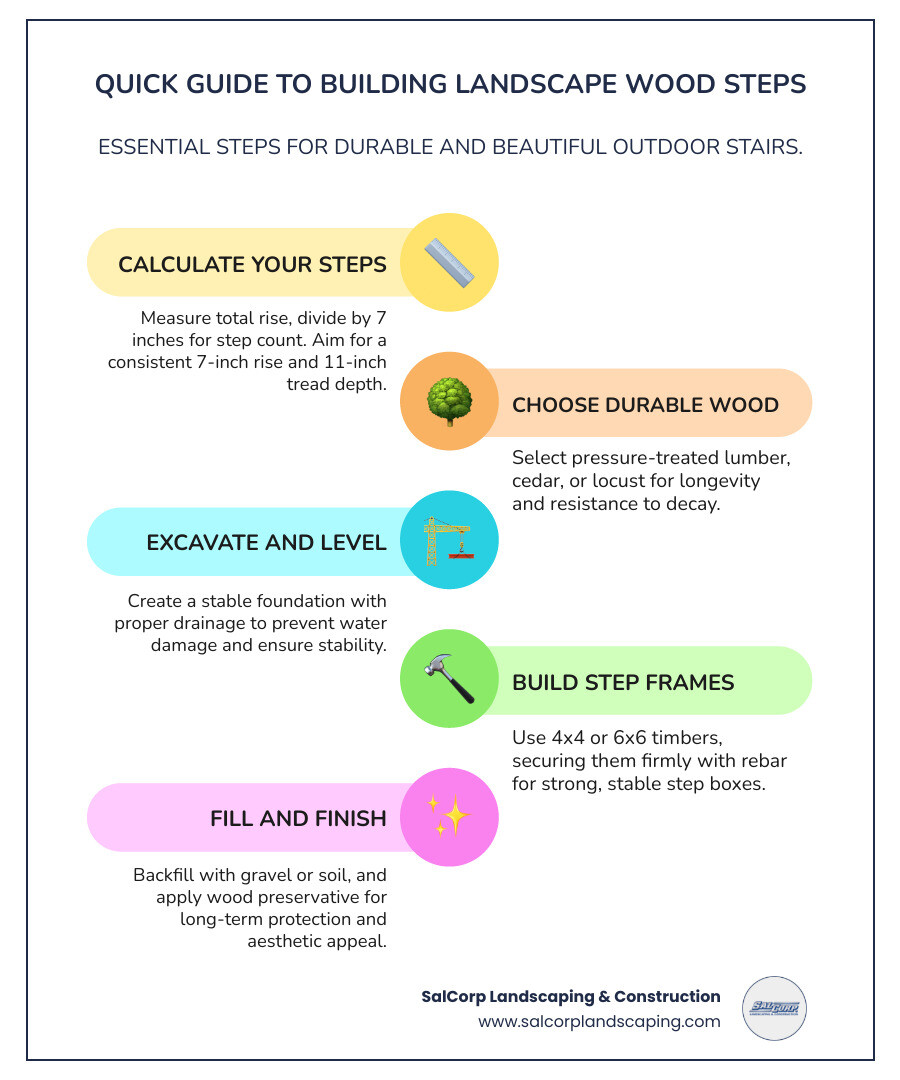
Quick Guide to Building Landscape Wood Steps:
- Calculate your steps – Measure total rise, divide by 7 inches for step count
- Choose durable wood – Pressure-treated lumber, cedar, or locust for longevity
- Excavate and level – Create stable foundation with proper drainage
- Build step frames – Use 4×4 or 6×6 timbers secured with rebar
- Fill and finish – Add gravel or soil, apply wood preservative
Wood steps cost significantly less than stone alternatives while offering easier installation and natural integration with existing landscaping. For steeper grades, plan one step every 3.5 feet. Each step should maintain a consistent 7-inch rise for safety and comfort.
The Benefits:
- Cost-effective compared to stone or concrete
- Easy to customize for any slope or design
- Natural appearance that ages beautifully
- DIY-friendly with basic tools and skills
I’m Sal Musto, owner of SalCorp Landscaping & Construction with over two decades of experience creating beautiful outdoor spaces throughout Massachusetts. I’ve designed and installed countless landscape wood steps that have transformed challenging slopes into accessible, attractive pathways for both residential and commercial properties.
How to Build Durable and Safe Landscape Wood Steps
Building landscape wood steps transforms a challenging slope into a beautiful, accessible pathway. It’s more than a functional fix; it’s a feature that improves your entire outdoor space. The versatility and natural charm of wood allow it to adapt to your landscape’s unique character, connecting garden levels or creating access to a favorite spot.
Planning and Preparation: Choosing Your Wood and Site
Success with landscape wood steps begins with proper planning. Choosing the right wood and accurately assessing your site will ensure your steps last for decades. Your wood choice is critical for longevity, especially in Massachusetts where timber must withstand harsh weather.
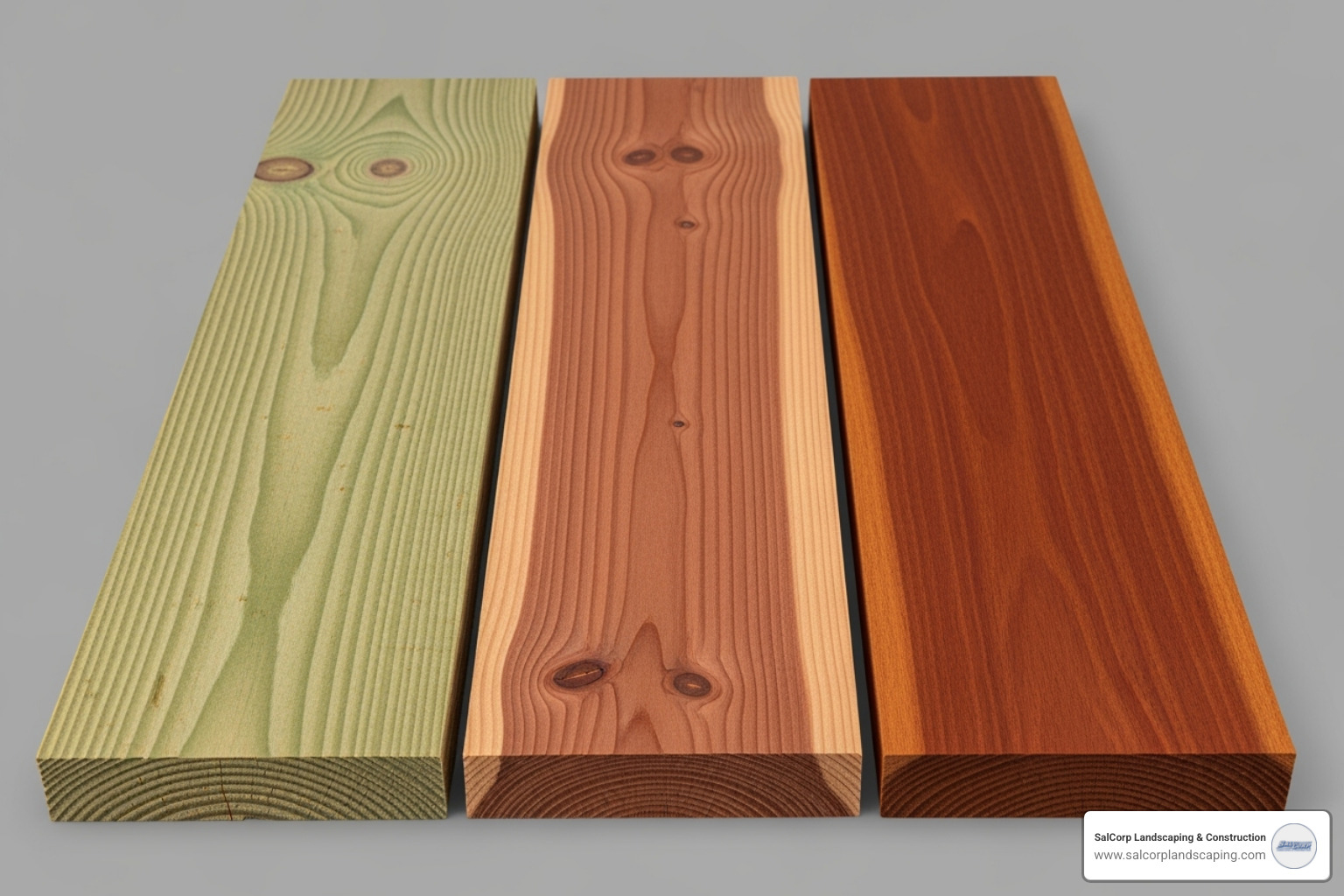
- Pressure-treated wood: My top recommendation for most projects. It’s chemically treated to resist rot and insects. Always use ground-contact rated lumber for any wood touching the soil.
- Cedar & Redwood: These woods offer natural resistance to decay and have a beautiful appearance. They cost more but are great for homeowners seeking a chemical-free option.
- Locust & Oak: For maximum durability, these hardwoods are unbeatable. They are dense, strong, and ideal for high-traffic areas.
Next, assess your site. Measure the slope’s total rise (the vertical height) using stakes and a level string line. This measurement is key for calculating your steps. For comfort and safety, each step’s height (rise) should be 7 inches, with an 11-12 inch tread depth. To find the number of steps, divide the total rise by 7. These dimensions are based on common building standards.
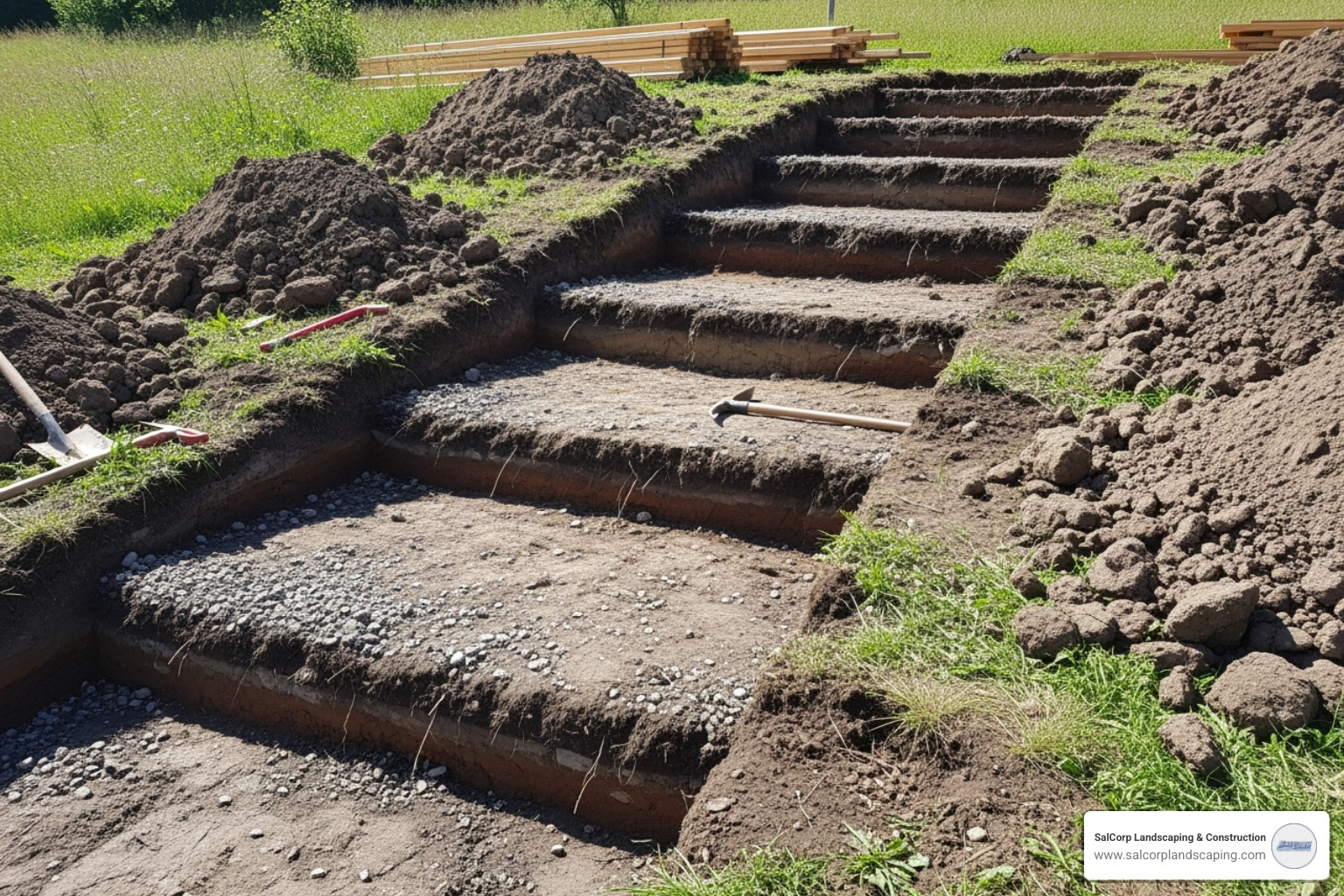
Once you have your measurements, excavate the path. Clear all vegetation and debris, then dig level trenches for each timber frame. This foundation is crucial for stability. Our team at SalCorp specializes in this type of precise hardscape preparation – you can learn more about our approach to hardscape design.
Essential Tools and Materials
Gathering everything beforehand keeps momentum going. Your tool collection should include a shovel, sledgehammer, circular saw, drill, tape measure, and level. Don’t forget safety glasses and ear protection.
For materials, you’ll need:
- Landscape timbers (4×4 or 6×6) for the step structure.
- Rebar (1/2-inch diameter) to anchor the frames.
- Galvanized steel spike nails and timber screws for connections.
- Landscape fabric to prevent weeds.
- Pea gravel or crushed stone for drainage and fill.
- Wood preservative for treating cut ends.
Step-by-Step Construction Guide for Landscape Wood Steps
Now for the rewarding part: building your landscape wood steps. A systematic approach is key to a sturdy, safe stairway.
- Excavate the Path: Clear the route of soil, roots, and rocks. Dig level trenches for each step frame to create a solid foundation.
- Cut and Treat Timbers: Cut timbers to your specified lengths. Immediately apply wood preservative to all cut ends to protect against moisture.
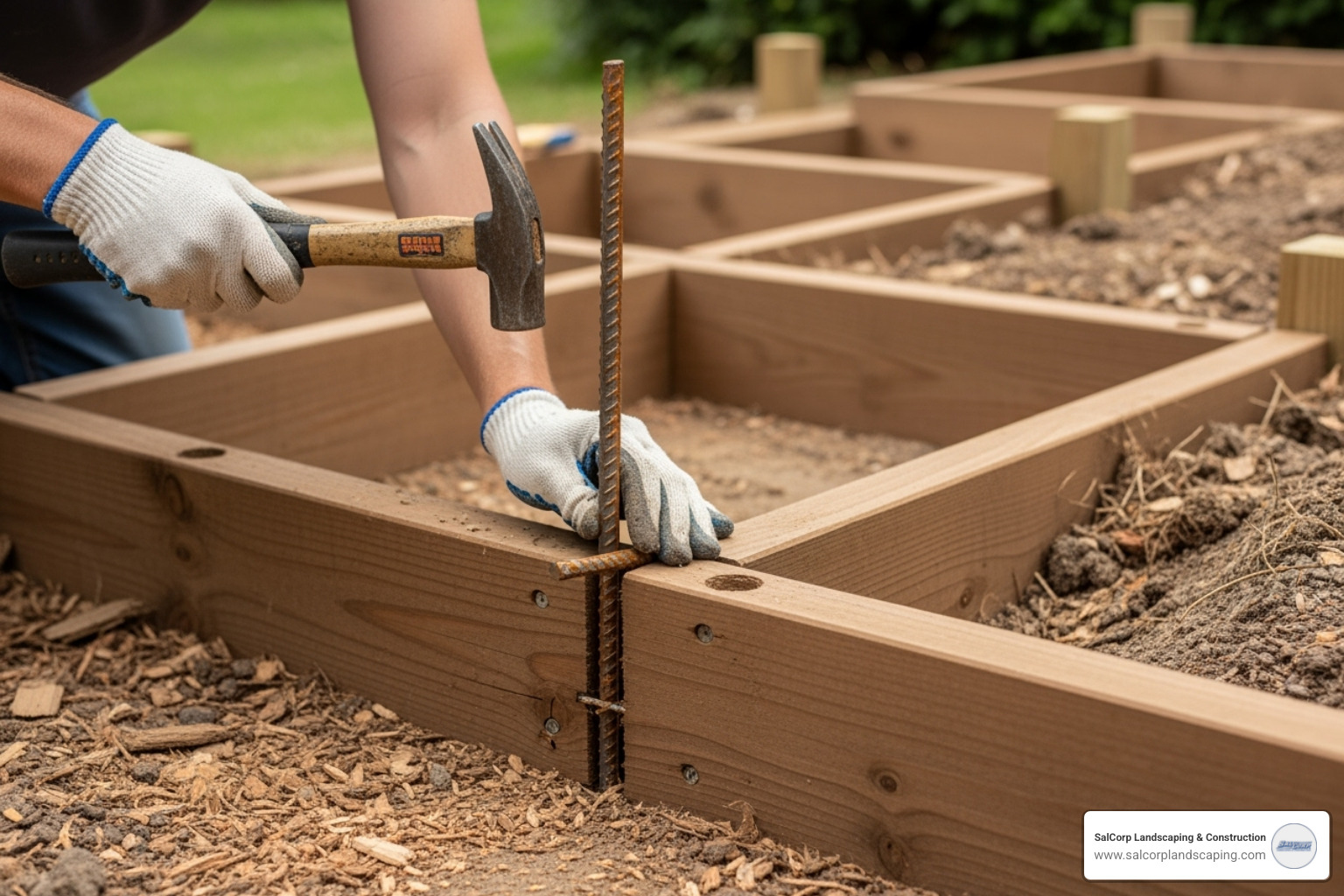
- Assemble Frames: Build U-shaped or rectangular frames, connecting the timbers with galvanized spike nails or long timber screws. Pre-drill holes to prevent splitting.
- Set the Bottom Step: Place the first frame in its trench, ensuring it’s perfectly level. Secure it by driving rebar through pre-drilled holes deep into the ground.
- Install Subsequent Steps: Work your way up the slope, setting each frame behind the previous one. Maintain a consistent 7-inch rise and secure each step to the one below with timber screws.
- Backfill: Lay landscape fabric inside each frame to block weeds. Fill with pea gravel for drainage or topsoil for planting, packing the material firmly.
- Ensure Drainage: Slope the fill material slightly away from the step fronts to prevent water from pooling, which can cause rot.
- Final Checks: Walk the steps to test for stability. Tighten any loose connections and backfill soil around the sides to blend the stairway into the landscape.
Professional hardscape construction requires this level of detail. For expert installation, explore our hardscape construction services. The satisfaction of completing steps that will serve your family for years makes the careful work worthwhile.
Designing, Finishing, and Maintaining Your Steps
The real magic of landscape wood steps happens after the construction is complete. This is where your vision comes to life through thoughtful design choices, protective finishes, and smart maintenance practices that keep your steps looking beautiful and functioning safely for decades.
Design Ideas and Hardscape Integration
Your landscape wood steps don’t have to be just functional—they can be the star of your outdoor space. The beauty of wood lies in its versatility, allowing you to create everything from a cozy cottage garden pathway to a sleek modern entrance.
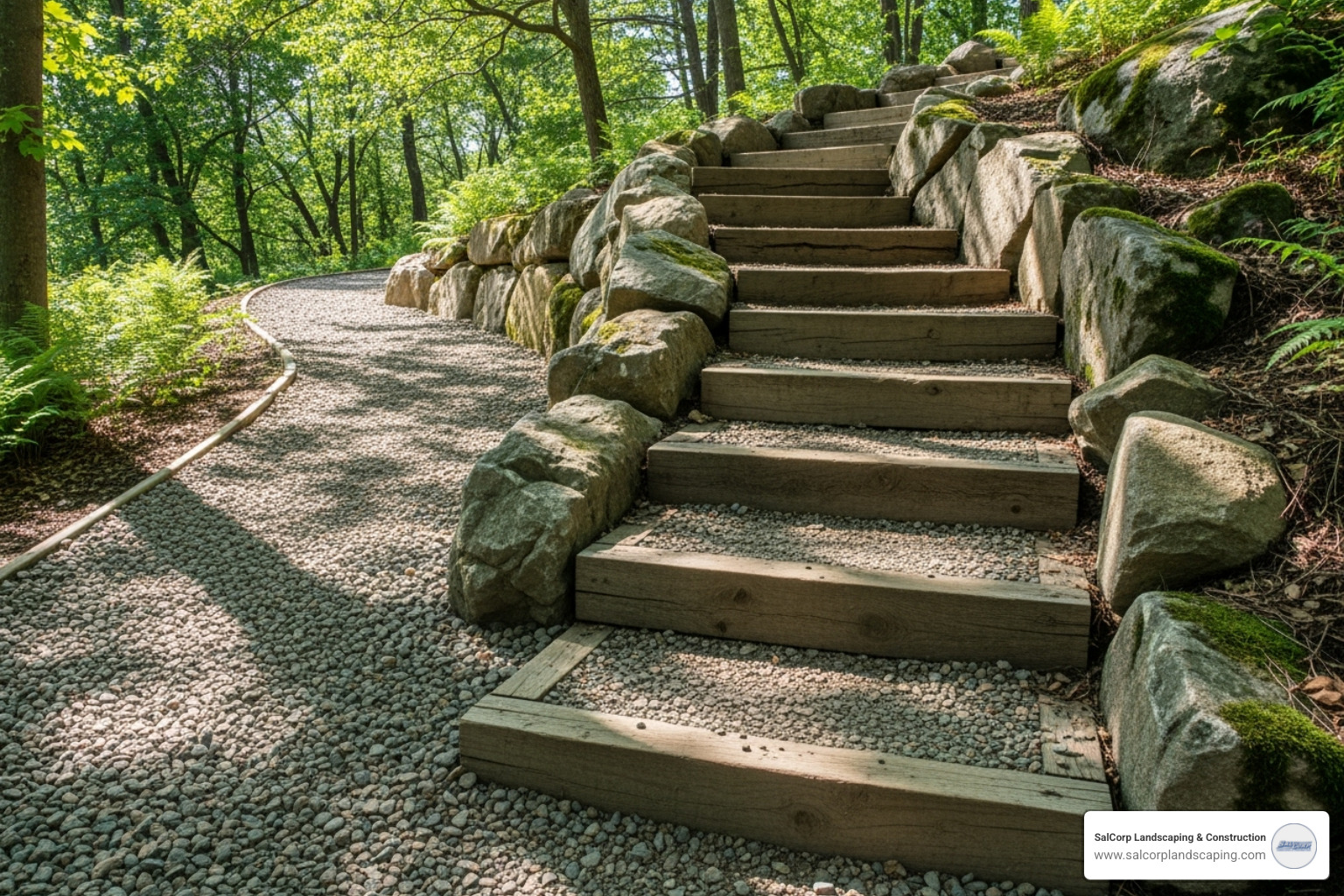
For a rustic style that feels like it’s always been part of your landscape, pair rough-hewn timbers with large natural boulders. These stones aren’t just decorative—they help hold the slope and create natural-looking borders. Fill your treads with pea gravel for that perfect woodland path feeling.
If you prefer modern design, think clean lines and generous proportions. Wide treads using double timbers create a more substantial, contemporary look. A rich dark stain on the wood paired with crisp gravel paths or stone accents gives you that designer edge without breaking the bank.
Don’t feel trapped by straight lines either. Curved steps following the natural contours of your slope create a more organic, welcoming feel. Yes, it takes a bit more planning and some angled cuts, but the flowing result is worth every extra minute.
The real game-changer is integrating your steps with other hardscape features. Combining with gravel paths that lead to and from your steps creates a cohesive journey through your landscape. Pairing with stone pavers along the edges adds visual interest and helps define the pathway.
Our Retaining Walls work beautifully with wood steps, especially on challenging slopes. The combination creates terraced levels that turn a problem hillside into a stunning landscape feature.
Adding landscape lighting transforms your steps from a daytime-only feature into an enchanting evening pathway. Low-voltage lights tucked along the edges or subtle step lights create both safety and ambiance that extends your outdoor enjoyment well into the night.
Finishing Touches and Long-Term Maintenance
Your landscape wood steps are built to last, but the right finishes and regular care will keep them looking and performing their best year after year.
Water-repellent sealer is your first line of defense against Massachusetts weather. Apply it before assembly for the best protection, especially on surfaces that will touch the ground. You can go with a clear sealer to showcase the natural wood grain, or choose a wood stain that complements your home’s exterior colors.
Here’s a pro tip from our years of experience: pressure-treated wood gets surprisingly slippery when wet. Anti-slip strips or textured paint on the treads can prevent dangerous slips, especially in shady areas where moisture lingers. Some homeowners embed coarse sand into their final sealer coat for natural traction that doesn’t look industrial.
Regular cleaning with a stiff brush and mild soap keeps your steps looking fresh and prevents that slick buildup of algae and mildew. It’s easier than you think—just a quick scrub every few months during your regular yard maintenance.
Inspecting for rot should become part of your seasonal routine. Check where wood meets ground and anywhere water might collect. Catching small issues early saves you from major repairs later. Tightening fasteners is another quick check—wood expands and contracts with the seasons, which can loosen connections over time.
Preventing slipperiness isn’t just about initial treatments. Keep leaves and debris swept off, especially in fall. A clean step is a safe step, and it only takes a few minutes to maintain.
For comprehensive maintenance support and professional guidance, explore our Hardscaping Services where we help keep your entire outdoor investment in peak condition.
Cost Considerations and Common Mistakes to Avoid
Understanding what drives costs for landscape wood steps helps you make smart decisions, whether you’re going the DIY route or hiring professionals. The beauty of wood is that it offers excellent value compared to other materials while still delivering lasting results.
| Wood Type | Cost Range | Durability | Maintenance |
|---|---|---|---|
| Pressure-Treated Pine | Budget-friendly | Good to Excellent | Moderate (annual sealing) |
| Cedar | Mid-range | Good | Moderate (sealing recommended) |
| Redwood | Higher-end | Good to Excellent | Moderate (sealing recommended) |
| Locust | Premium | Excellent | Low (naturally durable) |
| Oak | Premium | Excellent | Low (extremely durable) |
All pricing referenced is based on internet research and averages, not actual SalCorp Landscaping pricing. For wood landscape steps, average installation costs can range from $800–$2,500 for a small set of steps, with high-end projects reaching $7,500+ depending on materials and site complexity.
DIY projects can significantly reduce costs since you’re providing the labor. However, professional installation brings expertise, proper techniques, and often warranties that protect your investment.
The biggest mistakes we see could easily be avoided with proper planning. Improper drainage tops the list—water sitting around wood timbers leads to premature rot, even with treated lumber. Always slope away from your steps and use gravel for drainage.
Uneven rise and run creates dangerous tripping hazards. Your brain expects consistency when climbing stairs, so measure carefully and maintain that 7-inch rise throughout your project.
Inadequate foundation work comes back to haunt you later. Timbers sitting on loose soil will shift and settle. Take time to excavate properly, level carefully, and secure everything with rebar driven deep into compacted earth.
Forgetting landscape fabric means dealing with weeds forever. This simple step prevents vegetation from growing through your gravel and keeps everything looking clean and professional.
Choosing non-durable wood or skipping ground-contact rated lumber in earth-contact applications shortens your steps’ lifespan dramatically. Always treat cut ends with preservative—this small detail makes a huge difference in longevity.
At SalCorp Landscaping & Construction, we’ve been perfecting landscape wood steps for over 20 years. Our owner-operated approach means every project gets personal attention and professional expertise. For a professional assessment and installation in the Walpole, MA area, consider our Landscape Stairs services. We’re here to help transform your challenging slopes into beautiful, functional pathways that improve your outdoor living for years to come.
