Mowing Hydroseeded Lawn: Top 5 Expert Tips for Success

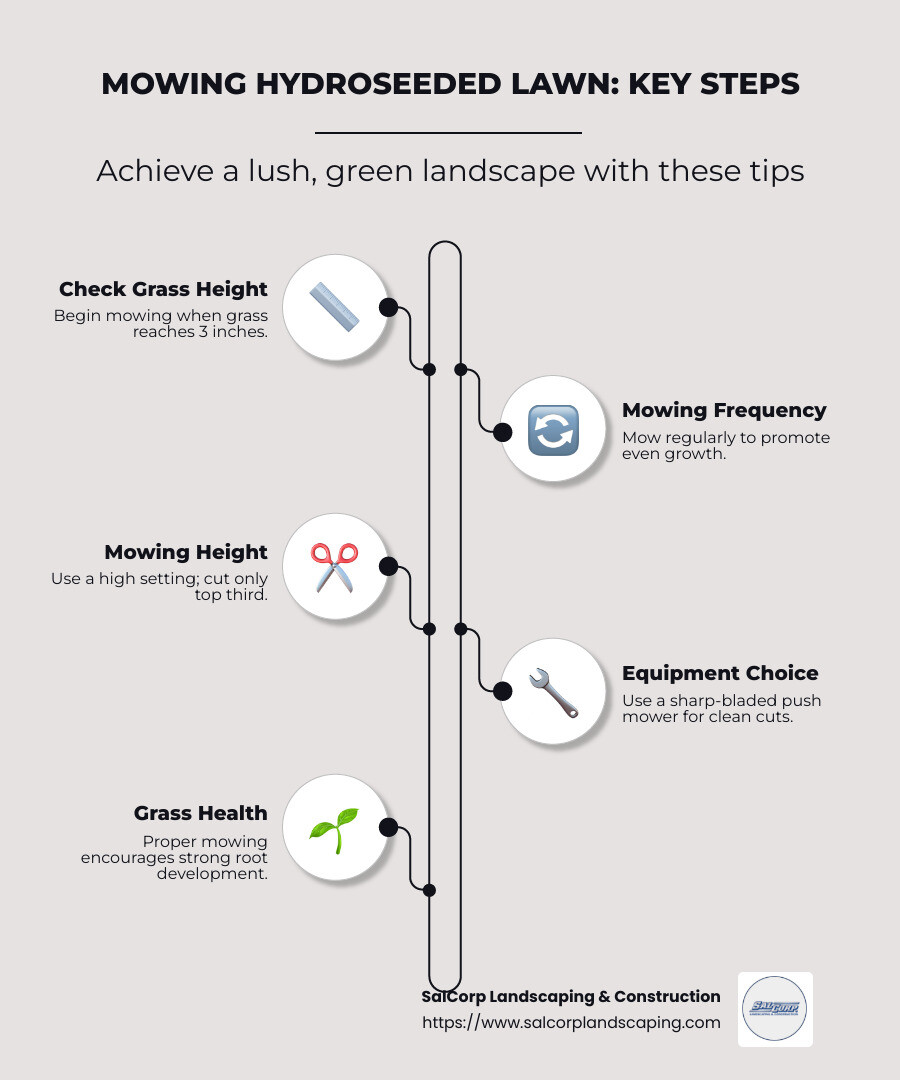
Mowing hydroseeded lawn is a key step to achieving a lush, green landscape. If you’re managing a recently hydroseeded lawn, here’s the quick answer: Begin mowing when the grass reaches a height of about 3 inches and the ground is firm. Use a high setting on your mower, and cut only the top third of the grass blades.
Understanding the ins and outs of mowing hydroseeded lawn is crucial for ensuring optimal growth and aesthetic appeal. Hydroseeding is a popular choice for establishing lawns due to its quick germination and cost-effectiveness. This technique sprays a mixture of seeds, mulch, and nutrients onto the soil, offering a more uniform lawn compared to traditional methods. As the grass grows, proper mowing techniques not just maintain its appearance but also promote healthy root development.
As Sal Musto, I’ve spent over two decades changing outdoor spaces into thriving landscapes. My experience with mowing hydroseeded lawn ensures top-quality results custom to Massachusetts’ unique climate.
Mowing hydroseeded lawn terms simplified:
– how to care for hydroseeded lawn
– how often to water hydroseeded lawn
– can i walk over hydroseeded lawn
When to Start Mowing Hydroseeded Lawn
Germination is the first step in your lawn’s journey to lushness. With hydroseeding, you can expect quick germination, often seeing results within 7 to 10 days. This rapid start is one of the reasons hydroseeding is favored by many homeowners in Massachusetts. However, patience is key before you bring out the mower.
The first mow is a significant milestone for your newly hydroseeded lawn. You should wait until the grass reaches a height of about 3 inches. This height ensures that the young grass has developed enough strength to withstand the mowing process. Cutting the grass too soon can damage the tender seedlings, which can set back your lawn’s progress.

Seedling height is crucial. As a rule of thumb, aim to mow when the grass is between 3 to 4 inches tall. This height allows the grass to develop a strong root system, essential for a healthy lawn. It’s not just about the height but also about the soil. Ensure the ground is firm enough to support the mower without causing damage to the seedlings.
Starting your mowing routine at the right time is vital for a vibrant lawn. Once your grass hits the right height, you can begin mowing, keeping in mind to cut only the top third of the blades. This technique not only maintains the lawn’s appearance but also encourages deeper root growth, making your lawn more resilient.
Transitioning into the next phase of lawn care involves understanding the best mowing techniques to ensure your hydroseeded grass thrives.
Optimal Mowing Techniques for Hydroseeded Grass
Mowing your hydroseeded lawn properly is key to helping it flourish. Let’s explore the best practices for mowing frequency, height, and equipment to keep your lawn healthy and lush.
Mowing Frequency
Early mowing is crucial. Once your grass reaches 3 to 4 inches, it’s time for the first cut. Initially, you might find yourself mowing twice a week. This frequent mowing helps promote growth and keeps pesky weeds at bay.
Regularly mowing your lawn encourages the grass to grow thicker and stronger. By cutting the top third of the grass blades, you stimulate the roots to grow deeper, which makes your lawn more resilient in the long run.
Mowing Height
Initial height is important. For the first few mows, set your mower blades to the highest setting. This ensures you’re only trimming the top portion of the grass, which keeps the grass cooler and prevents weed seeds from germinating.
As your lawn matures, you can adjust the mower height. However, always avoid cutting more than one-third of the grass blade to prevent stress on the lawn. Different grass types might have specific height preferences, so be sure to know what works best for your grass variety.
Mowing Equipment
Using the right mowing equipment can make a significant difference. A push mower is often ideal for small to medium lawns, as it provides better control and precision. Ensure your mower has sharp blades to make clean cuts. Dull blades can tear the grass, leaving it vulnerable to disease and pests.
Clipping management is another important aspect. You don’t need to collect clippings unless they are smothering the new grass. Leaving them can actually help return nutrients to the soil, promoting healthier lawn growth.
By following these optimal mowing techniques, you ensure your hydroseeded grass remains healthy and vibrant. With the right mowing frequency, height, and equipment, your lawn will not only look great but also develop a strong root system for lasting beauty.
Next, let’s explore how proper watering and fertilizing can further improve your lawn’s growth.
Watering and Fertilizing for Optimal Growth
Once you’ve mastered mowing, the next steps in caring for your hydroseeded lawn are watering and fertilizing. These are crucial for ensuring your lawn grows lush and healthy.
Watering Schedule
Watering your hydroseeded lawn is a balancing act. The goal is to keep the soil consistently moist without overwatering.
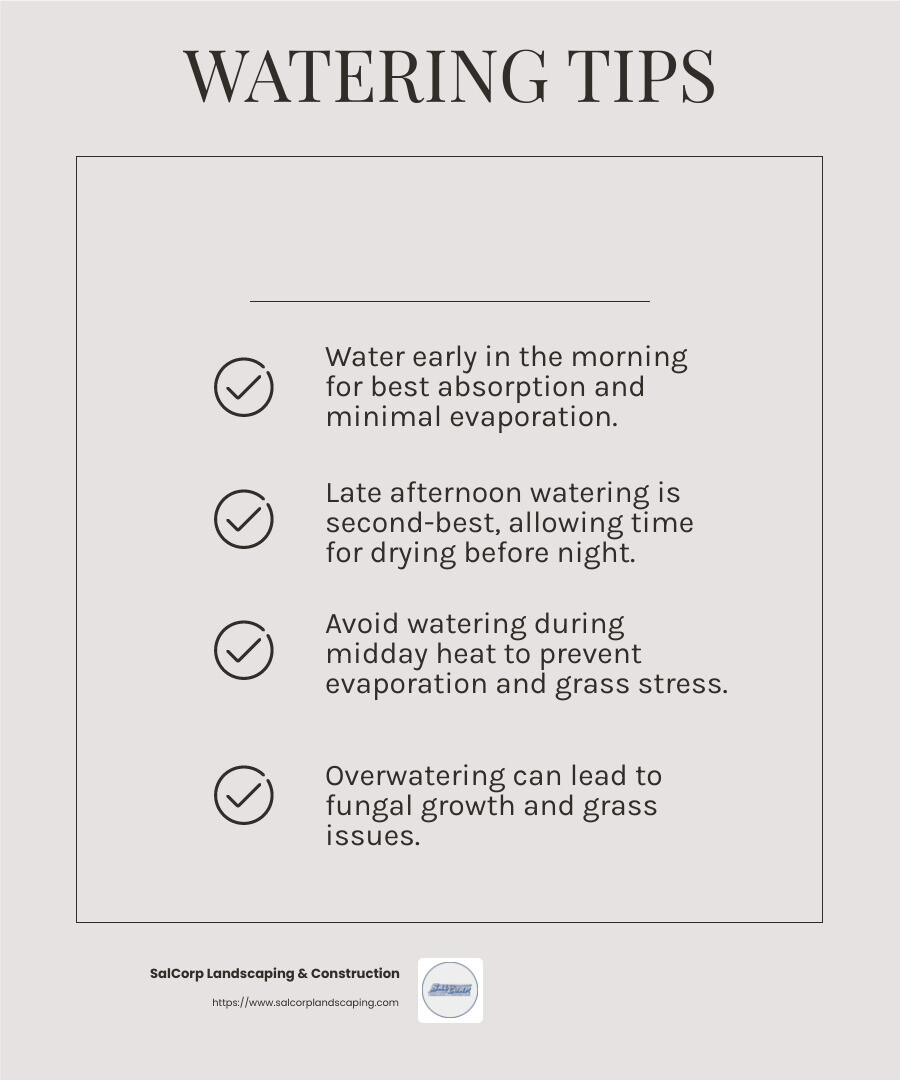
- Early Morning: Watering in the early morning is ideal. It allows the grass to absorb moisture before the sun gets too intense. This helps prevent evaporation and ensures the grass gets the water it needs.
- Late Afternoon: If morning watering isn’t possible, late afternoon is the next best option. However, make sure there’s enough time for the grass to dry before nightfall to prevent fungus growth.
- Avoid Mid-Day: Watering during the heat of the day is a no-go. The water will evaporate quickly, leaving your grass thirsty and stressed. Plus, it can even lead to “cooking” the grass if temperatures soar above 85 degrees, especially with high humidity.
Fertilizing Tips
Fertilizing provides essential nutrients that help your lawn thrive. Here’s what you need to know:
- Starter Fertilizer: Applying a starter fertilizer can give your lawn the best start. It provides the necessary nutrients to support young grass seedlings as they establish roots.
- Nitrogen Levels: Nitrogen is vital for lush, green growth. However, balance is key. Too much nitrogen can lead to rapid growth that’s hard to manage, while too little can result in a lackluster lawn.
- Phosphorus Importance: Phosphorus is crucial for root development. While many soils have adequate phosphorus levels, test your soil and adjust as needed. This nutrient helps your lawn withstand stress and promotes healthy growth.
By following these watering and fertilizing tips, you set the stage for a robust and resilient lawn. Next, we’ll address common challenges you might face with hydroseeded lawns and how to overcome them.
Addressing Common Challenges in Hydroseeded Lawns
Even with the best care, hydroseeded lawns can face a few problems. Let’s tackle some common challenges and how to overcome them.
Weed Control
When starting a new lawn, weeds can be a significant issue. They’re opportunistic and can quickly take over if not managed properly.
- Timing is Key: Hold off on using weed killers until your grass has been mowed 3 to 4 times. This allows the grass to establish itself before introducing any chemicals.
- Natural Methods: Consider using natural weed control methods, like vinegar solutions, which are safer for young grass and the environment.
- Regular Mowing: Keeping your lawn at the recommended height can naturally suppress weed growth by blocking sunlight and reducing their ability to establish.
Uneven Growth
Patchy or uneven growth can be frustrating for lawn owners. This can happen for several reasons, including inconsistent watering or uneven seeding.
- Consistent Watering: Ensure you’re watering evenly across your lawn. Uneven watering can lead to some areas being too dry or too wet, affecting growth.
- Proper Seeding: During hydroseeding, it’s crucial to apply the slurry evenly. Patchiness can occur if the slurry is too thin in some areas.
- Patience is a Virtue: Sometimes, uneven growth is simply a matter of time. Grass can grow at different rates, so give it a few weeks before taking corrective action.
Fertilizer Application
Applying fertilizer correctly is essential for a thriving lawn. However, it can be tricky to get it just right.
- Follow Instructions: Always follow the manufacturer’s instructions on your fertilizer packaging. Over-fertilizing can harm your lawn and the environment.
- Balanced Nutrients: Use a fertilizer that offers a balanced mix of nutrients. While nitrogen is crucial, don’t overlook the importance of phosphorus and potassium for root and overall plant health.
- Professional Help: If you’re unsure about the right fertilizer or application techniques, consider consulting with professionals like SalCorp Landscaping & Construction. They can offer custom advice and services to ensure your lawn gets what it needs.
By addressing these challenges with care and precision, your hydroseeded lawn will be on its way to becoming the lush, green oasis you envision. In the next section, we’ll discuss how SalCorp Landscaping & Construction can help maintain your lawn and improve your landscape design.
Maintaining Your Hydroseeded Lawn with SalCorp Landscaping & Construction
Keeping a hydroseeded lawn in top shape involves more than just mowing and watering. SalCorp Landscaping & Construction offers a range of services to ensure your lawn remains lush and vibrant.
Lawn Care Services
Maintaining a hydroseeded lawn requires consistent care. SalCorp provides expert lawn care services custom to the unique needs of hydroseeded grass. From customized mowing schedules to precise fertilization plans, their team ensures your lawn receives the attention it needs to thrive.
- Regular Maintenance: SalCorp’s team offers routine lawn care that includes mowing, fertilizing, and weed control, ensuring your lawn stays healthy year-round.
- Expert Guidance: With years of experience, SalCorp can advise on the best practices for maintaining your lawn, helping you avoid common pitfalls and maximize growth.
Landscape Design
A beautiful lawn is just the beginning. SalCorp Landscaping & Construction can help transform your entire outdoor space with their expert landscape design services.
- Custom Designs: Whether you want to add flower beds, trees, or hardscaping, SalCorp’s designers work with you to create a landscape that complements your home and lifestyle.
- Sustainable Practices: SalCorp incorporates environmentally friendly practices, ensuring your landscape is not only beautiful but also sustainable.
Owner-Operated Benefits
Choosing a local, owner-operated company like SalCorp offers several benefits.
- Personalized Service: As an owner-operated business, SalCorp provides personalized service and attention to detail that larger companies often lack. They treat every lawn as if it were their own.
- Local Expertise: With a deep understanding of the local climate and soil conditions, SalCorp can tailor their services to meet the specific needs of lawns in areas like Canton, Dedham, and beyond.
- Commitment to Quality: SalCorp is committed to delivering high-quality results. Their reputation is built on satisfied customers and thriving lawns.
By partnering with SalCorp Landscaping & Construction, you can ensure your hydroseeded lawn and overall landscape are in expert hands. Their comprehensive services and commitment to excellence make them a top choice for lawn care and landscape design.
In our next section, we’ll explore sustainable practices and long-term care strategies to keep your lawn healthy for years to come.
Conclusion
Caring for a hydroseeded lawn is a journey that extends beyond the initial growth phase. By adopting sustainable practices, committing to long-term care, and engaging with your community, you can enjoy a thriving and eco-friendly lawn.
Sustainable Practices
Sustainability is at the heart of effective lawn care. By choosing native plants and drought-tolerant species, you reduce the need for excessive watering and chemical fertilizers. This not only conserves water but also supports local wildlife, creating a balanced ecosystem in your backyard.
- Eco-friendly Materials: Use permeable pavers and recycled materials in your landscaping to reduce runoff and erosion. These choices contribute to a healthier environment.
- Natural Fertilizers: Opt for organic fertilizers that enrich the soil without harming the ecosystem. This practice ensures the long-term health of your lawn and surrounding areas.
Long-term Care
A lush lawn requires consistent attention. Regular mowing, proper watering, and timely fertilization are key components of long-term care.
- Routine Maintenance: Stick to a schedule for mowing and watering that adapts to seasonal changes. This helps your lawn withstand the stresses of hot summers and cold winters.
- Professional Support: Consider partnering with experts like SalCorp Landscaping & Construction for ongoing support. Their custom services can help maintain your lawn’s health and appearance year-round.
Community Engagement
Engaging with your community can improve your lawn care efforts. Share tips and resources with neighbors, or participate in local gardening clubs to learn and grow together.
- Local Workshops: Attend workshops or seminars on sustainable landscaping practices to stay informed about the latest trends and techniques.
- Community Projects: Get involved in community gardening projects that promote environmental awareness and beautify shared spaces.
By embracing these practices, you not only ensure the health of your hydroseeded lawn but also contribute positively to your environment and community. With the right care and commitment, your lawn can remain a source of pride and enjoyment for years to come.