

Mulch Delivery and Installation: 10 Powerful Benefits in 2025
Why Quality Mulch Delivery and Installation Transforms Your Landscape
Mulch delivery and installation services provide homeowners and property managers with professional-grade landscape materials delivered directly to their property and expertly installed by trained crews. Here’s what you need to know:
Key Service Components:
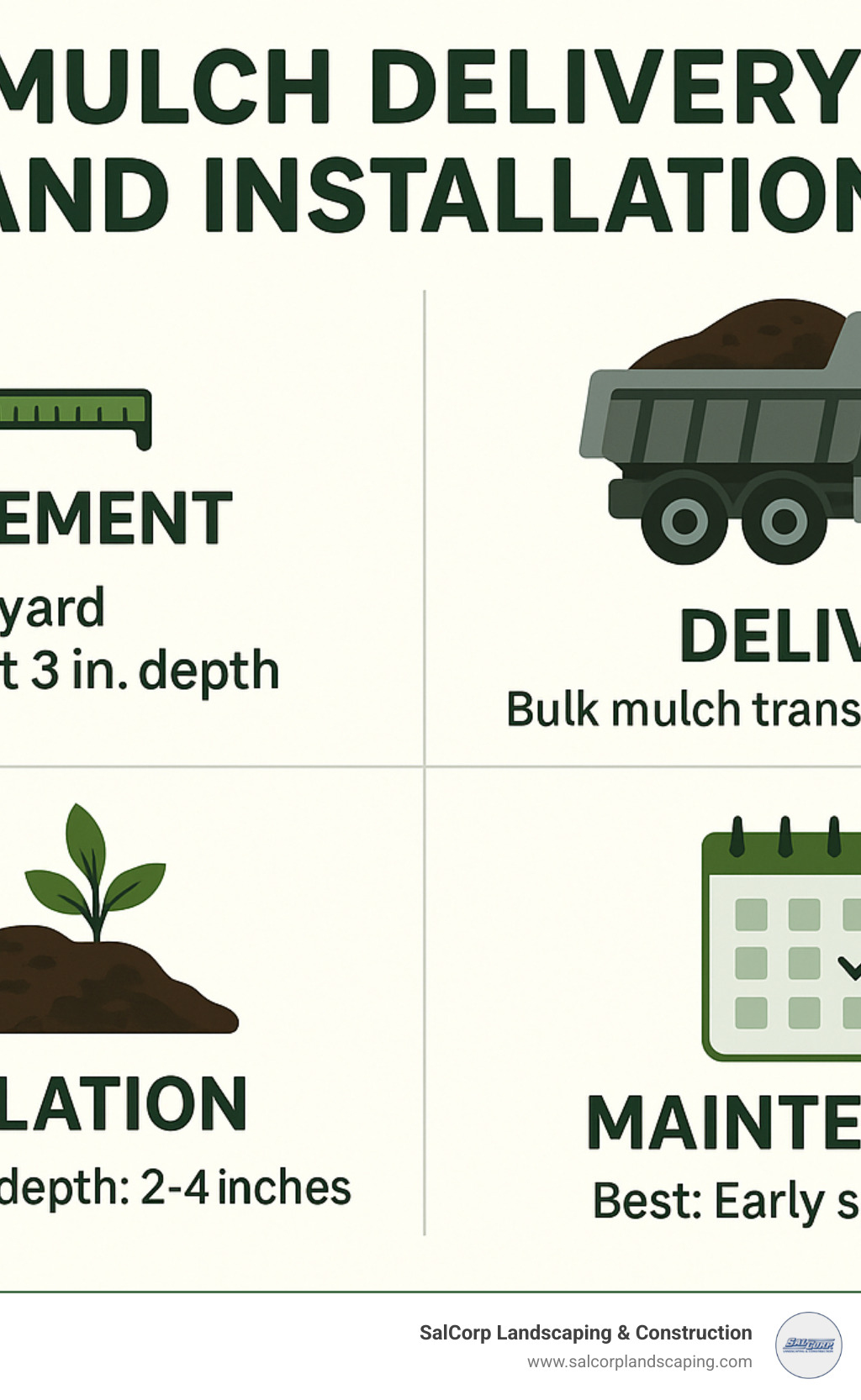
– Delivery: Bulk mulch transported via specialized trucks (3-15 cubic yard minimums typical)
– Installation: Professional spreading at optimal 2-4 inch depth with proper edging
– Materials: Hardwood, colored, cedar, pine bark, and playground-safe options
– Coverage: 1 cubic yard covers approximately 100 square feet at 3-inch depth
– Timing: Best scheduled in early spring or fall, weather permitting
Nothing beats the change that fresh mulch brings to tired landscape beds. As one satisfied customer noted, their yard “looked great just in time for Spring” after professional installation. Yet many property managers and homeowners struggle with the math, logistics, and back-breaking labor of DIY mulching.
The reality is stark: manual spreading can take an entire weekend, requires multiple store trips for bagged materials, and often results in uneven coverage that looks unprofessional. Professional services complete the same job in under an hour using specialized equipment.
This guide walks you through everything from calculating cubic yards to choosing between bulk and bagged materials, understanding delivery minimums, and deciding between DIY versus professional installation.
I’m Sal Musto, and over two decades of operating SalCorp Landscaping & Construction, I’ve overseen countless mulch delivery and installation projects across Massachusetts. My hands-on approach ensures every mulching project meets the highest standards while saving property owners time and physical strain.
Mulch delivery and installation terms to learn:
– black mulch delivery
– cedar mulch delivery
– bulk mulch delivery
What You’ll Learn in This Guide
This comprehensive guide covers everything you need to make informed decisions about your mulching project. We’ll break down coverage mathematics so you order the right amount, explore different mulch types and their unique benefits, share insider ordering tips that save time and money, compare professional installation versus DIY approaches, and outline proper maintenance practices to keep your landscape looking pristine year-round.
Mulch 101: What It Is and Why Your Yard Needs It
Think of mulch as a protective blanket for your soil. It’s simply a layer of material spread around plants, trees, and landscape beds to create a barrier between the earth and the elements.
Organic mulches like shredded hardwood, pine bark, and cedar chips are living materials that slowly break down and feed your soil. Inorganic options such as rubber chips, decorative stone, or gravel provide long-lasting coverage without decomposition. Both types serve the same basic purpose—protecting and improving your landscape.
The magic happens beneath the surface through something called nutrient cycling. As organic mulches gradually decompose, they feed beneficial microorganisms that create a thriving underground ecosystem. These tiny soil workers break down organic matter and make nutrients available to plant roots, essentially turning your mulch into a slow-release fertilizer.
Moisture retention might be mulch’s most valuable superpower. When summer heat beats down on bare soil, water evaporates quickly, leaving plants stressed and your water bill climbing. Mulched soil stays moist twice as long compared to bare ground, which means less frequent watering and happier plants during dry spells.
Temperature regulation works like insulation in your home. Mulch keeps soil cooler during scorching summer days and warmer during winter freezes. Plant roots appreciate this stable environment, especially during extreme weather that can shock unprotected plants.
Nobody enjoys spending weekends pulling weeds, which is where weed suppression becomes a game-changer. A proper layer of mulch blocks sunlight from reaching weed seeds, preventing them from germinating in the first place. It’s nature’s own weed barrier that works 24/7 without chemicals.
Erosion control protects your valuable topsoil during heavy rains. Mulch pieces naturally lock together, creating a protective mat that holds soil in place on slopes and prevents washout. This keeps your landscape intact and prevents sediment from running into storm drains.
Let’s be honest—curb appeal matters too. Fresh mulch instantly transforms tired landscape beds with uniform color and clean edges. It’s like giving your yard a professional makeover that neighbors notice and potential buyers appreciate.
Science-Backed Benefits of Mulch
Root insulation protects the most vulnerable part of your plants. Scientific research on mulch depth guidelines shows that maintaining 2-4 inches of mulch depth around trees and shrubs provides optimal protection without creating moisture problems against bark.
The 2x moisture retention factor translates to real water savings. Mulched beds require approximately half the irrigation of bare soil areas, which adds up to significant savings over a growing season. During water restrictions or drought conditions, this benefit becomes even more valuable.
Up to 90% weed reduction occurs when mulch reaches proper thickness. Light-dependent weed seeds simply cannot germinate beneath an adequate mulch layer, while existing weeds struggle to penetrate the barrier. This dramatically cuts down on hand-weeding time and reduces the need for herbicides.
Improved soil microbes thrive under mulch cover because the stable moisture and temperature conditions create ideal habitat for beneficial bacteria and fungi. This biological activity improves soil structure and fertility over time, creating a healthier foundation for all your plantings.
Professional mulch delivery and installation ensures you get these science-backed benefits from day one, with proper depth and coverage that maximizes every advantage mulch provides.
Choosing the Right Mulch for Your Landscape
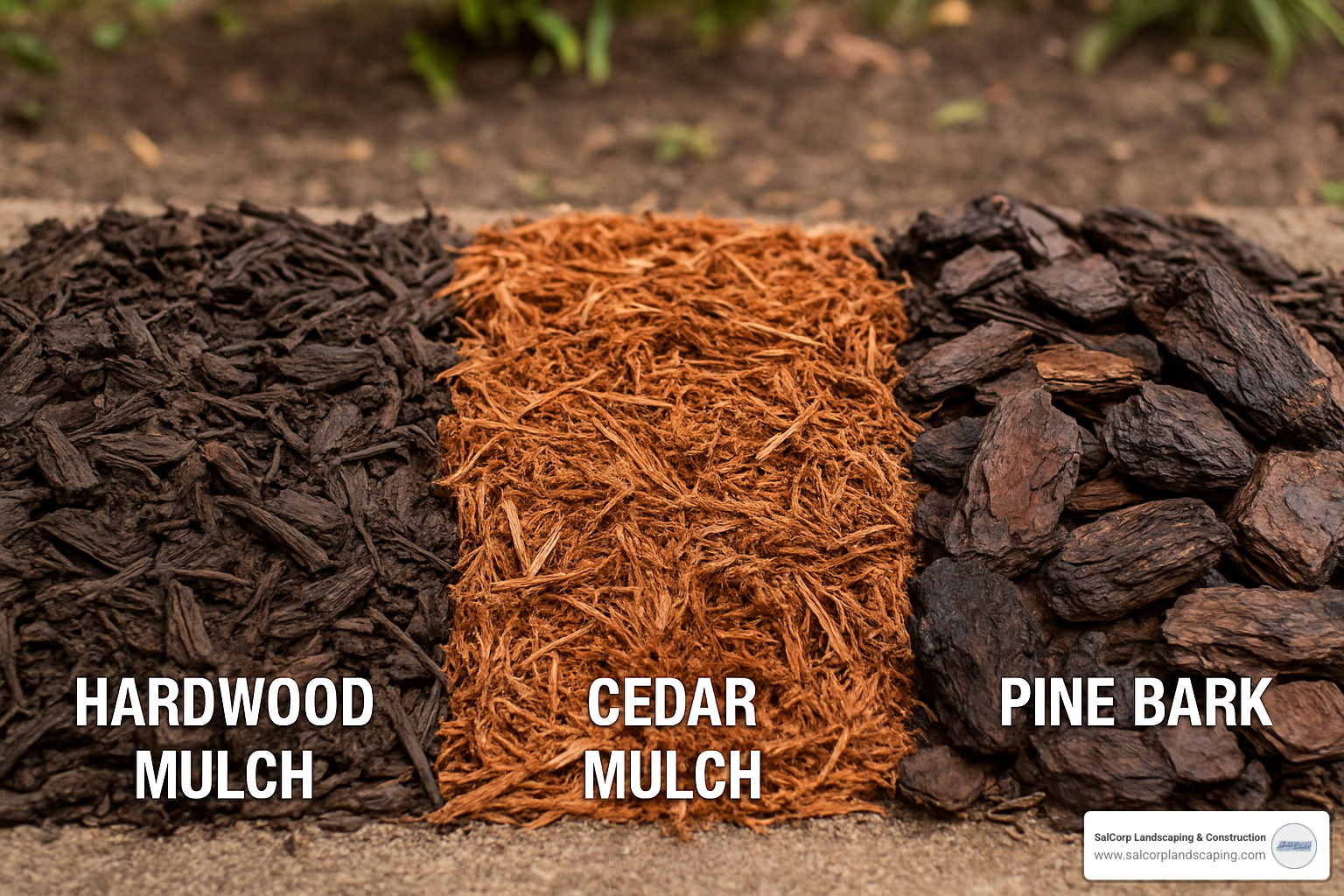
Walking through the mulch yard can feel overwhelming with so many options spread out before you. But here’s the good news: choosing the right mulch doesn’t have to be complicated once you understand what each type brings to your landscape.
Hardwood mulch remains the most popular choice for good reason. Made from oak, maple, or mixed deciduous trees, it strikes the perfect balance between performance and appearance. The natural brown color works with practically any landscape design, and it enriches your soil as it slowly breaks down over 12 to 18 months. Think of it as the reliable friend of the mulch world.
If you’re dealing with pesky insects around your garden beds, cedar mulch might become your new best friend. Those aromatic oils that create that pleasant woody scent? They naturally repel many insects while providing excellent weed suppression. Cedar’s built-in preservatives help it last longer than hardwood options, which often makes up for the slightly higher initial cost.
Pine bark comes in different sizes, from tiny mini nuggets to chunky pieces that look almost decorative. The smaller pieces excel at blocking weeds, while larger chunks offer longer-lasting coverage and create interesting texture. Here’s a pro tip: if you’re growing azaleas, rhododendrons, or blueberries, pine bark’s naturally acidic nature will make these plants absolutely thrive.
Dyed mulch blends solve one of the biggest frustrations homeowners face with natural mulch – color fading. Black mulch creates stunning contrast against green foliage and makes flower colors pop. Red mulch complements brick homes and colonial architecture beautifully. Brown dyed mulch gives you that natural look with much better color staying power.
For families with young children, playground mulch meets strict safety standards for cushioning falls around swing sets and play equipment. These engineered wood fiber products require deeper installation – usually 6 to 12 inches depending on your equipment height – but they provide peace of mind that’s worth every penny.
Stone and rubber alternatives work wonderfully in high-traffic areas or spots where you don’t want organic decomposition. River rock creates attractive borders and never needs replacing, while recycled rubber mulch offers permanent coverage around playgrounds. Just remember that these options won’t feed your soil like organic mulches do.
Native mulch sourced from local tree services often provides the most sustainable and budget-friendly option. These materials support local ecosystems while reducing transportation costs. How to Choose the Right Mulch for Your Landscape offers detailed guidance on matching mulch types to your specific needs.
Compost blends represent the premium end of mulch options, combining traditional mulch with aged organic matter. While they cost more upfront, these products deliver superior plant nutrition and soil improvement benefits that often justify the investment.
When considering scent and color longevity, natural mulches will fade and lose their aroma over time, while dyed options maintain appearance longer. For safety around kids and pets, avoid mulches treated with chemicals or dyes that aren’t specifically labeled as safe for areas where children and animals play.
Key Factors in Selection
Your climate plays a huge role in mulch performance. Hot, humid regions benefit from materials that resist mold and fungal growth, while dry climates need mulches with superior moisture-holding abilities. If you live in a windy area, choose heavier materials that won’t end up scattered across your driveway after the first storm.
Different plant types have different preferences, just like people. Acid-loving plants absolutely love pine-based products, while plants that prefer alkaline conditions do better with hardwood options. Vegetable gardens benefit tremendously from compost-enriched mulches that provide ongoing nutrition throughout the growing season.
Slope and drainage considerations affect both your mulch choice and how it gets applied. Steep areas need materials that interlock well and resist erosion during heavy rains. If you have poorly drained soil, avoid mulches that retain excessive moisture against plant stems, which can lead to rot problems.
Your home’s color theme should guide your mulch selection. Natural browns work with virtually any style, while colored options should coordinate with your home’s exterior colors, existing hardscaping, and seasonal plantings. When in doubt, stick with natural – it’s hard to go wrong.
Don’t forget to check your HOA rules before ordering. Some planned communities restrict mulch types or colors, and nobody wants to deal with compliance issues or forced replacement costs after the mulch delivery and installation is complete.
Budget considerations involve more than just the initial price tag. Premium mulches cost more upfront but often provide better value through longer replacement intervals and superior performance. Sometimes spending a bit more initially saves money in the long run.
Bulk vs Bagged Mulch – Which Saves Money and Time?
Let’s talk about one of the biggest decisions you’ll face: bulk versus bagged mulch. The math here is pretty eye-opening.
| Factor | Bulk Mulch | Bagged Mulch |
|---|---|---|
| Cost per cubic yard | Significantly lower | Often 2-3x more expensive |
| Store trips required | 0 (delivered to you) | 15-20 trips for typical yard |
| Installation time | 1-2 hours with professional crew | 6-8 hours of backbreaking DIY work |
| Plastic waste generated | None | 13 bags per cubic yard |
| Color consistency | Excellent throughout | Can vary between different batches |
| Moisture content | Optimal for immediate spreading | Often too dry and dusty |
Bulk delivery eliminates those endless trips to the store while providing superior material quality. For every cubic yard you order, you’re keeping 13 plastic bags out of landfills while saving significant money. Professional delivery trucks can place material exactly where you need it, which reduces your labor time dramatically.
Bagged mulch still has its place for small touch-up projects or areas where delivery trucks can’t reach. The convenience factor is real, but it comes at a premium price and creates substantial packaging waste. Plus, trying to match colors between different bag lots for larger projects can turn into a frustrating game of mulch roulette.
The bottom line? For any project larger than a small flower bed, bulk mulch delivery and installation almost always wins on cost, convenience, and environmental impact.
Calculating, Ordering, and Preparing for Service
Getting your mulch delivery and installation measurements right saves you from the headache of running short or drowning in leftover mulch. I’ve seen too many homeowners guess at their needs, only to find they ordered enough material for a football field when they just needed to cover a few flower beds.
Start by grabbing a measuring tape and sketching out your landscape beds. For simple rectangular areas, multiply length times width to get your square footage. Those curved, artistic beds that look so pretty? Break them down into smaller sections you can actually measure. For circular areas, use the formula π × radius² (or 3.14 times the radius times itself).
Here’s where many folks trip up: square footage tells you surface area, but mulch is sold by the cubic yard. Think of it like buying cake batter—you need to know how thick you want that layer. Most landscape beds perform best with 3 inches of mulch depth, which means one cubic yard covers about 100 square feet.
If you’re just refreshing existing mulch, 2 inches usually does the trick, stretching that cubic yard to cover 162 square feet. New installations or problem areas with stubborn weeds benefit from 4 inches, bringing coverage down to 81 square feet per cubic yard.
Always add 10% extra to your calculations. Trust me on this—beds are never perfectly flat, mulch settles, and you’ll inevitably find that forgotten corner behind the mailbox that also needs attention.
Most suppliers offer online calculators that do the math for you, but double-check their work. I’ve seen plenty of delivery trucks show up with either way too much or embarrassingly little material because someone clicked the wrong depth setting.
Scheduling your delivery requires some strategy. Spring is our busy season—everyone wants fresh mulch for their Easter gatherings. Book 1-2 weeks ahead during March through May. Summer and fall offer more flexibility, often with just 3-5 days notice needed.
Most companies require minimum orders of 3-5 cubic yards to make delivery worthwhile. If you only need a yard or two, consider splitting a delivery with neighbors or tackling a few extra beds while you’re at it.
How Much Mulch Do You Need?
Let’s make this crystal clear with real numbers. One cubic yard at 3-inch depth covers approximately 100 square feet—that’s a 10×10 foot area with optimal coverage for weed control and moisture retention.
Bump that depth down to 2 inches for maintenance applications, and suddenly you’re covering 162 square feet per cubic yard. This works perfectly when you’re refreshing beds that already have decent mulch underneath.
For heavy-duty applications—new plantings, slopes that need erosion control, or areas where weeds have been particularly stubborn—go with 4 inches deep. This drops your coverage to 81 square feet per cubic yard, but the extra thickness pays dividends in weed suppression.
A typical 1/8-acre property needs about 5 cubic yards for complete bed coverage at 3-inch depth. Larger quarter-acre lots usually require 8-10 cubic yards, depending on how much of the property is dedicated to landscape beds versus lawn.
Don’t forget to measure those oddball areas—the strip along the driveway, around the mailbox, or that narrow bed between the house and walkway. These small spaces add up quickly and often get overlooked during initial calculations.
Site Prep Checklist Before the Truck Arrives
Weed removal should happen 2-3 days before your delivery. Pull what you can by hand, or hit stubborn areas with herbicide according to the label directions. Dead weeds can stay put—they’ll decompose nicely under the new mulch layer.
Create clean edges around your beds using a sharp spade or mechanical edger. This isn’t just about looks (though it definitely improves curb appeal). Good edging prevents mulch from migrating into your lawn and helps you calculate accurate measurements for future orders.
Water your beds lightly the day before installation if the soil is bone dry. This helps new plantings establish better contact with the mulch layer. Bone-dry soil can create air pockets that stress plant roots.
Mark any sprinkler heads, low-voltage lighting, or other fixtures that might be hiding in your beds. A few small flags or temporary markers can save expensive repair bills. Let the installation crew know about any buried irrigation lines or electrical cables they should watch for.
Plan for pets and kids to be elsewhere during delivery day. Large trucks backing into driveways and crews working with equipment create temporary safety concerns. Most installations wrap up quickly, but it’s better to be safe.
Have a rain backup plan ready. Most professional services automatically reschedule for heavy downpours, but light drizzle might not stop the show. Discuss weather policies when you book so everyone’s on the same page.
Contact your utility marking service 2-3 days before delivery to locate underground lines. This free service prevents costly damage to gas, electric, water, and communication cables. It’s required by law in most areas and protects everyone involved.
Make sure your driveway can handle a loaded mulch truck—these vehicles can weigh 20-30 tons when fully loaded. If you have concerns about weight limits or tight turning spaces, discuss alternative delivery methods when placing your order.
Mulch Delivery and Installation: Step-by-Step Process
When you schedule mulch delivery and installation, you’re getting access to specialized equipment that makes quick work of what could be a weekend-long project. The process varies depending on your property size and accessibility, but professional crews have it down to a science.
Blower trucks represent the cutting edge of mulch installation technology. These specialized vehicles use powerful pneumatic systems to pump mulch through large hoses directly from truck-mounted hoppers. It’s honestly pretty amazing to watch—what would take hours with wheelbarrows gets done in minutes. The material distributes evenly with minimal site disturbance, making it perfect for established gardens where you don’t want crews trampling your prized hostas.
For properties where precision matters most, wheelbarrow crews provide the gold standard. This traditional approach involves manual spreading with rakes and shovels around delicate plantings. It takes more time, but when you’ve got expensive specimen plants or intricate garden layouts, the careful hand-placement makes all the difference.
The hand-lay vs pneumatic decision often comes down to your specific landscape. Large open areas benefit from blower installation speed, while mature gardens with lots of existing plants typically require the careful touch of manual spreading. Professional crews assess your property and recommend the best approach during scheduling.
Many services offer edging and weeding add-ons that transform good results into great ones. Fresh bed edges create those crisp, professional lines that make your landscape look intentional and well-maintained. Basic weed removal before mulch application prevents problems down the road—nobody wants dandelions poking through their beautiful new mulch layer.
Cleanup protocols separate the pros from the weekend warriors. Reputable services don’t just dump mulch and drive away. They remove excess material, clean driveways and walkways, and restore any areas disturbed during installation. You shouldn’t need to spend your evening hosing mulch off your driveway.
Professional crews arrive with proper safety gear including hard hats, safety glasses, and steel-toed boots. This isn’t just about looking official—landscaping involves heavy equipment and potential hazards. Licensed services carry appropriate insurance and follow safety guidelines to protect both workers and your property.
In areas with water restrictions, compliance with MWELO regulations becomes important. California’s MWELO regulations specifically encourage mulch use for water conservation. Even outside California, proper mulching helps reduce irrigation needs and supports sustainable landscaping practices.
DIY vs Professional Mulch Delivery and Installation
Let’s be honest about the labor hours involved in DIY mulching. That “quick weekend project” typically stretches into 6-8 hours for an average residential property. This includes multiple trips to the garden center, loading bags into your car (goodbye, clean interior), unloading, spreading, and the inevitable cleanup when you realize you’ve tracked mulch through the house.
Equipment rental costs add up faster than you might expect. Beyond the obvious wheelbarrow and shovels, you’ll need quality rakes, edge tools, and probably a tarp to protect your driveway. Professional crews arrive with everything needed, and their tools are designed for efficiency, not weekend warrior durability.
Depth consistency proves surprisingly challenging for first-timers. Three inches looks different than you’d expect, and maintaining uniform coverage across large areas requires practice. Too thin and weeds break through; too thick and you’re wasting money while potentially harming plants. Professional crews develop an eye for proper thickness through experience.
Most professional services include warranty coverage for their work. If problems arise with material quality or application issues, you have recourse. DIY projects come with no such protection—if you order the wrong amount or apply incorrectly, you’re on your own for corrections.
Average errors in DIY projects include insufficient depth around tree bases, poor edge definition that looks amateur, and material waste from miscalculations. These mistakes often require additional purchases and rework time, eliminating the cost savings that motivated the DIY approach initially.
The back-strain reality deserves serious consideration. Mulching involves repetitive lifting, bending, and spreading motions that can cause real injury. Professional crews have the conditioning and proper technique to handle these demands safely. Your chiropractor would probably vote for professional installation.
What to Expect on Delivery Day
Truck size depends on your order quantity and property access. Small orders might arrive via pickup truck with trailer, while larger projects require commercial dump trucks. Don’t worry—drivers contact you before arrival to confirm timing and discuss any last-minute access concerns.
Driveway weight becomes a real consideration with loaded mulch trucks that can exceed 30 tons. Older concrete or asphalt surfaces might not handle this weight without cracking. Honest contractors discuss surface conditions during booking and arrange alternative delivery methods when needed, like placing material at the street for wheelbarrow transport.
Contact-free drop options work perfectly for busy homeowners. Drivers place mulch in predetermined locations and handle payment through pre-arranged methods. You can literally have fresh mulch delivered while you’re at work, though being present helps ensure proper placement.
Payment methods typically include cash, check, or credit card options. Most services require payment upon delivery, though established customers might have billing arrangements. Confirm expectations during booking to avoid awkward moments with the driver.
Same-day spreading represents the ultimate convenience. Crews arrive with delivery trucks and begin installation immediately after material placement. Your property goes from tired-looking beds to professionally landscaped in a single visit, with minimal disruption to your daily routine.
Costs, Service Areas, and Money-Saving Tips
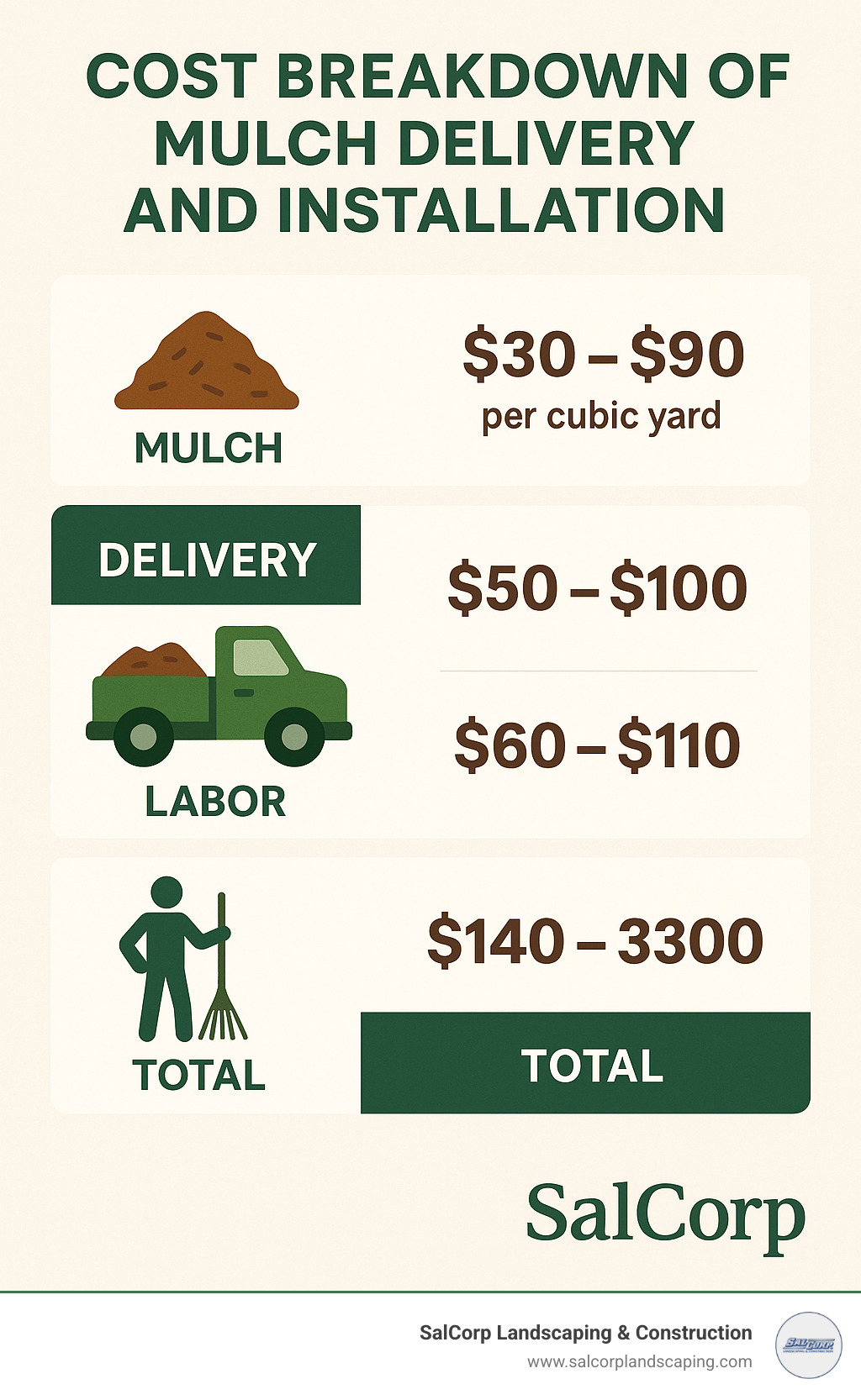
Understanding mulch delivery and installation costs helps you budget properly for your landscape project. Based on internet research, bulk mulch pricing varies significantly across the industry, with basic hardwood mulch averaging $30-$50 per cubic yard, while premium options can reach $75-$120 per cubic yard. These figures represent general market averages and don’t reflect SalCorp’s specific pricing.
Colored and dyed mulches command higher prices due to additional processing requirements. Internet sources show these specialty products typically cost $40-$75 per cubic yard, though premium colored varieties can reach up to $120 per cubic yard. The improved color retention and aesthetic appeal often justify the extra investment for homeowners seeking long-lasting curb appeal.
Premium bark products like cedar or specialized playground mulch represent the top tier of pricing. According to online data, these materials range from $75-$120 per cubic yard, with some specialty safety-certified products reaching even higher price points. The natural insect-repelling properties of cedar and safety certifications for playground applications contribute to these premium costs.
Delivery fees depend heavily on distance and order size. Most suppliers offer free delivery within their local service area for orders meeting minimum requirements, but charges can range from $0-$100 based on miles traveled. Remote locations or rush deliveries may incur additional transportation fees.
Installation labor costs vary widely based on site conditions and project complexity. Internet averages suggest pricing between $25-$90 per cubic yard for professional spreading and installation. Factors like site accessibility, bed complexity, and additional services such as edging or extensive cleanup can affect final labor charges.
Our Massachusetts service area includes numerous communities throughout the greater Boston region and South Shore. We proudly serve Walpole, Newton, Wellesley, Needham, Dover, Sherborn, Medfield, Westwood, Norwood, Canton, Milton, Quincy, and many other local towns. Our established delivery routes allow us to provide efficient service across this broad coverage area.
Minimum order requirements help ensure delivery efficiency while providing customers with economies of scale. Most suppliers require 3-5 cubic yards minimum for delivery, though this can vary by location and distance from the supplier’s facility. More info about lawn service & mulch installation provides additional details about our specific service requirements.
How to Score the Best Deal
Smart planning can significantly reduce your mulch delivery and installation costs without sacrificing quality. Ordering in bulk provides the best value per cubic yard while eliminating multiple delivery charges. Even if you don’t need all the material immediately, bulk purchasing often costs less than multiple smaller orders.
Splitting delivery with neighbors creates win-win situations for everyone involved. Coordinate with adjacent property owners to combine orders and share delivery costs. This strategy helps meet minimum order requirements while reducing per-yard expenses for all participants.
Scheduling during off-peak periods can yield better pricing and faster service availability. Early spring specials often provide the best savings, as many suppliers offer discounts during winter months for spring delivery. Booking your project during slower periods typically results in more competitive pricing.
Combining services creates package deal opportunities that benefit your entire landscape. Bundling mulch installation with edging, pruning, or other maintenance services often costs less than scheduling these projects separately. This approach also minimizes disruption to your property and daily routine.
Volume discounts reward larger orders with reduced per-yard pricing. Many suppliers offer tiered pricing structures where unit costs decrease as order quantities increase. This makes bulk purchasing particularly advantageous for larger properties or multiple project areas.
Senior and military discounts acknowledge service and provide cost relief for eligible customers. Many landscaping companies offer special pricing for veterans, active military personnel, and senior citizens as a way of showing appreciation for their service and contributions.
When to Refresh or Top-Dress Mulch
Understanding replacement timing helps you maintain beautiful landscapes while managing long-term costs effectively. Color fade typically occurs within 12-18 months as organic mulches weather naturally under UV exposure, rainfall, and seasonal temperature changes. This natural aging process gradually transforms vibrant colors to neutral browns and grays.
Spot-topping with 1-2 inches of fresh material can extend existing mulch life while restoring visual appeal. This maintenance approach works particularly well when underlying mulch still provides good weed suppression but needs color refreshment. Spot-topping costs significantly less than complete replacement while delivering impressive aesthetic improvements.
Full replacement every 2-3 years ensures optimal performance and maintains professional appearance standards. Complete removal and fresh installation provide the best weed suppression, moisture retention, and visual impact. This comprehensive approach works best for high-visibility areas or when existing mulch has decomposed significantly.
Soil test indicators help determine optimal replacement timing from a plant health perspective. When underlying soil shows improved organic content and structure, the existing mulch has decomposed sufficiently to warrant replacement with fresh material. This scientific approach ensures your landscape receives maximum benefit from mulching investments.
Frequently Asked Questions about Mulch Delivery and Installation
Over the years, I’ve noticed customers ask similar questions about mulch delivery and installation projects. These concerns make perfect sense—you want to get it right the first time and avoid costly mistakes. Let me address the most common questions that come up during our consultations.
How thick should mulch be applied for optimal results?
The sweet spot for most landscape applications is 3 inches of depth. This thickness blocks enough sunlight to prevent weed seeds from germinating while allowing proper air and water movement to your plants’ roots. Think of it as the “Goldilocks zone”—not too thick, not too thin, but just right.
Around trees and shrubs, stick to 2-3 inches maximum. Any deeper creates problems with moisture buildup against bark, which can lead to rot and pest issues. I’ve seen too many beautiful trees damaged by well-meaning homeowners who thought “more is better.”
Playground areas follow completely different rules. Safety standards require 6-12 inches of specialized playground mulch under equipment. The depth depends on the height of your play structures—taller equipment needs deeper cushioning for fall protection.
For slopes or areas prone to erosion, 4 inches provides maximum soil protection without going overboard. The extra depth helps materials stay in place during heavy rains while still allowing proper drainage.
Here’s what to avoid: anything deeper than 4 inches in regular landscape beds. Excessive mulch creates anaerobic conditions that stress plant roots and provides cozy hiding spots for rodents you definitely don’t want near your home.
Are there minimum order requirements for delivery?
Yes, most professional services including ours require minimum orders of 3-5 cubic yards for delivery. This isn’t arbitrary—it reflects the real costs of mobilizing trucks and crews for each job. Think about it: the same truck and driver are needed whether you order 2 yards or 10 yards.
Distance affects minimum requirements too. Properties farther from our facility may need larger minimums to justify the fuel and travel time. Remote locations might require 7-10 cubic yards, but we’ll always discuss this upfront during your consultation.
If your project needs less than our minimum, don’t worry—we have options. Some suppliers offer smaller quantity delivery for premium fees. It costs more per yard, but you still get professional delivery and installation without hauling bags from the store.
The good news? Most properties actually need more mulch than homeowners initially estimate. Once you calculate all your beds properly, you’ll likely hit our minimums naturally. We’re always happy to help with measurements during your free consultation.
Can I order mulch delivery and installation entirely online?
Modern technology makes online ordering surprisingly convenient for straightforward projects. Many suppliers now offer complete digital platforms that handle material selection, quantity calculations, scheduling, and payment processing. You can literally order premium mulch delivery and installation from your couch.
Online systems work best when you have accurate measurements and clear project goals. Digital mulch calculators excel at converting your square footage into cubic yards, and most platforms include helpful photos to guide material selection. For standard residential applications, online ordering streamlines the entire process.
However, complex projects benefit from personal consultation. Slopes, drainage issues, unusual access requirements, or plant-specific needs often require experienced eyes to evaluate properly. That’s where our two decades of experience becomes invaluable.
We offer a hybrid approach that combines digital convenience with personal service. You can start your project online to get initial estimates and material options, then we follow up with a consultation call to confirm details and address any specific concerns about your property.
The beauty of working with an established local company is having real people available when questions arise. While online ordering is convenient, having Sal and our experienced crew just a phone call away provides peace of mind that pure digital services can’t match.
Conclusion

Fresh mulch creates that “wow factor” that makes neighbors stop and take notice. Your landscape beds go from tired and weedy to magazine-worthy in just a few hours with professional mulch delivery and installation. It’s amazing how something as simple as quality mulch can completely transform your outdoor space.
The math really is straightforward once you get the hang of it. One cubic yard covers about 100 square feet at 3-inch depth – that’s your golden rule for ordering. Choose materials that match your climate and plants, and don’t be afraid to ask suppliers for guidance when you’re unsure.
Professional installation saves your back and your weekend while delivering results that look consistent and polished. You can spread mulch yourself, but there’s something to be said for having experienced crews show up with the right equipment and knock out your entire property in an hour or two.
The investment pays dividends through reduced watering, fewer weeds, and healthier plants. Your irrigation bills drop, weekend weeding becomes a thing of the past, and your landscape stays looking fresh longer. It’s one of those rare home improvements that actually reduces future maintenance work.
At SalCorp Landscaping & Construction, we’ve seen how proper mulching transforms properties across Massachusetts. Our owner-operated approach means Sal personally oversees projects to ensure every detail meets our standards. After two decades in business, we know that quality materials and skilled installation create lasting value for homeowners.
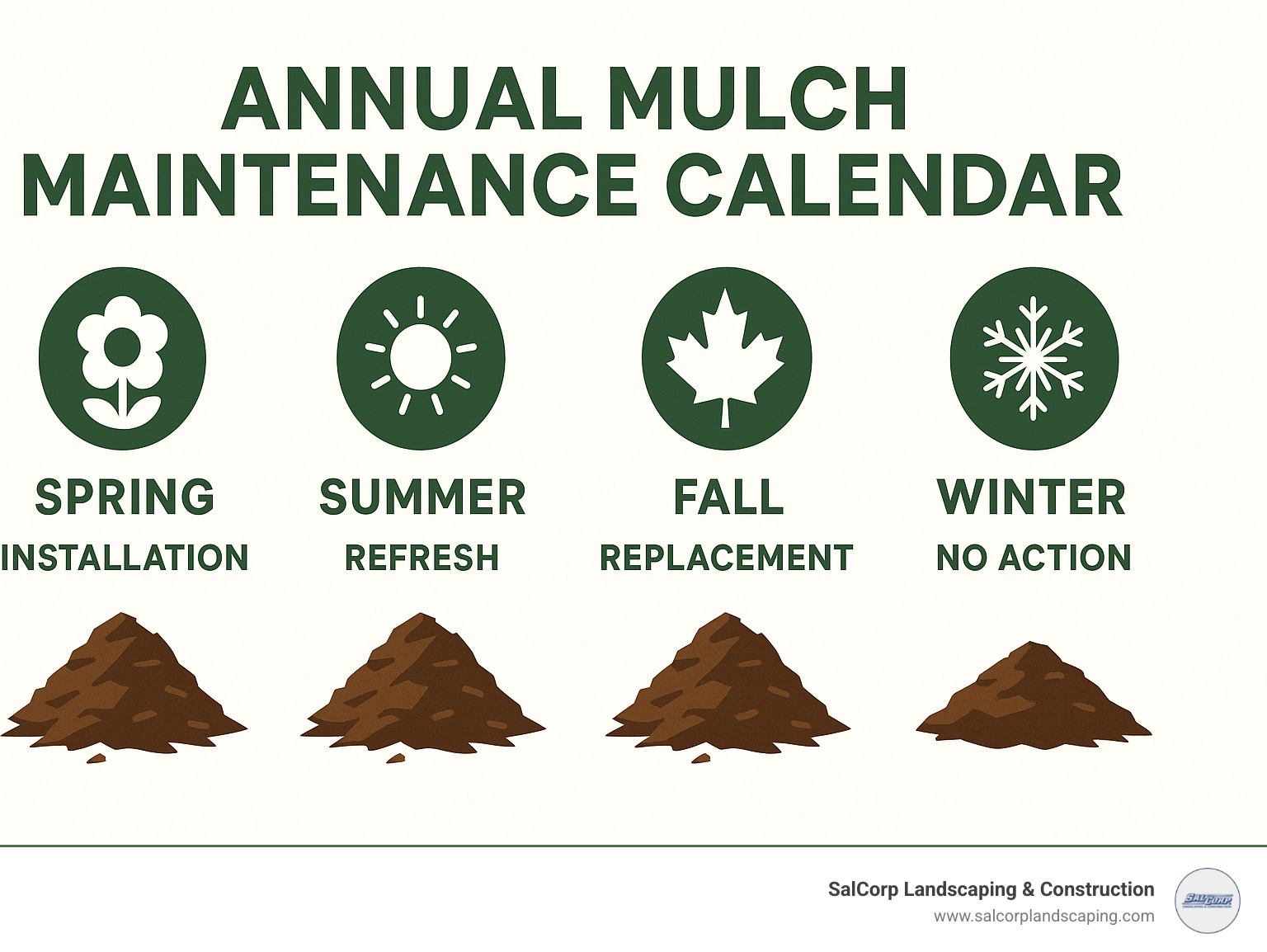
Spring and fall represent prime mulching seasons, but the calendar above shows how strategic timing maximizes your investment. Early spring installation protects plants during growing season, while fall applications prepare beds for winter weather.
Whether you’re tackling a small refresh project or completely redesigning your landscape beds, quality mulch delivery and installation provides the foundation for outdoor spaces that thrive with minimal effort. Your plants will thank you, your neighbors will admire the results, and you’ll wonder why you waited so long to make the investment.
Ready to see what professional mulching can do for your property? More info about Landscaping services shows how we combine mulching with comprehensive landscape solutions that keep your outdoor spaces looking their absolute best year-round.
