Natural stone retaining walls: 5 Essential Facts
Why Natural Stone Retaining Walls Transform Your Property
Natural stone retaining walls serve as both functional barriers and stunning landscape features that prevent soil erosion while creating usable outdoor spaces. These structures combine timeless beauty with practical engineering to solve slope challenges and improve property value.
Key Benefits of Natural Stone Retaining Walls:
- Erosion Control – Prevents soil movement and landslides on slopes
- Space Creation – Transforms unusable hillsides into level areas for patios and gardens
- Durability – Lasts decades or even centuries with proper construction
- Aesthetic Appeal – Adds natural beauty and increases property value
- Low Maintenance – Requires minimal upkeep once properly installed
Natural stone retaining walls work by using gravity and friction to hold back soil pressure. The most common construction methods include dry-stack (no mortar) for walls under 3 feet and mortared construction for taller structures. Popular stone types include fieldstone, granite, limestone, and sandstone – each offering unique colors, textures, and characteristics.
The construction process involves excavating a proper foundation, installing a gravel base, and carefully placing stones in courses with proper drainage behind the wall. Most DIY projects should stay under 3 feet in height, while taller walls require professional engineering and installation.
I’m Sal Musto, owner of SalCorp Landscaping & Construction, and I’ve spent over two decades designing and installing natural stone retaining walls throughout Massachusetts. My hands-on approach ensures every project meets the highest standards of both structural integrity and aesthetic appeal.
Natural stone retaining walls word guide:
The Foundation: What Are Natural Stone Retaining Walls and Why Choose Them?
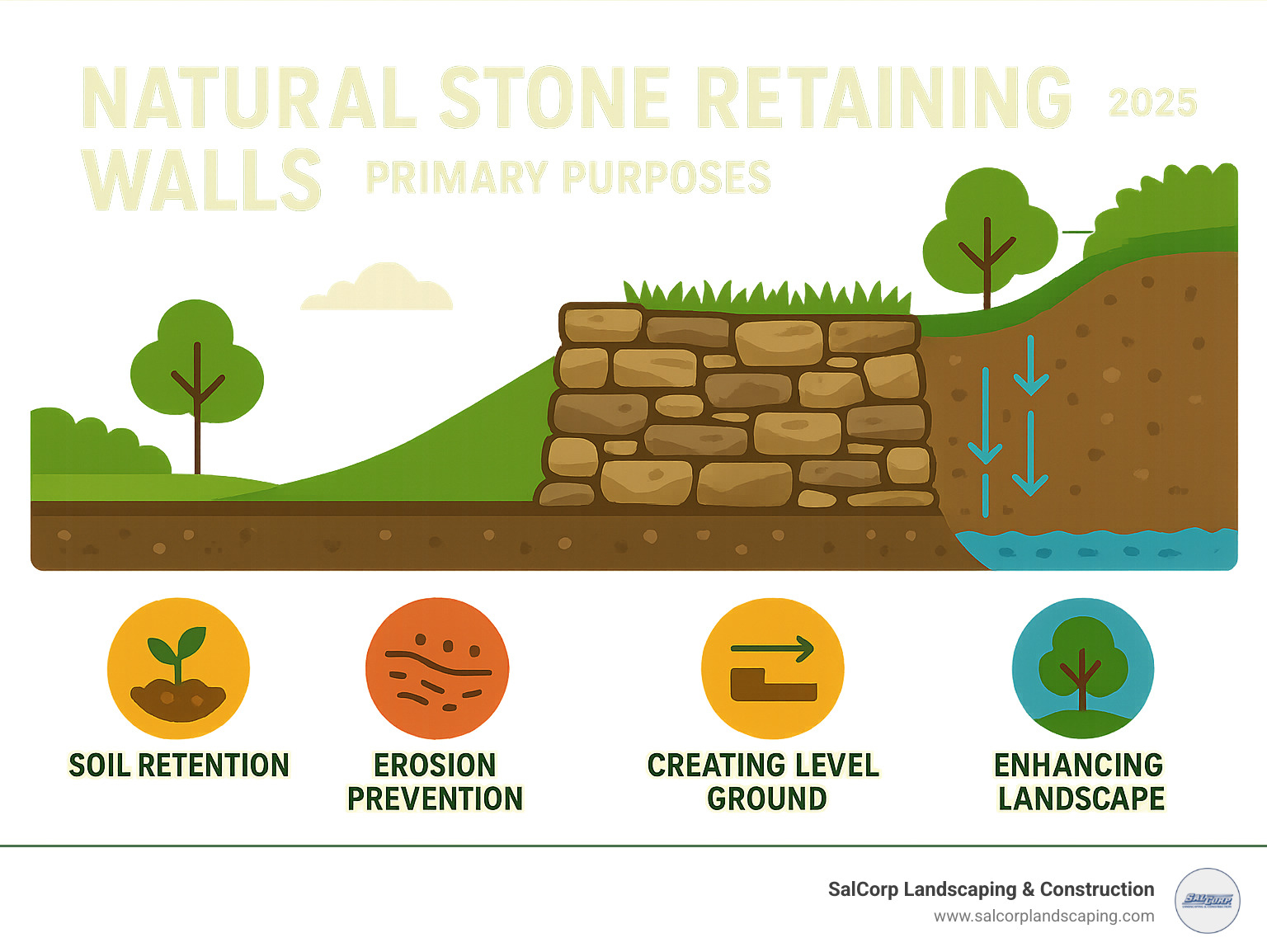
Natural stone retaining walls are more than just stacked rocks—they’re engineered to hold soil in place while enhancing curb appeal. In simplest terms, a retaining wall counters lateral earth pressure using the sheer weight and friction of stone. The concept is ancient (see the retaining wall article for historical examples) and still the gold standard for residential landscapes.
The Practical Purpose
When gravity starts stealing your hillside, a stone wall steps in to provide soil retention, protect nearby foundations, and keep valuable topsoil where it belongs. By creating level terraces, you turn unusable slopes into patios, gardens, or play areas. Built-in drainage channels water away from your home, making these walls a quiet line of defense against New England’s freeze–thaw cycles.
Our hardscaping services often begin with a retaining wall because it lays the groundwork—literally—for every other outdoor feature.
The Enduring Appeal of Natural Stone
Unlike manufactured block, each natural stone has its own color variations, textures, and patterns, giving your wall a one-of-a-kind personality. Properly installed, these walls last decades—often centuries—with almost no maintenance. They never need paint or sealant, and they age gracefully, blending into the landscape over time.
Stone is also an eco-friendly choice: it requires no energy-intensive manufacturing and can be sourced locally here in Massachusetts. Factor in the boost to property value and you have a project that pays you back while looking better every year.
The Building Blocks: Common Types of Natural Stone
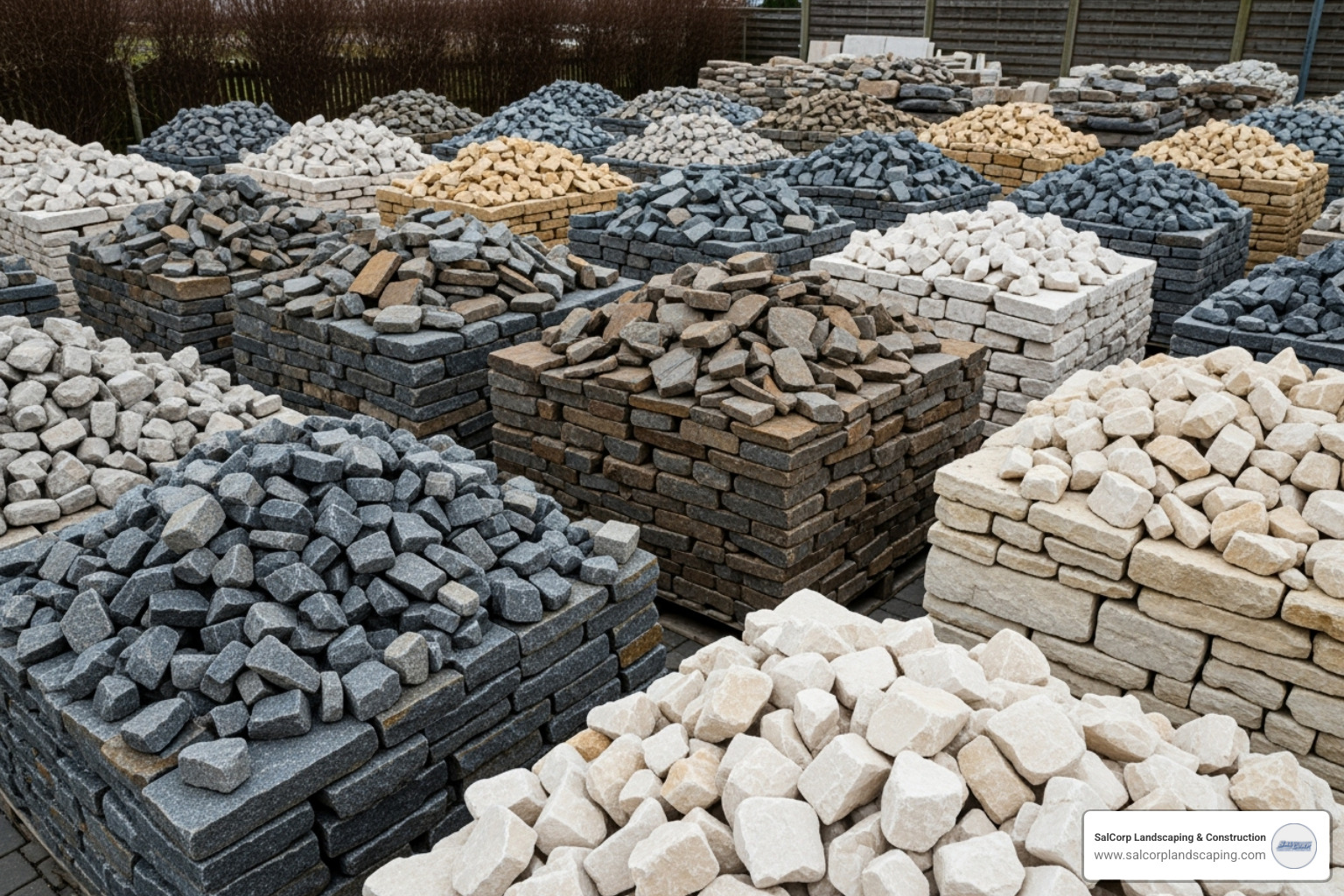
Choosing the right stone is like choosing the right tool—get it right and the job is easier, looks better, and lasts longer. Whenever possible, we recommend locally quarried stone; it’s cost-effective, matches the regional look, and is proven to handle Massachusetts winters.
Fieldstone
Fieldstone delivers authentic New England charm and is usually the most economical choice. Angular pieces stack well for dry-laid walls, creating an informal, organic look that blends into woodland and cottage landscapes.
Granite
Need maximum durability? Choose granite. Its speckled gray, pink, or black tones fit both rustic and formal designs. Though pricier than fieldstone, granite shrugs off moisture and freeze-thaw cycles, making it a smart long-term investment. See our hardscape material guide for color options.
Limestone
With consistent tans and grays, limestone offers a refined, almost architectural appearance. Sawn blocks stack quickly, so labor costs can be lower even if the stone itself is mid-range in price.
Sandstone (and Other Options)
Sandstone provides warm earth tones and natural layered lines that look like miniature cliffs. Other excellent New England choices include bluestone for its blue-gray hue and quartzite for extreme hardness with flashy veining.
In short, pick the stone that meets your design vision, budget, and durability goals—and remember that local availability often dictates the smartest choice.
The Blueprint: Construction Methods and Key Steps for Natural Stone Retaining Walls
Building natural stone retaining walls requires careful planning and attention to detail. The construction process depends on your chosen method and wall height, but understanding these fundamentals will help you make smart decisions about your project.
Mortared vs. Dry-Stack Construction
| Feature | Mortared Walls | Dry-Stack Walls |
|---|---|---|
| Foundation | Concrete footing required | Gravel base sufficient |
| Flexibility | Rigid structure | Flexible, moves with ground |
| Drainage | Requires weep holes | Natural drainage through joints |
| Height Limit | Can be built taller | Limited to 3-4 feet for DIY |
| Skill Level | Professional installation recommended | DIY-friendly for short walls |
| Cost | Higher due to materials and labor | Lower material and labor costs |
| Maintenance | May crack and require repairs | Individual stones can be adjusted |
Mortared walls use concrete footings and masonry cement to create rigid structures that can handle greater heights and loads. While they’re incredibly strong, they require professional skill to install correctly. If the foundation settles or freezes, these walls can crack—and repairs can be costly.
Dry-stack walls are the friendlier option for most homeowners. They rely on gravity and friction between stones for stability, which might sound less secure but actually works beautifully. These walls naturally drain water through their joints and can flex with ground movement, making them perfect for New England’s freeze-thaw cycles.
Essential Steps for a Dry-Stack Wall
Site preparation sets the stage for everything that follows. I always start by marking the wall location with spray paint and calling 811 (Call Before You Dig) to locate underground utilities. Trust me—hitting a gas line is nobody’s idea of a good time. The excavation needs to extend at least 6 inches behind where your wall face will be, giving you room for proper backfill and drainage.
Trenching and creating the gravel base is where the real work begins. Your trench should be about 12 inches deep and at least as wide as your wall thickness. We fill this with 5-6 inches of compacted gravel, creating a stable foundation that drains well. This base prevents frost heave and keeps your wall stable for decades.
Installing the first course is absolutely critical—it’s the foundation that supports your entire wall. I use the largest, flattest stones available for this course, making sure each one is perfectly level and firmly seated in the gravel base. String lines help keep everything aligned, and taking extra time here saves headaches later.
Building subsequent courses requires patience and technique. Each course should be set back slightly from the one below—about 1/4 to 1/2 inch—creating what we call a “batter.” This backward lean dramatically improves stability. Joints between stones should be staggered like brickwork, and I fill any gaps with smaller stones or stone chips to eliminate voids.
Backfilling and drainage work together to prevent water problems. Behind the wall, we install geotextile fabric to stop soil from washing through stone joints. The space gets backfilled with gravel for drainage, then topped with soil for planting. Proper drainage is what separates walls that last from walls that fail. For detailed information about our professional installation process, check out our retaining wall installation page.
Placing capstones provides the finishing touch. These large, flat stones on top give your wall a polished appearance and help lock the structure together. In good weather conditions, I sometimes secure capstones with construction adhesive for extra stability.
Tools and Materials Checklist
Having the right tools makes all the difference between a smooth project and a frustrating struggle. You’ll need basic excavation tools like a shovel and spade, plus a tamper for compacting base materials. A 4-foot level is essential for checking stone placement, while string lines and stakes keep everything aligned. A sledgehammer helps adjust stone positions, and a brick chisel shapes stones when needed. Don’t forget safety glasses and work gloves—stone work is tough on hands and eyes.
For materials, you’ll need wall stone (quantity depends on your wall size), compactible gravel for the base, and coarse sand for leveling. Landscape fabric prevents soil migration, while drainage gravel goes behind the wall. Construction adhesive secures capstones, and stone dust or chips fill small gaps between stones.
The key to success is preparation. Having everything on hand before you start keeps the project moving smoothly and prevents those frustrating trips to the supply yard mid-project.
The Finishing Touch: Design, Landscaping, and Regulations

Creating beautiful natural stone retaining walls goes far beyond just stacking stones. The magic happens when you thoughtfully integrate these structures into your overall landscape design while respecting local building codes and regulations.
Integrating Walls into Your Landscape
The most successful retaining wall projects feel like they’ve always belonged in the landscape. When dealing with steep slopes, tiered wall systems often work better than one towering wall. Multiple shorter walls create natural planting beds between levels, reduce pressure on individual structures, and give you more design flexibility.
Think of your retaining wall as outdoor furniture. Built-in seating areas using flat capstones turn functional walls into gathering spaces. I’ve seen homeowners create cozy conversation areas simply by designing their walls with comfortable seating heights in mind.
Planting pockets within the wall structure soften the hard edges and create living art. Small perennials, herbs, and alpine plants thrive in the well-drained crevices of dry-stack walls. This approach makes your wall feel more natural and less like a barrier.
Water features add another dimension to stone walls. A small cascade or fountain integrated into the wall structure creates a focal point and masks traffic noise. The sound of water complements the natural texture of stone beautifully.
For comprehensive landscape integration, our retaining wall landscaping services help create cohesive outdoor spaces that maximize both beauty and functionality.
Walkways and steps should complement your wall design rather than compete with it. Natural stone steps can be built directly into the wall structure, creating seamless transitions between different levels. Our masonry stairs services ensure these elements work together as a unified design.
Lighting transforms stone walls after dark. Small LED fixtures tucked into wall crevices or behind plants create dramatic shadows and highlight the stone’s natural texture. This extends your outdoor living hours and improves safety on steps and walkways.
Height Limits, Permits, and Codes
Here’s where things get serious. Most towns have height restrictions for retaining walls that don’t require permits—typically between 30 and 48 inches. Building a stone retaining wall as a DIY project works well as long as you stay under 3 feet in height.
Permit requirements kick in for taller walls, and the process involves more than just paperwork. You’ll need detailed construction plans, soil analysis, engineering calculations, and inspections during construction. The final approval comes only after everything meets local standards.
Engineering requirements for tall walls account for soil pressure, drainage loads, seismic activity, and frost penetration. These forces can be substantial, which is why professional engineering is required for structures over certain heights.
Property line considerations can surprise homeowners. Retaining walls near boundaries may require setbacks and neighbor notification. Always verify property boundaries before starting construction—it’s much easier than dealing with disputes later.
Don’t forget to call 811 (Call Before You Dig) before any excavation. Underground utilities can be anywhere, and hitting them creates expensive problems and safety hazards.
Local municipal codes vary significantly between communities. What’s allowed in one town might require permits in another. Some areas have specific requirements for stone types, drainage systems, or construction methods.
For professional guidance on design requirements and permitting, our retaining wall design services help steer local regulations and ensure your project meets all necessary standards from the start.
The key is planning ahead. Understanding these requirements early in your project prevents costly changes and delays later. When in doubt, consult with professionals who know your local codes—it’s an investment that pays off in peace of mind.
The Investment: Cost, Durability, and Maintenance
Natural stone walls cost more up front than timber or segmental block, but they pay off in longevity and lower upkeep.
How Long Do Natural Stone Walls Last?
• Stone type: Granite and quartzite can last centuries; limestone and sandstone last decades when installed correctly.
• Construction quality: A proper base, drainage, and tight stone placement are non-negotiable for long life.
• Climate & drainage: New England’s freeze–thaw cycles demand good back-of-wall drainage; without it, even the best stone can fail.
Cost Considerations
Internet sources place natural stone walls between $20 and $105 per square foot (wide national average). Your exact price depends on:
- Material (fieldstone vs. premium granite)
- Wall height & length
- Site access and soil conditions
- Extras—steps, lighting, seating, or water features
These are typical market ranges, not SalCorp quotes. We provide firm estimates after an on-site evaluation.
Ongoing Maintenance
Annual spring/fall inspections and clearing drainage areas are usually all that’s required. If a stone shifts, it can often be repositioned in minutes, and there’s no paint, stain, or sealant schedule to worry about.
Bottom line: pay a bit more now, enjoy a wall that could outlast the house, and spend your weekends relaxing instead of repairing.
Frequently Asked Questions about Natural Stone Retaining Walls
Can I build a natural stone retaining wall myself?
The short answer is yes—but with some important caveats. DIY construction of natural stone retaining walls can be a rewarding project for the right homeowner, but it’s not suitable for every situation.
Height is your biggest consideration. Industry standards recommend keeping DIY stone retaining walls under 3 feet tall. This height limit isn’t arbitrary—it’s based on safety and structural integrity. Shorter walls create manageable soil pressure that doesn’t require professional engineering calculations. Once you go beyond 3 feet, you’re dealing with forces that can cause serious problems if not properly addressed.
The physical demands are substantial. Each wall stone typically weighs between 50 and 75 pounds, and you’ll be moving hundreds of them during construction. The work involves digging, lifting, carrying, and precise positioning—all while maintaining proper technique to ensure structural soundness. It’s genuinely hard work that requires good fitness levels and patience.
Skill level matters too. The dry-stack method is more forgiving for beginners than mortared construction, but you still need to understand foundation preparation, proper stone selection, and drainage principles. These aren’t skills you can pick up from a quick online tutorial—they require hands-on experience and careful attention to detail.
You should definitely call professionals when your wall exceeds 3 feet, site conditions are challenging (like steep slopes or poor drainage), local codes require permits, or you simply lack the time, tools, or physical ability for the project. There’s no shame in recognizing when a project is beyond your capabilities—wall failures can be dangerous and expensive to fix.
For professional expertise and peace of mind, our local masonry contractors bring decades of experience to every project, ensuring your wall is built right the first time.
How do you ensure proper drainage for a stone retaining wall?
Proper drainage isn’t just important for natural stone retaining walls—it’s absolutely critical. I’ve seen too many well-built walls fail simply because water wasn’t properly managed. The good news is that effective drainage isn’t complicated when you understand the principles.
The foundation of good drainage is gravel backfill. Instead of backfilling behind your wall with soil, you create a drainage zone using graded gravel. This free-draining material allows water to flow down and away from the wall structure rather than building up pressure behind it. The gravel should extend from your foundation up to near the surface, where it’s capped with soil for planting.
Geotextile fabric plays a crucial supporting role. This landscape fabric separates your gravel drainage zone from the surrounding soil, preventing fine particles from gradually clogging your drainage system. Think of it as a filter that keeps your drainage working effectively for years. Make sure seams overlap by at least 6 inches and extend the fabric up the back of your wall.
For mortared walls, weep holes provide essential drainage outlets. These small openings, spaced every 4 to 6 feet, allow trapped water to escape before it can build up dangerous pressure. In more challenging situations, perforated drain pipes can be installed at the wall base and connected to daylight or storm drainage systems.
Don’t forget about surface drainage either. Proper grading above your wall directs rainwater and runoff away from the structure. This simple step prevents excessive water from entering your drainage system and reduces the overall load on your wall.
The importance of drainage cannot be overstated—hydrostatic pressure from trapped water is the leading cause of retaining wall failure, even in otherwise well-constructed walls.
What kind of maintenance do stone walls require?
Here’s one of the best things about natural stone retaining walls—they’re remarkably low maintenance. Unlike timber walls that need regular staining and sealing, or concrete walls that can crack and stain, natural stone walls mostly take care of themselves.
Annual inspections are your main maintenance task. Walk along your wall each spring and fall, looking for shifted or displaced stones, cracks in mortared joints, drainage issues, unwanted vegetation growth, and any signs of erosion. Catching small problems early prevents them from becoming major headaches later.
Vegetation control is straightforward. Remove weeds and unwanted plants from wall joints before their roots can gradually displace stones. Many homeowners worry about moss and lichen growth, but these actually protect the stone surface and add natural character. If you prefer a cleaner look, gentle pressure washing can remove growth and stains, though most people learn to appreciate the weathered appearance over time.
Drainage maintenance involves keeping water flowing freely. Check that weep holes aren’t blocked by debris, ensure surface water continues to flow away from the wall, and clear any accumulated sediment from drainage areas. This simple maintenance protects your investment and prevents costly repairs.
Minor repairs are typically easy to handle. You might need to reposition a shifted stone, repoint a mortar joint, or clear a blocked drainage feature. These small tasks prevent larger problems and keep your wall looking and performing its best.
The minimal maintenance requirements make natural stone walls an excellent long-term investment. Once properly installed, they can provide decades of reliable service with just occasional attention—a stark contrast to many other retaining wall materials that require regular upkeep and eventual replacement.
Conclusion
Natural stone retaining walls offer something truly special—they solve real problems while making your property more beautiful. Think about it: how many home improvements can prevent soil erosion, create usable outdoor space, and add lasting value all at the same time? That’s the magic of working with natural stone.
The beauty of these walls goes beyond their appearance. While they’re stopping your hillside from washing away, they’re also creating the perfect spot for that patio you’ve been dreaming about. The durability is remarkable—we’re talking about structures that can last for decades or even centuries when built correctly. Compare that to other materials that need replacing every few years, and the value becomes crystal clear.
Functionality meets aesthetic improvement in ways that few other landscape features can match. Whether you choose the rustic charm of fieldstone or the polished elegance of granite, each stone brings its own character to your outdoor space. The natural beauty doesn’t fade over time—it actually gets better as the stone weathers and settles into the landscape.
What makes the difference between a good wall and a great one? It’s the combination of quality materials, proper construction techniques, and experienced craftsmanship. After more than 20 years in the business, I’ve learned that every detail matters—from the foundation preparation to the final capstone placement.
At SalCorp Landscaping & Construction, we’ve helped countless Massachusetts homeowners transform challenging slopes into stunning outdoor spaces. Being owner-operated means I’m personally involved in every project, ensuring that each wall meets our high standards for both structural integrity and visual appeal.
Our comprehensive hardscaping solutions go beyond just building walls. We look at your entire landscape and create integrated designs that work together beautifully. From the initial consultation through the final landscaping touches, we handle every aspect of your project with the attention it deserves.
The investment in a properly built natural stone retaining wall pays dividends for years to come. Lower maintenance costs, increased property value, and the satisfaction of knowing your landscape is both beautiful and protected—these benefits make the initial investment worthwhile.
Ready to see what natural stone retaining walls can do for your property? Transform your landscape with an expert retaining wall contractor and find how SalCorp Landscaping & Construction can bring your vision to life with the timeless appeal and lasting durability that only natural stone can provide.