

Outdoor Water Drainage Solutions: 10 Essential Fixes

Outdoor water drainage solutions play a vital role in protecting your property and enhancing curb appeal. When your yard can’t effectively manage rainwater, it leads to soggy lawns, increased insect populations, and even potential damage to your home’s foundation. Here’s a quick list of essential solutions:
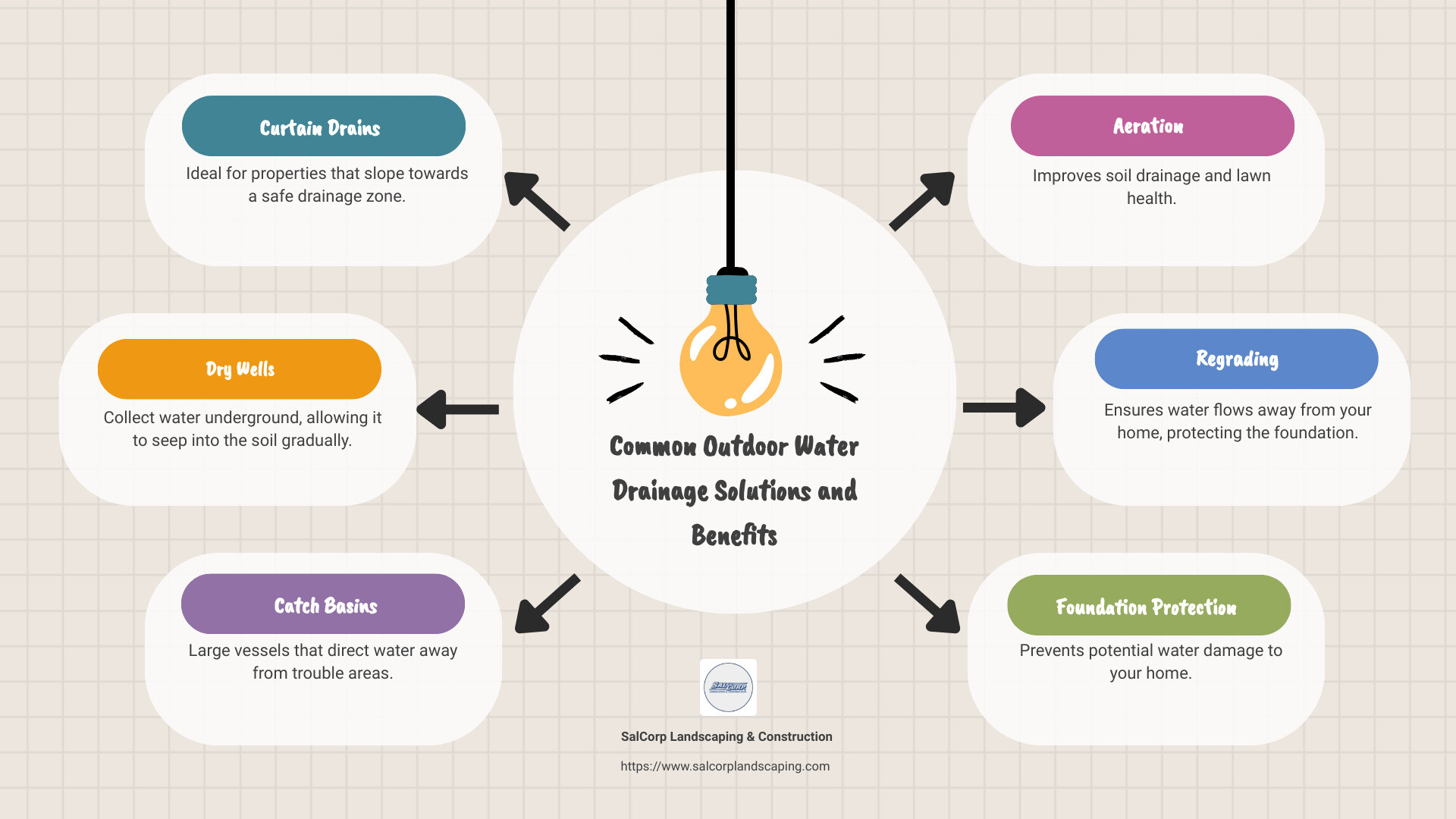
- Curtain Drains: Ideal for properties that slope towards a safe drainage zone.
- Dry Wells: Collect water underground, allowing it to seep into the soil gradually.
- Catch Basins: Large vessels that direct water away from trouble areas.
- Aeration: Improves soil drainage and lawn health.
- Regrading: Ensures water flows away from your home, protecting the foundation.
Maintaining proper drainage is not just about preventing foundation issues; it also keeps your landscape attractive and safe for users.
I’m Sal Musto, and I’ve dedicated over two decades to enhancing outdoor spaces with effective solutions for landscape management and water drainage. Through my role with SalCorp Landscaping & Construction, I ensure that our projects in Massachusetts seamlessly combine aesthetic appeal and functional design with industry-leading drainage techniques.
Know your outdoor water drainage solutions terms:
– french drain system
– sloped yard drainage
– types of drainage
Common Causes of Drainage Problems
Understanding the root causes of drainage issues is the first step in implementing effective outdoor water drainage solutions. Let’s explore the most common culprits:
Yard Slope
A yard’s slope should naturally direct water away from your home. When the slope is incorrect, water pools in low areas. This can lead to soggy soil, brown patches of grass, and even foundation damage. If your home is at the bottom of a hill, you might notice water collecting in the lowest sections of your yard.
Impacted Soil
Heavy construction projects, like installing a pool, can compact your soil. This makes it difficult for water to drain. Hardpan clay soil is particularly troublesome as it retains moisture longer. Look for hard, dense soil and pooling water where projects have been completed. These are signs that soil compaction might be an issue.
Short Gutter Downspout
Gutters are meant to direct water away from your home. However, if the downspout is too short, water can pool at your foundation. This can cause basement flooding and mold growth. Keep an eye out for big puddles under your downspouts as a warning sign.
Barriers Like Sidewalks and Rocks
Sidewalks and concrete paths can act as barriers, causing water to flow into your yard instead of away from it. If these structures are higher than your soil, they can lead to standing water in low spots, increasing the risk of erosion and attracting mosquitoes.
Runoff Erosion
Stormwater runoff can strip away topsoil, leaving behind compacted dirt that doesn’t absorb water well. This results in water collecting in certain areas and can expose tree roots or damage plant beds. Keep an eye out for thin, patchy grass areas as an early indicator.
Broken Water or Sewer Lines
Excessive water pressure can cause underground water lines to break, leading to leaks. If you have a septic tank, standing water near it might indicate a problem. These issues can be tricky to diagnose without professional help, but they’re crucial to address promptly to avoid further complications.
By identifying these common causes, you can take proactive steps to implement effective drainage solutions and protect your property from water damage.
Quick and Easy Outdoor Water Drainage Solutions
Addressing drainage issues in your yard doesn’t always require complex solutions. Here are some simple and effective outdoor water drainage solutions you can implement yourself:
Water Less Often
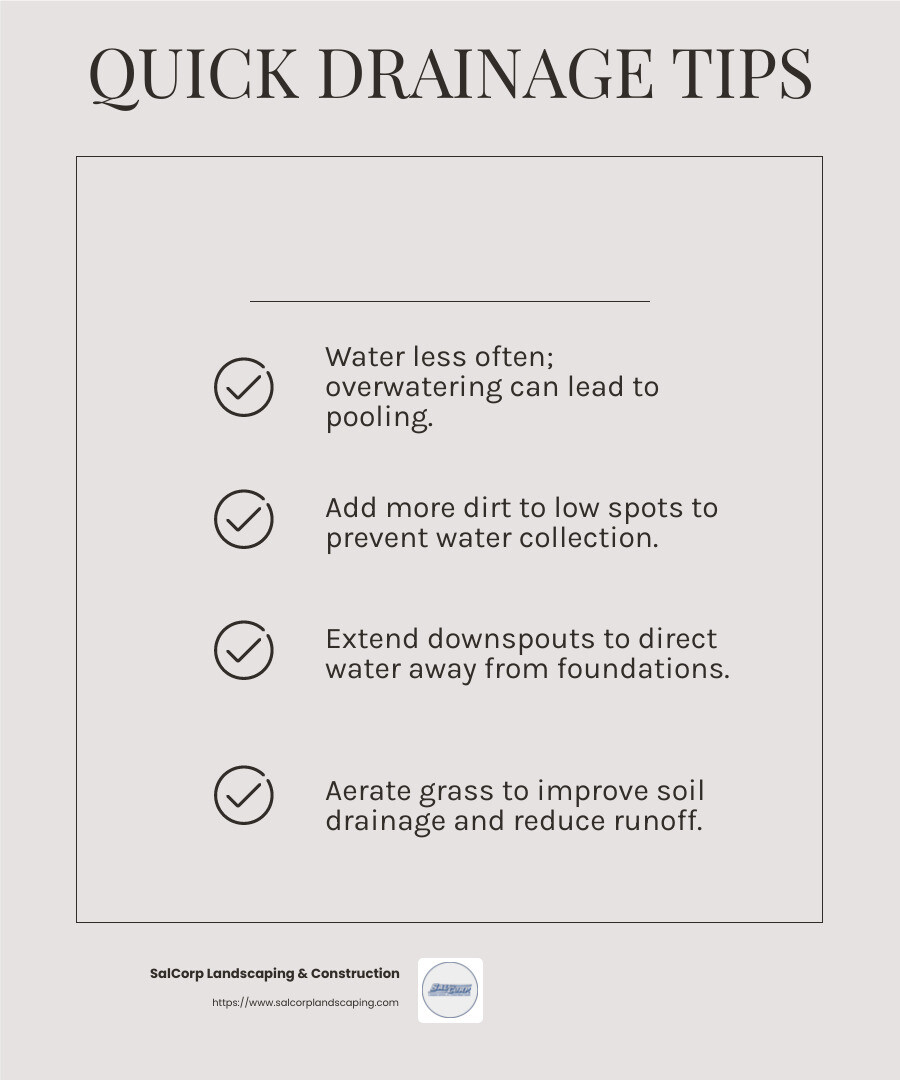
Sometimes, the problem is as simple as overwatering. If your yard is constantly wet, try reducing the frequency of watering. Monitor the trouble spots to see if they improve. If they do, you might be overwatering. Adjust your watering schedule accordingly.
Add More Dirt
Low spots in your yard can collect water after rain. To fix this, add topsoil to these areas. Spread it evenly and rake it in. This helps create a more even surface, allowing water to flow away instead of pooling.
Pro Tip: If you notice any foundation damage, address it before adding soil. Water can seep into the soil and worsen the damage.
Extend Your Downspout
Short downspouts can cause water to pool near your home’s foundation. Extend your downspout to direct water further away. Aim it towards a storm drain or a safe drainage area, not your neighbor’s property. This simple fix can prevent potential water damage to your home.
Ensure your gutters and downspouts are clear of debris to avoid overflow issues.
Aerate Your Grass
Compacted soil can prevent water from draining properly. Aerating your lawn creates small holes, allowing air, water, and nutrients to reach the roots. This reduces runoff and improves drainage. You can rent an aerator or use a manual spike aerator for smaller areas.
Remove Large Rocks
Large decorative rocks can block water flow, causing it to pool. Consider relocating or removing these rocks to ensure water can move freely. This simple adjustment can prevent unwanted water accumulation in your yard.
By implementing these quick and easy solutions, you can improve drainage in your yard and protect your property from water damage. Next, we’ll explore more advanced DIY techniques for tackling persistent drainage issues.
Advanced DIY Outdoor Water Drainage Solutions
When simple fixes aren’t enough, it’s time to roll up your sleeves and tackle some advanced outdoor water drainage solutions. These methods require a bit more effort but can make a big difference in managing water in your yard.
Dig a Creek Bed or Swale
A creek bed or swale can transform your yard both functionally and aesthetically. These features create a channel for water to flow, preventing it from pooling near your home.
Steps to Create a Creek Bed:
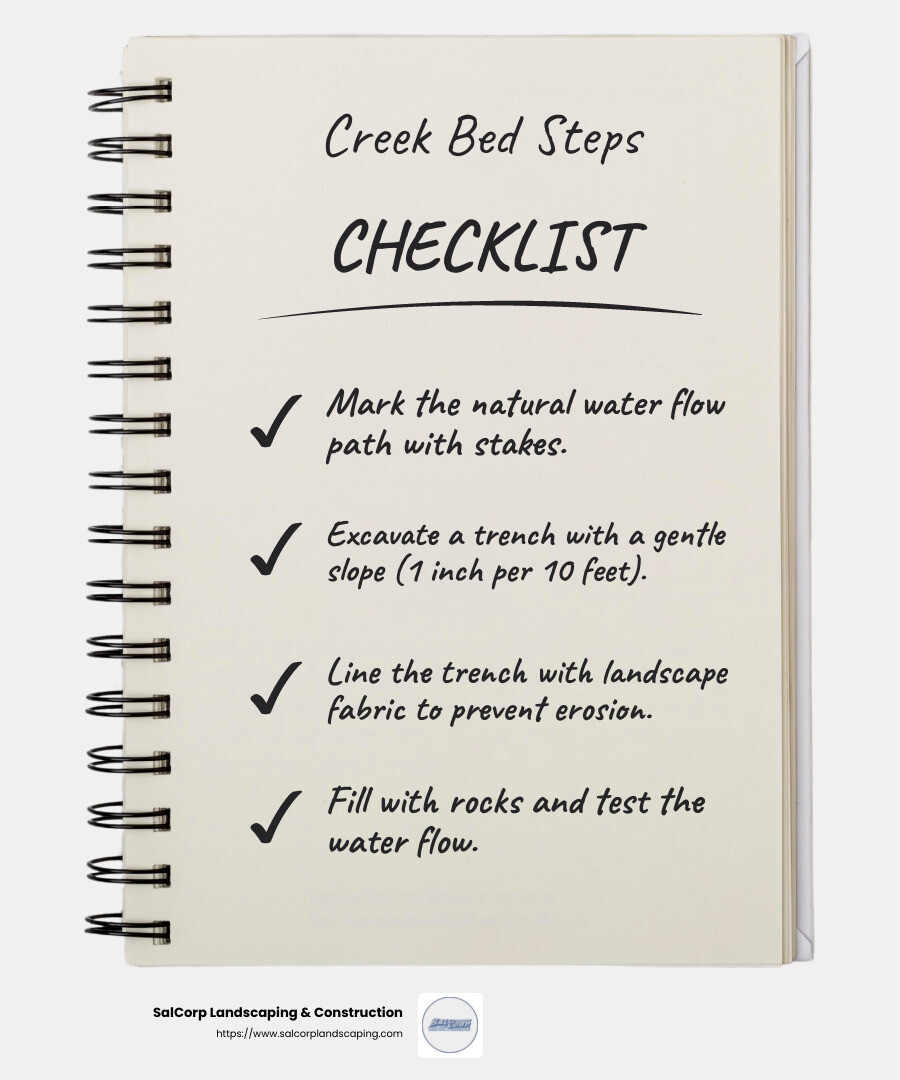
- Mark the Path: Decide where the water naturally wants to flow and mark this path with stakes.
- Excavate: Dig a trench along the marked path. Aim for a gentle slope of about 1 inch per 10 feet to ensure water flows smoothly.
- Add Landscape Fabric: Line the trench with landscape fabric to prevent erosion and keep the rocks in place.
- Fill with Rocks: Add a layer of small rocks or gravel. Test the flow with a hose to ensure water moves without pooling.
- Add Plants: For a natural look, plant water-loving plants along the creek bed.
Construct a Rain Garden
Rain gardens are a beautiful way to handle excess water. They are designed to collect rainwater runoff and are filled with water-loving plants like hostas and ferns.
Creating a Rain Garden:
- Choose the Location: Pick a low area in your yard that collects water, ideally at the end of a downspout or creek bed.
- Test the Drainage: Dig a small hole and fill it with water to see how quickly it drains. This helps determine the right depth for your garden.
- Plant Selection: Choose plants that thrive in wet conditions. Native plants are often the best choice as they require less maintenance.
Install a French Drain
French drains are effective at redirecting water away from problem areas. They involve digging a trench, placing a perforated pipe at the bottom, and covering it with gravel.
Steps to Install a French Drain:
- Plan the Path: Identify the area where water collects and plan a path to a lower area or storm drain.
- Dig the Trench: The trench should be around 18 inches wide and 24 inches deep, sloping downward from the problem area.
- Add Pipe and Gravel: Place the pipe at the bottom of the trench, ensuring it slopes. Cover it with gravel.
- Cover with Soil: Finish by adding topsoil and planting grass or other ground cover.
Install a Dry Well
A dry well is a great solution for collecting and dispersing water into the surrounding soil. It’s often used at the end of a French drain or creek bed.
Steps to Install a Dry Well:
- Dig the Hole: The hole should be about 4 feet deep. Ensure the pipe leading to the dry well slopes at least one-quarter inch per foot.
- Fill with Gravel: Line the bottom with gravel, then place a large, perforated container or tank in the hole.
- Cover and Finish: Fill around the container with more gravel and cover with soil. Plant grass or other vegetation on top for a seamless look.
By investing some time and effort into these advanced DIY solutions, you can significantly improve your yard’s drainage. Next, we’ll explore professional solutions for more complex drainage issues.
Professional Outdoor Water Drainage Solutions
When DIY efforts aren’t enough to solve your drainage problems, it’s time to consider professional solutions. These methods can handle more complex issues and provide long-term protection for your home and yard.
Regrade Your Yard
Regrading involves reshaping the land to ensure water flows away from your home. This is a big job that often requires heavy machinery and professional expertise. Proper grading is essential to prevent water from pooling near your foundation, which can lead to serious structural damage.
Benefits of Regrading:
- Protects Your Foundation: By directing water away, regrading helps prevent basement leaks and erosion.
- Improves Lawn Health: Proper grading ensures your lawn receives the right amount of water, preventing soggy spots and promoting healthy grass growth.
Install Channel Drains
Channel drains are excellent for managing water on paved surfaces like driveways and patios. These drains collect water and direct it away from your home, preventing flooding and erosion.
How Channel Drains Work:
- Placement: Typically installed across driveways or along patios where water tends to pool.
- Construction: A trench is dug, and a pre-formed channel is set in place. The channel is then covered with a grate to allow water to enter while keeping debris out.
Replace Hardscaping with Porous Materials
Traditional hardscaping materials like concrete and asphalt can worsen drainage issues by preventing water from soaking into the ground. Replacing these with porous alternatives allows water to seep through, reducing runoff and erosion.
Porous Materials Options:
- Permeable Pavers: These allow water to pass through gaps, filtering it into the soil below.
- Gravel or Crushed Stone: Ideal for driveways and paths, these materials let water drain naturally.
Install a Sump Pump
For homes with severe water issues, a sump pump is an effective solution. Installed in a sump pit, this pump collects water and moves it away from your home. It’s particularly useful in areas with high water tables or frequent flooding.
Key Features of a Sump Pump:
- Automatic Operation: Most sump pumps activate automatically when water reaches a certain level.
- Reliable Protection: Provides peace of mind by preventing basement flooding and water damage.
These professional outdoor water drainage solutions can address even the most challenging situations. Whether it’s regrading your yard or installing a sump pump, these methods ensure your home stays dry and protected.
Next, let’s dive into some frequently asked questions about outdoor water drainage solutions.
Frequently Asked Questions about Outdoor Water Drainage Solutions
How do I fix poor water drainage in my yard?
Fixing poor water drainage often starts with simple DIY methods. Here are a few effective strategies:
- Aerate Lawns: Aerating your lawn helps water penetrate the soil. It breaks up compacted soil, allowing water, air, and nutrients to reach the roots of your grass. You can rent an aerator or use a manual spike aerator for this task.
- Plant Water-Hungry Plants: Consider adding plants like willows, red maples, or primroses in areas where water tends to pool. These plants absorb excess moisture, helping to dry out soggy spots.
- Install Channel Drains: For areas with lots of hard surfaces like driveways, channel drains can be a great solution. They capture and redirect water away from problem areas.
- Regrade Your Yard: If water consistently pools in certain areas, regrading might be necessary. This involves reshaping the land to direct water away from your home and toward more suitable drainage areas.
What is best for drainage in a yard?
The best drainage solutions often depend on the specific issues you’re facing. Here are some general recommendations:
- Add Topsoil: If your yard has low spots, adding topsoil can help level the area and improve drainage.
- Install a Trench Drain: Similar to a channel drain, trench drains are ideal for directing water away from your home, especially in areas with heavy rainfall.
- Amend Soil: Improving soil quality can improve drainage. Adding organic matter like compost can help soil retain the right amount of moisture while allowing excess water to drain away.
How do I drain surface water from my yard?
Surface water can be a nuisance, but there are several ways to manage it effectively:
- Add More Dirt: Filling in low spots with dirt can prevent water from pooling.
- Extend Downspout: Ensure your downspouts are long enough to direct water far away from your home’s foundation. This simple fix can prevent water from pooling near your house.
- Dig a Creek Bed: Creating a dry creek bed can naturally guide water away from your yard. This involves digging a shallow trench and lining it with rocks and plants.
- Construct a Rain Garden: Rain gardens are designed to collect and absorb rainwater. They are planted with water-tolerant plants and can be a beautiful and functional addition to your landscape.
These frequently asked questions address common concerns and provide practical solutions for improving yard drainage. Whether you’re dealing with minor puddles or significant water issues, there’s a solution to fit your needs.
Conclusion
Addressing drainage issues is crucial for maintaining the health and beauty of your outdoor spaces. Poor drainage can lead to water pooling, which not only creates a muddy mess but can also damage your home’s foundation and invite pests like mosquitoes. By implementing effective outdoor water drainage solutions, you can protect your property and improve its curb appeal.
At SalCorp Landscaping & Construction, we understand the importance of effective drainage systems. With over 20 years of experience in the industry, we specialize in providing comprehensive solutions custom to your specific needs. Whether you’re dealing with minor drainage problems or require major construction, our expert team is equipped with the knowledge and machinery to handle any project.
Serving communities throughout Massachusetts, we are committed to delivering high-quality, sustainable landscaping and hardscaping services. Our owner-operated business ensures personalized attention and superior craftsmanship in every project we undertake.
Don’t let drainage issues compromise the beauty and safety of your property. Reach out to us at SalCorp Landscaping & Construction, and let our experienced team help you create a well-drained, stunning outdoor space that you can enjoy for years to come.
By addressing drainage issues promptly, you not only protect your investment but also create a more enjoyable and functional outdoor environment. Whether you’re looking to regrade your yard, install channel drains, or replace hardscaping with porous materials, we have the solutions you need to transform your landscape into a masterpiece.
