

Patio Drainage: 5 Best Techniques to Prevent Damage
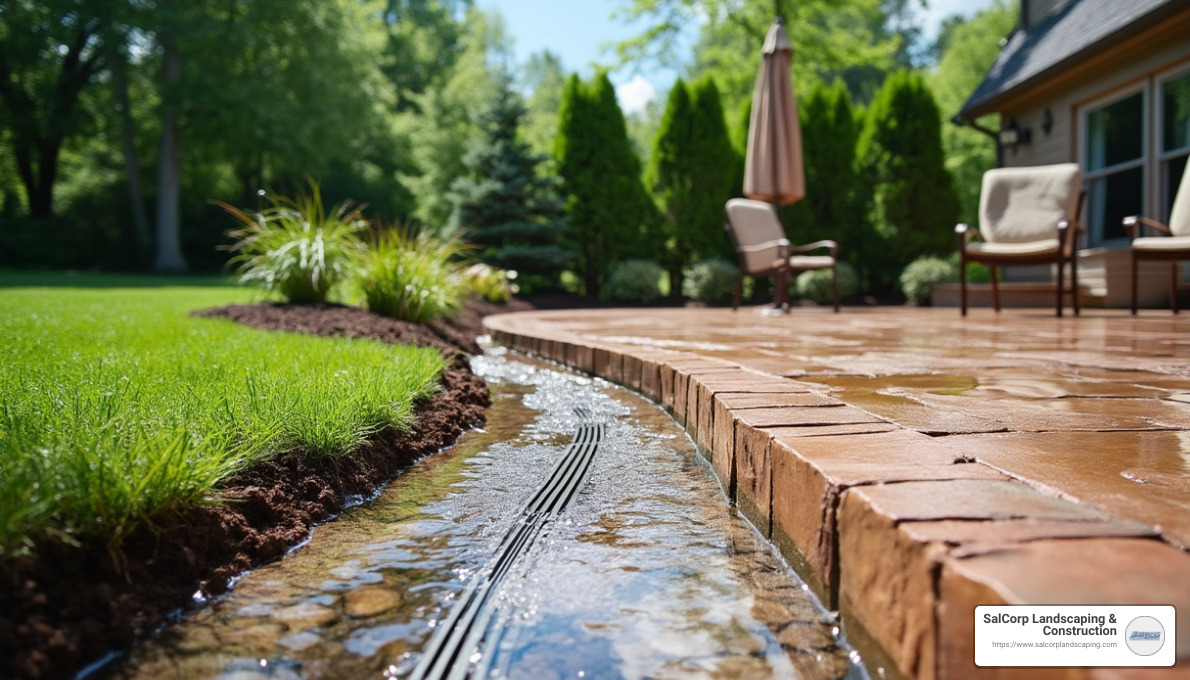
Patio drainage is essential in maintaining the integrity and beauty of your outdoor spaces. Without it, you might face problems like foundation damage, erosion, and standing water, which are not only unsightly but can also lead to bigger repairs down the road. Here’s what you need to know in brief:
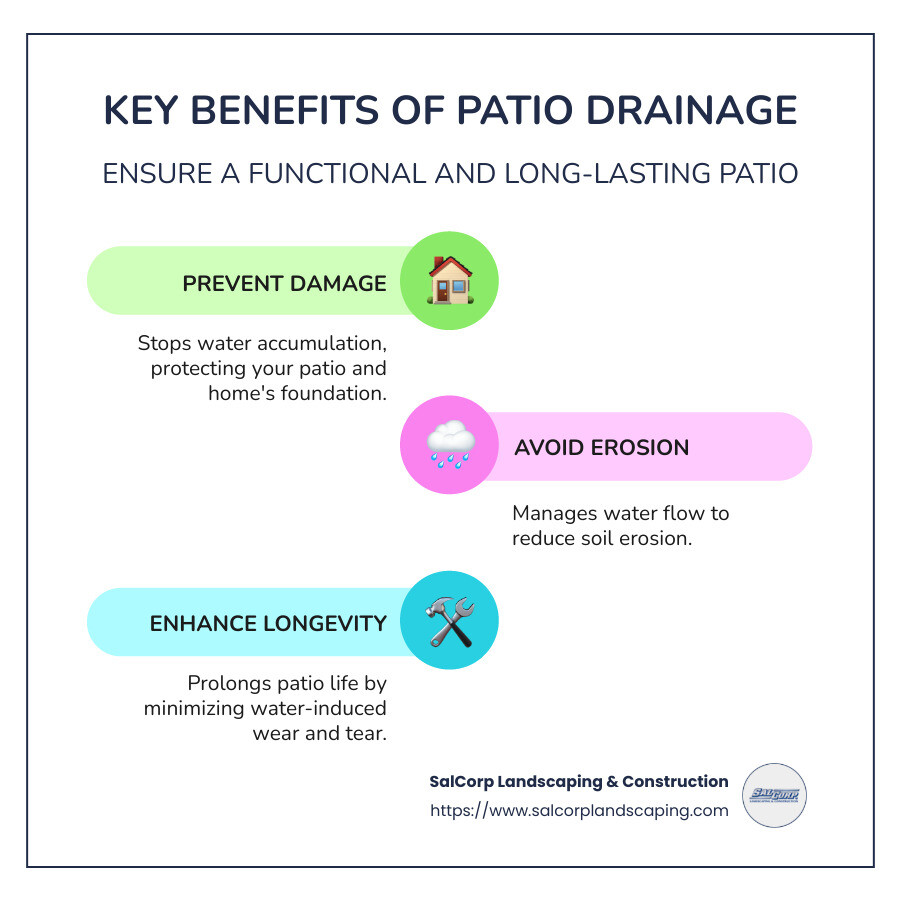
- Prevent Damage: Adequate drainage prevents water from accumulating around your home, protecting both the patio and your property’s foundation.
- Avoid Erosion: Well-designed drainage solutions help manage water flow, reducing soil erosion around the patio.
- Improve Longevity: Proper drainage systems prolong the life of your patio by minimizing the wear and tear caused by water.
By investing in effective drainage options, you ensure your patio remains both functional and attractive.
I’m Sal Musto, with over two decades of experience in designing outdoor solutions, including efficient patio drainage systems. Through my leadership at SalCorp Landscaping & Construction, I’ve helped many Massachusetts homeowners and property managers safeguard their outdoor spaces against the challenges posed by poor drainage. Let’s dive deeper into understanding the importance of these systems and the options available.
Glossary for patio drainage:
– drainage ditch
– french drain system
– yard drainage solutions
Understanding Patio Drainage
When it comes to keeping your patio dry and problem-free, understanding patio drainage is crucial. Water runoff is a natural occurrence, especially in areas with hard surfaces like patios. Without proper drainage, water can pool, leading to damage and erosion.
Water Runoff and Hard Surfaces
Water runoff happens when rainwater or melted snow flows over the surface of your patio. Hard surfaces, like concrete or stone, don’t absorb water, so it needs somewhere to go. If not managed well, this runoff can lead to water pooling, which is both unsightly and potentially damaging.
Why does this matter?
- Standing Water: Without proper drainage, water can collect on your patio, leading to slippery surfaces and possible safety hazards.
- Foundation Risks: Accumulated water can seep into the ground, affecting the foundation of your home.
- Erosion: Water flowing unchecked can erode soil around your patio, destabilizing the structure over time.
Drainage Systems
To combat these issues, effective drainage systems are necessary. They guide water away from the patio and your home’s foundation.
Here are some common drainage systems used in patios:
- Sloping: The simplest form of drainage. By grading the patio to slope away from the house, water naturally flows downhill, away from vulnerable areas.
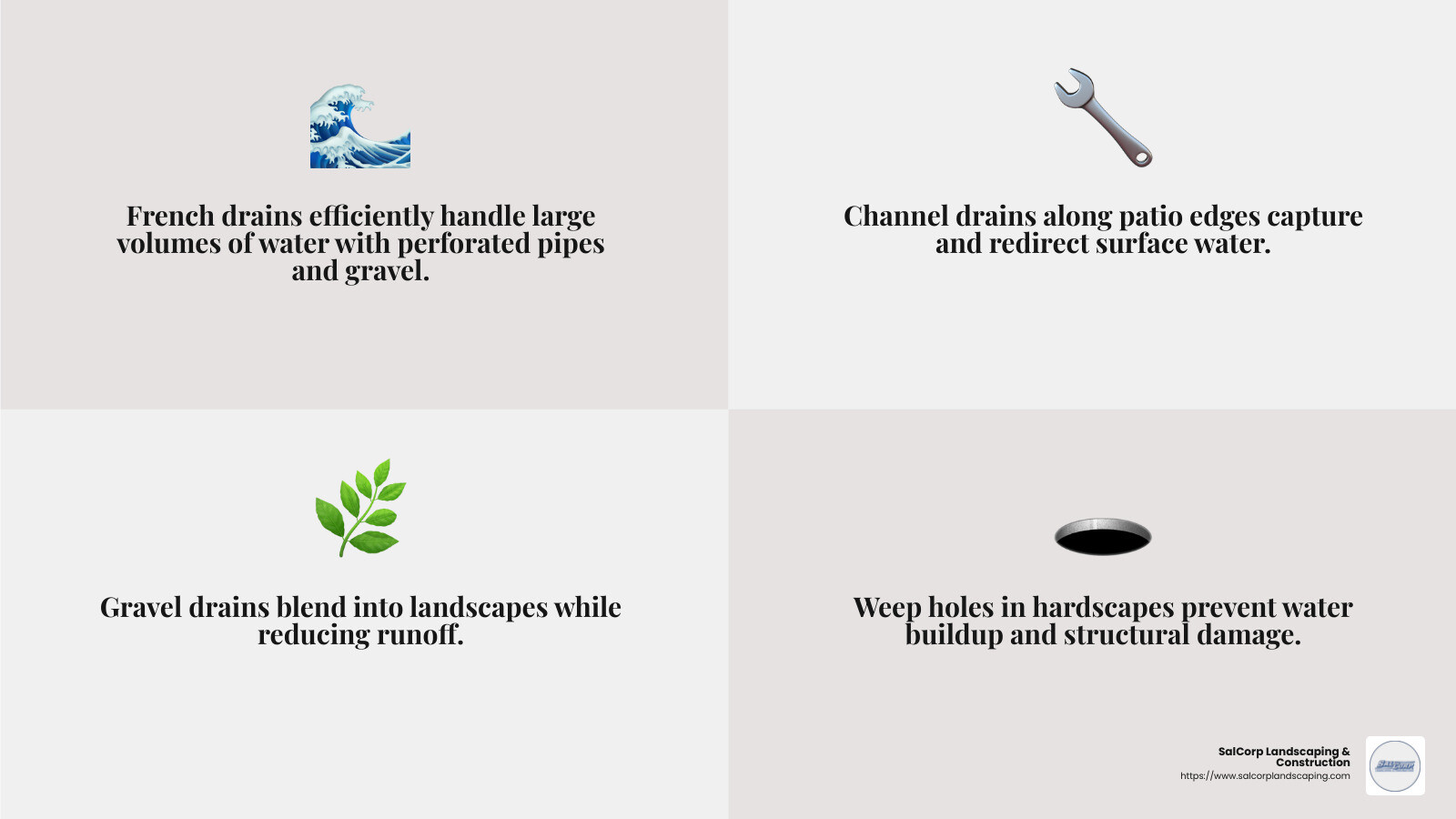
- French Drains: These systems use perforated pipes surrounded by gravel to redirect water underground. They are discreet and effective for managing large amounts of water runoff.
- Channel Drains: Installed at the edges of hardscapes, these narrow drains catch and direct water away from the patio, preventing pooling.
- Gravel Drains: Aesthetic and functional, these drains use gravel to allow water to seep through, providing a natural-looking border while managing water flow.
- Weep Holes: Small gaps in hardscapes that allow water to escape into drainage systems without altering the patio’s appearance.

By choosing the right drainage system, you can protect your patio from water damage and ensure it remains a beautiful and safe part of your home. Up next, we’ll explore the top techniques for implementing these drainage solutions effectively.
Top Patio Drainage Techniques
Creating an effective patio drainage system involves using a combination of techniques that work together to manage water flow and prevent damage. Let’s explore some of the most effective methods.
Sloping
Sloping is the simplest yet one of the most effective drainage techniques. By grading the patio surface to create a gentle slope, water naturally flows downhill, away from your home and other vulnerable areas. This method doesn’t just prevent water pooling; it also minimizes erosion and protects the foundation of your home.
- How it works: The patio is angled slightly, usually at a 1-2% grade, directing water to designated drainage areas.
- Benefits: It’s a low-cost solution that integrates seamlessly into the patio design.
French Drains
French drains are a favorite for their ability to handle large volumes of water. They consist of perforated pipes buried underground, surrounded by gravel and landscape fabric. This setup collects and redirects water efficiently.
- Installation: Dig a trench, line it with landscape fabric, place the pipe, cover with gravel, and wrap with fabric to keep debris out.
- Advantages: They are discreet and highly effective, perfect for areas with heavy water runoff.
Channel Drains
For patios with hardscapes, channel drains are an excellent option. These narrow strips are installed along the edges of the patio, capturing surface water and directing it away.
- Installation: Place along patio edges or across walkways to catch runoff.
- Features: They are durable and can be covered with decorative grates for aesthetic appeal.
Gravel Drains
Gravel drains are both functional and beautiful. By creating borders with gravel, these drains allow water to seep through naturally, reducing runoff and adding a decorative touch.
- Usage: Perfect for areas between the patio and garden beds or walls.
- Benefits: They are cost-effective and blend well with natural landscapes.
Weep Holes
Weep holes are subtle yet powerful. These small gaps in hardscapes let water escape into underlying drainage systems, maintaining the structure’s integrity without affecting its appearance.
- Placement: Typically used in retaining walls or at the base of structures.
- Advantages: They prevent water buildup behind hardscapes, reducing pressure and potential damage.
By employing these patio drainage techniques, homeowners can ensure their outdoor spaces remain dry and inviting. Each method has its own strengths, and often, a combination will offer the best results.
Next, we’ll guide you through installing a French drain for your patio, a practical solution for many drainage challenges.
How to Install a French Drain for Your Patio
Installing a French drain is a practical way to manage water runoff from your patio. This method effectively redirects water and prevents damage to your outdoor space. Here’s a step-by-step guide to help you get started.
Dig and Line the Trench
Begin by marking the path for your French drain. Use a spade to slice the sod along this path, approximately two feet wide. Remove and save the sod for later. Dig a trench about 6 inches deep, ensuring it slopes 1/4 inch per foot using a slope gauge. This slope helps water flow naturally towards the drainage exit.
At the lowest end of the trench, dig a dry well 2-4 feet wide and 3 feet deep. Line the entire trench with landscape fabric to prevent soil from clogging the drain. This fabric is crucial for maintaining the system’s efficiency.
Fill with Gravel
Place a layer of gravel over the landscape fabric. This not only supports the drainpipe but also assists in water filtration. Lay a 4-inch perforated drainpipe with the holes facing down into the trench. Ensure the pipe extends a few inches into the dry well. Connect pipe sections using fittings, avoiding glue for flexibility.
Cover the pipe with more gravel, leaving enough space above for the patio block cover. The gravel acts as a filter, allowing water to enter the pipe while keeping debris out.
Cover the Well
Fold the excess landscape fabric over the gravel-filled trench. Place a patio block on top to secure the fabric and protect the well. This cover helps blend the drainage system with your patio’s design.
Backfill the trench and the well with soil, tamping it lightly with a garden rake. This step ensures the area remains stable and ready for sod replacement.
Replace the Sod
Finally, cover the patio block with at least three inches of soil. Use a garden rake to tamp the soil lightly, creating a smooth surface. Roll the saved sod back over the trench, pressing it firmly to establish a seamless look with the rest of your lawn.
By following these steps, you can effectively install a French drain that keeps your patio dry and functional. This method not only prevents water accumulation but also protects your outdoor investment.
Next, we’ll explore additional patio drainage solutions to improve your landscape’s water management.
Additional Patio Drainage Solutions
While French drains are a popular choice, there are other effective patio drainage solutions that can improve your landscape’s water management. Let’s explore a few of these options.
Downspouts
Downspouts are crucial for directing water away from your patio and home. Installing them underground is a smart choice to maintain your patio’s aesthetic appeal and prevent water pooling on the surface. Underground downspouts guide water to designated drainage areas, keeping your outdoor space dry and your foundation protected.
It’s important to consider aesthetic considerations when installing downspouts. You don’t want them to be an eyesore, so integrating them into the landscape design is key. Properly routed downspouts can blend seamlessly with your patio, ensuring both functionality and visual appeal.
Dry Wells
A dry well is an excellent solution for collecting excess water and allowing it to seep slowly into the ground. This method is particularly useful in areas with heavy rainfall. A dry well is essentially a large, underground container filled with rocks or gravel that temporarily holds water before it gradually seeps into the surrounding soil.
When installing a dry well, always check local codes to ensure compliance. This is crucial as some areas have specific regulations regarding water management systems. A well-installed dry well can significantly improve your patio’s drainage by preventing waterlogging and reducing runoff.
Steps
Steps aren’t just for moving between different levels of your yard—they can also be a strategic part of your patio drainage plan. By using strategic grading, steps can help direct water flow away from your patio and home. This improves watershed management and prevents erosion.
When designed thoughtfully, steps can improve both the functionality and beauty of your outdoor space. They guide water down and away, ensuring that your patio remains dry and your landscape stays intact. This simple yet effective technique can be a game-changer in managing water flow around your home.
By considering these additional patio drainage solutions, you can ensure that your outdoor space remains dry, functional, and beautiful. Next, we’ll address some frequently asked questions about patio drainage to further assist you in maintaining your patio.
Frequently Asked Questions about Patio Drainage
What is the best drainage for a patio?
Choosing the right patio drainage system depends on your specific needs and landscape. However, gravel drains are often considered the best option for their aesthetic and functional benefits. Gravel drains serve as a border around your patio, allowing water to seep through the gravel instead of pooling on the surface. This not only helps manage water effectively but also adds a decorative touch to your outdoor space.
How to do drainage for a patio?
Implementing effective drainage for a patio can be straightforward with the right approach. One popular method is installing a French drain. This involves digging a trench around the patio, lining it with landscape fabric, and laying down a perforated pipe. The pipe is then covered with gravel. This system efficiently redirects water away from your patio, preventing standing water and erosion.
Another effective method is using gravel drains along the edges of your patio. These drains allow water to seep through the gravel, reducing surface water accumulation and potential damage.
Does a concrete patio need drainage?
Absolutely, a concrete patio requires a well-planned drainage system. Without proper drainage, standing water can cause damage over time. Water pooling on a concrete surface can lead to erosion, promote mold growth, and even cause the concrete to crack or degrade.
To protect your concrete patio, consider incorporating a combination of channel drains and weep holes. Channel drains run along the edges of the patio to guide water away, while weep holes allow water to escape from beneath the surface, preventing damage and maintaining the integrity of your patio.
By understanding and addressing these common questions about patio drainage, you can ensure your outdoor space remains functional and beautiful. Next, let’s dive into the conclusion of our guide to see how SalCorp Landscaping & Construction can bring these solutions to your Massachusetts home.
Conclusion
At SalCorp Landscaping & Construction, we understand that a well-designed outdoor space is more than just a visual delight—it’s a functional necessity. Our comprehensive solutions ensure that your patio not only looks great but also stands up to the elements. With over 20 years of experience, we specialize in crafting custom patio drainage systems that effectively manage water runoff, preventing damage and erosion.
Our team is well-versed in the latest drainage techniques, from French drains to channel drains, and everything in between. These systems are designed to seamlessly integrate with your existing landscape, ensuring both functionality and aesthetic appeal. Whether you’re dealing with a concrete patio or a more intricate hardscape, we have the expertise to implement the right drainage solutions for your needs.
Serving communities across Massachusetts, including Canton, Dedham, Foxborough, and beyond, we are committed to delivering exceptional service and quality craftsmanship. Our owner-operated business ensures that every project receives the personal attention it deserves, from start to finish.
If you’re ready to improve your outdoor space with effective patio drainage solutions, contact us today to schedule a consultation. Let SalCorp Landscaping & Construction help you create a patio that is not only beautiful but also built to last. Together, we can transform your outdoor space into a masterpiece that you’ll enjoy for years to come.
