


A practical guide to choosing a retaining wall that adds stability, usable space and lasting character to your Massachusetts property.
Retaining walls can do much more than hold back soil. For New England homeowners, a well-designed wall can help control erosion, improve drainage, create more usable space on a sloped property and become an attractive part of the overall landscape.
The right retaining wall, however, requires more than choosing a material that looks good. New England properties experience heavy rain, snow and repeated freeze-thaw cycles, so proper construction, drainage and material selection are especially important for long-term performance.
Whether you are considering natural stone, concrete block or timber, understanding your options can help you make a smarter investment in your outdoor space.
What Does a Retaining Wall Do?
Retaining walls are designed to stabilize soil and manage changes in elevation, but they can also completely change how a yard looks and functions.
Homeowners commonly use retaining walls to:
- Reduce erosion on sloped areas
- Create level areas for patios, lawns or gardens
- Help manage runoff and drainage
- Separate different areas of the landscape
- Support elevated areas of a property
- Add structure and visual interest to an outdoor design
For New England properties with uneven terrain, a retaining wall can transform a difficult section of the yard into useful, attractive space.
Choosing the Right Retaining Wall Material
The best material depends on your landscape, preferred style, project goals and the amount of soil the wall needs to retain.
Natural Stone: Classic New England Character
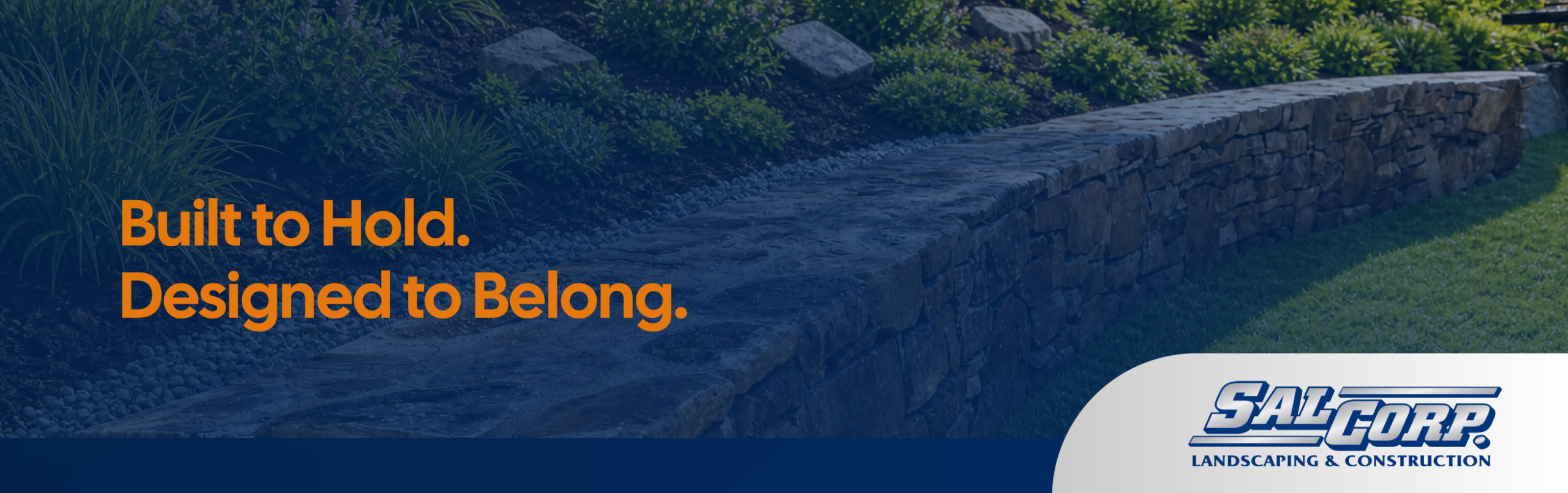
Natural stone is one of the most recognizable choices for Massachusetts landscapes. Its organic texture blends naturally with traditional homes, wooded properties and established gardens.
Natural stone works especially well for:
- Traditional New England landscapes
- Garden walls
- Terraced slopes
- Rustic or natural outdoor designs
- Properties where long-term appearance is a priority
Stone can create a timeless look while providing the strength needed for many residential retaining wall applications.
Concrete Block: Durable and Versatile
Concrete block is another popular choice because it combines strength with a wide range of colors, textures and design options.
It can be a great fit for homeowners looking for:
- Clean, consistent lines
- Curved or geometric wall designs
- A coordinated look with patios or walkways
- A durable material for changing weather conditions
- A more modern or transitional landscape style
Concrete wall systems can also work well for larger or more complex projects when properly designed and reinforced.
Timber: Warm and Rustic
Timber retaining walls can create a more casual, natural appearance and may work well for smaller landscape projects.
They are often used for:
- Low garden walls
- Smaller elevation changes
- Rustic landscapes
- Informal outdoor spaces
Because wood is continuously exposed to moisture and soil, it typically requires more maintenance and may not offer the same lifespan as stone or concrete options.
What Affects the Cost of a Retaining Wall?
There is no one-size-fits-all price for retaining wall installation because every property has different site conditions and project requirements.
Instead of focusing on a standard price, homeowners should consider the factors that influence the overall scope of the project. These may include:
- Wall size and height: Larger and taller walls require more excavation, labor and materials.
- Material selection: Stone, block and timber each have different installation requirements.
- Site access: Limited access for equipment can make construction more complex.
- Excavation and grading: Uneven or steep properties may require additional preparation.
- Drainage needs: Gravel, drainage systems and proper backfilling are important parts of installation.
- Reinforcement: Taller walls may need additional structural support.
- Design complexity: Curves, terraces, steps and integrated landscape features can increase the scope of the project.
- Permits or engineering: Certain walls may require additional planning or local approvals.
Because every site is different, a professional property evaluation is the best way to understand what the project will involve and receive an accurate estimate.
 Why Drainage Matters
One of the most important parts of a retaining wall is often the part homeowners cannot see.
Proper drainage is essential.
Water that collects behind a wall creates additional pressure against the structure. In New England, freeze-thaw conditions can make this even more important because trapped moisture may freeze, expand and contribute to movement over time.
A properly built retaining wall may include:
- Compacted gravel
- Free-draining backfill
- Perforated drainage pipe
- Proper grading
- Drainage outlets
- Reinforcement when necessary
Good drainage helps protect the wall and supports its long-term stability.
Retaining Wall Design Ideas for New England Homes
A retaining wall does not have to feel purely functional. With thoughtful planning, it can become one of the most attractive parts of the landscape.
Create a Terraced Garden
Instead of one large wall, multiple smaller retaining walls can divide a slope into landscaped levels. These areas can be used for:
- Perennials
- Shrubs
- Ornamental grasses
- Seasonal flowers
- Small garden beds
Terracing can make a steep property feel softer and more intentional.
Frame an Outdoor Patio
A retaining wall can help define a patio while supporting changes in elevation around the space.
Choosing materials that complement the patio can create a more cohesive outdoor living area.
Add Built-In Seating
Certain low retaining walls can be designed to function as additional seating around patios, fire features or gathering spaces.
This can make the wall both practical and visually appealing.
Coordinate With Walkways and Steps
Using similar or complementary materials throughout the landscape can help connect retaining walls with:
- Walkways
- Steps
- Patios
- Driveways
- Garden borders
The result is a more polished and unified design.
Incorporate Landscape Lighting
Lighting can highlight the texture of stone or block while also improving visibility around walls, steps and pathways after dark.
Combine Hardscaping With Plantings
Plants can soften the appearance of a retaining wall and help it blend naturally into the surrounding property.
Planting above, below or alongside the wall can add color, texture and seasonal interest.
When Should You Hire a Professional Retaining Wall Builder?
Small decorative garden walls may look simple, but retaining walls that hold significant amounts of soil require careful planning.
Professional installation is especially important when:
- The wall is tall
- The property has a steep slope
- Drainage problems are present
- The wall supports an important area of the property
- Significant excavation is required
- Soil stability is a concern
- Multiple terraces are being constructed
Improper installation can lead to leaning, shifting, cracking or drainage problems over time.
Build for New England Conditions With SalCorp
At SalCorp Landscaping & Construction, retaining walls are approached as part of the complete outdoor environment. The right wall should not only provide structural support but also complement the style, layout and function of the surrounding landscape.
From site preparation and grading to drainage, material selection and final design, careful planning helps create a retaining wall that feels like a natural part of the property.
Whether you want to stabilize a slope, create more usable yard space or add dimension to your landscape, SalCorp can help you explore retaining wall options designed for your property’s specific needs.
Thinking about adding or replacing a retaining wall? Contact SalCorp Landscaping & Construction to discuss your property, design ideas and project goals.
Frequently Asked Questions
1. What is the best retaining wall material for New England?
Natural stone and concrete blocks are both popular because they offer durability and work well with many New England landscape styles. The best option depends on your property, design preferences and project needs.
2. How long does a retaining wall last?
A properly designed and installed retaining wall can last for many years. Material quality, drainage, soil conditions and installation all play an important role.
3. Why is drainage important behind a retaining wall?
Drainage helps prevent water from building up behind the wall and creating additional pressure that can lead to shifting or damage.
4. How much does a retaining wall cost?
The cost depends on the wall’s size, material, site conditions, drainage requirements and overall design. A professional evaluation is the best way to receive an accurate estimate.
5. Can a retaining wall make my yard more usable?
Yes. Retaining walls can help create level areas for lawns, gardens, patios, walkways and other outdoor features.
