

Snow and Ice Management: Top Tips for 2024 Success
Snow and ice management is more than just moving snow and salting sidewalks—it’s an essential service that ensures the safety of roads, walkways, and commercial properties during winter months. Managing snow and ice effectively prevents accidents, maintains access to critical services, and upholds community well-being. If you’re looking for reliable snow and ice management, prioritize providers who offer:
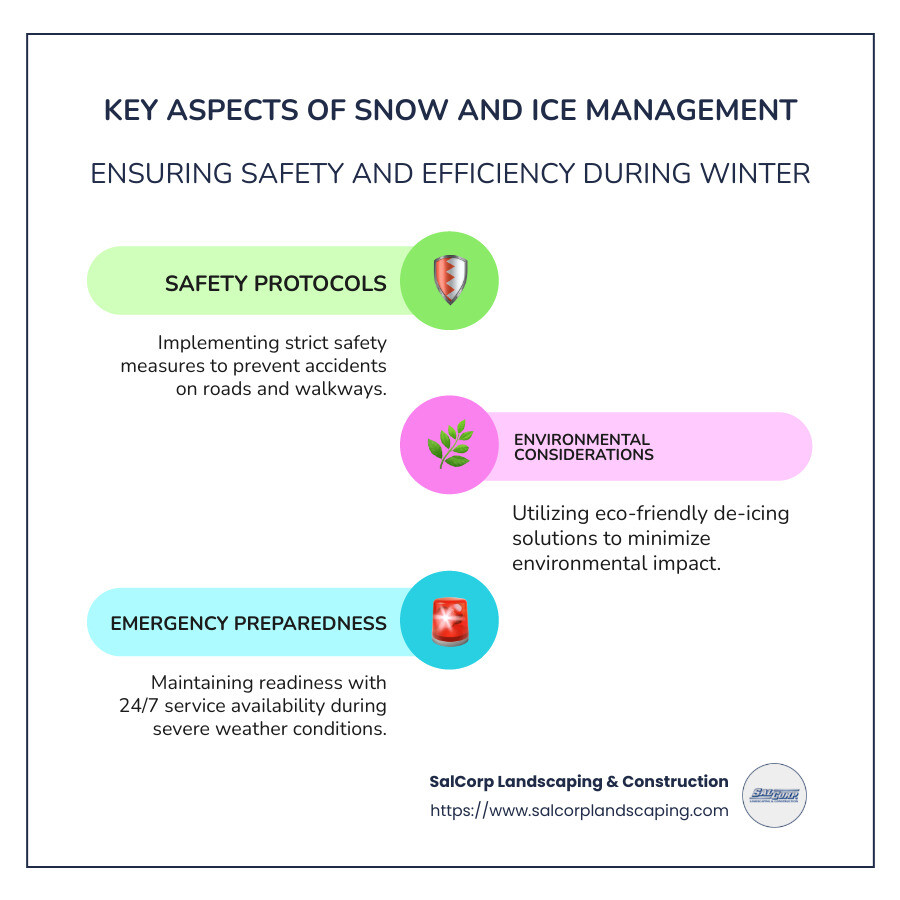
- Around-the-clock readiness to handle severe weather.
- Local expertise to quickly address specific community needs.
- Environmentally responsible salt and de-icing practices.
I’m Sal Musto, the owner of SalCorp Landscaping & Construction. With over two decades of experience, I recognize the significance of efficient snow and ice management in maintaining not only the safety but also the aesthetic appeal of your outdoor spaces. Our expertise ensures you, whether a busy property manager or a homeowner, can confidently steer the challenges of harsh Massachusetts winters.
Common snow and ice management vocab:
– commercial property snow & ice management services
– commercial snow plowing services
– parking lot snow
Understanding Snow and Ice Management
Snow and ice management is a crucial part of keeping properties safe and accessible during the winter months. It involves more than just shoveling snow or spreading salt. Let’s break down the key components:
Snow Removal
Snow removal is the process of clearing snow from pathways, driveways, parking lots, and other critical areas. This ensures that pedestrians and vehicles can move safely. There are several tools and techniques used for this:
- Snow Plows: These are often mounted on trucks and are used to clear large areas quickly. They are essential for commercial snow removal operations.
- Snow Blowers: Ideal for deep or heavy snow, snow blowers can handle areas that are too small or intricate for plows.
- Front-End Loaders: These are versatile machines that can move large piles of snow, making them perfect for big properties.
Liquid Deicers
Liquid deicers are chemical solutions applied to surfaces to prevent ice from forming. They can be used before or after a snowfall:
- Preventative Use: Applying liquid deicers before a storm can stop ice from bonding to surfaces, making snow removal easier.
- Post-Snowfall Use: After snow has been cleared, liquid deicers help to keep surfaces ice-free, reducing the risk of slips and falls.
Liquid deicers are often more effective than traditional salt, especially in very cold conditions. They also tend to be more environmentally friendly.
Preventative Approach
A preventative approach to snow and ice management involves planning and acting before the snow falls. This strategy includes:
- Pre-Treatment: Applying liquid deicers ahead of a storm to prevent ice formation.
- Weather Monitoring: Keeping a close eye on forecasts to prepare and deploy resources efficiently.
- Efficient Plowing Patterns: Using techniques like “V-plowing” to minimize the need for repeated passes, saving time and resources.
Taking a preventative approach not only makes the actual removal process easier but also helps to maintain safety and accessibility throughout the winter.

By understanding these aspects of snow and ice management, property owners and managers can ensure their spaces remain safe and functional, even in the harshest conditions. This proactive stance is essential for minimizing disruptions and maintaining smooth operations during the winter months.
How Technology Improves Snow and Ice Management
Technology plays a crucial role in enhancing snow and ice management. With advancements in IoT software and platforms like Rubicon, snow removal has become smarter and more efficient. Let’s explore how these innovations are changing operations:
IoT Software
Internet of Things (IoT) software connects devices and systems to streamline snow management. Here’s how it works:
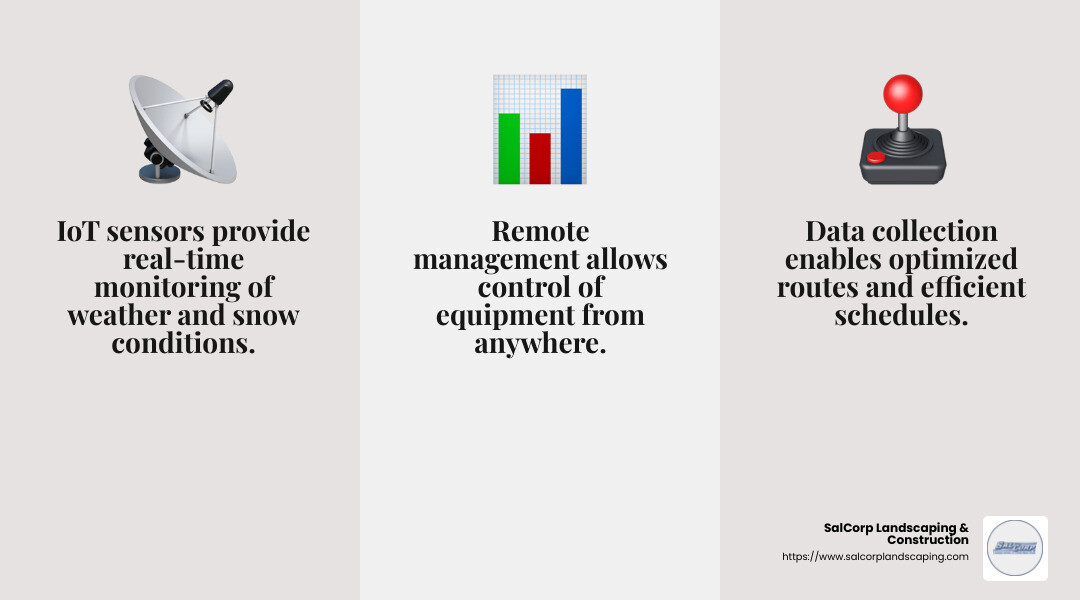
- Real-Time Monitoring: IoT sensors can track weather conditions and snow accumulation. This allows for timely decision-making and deployment of resources.
- Data Collection: By gathering data on snow patterns and equipment performance, managers can optimize routes and schedules.
- Remote Management: IoT enables remote control of snow removal equipment. This can improve efficiency and reduce the need for on-site personnel.
Rubicon Platform
The Rubicon platform is a cloud-based solution that improves snow removal operations. It offers features like:
- Route Optimization: Rubicon helps to plan the most efficient routes for plows and other equipment. This minimizes fuel consumption and reduces time on the road.
- Fleet Management: With Rubicon, managers can monitor the location and status of all vehicles. This ensures that resources are used effectively and that any issues are quickly addressed.
- Community Engagement: The platform includes tools for communicating with residents about snow removal schedules and progress.
Smart Operations
Smart operations integrate technology to improve snow management:
- Automated Equipment: Innovations like snow removal robots can autonomously clear sidewalks and pathways, reducing labor costs and increasing efficiency.
- Predictive Analytics: By analyzing weather data, predictive analytics can forecast snow events and optimize resource allocation.
- Environmental Impact: Smart systems can also help minimize the environmental impact of snow removal by optimizing salt use and reducing emissions.
By leveraging technology, snow and ice management becomes more efficient, cost-effective, and environmentally friendly. These innovations ensure that properties remain safe and accessible, no matter how severe the winter weather.
Next, we’ll dig into the cost considerations you should keep in mind when planning for snow and ice management.
Cost Considerations in Snow and Ice Management
When planning for snow and ice management, understanding cost factors is crucial. This section will provide insights into typical price ranges, hourly rates, and strategies for maximizing profits.
Typical Price Range
The cost of snow and ice management services can vary widely based on several factors, including the size of the property, the frequency of service, and the specific services required. For commercial properties, prices can range from a few hundred to several thousand dollars per season. It’s important to get quotes from multiple providers to ensure competitive pricing.
Hourly Rates
Hourly rates for snow removal services depend on the type of equipment used and the complexity of the job. For instance:
- Standard Snow Plowing: Typically ranges from $50 to $150 per hour.
- Sidewalk Clearing: May cost between $30 and $80 per hour.
- Snow Hauling and Stacking: These specialized services can be more expensive, often ranging from $100 to $300 per hour.
That rates can fluctuate based on demand, especially during heavy snowfalls.
Maximizing Profits
For businesses offering snow and ice management services, maximizing profits involves strategic planning and efficiency. Here are some tips:
- Optimize Routes: Use technology like route optimization software to reduce travel time and fuel costs.
- Invest in Multi-Use Equipment: Equipment that can handle multiple tasks (e.g., plowing and deicing) can reduce overhead and increase job capacity.
- Offer Seasonal Contracts: Encourage clients to sign seasonal contracts rather than pay-per-event. This provides consistent revenue and helps with resource planning.
- Leverage Technology: Implement IoT and fleet management systems to improve operational efficiency and reduce labor costs.
By understanding these cost considerations, both service providers and property managers can make informed decisions. This ensures that snow and ice are managed efficiently and economically.
Next, we’ll explore best practices for effective snow and ice management to ensure safety and sustainability.
Best Practices for Effective Snow and Ice Management
When it comes to snow and ice management, following best practices is essential for safety and sustainability. Here are some key areas to focus on:
Risk Management
Managing risks is crucial in snow and ice operations. Effective risk management involves:
- Obtaining Proper Insurance: Insurance for snow businesses can be costly, but it’s necessary. Connect with insurance providers who understand the unique needs of the industry.
- Documentation: Keep detailed records of all snow removal activities. This includes the date and time of service, areas cleared, and materials used. Accurate documentation can protect against liability and help evaluate your snow removal plan’s effectiveness.
- Training: Regularly train your team on safety protocols and equipment operation. Educating employees helps create a safety-conscious culture.
Sustainable Salt Use
The use of salt and deicers is necessary for safety but can impact the environment. Here’s how to use them sustainably:
- Judicious Application: Use salt and deicers sparingly to prevent environmental damage and property deterioration. Professional services are trained in proper application techniques.
- SIMA Standards: Follow the Snow & Ice Management Association (SIMA) standards for salt use. These standards help reduce environmental impact while keeping sites safe.
- Alternative Solutions: Consider alternatives to traditional salt, like sand or eco-friendly deicing products, to minimize environmental harm.
SIMA Standards
Adhering to SIMA standards helps ensure high-quality service and safety. Key aspects include:
- Best Practices: SIMA’s best practices cover everything from sustainable salt management to snow planning and operations. Implementing these practices can connect, educate, and benchmark your services.
- Training and Resources: Leverage SIMA’s training resources to improve your team’s skills. This includes courses, templates, and snow-focused credentials.
- Networking: Connect with over 1,600 snow contractors and suppliers through SIMA. Building a strong network can be a game-changer for learning and growth.
By incorporating these best practices, you can effectively manage snow and ice while ensuring safety and sustainability. Next, we’ll address common questions about snow and ice management to provide further clarity.
Frequently Asked Questions about Snow and Ice Management
What is snow and ice management?
Snow and ice management involves removing snow and preventing ice formation to ensure safety and accessibility on commercial properties. This process includes snow removal from critical areas like sidewalks, parking lots, and roadways. It also involves applying liquid deicers to prevent ice from forming, reducing the need for constant plowing and minimizing slip and fall risks. This proactive approach is essential for maintaining safe and functional environments during the winter months.
How much should I expect to pay for snow removal?
The cost of snow removal services can vary based on several factors, including the size of the property and the specific services needed. While it’s challenging to pinpoint exact numbers without a detailed assessment, businesses can typically expect to pay within a certain range.
Hourly rates for snow removal services often depend on the equipment used and the complexity of the job. It’s important to discuss your specific needs with a provider to get an accurate estimate. That investing in quality services can save money in the long run by preventing accidents and property damage.
Can you make money doing snow removal?
Yes, snow removal can be a profitable business. The median pay for snow removal services can vary, but with effective management and strategic planning, businesses can maximize their profits. Key strategies include:
- Efficient Operations: Streamlining operations and using technology can help reduce costs and improve service delivery.
- Diverse Service Offerings: Providing a range of services, such as snow removal, deicing, and snow hauling, can attract more clients and increase revenue.
- Building a Strong Reputation: Delivering reliable and high-quality services can lead to repeat business and referrals, which are crucial for growth.
By focusing on these areas, snow removal businesses can improve their profitability while providing essential services during the winter season.
Conclusion
At SalCorp Landscaping & Construction, we pride ourselves on delivering comprehensive snow and ice management solutions across Massachusetts communities. With over two decades of experience, we understand the unique challenges that winter brings to commercial properties. Our owner-operated approach ensures that every project receives the personal attention and expertise it deserves.
Our services are designed to keep your property safe and accessible, no matter how severe the winter weather. From snow removal to applying liquid deicers, we tailor our solutions to meet your specific needs. Our team is equipped with the latest technology and machinery to provide efficient and reliable service, ensuring your business can operate smoothly throughout the winter months.
Serving communities like Canton, Dedham, and Foxborough, we are committed to maintaining the highest standards in the industry. Our proactive strategies not only improve safety but also help minimize disruptions to your operations.
If you’re looking for a partner to handle your snow and ice challenges, SalCorp Landscaping & Construction is here to help. Contact us today to learn more about how we can ensure your property remains safe and functional this winter.
