

Why Understanding Garden Wall Costs Matters for Your Property
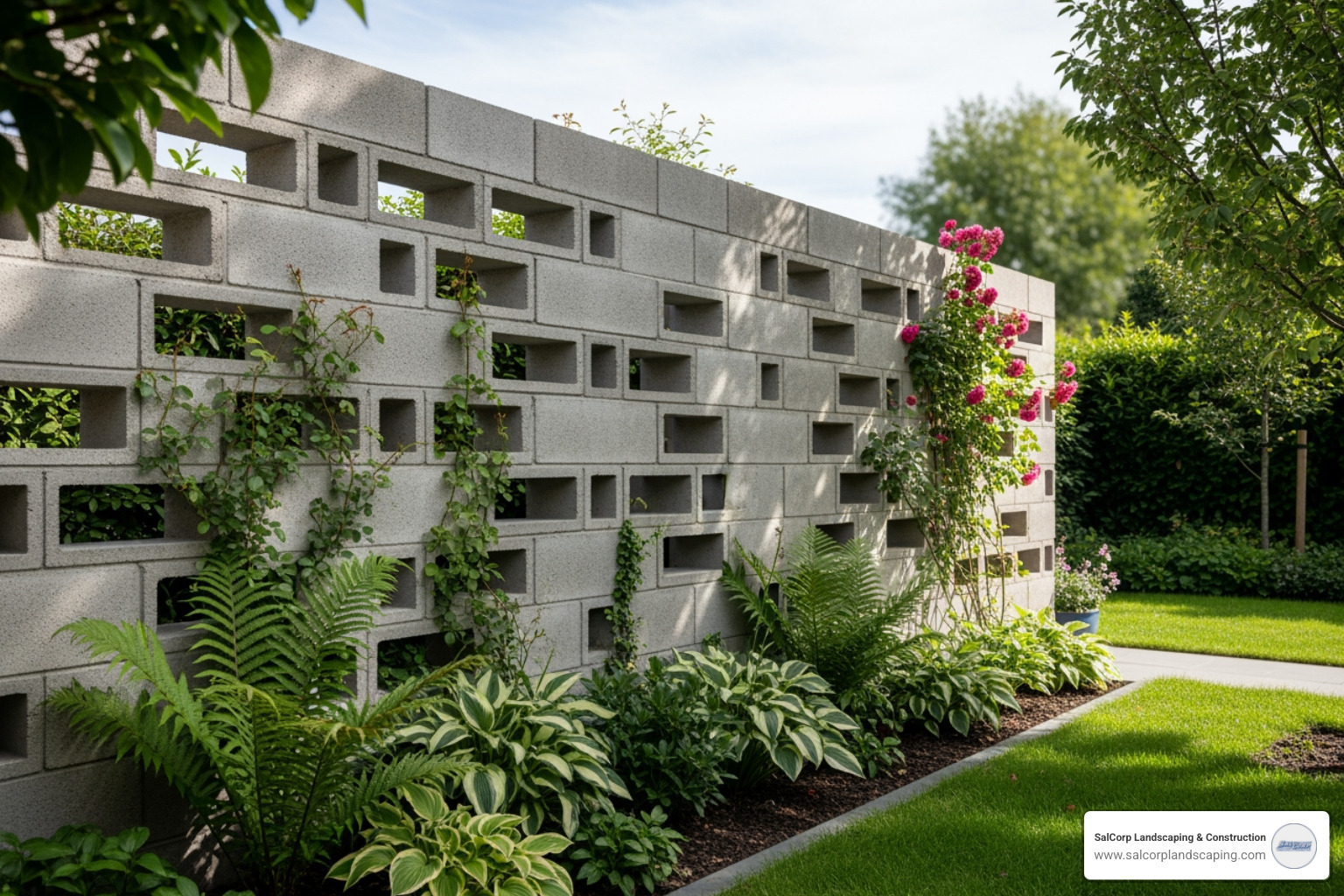
The cost of building a breeze block garden wall typically ranges from $10 to $45+ per square foot for professional installation, or $2 to $40+ per block for materials alone, based on average internet data (not SalCorp Landscaping pricing). Here’s what influences your investment:
Quick Cost Breakdown:
- Materials: $2-$40+ per block
- Labor: $35-$150+ per hour or $10-$45+ per square foot
- Foundation: $50-$200+ per linear foot
- Additional costs: Finishing, permits, and waste removal
Breeze blocks are decorative concrete blocks with open patterns, offering a unique blend of privacy, airflow, and mid-century modern style. Unlike solid walls, they create visual interest while allowing light and air to circulate, making them a popular choice for functional, aesthetic garden walls.
The total project cost depends on wall size, design complexity, site access, and the need for foundations or special finishes. A simple, straight wall is far more economical than a curved design with premium blocks and extensive groundwork.
I’m Sal Musto, and over the past two decades with SalCorp Landscaping & Construction, I’ve helped countless Massachusetts property owners steer the cost of building a breeze block garden wall and similar hardscape projects. We know how proper planning and professional installation can transform outdoor spaces while staying within budget.
What Are Breeze Blocks and Why Choose Them for Your Garden?
Breeze blocks are decorative concrete blocks with distinctive open patterns that allow light and air to pass through. They are not solid cinder blocks but rather feature intricate designs that create a unique aesthetic, which has seen a resurgence in mid-century modern design.
Originally popular in the 1950s-70s in warmer climates, breeze blocks provided privacy and shade while promoting airflow. This blend of form and function has brought them back into the spotlight for their timeless appeal and practical benefits.
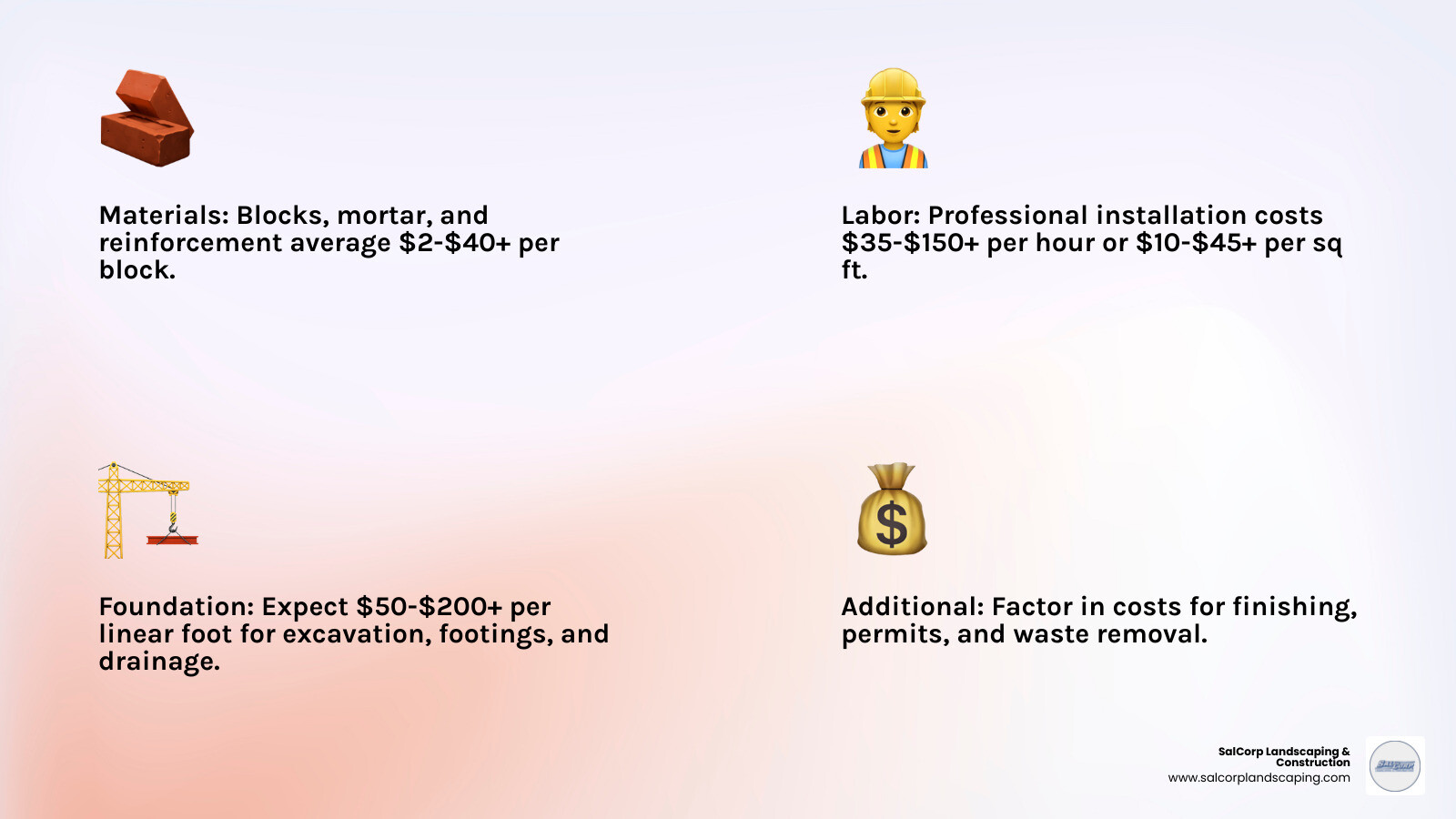
For garden walls in our Massachusetts communities, breeze blocks offer several compelling advantages:
- Aesthetic Appeal: With patterns ranging from vintage to contemporary, they add a unique focal point to any outdoor space.
- Privacy with Airflow: They offer enclosure without blocking light or air, creating private yet open-feeling zones like patios or reading nooks.
- Cost-Effective: Standard breeze blocks can be more budget-friendly than natural stone or some bricks. Their lighter weight may also reduce labor costs.
- Versatility: Beyond walls, they can be used for patio screens, partitions, carports, and outdoor kitchens, allowing for creative, modular designs.
- Durability: As concrete products, they are robust and can withstand New England weather when properly installed on a solid foundation.
Choosing breeze blocks means embracing a blend of style, practicality, and durability. They offer a refreshing alternative to solid walls, allowing us to craft beautiful, functional spaces that breathe.
Understanding the Cost of Building a Breeze Block Garden Wall
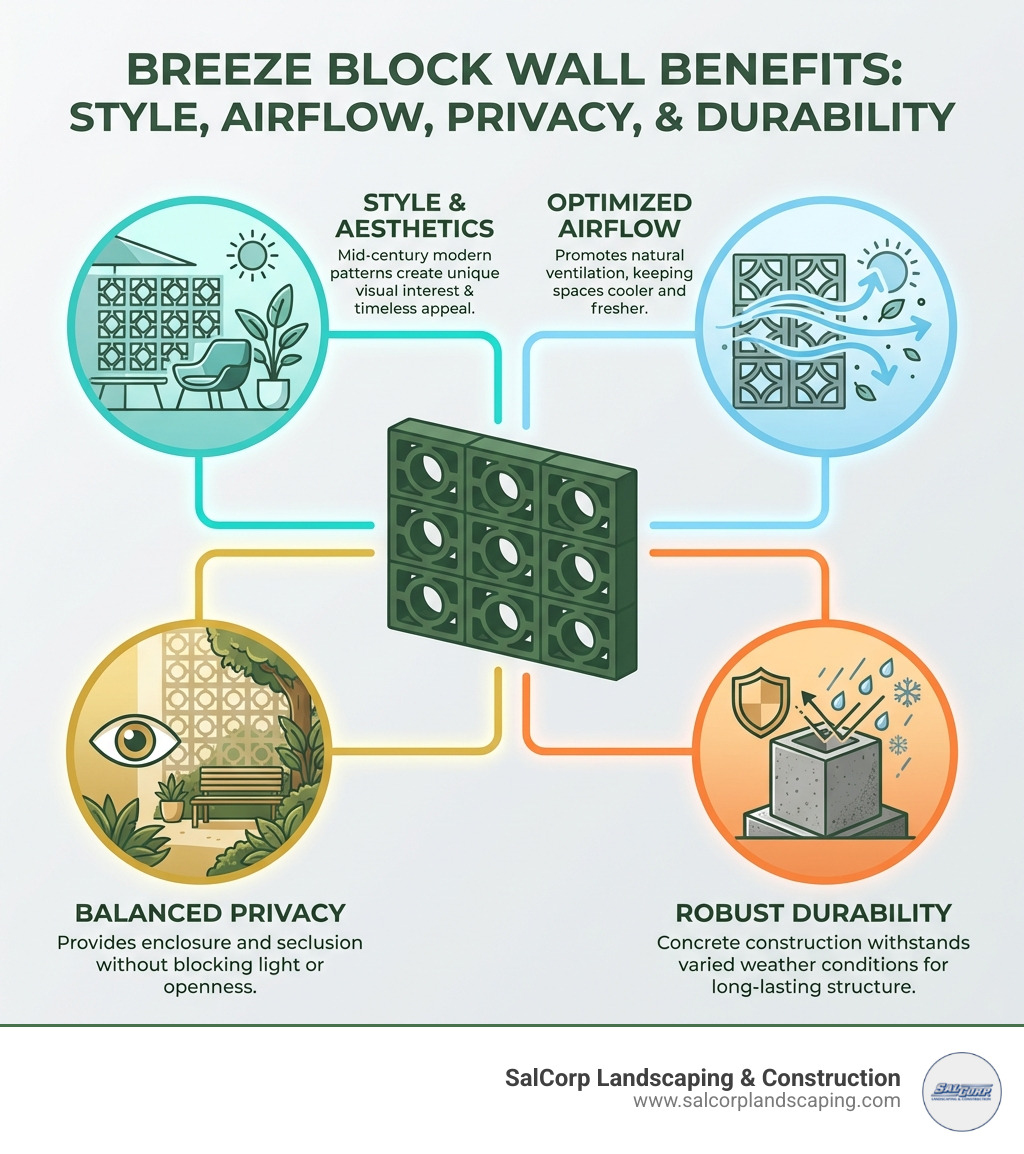
When considering the cost of building a breeze block garden wall, it’s crucial to understand that there isn’t a single fixed price. The figures we provide are average costs based on internet data, not actual costs for SalCorp Landscaping, and can fluctuate significantly based on project specifics.
In Massachusetts, pricing is influenced by local labor rates, material availability, and site conditions. A project in Boston could have a different cost than one in a more rural setting. A detailed assessment is required for a precise estimate.
We offer comprehensive services for More info about landscape walls services, and we’re always happy to discuss how these factors might impact your project here in Massachusetts.
Breaking Down the Core Costs: Materials and Labor
The two largest parts of your budget will be materials and skilled labor.
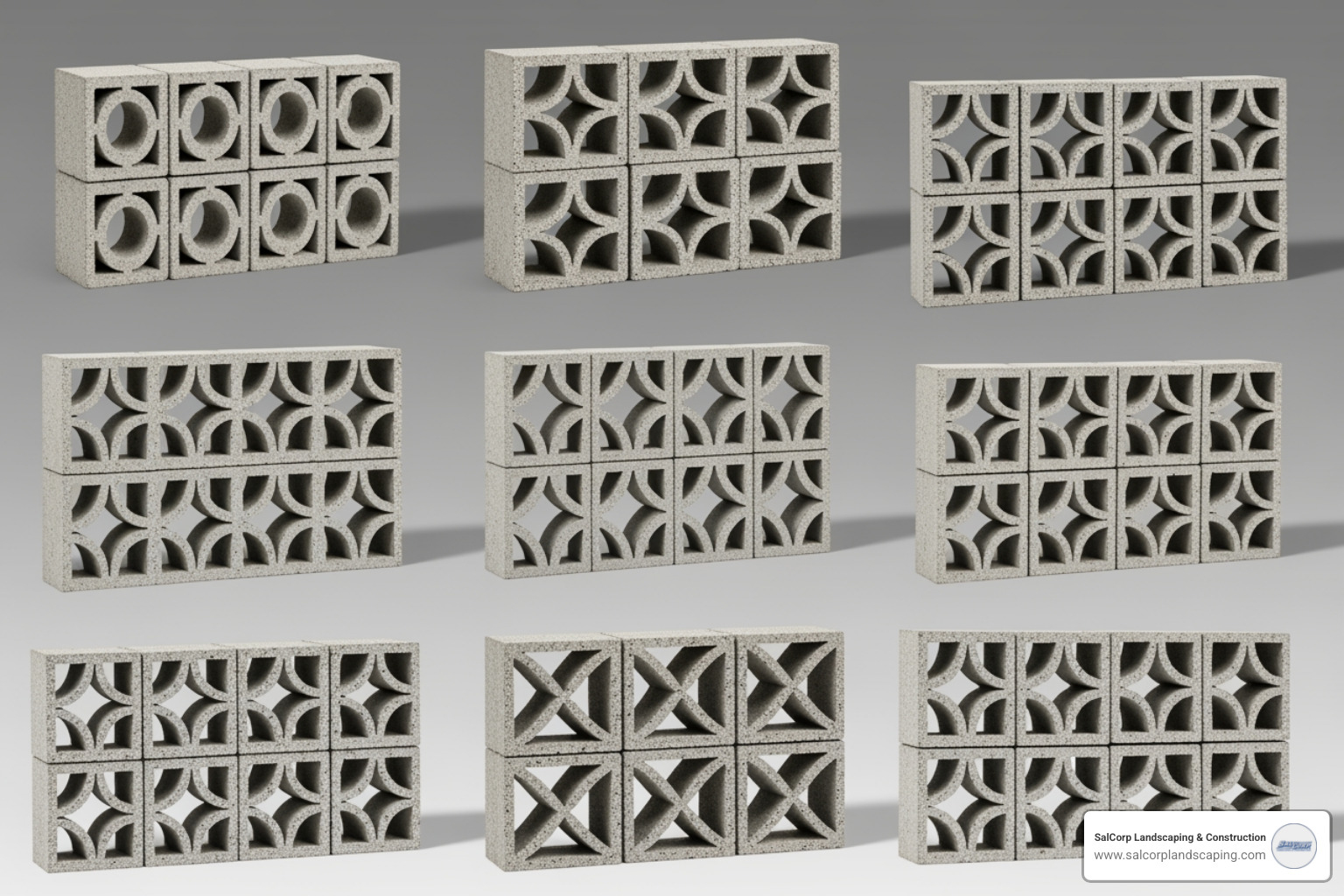
Breeze Blocks Per Block:
The cost of blocks varies dramatically by design and intricacy.
- Standard Decorative Blocks: Basic patterns average around $2 to $5 per block.
- Premium or Specialty Blocks: Elaborate patterns or unique finishes can cost upwards of $40 per block.
- Price per block (average $2 – $40+ based on internet data, not SalCorp Landscaping pricing): This wide range reflects the spectrum from basic to highly specialized options.
While specialized blocks may require sourcing from masonry supply yards, you can find standard options at local retailers like Home Depot or Lowe’s. We recommend exploring all options to find the right materials for your vision.
Other Materials:
- Mortar and Grout: These bonding materials are essential. Mortar can add roughly $3 per square meter to the material cost (based on international data, not SalCorp Landscaping pricing).
- Reinforcement (Rebar): Taller walls or those needing extra structural integrity require steel rebar, which adds to material and labor costs.
Labor Costs:
Skilled masons are essential for a durable, attractive wall. Their rates vary by experience and location.
- Labor cost per hour (average $35 – $150+ based on internet data)
- Labor cost per square foot (average $10 – $45+ based on internet data): This often covers the entire installation. Complex designs, site accessibility, and block type will influence this cost.
The Foundation: A Critical and Significant Cost
A garden wall is only as strong as its foundation. This is a significant cost that prevents settling and cracking, especially in Massachusetts where frost heave is a concern.
Foundation Cost Per Linear Foot (average $50 – $200+ based on internet data, not SalCorp Landscaping pricing): This range accounts for the required depth and width, concrete mix, and excavation complexity.
Key Foundation Factors:
- Excavation and Site Prep: This involves digging a trench, clearing debris, and leveling the ground. Difficulties like rocky soil (common in Massachusetts) or tree roots can increase labor and equipment costs. SalCorp Landscaping & Construction handles all aspects of site preparation, which you can learn about in our More info about excavation services.
- Soil Conditions: Unstable soil may require deeper or wider footings, adding to the cost. Our team is experienced in assessing local soil conditions to ensure a stable base.
- Drainage: Proper drainage is crucial to prevent water pressure from damaging the wall. Solutions like gravel backfill, French drains, or weep holes are a vital investment in the wall’s longevity.
Additional Factors Affecting the Cost of Building a Breeze Block Garden Wall
Several other elements can influence your total investment:
- Wall Size: A larger wall (length, height, or thickness) requires more materials and labor, directly increasing the cost.
- Design Complexity: Curved walls or intricate patterns require more precise cutting and time-intensive labor, increasing costs compared to a simple straight wall.
- Site Accessibility: Difficult access for materials and equipment will increase labor charges. Steep slopes or uneven terrain also add to ground preparation time.
- Finishing Costs: Applying a finish can protect the wall and improve its look. This includes painting or applying a protective sealant, which is highly recommended in New England’s climate to prevent moisture damage and staining.
- Waste Removal: Construction generates waste like excavated soil and broken blocks. The cost of hauling and disposing of this debris must be factored into your budget.
Breeze Blocks vs. Traditional Brick: A Cost and Application Comparison
Homeowners often weigh breeze blocks against traditional bricks. They differ in cost, application, and aesthetic.
| Feature | Breeze Block Wall | Traditional Brick Wall |
|---|---|---|
| Cost (Materials) | Generally lower for basic options ($2-$5), but high-end decorative can be $40+ per block. | Higher per unit, but often bought in bulk. Average $350-$850 per 1,000 bricks. |
| Cost (Installation) | Average $10-$45+ per square foot. | Average $10-$45+ per square foot (can be higher for intricate patterns). |
| Installation Speed | Potentially faster due to larger block size. | Slower due to smaller unit size. |
| Aesthetics | Mid-century modern, decorative, open patterns, allows light/airflow. | Classic, traditional, solid appearance. |
| Structural Use | Primarily decorative, non-load-bearing. Not for retaining significant soil. | Excellent for load-bearing, structural applications. |
| Durability | Good, with proper sealing and foundation. | Excellent, known for longevity. |
Key Differences:
- Load-Bearing Capacity: This is a critical distinction. Breeze blocks are lightweight and non-structural, ideal for decorative screens or privacy walls. Traditional bricks are used for load-bearing applications, foundations, and robust retaining walls. If your project needs to bear weight, brick or solid concrete blocks are the better choice.
- Aesthetic Styles: Breeze blocks offer a distinct mid-century modern look with geometric patterns that play with light and shadow. Traditional bricks provide a classic, solid appearance that can range from rustic to formal.
The choice depends on your goals: decorative flair with airflow, or structural support with a traditional look. For robust structural projects, explore our More info about our masonry services.
Final Considerations and Getting Your Project Started
Thoughtful project planning is key to ensuring your breeze block wall meets your expectations, stays within budget, and lasts for years.
DIY vs. Professional Installation: While a small, simple wall might seem like a DIY project, we recommend professional installation for most breeze block walls. Proper foundation work, leveling, and mortar application require expertise. A DIY attempt can lead to costly mistakes and structural problems, especially for walls over a few feet high. Structural integrity is paramount, and a robust foundation is essential to prevent damage from Massachusetts’ freeze-thaw cycles.
Navigating Permits and Structural Requirements
Before starting, it’s crucial to understand local regulations in your Massachusetts town to ensure safety and compliance.
- Permit Rules: A building permit is often required for walls exceeding a certain height (e.g., over six feet, or lower near public roads). Rules vary by town, so always check with your local building department.
- Structural Engineer: For taller walls, walls on slopes, or load-bearing structures, consulting a structural engineer is highly recommended to ensure stability.
- Building Codes: All construction must comply with local building codes, which dictate everything from foundation depth to material specifications.
Navigating these requirements can be complex. At SalCorp Landscaping & Construction, we are familiar with local regulations and can guide you through the process. To talk through your specific site and permitting needs, contact SalCorp Landscaping & Construction for guidance on local requirements.
Is a Breeze Block Wall Your Next Project?
A breeze block garden wall offers a fantastic blend of style, privacy, and airflow for Massachusetts homeowners. We’ve covered the key costs, and while it’s an investment, a well-built wall adds lasting value and beauty to your property.
At SalCorp Landscaping & Construction, we bring over 20 years of owner-operated experience to every hardscaping project. Our comprehensive approach, using our own machinery and dedicated team, ensures your project is handled with expertise from start to finish.
Choosing a professional means investing in quality craftsmanship and peace of mind. We’ll ensure your wall is not only stunning but also built to withstand New England’s elements. If you’re ready to transform your garden with a beautiful breeze block wall, we’re here to help.
Get expert help with your retaining wall project and find how we can bring your vision to life.