

Yard Drainage Solutions in Massachusetts
From standing water and soggy lawns to foundation seepage and erosion — we diagnose what's causing your drainage problem and engineer the right fix. French drains, dry wells, regrading, swales, and more across Norfolk and Plymouth County.
Schedule a Drainage AssessmentDrainage Problems Have Causes — and Specific Fixes
Most drainage problems get worse over time, not better. Standing water erodes soil, kills grass, breeds mosquitoes, undermines foundations, and floods basements. The good news: every drainage issue has a cause, and once the cause is identified, the right fix usually delivers a permanent result. At SalCorp, we've been solving drainage problems across Massachusetts for over twenty years. We start by understanding where the water is coming from before recommending a solution — because the wrong fix is just an expensive way to still have the problem.
Before SalCorp & After
Real Massachusetts properties. What our crews fixed, and what the same yards look like once the drainage system is doing its job.
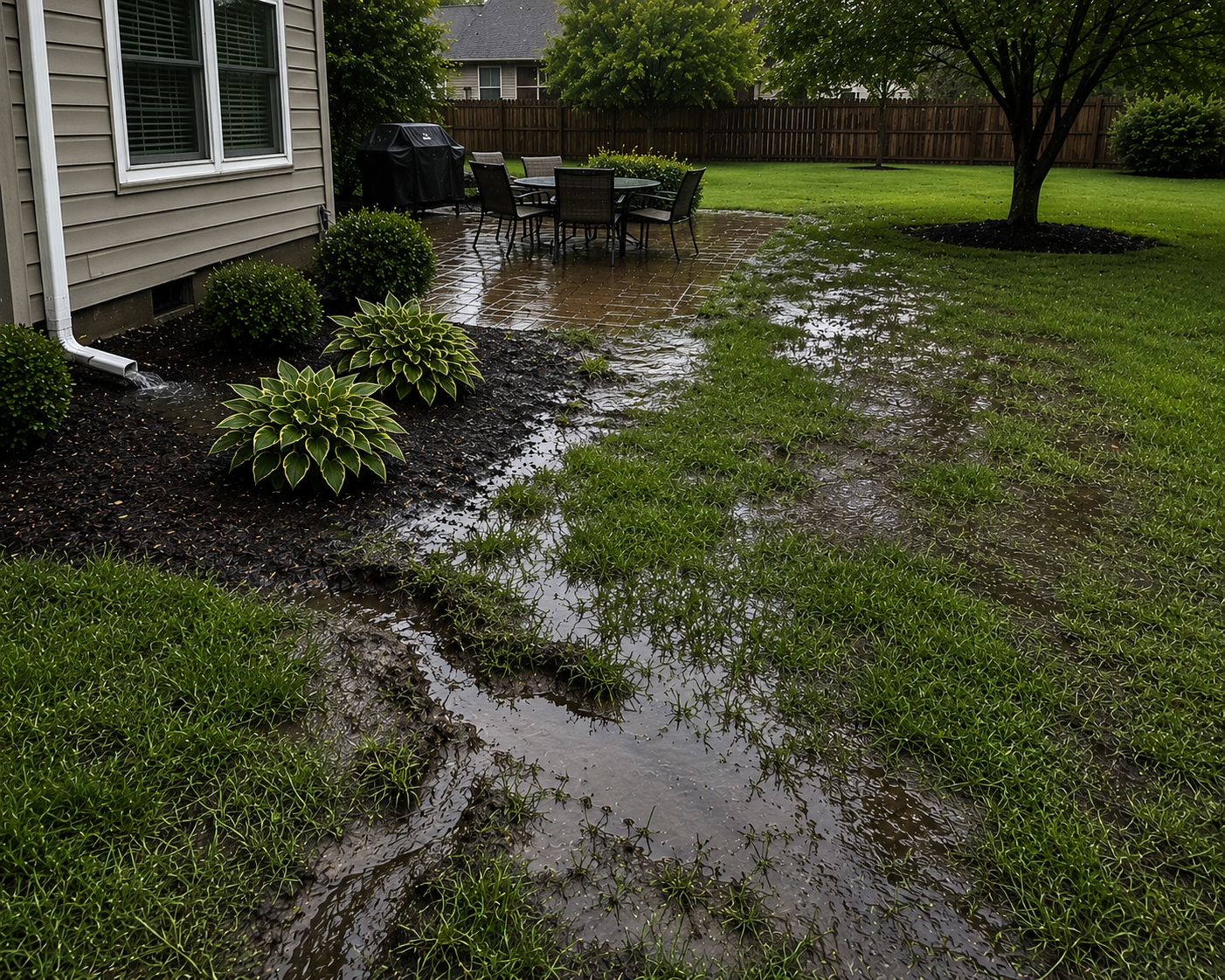
Standing water against the foundation
Saturated soil and pooling next to the house — a fast track to basement seepage.

Drainage system installed
Water captured, redirected, and discharged safely away from the foundation.
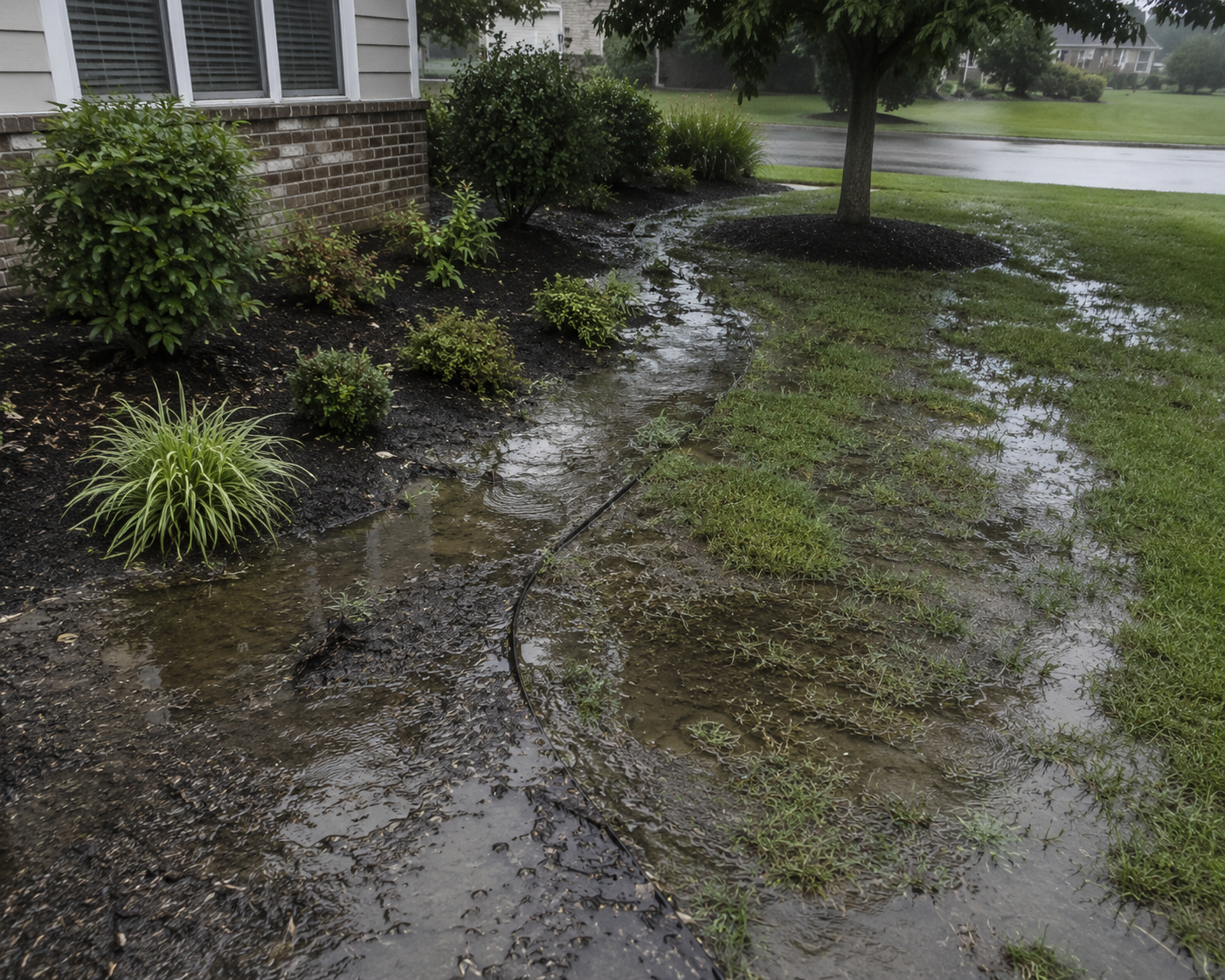
Chronically wet lawn area
The same patch of grass never fully dried out — a sign of subsurface water that needs to be intercepted.
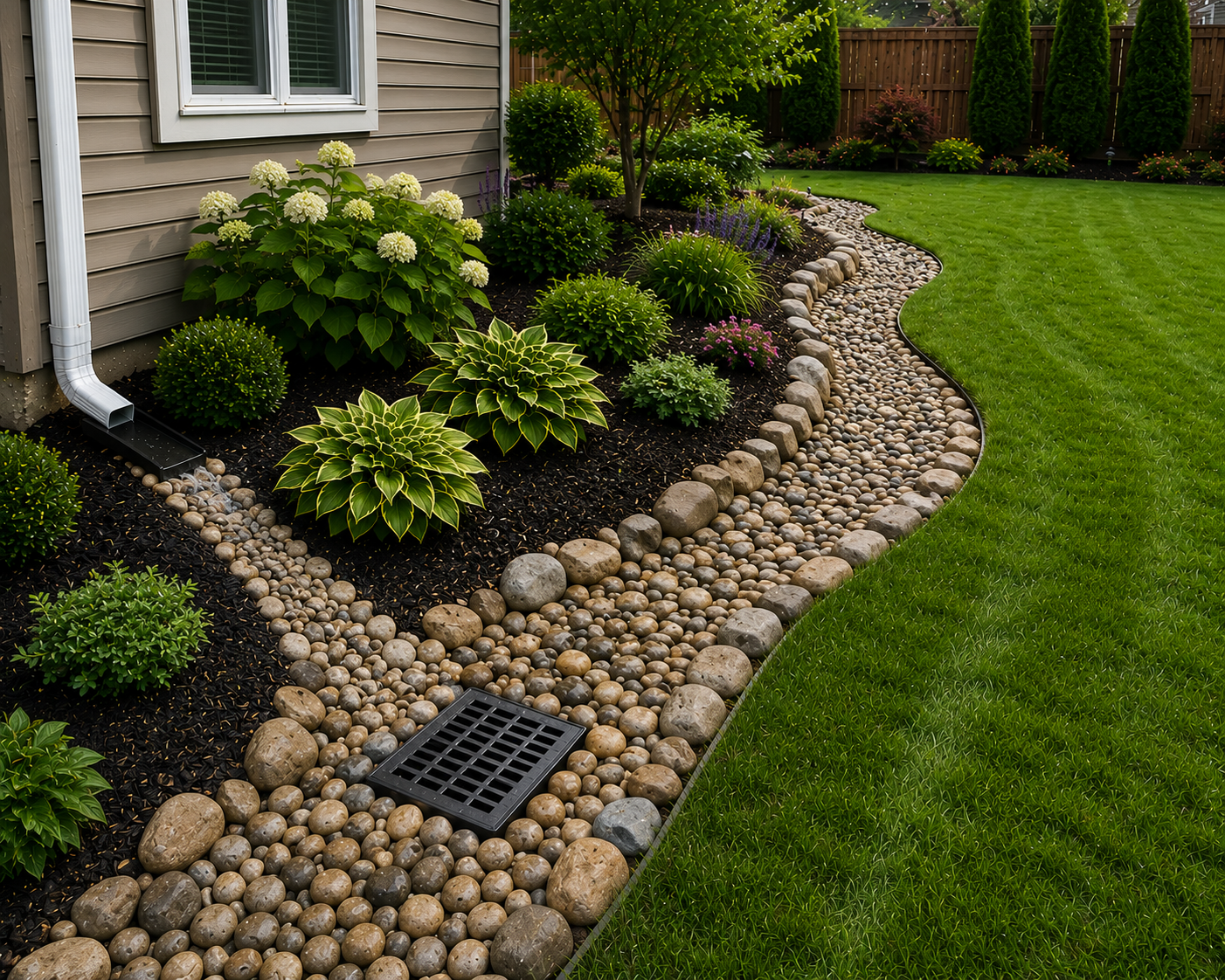
French drain & restored grade
Subsurface water now collected by the drain and carried to a discharge point, with the lawn fully restored.
Signs Your Property Has a Drainage Problem
Occasional pooling after a heavy storm is normal. Persistent water — water that's still around days later, or shows up in the same places every time it rains — points to a problem that won't fix itself.
Standing water 24+ hours after rain
Healthy soil absorbs rainfall within a day. Water that's still pooled 24-48 hours after the storm ends indicates compacted soil, high water table, or insufficient slope.
Soggy spots that never dry
Chronically wet patches of lawn — areas that stay spongy underfoot even during dry weeks — almost always indicate subsurface water flow from somewhere else on the property.
Water against the foundation
Pooling within a few feet of the house is a serious red flag. It leads directly to basement seepage, efflorescence, and over time, foundation movement.
Erosion and soil washouts
Visible channels where water has carved paths through grass, mulch, or bare soil mean runoff is moving fast enough to cause damage and needs to be slowed or redirected.
Basement moisture after rain
Damp walls, musty smell, water stains, or actual seepage in the basement following heavy storms point to yard drainage problems — even if the basement itself is "waterproofed."
Mosquitoes & dying grass
Chronically wet areas breed mosquitoes and suffocate lawn roots. If you have patches of grass dying off without obvious cause, drainage is often the underlying issue.
Our Drainage Solutions
The right fix depends on the source of the water. We carry every common drainage solution in our toolkit and select based on the diagnosis, not based on what we like to install.
French Drains
A perforated pipe in a gravel-filled trench, wrapped in geotextile fabric, that intercepts subsurface water and carries it to a discharge point. The workhorse solution for most subsurface drainage problems.
Subsurface waterCurtain Drains
A French drain installed across a slope above a wet area to intercept water before it reaches the problem zone. Highly effective on properties where water flows in from uphill sources.
Slopes & uphill waterDry Wells
An underground perforated reservoir that collects concentrated runoff (typically from downspouts) and allows it to slowly percolate into the surrounding soil. Effective when soil below can absorb water.
Downspout dischargeCatch Basins
Surface grates installed at low points that capture pooling water and divert it through underground pipes to a discharge location. The right answer for surface water collecting in specific spots.
Low spots & surface poolingChannel/Trench Drains
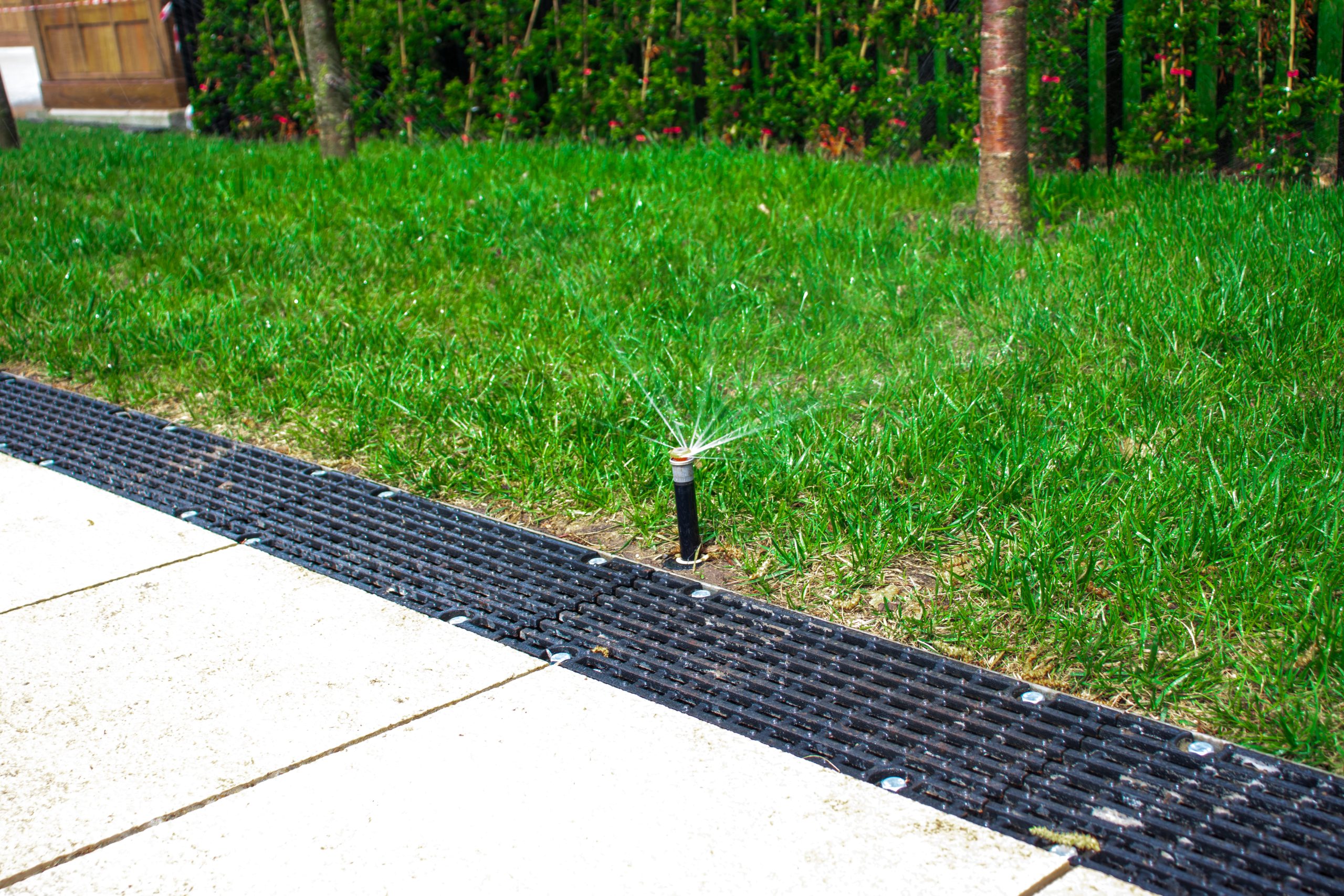
Linear surface grates ideal for capturing flowing water along driveways, patios, walkways, and garage entrances. Stops surface runoff at the line you draw rather than letting it spread.
Driveways & hardscape edgesRegrading
Re-sloping the yard so water flows away from the foundation and toward appropriate discharge areas. Often the most effective long-term fix — and the one nobody wants to hear about because it's invasive.
Insufficient slopeSwales
Shallow grassy channels that move surface water visibly across the property using natural contour and gravity. Beautiful, low-maintenance, and effective for moderate volumes of runoff.
Visible runoff pathsDry Creek Beds
Decorative river-rock channels that handle stormwater runoff with intention — turning a drainage problem into a landscape feature. Excellent for properties where the water flow needs to be acknowledged, not hidden.
Decorative drainageDownspout Extensions
Buried PVC extending downspout discharge 10+ feet from the foundation, often tied to a daylight outlet or dry well. The simplest, highest-impact change for many drainage problems.
Roof runoffHow We Approach a Drainage Project
Diagnosis before prescription. Every drainage project starts the same way — understanding where the water is actually coming from before deciding what to install.
On-Site Assessment
We walk your property after a rainstorm whenever possible — actually seeing where water flows, pools, and discharges is far more accurate than any verbal description. We identify the water source (surface runoff, subsurface flow, roof runoff, neighboring property, high water table) and document the problem areas.
Diagnosis & Design
Based on the source and severity of the problem, we design a solution that addresses the cause — not just the symptom. Most properties need a combination of approaches: a French drain plus regrading, or downspout extensions plus a catch basin. We map discharge points and confirm where the water will safely end up.
Installation
Excavation is done with the right equipment for your site — mini-excavators for tight backyards, full-size machines for larger projects. Pipe is laid at correct grade (a minimum 1% slope, verified with laser level), drainage stone and fabric are installed to spec, and the system is tested with water before backfilling.
Restoration & Discharge Confirmation
Disturbed lawn areas are restored — typically with fresh loam and seed or sod, depending on the season. We verify the discharge point is functioning and won't create a new problem elsewhere. After the next significant rain, we recommend a follow-up walk-through to confirm everything is performing as designed.
Two Decades of Drainage Work Across Massachusetts
20+
Years solving drainage
problems in MA
In-house
Owner-supervised crews,
no subcontractors
Licensed
Fully insured &
workmanship guaranteed
Local
Norfolk County based
since 2004
Yard Drainage FAQs
What is best for drainage in a yard?
The best drainage solution depends entirely on what's causing the problem and where the water is coming from. For subsurface water saturating the soil, a French drain or curtain drain is usually the right answer. For surface water pooling in low spots, a catch basin tied to a discharge line is more effective. For roof runoff hammering the foundation, extending downspouts and routing them to a dry well or daylight outlet solves the problem at the source. For yards with insufficient slope away from the house, regrading is the only real fix. Most properties with serious drainage issues need a combination of solutions, not just one — diagnosis comes first.
How do you fix a waterlogged yard?
Fixing a waterlogged yard starts with identifying whether the water is coming from the surface (rain, runoff, downspouts) or from below (high water table, subsurface flow from neighboring properties). Surface water is solved with regrading to direct water away, swales or dry creek beds to channel it, and catch basins at low points. Subsurface water requires French drains or curtain drains to intercept the water below ground and carry it to a discharge point. Heavy clay soil that holds water can be amended with organic matter or aerated to improve infiltration. In severe cases, a sump pump system is needed to actively move water uphill or to a discharge line.
What is the easiest DIY yard drainage solution?
The easiest DIY drainage improvement is extending your downspouts to discharge at least 10 feet away from the foundation, either with rigid extensions, flexible roll-out extensions, or buried PVC tied to a daylight outlet. This single change fixes a surprising number of basement moisture and foundation-area pooling problems. Other DIY-friendly options include adding a small dry well at downspout discharge points, installing a short trench drain at a problem spot, or amending compacted clay soil with compost to improve absorption. Bigger projects — French drains, regrading, curtain drains — require equipment, design knowledge, and proper grade calculations that put them outside the DIY range for most homeowners.
Can I dig a hole and fill it with gravel for drainage?
A gravel-filled hole — sometimes called a soakaway or French drain pit — can work as a small-scale solution for downspout discharge or a single low spot, but it's not a substitute for a proper drainage system. The hole needs to be large enough to hold a meaningful volume of water (typically 2-4 cubic feet minimum), lined with geotextile fabric to prevent soil from clogging the gravel, and located where soil below can actually absorb the collected water. If the underlying soil is heavy clay or the water table is high, the pit will fill up and stay full — water has nowhere to go. For yard-wide drainage problems, a proper system that moves water to a discharge point is far more effective.
What soaks up water in a yard without drainage?
Several landscape strategies can help wet areas absorb water without installing a drainage system. Rain gardens — sunken planting beds filled with water-loving native plants like switchgrass, joe-pye weed, and inkberry — can absorb significant runoff while looking intentional rather than like a problem area. Heavy organic mulch (3-4 inches of bark or wood chips) absorbs surface moisture and improves underlying soil over time. Deep-rooted native grasses and groundcovers increase soil infiltration. Soil amendment with compost in clay-heavy yards opens up the soil structure and dramatically improves drainage. These approaches work well for moderate wetness; severe waterlogging requires a real drainage system.
What are some alternatives to yard drains?
Several landscape-based alternatives can address drainage issues without traditional drain pipes. Regrading — re-sloping the yard so water flows away from problem areas — is often the most effective fix and requires no buried infrastructure. Swales (shallow grassy channels) move surface water visibly and naturally. Dry creek beds use river rock and stone to channel water with an attractive aesthetic. Rain gardens absorb runoff in planted basins. Berms redirect water around problem areas. Soil amendment improves infiltration in compacted yards. Each of these has the advantage of being visible and self-maintaining, but they're appropriate for moderate water issues — severe drainage problems usually need piped systems.
Do I need a drainage system if my yard floods after heavy rain?
Occasional pooling that disappears within a few hours after a heavy storm is normal and usually doesn't require intervention. Persistent standing water — water that's still pooled 24-48 hours after the rain stops — is a sign of a real drainage problem. Other signs that suggest a system is needed: water against the foundation, moisture or seepage in the basement after rain, soggy lawn areas that never fully dry out, soil erosion, visible runoff patterns scarring the yard, mosquito breeding in standing pools, or grass dying in chronically wet patches. If any of these are happening, a drainage assessment is worth scheduling.
Do landscapers fix drainage problems?
Yes — drainage work is a core capability for full-service landscaping and hardscape contractors. At SalCorp we install French drains, curtain drains, dry wells, catch basins, channel drains, downspout extensions, swales, dry creek beds, and grade-correction work as part of our regular service. For severe issues involving the building structure — basement waterproofing, foundation repair, sump pumps inside the home — those projects are typically handled by waterproofing specialists. Yard-side drainage that prevents water from reaching the foundation is squarely in the landscape contractor's wheelhouse, and it's usually the most cost-effective place to solve the problem before it becomes a basement issue.
Stop Fighting the Water
Schedule a free on-site drainage assessment with SalCorp. We'll diagnose what's actually causing the problem and recommend a solution that will end it permanently.
Schedule Your Assessment