

Yellow French Drain Pipe: Essential 2025 Guide
Why Yellow Matters: Understanding Your French Drain Pipe Options
Yellow french drain pipe is a common sight in residential, agricultural, and highway drainage projects. But is it right for you? Here’s a quick guide:
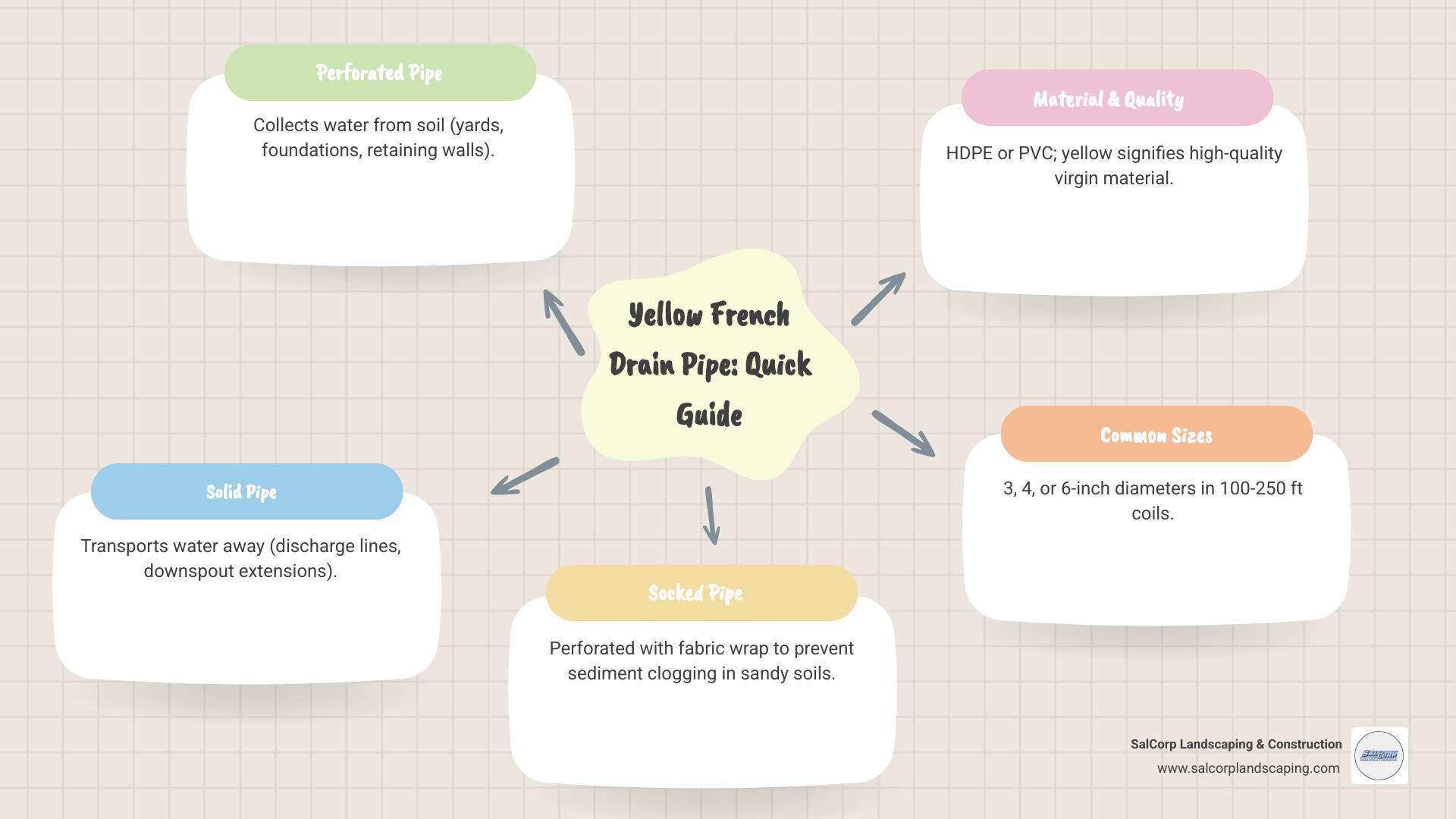
- Perforated Yellow Pipe: Best for collecting groundwater in yards, around foundations, and behind retaining walls.
- Solid Yellow Pipe: Ideal for transporting collected water away from your property via discharge lines.
- Socked Yellow Pipe: A perforated pipe with a fabric filter, essential for preventing clogs in sandy or silty soils.
- Material: Usually HDPE (High-Density Polyethylene), with yellow often signifying high-quality virgin material.
- Common Sizes: 3-inch, 4-inch, and 6-inch diameters in 100-250 foot coils.
The yellow color isn’t just for show. It has become an industry symbol for quality and value, and its bright hue makes it easy to spot during installation and future digging. Choosing the right pipe is critical; the wrong type can lead to a failed system and expensive repairs.
I’m Sal Musto, owner of SalCorp Landscaping & Construction. With over 20 years of experience installing yellow french drain pipe systems across Massachusetts, I’ve seen what works. This guide will provide the key information you need to make a smart decision for your drainage project.
Your Complete Guide to Yellow French Drain Pipe
Let’s dive deeper into what makes yellow french drain pipe a top choice for professionals and DIYers. This section covers the different varieties, their benefits, and how to choose the right pipe for your project, from material specs to proper installation.
Perforated, Solid, or Socked? Understanding the Types
When shopping for yellow french drain pipe, you’ll find several types, each with a specific job. Using the wrong one can cause your system to fail.
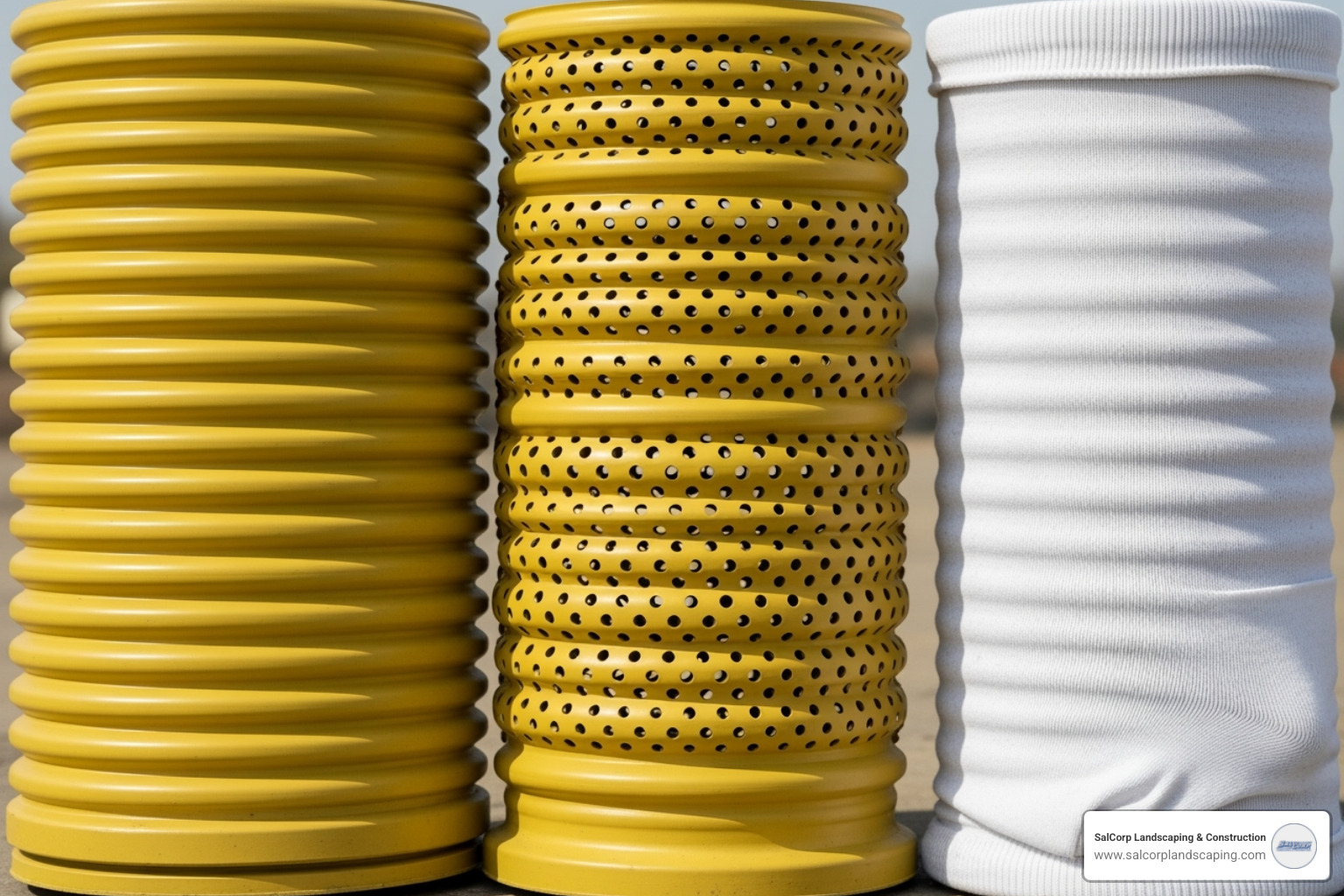
Most yellow drainage pipe is corrugated, meaning it has ridges that provide flexibility and strength. This allows it to bend around obstacles and withstand ground shifts from frost heave without cracking.
- Perforated Pipe: This is the core of a French drain. It has small slots or holes that allow groundwater to enter the pipe. High-performance pipes offer superior water intake capacity, making them ideal for quickly draining saturated soil.
- Solid Pipe: Also called non-perforated pipe, this type has no holes. Its purpose is to transport water. Once your perforated pipe collects the groundwater, solid pipe carries it safely to a discharge point. It’s commonly used for downspout extensions and main discharge lines.
- Socked Pipe: This is a perforated pipe pre-wrapped in a geotextile fabric sock. The sock acts as a filter, preventing sand and silt from clogging the pipe’s perforations. It’s a must-have in areas with sandy or silty soils, like many parts of coastal Massachusetts.
| Pipe Type | Primary Use |
|---|---|
| Perforated Pipe | Collection of groundwater from surrounding soil |
| Solid Pipe | Transport of collected water to a discharge area |
Why Choose a Yellow French Drain Pipe for Your Project?
Yellow pipe has become an industry favorite for several reasons beyond its easy-to-spot color.
Most quality yellow pipe is made from high-density polyethylene (HDPE), a material known for its exceptional durability and flexibility. It resists corrosion, chemicals, and impact, and it flexes with ground movement, which is critical in New England to prevent cracking from frost heave.
Modern perforated pipes offer high water inlet capacity. Advanced designs can handle heavy downpours, reducing surface pooling and protecting foundations more effectively.
HDPE pipe is also cost-effective. It’s lightweight and comes in long coils, which means faster installation, lower labor costs, and fewer joints that could become weak points.
For maximum longevity, look for pipe made from 100% virgin material. Virgin resin provides superior strength and consistency, ensuring the pipe you bury will last for decades. This quality is essential for any groundwork done by our excavation services.
The yellow color has become an industry standard for quality drainage, championed by long-standing companies like Baughman Tile Co.. This ensures you’re using a proven, reliable product.
Key Specifications for Your Yellow French Drain Pipe
Matching the pipe’s specifications to your project is crucial. Here’s what to consider.
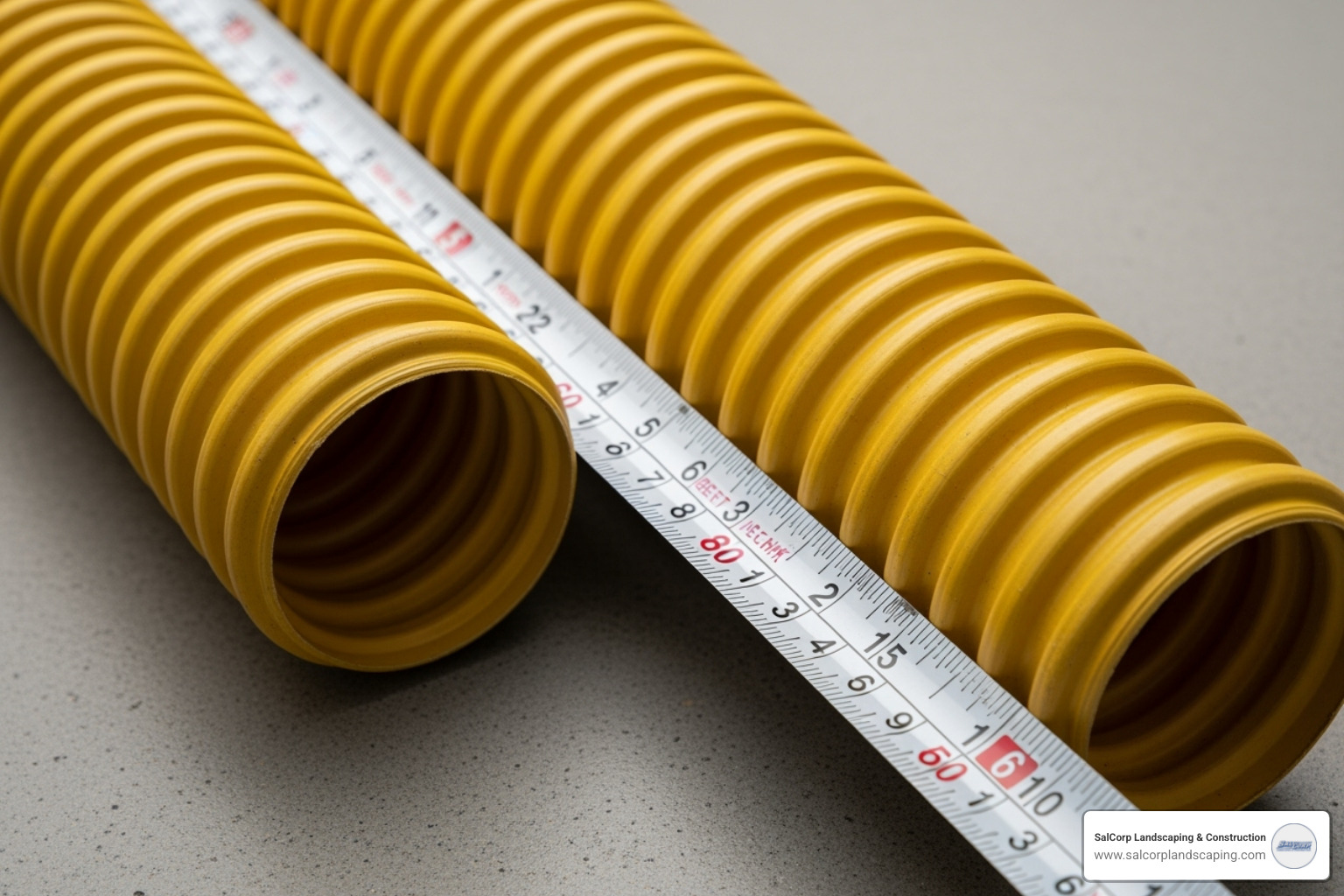
- Diameter: A 3-inch pipe is suitable for small-scale drainage. The 4-inch diameter is the standard for most residential French drains. For large properties or areas with severe water issues, a 6-inch pipe is necessary.
- Length: Pipes typically come in 100-foot or 250-foot coils. Longer coils mean fewer connections, which speeds up installation and reduces potential failure points.
- Material: HDPE (High-Density Polyethylene) is the most common material for its strength and flexibility. PVC (Polyvinyl Chloride) is also used, often for rigid pipes and fittings.
- Resin Quality: Pipes made from 100% virgin resin offer the best long-term performance and durability compared to those made with recycled materials.
- Wall Type: Most flexible yellow pipe is single-wall corrugated, which is lightweight and ideal for French drains. Dual-wall pipes are typically reserved for culverts and storm sewers.
- Cost Factors: The price of yellow french drain pipe is influenced by diameter, length, and resin quality (virgin vs. recycled). While we provide custom quotes, average costs based on internet data can range from approximately $150 to $550 or more per 100-foot roll. This is a market average and not our specific pricing.
Top Applications for Effective Water Management
The versatility of yellow french drain pipe allows it to solve a wide range of water problems.
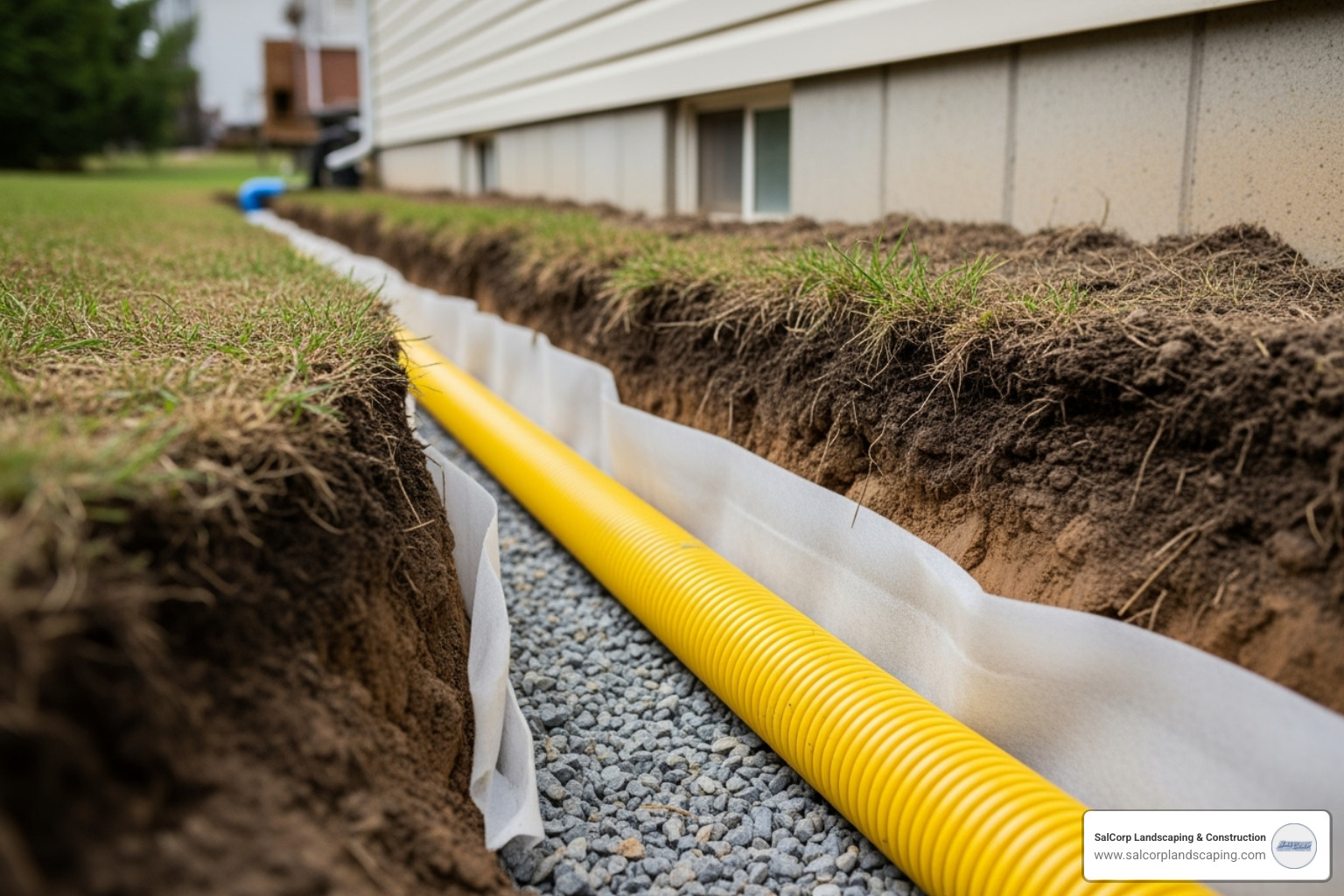
- Residential & Foundation Protection: A French drain intercepts groundwater before it can damage your foundation, preventing basement flooding and structural issues.
- Soggy Lawn Solutions: A subsurface drainage system can turn a swampy, unusable yard into healthy, dry turf.
- Agricultural Drainage: Farmers use yellow corrugated pipe to manage waterlogged fields, protecting crops and improving yields.
- Highway Underdrains: Pipe installed along roadways prevents the roadbed from becoming saturated, extending pavement life.
- Retaining Wall Drainage: Installing perforated pipe behind retaining walls is essential to relieve hydrostatic pressure and prevent wall failure.
- Hardscape Project Drainage: We integrate drainage into our hardscaping projects to manage runoff from patios and walkways, preventing erosion and water damage.
- Crawl Space & Basement De-watering: Perforated pipe can be installed to collect and remove groundwater, creating a drier, healthier environment.
Essential Installation Tips for a Long-Lasting System
Even the best yellow french drain pipe will fail if installed incorrectly. A proper French drain is an engineered system. Here are the key steps for a long-lasting installation:
- Trenching and Slope: The trench must have a consistent downward slope—at least a 1% grade (a 1-foot drop over 100 feet). Gravity is what moves the water, so without proper slope, the system will fail.
- Geotextile Fabric: Line the trench with permeable landscape fabric first. This acts as a barrier, preventing soil and silt from clogging the gravel and pipe.
- Aggregate Base: Add a layer of clean, washed 1 to 2-inch gravel or crushed stone. This coarse material allows water to flow freely into the pipe.
- Pipe Placement & Backfill: Lay the perforated pipe on the gravel bed, surround it with more gravel, then fold the fabric over the top. This protects the entire system from sediment before you backfill the trench with soil.
- Connect to Discharge: Connect the perforated collection pipe to a solid discharge pipe that carries the water safely away from your property to a suitable outlet.
For a DIY project, you’ll need a shovel, level, tape measure, landscape fabric, gravel, and the correct yellow french drain pipe. However, for complex issues, professional installation is recommended to avoid costly mistakes.
Professional French Drain Solutions in Massachusetts
You’ve learned about the different types of yellow french drain pipe, their specifications, and even some installation basics. But here’s the truth: choosing the right pipe is only half the battle. The real difference between a drainage system that works for decades and one that fails in a few years? Professional installation.
At SalCorp Landscaping & Construction, we’ve spent over 20 years solving drainage problems across Massachusetts. We’ve seen what happens when a well-intentioned DIY project goes sideways – water still pooling by the foundation, soggy yards that never quite dry out, and ultimately, homeowners frustrated after spending time and money on a solution that didn’t solve their problem.
Our owner-operated approach means you’re working directly with people who care about getting it right. We’re not a franchise sending out different crews each time. We own our own machinery, we know the local soil conditions from Mansfield to Norwood, from Dedham to Canton, and we understand how New England weather puts drainage systems to the test.
When we design a French drain system for your property, we’re thinking about more than just burying some pipe. We’re considering your property’s grading, where water naturally flows, how it interacts with your foundation or landscape features, and where we can safely discharge it. Sometimes a drainage project connects with other improvements – maybe you’re planning new hardscaping or need retaining walls that require proper drainage behind them. We look at the complete picture.
Our excavation services ensure your drainage project starts with a solid foundation – literally. Proper trenching, correct slope, quality materials like yellow french drain pipe from trusted manufacturers, and meticulous attention to detail during installation all add up to a system that protects your property investment.
Whether you’re dealing with a basement that gets damp after heavy rains, a yard that’s unusable for days after a storm, or you’re proactive about protecting a new construction project, we’re here to help. Don’t let water problems dictate how you use your outdoor space or threaten your home’s foundation.
After two decades in this business, we’ve learned that drainage issues rarely get better on their own – they just get more expensive to fix. If you’re ready to solve your water problems the right way, let’s talk about creating a drainage solution that actually works for your Massachusetts property.
