

Retaining Wall Landscaping: 10 Stunning Ideas for 2024
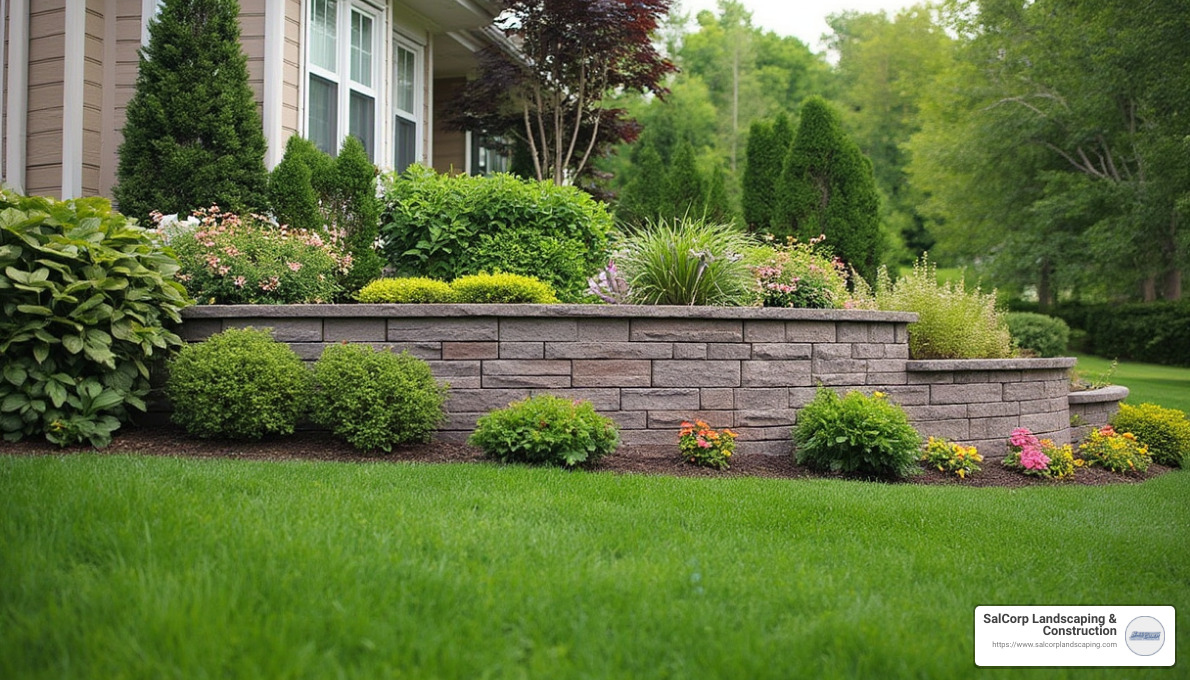
Retaining wall landscaping is a powerful tool that combines functionality with aesthetic charm, offering both structural support and visual appeal. Whether you’re aiming to prevent soil erosion, create distinct garden zones, or simply improve your property’s curb appeal, retaining walls are a versatile solution. Here are key points on retaining wall landscaping:
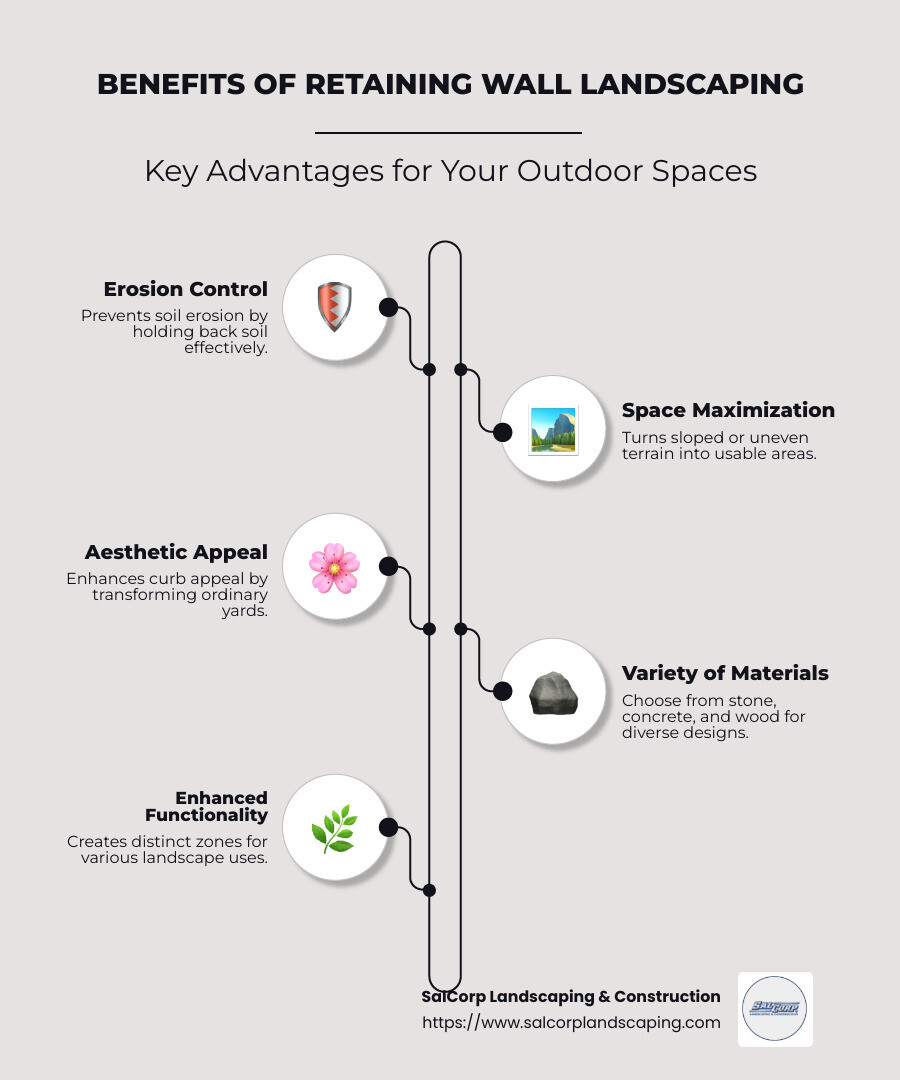
- Erosion Control: Retaining walls hold back soil, preventing erosion.
- Aesthetic Appeal: They can transform ordinary yards into stunning landscapes.
- Space Maximization: Turn sloped or uneven terrain into usable areas.
- Variety of Materials: Options include stone, concrete, and wood.
As Sal Musto, the founder of SalCorp Landscaping & Construction, I’ve dedicated over two decades to crafting landscapes that blend beauty with practicality. My expertise in retaining wall landscaping ensures your outdoor spaces effectively serve your needs.
Retaining wall landscaping word roundup:
– retaining wall ideas for sloped backyard
– retaining wall design
– what is a retaining wall
Benefits of Retaining Wall Landscaping
Retaining walls aren’t just about holding back soil. They offer a range of benefits that can transform your outdoor space into a functional and beautiful extension of your home. Let’s explore the key advantages of retaining wall landscaping.
Erosion Control
One of the primary functions of a retaining wall is to prevent soil erosion. By holding back soil on a slope, these walls protect your landscape from the damaging effects of water runoff. This is especially useful in areas with heavy rainfall or steep gradients. Preventing erosion not only safeguards your property but also helps maintain the health of your garden.
Increased Usable Space
If your yard is hilly or uneven, retaining walls can make a world of difference. They create flat, usable spaces where none existed before. You can transform slopes into terraces, giving you more room for gardening, play areas, or even a patio. This maximizes your outdoor living space and adds value to your home.
Imagine turning a steep backyard into a series of beautiful, level gardens or seating areas. With retaining walls, your yard becomes a canvas for creativity.
Aesthetic Appeal
Retaining walls can dramatically improve the look of your landscape. They add structure and interest, turning a plain yard into a stunning visual display. With materials like natural stone, concrete blocks, or treated wood, you can match the wall’s design to your home’s style.
Consider incorporating features like built-in flower beds or seating areas. These additions not only beautify your yard but also make it more functional. Lighting can be integrated into the design to highlight the wall’s features and extend your outdoor enjoyment into the evening.
In summary, retaining wall landscaping offers multiple benefits, making it a smart choice for homeowners looking to improve their outdoor spaces. Whether you’re focused on practicality or beauty, retaining walls provide solutions that improve both.
Next, let’s explore the different types of retaining walls and how to choose the right one for your needs.
Types of Retaining Walls
When it comes to retaining wall landscaping, selecting the right type of wall is crucial. Different materials offer unique benefits and aesthetics. Let’s explore some popular options: poured concrete, interlocking concrete block, pressure-treated pine, and stone.
Poured Concrete
Poured concrete walls are known for their strength and durability. They offer a sleek, modern look and can be customized with various finishes. These walls are perfect for those who need a sturdy structure to hold back large amounts of soil. Plus, they can be molded into different shapes and sizes, making them versatile for any landscape design.

Interlocking Concrete Block
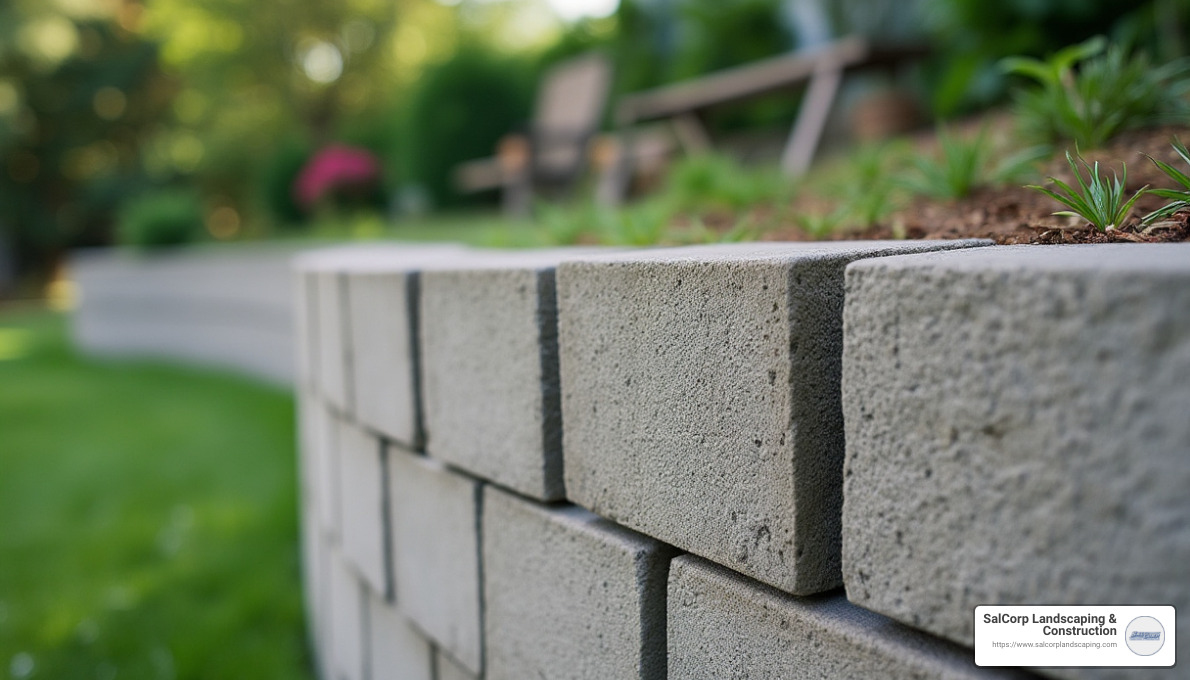
For a DIY-friendly option, consider interlocking concrete blocks. These blocks are designed to fit together easily, like a puzzle, requiring no mortar. This makes them a great choice for homeowners who want to tackle a project themselves. Interlocking blocks come in various colors and textures, allowing you to create a wall that complements your home.
Pressure-Treated Pine
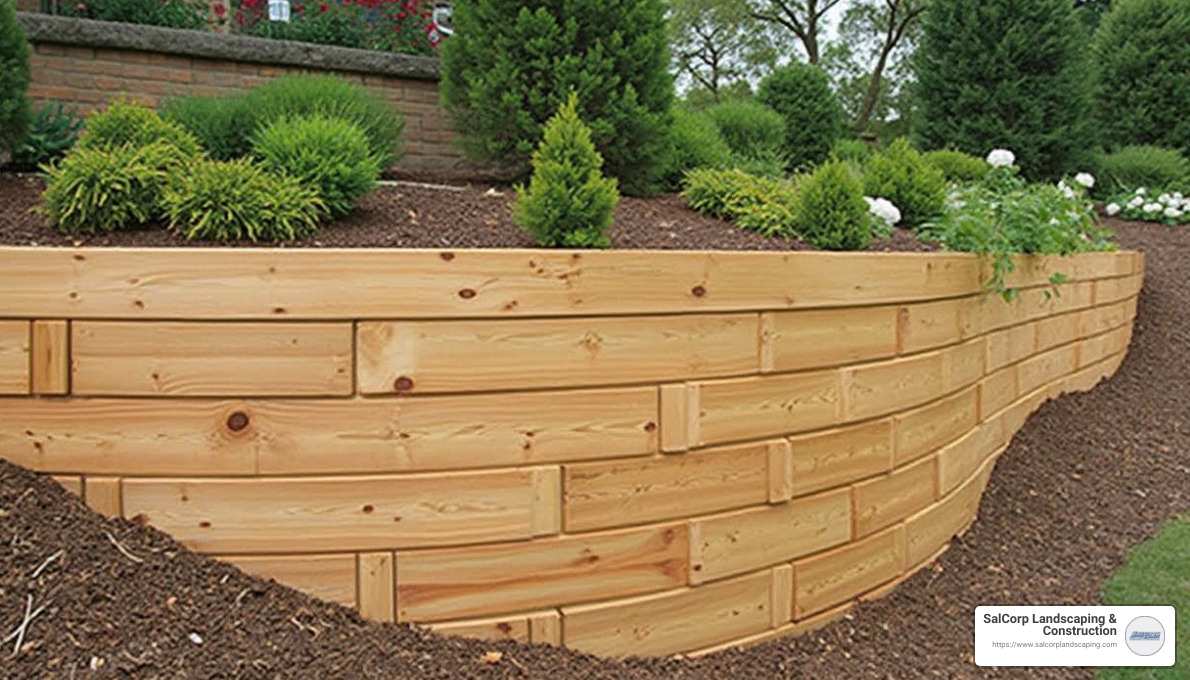
If you prefer a natural look, pressure-treated pine could be the way to go. Wood retaining walls blend seamlessly with outdoor environments, offering a warm and organic feel. While wood may not last as long as stone or concrete, using pressure-treated lumber and a preservative can extend its life. That the chemicals in treated wood can be harmful to nearby plants, so plan your landscaping accordingly.
Stone
For timeless beauty, nothing beats natural stone. Stone walls exude elegance and can be crafted from materials like bluestone, limestone, or fieldstone. These walls are incredibly durable and can be built to suit both traditional and contemporary styles. Stone walls often become focal points in a landscape, adding texture and character.

Each type of retaining wall offers distinct advantages and can be custom to fit your landscape’s needs. Whether you’re aiming for a modern aesthetic or a rustic charm, there’s a retaining wall solution that will improve your outdoor space.
Next, we’ll discuss how you can build a retaining wall yourself, including the essential steps and tools you’ll need.
How to Build a Retaining Wall
Building a retaining wall can transform your outdoor space, offering both functionality and beauty. Here’s a step-by-step guide to help you create a sturdy and attractive wall using interlocking concrete blocks—a popular choice for DIY enthusiasts.
Planning and Preparation
Before you start, planning is key.
- Utility Lines: Call 811 to locate any underground utility lines. Safety first!
- Building Permits: Check local codes and HOA rules. You might need a permit depending on the wall’s height.
- Material Selection: Choose interlocking blocks for ease of use. They’re available in various colors and textures.
- Measurements: Measure the length and height of your wall. Use this to calculate the number of blocks needed.
Building the Foundation
A strong foundation is essential.
- Trench Digging: Dig a trench where your wall will sit. It should be deep enough to bury half of the first course of blocks.
- Leveling: Ensure the trench is level. This is crucial for a stable wall.
- Gravel Base: Add a layer of gravel to the trench. This helps with drainage and stability.
- Compacting: Use a tamper to compact the gravel. A solid base prevents shifting.
Laying the Blocks
Now, let’s start building.
- First Course: Lay the first row of blocks, checking for level as you go. This row sets the tone for the entire wall.
- Leveling: Adjust each block as needed to maintain a level surface.
- Staggered Blocks: For subsequent courses, stagger the blocks. This adds strength to the wall.
- Cutting End Blocks: Use a saw to cut blocks for a snug fit at the ends.
Installing Drainage
Proper drainage prevents future headaches.
- Drain Pipe: Place a perforated drain pipe behind the first course of blocks. This helps channel water away.
- Gravel Backfill: Backfill with gravel after each course. This ensures stability and aids drainage.
- Landscape Fabric: Lay fabric between the gravel and soil to prevent erosion.
Finishing Touches
Make your wall look polished and complete.
- Capstones: Add capstones on top for a finished look. Use adhesive to secure them.
- Topsoil: Fill the area behind the wall with topsoil, leaving room for plants.
- Plants: Consider adding ivy, succulents, or ornamental grasses to soften the wall’s look.
Building a retaining wall is a rewarding project that improves your landscape. With careful planning and execution, you’ll create a beautiful and functional addition to your yard.
Next, we’ll explore creative retaining wall landscaping ideas to lift your outdoor space.
Retaining Wall Landscaping Ideas
Retaining walls aren’t just about functionality; they can also be a canvas for creativity in your yard. From planting ideas to decorative elements, let’s explore how you can transform these structures into stunning features.
Planting Ideas
Plants add life and color to any retaining wall, creating a seamless blend with your landscape.
- Raised Garden Beds: Use the space created by retaining walls for raised garden beds. This not only maximizes your planting area but also makes gardening more accessible.
- Ivy and Climbing Plants: Let ivy or other climbing plants cascade down your wall. They soften the structure and add a touch of elegance.
- Ornamental Grasses: These are perfect for adding texture and movement. They also provide privacy and can be a beautiful backdrop.
- Succulents: For a low-maintenance option, consider succulents. They thrive in the nooks and crannies of retaining walls, adding a splash of color and interest.
Decorative Elements
Turn your retaining wall into a focal point with these decorative touches.
- Seating Areas: Incorporate seating into your retaining wall design. This can be as simple as a built-in bench, offering a cozy spot to enjoy your garden.
- Lighting: Add lighting to highlight your wall and plants. Solar lights or LED strips can create a warm ambiance at night.
- Water Features: Integrate a small waterfall or fountain into the wall. The sound of running water adds tranquility and charm.
- Statues and Pathways: Place statues or create pathways that lead to or from your retaining wall. These elements add personality and guide visitors through your garden.
- Fences: Use retaining walls as a base for fences. This adds height and privacy to your yard while maintaining a cohesive look.
These retaining wall landscaping ideas can transform your outdoor space into a vibrant and inviting area. Whether you’re a fan of lush greenery or artistic elements, there’s something for everyone.
Next, we’ll dig into the cost considerations for implementing these ideas in your yard.
Cost Considerations
When planning for retaining wall landscaping, understanding the costs involved is crucial. Let’s break down the key factors: material costs, labor costs, and the choice between DIY and professional installation.
Material Costs
The materials you choose play a big role in the overall cost of your retaining wall. Options vary widely in both price and durability:
- Poured Concrete: Durable and versatile, but can be more expensive due to the need for forms and professional pouring.
- Interlocking Concrete Blocks: These are popular for DIY projects. They offer a balance of cost and ease of installation.
- Pressure-Treated Pine: A budget-friendly option, though it has a shorter lifespan compared to stone or concrete.
- Stone: Offers a natural look and is very durable, but typically comes at a higher price point.
Labor Costs
Labor costs depend on the complexity of the project and whether you choose to hire professionals. Here’s what to consider:
- DIY Projects: If you have the skills and time, building the wall yourself can save money on labor. However, be prepared for a physically demanding project that requires precision.
- Professional Installation: Hiring a contractor ensures expertise and efficiency. Professionals can handle complex tasks and prevent costly mistakes, but they do come with added labor costs.
DIY vs Professional Installation
Deciding between DIY and professional installation depends on your budget, skills, and project scope.
- DIY Installation: Ideal for those with construction experience and a smaller budget. You’ll have full control over the project, but it’s important to plan carefully to avoid errors.
- Professional Installation: Offers peace of mind and high-quality results. This is the best choice for complex projects or if you’re short on time. Professionals can also help with design and material selection.
By weighing these cost considerations, you can make informed decisions that align with your budget and vision for your outdoor space. Whether you choose to DIY or hire a pro, careful planning is key to a successful project.
Next, we’ll address some frequently asked questions about retaining wall landscaping.
Frequently Asked Questions about Retaining Wall Landscaping
What is the cheapest option for a retaining wall?
When it comes to building a retaining wall, cost is often a major concern. Here are some affordable options:
- Poured Concrete: This is typically one of the least expensive materials for retaining walls. It’s durable and can be molded into any shape. However, it may require professional installation for best results.
- Interlocking Concrete Blocks: These blocks are a popular choice for DIY enthusiasts. They are easy to install and can be stacked without mortar, which reduces labor costs.
- Pressure-Treated Pine: Wood is generally cheaper, but it doesn’t last as long as stone or concrete. To extend its life, use pressure-treated wood and apply a wood preservative.
- Stone: While natural stone can be pricier, it’s possible to find affordable options like rubble stone. Stone offers a rustic look and excellent durability, but costs can vary widely.
How to landscape around a retaining wall?
Landscaping around a retaining wall can improve its appearance and integrate it into your yard seamlessly. Consider these ideas:
- Plants: Incorporate a variety of plants to add color and life. Ornamental grasses and succulents are low-maintenance options that work well.
- Ivy and Climbing Plants: These can soften the look of the wall and create a lush, green backdrop. Be cautious, though, as some ivy can damage certain wall materials over time.
- Decorative Elements: Add visual interest with statues, water features, or decorative fences. These elements can complement the wall and add personality to your landscape.
What should I put under my retaining wall?
The foundation of your retaining wall is crucial for stability and longevity. Here’s what you’ll need:
- Gravel: A layer of gravel at the base provides drainage and prevents water from building up behind the wall, which could cause it to shift or collapse.
- Paver Base: This is often used beneath the first course of blocks or stones to provide a solid, level foundation.
- Landscape Fabric: Place landscape fabric between the soil and gravel to prevent soil from washing into the gravel and clogging drainage paths.
By addressing these common questions, you can better plan your retaining wall landscaping project and achieve a functional and beautiful outdoor space.
Next, we’ll dive deeper into the Conclusion and how SalCorp Landscaping & Construction can help bring your vision to life.
Conclusion
At SalCorp Landscaping & Construction, we believe that your outdoor space should be as inviting and functional as the inside of your home. With over 20 years of experience, we specialize in crafting comprehensive outdoor solutions that transform your yard into a beautiful and practical extension of your living area.
Comprehensive Outdoor Solutions
Our approach to retaining wall landscaping is holistic. We don’t just build walls; we create environments. Whether you need erosion control, increased usable space, or improved curb appeal, our team is ready to design and construct retaining walls that meet your specific needs. Our services go beyond just hardscaping. We integrate elements like raised garden beds, seating areas, and decorative features to ensure your outdoor space is both functional and aesthetically pleasing.
Serving Massachusetts Communities
Based in Walpole, Massachusetts, we proudly serve a variety of communities including Canton, Dedham, Foxborough, and more. Our owner-operated business model ensures that every project receives the personal attention it deserves. We use our own machinery, allowing us to maintain high standards of quality and efficiency.
Ready to Transform Your Space?
If you’re considering a retaining wall for your property, let us help you bring your vision to life. Our team is dedicated to providing exceptional craftsmanship and superior customer service. Whether you need a simple retaining wall or a complete landscape overhaul, we have the expertise to deliver outstanding results.
For more information on how we can help with your retaining wall landscaping, visit our Retaining Walls page. Let’s work together to create an outdoor space that you and your family will enjoy for years to come.
