

Garden sprinkler system installation: Ultimate Easy 2025
Why Your Garden Deserves an Automated Watering Solution
A garden sprinkler system installation transforms your watering routine from a daily chore into an automated process that saves time, conserves water, and promotes healthier plants. Manual watering is labor-intensive and often leads to inconsistent hydration and water waste.
The benefits of automating your watering are clear:
- Water efficiency: Delivers precise amounts of water directly where needed.
- Time savings: Eliminates the need to drag hoses around your property.
- Healthier plants: Consistent moisture encourages deep, strong root growth.
- Property value: A professional irrigation system can increase your home’s value.
- Conservation: Smart controllers can reduce water usage by up to 30%.
A properly designed sprinkler system provides total coverage, ensuring no areas are left parched or over-watered. By metering out precise amounts of water, automatic sprinklers make it easier to maintain a lush landscape while reducing waste.
I’m Sal Musto, owner of SalCorp Landscaping & Construction. For over two decades, I’ve helped Massachusetts property owners install efficient irrigation solutions. My experience with garden sprinkler system installation shows that while DIY is possible, proper planning is critical for success.
Phase 1: Planning and Preparation
The foundation of a successful garden sprinkler system installation is meticulous planning. A detailed blueprint will make the entire process smoother.
Why Install a Garden Sprinkler System?
An automated sprinkler system provides consistent, efficient watering, promoting deep root growth for a healthier landscape. It saves you significant time and effort, freeing you up to enjoy your garden rather than laboring over it. A well-maintained, lush landscape can also increase your property’s curb appeal and value.
Essential Pre-Installation Checks
Before digging, perform these critical checks:
- Call 811: A few days before you dig, this national service will mark underground utility lines (gas, power, cable) to prevent dangerous and costly accidents. Safety first!
- Check Local Regulations: Many municipalities have specific requirements for garden sprinkler system installation, including permits, backflow prevention devices, and water usage guidelines. Check with your local building or water authority.
- Review HOA Rules: Your Homeowners’ Association may have guidelines on exterior modifications.
For more information, consult general irrigation system regulations.
Measuring Water Pressure and Flow Rate
Understanding your home’s water pressure and flow rate is essential for designing an effective system.
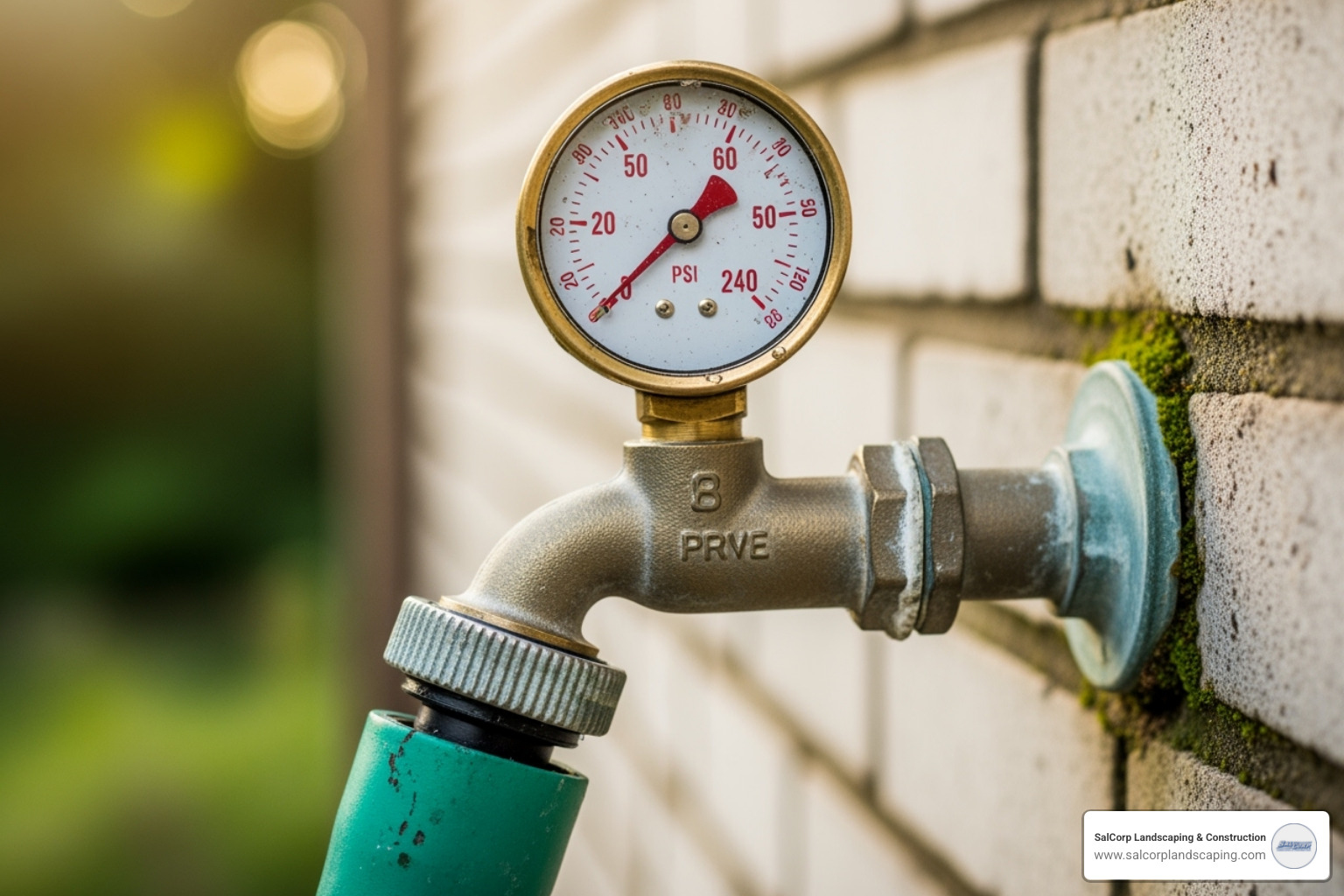
- Water Pressure (PSI): Most irrigation systems operate best between 40 and 75 PSI. You can measure your static pressure (when water is off) with a pressure gauge attached to an outdoor spigot.
- Flow Rate (GPM): This measures how much water is available. To determine your Gallons Per Minute (GPM), perform the “bucket test”: time how long it takes to fill a 5-gallon bucket from your spigot. If it takes 30 seconds (0.5 minutes), your flow rate is 10 GPM (5 / 0.5 = 10).
Also, know your water meter size (typically 5/8, 3/4, or 1 inch), which can be found on your utility bill.
Designing Your System Layout
With your measurements, sketch your property to scale, marking the house, walkways, trees, and garden beds. This blueprint is key for your garden sprinkler system installation.
Next, define watering zones. Group areas with similar needs (e.g., sunny lawns vs. shady flowerbeds) into separate zones for efficient, customized irrigation.
When placing sprinkler heads, aim for “head-to-head coverage,” where each sprinkler’s spray reaches the next, ensuring uniform water distribution. Map the pipe layout to minimize turns and prevent pressure loss.
For more planning guidance, see our insights on designing underground sprinkler system.
Choosing the Right Irrigation System
Your choice depends on your garden’s needs, plant types, and budget.
| System Type | Pros | Cons | Best For |
|---|---|---|---|
| In-Ground Sprinklers | Automated, consistent, discreet pop-up heads, great for large areas. | Complex installation, higher initial cost, requires trenching. | Large lawns and open areas where uniform coverage is desired. |
| Drip Systems | Highly water-efficient, targets roots, reduces weeds, flexible. | Can clog, emitters need checks, slower watering. | Garden beds, vegetable gardens, container plants, trees, and hedges. |
| Soaker Hoses | Inexpensive, easy to install, good for targeted watering. | Less precise, can break down over time, not automated. | Rows of plants, new hedges, or foundation plantings. |
For in-ground systems, choose from different sprinkler heads like pop-up heads (for lawns), rotors (for large areas), or drip emitters (for garden beds). Choosing the right combination is vital. If considering other options, our guide on the Best Above Ground Sprinkler Setup offers valuable insights.
Phase 2: The Ultimate Garden Sprinkler System Installation Guide
Now it’s time to turn your plans into a functioning irrigation system. This is where your garden sprinkler system installation takes shape.
Gathering Your Tools and Materials
Having everything ready beforehand saves trips to the hardware store. Your main components will include:
- Pipes: Rigid PVC is excellent for main lines, while flexible polyethylene is great for freeze-thaw cycles. I recommend larger diameter PVC (3/4-inch to 1 1/4-inch Schedule 40) for durability.
- Fittings and Valves: Tees, elbows, couplings, zone valves, and shut-off valves.
- Controller/Timer: The system’s brain. Smart Wi-Fi controllers offer remote control and water optimization.
- Sprinkler Heads: Pop-up heads, rotors, or drip emitters, based on your design.
- Backflow Preventer: A critical safety device.
- Low-Voltage Wire: Direct burial wire connects the controller to the valves.
- Tools: Pipe cutter, shovel, PVC primer and cement, and Teflon tape.
Pro Tip: Renting a power trencher for about $180/day can make the most physically demanding part of the project much easier.
Connecting to the Main Water Supply
This is a crucial step in your garden sprinkler system installation. First, shut off your main water supply.
Tap into your service line near the water meter for maximum pressure. This involves cutting the main line and installing a tee fitting. Immediately after, install a shut-off valve to isolate the irrigation system from your house’s water supply.
Next, install the backflow preventer. This non-negotiable safety device prevents contaminated sprinkler water from flowing back into your home’s drinking water.
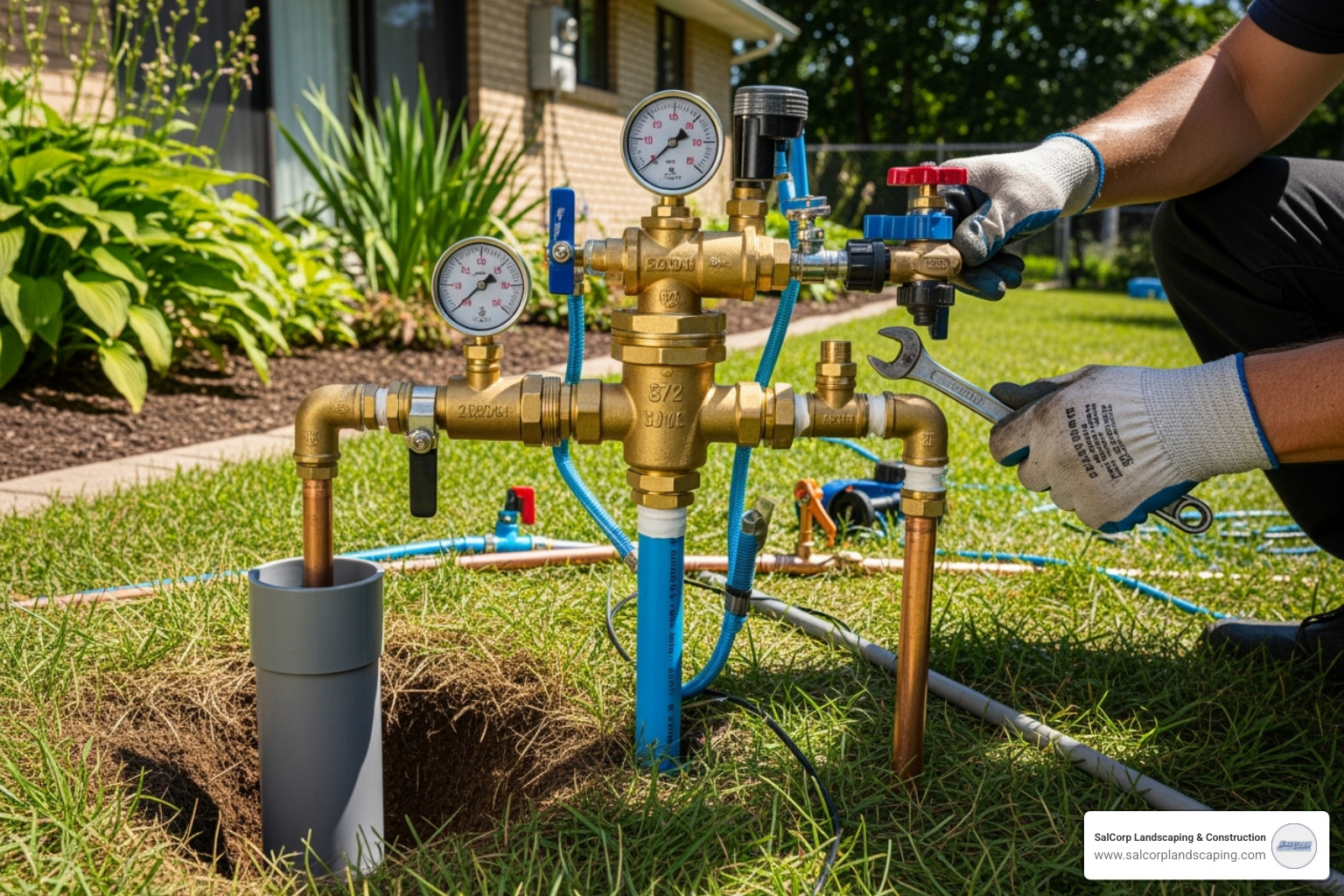
Types include Reduced Pressure Zone (RPZ) devices, double check valves, and atmospheric vacuum breakers. Your local authority will specify which type is required, so always check to ensure compliance with local plumbing codes.
Trenching and Laying the Pipes
This is often the most labor-intensive phase. With the right approach, it’s manageable.
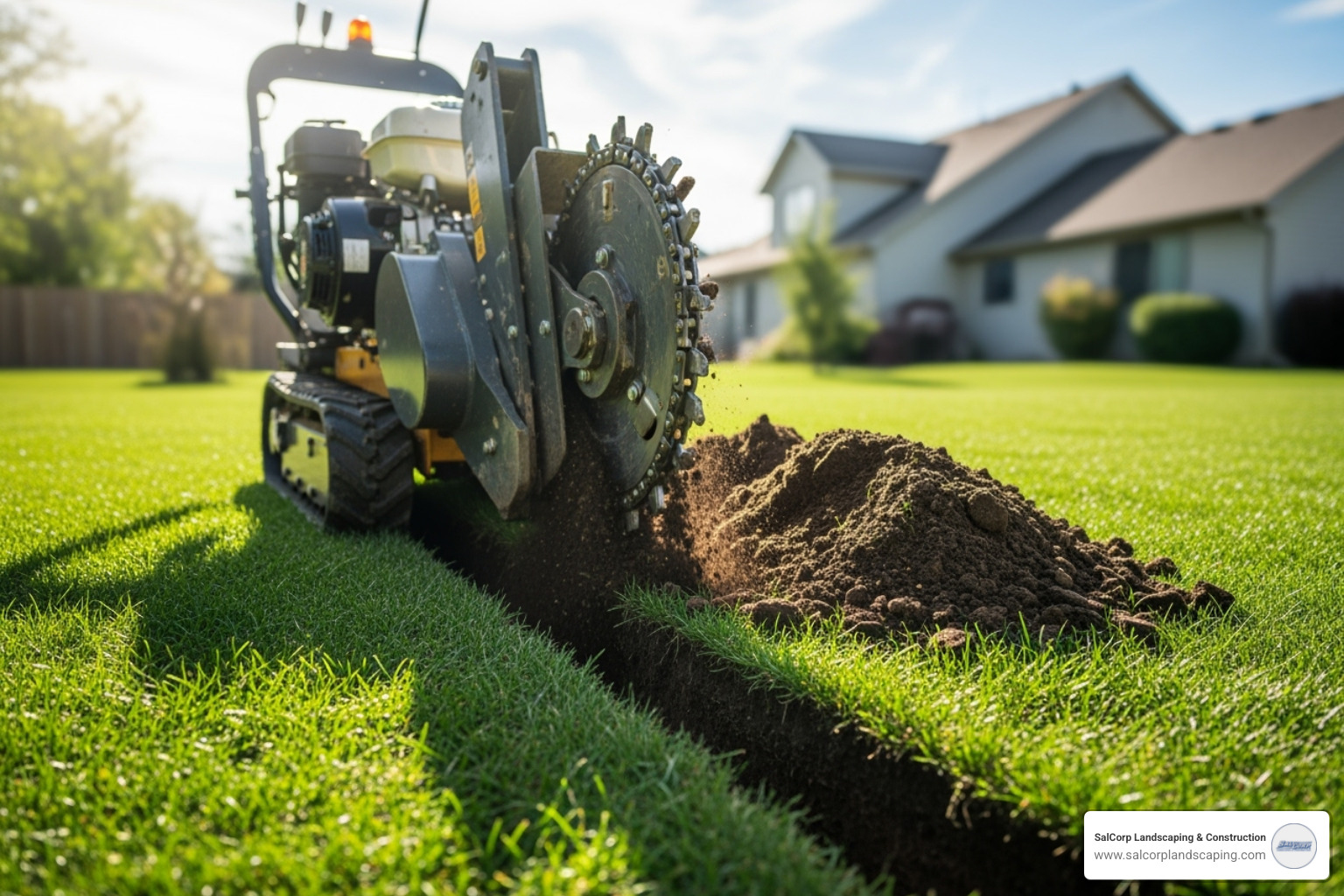
Mark your pipe runs with string or spray paint. Trenches should be 6 to 12 inches deep; I recommend 8 to 10 inches for better protection, especially in freeze-thaw zones. To cross under walkways, use water pressure and a PVC pipe to tunnel underneath. Once trenches are ready, lay your main and lateral lines, leaving some slack for adjustments.
Assembling the System and Wiring the Controller
With pipes in place, it’s time to connect everything. Start by building the valve manifold, a central hub for your zone valves. Pre-assembled kits can simplify this process.
For PVC connections, use primer and cement. For polyethylene pipes, use barb fittings and clamps. Install sprinkler heads using risers or flexible swing joints (“funny pipe”), which prevent damage and allow for easy adjustments.
Finally, run low-voltage wire from the controller to each valve. Use direct burial wire and waterproof silicone-filled connectors for all outdoor electrical connections to prevent future issues.
For more details, see our Lawn Sprinkler System Setup guide.
Phase 3: Testing, Troubleshooting, and Maintenance
This final phase transforms your garden sprinkler system installation from a collection of parts into a finely-tuned watering machine.
Testing for Leaks and Coverage
Before installing sprinkler heads, perform a system flush. This critical step removes dirt, PVC shavings, and other debris that can clog nozzles. Turn on the water and manually activate each valve, letting it run for several minutes until the water is clear.
Once the lines are clean, install your sprinkler heads and run each zone one by one. Carefully check for any leaks at fittings or connections. A small drip now can become a major issue later.
Observe the spray patterns to ensure you have “head-to-head coverage,” where each sprinkler’s spray reaches the next. Adjust the distance, arc, and spray pattern of each head until you achieve complete coverage without dry spots or watering your driveway.
Ongoing Sprinkler System Maintenance
Proper installation is just the beginning. Regular maintenance is key to a long-lasting system.
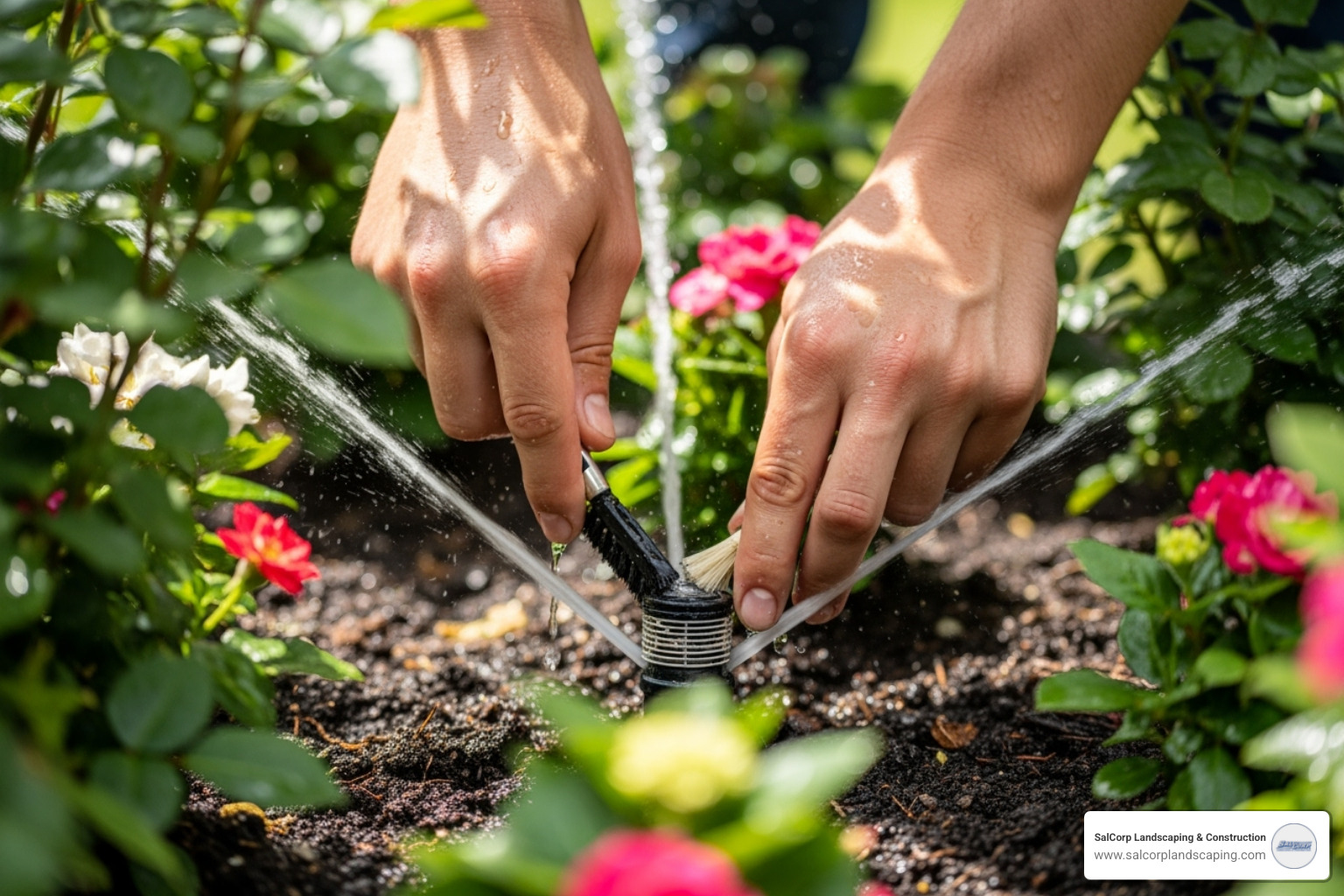
- Seasonal Inspections: Perform a thorough check in the spring before the growing season and another in the fall before winter.
- Clean Filters: Regularly clean filters at the main connection point and within individual sprinkler heads to prevent clogs.
- Adjust Heads: As your plants grow, adjust sprinkler heads to ensure they aren’t blocked and that new plantings receive adequate coverage.
- Winterization: In Massachusetts, winterization is essential. Use an air compressor (50-100 PSI) for the “blow-out method” to push all water out of the pipes, preventing them from freezing and cracking. For more details, see our guide on Installing Underground Irrigation Systems.
Troubleshooting Common Problems
Even well-installed systems can have issues. Most have straightforward solutions.
- Low Pressure: If heads don’t pop up or have a weak spray, you may have too many heads on one zone, a partially closed valve, or a leak.
- Clogged or Damaged Heads: An erratic spray pattern or no spray at all usually indicates a clog. Clean the nozzle and filter. Replace heads damaged by lawnmowers.
- Leaks in the Line: Look for pooling water or unusually green patches of lawn. Leaks often occur near fittings and require cutting out the damaged section and repairing it.
- Controller Malfunctions: Check the power supply, wiring, and programming. A simple reset often helps.
- Zone Won’t Turn On: The issue is likely the zone valve or its wiring. Use a multimeter to diagnose electrical problems.
DIY vs. Professional Installation: Making the Right Choice
Deciding between a DIY garden sprinkler system installation and hiring a professional is a key decision for your project.
The DIY Approach: Costs and Time Commitment
A DIY installation can be budget-friendly. Average DIY costs typically range from $500 to over $5,000, depending on yard size and complexity. A simple two-zone system might cost $1,000 to $1,400 in materials. Please note: these cost estimates are based on publicly available internet data and are not a quote from SalCorp Landscaping & Construction.
However, the primary investment is time. A two-zone system can take 16-20 hours of hands-on work, not including planning. The work is physically demanding, requiring trench digging and pipe fitting. You’ll need basic plumbing and low-voltage electrical skills. The reward is a potential savings of 30-40% compared to professional services, but it comes with the responsibility of getting the design and installation right.
When to Hire a Professional for Your Garden Sprinkler System Installation
In some cases, hiring a professional for your garden sprinkler system installation is the smartest choice.
- Large or Complex Properties: Professionals have expertise in designing efficient systems for irregular shapes, slopes, and diverse planting areas.
- Time Constraints: If your schedule is packed, a professional crew can complete the work efficiently with minimal disruption.
- Code Compliance: Professionals are current on local regulations in towns like Walpole, Canton, or Franklin, ensuring your system meets all legal requirements for permits and backflow prevention.
- Peace of Mind: Professional installations typically come with warranties on materials and workmanship, protecting your investment.
- Water Conservation: Experts can incorporate advanced, water-saving technologies that can lower your water bill over time.
At SalCorp Landscaping & Construction, we have over 20 years of owner-operated experience. We bring specialized machinery and deep knowledge of Massachusetts climate and soil to every project. Learn more about our comprehensive In-Ground Sprinkler Installation services.
Frequently Asked Questions about Garden Sprinkler System Installation
Here are answers to common questions about a new garden sprinkler system installation.
How deep should sprinkler lines be buried?
Generally, sprinkler lines should be buried 6 to 12 inches deep. This depth protects pipes from lawn aeration, shovels, and light traffic. In colder climates like Massachusetts, burying them closer to 12 inches offers better protection against freezing. Always check local municipal codes for specific depth requirements.
Can I mix different types of sprinkler heads in one zone?
It is not recommended. Different sprinkler heads (rotors, sprays, drip emitters) apply water at very different rates. Mixing them in the same zone leads to uneven watering—some areas will be overwatered while others remain dry. This wastes water and can harm plants. For uniform coverage, always group similar head types into the same zone.
How often should I water my garden with a new sprinkler system?
The ideal frequency depends on your climate, soil, and plant types. A good rule of thumb for lawns is to provide 1 to 1.5 inches of water per week, including rainfall. It’s better to water deeply and infrequently (2-3 times per week) rather than a little bit every day. This encourages deep, resilient root growth.
For slopes or clay soil, use your controller’s “cycle and soak” feature to apply water in shorter bursts, preventing wasteful runoff. For best results and to minimize evaporation, water early in the morning, before 9 AM.
Conclusion
A successful garden sprinkler system installation is a true game-changer, changing watering chores into a seamless, automated process. From initial planning and measurements to trenching and final adjustments, each step is crucial for creating a vibrant, healthy landscape.
The rewards are clear: time saved, improved water conservation, healthier plants, and an increase in property value. A well-maintained garden boosts your home’s curb appeal and provides enjoyment for years to come.
Whether you accept a DIY project or prefer the peace of mind that comes with a professional installation, the result is a beautifully transformed outdoor space. If you’re ready to invest in your home’s beauty and value with expert design and installation of irrigation and sprinkler systems in Massachusetts, contact our team at SalCorp Landscaping & Construction today. We’re here to help you cultivate the garden of your dreams.
