

Designing Underground Sprinkler System: Top Guide 2025
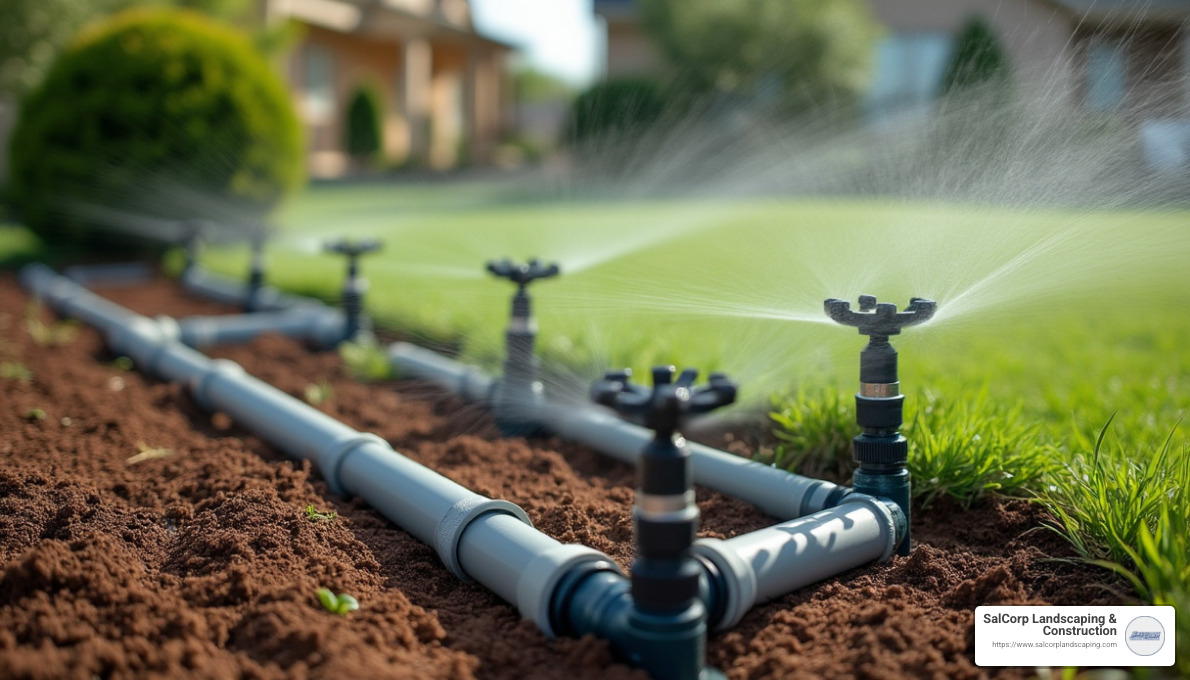
Designing underground sprinkler system is a crucial step in maintaining a lush and healthy landscape, especially for busy Massachusetts-based commercial property managers and homeowners. A well-planned sprinkler system not only ensures efficient water distribution but also conserves resources and reduces maintenance efforts. Here’s a quick overview of what’s involved:
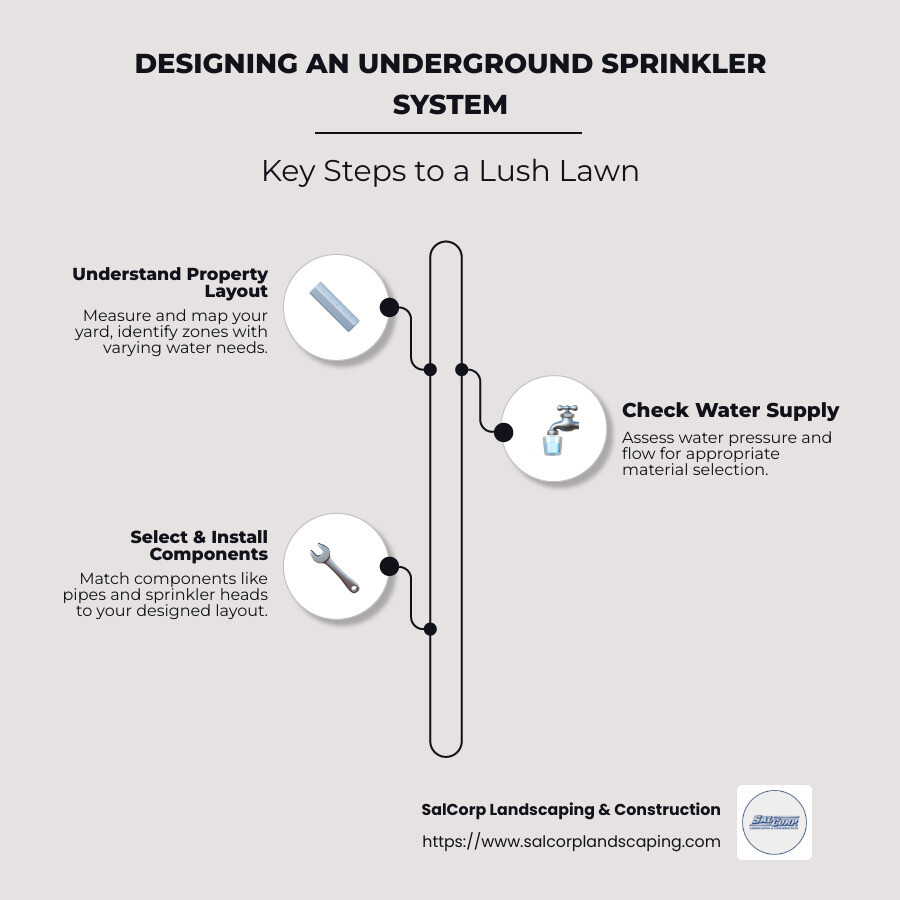
- Understand your property’s layout: Measure and map your yard, identifying zones with different watering needs.
- Check water supply: Determine water pressure and flow to select appropriate materials and heads.
- Select and install components: From pipes to sprinkler heads, ensure components match your designed layout.
- Regular maintenance: Perform seasonal checks, including winterization, to ensure longevity.
In crafting a thriving landscape, the benefits of designing underground sprinkler system extend beyond appearance. It offers water conservation, reduces costs, and minimizes manual labor—all while promoting a greener, healthier lawn.
I’m Sal Musto, with over two decades of experience in landscaping and irrigation solutions. My dedication to designing underground sprinkler system in the Massachusetts area ensures your properties remain vibrant and attractive year-round.
Simple guide to designing underground sprinkler system:
– installing new sprinkler system
– lawn installation services
– lawn service mulch installation
Planning Your Underground Sprinkler System
Designing an underground sprinkler system begins with understanding your landscape. It’s essential to consider your lawn size, types of plants and grasses, sun and shade patterns, and water utility usage. These factors help create a custom system that efficiently waters your property.
Measuring Your Lawn
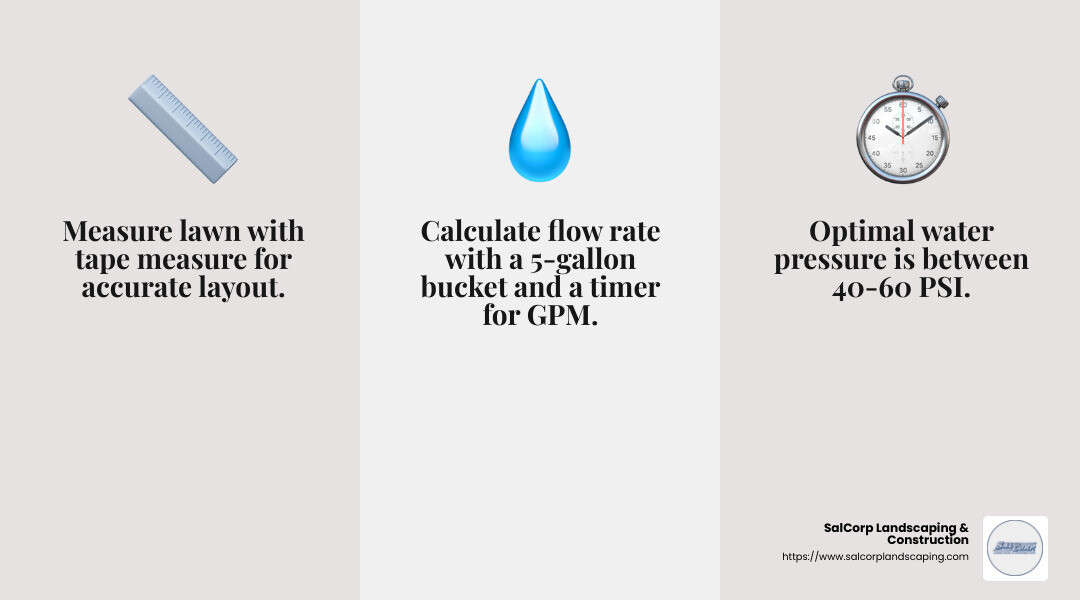
Start with a tape measure and some graph paper. Measure the dimensions of your lawn, noting any slopes or unique features. This will help in sketching a rough layout of your yard. Include trees, flower beds, and any structures like patios or driveways. Keeping your sketch to scale is important, as it guides the placement of sprinkler heads and zones.
Checking Water Pressure and Flow
To ensure your sprinkler system functions optimally, you need to know your water pressure and flow rate. Use a water pressure gauge, which can be attached to an outdoor faucet. Turn on the water and record the pressure in pounds per square inch (PSI). Most systems require 40 to 60 PSI.
Next, calculate the flow rate in gallons per minute (GPM). Fill a 5-gallon bucket with water from the faucet, timing how long it takes. Use the formula: Gallons ÷ Time(seconds) × 60 = GPM. This calculation helps determine how many sprinkler heads can operate simultaneously.
Identifying Water Meter and Service Line
Locate your water meter to find its size, usually stamped on the outside. If it’s not visible, contact your water utility company for assistance. Common sizes are 5/8″, 3/4″, or 1″. The water meter size influences the system’s capacity.
Next, measure the service line diameter. Use a piece of string to wrap around the pipe, mark it, then measure the string length. Compare this length to a size chart to find the diameter. This information is crucial for selecting the right pipe size for your system.
By carefully planning these steps, you lay a solid foundation for a successful underground sprinkler system. This attention to detail ensures efficient water use and a lush, healthy lawn.
Designing the Sprinkler Layout
Crafting an efficient underground sprinkler system requires a well-thought-out layout. The goal is to ensure every inch of your lawn gets the right amount of water without waste.
Creating Hydrozones
Hydrozones are essential for efficient watering. These are specific areas grouped by plants with similar water needs. For example, turfgrass typically needs more water than drought-tolerant shrubs.
- Grouping Plants: Arrange plants with similar water requirements together. This prevents overwatering or underwatering, ensuring all your plants thrive.
- Sunlight and Soil Requirements: Consider how much sunlight each area receives. Shady areas need less water than sunny spots. Also, account for soil type—sandy soils drain quickly, while clay holds water longer.
By creating hydrozones, you can tailor your watering schedule, saving water and promoting healthy plant growth.
Selecting Sprinkler Heads
Choosing the right sprinkler heads is crucial for optimal coverage and efficiency. Here’s a breakdown of different types:
- Rotor Heads: Best for large areas. They rotate to cover a wide radius, making them ideal for lawns. Ensure head-to-head coverage, where the spray from one head reaches the next, for even watering.
- Spray Heads: Suitable for smaller areas and narrow strips. These have a fixed spray pattern and work well in gardens or along sidewalks.
- Rotary Nozzles: A versatile option for medium-sized areas. They offer a rotating stream of water, providing a balance between rotor and spray heads.
- Specialty Patterns: These are designed for unique spaces like corners or odd shapes. Variable arc nozzles can adjust to fit these tricky spots.
- Drip Irrigation: Ideal for flower beds and shrubs. This system delivers water directly to the roots, reducing evaporation and water waste.
For narrow strips, consider strip pattern spray heads. They provide targeted coverage, minimizing overspray onto sidewalks or driveways.
When designing your sprinkler layout, aim for equal spacing between heads. This ensures consistent coverage and prevents dry patches. By carefully selecting and placing sprinkler heads, you create an effective system that keeps your lawn lush and green.
With your layout and hydrozones planned, you’re ready to move on to the installation phase, where these designs come to life.
Installing the Sprinkler System
Once you have your sprinkler layout and hydrozones planned, it’s time to bring your design to life with installation. This involves precise trenching, pipe layout, and connecting all components to ensure a functional system.
Depth of Sprinkler Lines
Trenching is the first step in installing your underground sprinkler system. The depth of these trenches is crucial for protecting your pipes from the elements. Generally, trenches should be 8 to 12 inches deep. This depth keeps the pipes below the grass roots and helps prevent damage from foot traffic or lawn equipment.
In colder climates, consider the freeze cycles and frost severity. Pipes need to be deep enough to avoid freezing, which can cause cracks and leaks. If you live in an area with harsh winters, aim for the deeper end of the range.
Connecting Components
With trenches dug, it’s time to lay out your pipes. PVC or polyethylene pipes are commonly used due to their durability. Arrange them according to your design, ensuring they follow the marked paths.
Fittings like elbows and tees are essential for directing the pipes through the landscape. They allow you to steer around obstacles and change directions as needed.
Next, install the sprinkler heads. Attach them to the pipes using risers or tubing. Make sure they are at the correct height and angle for optimal water distribution.
Control valves are crucial for regulating water flow. Place them in a manifold setup, which allows you to control multiple zones from a single location. Position the manifold in an accessible area for easy maintenance.
Finally, connect the system to your water supply. Ensure all connections are secure to prevent leaks. Once everything is in place, test the system to check for proper operation.
By carefully planning and executing each step, you ensure your underground sprinkler system functions efficiently and effectively, keeping your lawn healthy and vibrant. As you move forward, you’ll encounter common design challenges, and we’ll discuss solutions to tackle them next.
Common Irrigation Design Challenges and Solutions
Designing an underground sprinkler system is not without its challenges. From watering slopes to dealing with varied plant types, each yard presents unique problems. Let’s explore some common irrigation challenges and explore effective solutions.
Watering Slopes or Hills
When installing sprinklers on slopes or hills, pooling water can be a significant issue. Water tends to collect at the bottom, creating soggy patches that invite fungus. To prevent this, avoid placing sprinkler heads at the very bottom of a slope. Instead, position them strategically along the incline to ensure even distribution.
Different Plant Types
Different plants have different watering needs. Shrubs, trees, flowers, and grass all require varying water amounts. A one-size-fits-all approach can lead to over-watering or under-watering, both of which can harm plant health. Customized water delivery through low-volume drip irrigation allows you to tailor water amounts to each plant type, promoting healthier growth and reducing waste.
Corners, Odd Shapes, or Strips
Unusual property lines or oddly shaped garden beds can make it difficult to achieve even coverage. Variable Arc Nozzles (VAN) are a great solution here. They provide precise, efficient coverage by adjusting to fit any corner or shape. This ensures that every part of your yard receives the right amount of water.
Small Yards
In small yards, traditional sprinklers often waste water by spraying onto sidewalks or driveways. Consider using low-volume nozzles, like the Rain Bird SQ Nozzles, which are designed for precise watering in tight spaces. These nozzles help eliminate over-watering and runoff, ensuring water is applied only where needed.
Variations in Sun and Shade
Sun and shade patterns can vary dramatically across a yard, affecting how much water each area needs. Using a smart controller with multiple independent programs can help. These controllers allow you to set different watering schedules for sunny and shady areas, ensuring each zone gets just the right amount of water. The Rain Bird ARC8 Smart WiFi controller is a popular choice for managing such variations, and it can be easily programmed via a smartphone app.
By addressing these common challenges with thoughtful solutions, you can create a more efficient and effective underground sprinkler system. This not only saves water but also keeps your landscape looking its best. Next, we’ll tackle some frequently asked questions about sprinkler system design to further improve your understanding.
Frequently Asked Questions about Designing Underground Sprinkler Systems
How do you layout underground sprinklers?
When designing underground sprinkler systems, achieving head-to-head coverage is crucial. This means each sprinkler head should reach the next one, ensuring no dry spots in your lawn. Equal spacing between sprinkler heads helps maintain consistent water distribution. For narrow areas, use strip pattern spray heads to cover elongated spaces efficiently.
How to plan for a sprinkler system?
Start by measuring your lawn accurately. Use a tape measure and graph paper to sketch your yard’s layout. Note the location of plants, trees, and hardscapes. Lawn size measurement is essential to determine the number of sprinkler zones needed. Next, assess your water supply by measuring water pressure and flow rate. This will help you select the right equipment, such as pipes and sprinkler heads.
Creating hydrozones is another critical step. Group plants with similar water needs and sunlight exposure. This ensures each zone receives the appropriate amount of water, reducing waste and promoting healthy growth.
How deep should underground sprinkler lines be?
Sprinkler lines should be buried below the grass roots, typically between 8 to 12 inches deep. This depth protects the pipes from damage during lawn maintenance. In areas with harsh winters, consider the frost severity. Deeper installation helps prevent pipes from freezing and cracking during cold months.
By following these guidelines, you can design an efficient and effective underground sprinkler system custom to your lawn’s unique needs.
Conclusion
At SalCorp Landscaping & Construction, we pride ourselves on delivering comprehensive outdoor space solutions that cater to the diverse needs of Massachusetts communities. With over 20 years of experience, we understand that creating a well-designed landscape is more than just aesthetics—it’s about functionality and sustainability.
Whether you’re looking to install a new underground sprinkler system or upgrade an existing one, our expertise ensures a seamless integration with your landscape. We take into account all the essential factors, from accurate lawn measurements to the selection of appropriate sprinkler heads, ensuring your lawn remains lush and healthy.
Our commitment to quality and customer satisfaction is unwavering. We use only top-of-the-line products and cutting-edge techniques to design and install irrigation systems that are efficient and easy to maintain. By focusing on sustainability, we help you conserve water while keeping your landscape vibrant.
Serving various communities across Massachusetts, including Walpole, Canton, and Dedham, our team is dedicated to changing your outdoor spaces into thriving environments. Whether you’re dealing with slopes, small yards, or varying sun and shade conditions, we have the expertise to overcome any design challenges.
Ready to improve your landscape with a custom-designed sprinkler system? Contact us at SalCorp Landscaping & Construction and let us bring your vision to life. Together, we can create a beautiful and sustainable landscape that you and your family will enjoy for years to come.
