

Excavation & Site Work Services in Massachusetts
Foundations, grading, trenching, and land clearing done right the first time. Owner-supervised excavation for homeowners, builders, and commercial properties across Norfolk and Plymouth County.
Get an Excavation EstimateExcavation Services
Every hardscape, foundation, and drainage project starts in the ground. Getting the excavation right is what keeps everything built on top of it level, dry, and stable for decades.
Foundation Excavation
Digging for additions, garages, and new construction to the depth and dimensions on the plans, with clean walls, a level bottom, and spoil managed so the site stays workable.
Grading & Regrading
Cut and fill grading that sets the slope of your yard so water moves away from the house. Rough grade, finish grade, and compaction for lawns, patios, and driveways.
Site Preparation
Clearing, grubbing, stump and brush removal, and topsoil stripping to turn raw or overgrown land into a buildable, stable surface.
Trenching & Utilities
Trenches for drainage pipe, water and sewer lines, electrical conduit, and irrigation mains, cut to grade and backfilled in compacted lifts.
Hardscape Base Excavation
Excavation to the correct depth for patios, walkways, driveways, and walls so the gravel base can be built below the frost-heave zone that wrecks shallow installs.
Demolition & Removal
Breaking out old concrete slabs, failed walkways, steps, and walls, then hauling the debris so the new project starts on a clean site.
Every Project Is Only as Good as the Hole Under It
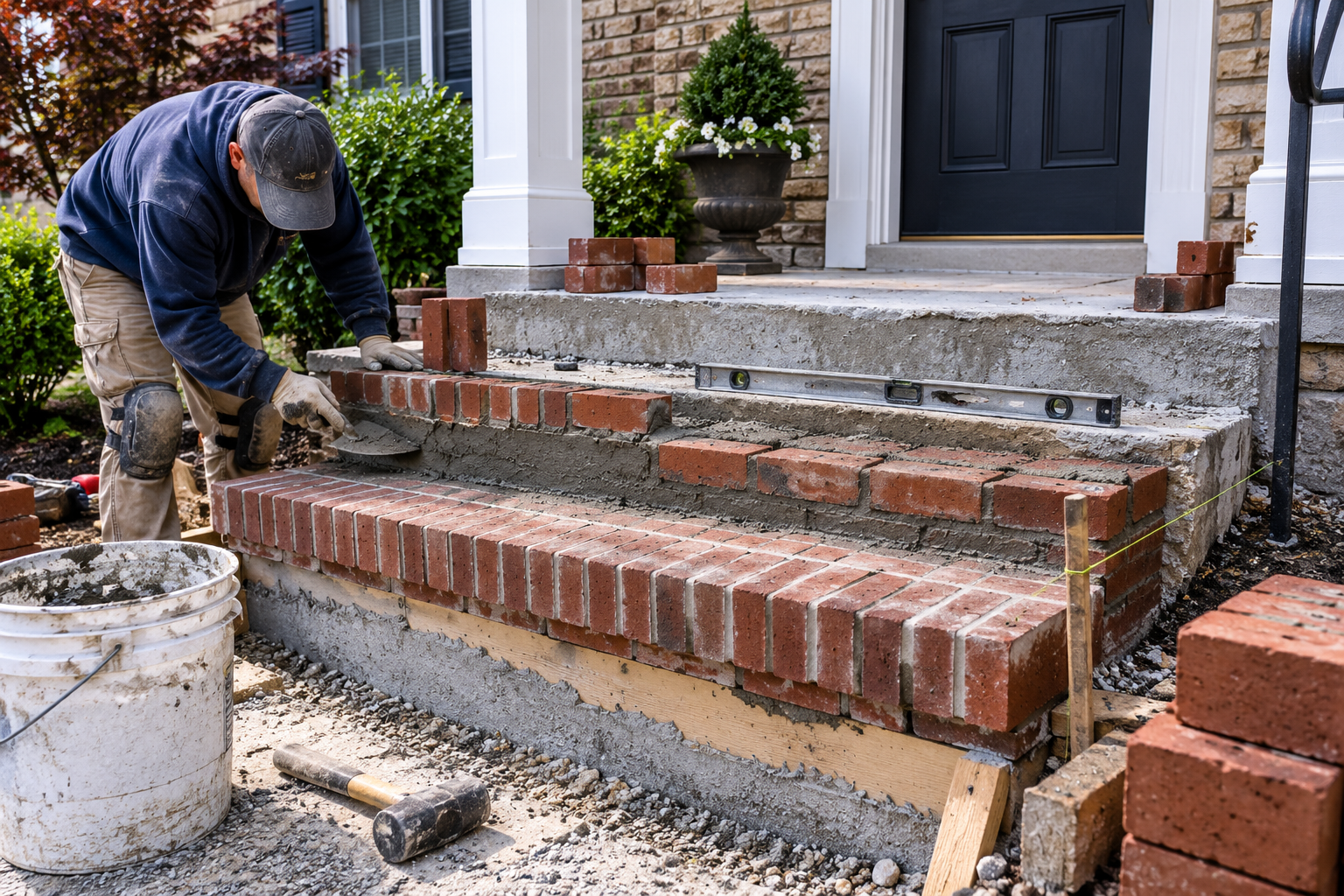
Most hardscape failures in Massachusetts trace back to excavation that was too shallow, too soft at the bottom, or graded the wrong way. A patio on 3 inches of base heaves. Steps on a shallow pad pull away from the house. A wall without a proper trench and drainage leans within a few winters.
We excavate to the depth the structure actually needs, remove organic soil instead of building on it, compact the subgrade before any base goes in, and confirm grade with a laser level, not by eye. It is slower than cutting corners, and it is why our work stays put.
Our Site Work Process
The same sequence on every job, from a single patio base to a full lot.
Site Walk & Layout
We walk the property, review plans, mark the work area, and identify access routes, grade changes, wet areas, and likely ledge.
Dig Safe & Permits
Underground utilities are marked through Dig Safe before any machine moves, and any required town permits or reviews are confirmed.
Clearing & Stripping
Brush, stumps, and topsoil are removed and stockpiled or hauled, exposing stable subsoil for the work ahead.
Excavation & Grading
We dig to design depth and set grades with a laser level, cutting and filling so water drains where it should.
Compaction & Base
Subgrade is compacted, and stone or gravel base is placed and compacted in lifts for whatever gets built on top.
Restoration & Cleanup
Disturbed areas are backfilled, topsoiled, and left ready for loam and seed, sod, or the next phase of construction.
Before & After: Regrading a Wet Yard
Much of our excavation work is grading. When water sits in a yard or runs toward the foundation, the fix usually starts with moving soil to change how the property drains.
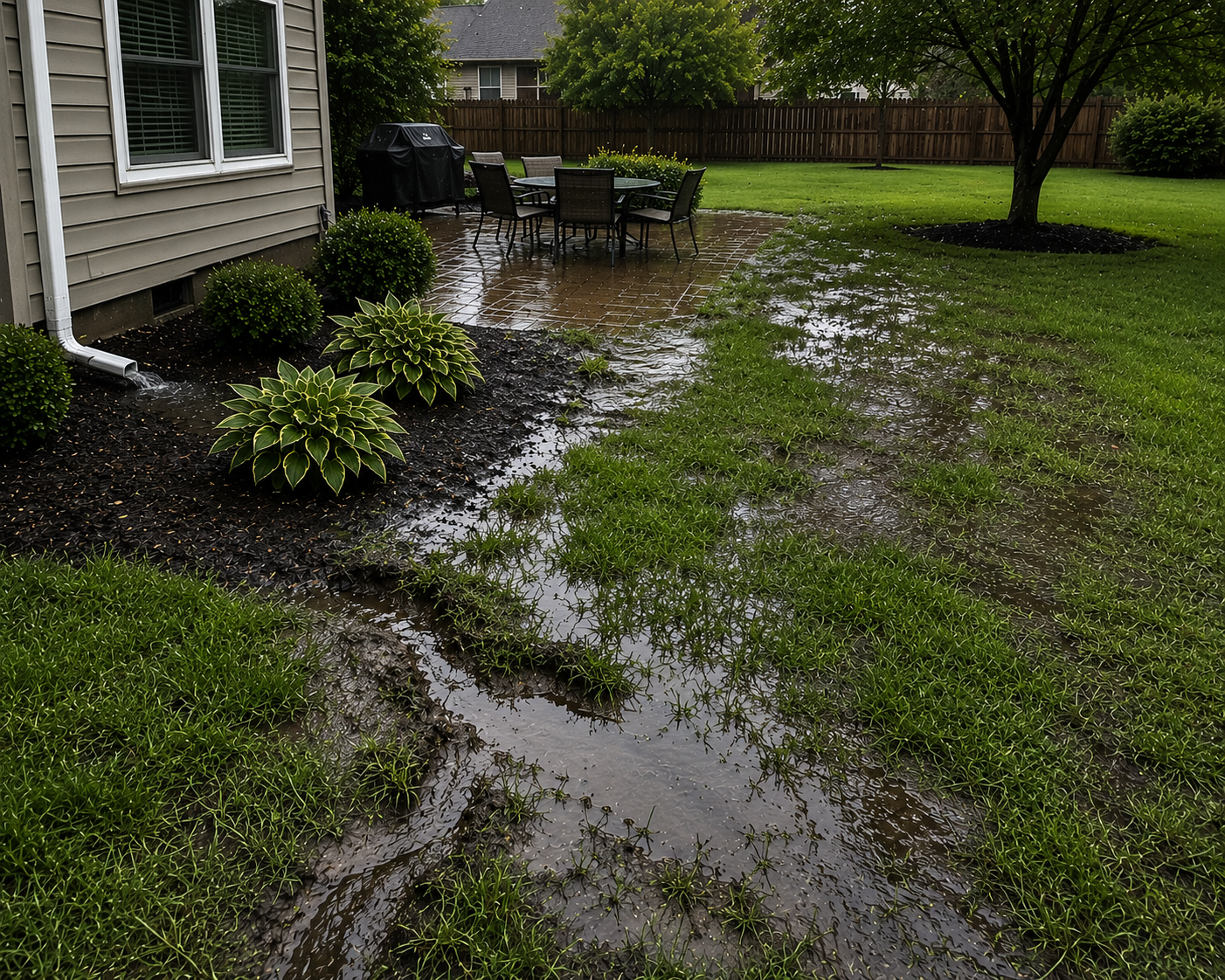
Standing water, soggy lawn
Low spots and a flat grade held water against the house after every storm.

Regraded and draining
Soil cut and filled to pitch water away, with drainage added where grade alone was not enough.
One Crew From the First Dig to the Finished Project
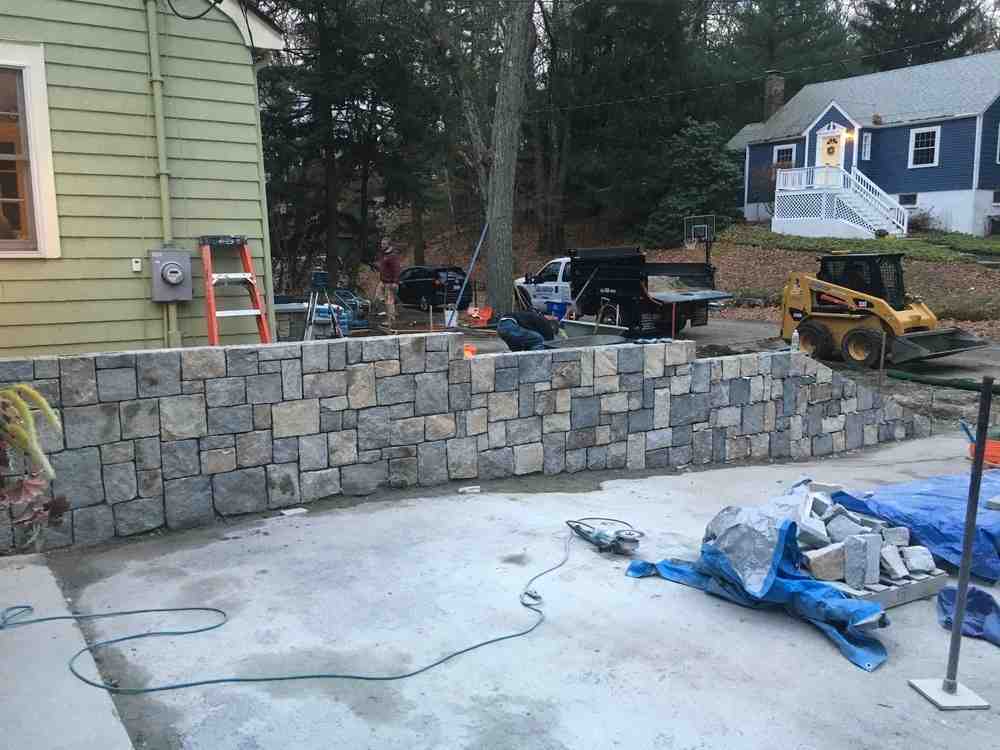
Hiring one company to dig and another to build is where most project problems start. The excavator does not know what the mason needs, and the mason inherits a base they did not prepare.
We excavate, then build the retaining walls, patios, walkways, and drainage systems that sit on top. The crew that digs is accountable for what comes after, so the base gets done right.
Massachusetts Ground Conditions We Plan For
Excavating in eastern Massachusetts is different from digging in sandy coastal regions or the open Midwest. Four conditions shape almost every job we do:
- Ledge and glacial boulders: common across Norfolk County, often shallow, and they can change a design if they are not found early
- Clay-heavy subsoil: drains slowly, holds water against foundations, and has to be removed or compensated for under hardscape
- A deep frost line: structural footings go below roughly 48 inches so freeze-thaw does not lift them
- Wetland buffers and conservation rules: many towns review grading near wetlands, so planning and permits come before digging
Safety is not optional on deep work.
Trenches 5 feet or deeper need sloping, benching, or a trench box under OSHA rules, spoil stays at least 2 feet back from the edge, and a competent person inspects the excavation every day and after rain. These rules exist because trench collapses happen fast. We follow them on every job, residential or commercial.
Residential and Commercial Excavation
Homeowners call us for additions, garage foundations, regrading wet yards, and preparing ground for patios and walls. Builders and property managers call us for pad preparation, lot clearing, parking area grading, and drainage and utility trenching. Equipment is sized to the property, from compact excavators that fit through a side gate to larger machines for open lots.
Communities We Serve
SalCorp provides excavation and site work throughout Norfolk County, Plymouth County, and Greater Boston, including Walpole, Westwood, Norwood, Needham, Wellesley, Dover, Sherborn, Medfield, Sharon, Foxborough, Canton, Dedham, Milton, Braintree, Weymouth, Hingham, Norwell, Cohasset, Newton, Brookline, and surrounding communities.
Planning a project that starts in the ground? Contact SalCorp for a site walk and estimate.
Twenty Years Moving Earth in Massachusetts
20+
Years serving
Massachusetts
Equipment
Sized from side-gate
to open lot
Licensed
Fully insured &
guaranteed
Walpole
Norfolk County
based
Excavation FAQs
How much does an excavation job cost?
Excavation pricing depends on the volume of material moved, soil and ledge conditions, site access for equipment, haul-away and disposal, and whether grading, drainage, or utility work is part of the scope. Clay and ledge take more time and heavier equipment than sandy soil. Every job is quoted after an on-site evaluation, because soil, access, and scope change the work from property to property. Contact us for a quote.
What are the three types of excavation?
Classified by material, the three types are topsoil excavation (stripping the organic top layer, roots, and vegetation), earth excavation (removing the soil, clay, and sand beneath the topsoil for foundations, trenches, and grading), and rock excavation (removing ledge or boulders, which requires heavier equipment and sometimes hammering). Most residential projects in Massachusetts involve the first two, and many uncover at least some ledge or glacial boulders along the way.
What does site work include?
Site work covers everything done to prepare a property before and around construction: surveying and layout, utility locates, clearing and grubbing, demolition of old structures or paving, excavation, cut and fill grading, compaction, erosion control, trenching for utilities and drainage, and final restoration of the disturbed area. On a residential job it is everything that has to happen in the ground before a foundation, patio, wall, or driveway can be built correctly.
What is the 5-4-3-2-1 excavation rule?
It is a field memory aid based on OSHA trenching rules. Five feet: trenches 5 feet or deeper need a protective system such as sloping, benching, or a trench box. Four feet: trenches 4 feet or deeper need a ladder or ramp within 25 feet of workers. Three feet: ladders extend at least 3 feet above the trench edge. Two feet: spoil piles and equipment stay at least 2 feet back from the edge. One: a competent person inspects the excavation daily and after rain.
Do I need a permit for excavation in Massachusetts?
It depends on the town and the scope. Foundation excavation, work near wetlands or buffer zones, significant grading that changes drainage, and utility connections usually require permits or conservation commission review. Small landscape excavation for a patio or walkway often does not. Every project requires a Dig Safe call before any digging so underground utilities are marked. We confirm local requirements for your town before the job starts.
How long does residential excavation take?
A patio, walkway, or small wall base is often excavated in a single day. Grading a yard, digging a foundation, or trenching for drainage typically takes two to five days. Larger site work with clearing, utilities, and restoration can run longer. Ledge, wet soil, tight access, and weather are the main factors that extend a schedule, and we walk you through the expected timeline during the estimate.
What happens if you hit ledge or boulders?
Ledge and glacial boulders are common across Norfolk and Plymouth County. Smaller boulders are removed with the excavator and either hauled off or reused in walls and landscaping. Ledge may require a hydraulic hammer, a design adjustment, or a change in elevation. We probe and test dig problem areas before committing to a final plan so there are as few surprises as possible once work begins.
Do you handle commercial excavation?
Yes. We handle commercial site preparation, parking lot and drive grading, utility and drainage trenching, and pad preparation for commercial properties, HOAs, and builders, in addition to residential work. The same owner-supervised crew runs both, with equipment sized to the property.
Ready to Break Ground?
Schedule a site walk with SalCorp. We will check access, soil, and grade, call in Dig Safe, and give you a clear plan for the work.
Get Your Excavation Estimate