

Apartment Complex Snow Removal Policy: Top 5 Must-Know Facts

When the snow starts falling, one pressing question emerges for residents and managers alike: apartment complex snow removal policy—who’s responsible, and how can it ensure everyone’s safety during the icy months? In Massachusetts apartment complexes, understanding these responsibilities is crucial for compliance, safety, and community well-being.
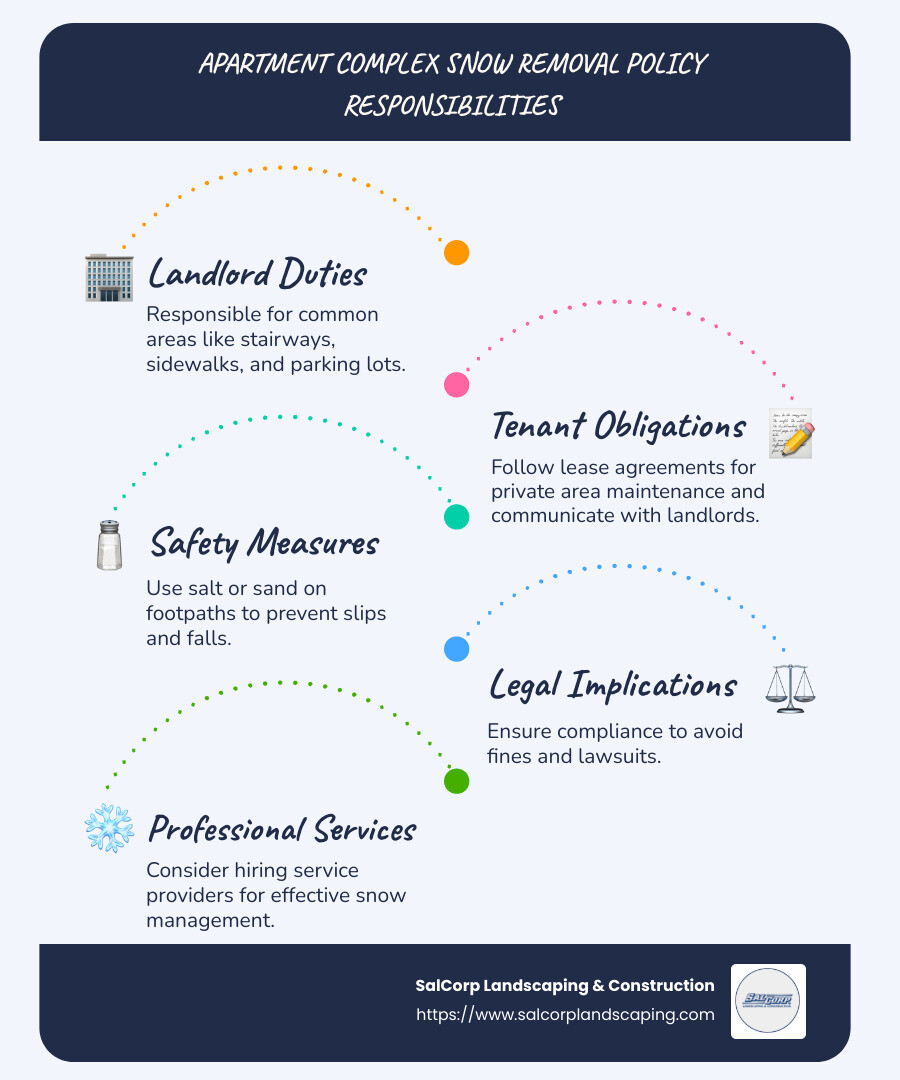
- Responsibility: Typically falls to property owners or managers, but lease agreements might specify tenant obligations.
- Safety: Clear paths to prevent slips and falls. Use salt or sand to mitigate ice.
- Legal Considerations: Non-compliance can lead to fines or lawsuits.
Snow removal isn’t just a matter of looks; it’s a matter of safety and legality. Ignoring the need to address snow and ice can result in fines and accidents. Effective snow removal means your property stays safe and attractive, ensuring uninterrupted operation throughout winter.
I’m Sal Musto, owner of SalCorp Landscaping & Construction. With years of experience in apartment complex snow removal policy, we ensure your property remains accessible and secure during winter months. Now let’s dive into understanding these responsibilities and their implications.
Important apartment complex snow removal policy terms:
– commercial property snow & ice management services
– commercial snow management in massachusetts
– snow removal service
Understanding Snow Removal Responsibilities
When it comes to apartment complex snow removal policy, knowing who is responsible for what can make all the difference. Let’s break it down by looking at the roles of landlords, tenants, and property managers.
Landlord Responsibilities
In most cases, landlords or property managers are responsible for keeping common areas safe and accessible. This includes sidewalks, parking lots, stairways, and other shared spaces.
- Common Areas: Landlords must ensure that snow and ice are promptly removed from common areas to prevent slips and falls. This is not just about maintaining property appeal but also about fulfilling legal duties.
- Parking Lots and Sidewalks: These areas often see the most foot traffic and vehicle use, so clearing them is a top priority. Landlords should have a plan in place for regular snow removal and may even hire professional services to handle heavy snowfalls efficiently.
The lease agreement might specify these responsibilities, but landlords generally bear the primary duty for these areas. In some states, like Massachusetts, landlords can face fines if they fail to comply with local snow removal ordinances.
Tenant Responsibilities
Tenants may have their own responsibilities, depending on what’s outlined in the lease agreement.
- Private Areas: Tenants may be required to clear snow from private areas such as balconies or personal walkways. It’s essential for tenants to understand their obligations to avoid any conflicts or safety issues.
- Communication with Landlord: Open communication is key. Tenants should promptly report any dangerous conditions or issues with snow removal to their landlord or property manager.
- Lease Agreements: Review your lease to understand your specific responsibilities. If tenants are expected to handle certain snow removal tasks, this should be clearly stated in the lease.
Ensuring clear communication and understanding between landlords and tenants can prevent missteps and ensure everyone’s safety during snowy months.
Understanding these responsibilities helps maintain a safe and well-functioning apartment complex. Next, we’ll explore the legal requirements and local ordinances that further define these duties.
Legal Requirements and Local Ordinances
Snow removal in apartment complexes isn’t just about keeping pathways clear—it’s also a legal obligation. Understanding the rules and regulations can help landlords, tenants, and property managers avoid costly penalties and ensure safety.
Illinois Snow and Ice Removal Act
In Illinois, the Snow and Ice Removal Act encourages residential property owners to clear sidewalks of snow and ice. While it doesn’t mandate removal, it offers immunity from liability for injuries caused by natural accumulations, unless there’s willful or wanton misconduct. This means owners aren’t typically liable for slip-and-fall accidents on naturally accumulated snow or ice, unless they acted with clear wrongdoing.
Local Snow Removal Ordinances
Different areas have their own specific ordinances regarding snow removal. For example, some cities require property owners to clear snow and ice from sidewalks in front of their buildings. Here’s a quick breakdown of typical requirements:
- Sidewalks: Snow must often be removed to create a path at least five feet wide. This ensures accessibility for all pedestrians, including those using wheelchairs or strollers.
- Time Frame: Many ordinances specify a time frame for snow removal, such as clearing snow by a certain time in the morning if it falls overnight.
- Fines: Non-compliance can result in fines, which vary by location and can be significant.
For those unable to clear their sidewalks, some cities offer volunteer programs to connect volunteers with residents in need, such as seniors or individuals with disabilities.
State-Specific Laws
Beyond Illinois, snow removal laws can vary significantly by state. Here’s a brief look at how some states approach the issue:
- Pennsylvania: Property owners are typically responsible for clearing sidewalks within a specified time after snowfall ends. Municipalities may have their own specific ordinances, so it’s crucial to check local laws.
- New York: Similar to Pennsylvania, New York requires property owners to clear sidewalks. The time frame and specific regulations can vary by city or town.
- Idaho: While not as stringent as some states, Idaho encourages snow removal to ensure public safety. Property owners are generally expected to keep sidewalks clear, but local ordinances may dictate specific requirements.
Understanding these legal requirements is essential for anyone involved in managing an apartment complex. Keeping up with local ordinances not only ensures compliance but also promotes safety and accessibility for all residents and visitors. Next, we’ll explore best practices for snow removal in apartment complexes.
Best Practices for Snow Removal in Apartment Complexes
When it comes to snow removal in apartment complexes, safety and efficiency are key. Let’s explore some best practices that can help keep your property safe and accessible during the winter months.
Safety Measures
Ensuring safety is the top priority during snow removal. Here are some essential steps to consider:
- Use Salt and Sand: Applying salt or sand to sidewalks and pathways can prevent ice from forming and provide traction. This reduces the risk of slips and falls for residents and visitors.
- Clear Paths: Make sure to create a clear path at least five feet wide on sidewalks. This width accommodates pedestrians, including those using wheelchairs or strollers, ensuring everyone can steer safely.
- Avoid Piling Snow in Hazardous Areas: Be mindful not to push snow into streets, bike paths, or around fire hydrants. This can create dangerous conditions and obstruct emergency services.
Equipment and Tools
Having the right tools and equipment is crucial for efficient snow removal:
- Shovels and Snow Blowers: These are essential for clearing smaller areas like walkways and entrances. Snow blowers can speed up the process and reduce physical strain compared to shoveling.
- De-Icing Products: Liquid de-icers, such as calcium chloride, can be applied before a snowstorm to prevent ice from bonding to surfaces. This makes snow removal easier and helps keep surfaces safe.
- Regular Maintenance: Ensure all equipment is in good working order before winter arrives. Regular maintenance can prevent breakdowns and improve efficiency.
Hiring Professional Services
For many apartment complexes, hiring professional snow removal services can be a wise investment. Here’s why:
- Efficiency: Professional services, like those offered by SalCorp Landscaping & Construction, have the expertise and equipment to handle snow removal quickly and effectively. This can save time and reduce stress for property managers.
- Compliance: Professionals are familiar with local regulations and can ensure your property meets all legal requirements, such as those outlined in the Chicago Snow Removal Ordinance.
- Safety and Peace of Mind: By outsourcing snow removal, you can focus on other important aspects of property management, knowing that experts are handling this critical task.

By implementing these best practices, apartment complexes can maintain a safe and accessible environment for all residents and visitors during the winter season. Next, we’ll address some frequently asked questions about apartment complex snow removal policies.
Frequently Asked Questions about Apartment Complex Snow Removal Policy
What is the Snow and Ice Removal Act in Illinois?
The Illinois Snow and Ice Removal Act is designed to encourage residential property owners to clear snow and ice from sidewalks. However, it provides immunity from liability for injuries caused by natural accumulations of snow and ice. This means that property owners, including those managing apartment complexes, are generally not held responsible for accidents unless there is willful or wanton misconduct. The Act primarily focuses on natural accumulations, so any claims related to unnatural accumulations would need to prove significant negligence, a challenging standard to meet.
Is the landlord responsible for snow removal in Chicago?
In Chicago, the Municipal Code requires property owners, including landlords and property managers, to clear snow and ice from sidewalks adjacent to their properties. This responsibility extends to those who have charge of the building, such as occupants or tenants if specified in the lease. The code outlines specific time frames for snow removal: snow that falls between 7 a.m. and 7 p.m. must be cleared by 10 p.m., and snow that falls overnight must be cleared by 10 a.m. Failure to comply with these regulations can result in fines, emphasizing the importance of timely snow removal.
Are landlords responsible for snow removal in Pennsylvania?
In Pennsylvania, snow removal responsibilities can vary based on local municipality laws. Generally, property owners are expected to ensure safe passage on sidewalks adjacent to their properties. Each municipality may have different time frames and specific requirements for snow removal. It’s crucial for landlords to be aware of these local ordinances to avoid fines and ensure the safety of tenants and visitors. Checking with the local municipality will provide the most accurate guidance on snow removal obligations.
Conclusion
In summary, understanding and adhering to apartment complex snow removal policies is crucial for maintaining safety and avoiding legal complications. Both landlords and tenants must be clear about their responsibilities, which can vary based on local laws and lease agreements. In places like Chicago, the Municipal Code sets strict guidelines for snow removal, emphasizing the importance of compliance to avoid hefty fines.
At SalCorp Landscaping & Construction, we recognize the challenges of snow management in apartment complexes. Our professional services ensure efficient and effective snow removal, keeping pathways clear and safe for residents. With over 20 years of experience and a commitment to safety, we offer comprehensive snow management solutions custom to your needs.
For more information on how SalCorp Landscaping & Construction can assist with your snow management needs, visit our Snow Management Service Page.
Feel free to contact us directly for personalized advice or to schedule a consultation. Our team is ready to help you tackle winter’s challenges and ensure your property remains safe and accessible.
