

Commercial Snow Management in Massachusetts: Top 7 Secrets

Commercial snow management in massachusetts is an essential service for businesses due to the state’s harsh winter climate. Every year, Massachusetts experiences severe snowstorms, creating challenges for commercial properties. The importance of having an effective system for snow removal and management cannot be overstated. Here’s what you need to know:
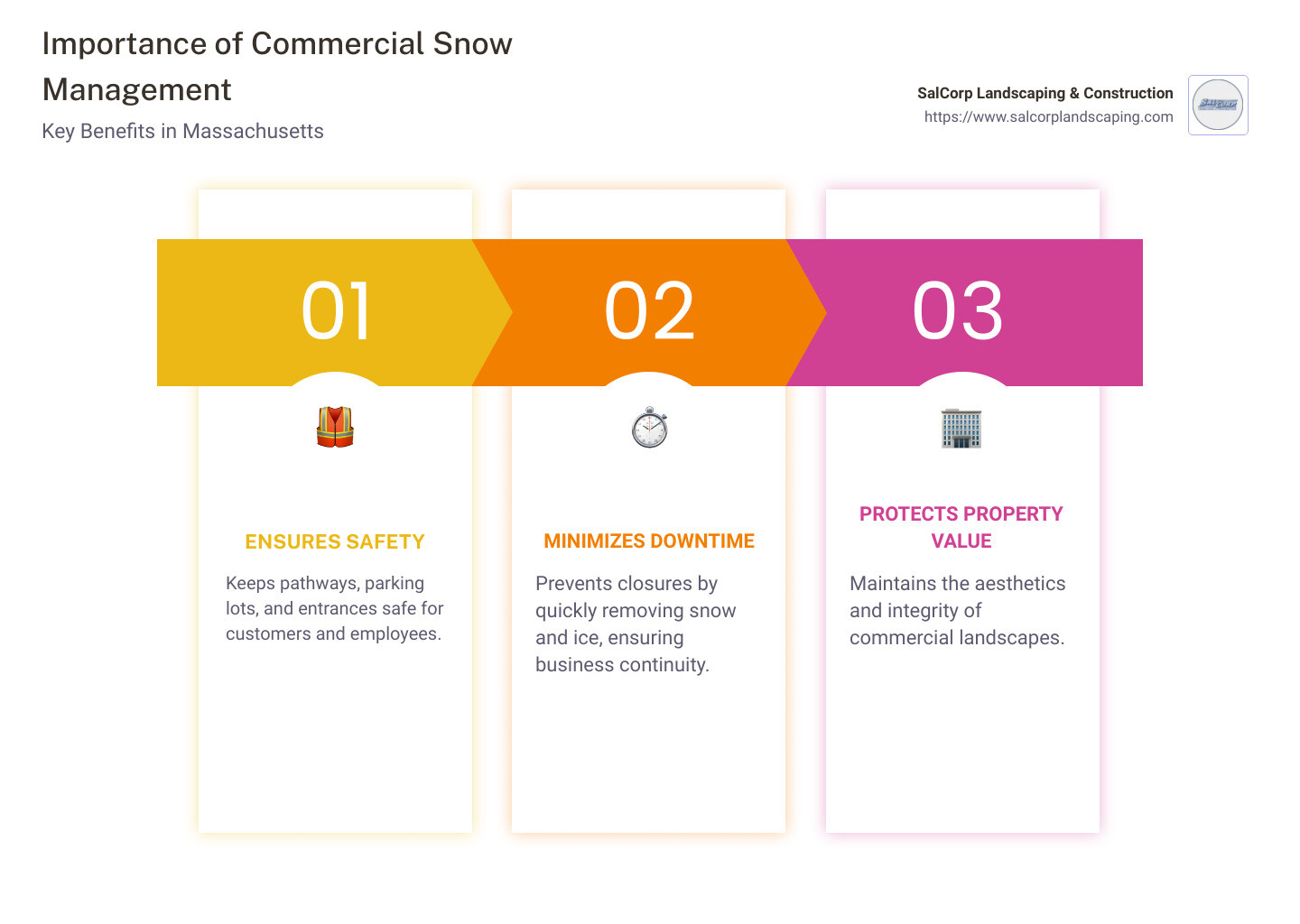
- Ensures Safety: Keeps pathways, parking lots, and entrances safe for customers and employees.
- Minimizes Downtime: Prevents closures by quickly removing snow and ice, ensuring business continuity.
- Protects Property Value: Maintains the aesthetics and integrity of commercial landscapes.
I’m Sal Musto, dedicated to enhancing Massachusetts outdoor spaces with over two decades of experience in commercial snow management. At SalCorp Landscaping & Construction, we’ve seen how critical effective snow management is for keeping businesses safe and operational. For a deep dive into the services and strategies that can help your business weather any storm, let’s explore further.
Commercial snow management in massachusetts terminology:
– commercial snow plowing contracts
– parking lot snow
– salting near me
Understanding Commercial Snow Management
Commercial snow management in Massachusetts involves a set of critical services designed to keep businesses operational during harsh winters. Here’s a breakdown of the key components:
Snow Removal
Snow removal is the backbone of commercial snow management. It involves clearing snow from parking lots, driveways, and other essential areas. This process ensures that businesses can remain open and accessible, even in the midst of heavy snowfall.
Deicing and Anti-Icing
Deicing and anti-icing are proactive measures that prevent ice build-up on surfaces. Deicing involves applying materials like calcium chloride to melt existing ice. Anti-icing is a preventive measure, using solutions like liquid salt brine treatments to stop ice from forming in the first place. These techniques are vital for keeping walkways and roads safe.
Walkway Shoveling
Walkway shoveling is crucial for maintaining safe pedestrian paths. It involves manually clearing snow from sidewalks and entrances to prevent slips and falls. This service is often complemented by site maps that guide workers on where to focus their efforts.
Snow Relocation and Hauling
Sometimes, it’s not enough to just plow the snow. Snow relocation and hauling involve moving excess snow off-site or to designated stockpile locations. This is particularly important for properties with limited space, ensuring that snow doesn’t obstruct operations or parking.
Liquid Salt Brine Treatments
Liquid salt brine treatments are an advanced method of anti-icing. This solution is sprayed onto surfaces before a storm to prevent snow and ice from bonding. It’s an environmentally friendly option that reduces the need for traditional rock salt, which can be harsh on surfaces and vegetation.
Commercial snow management is about more than just clearing snow—it’s about strategic planning and execution to keep businesses running smoothly during the winter months. By understanding these services, businesses can better prepare for the challenges of Massachusetts winters.
Key Services in Commercial Snow Management
Snow Plowing
Snow plowing is a fundamental service in commercial snow management in Massachusetts. It involves the use of heavy-duty trucks and front-end loaders to clear large areas quickly. These machines are essential for keeping parking lots and driveways accessible during heavy snowfall. By efficiently removing snow, businesses can avoid disruptions and maintain safe environments for employees and customers.

Deicing and Anti-Icing
Deicing and anti-icing are crucial for preventing dangerous ice buildup. Deicing involves spreading materials like calcium chloride to melt existing ice. Anti-icing, on the other hand, is a preventive approach. It uses solutions such as calcium magnesium acetate (CMA) to stop ice from forming. These methods are essential for ensuring the safety of both vehicles and pedestrians.

Sidewalk and Walkway Management
Sidewalk and walkway management focuses on keeping pedestrian paths clear and safe. This includes walkway shoveling and applying deicing materials to prevent slips and falls. Site maps are often used to guide workers, ensuring that all critical areas are addressed promptly. This service is vital for businesses, especially those with high foot traffic, like retail stores or office complexes.
Snow Relocation and Hauling
In some cases, simply plowing snow isn’t enough. Snow relocation and hauling are necessary to move excess snow off-site or to designated stockpile locations. This is particularly important for properties with limited space, ensuring that snow doesn’t obstruct parking or operations. Effective snow relocation helps maintain business functionality, even during severe winter conditions.
By understanding these key services, businesses can better prepare and plan for the challenges posed by Massachusetts winters. Strategic snow management ensures safety and minimizes disruption, keeping operations running smoothly throughout the season.
Planning and Preparation
Effective planning and preparation are the backbone of successful commercial snow management in Massachusetts. Without a solid plan, businesses risk disruptions and safety hazards during harsh winter conditions. Here’s how to get ready:
Pre-Season Planning
Before winter even begins, it’s crucial to have a pre-season planning session. This involves assessing your property and identifying high-priority areas that need attention during snow events. Early planning helps in allocating resources efficiently and avoids last-minute scrambles when the first snowstorm hits.
Site-Specific Plans
Every property is unique, and so are its snow management needs. Site-specific plans are custom strategies that consider the layout, size, and function of your property. These plans detail where snow should be plowed, where to apply deicing agents, and where snow can be safely relocated. Customized plans ensure that no area is overlooked and that operations remain smooth.
Site Inspections
Regular site inspections are essential to identify potential problem areas. Inspections help in spotting obstacles that could interfere with snow removal, such as low-hanging branches or uneven surfaces. Addressing these issues before winter ensures that your property is ready for any storm.
Pre-Treatment
One proactive step is pre-treatment. This involves applying anti-icing solutions before a storm to prevent ice from bonding to surfaces. Pre-treatment is a game-changer, as it makes subsequent snow removal faster and more efficient. By getting ahead of the weather, you reduce the risk of slippery surfaces and improve safety.
Equipment Readiness
Finally, ensure all snow management equipment is in top shape. Equipment readiness means checking that snowplows, salt spreaders, and other machinery are serviced and ready to go. Having a fleet that’s primed for action minimizes downtime and ensures that snow is cleared promptly.
Being prepared is half the battle. By focusing on these aspects, businesses can tackle even the toughest Massachusetts winters with confidence.
Technology and Equipment
In commercial snow management in Massachusetts, technology and equipment play a crucial role in ensuring efficient and effective operations. Here’s how cutting-edge tools and machinery make a difference:
GPS Fleet Tracking
Imagine knowing exactly where each snowplow is at any given moment. GPS fleet tracking allows for real-time monitoring of snow removal vehicles. This technology ensures that every truck is on the right path, optimizing routes and reducing fuel consumption. It also helps in quickly dispatching equipment to areas needing immediate attention, making snow management more responsive and efficient.
Photo Back-Up
Accountability and transparency are key in snow management. Photo back-up systems document each service with time-stamped images. This means that property managers can verify that snow removal tasks were completed as planned. It’s a simple yet effective way to maintain records and provide evidence of work done, which can be invaluable for resolving disputes or claims.
Leading-Edge Technology
The snow management industry is embracing leading-edge technology to improve its services. From remote monitoring systems that track weather conditions to apps that facilitate communication between property managers and snow removal teams, technology is making snow management smarter. These innovations allow for better planning and execution, ensuring that properties remain safe and accessible.
Heavy-Duty Trucks
When it comes to moving large amounts of snow, heavy-duty trucks are indispensable. Equipped with powerful engines and robust plows, these trucks can clear vast areas quickly. They are the backbone of any snow removal operation, capable of handling everything from parking lots to long driveways with ease.
Salt Spreaders
Preventing ice build-up is just as important as removing snow. Salt spreaders play a vital role in this process. Mounted on trucks, these devices evenly distribute deicing agents like salt or liquid brine across surfaces. This not only prevents slippery conditions but also makes subsequent snow removal more manageable. By applying salt efficiently, spreaders help in reducing both time and resources spent on snow management.
By using the power of technology and investing in the right equipment, businesses can effectively manage snow and ice, ensuring safety and continuity during the challenging winter months in Massachusetts.
Liability and Safety
Winter in Massachusetts isn’t just about snowflakes and chilly weather. It’s also about liability and safety. Slips and falls can cause serious injuries, and businesses need to be prepared to prevent these accidents. Here’s how commercial snow management in Massachusetts addresses these concerns:
Winter Liability Reduction
Reducing liability during winter starts with proactive measures. Businesses can face legal issues if someone slips on their property. That’s why having a comprehensive snow management plan is essential. By hiring professional services, businesses can ensure that their premises are safe and accessible, minimizing the risk of accidents.
Slips and Falls
Slips and falls are common in icy conditions. To prevent them, regular snow and ice removal is crucial. This involves not just clearing snow, but also treating surfaces to prevent ice formation. Professional services use materials like calcium chloride and calcium magnesium acetate (CMA) to melt ice quickly and effectively, reducing the risk of slip and fall accidents.
Site Preparation
Before the snow even starts falling, site preparation is key. This includes creating site-specific plans that outline how snow will be managed. These plans consider factors like high-traffic areas and critical access points. By preparing in advance, businesses can ensure that snow removal is efficient and effective, keeping paths clear and safe.
Weather Contingency Planning
Winter weather is unpredictable. That’s why having a weather contingency plan is important. This plan outlines what actions to take during different weather scenarios. It includes monitoring weather forecasts and having the necessary equipment and manpower ready to deploy at a moment’s notice. By planning for various weather conditions, businesses can maintain safety and accessibility throughout the winter season.
By focusing on these key areas, businesses can significantly reduce their winter liability and ensure a safe environment for employees and visitors. This proactive approach not only protects people but also safeguards the business’s reputation and bottom line.
Cost of Commercial Snow Management in Massachusetts
Managing snow and ice on commercial properties in Massachusetts can be a significant expense, but it’s crucial for safety and accessibility. Here’s a breakdown of what you can expect to pay and some tips on how to manage these costs effectively.
Average Costs
The cost of commercial snow management in Massachusetts varies based on several factors, including the size of the property and the intensity of the snowfall. On average, you might pay between $350 and $500 for a seasonal contract. This contract typically covers multiple visits throughout the winter season, ensuring that your property remains snow-free.
Per Visit Costs
For those who prefer not to commit to a full-season contract, per visit costs are an option. A one-time snow removal service can range from $45 to $150 per visit. This is ideal for businesses that might only need occasional services or want to test the waters before committing to a contract.
Hourly Rates
If your property requires more intensive snow management, you might be charged an hourly rate. This typically ranges from $30 to $80 per hour per crew member. The rate can vary depending on the complexity of the job and the equipment required. For larger properties, this can add up quickly, so it’s important to discuss all the details with your service provider.
Cost-Saving Strategies
There are several ways to manage and potentially reduce the costs of snow management:
- Choose a Seasonal Contract: While a seasonal contract may seem like a large upfront cost, it often provides the best value for properties that require frequent snow removal. It typically includes a set number of visits, which can help you budget more effectively.
- Plan Ahead: Pre-season planning and site inspections can help identify the most efficient snow management strategies for your property. This proactive approach can save time and money in the long run.
- Combine Services: Many companies offer bundled services, such as snow removal and deicing. Combining these services can sometimes result in cost savings.
- Negotiate Rates: Discuss your needs with your snow management provider and negotiate rates based on the size of your property and expected snowfall. Some companies might offer discounts for long-term contracts or larger properties.
By understanding these cost factors and strategies, businesses in Massachusetts can effectively manage their snow management expenses while ensuring their premises remain safe and accessible throughout the winter months.
Frequently Asked Questions about Commercial Snow Management in Massachusetts
How much do snow plowers make in Massachusetts?
In Massachusetts, the salary for snow plowers can vary widely based on experience, location, and the nature of the job. On average, snow plowers earn an hourly rate between $20 and $30. During peak winter months, experienced plowers might see higher rates, especially if they’re working in areas with heavy snowfall or managing large commercial properties. This seasonal fluctuation often means that snow plowers can earn a substantial portion of their yearly income during the winter months.
Is the landlord responsible for snow removal in Massachusetts?
Yes, in Massachusetts, landlords typically bear the responsibility for snow removal, especially in multi-family units or commercial properties. Legal obligations require landlords to ensure that walkways, driveways, and parking areas are clear of snow and ice to prevent accidents. Failure to do so could result in fines or potential liability in case of injuries. It’s crucial for landlords to have a clear plan, often involving hiring professional snow management services, to meet these obligations and maintain safe premises.
How much does it cost to plow a driveway in Massachusetts?
The cost to plow a driveway in Massachusetts can depend on several factors, including the size of the driveway and the amount of snow. On average, a single plowing service might cost between $45 and $150 per visit. For more extensive or frequent services, some property owners opt for seasonal contracts, which can offer more predictable costs. These contracts typically range from $350 to $500 for the winter season, covering multiple visits. Hourly rates for snow plowing services can also be charged, usually ranging from $30 to $80 per hour, depending on the complexity of the job and the equipment used.
Conclusion
Navigating the challenges of commercial snow management in Massachusetts requires expertise, preparation, and the right partner. With Massachusetts’ unpredictable winter weather, businesses must ensure their properties remain safe and accessible.
SalCorp Landscaping & Construction is your trusted partner in this endeavor. With over 20 years of experience, we offer comprehensive snow management services custom to your needs. Our owner-operated business ensures prompt and reliable service using our own machinery, allowing us to respond quickly and efficiently to any snow event.
We provide a full suite of services, including snow plowing, deicing, sidewalk management, and snow relocation. Our commitment to safety and efficiency is backed by cutting-edge technology like GPS fleet tracking and photo documentation, ensuring every job is done to the highest standard.
If you’re a commercial property owner in Massachusetts looking to maintain a clean, snow-free environment, reach out to us today. Let us take the hassle out of winter with our professional snow management services.
Contact SalCorp Landscaping & Construction for a free estimate or consultation. Visit our Snow Management page to learn more about our services and how we can help keep your property safe and accessible this winter. We look forward to building a long-lasting relationship with you and ensuring your property is always ready to face the winter months.
