

Understanding the Investment in Additional Living Space
Expanding your home’s footprint downward is one of the most complex construction projects you can undertake. A basement dig out cost typically ranges from $60,000 to $180,000 or more for many Massachusetts homes, with crawl space conversions often falling between $50,000 and $150,000. All of these figures are broad averages based on internet data for a 1,000-square-foot space and are not actual prices from SalCorp Landscaping & Construction.
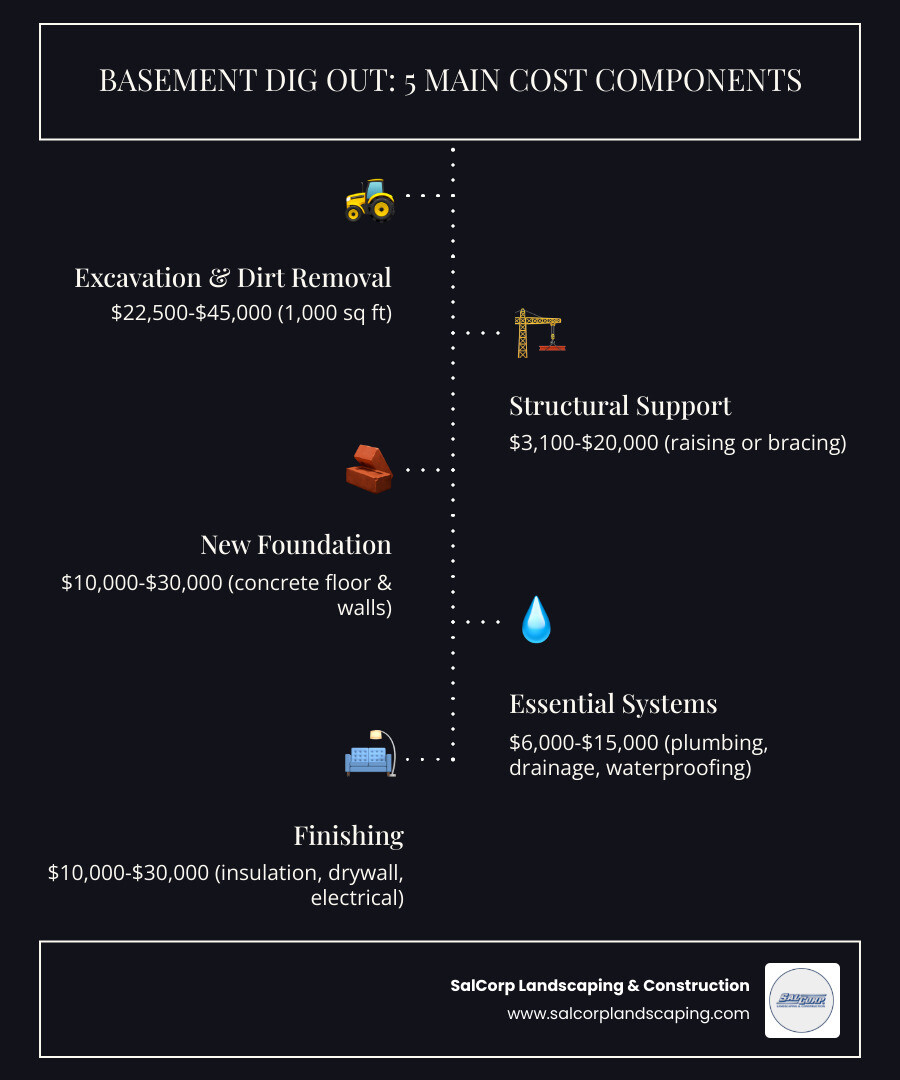
Here is a general breakdown of what drives these expenses, again using wide national internet averages for a 1,000-square-foot space and not specific quotes from our company:
- Excavation: $22,500 to $90,000 (digging and hauling)
- Structural Support: $3,100 to $25,000 or more for house raising or underpinning
- New Foundation: $10,000 to $35,000 for concrete floors and walls
- Systems: $3,000 to $12,000 for drainage and plumbing rough-ins
- Permits and Engineering: $1,200 to several thousand dollars, depending on your town and design needs
- Finishing: $10,000 to $40,000+ to create a livable area, depending on material choices
The scope and cost vary dramatically based on whether you are converting a crawl space, deepening a partial basement, or creating entirely new space under an existing home. For new construction, excavation is generally far less expensive than retrofitting an existing home, which requires the significant added cost of structural support and careful staging.
Beyond excavation, you must budget for waterproofing, drainage, plumbing, electrical, and HVAC systems, which can add $20,000 or more in average internet-based estimates. Then there is the decision to finish the space for living or leave it as storage, which significantly impacts your total investment.
Is it worth the expense? While a finished basement remodel typically returns around 70% of its cost, that figure applies to existing basements according to many industry sources, not new excavation projects, which have different economics. The answer depends on your property, local real estate market, and whether a traditional addition is a more cost-effective option.
As Sal Musto, owner of SalCorp Landscaping & Construction with over two decades of experience in site work and excavation in Massachusetts, I have seen how realistic basement dig out cost expectations are crucial for a successful project. Understanding these fundamentals is the first step.
Key Factors Influencing Your Basement Dig Out Cost
Understanding the factors that influence the final basement dig out cost is crucial. This is not just about moving dirt; it is about engineering a safe, functional space beneath your home. From soil conditions to local permits in Massachusetts communities like Walpole, Westwood, Needham, and the surrounding area, every detail plays a role.
Structural Work: Excavation, Support, and Foundation
The core of a basement dig out is the structural work, which represents a significant portion of the total basement dig out cost.
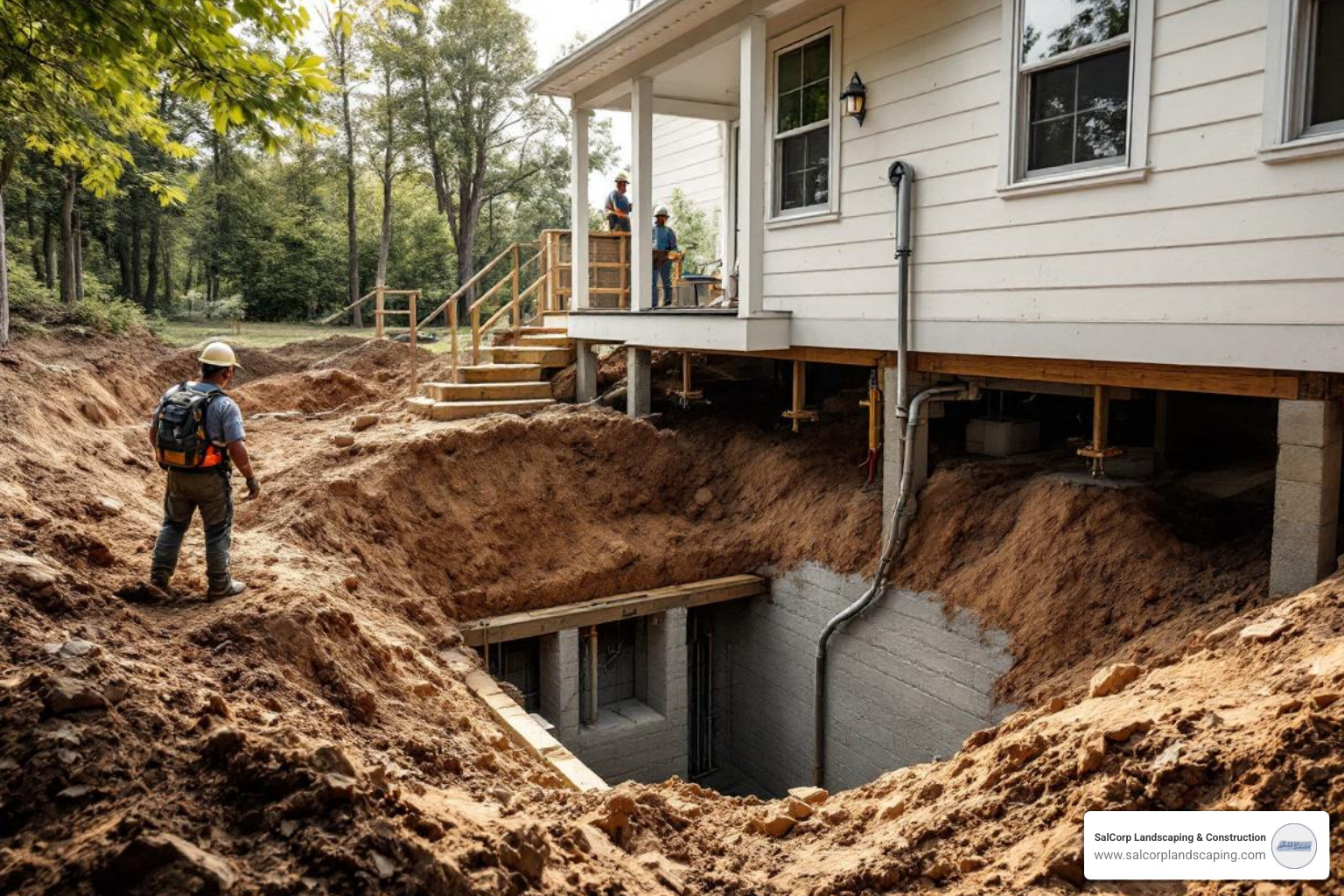
Excavation and Dirt Removal The volume of earth removed is a primary cost driver. Based on widely cited internet data, excavation costs can range from about $75 to $250 per cubic yard, depending on access and soil conditions. For a 1,000-square-foot basement, this translates to an average of roughly $22,500 to $90,000 for digging and hauling. Soil type greatly influences this cost; sandy soil is generally easier, while dense clay or rock is more challenging and expensive to excavate, potentially adding $20,000 or more for rock removal alone, according to many online sources. These numbers are broad averages from the internet and not specific pricing from SalCorp Landscaping & Construction.
Supporting the Existing House Ensuring your home’s structural integrity during the dig is a critical and potentially costly step. This is typically done by raising the house or underpinning the foundation.
- House Raising: Lifting the house with hydraulic jacks allows for easier excavation access. Average cost ranges found online are often between $3,045 and $9,379, but complex projects can be higher.
- House Bracing (Underpinning): This labor-intensive process involves extending the existing foundation deeper in sections. Underpinning can add $10,000 to $30,000 or more to the total basement dig out cost and requires expert precision.
All of these structural cost figures are general averages based on internet data and should not be interpreted as a quote from SalCorp.
Pouring a New Foundation Once excavated, a new foundation including concrete footings, walls, and a floor slab is built. According to many industry averages online, a new concrete foundation for a space in this size range often costs between $10,000 and $35,000. This forms the structural shell of your new basement and sets the stage for waterproofing and interior work.
For more information on excavation services in Massachusetts, visit our page on excavation services in Walpole MA. Please remember that all cost figures in this article are broad averages based on internet data and not actual costs for SalCorp Landscaping & Construction.
Essential Systems: Plumbing, Drainage, and Waterproofing
Integrating essential systems is crucial for a dry, functional basement and significantly impacts the overall basement dig out cost.
Plumbing and Drainage Systems A new basement typically requires rough-in plumbing for water supply and sewer lines if you plan to add bathrooms or laundry. Based on internet sources, this can cost roughly $2,300 to $7,000 or more, depending on the layout and distance to existing lines. A robust drainage system to prevent water accumulation is also paramount. A new drainage system, combined with basic plumbing rough-ins, can commonly range between $3,000 and $12,000 in online cost guides. Proper drainage directs groundwater away from your foundation, protecting your investment over the long term.
Waterproofing for Longevity Waterproofing is a critical investment, not an optional extra. Installing it during excavation often saves thousands compared to retrofitting it later. Based on internet averages, waterproofing a basement can cost between $2,300 and $8,000 or more, depending on whether you use interior systems, exterior membranes, or a combination of approaches. This typically involves applying membranes and sealants to the new foundation walls and managing surface and groundwater to help prevent moisture, mold, and structural damage.
Learn more about these crucial considerations on our page detailing the importance of excavation in landscaping and hardscaping.
Ancillary Expenses: Permits, Engineering, and Finishing
Beyond the core construction, several other expenses contribute to the total basement dig out cost.
Permits and Engineering Before work begins, you must secure permits from your local Massachusetts municipality, which typically cost between $500 and $2,000 according to online averages. Engaging a structural engineer to assess your home and design the plans is also crucial for safety. Engineering and design costs generally run into the thousands of dollars, depending on complexity, but are indispensable for a project this complex, which environmental safety experts regard as a high-risk construction activity.
Finishing Costs Changing the raw space into a livable area adds considerably to the basement dig out cost, with average finishing costs often ranging from $10,000 to $40,000+ based on internet data. Here are some common finishing expenses to consider, all drawn from broad online averages (and not actual SalCorp pricing):
- Insulation: $1,400 to $6,300 or more, depending on type and R-value
- Framing: $1,000 to $3,000+ for basic partition walls
- Drywall: Roughly $1.50 to $3.50 per square foot of wall area installed and finished
- Electrical Wiring: $3,500 to $11,000 or more, depending on the number of circuits and fixtures
- Flooring: Costs vary widely, from around $1 per square foot for basic vinyl to $20+ for high-end stone or specialty materials
- Painting: $1,000 to $4,000 for a 1,000 sq ft area, depending on prep work and paint quality
- Egress Windows: A safety requirement for bedrooms in most building codes, with each window often costing $2,500 to $8,000 according to internet sources
- HVAC: Extending or upgrading your system can range from about $2,000 to $9,000 or more for a single-zone unit, depending on the equipment and ductwork needed
These are average cost ranges from internet sources only; your material choices, layout, and local labor conditions in Massachusetts will directly impact the final price. For an accurate estimate custom to your property, you would need a site visit and detailed proposal from a qualified contractor.
Making the Decision: Is a Basement Dig Out Right for You?
Deciding to dig out a basement is a monumental undertaking. It requires careful thought, weighing the benefits against the significant investment and challenges. Below, we explore different project types, the potential return on investment, common risks, and how to approach this complex project wisely.
Comparing Your Options and the Associated Basement Dig Out Cost
The approach to adding basement space significantly impacts the project’s complexity and overall basement dig out cost. The table below compares the main scenarios, with all costs based on broad internet data ranges. These are not quotes from SalCorp Landscaping & Construction and should only be used for very general planning.
| Project Type | Average Cost Range (Internet Data) | Complexity | Disruption Level | Key Considerations |
|---|---|---|---|---|
| New Construction | $10,000 – $40,000 (excavation alone) | Low | Minimal (pre-build) | Most affordable option; integrates seamlessly with home design and site grading. |
| Crawl Space Conversion | $50,000 – $200,000+ | Medium to High | Significant | Requires less excavation than a full dig-out but still involves major structural work. |
| Deepening Existing Basement | $40,000 – $150,000+ | High | Very High | Requires underpinning the existing foundation; often very disruptive to daily living. |
| Digging Under Existing Home | $60,000 – $180,000+ (total project) | Very High | Very High | Most complex and costly; requires significant structural engineering and temporary support. |
New Construction: Including a basement from the outset is by far the most cost-effective option, with excavation being a relatively straightforward part of the build.
Crawl Space Conversion: This popular option in many Massachusetts homes involves significant excavation and structural modifications to turn a shallow space into a full-height basement.
Deepening an Existing Basement: For homes with a shallow basement, digging down increases headroom but requires carefully underpinning the existing foundation.
Digging Under an Existing Home: This is the most complex scenario, involving raising or bracing the house to create a new basement where none existed.
Weighing the ROI, Risks, and Project Timeline
Before committing, consider the financial return, inherent risks, and project duration.
Return on Investment (ROI) Adding usable square footage almost always increases home value, especially in competitive Massachusetts markets like Boston, Brookline, or Newton. However, the direct ROI for a newly excavated basement is nuanced. Many industry statistics show around a 70% average ROI for remodeling an existing basement, but this does not account for the much higher upfront basement dig out cost that includes excavation and structural work. In some neighborhoods, the added living space and improved layout can make your home far more marketable, but building up or out may be a less costly way to add space if your lot and local zoning allow it.
Risks and Challenges Excavation is considered one of the most dangerous construction types by environmental safety experts. Key risks include:
- Structural Integrity: Improper support can lead to foundation damage or, in the worst case, partial collapse. An experienced structural engineer and qualified excavation contractor are non-negotiable.
- Water Intrusion: Without meticulous waterproofing and drainage, your new basement could become a damp, mold-prone space that undermines your investment.
- Unexpected Obstacles: Hidden boulders, buried debris, utility lines, or a high water table can cause significant delays and cost overruns.
- Disruption: The process is loud, messy, and can make parts of your home or yard unusable for weeks or months while machinery, soil piles, and materials occupy the site.
Project Duration The timeline varies by complexity. Digging a basement during new construction may take a few weeks as part of the broader build. However, a conversion or full dig-out under an existing home can take 2 to 5 weeks for just the excavation and foundation work, with the entire project often stretching over several months once permitting, inspections, and finishing are included.
How to Save Money and Hire the Right Professionals
While a basement dig out is a major investment, there are ways to manage the basement dig out cost and help ensure a successful outcome.
Cost-Saving Strategies
- Get Multiple Quotes: Obtain detailed written estimates from at least three reputable contractors with specific basement excavation experience.
- Plan Ahead: Finalize your layout and finishes before construction begins to avoid costly mid-project changes.
- DIY Finishing Tasks: If you have the skills, tackle non-structural tasks like painting, basic trim, or some flooring to save on labor costs. Never attempt DIY excavation, underpinning, or structural changes.
- Bundle Services: If you need other site work such as grading, drainage improvements, or hardscaping, bundling it with your dig out may reduce the overall rate because the equipment is already on-site.
- Leave Partially Unfinished: Complete the structural work, waterproofing, and rough-ins now, and finish portions of the space later as your budget allows.
Hiring the Right Professionals This is the most critical step. Look for companies with specific experience in basement excavation and site work under existing homes in your Massachusetts area (such as Walpole, Needham, Westwood, Canton, and the many other communities we serve).
Here at SalCorp Landscaping & Construction, we bring over 20 years of owner-operated experience to every project. We understand the unique challenges of excavation in Massachusetts, from varying soil and ledge conditions to local regulations and permitting. Our team operates our own machinery, which helps us maintain efficiency and control from the first bucket of soil to the final grading.
When vetting contractors, always verify their licenses and insurance, ask for references for similar projects, and ensure they provide a detailed contract that clearly outlines scope, schedule, payment terms, and how unforeseen conditions will be handled.
With the right planning and a trusted professional partner, you can transform your property and gain valuable living space. To discuss your project and receive a professional estimate for excavation or related site work, please contact SalCorp Landscaping & Construction today.
