

Best Above Ground Sprinkler Setup: Top 7 Proven Picks 2025
Why Finding the Best Above Ground Sprinkler Setup Matters for Your Property
The best above ground sprinkler setup transforms lawn care from a time-consuming chore into an automated system that keeps your grass healthy while saving water and effort. Based on extensive testing and research, here are the top options by yard size:
Small Lawns (Under 2,500 sq ft):
– Dramm 9-Pattern Turret Sprinkler – covers up to 575 sq ft with adjustable patterns
– Gardena ZoomMaxx Oscillating – handles up to 2,300 sq ft with precise width control
Medium Lawns (2,500-5,000 sq ft):
– Eden Turbo Oscillating – covers up to 4,973 sq ft with 20 nozzles
– Melnor XT with Flow Control – adjustable coverage with built-in pressure regulation
Large Lawns (Over 5,000 sq ft):
– Orbit Impact on Tripod – reaches up to 5,670 sq ft with 30-40 foot radius
– Traveling Sprinklers – automatically water up to 13,500 sq ft by following hose paths
Key factors for choosing your setup include water pressure (most need 30-60 PSI), coverage area, and automation level. Smart controllers with weather intelligence can reduce water usage by up to 50% while maintaining optimal lawn health.
Most above ground systems install in under an hour without digging, making them perfect for rental properties or temporary solutions. The investment typically pays for itself through reduced water bills and eliminated manual watering time.
As Sal Musto, owner of SalCorp Landscaping & Construction with over 20 years of experience in outdoor space management, I’ve helped countless Massachusetts property owners select the best above ground sprinkler setup for their specific needs. My hands-on approach ensures each system delivers maximum coverage and water efficiency for long-term property value.
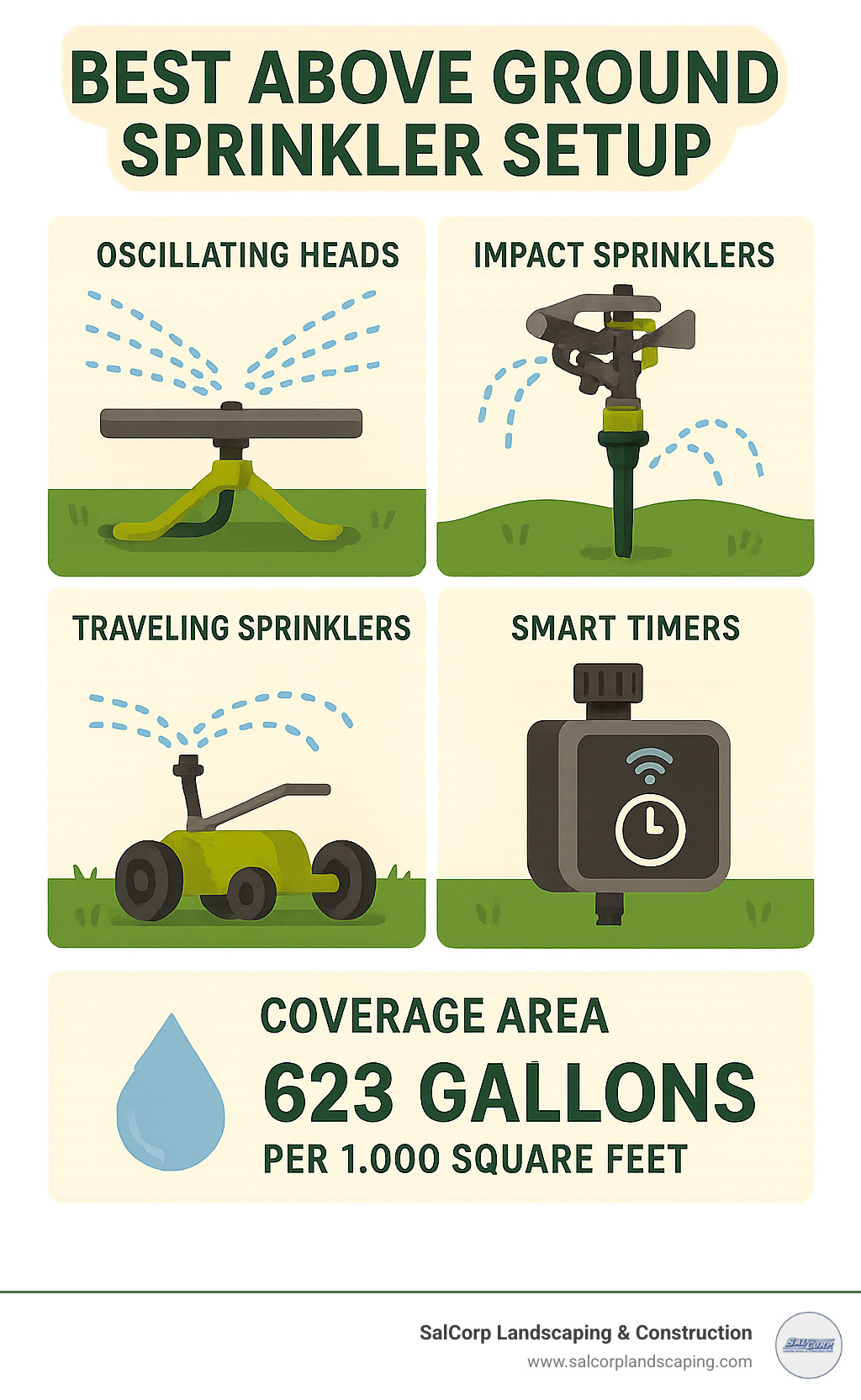
Best above ground sprinkler setup terminology:
– designing underground sprinkler system
– installing irrigation system for garden
– lawn sprinkler system setup
Understanding Above Ground Sprinkler System Types
Picking the right sprinkler type is the first step to building the best above ground sprinkler setup for your yard. At SalCorp Landscaping, we’ve seen hundreds of lawns across Massachusetts and can confirm: the right sprinkler makes all the difference.
Above ground sprinklers generally fall into six categories, each with its own strengths. The big differences come down to how they spray water, what coverage shape they offer, and how much water pressure they need. Most homes in Massachusetts will have water pressure between 30 and 60 PSI, which works well for the models we recommend.
Oscillating Sprinklers for Rectangular Areas
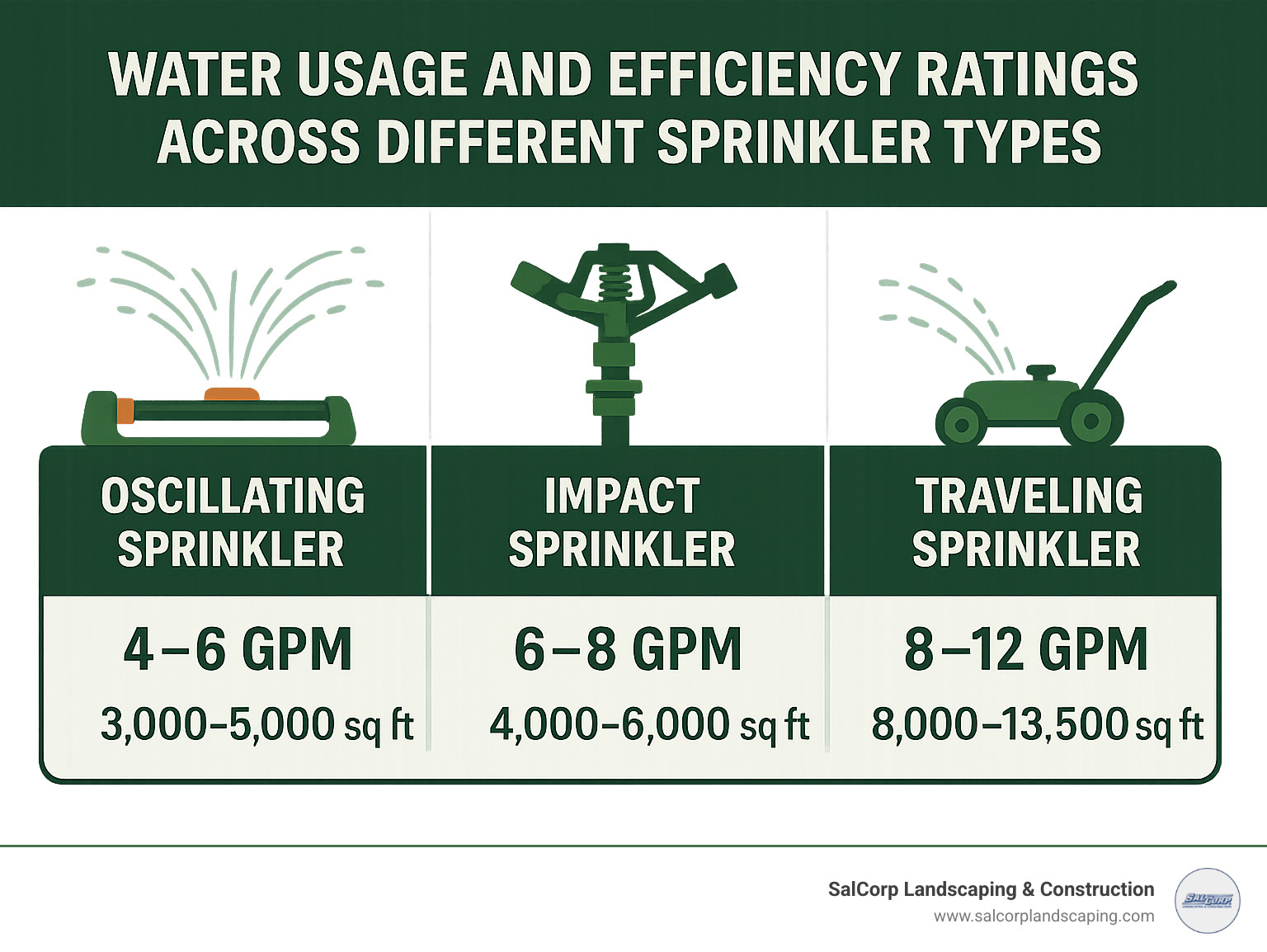
If your lawn is more rectangle than circle, oscillating sprinklers are a perfect fit. These are the classic “back-and-forth” models that sweep a gentle arc. The Eden Turbo Oscillating sprinkler, with its 20 nozzles and powerful motor, can handle up to 4,973 square feet, covering most front and back lawns with ease.
Oscillating sprinklers work by moving a long, perforated tube side to side, distributing water evenly across rectangular areas. You can adjust the width, so they’re just as good for narrow strips by the sidewalk as they are for wide open patches. Models with metal construction, like the Aqua Joe series, hold up better over time.
If your yard has defined boundaries, such as between a driveway and a flower bed, an oscillating sprinkler gives you the cleanest, most efficient coverage.
Impact and Pulsating Sprinklers for Large Yards
When you need to cover a lot of ground, impact and pulsating sprinklers are tough to beat. These create a circular spray pattern by shooting out jets of water that pulse around in a steady rhythm (you’ll recognize the signature “tch-tch-tch” sound).
Set up on a tripod base, models like the Orbit Impact Sprinkler reach a 30-40 foot radius and can cover up to 5,670 square feet. The adjustable height gives you even more reach, which is especially useful if you have tall grass or uneven ground.
Look for sprinklers with brass fittings—they’re less likely to rust and much more reliable season after season. The Melnor Deluxe Metal Pulsating Sprinkler is a standout, offering wide spray and solid build quality.
Traveling Sprinklers for Automated Coverage
If you love the idea of automation, traveling sprinklers might be your new favorite tool. These clever machines are self-propelled, using water pressure to crawl along your garden hose like a little green tractor, watering as they go.
The Orbit Traveling Sprinkler can cover up to 13,500 square feet—all you do is lay out your hose in the route you want it to follow. Once it starts, you can kick back and let the sprinkler do all the work. These are especially handy for sprawling lawns or irregular shapes where a stationary sprinkler just wouldn’t cut it.
Traveling sprinklers are also pretty smart: most come with automatic shut-off features, stopping once they reach the end of the hose.
With so many options, the key is to match your lawn’s shape, size, and water pressure to the sprinkler type that fits best. For more on irrigation and lawn care, check out our lawn sprinkler system setup and installing irrigation system for garden resources.
Best Above Ground Sprinkler Setup Components and Planning
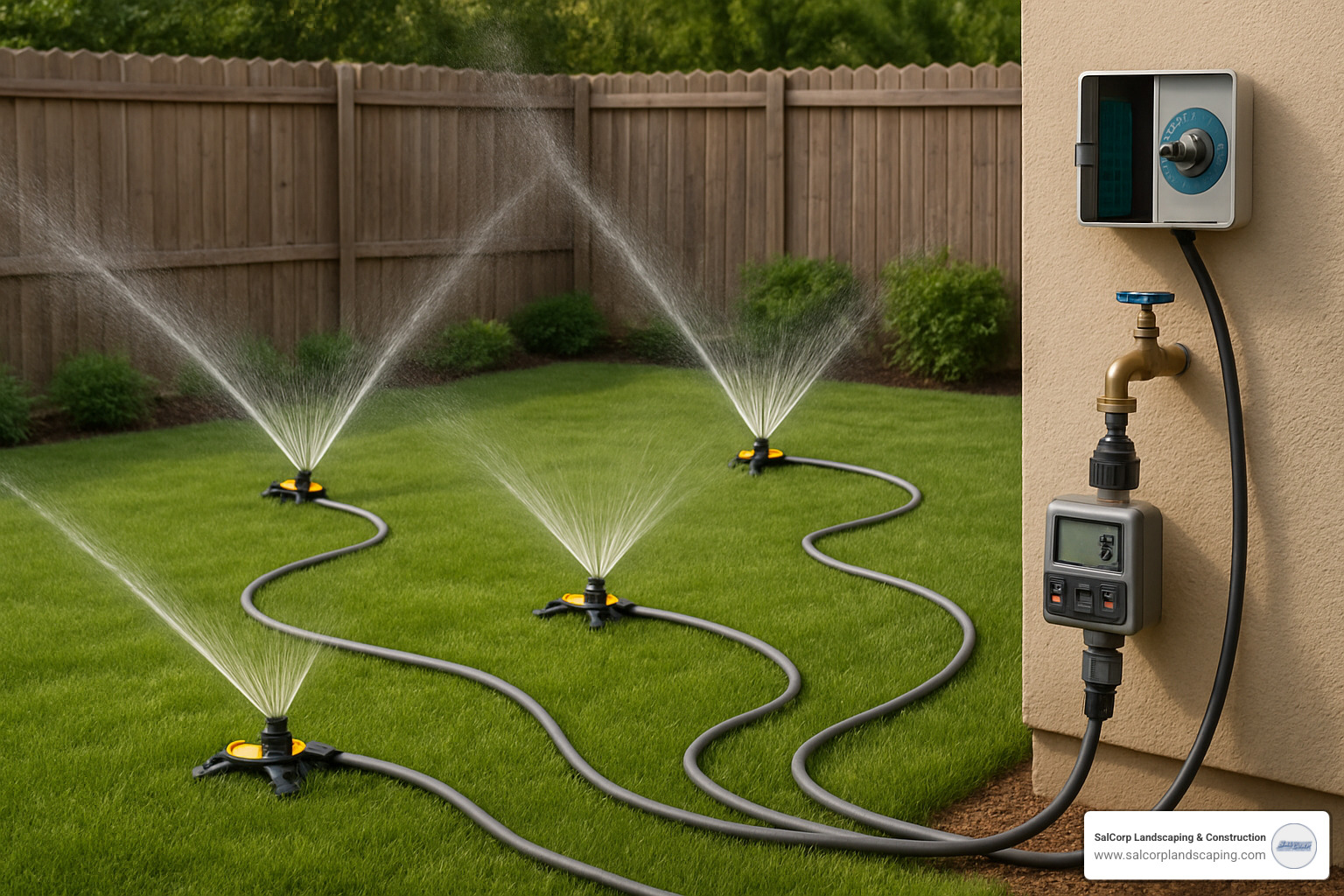
Building the best above ground sprinkler setup is like putting together a puzzle – every piece needs to fit perfectly for the whole picture to work. After two decades of helping Massachusetts homeowners create effective irrigation systems, I’ve learned that the secret isn’t in having the fanciest equipment, but in understanding how water pressure, flow rates, and timing work together.
The biggest mistake I see people make is rushing to buy sprinklers without understanding their water system’s capabilities. Your home’s water pressure and flow rate determine everything else about your setup.
Calculating Your Lawn’s Water Needs
Getting your lawn’s water needs right feels overwhelming at first, but it’s actually pretty straightforward once you know the basics. The magic number to remember is 623 gallons per 1,000 square feet – that’s how much water you need to give your grass a proper 1-inch drink.
Start by walking your property with a measuring tape. Break your lawn into sections that make sense – maybe your front yard gets full sun while the back stays shady, or you have that stubborn hill that always seems dry.
Pressure testing is easier than it sounds. Grab a water pressure gauge from any hardware store, screw it onto your outdoor spigot, and turn on the water. Most sprinklers need at least 30 PSI to work properly, with the sweet spot being around 40-60 PSI.
The flow rate measurement uses the old bucket trick that never fails. Fill a 5-gallon bucket while timing yourself, then divide 5 by however many minutes it took. This gives you your gallons per minute, which determines how many sprinklers you can run at once.
Coverage overlap prevents those annoying brown stripes that show up between sprinkler zones. Plan for about 10-15% overlap between coverage areas – it’s like overlapping paint strokes when you’re painting a wall.
Smart Controllers and Automation Options
Smart controllers have revolutionized how we think about lawn watering, and honestly, they’re game-changers for busy homeowners. Weather-based scheduling automatically adjusts your watering based on local conditions, which can cut your water usage in half while keeping your grass healthier than manual watering.
Programmable timers offer the most bang for your buck if you’re just starting with automation. These battery-powered units let you set multiple watering times throughout the day and work great even if you don’t have electrical outlets near your water source.
Weather intelligence features connect to local weather stations and automatically skip watering when it’s raining. These systems adjust for temperature, humidity, and seasonal changes without you having to remember to reprogram everything.
Mobile app integration means you can control your sprinklers from anywhere – whether you’re stuck in traffic or vacationing in Florida. Many systems send alerts if something goes wrong.
Rain sensors provide the biggest water-saving impact for the smallest investment. These simple devices automatically shut off your system when it starts raining, typically reducing water waste by 20-30% during our typical Massachusetts growing season.
Top-Rated Above Ground Sprinkler Models by Yard Size
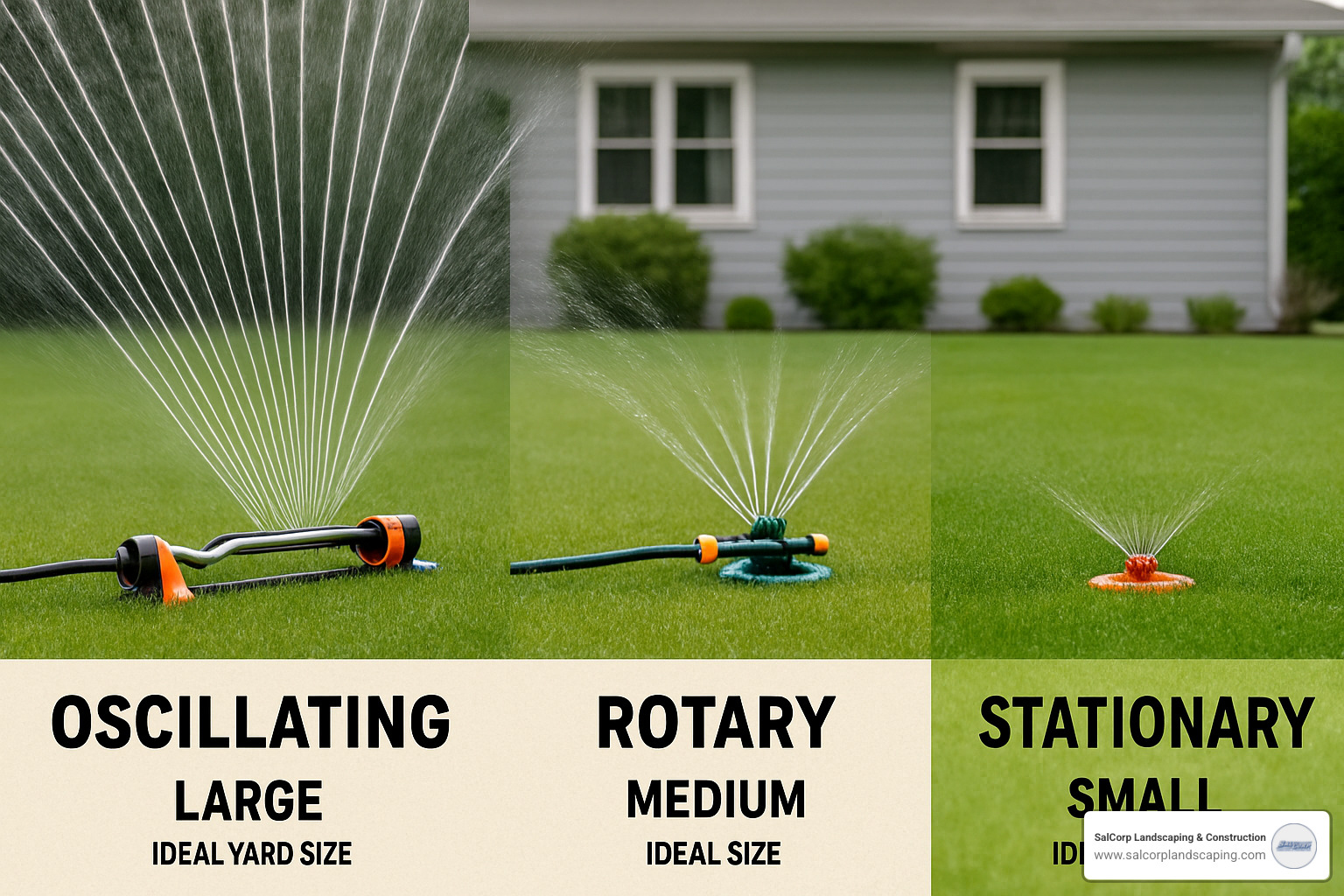
Finding the best above ground sprinkler setup for your property starts with matching the right sprinkler to your lawn size. After years of helping Massachusetts homeowners with their irrigation needs, I’ve learned that yard size is the biggest factor in sprinkler selection.
Your water pressure, the shape of your lawn, and how much automation you want all play important roles too. Most sprinkler manufacturers test their products under perfect conditions, so expect about 80-90% of the advertised coverage in real-world use.
Best Setups for Small Lawns (Under 2,500 Square Feet)
Small lawns need precision more than power. The Dramm 9-Pattern Turret Sprinkler handles this perfectly, covering up to 575 square feet with nine different spray patterns you can adjust on the fly. This flexibility means you can water your front yard strips without soaking the sidewalk.
What makes this sprinkler special is its metal spike base that pushes right into the ground for stability. At 14.4 ounces, it’s heavy enough to stay put but light enough to move around easily. The nine patterns include everything from a gentle mist for delicate areas to a full circle for open spaces.
For homeowners with slightly larger small lawns, the Gardena ZoomMaxx oscillating sprinkler covers up to 2,300 square feet while giving you precise width control. This feature prevents water waste – something I see too often with poorly chosen sprinklers.
These smaller systems work great at lower water pressures too, typically performing well at 25-35 PSI. This makes them perfect if you’re running other outdoor water features or if your home has older plumbing.
Best Setups for Medium Lawns (2,500-5,000 Square Feet)
Medium-sized lawns hit the sweet spot where you can get excellent coverage without breaking the bank. The Eden Turbo Oscillating sprinkler dominates this category, covering an impressive 4,973 square feet with its 20 nozzles and turbo drive motor.
This coverage means you won’t spend your evenings moving sprinklers around every 30 minutes. Set it up once, and it waters your entire medium lawn in one session. The turbo drive motor ensures the oscillation stays smooth and consistent, even after months of regular use.
For properties where water pressure fluctuates – common in neighborhoods with lots of irrigation systems – the Melnor XT with Flow Control offers built-in pressure regulation. This feature maintains steady spray patterns whether your neighbors are watering or not.
These systems perform best with 35-50 PSI water pressure and 4-6 GPM flow rates, which matches what most residential water systems provide without any upgrades.
Best Setups for Large Lawns (Over 5,000 Square Feet)
Large lawns require serious irrigation equipment. The Orbit Impact Sprinkler on Tripod Base rises to this challenge, covering up to 5,670 square feet with its impressive 30-40 foot radius. The adjustable tripod height helps you clear flower beds and other obstacles while maximizing spray distance.
The impact mechanism creates that distinctive “tick-tick-tick” sound you might remember from childhood, but there’s science behind it. This pulsating spray penetrates soil more effectively than continuous spray, making it perfect for the clay soils we see throughout Massachusetts.
For truly massive lawns, traveling sprinklers represent the ultimate automation. These self-propelled units follow your garden hose path, automatically watering up to 13,500 square feet without any manual repositioning.
When your lawn exceeds 8,000 square feet, multiple zone systems become practical. Instead of one giant sprinkler, you use several smaller ones controlled by programmable timers. This approach gives you better water pressure management and lets you customize watering for different areas of your property.
The best above ground sprinkler setup for large lawns often combines multiple approaches – perhaps an impact sprinkler for the main lawn area and oscillating sprinklers for rectangular sections near the house.
Installation and Maintenance Best Practices
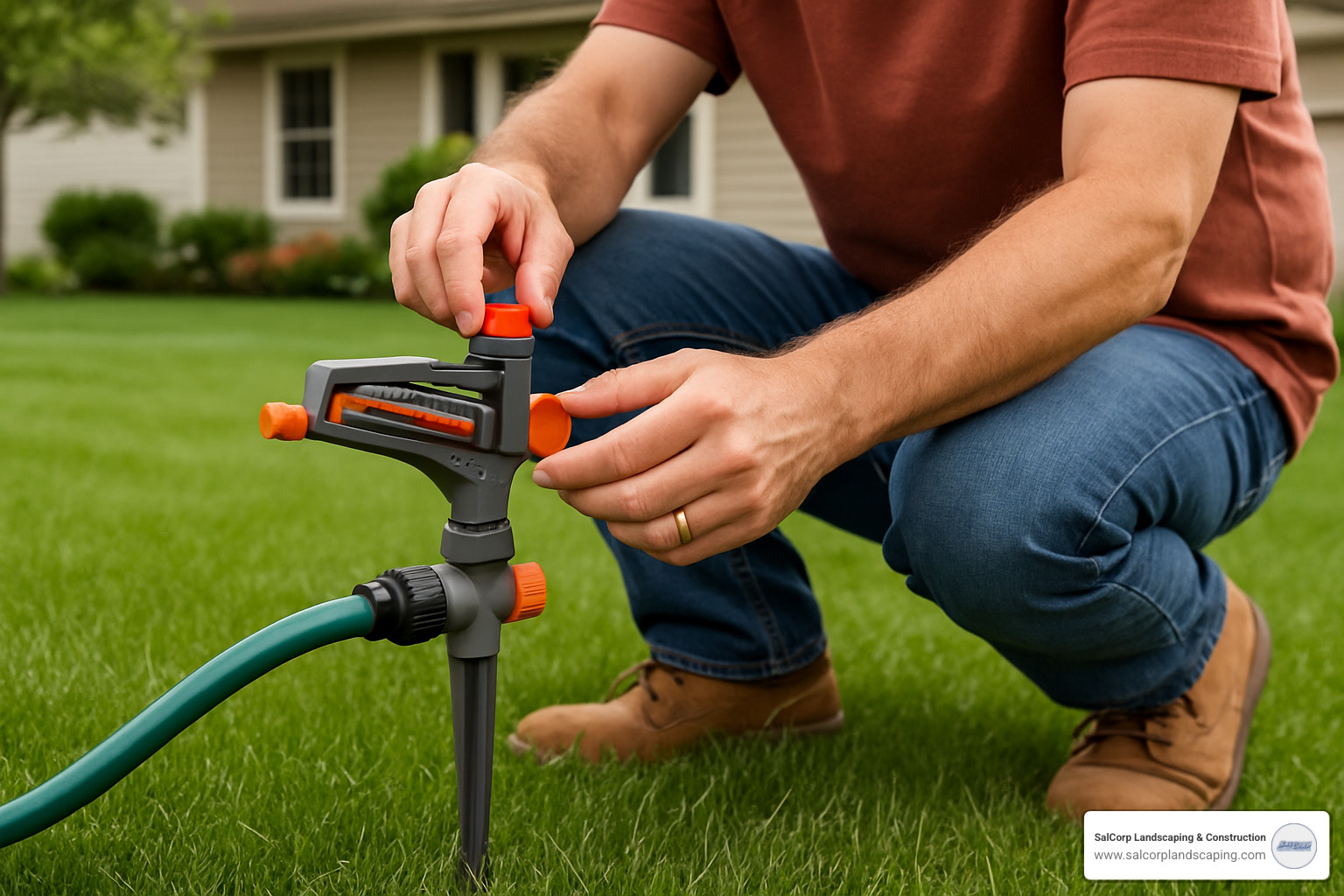
Setting up the best above ground sprinkler setup is a bit like making a good sandwich—if you skip the important steps, you end up with a soggy mess! A careful installation is the secret to getting even, reliable watering and making sure your sprinklers last season after season.
Step-by-Step Installation Process
First, grab a water pressure gauge and check your outdoor spigot. Attach it and turn the water on full blast. That number you see? That’s the real pressure your sprinklers will use.
Next, measure your lawn and sketch a quick map. Mark out where you want your sprinklers to sit so you get full coverage without big overlaps or missed spots. Watch out for trees, flower beds, patios, and curious little feet.
When routing hoses, keep them as short and direct as possible. Try to avoid laying hoses where people walk since nobody likes tripping mid-barbecue. Simple hose guides or stakes help keep things tidy and prevent accidental yanks.
Place each sprinkler on level ground. For oscillating or impact sprinklers, make sure the head is nice and straight. Adjust the spike or tripod legs so the spray goes where you want—nobody wants to water the driveway more than the daisies.
If you’re using a timer or smart controller, set it up according to your lawn’s needs. Early morning is the gold standard—watering between 6-10 AM means less evaporation and healthier grass.
Don’t skip system testing! Turn everything on and watch for leaks at connections, weird spray patterns, or dry patches. Give each zone 10-15 minutes and tweak as needed.
Seasonal Maintenance and Troubleshooting
Just like your car needs an oil change, your sprinkler system needs regular checkups. Monthly walk-arounds during the growing season can catch issues before they become headaches.
Cleaning the nozzles is key—grass clippings, leaves, and even tiny bugs love to sneak in and block the spray. Unclog them with a small brush and a gentle soap solution. Most heads come apart easily for this purpose.
Keep an eye on water pressure as seasons change. If you notice weaker sprays or uneven watering, it might be time to adjust your setup or check for leaks.
When winter rolls in, it’s important to drain all water from hoses and sprinkler units. Storing them in a dry, heated space prevents cracks and damage from freezing.
Come spring, inspect every piece for signs of damage before reconnecting. Check for leaks, worn-out seals, or cracked parts. Slowly bring up the water pressure and watch for any surprises.
Proper installation and steady maintenance are what truly allow the best above ground sprinkler setup to shine. If you’re ever unsure, SalCorp Landscaping & Construction is always happy to help keep your lawn green, healthy, and your watering effortless all season long.
Cost Analysis and Water Conservation
Let’s talk about the real costs of keeping your lawn green because nobody likes surprise water bills! Understanding irrigation expenses goes beyond the initial equipment purchase. It includes monthly water usage, seasonal maintenance, and those inevitable replacement parts.
Our experience with Massachusetts homeowners shows that a well-chosen best above ground sprinkler setup typically pays for itself within 2 93 growing seasons. The savings come from reduced water waste, eliminated manual watering time, and preventing those brown patches that require expensive lawn repair.
Here’s something that might surprise you: water usage varies dramatically between hose sizes. A typical 0.5 Din garden hose at 60 PSI uses approximately 630 gallons per hour, while stepping up to a 0.75 Din hose can use up to 1,860 gallons per hour. That difference shows up quickly on your water bill!
According to the EPA’s WaterSense program, most homeowners overwater by 30 40% simply because they’re guessing at timing and coverage needs.
Budget-Friendly Setup Options
You don’t need to break the bank to get reliable lawn irrigation. Entry-level systems work perfectly well for most residential properties, especially those under 3,000 square feet. Basic oscillating sprinklers with plastic construction deliver adequate performance without premium price tags.
DIY installation eliminates professional setup costs while giving you valuable hands-on experience with your system. Most above ground sprinklers can be installed and running within an hour using basic tools you probably already own.
Basic timers add automation without the complexity of smart controllers. Mechanical timers provide reliable scheduling for very reasonable costs, while battery-powered digital models offer more programming flexibility.
The real maintenance savings show up over time with quality equipment. Investing in metal construction and brass fittings costs more upfront but typically reduces long-term expenses significantly.
Water-Saving Technologies and Techniques
Modern smart controllers represent the biggest leap forward in irrigation efficiency. These systems can reduce water usage by up to 50% while actually improving your lawn’s health. They automatically adjust watering schedules based on local weather conditions, soil moisture levels, and seasonal plant needs.
Weather-based scheduling eliminates those frustrating moments when your sprinklers turn on during rainstorms. The system connects to local weather data and skips unnecessary watering during rain events.
Soil moisture sensors take the guesswork out of watering decisions. These devices provide real-time feedback about actual soil conditions rather than relying on predetermined schedules.
Rainwater collection can supplement your irrigation water supply using roof runoff captured in storage tanks. While large-scale collection isn’t practical for extensive lawns, smaller gardens benefit significantly from harvested rainwater.
The bottom line? Efficient irrigation technology has come a long way, and the water savings can be substantial. Even simple upgrades like adding a rain sensor can reduce your water usage by 20 30% during a typical Massachusetts growing season.
Frequently Asked Questions about Above Ground Sprinkler Setups
What is the most efficient above ground sprinkler setup for water conservation?
If you want the best above ground sprinkler setup for saving water, look for a system that pairs rotary sprinklers with smart, weather-based controllers and soil moisture sensors. Rotary sprinklers are a water-wise choice—they release water slowly and steadily, so it soaks into the soil instead of running off or evaporating. Less waste, more green!
Adding a smart controller is a real game-changer. These clever devices watch the weather for you, automatically pausing watering when it rains or reducing watering time when it’s cloudy and cool. With this technology, your sprinkler system can cut water use by 30–50% compared to old-fashioned, fixed schedules. Your lawn stays happy and you don’t have to play “guess the forecast.”
For even better results, set up smaller sprinklers in each area of the yard. This lets you water different spots based on what they need—sunny patches might need more frequent watering, while shady zones can get by with less. The result? Every part of your lawn gets just the right amount of TLC (and not a drop more).
How do I determine the right water pressure for my sprinkler system?
To check if your water pressure is a good fit for your sprinklers, grab a pressure gauge and screw it onto your outdoor spigot. Turn the water on at full blast and take a reading. Most above ground sprinklers perform their best between 30 and 60 PSI (pounds per square inch)—but double-check the requirements in your sprinkler’s manual just to be sure.
If you’re using impact or pulsating sprinklers, you’ll want pressure on the higher end (think 40–60 PSI) to get maximum coverage. Oscillating sprinklers can usually hum along just fine with lower pressure, around 25–40 PSI.
If your pressure is a little low, don’t worry—there are sprinklers designed for lower pressure, or you might add a small pressure booster. On the flip side, if you’re pushing much over 70 PSI, a pressure-reducing valve is a good idea to protect your equipment and keep the water spray just right. A little adjustment goes a long way to making sure your best above ground sprinkler setup works smoothly from season to season.
Can I install multiple sprinklers to cover my entire lawn automatically?
Absolutely—you can cover your whole yard without ever dragging a sprinkler across the grass again. The key is to set up multiple sprinkler “zones,” each with its own sprinkler(s) and a programmable timer. This way, each part of your lawn gets watered on schedule, and you can kick back and enjoy the view.
First, check your home’s water flow using the trusty bucket test (time how long it takes to fill a 5-gallon bucket at full flow). Most homes can handle about five to six rotary sprinklers or eight to ten spray heads at once per zone—just be sure not to exceed your flow rate or pressure limits.
Set up a multi-outlet timer or a manifold to control the different zones. The secret sauce? Schedule only one zone to run at a time. That way, each area gets the pressure and water it needs, and you don’t overload your system. With these steps, your best above ground sprinkler setup will make lawn care a breeze—no more running around with hoses, just lush green grass all season long.
If you ever want expert help or a custom design for your property, SalCorp Landscaping & Construction has over 20 years of experience helping Massachusetts homeowners get their irrigation systems just right.
Conclusion
Finding the best above ground sprinkler setup is all about matching your yard’s needs with the right tools—and a dash of smart planning. Whether you have a cozy patch of grass or a sprawling backyard, there’s a setup that will keep your lawn healthy, green, and hassle-free.
If you have a small lawn, you’ll love the precision and flexibility of sprinklers like the Dramm 9-Pattern Turret. For bigger spaces, impact or traveling sprinklers can make short work of watering—no need to run around with a hose. The most important thing is to consider your water pressure, lawn shape, and how much time you want to spend on irrigation.
Technology has changed the game, too. Smart controllers and weather-based schedulers are not just fancy gadgets—they’re real water savers. They adjust your watering plan based on the weather, so you use just the right amount of water.
At SalCorp Landscaping & Construction, we’ve spent over 20 years helping Massachusetts homeowners create outdoor spaces that are both beautiful and practical. Because we’re owner-operated, every project gets personal attention. Whether you want a single sprinkler or a fully automated, multi-zone system, you’ll get the benefit of our expertise—plus our own machinery, so the job’s done right the first time.
If you want to skip the guesswork, professional help can make all the difference. We’re here to guide you, from planning and installation to long-term maintenance. Serving communities from Walpole to Cape Cod, we’re committed to smart, reliable solutions that bring out the best in your property.
Ready to make lawn care simple—and maybe even a little fun? Contact us today to learn how the best above ground sprinkler setup can save you time, conserve water, and help your yard shine. With the right system, you’ll spend less time watering and more time enjoying the outdoors.
