Best Time Grass Seed Planting: 7 Powerful Tips for Success 2025
Why Timing Makes or Breaks Your Grass Seed Success
Best time grass seed planting is the single most important factor determining whether you’ll have a lush, thick lawn or patchy disappointment come spring. The difference between success and failure often comes down to just a few weeks – or even days.
Quick Answer for Massachusetts Homeowners:
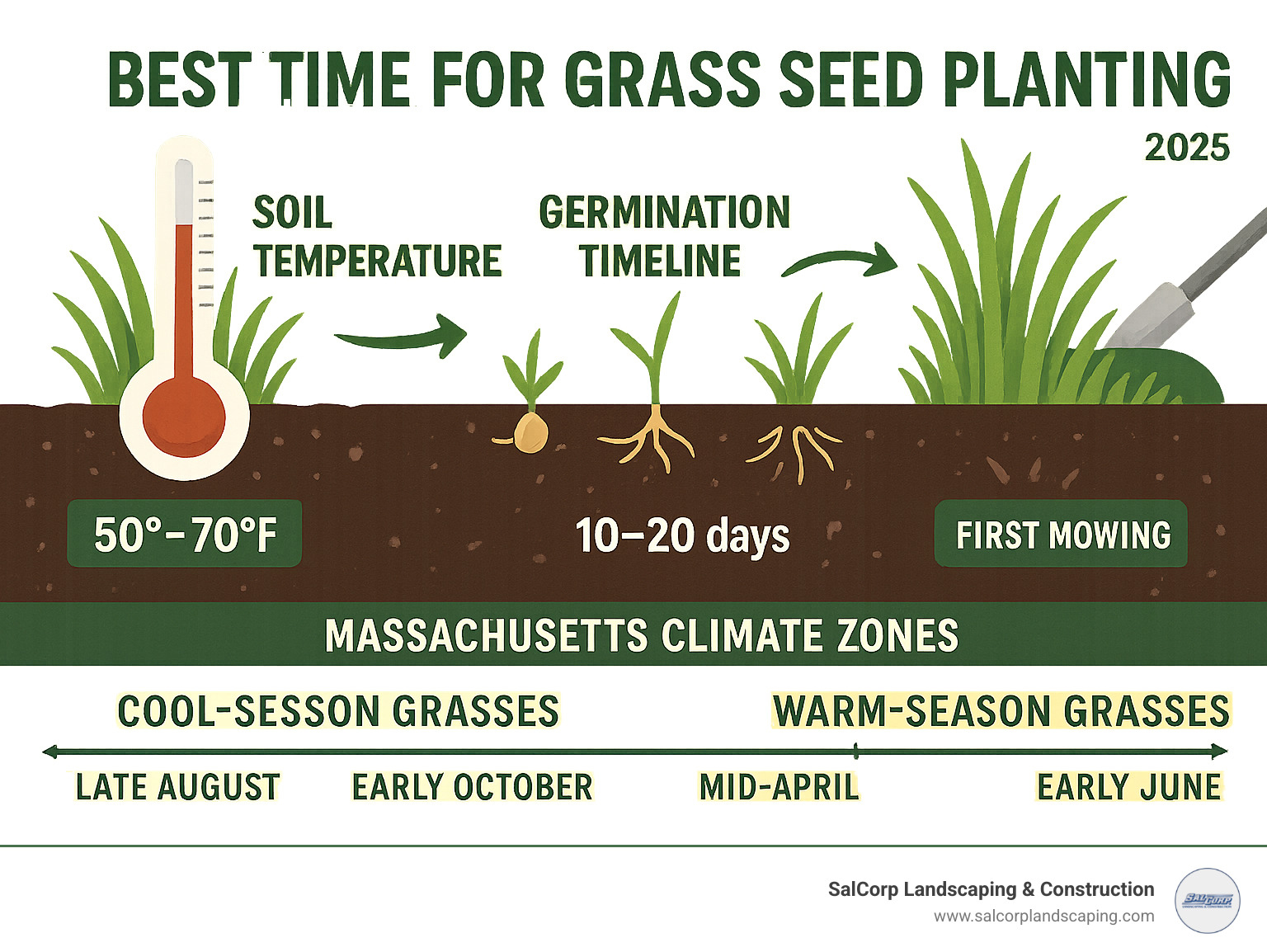
- Cool-season grasses (Kentucky bluegrass, fescue, ryegrass): Late August to early October
- Warm-season grasses (Bermuda, Zoysia): Mid-April to early June
- Soil temperature threshold: 50-60°F for cool-season, 65-70°F for warm-season
- Rule of thumb: 45 days before first frost for cool-season, 90 days for warm-season
When your sights are set on a thick, lush lawn, planting grass seed represents an investment of time, money, labor and hope. Yet many Massachusetts property managers and homeowners make the costly mistake of scattering seed without considering soil temperature, seasonal moisture patterns, or regional frost dates.
The research is clear: timing aligned with your grass type’s natural growth cycle is critical. Cool-season grasses germinate best when soil temperatures reach 50-60°F, while warm-season varieties need consistent soil temps of 65-70°F. Plant too early and seeds may rot in cold, wet soil. Plant too late and seedlings won’t establish strong roots before winter dormancy or summer stress.
I’m Sal Musto, owner of SalCorp Landscaping & Construction, and over two decades of changing Massachusetts lawns has taught me that understanding the best time grass seed planting windows can save property owners thousands in re-seeding costs.
Best time grass seed planting definitions:
– installing new grass sod
– lawn installation services
– sodding landscaping
Know Your Grass & Climate First
Best time grass seed planting isn’t about the calendar date – it’s about understanding what type of grass you’re planting and what Mother Nature is doing in your specific corner of Massachusetts.
Massachusetts sits in USDA hardiness zones 5a through 7a, making us prime territory for cool-season grasses. We can even grow some warm-season varieties in protected spots that catch extra sun.
After 20 years of planting grass across the Bay State, I’ve learned that most homeowners make one critical mistake: they pay attention to air temperature instead of soil temperature. Your grass seeds don’t care what the thermometer on your deck says – they care about how warm the dirt feels around them.
Cool-season grasses need soil temperatures between 50-60°F to wake up and start growing. Warm-season grasses are pickier – they want soil temperatures consistently between 65-70°F.
The scientific research on planting times backs up what we see in the field: grass grows best when you plant during its natural growth periods.
| Grass Type | Soil Temp | Air Temp | Best Planting Window | Germination Time |
|---|---|---|---|---|
| Cool-Season | 50-60°F | 60-75°F | Late Aug – Early Oct | 7-21 days |
| Warm-Season | 65-70°F | ~80°F | Mid-Apr – Early Jun | 14-30 days |
Cool-Season Champions
Kentucky bluegrass, tall fescue, and perennial ryegrass are the reliable workhorses that thrive in our Massachusetts climate. These grasses have two growing seasons – spring and fall – but fall is absolutely the sweet spot for new plantings.
Why does fall win for best time grass seed planting? The soil is still holding onto summer’s warmth, but the air has cooled down. Your seeds get the warm soil they need to germinate quickly, while the cooler air prevents them from getting stressed out. Plus, fall usually brings more rain.
Kentucky bluegrass takes 4-6 weeks to fully emerge. Perennial ryegrass pops up in just 1-2 weeks. Tall fescue splits the difference at 7-12 days. That’s why we often recommend seed mixes – the quick ryegrass gives you instant gratification while the slower bluegrass builds long-term durability.
Warm-Season Winners
Bermuda, Zoysia, and centipede grasses need consistent soil temperatures above 65°F to germinate. In Massachusetts, that limits your planting window to late spring through early summer – typically mid-April to early June.
These grasses are tough once established. They handle summer drought and heavy foot traffic better than most cool-season grasses. The catch? They need at least 90 days before the first fall frost to develop strong enough roots to survive their first Massachusetts winter.
The “Best Time Grass Seed Planting” Calendar
After helping Massachusetts homeowners create beautiful lawns for over 20 years, I’ve learned that the best time grass seed planting has nothing to do with what the calendar says. It’s all about reading the soil and understanding what your grass actually needs to thrive.
Here’s what really matters: cool-season grasses need at least 45 days before your first fall frost, while warm-season varieties require a full 90 days. In Massachusetts, this means we’re working with fairly narrow windows that shift slightly each year based on weather patterns.
The secret weapon? A soil thermometer. Air temperature can fool you – I’ve seen homeowners plant when it’s 70°F outside, not realizing their soil is still a chilly 45°F.
Why Fall Is Peak Season for Cool-Season Lawns
Fall is hands down the best time grass seed planting for Kentucky bluegrass, fescue, and ryegrass in our region. The beauty of fall planting lies in the warm soil, cool air combination. Your soil is still holding onto summer’s heat – perfect for quick germination – while cooler air temperatures keep those tender seedlings from getting stressed.
Lower weed pressure is another huge advantage. By September, most aggressive summer weeds like crabgrass are winding down. Your grass seedlings get to establish without fighting for space and nutrients.
Mother Nature also lends a hand with increased rainfall and morning dew. This natural moisture boost means less work for you and more consistent growing conditions. The 45-day rule ensures your seedlings have enough time to develop strong roots before winter arrives.
In our Massachusetts climate, I typically recommend seeding between late August and early October, with mid-September being the sweet spot.
Spring Perks for Warm-Season Yards
When it comes to Bermuda, Zoysia, and other warm-season grasses, spring is your best time grass seed planting window. These heat-loving varieties need consistent soil temperatures of 65-70°F to germinate properly.
Spring rains provide natural irrigation during those critical first few weeks when seeds are most vulnerable. The 90-day rule is crucial for warm-season success. These grasses need almost the entire growing season to develop the root systems necessary to survive their first Massachusetts winter.
Summer & Winter Sowing – Risks You Should Know
Summer and winter seeding can work, but they’re playing with fire. The success rate drops significantly, and the extra effort rarely justifies the results.
Summer heat stress is brutal on cool-season seedlings. Even with intensive watering, temperatures above 85°F can literally cook young grass. Winter dormant seeding sounds appealing in theory, but frost heave can push seeds to the surface, while temperature swings create inconsistent germination.
My advice? Stick to the proven windows unless you have a specific reason to plant off-season.
Prep Your Lawn & Soil for Success
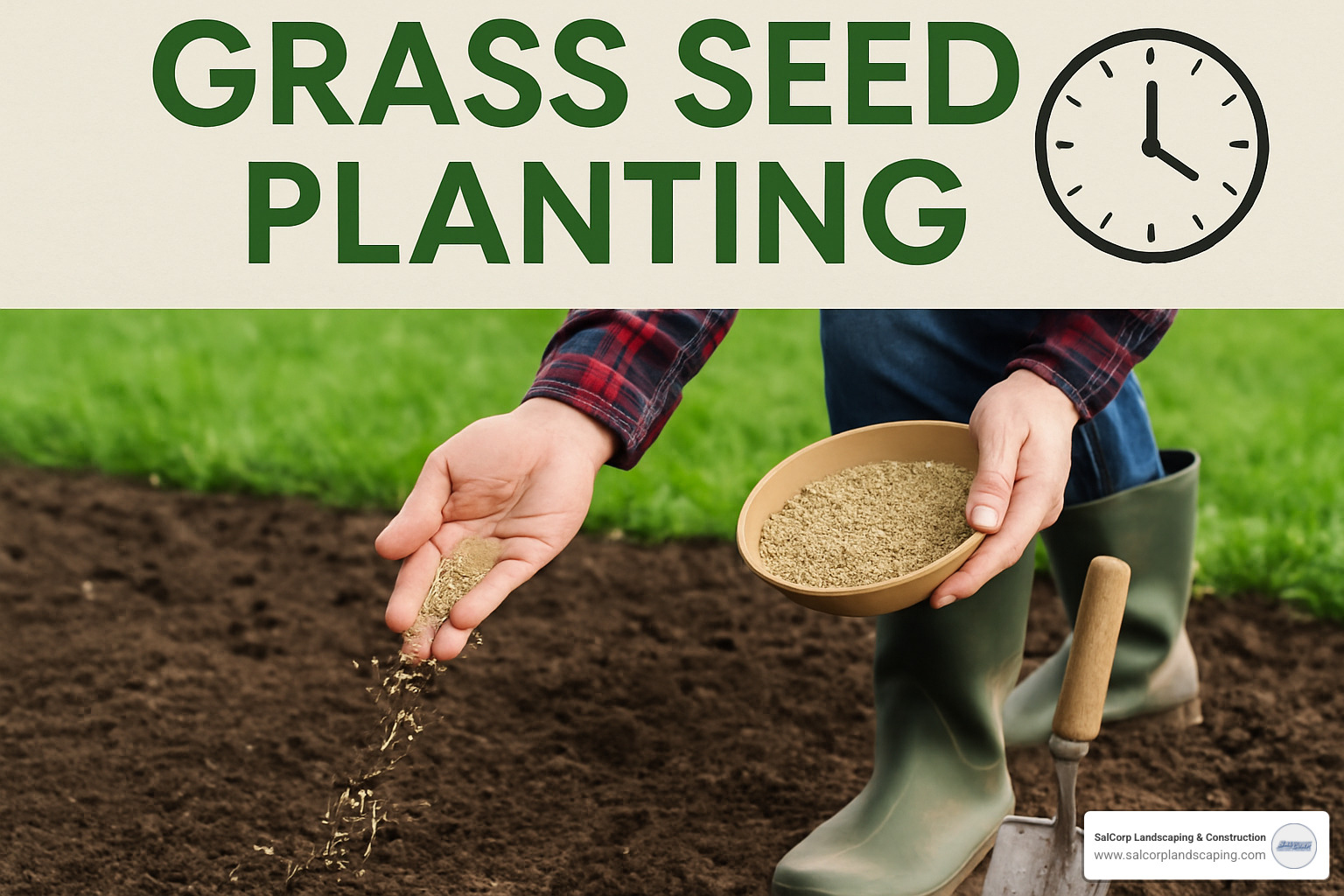
Perfect timing means nothing if your soil isn’t ready. I’ve seen homeowners nail the best time grass seed planting window only to watch their investment wash away because they skipped proper soil preparation.
The most common mistake? Property owners scatter seed over compacted, acidic soil and wonder why their lawn looks patchy. Massachusetts soils tend to run acidic (often below 6.0 pH), and our clay-heavy soils compact easily.
Soil testing should happen at least six weeks before your planned seeding date. Most grasses prefer pH between 6.0-7.0, and if your soil tests acidic, you’ll need time for lime applications to work.
Core aeration breaks up compacted soil. We run aerators over the area multiple times, pulling up cores 2-3 inches deep. This creates pathways for water, air, and roots to penetrate.
Dethatching removes the layer of dead grass and organic matter that can block seed-to-soil contact. Grading and debris removal eliminates rocks, sticks, and construction debris that create uneven surfaces where water pools and seeds wash away.
Adding organic amendments transforms Massachusetts clay and sandy soils. Working 1-2 inches of quality compost into the top soil layer improves both drainage and water retention.
Starter fertilizer with high phosphorus content feeds developing roots during those critical first weeks. We apply it just before seeding so nutrients are available when seeds germinate.
For comprehensive lawn renovations, our lawn installation service handles every step from soil testing through final seeding.
Step-by-Step Soil Prep Checklist
- Test soil pH and nutrients 6+ weeks before seeding
- Clear all debris including rocks, sticks, and dead vegetation
- Core aerate compacted areas with multiple passes
- Dethatch if layer exceeds ½ inch thickness
- Grade surface to eliminate depressions and high spots
- Work in 1-2 inches of compost to top 2 inches of soil
- Apply starter fertilizer just before seeding
- Lightly rake to ensure seed-to-soil contact
Hydroseeding & Other Alternatives
For larger properties or slopes where traditional seeding struggles, hydroseeding offers distinct advantages. What is hydroseeding? It’s a process where we mix seed, fertilizer, mulch, and water into a slurry and spray it evenly across your lawn area.
The beauty of hydroseeding lies in perfect seed-to-soil contact and built-in erosion protection. The mulch component holds moisture and prevents seeds from washing away during heavy rains.
Hydroseeding costs vary widely based on site conditions and seed selection. These are average costs based on internet data and not actual costs for SalCorp Landscaping, but typical ranges run from $0.08-$0.35 per square foot for standard applications, with specialized high-end installations reaching $1.00 per square foot.
Timing for hydroseeding follows the same principles as traditional seeding. Fall remains the best time grass seed planting window for cool-season grasses, while spring works best for warm-season varieties. Learn more about how often to water hydroseeded lawn to maximize your investment.
Planting, Watering & Early Care
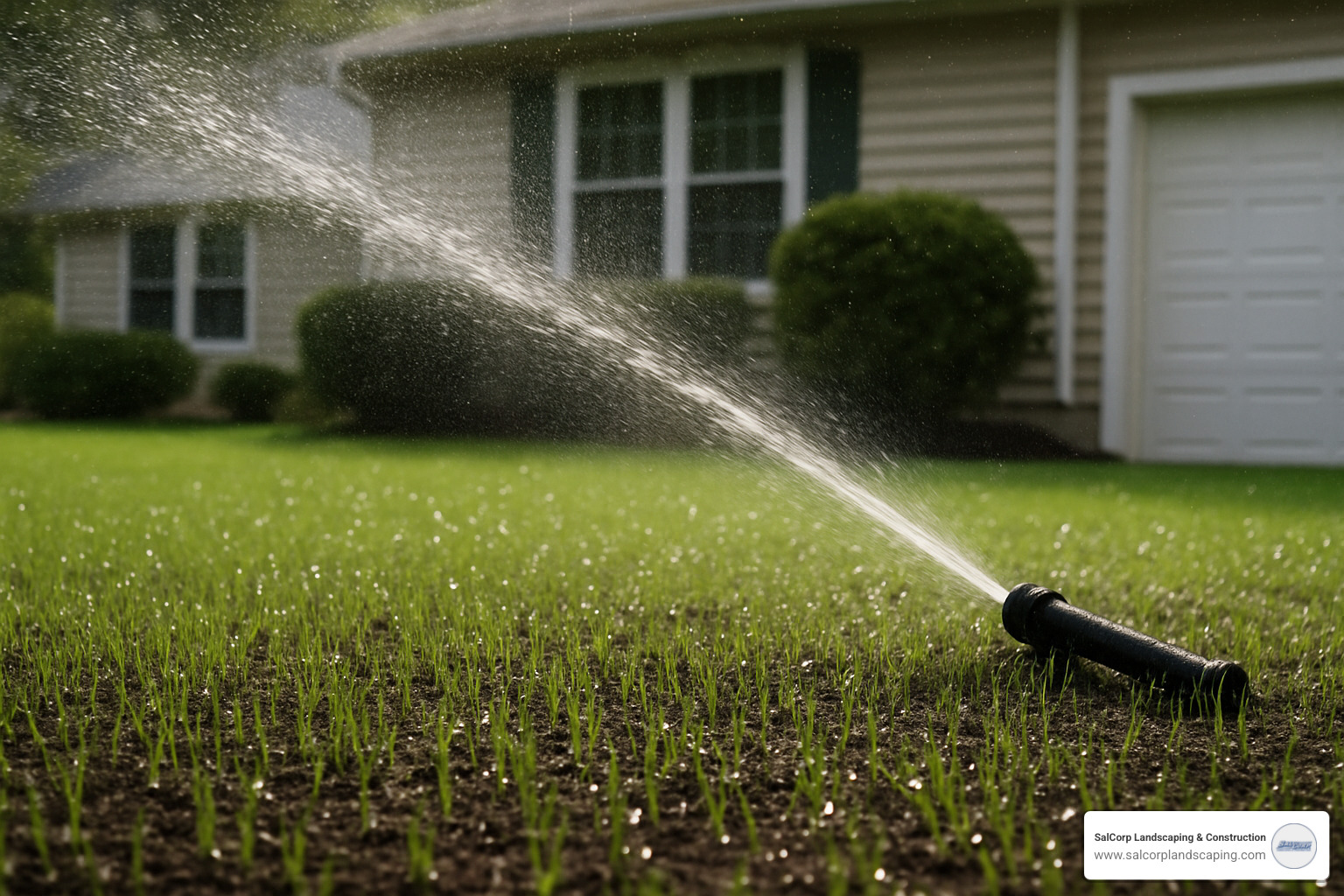
Once your soil is prepared and timing is right, proper planting and watering techniques determine success.
Seeding rates matter: Don’t over-seed or under-seed. Follow package recommendations, typically 2-4 pounds per 1,000 square feet for most cool-season grasses. Over-seeding creates competition and weak grass. Under-seeding leaves gaps for weeds.
Application method: Use a drop spreader for precise application, making two passes at half-rate in perpendicular directions. This ensures even coverage without waste.
Seed coverage: Lightly rake seeds into the top 1/8 to 1/4 inch of soil. About 10% of seeds should remain visible on the surface. Too deep and seeds won’t germinate; too shallow and they’ll dry out or wash away.
Mulching: Apply a thin layer of straw or seed-starting mulch to retain moisture and prevent erosion. Avoid thick layers that block sunlight from reaching emerging seedlings.
Water Wisely
Watering is where most DIY seeding projects fail. Here’s our proven approach:
Germination phase (first 7-21 days): Water 2-3 times daily with light applications. Keep the top 1-2 inches of soil consistently moist but not waterlogged. Early morning and late afternoon waterings work best.
Establishment phase (weeks 2-6): Gradually reduce frequency but increase duration. Water deeply every 2-3 days rather than daily light waterings. This encourages deep root development.
Avoid common mistakes: Don’t create puddles or runoff. Don’t let soil dry out completely between waterings. Don’t water during the heat of the day when evaporation is highest.
For detailed guidance on watering schedules, check our guide on how often to water hydroseeded lawn – the principles apply to all seeded lawns.
Overseeding & Patch Repair Timing
Overseeding existing lawns follows the same timing principles as new seeding:
Early fall window: September is ideal for overseeding cool-season lawns in Massachusetts. Existing grass provides some protection for new seedlings while soil temperatures remain optimal.
Preparation differences: Mow existing grass short (2 inches) and rake up clippings. Core aerate or use a slit seeder to ensure seed-to-soil contact through the existing turf layer.
Traffic management: Keep foot traffic off overseeded areas until new grass is well-established – typically 4-6 weeks after germination.
Weed & Feed Timing Conflicts
One of the biggest mistakes we see is applying pre-emergent herbicides too close to seeding time. Pre-emergent products prevent all seeds from germinating – including grass seed.
The gap period: Wait until new grass has been mowed at least 3 times before applying any weed control products. This typically means 6-8 weeks after seeding.
Hand weeding: During the first 4-6 weeks, hand-pull weeds rather than using chemicals. New grass seedlings are particularly sensitive to herbicides.
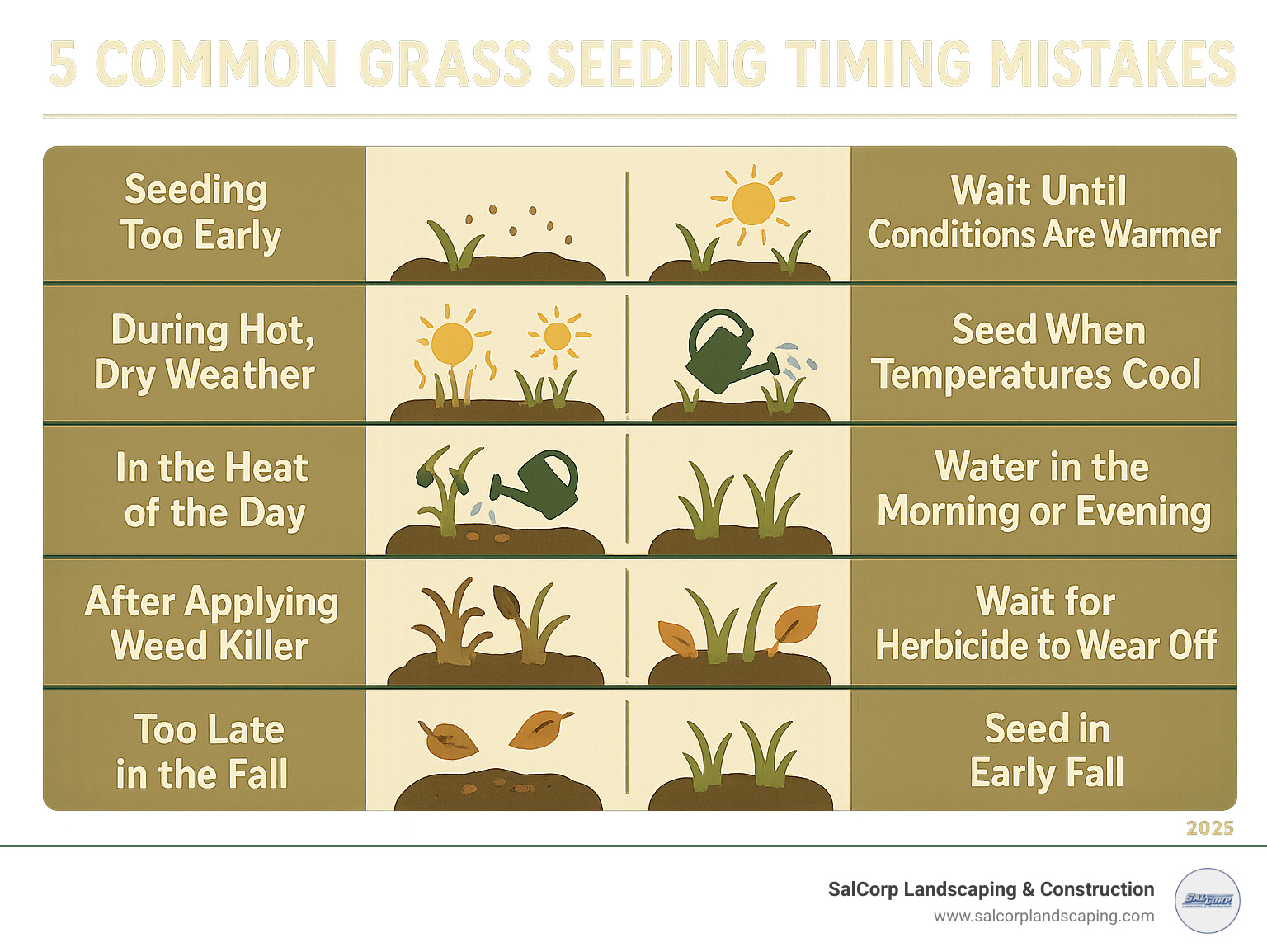
Timing Pitfalls & Pro Tips
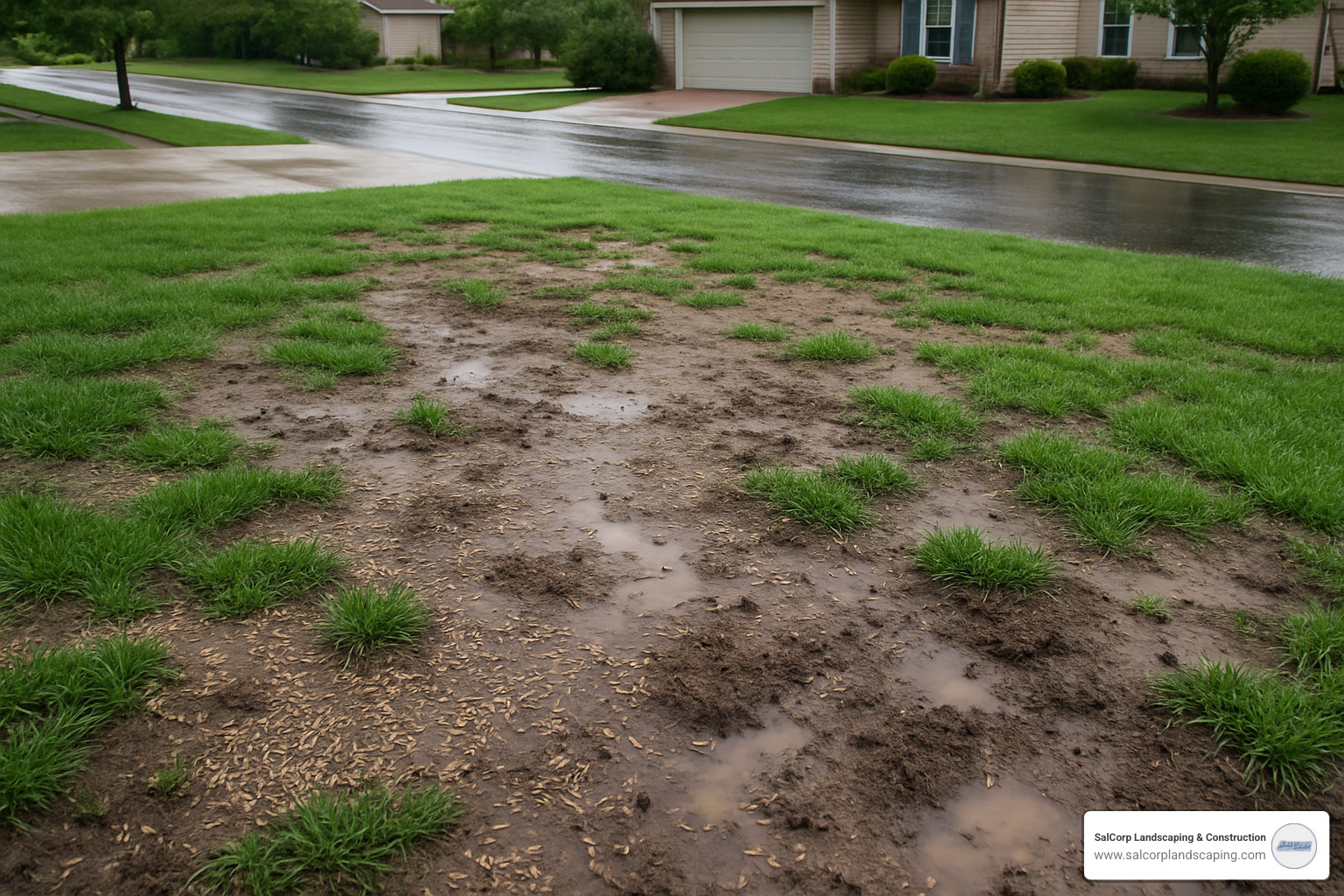
I’ve seen homeowners make the same timing mistakes year after year. The photo above shows exactly what happens when timing goes wrong: washout, bare patches, and frustrated property owners wondering why their investment didn’t pay off.
Planting too early is the mistake I see most often. Spring fever hits, the air feels warm, and suddenly everyone wants to seed their lawn. But your thermometer might read 70°F while the soil could still be sitting at a chilly 45°F. Seeds won’t germinate in cold soil; they’ll just sit there and rot.
I always tell my clients to buy a simple soil thermometer. It’s maybe ten bucks, but it’ll save you hundreds in wasted seed and re-seeding costs. Soil temperature typically lags behind air temperature by 2-3 weeks in spring, which is why the best time grass seed planting often feels “too late” when you’re eager to get started.
Ignoring the weather forecast is another costly mistake. Always check the 7-day forecast before you start. A gentle rain after seeding is perfect, but heavy downpours will destroy your work.
The wrong grass for your specific zone might seem obvious, but microclimates can fool you. That sunny, south-facing slope in your yard might be hot enough for warm-season grass, while the shaded north side needs cool-season varieties.
Frost date miscalculations happen because people treat the first frost date like it’s written in stone. Nature doesn’t follow calendars, and an early cold snap can kill seedlings that haven’t had enough time to establish. Cool-season grasses need at least 45 days before frost, warm-season varieties need 90 days – but I always recommend adding an extra week or two as insurance.
Shallow seed coverage might seem like a minor detail, but it makes or breaks germination. Seeds need contact with soil to absorb moisture, but bury them too deep and they’ll never see sunlight. The sweet spot is 1/8 to 1/4 inch deep – about the thickness of a quarter.
Here’s my favorite pro tip: take photos during the process. Document your soil temperature readings, seeding dates, and weather conditions. If something goes wrong, you’ll have the information needed to figure out what happened.
The bottom line? Most seeding failures aren’t about bad luck – they’re about timing mistakes that could have been avoided with a little patience and the right information.
Frequently Asked Questions about Grass-Seed Timing
What soil temperature guarantees germination success?
The best time grass seed planting depends entirely on getting soil temperature right—not air temperature. This is where many Massachusetts homeowners go wrong, checking the weather app instead of actually measuring soil conditions.
For cool-season grasses like Kentucky bluegrass, tall fescue, and perennial ryegrass, you need consistent soil temperatures between 50-60°F. These are the workhorses of Massachusetts lawns, and they’ll germinate reliably once soil hits this sweet spot.
Warm-season grasses like Bermuda and Zoysia are pickier—they need soil temperatures consistently in the 65-70°F range. Plant too early and they’ll just sit there, waiting for warmer conditions.
Here’s the key: invest in a simple soil thermometer and use it properly. Push it 2-3 inches deep into your prepared seedbed and take readings at the same time each day for several consecutive days. Morning readings give you the most consistent data.
Don’t trust air temperature as a guide. Soil temperature typically lags behind air temperature by 2-3 weeks in spring and holds summer heat longer into fall. This is actually why fall seeding works so well—warm soil from summer heat combined with cooler air temperatures.
Can I seed in midsummer or midwinter?
I get this question a lot, especially from homeowners who missed the ideal windows. The honest answer? It’s possible but challenging, and you’ll likely spend more money with lower success rates.
Midsummer seeding feels logical—everything’s growing, right? But it’s actually one of the toughest times for grass establishment. You’re fighting intense heat stress, drought conditions, and peak weed competition. Cool-season grasses particularly struggle in July and August heat, while warm-season varieties face established crabgrass and other summer weeds.
If you must seed in summer, plan for intensive irrigation—we’re talking multiple waterings daily—and careful monitoring. Your water bill will reflect the extra effort.
Midwinter or dormant seeding can work for cool-season grasses, but it’s unpredictable. Seeds scattered in late fall or early winter will sit dormant until spring conditions trigger germination. The problems? Frost heave can push seeds around, temperature fluctuations affect germination rates, and spring snowmelt can wash seeds away.
Both timing options typically require re-seeding in some areas, which obviously increases your total cost. That’s why we always recommend sticking to proven fall and spring windows when possible.
How long before I can mow new grass?
This is probably the most common mistake I see—homeowners getting excited about their emerging grass and mowing too early. Patience pays off when it comes to that first mow.
Most grass seeds germinate within 7-21 days under proper conditions, but germination is just the beginning. Those tiny green shoots need another 3-4 weeks of growth before they’re strong enough for mowing.
The rule of thumb: wait until your new grass reaches 3-4 inches tall depending on the variety. For the first mow, never remove more than one-third of the blade length—this prevents shock and keeps those developing root systems strong.
Kentucky bluegrass is the slowest, often taking 4-6 weeks total from seeding to first mow. Perennial ryegrass is the speed demon, sometimes ready in just 3-4 weeks total. Tall fescue falls somewhere in between.
Before you mow, make sure the soil is firm enough to support your mower’s weight without creating ruts or compaction. And absolutely use sharp mower blades—dull blades tear tender new grass instead of cutting it cleanly.
One more tip: if you’re unsure whether it’s ready, wait another week. New grass recovers slowly from mowing mistakes, so err on the side of caution.
Conclusion
After two decades of helping Massachusetts homeowners create beautiful lawns, I can tell you that understanding the best time grass seed planting is the difference between lawn success and expensive do-overs. The science backs up what we see in the field every day: timing your seeding to match your grass type’s natural rhythm dramatically improves your chances of success.
Here in Massachusetts, we’re blessed with ideal conditions for cool-season grasses. Fall planting between late August and early October gives you that perfect sweet spot of warm soil temperatures, cooler air, natural seasonal moisture, and dying weed competition.
Spring works too, especially for warm-season varieties that need soil temperatures consistently above 65°F. But fall consistently delivers better results with less work and worry on your part.
The real game-changers for successful seeding aren’t complicated. Use a soil thermometer instead of guessing – it’s the best $10 investment you’ll make. Give cool-season grasses at least 45 days before frost, warm-season varieties need 90 days. Don’t skip soil preparation because even perfect timing can’t overcome poor soil conditions.
Most importantly, be patient with the watering routine. Those first few weeks require consistent moisture without creating puddles. We see too many beautiful seeding jobs fail because homeowners either underwater during germination or flood the area trying to help.
At SalCorp Landscaping & Construction, we’ve been perfecting these techniques across communities from Boston to Newton to Wellesley since 2003. Being owner-operated means I’m personally invested in every lawn we install. I understand the unique challenges of our New England climate – from late spring frosts to summer drought to those brutal winters that test even the best-established lawns.
Whether you’re tackling thin spots, starting fresh after construction, or finally replacing that patchy mess you’ve been staring at for years, proper timing makes all the difference. The best time grass seed planting isn’t just about calendar dates – it’s about reading soil conditions, understanding your grass varieties, and working with Massachusetts weather patterns instead of against them.
Ready to transform your property this season? We’d love to help you plan the perfect seeding project. Our comprehensive approach includes soil testing, variety selection, professional installation, and follow-up care to ensure your investment pays off with years of thick, healthy grass.
Check out our complete Lawn Care Services List to see how we can help you achieve the lawn that makes your neighbors jealous – in the best possible way, of course.