

Brick and Concrete Stairs: Top 5 Durable Picks 2025

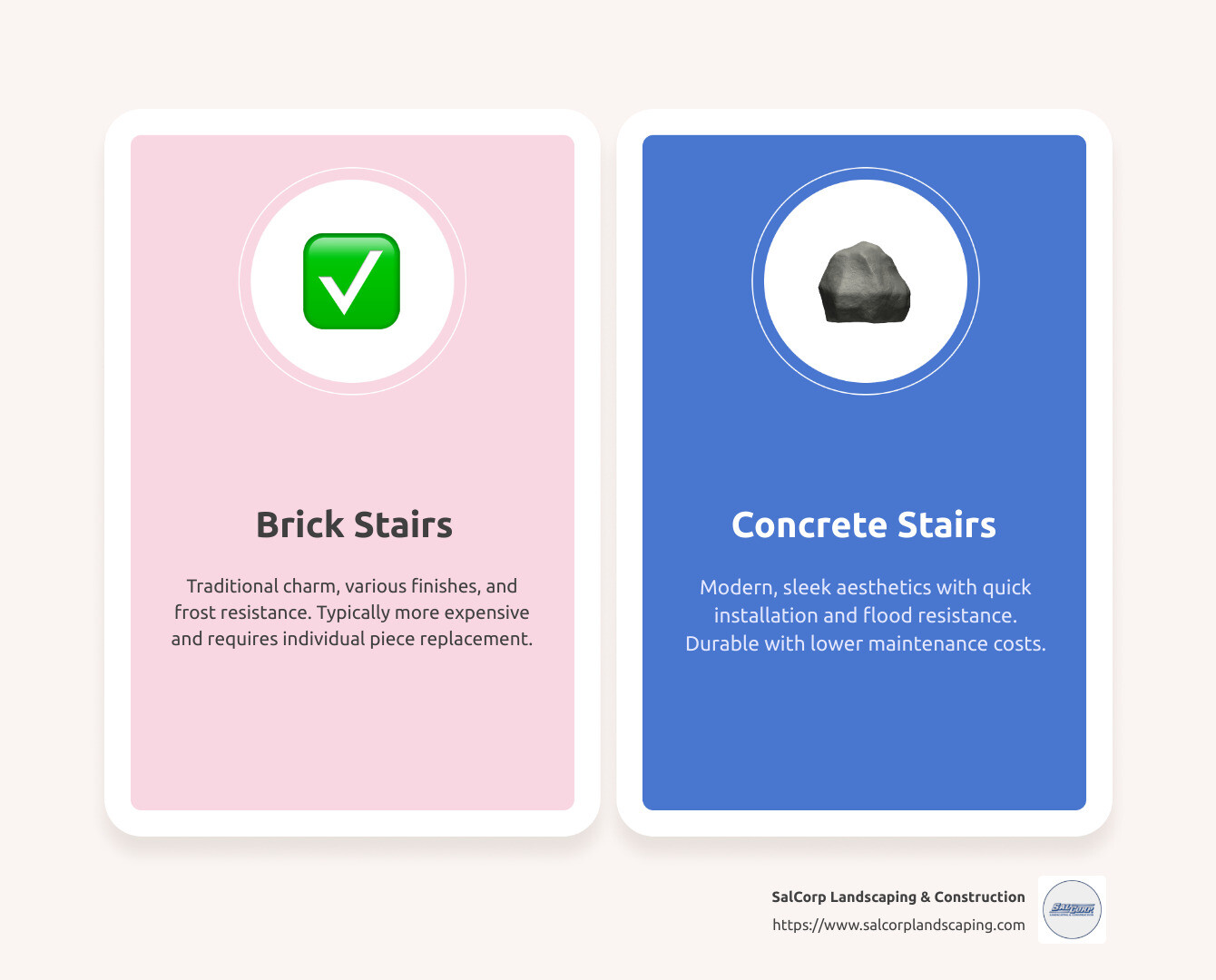
Brick and concrete stairs are not just functional elements of your home or business—they are a design trend that can improve the aesthetic appeal and improve the entryway of your property. Whether you’re drawn to the classic, timeless charm of bricks or the modern, sleek finish of concrete, choosing the right material for your stairs can make a significant impact. Here’s a quick comparison to help you decide:
- Aesthetic Appeal:
- Brick offers a warm, traditional look with various colors and patterns.
- Concrete gives a clean, contemporary vibe with versatile finishes.
- Durability:
- Brick is long-lasting and allows easy replacement of individual pieces.
- Concrete withstands heavy traffic and requires less maintenance.
- Cost-Effectiveness:
- Brick can be more expensive due to customization and installation.
- Concrete is often budget-friendly.
When choosing between brick and concrete stairs, consider your property’s architectural style, your personal taste, and the specific function you want the stairs to serve.
I’m Sal Musto, and with over two decades of experience in designing and constructing brick and concrete stairs, I lead SalCorp Landscaping & Construction to ensure that each project meets the highest standards. Stay with us as we dig deeper into how these choices can transform your property’s entrance.
Brick and concrete stairs terms at a glance:
– brick stairs design
– how to build brick stairs
– step by step landscaping ideas
Brick and Concrete Stairs: An Overview
When it comes to brick and concrete stairs, both options bring unique advantages to the table. Let’s break down what makes each material stand out in terms of aesthetic appeal, durability, and cost-effectiveness.
Aesthetic Appeal
Brick Stairs
Brick stairs exude a classic and timeless charm. They come in a wide array of colors and patterns, allowing for customization that can perfectly match the architectural style of your home. This versatility makes brick a popular choice for those seeking a warm and inviting entryway.
Concrete Stairs
On the other hand, concrete stairs offer a modern, sleek finish. They can be designed with various textures and finishes to achieve a contemporary look. This makes concrete an excellent choice for those who prefer a clean and minimalist aesthetic.
Durability
Brick Stairs
Brick is known for its durability. When installed correctly, brick stairs can last for decades. The modular nature of brick allows for easy replacement of individual bricks if they become damaged, ensuring that your stairs remain in top condition over time.
Concrete Stairs
Concrete stairs are incredibly strong and can bear heavy loads, making them suitable for high-traffic areas. They require less maintenance compared to brick, as they are resistant to issues like weed growth and erosion.
Cost-Effectiveness
Brick Stairs
While brick stairs offer aesthetic and durability benefits, they tend to be more costly due to the customization options and labor-intensive installation process.
Concrete Stairs
Concrete stairs are generally more budget-friendly. Their quick installation and low maintenance requirements make them a cost-effective solution for many homeowners.

In summary, the choice between brick and concrete stairs should be guided by your personal preferences, budget, and the specific needs of your property. With the right selection, your stairs can become a beautiful and functional element of your landscape.
Next, we’ll explore the specific advantages of choosing brick stairs for your project.
Advantages of Brick Stairs
When considering brick and concrete stairs, brick offers unique benefits that make it a fantastic option for your property. Let’s explore why brick stairs might be the perfect choice for you.
Frost Resistant
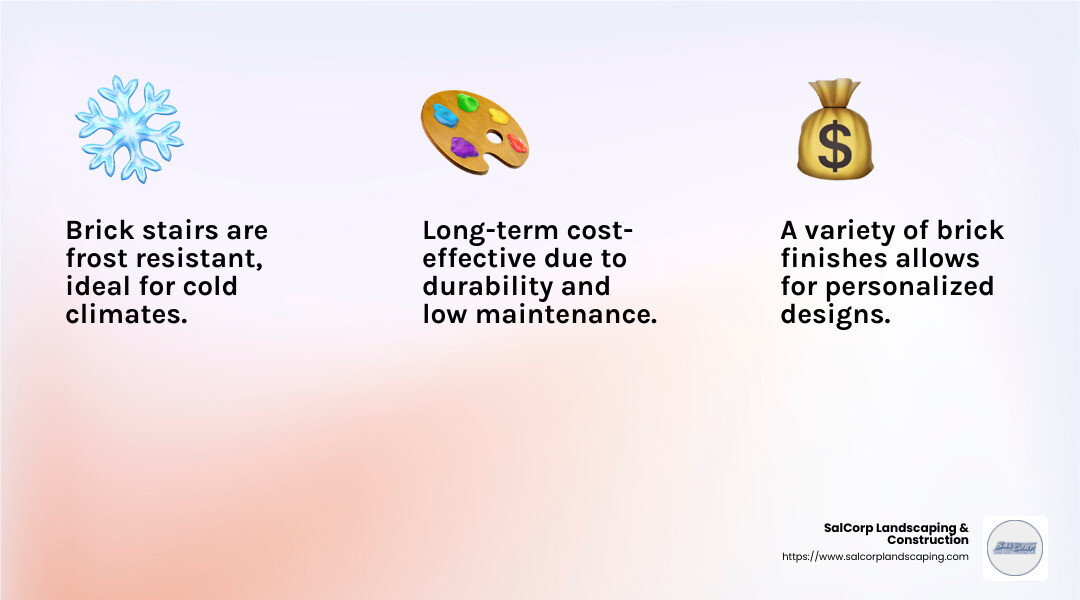
Brick stairs are well-suited for colder climates. They are naturally resistant to frost, which is a significant advantage in areas that experience freezing temperatures. By ensuring the mortar is flush with the bricks, water can run off easily, reducing the risk of damage from freeze-thaw cycles. This makes brick stairs a reliable choice in places like Massachusetts, where winters can be harsh.
Variety of Finishes
One of the standout features of brick stairs is the variety of finishes available. Bricks come in many colors and patterns, allowing you to tailor the look to match your home’s style. Whether you prefer a traditional red brick or a more modern hue, there’s a finish to suit every taste. This versatility allows you to create a unique and personalized entryway that improves your property’s curb appeal.
Cost-Effective
While brick stairs might initially seem more expensive due to the labor involved in their installation, they offer cost-effectiveness in the long run. Their durability means they require less frequent repairs, and the ability to replace individual bricks without overhauling the entire staircase can save money on maintenance.
Moreover, brick stairs can add value to your home. They are a desirable feature for potential buyers, which could increase your property’s market appeal.
In the next section, we’ll dig into the advantages of concrete stairs and see how they compare to brick in terms of installation speed, pest protection, and flood resistance.
Advantages of Concrete Stairs
Concrete stairs offer several compelling benefits that make them a popular choice for many homeowners. Let’s explore why concrete might be the right option for your staircase needs.
Quick Installation
One of the standout advantages of concrete stairs is their quick installation process. Unlike brick stairs, which require careful placement of individual bricks, concrete can be poured and set in a shorter timeframe. This efficiency can be particularly appealing if you’re looking to complete your project swiftly. The faster drying time of concrete means less waiting around, allowing for quicker access to your new steps.
Pest Protection
Concrete stairs provide excellent protection against pests. Since concrete is a solid and non-porous material, it doesn’t offer the nooks and crannies that insects or rodents typically exploit. This makes concrete stairs a great option if you’re concerned about pest infestations. With fewer places for pests to hide or enter, your stairs remain a clean and safe part of your home.
Flood Resistance
Flood resistance is another key benefit of choosing concrete stairs. Concrete’s dense composition helps it withstand water exposure better than some other materials. This makes it an ideal choice for areas prone to heavy rainfall or flooding. By minimizing the risk of water damage, concrete stairs can offer peace of mind and long-term durability, ensuring your entryway remains intact during adverse weather conditions.
In the upcoming section, we’ll explore the process of refacing concrete steps with brick, including the masonry techniques involved and the challenges you might face.
Refacing Concrete Steps with Brick
Changing your concrete steps with a brick veneer can lift the look of your entryway, giving it a classic and timeless appeal. However, this process isn’t without its challenges. Let’s take a closer look at the masonry techniques involved, the potential problems, and the beauty of the herringbone pattern.
Masonry Techniques
Refacing concrete steps with brick involves precise masonry techniques. The process starts with preparing the concrete surface to ensure the bricks adhere properly. This might involve cleaning the surface and applying a bonding agent.
Next, a layer of mortar is spread over the concrete, and the bricks are carefully laid on top. Maintaining a consistent mortar thickness is crucial to compensate for any unevenness in the concrete. This ensures that the bricks appear level and plumb, even if the underlying surface isn’t perfectly flat.
Veneer Challenges
One of the primary challenges in refacing concrete steps with brick is dealing with uneven surfaces. As noted in a case study, the risers of concrete stairs can vary in height, which can complicate the brick-laying process. Careful planning and adjustments in the mortar layer can help manage these discrepancies.
Another challenge is ensuring the bricks fit seamlessly around existing structures, like wooden posts. In some projects, the space around these structures might be too narrow to support a full brick, requiring creative solutions like cutting bricks to fit or using alternative materials.
Herringbone Pattern
The herringbone pattern is a popular choice for its visual appeal and structural stability. This pattern involves laying bricks at a 45-degree angle, creating a zigzag effect that adds texture and interest to the steps.
While the herringbone pattern can improve the aesthetic of your stairs, it demands precision and skill. Each brick must be placed accurately to maintain the pattern’s integrity, which can be time-consuming but rewarding. This pattern not only looks sophisticated but also helps distribute weight evenly across the surface, enhancing the durability of the stairs.
In the next section, we’ll address frequently asked questions about brick and concrete stairs, including costs and maintenance tips.
Frequently Asked Questions about Brick and Concrete Stairs
What is the cost of brick and concrete stairs?
The cost of brick and concrete stairs can vary based on factors like design complexity, materials, and installation. Concrete stairs are generally more budget-friendly. They offer a straightforward installation process and are often the go-to choice for those mindful of expenses. Brick stairs, on the other hand, tend to be pricier due to the craftsmanship involved and the cost of materials. However, they offer a timeless aesthetic that many homeowners find worth the investment.
How do you maintain brick and concrete stairs?
Maintenance for both brick and concrete stairs is key to ensuring their longevity. Brick stairs require regular checks for mortar decay and may need resealing to prevent moisture damage, especially in areas prone to freezing. Using a masonry sealer like Glaze ‘N Seal’s Multi-Purpose Clear Penetrating Sealer can help protect the surface.
Concrete stairs, while generally low-maintenance, should be inspected for cracks or surface wear. Regular cleaning and applying a concrete sealant can help maintain their appearance and durability. Both types of stairs benefit from keeping them clear of debris and ensuring proper drainage to prevent water accumulation.
Can brick stairs be used in all climates?
Brick stairs are versatile and can be used in various climates, but they do have some limitations. In cold areas, like Canada or Alaska, water can seep into the joints, freeze, and cause damage. To combat this, it’s crucial to ensure the mortar is flush with the bricks, allowing water to run off easily. For added protection, concrete or rock caps can be installed over each step.
In warmer climates, brick stairs demonstrate excellent durability and require less frequent maintenance. However, regardless of location, proper installation and maintenance are essential to ensure their longevity and performance.
Conclusion
At SalCorp Landscaping & Construction, we pride ourselves on delivering exceptional quality and comprehensive solutions for all your outdoor needs. With over 20 years of experience, our team understands the importance of craftsmanship and attention to detail in every project we undertake. Whether you’re looking to improve your entryway with neat brick and concrete stairs or transform your entire landscape, we have the expertise to bring your vision to life.
Our commitment to quality craftsmanship ensures that each project is not only visually appealing but also durable and functional. We use only the highest quality materials and the latest masonry techniques to create stairs that stand up to the elements and the test of time. Our skilled masons pay close attention to every detail, ensuring that your stairs are both beautiful and safe.
We offer comprehensive solutions that go beyond just installing stairs. Our services include personalized design consultations, helping you choose the right materials, colors, and patterns to complement your home’s aesthetic. We work closely with you from the initial concept to the final installation, ensuring that your project meets your needs and exceeds your expectations.
For those in Massachusetts communities like Walpole, Norwood, and Canton, we are your local experts in landscape design and hardscaping. Our owner-operated business model means you receive personalized service and the assurance that we stand behind our work.
Ready to improve your property with stunning brick and concrete stairs? Contact us today to learn more about our services and how we can help you create a lasting impression with your outdoor space. At SalCorp Landscaping & Construction, we’re not just building stairs; we’re creating pathways to your dreams.
