

Brick Steps and Stairs Installation: Pro Guide 2025
Why Professional Brick Steps and Stairs Installation Matters
Brick Steps and Stairs Installation provides decades of durability and timeless appeal, changing your property’s entrance. When done correctly, brick stairs can last a lifetime, boost property value, and create a welcoming entrance that withstands harsh New England weather.
Essential Steps for Brick Steps and Stairs Installation:
- Planning & Design – Calculate rise, run, and tread dimensions (7-inch risers, 11-12 inch treads)
- Foundation Preparation – Excavate below frost line (12-48 inches in MA), install concrete footing with rebar
- Base Construction – Add 4-6 inches of compacted gravel for drainage and stability
- Brick Installation – Use Type M mortar (2500 psi), maintain 3/8-inch joints, check level constantly
- Finishing – Tool joints for water shedding, clean excess mortar, cure 5-7 days minimum
Research shows DIY projects typically run $4-$15 per square foot for materials, while professional installation ranges from $3,000-$9,000 or more, depending on complexity. However, the critical factor isn’t cost—it’s the foundation. A proper foundation determines whether your stairs last for decades or fail within years.
As one expert noted: “A solid foundation is not the glamorous part of the project, but it is the most important.” This is especially true in Massachusetts, where frost heave can destroy poorly built stairs in one winter.
Never build brick stairs directly on dirt. Soil expands, contracts, and erodes, making steps unstable and unsafe. A concrete foundation below the frost line is non-negotiable for safety and longevity.
I’m Sal Musto, owner of SalCorp Landscaping & Construction, and I’ve been perfecting Brick Steps and Stairs Installation techniques in Massachusetts for over 20 years. My hands-on approach ensures every project meets the highest standards for craftsmanship and safety, from foundation to final brick.
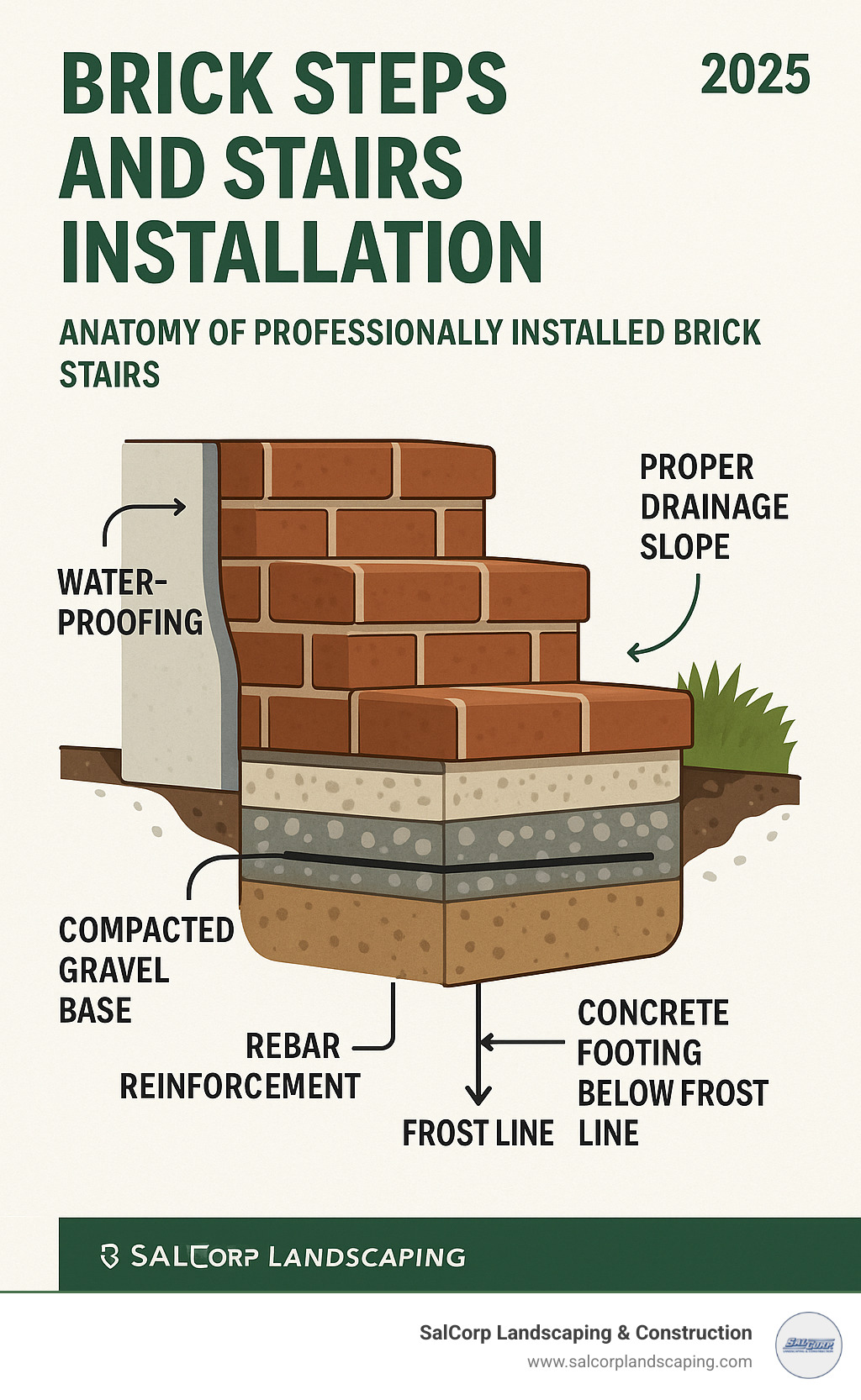
Know your Brick Steps and Stairs Installation terms:
Planning and Designing Your Perfect Brick Steps
The foundation of every successful Brick Steps and Stairs Installation starts with careful planning and design, turning your vision into a safe, beautiful, and lasting entrance for your home.
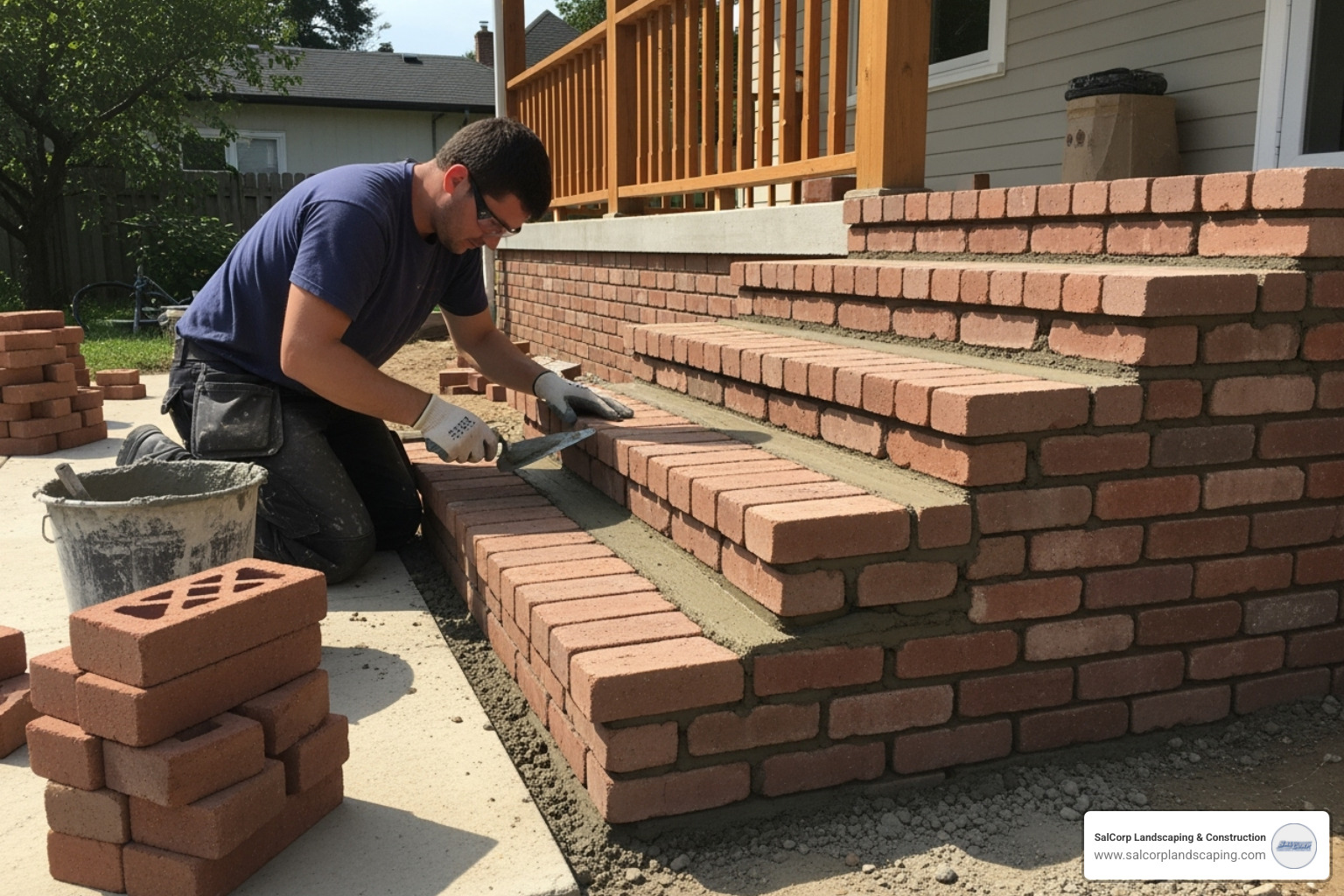
Correct dimensions are critical for comfort and safety. We start by measuring the total rise (vertical distance) and total run (horizontal space). From these, we determine the ideal riser height and tread depth. Experience matters here. While codes allow 8-inch risers, we find that 7-inch risers are most comfortable. For treads, we stick to 11-12 inches deep, giving your foot ample room to land securely. After 20 years of building stairs, I know these dimensions make a huge difference in comfort. You can dive deeper into these calculations with this helpful A DIY Guide to Outdoor Stair Construction.
Brick offers many style choices. We can create classic straight stairs, graceful curved stairs, or add landings as resting spots on longer runs. For homes on sloped terrain, wing walls provide structural support and create a more substantial, welcoming entrance. Check out our Brick Step Designs for inspiration.
Safety and code compliance are the foundation of responsible construction. Here in Massachusetts, we follow strict guidelines for step dimensions, riser heights, and handrail requirements to prevent trips and injuries. We stay current with local building codes in Massachusetts to ensure compliance.
Drainage is essential for longevity. We build in a slight drainage slope (typically 1/4 inch per foot) on treads and the foundation. This directs water away from your home and prevents pooling. In New England, proper drainage prevents destructive freeze-thaw cycles that crack masonry. Detailed planning now saves headaches later and ensures your stairs remain beautiful and functional for decades.
The Unseen Hero: Building a Foundation That Lasts
When it comes to Brick Steps and Stairs Installation, the foundation isn’t glamorous, but it’s everything. You wouldn’t build a house on quicksand, and the same logic applies to your brick steps.
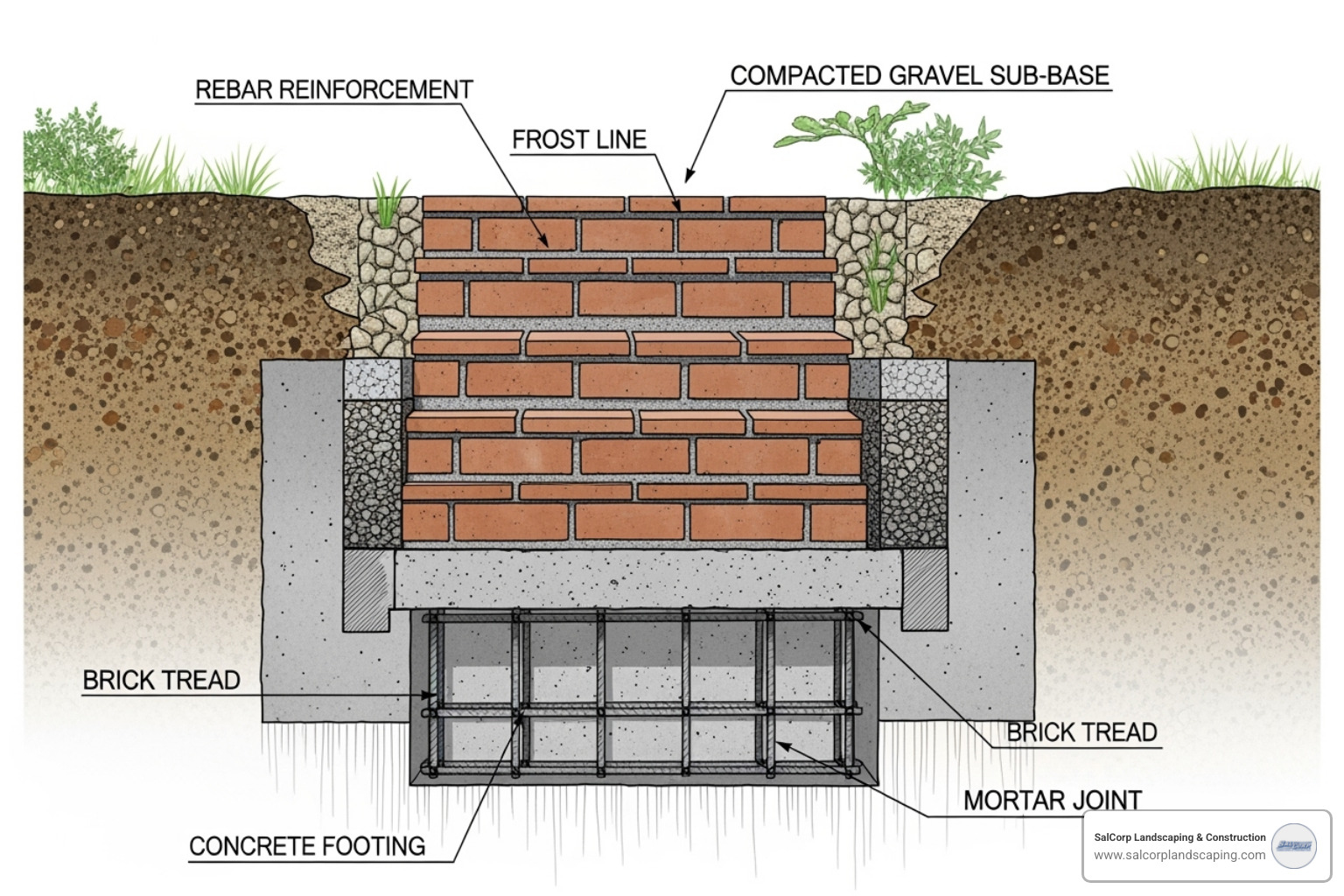
The hard truth is: you absolutely cannot build brick steps directly on soil. I’ve seen many homeowners learn this lesson the hard way. Soil expands, shrinks, and shifts during New England’s freeze-thaw cycles. Skipping a proper foundation leads to numerous problems: erosion washes away support, shifting soil creates wobbly stairs, and cracking becomes inevitable. These issues create serious safety hazards.
The concrete footing is where we start building for the long haul. In Massachusetts, the frost line can be 12 to 48 inches deep. When water freezes underground, it expands with enough force to lift and crack sturdy construction. That’s why we always dig down to solid ground, well below the frost line. This prevents frost heave, the enemy of outdoor structures in New England.
Our sub-base layer is the unsung hero of drainage and stability. We lay down 4 to 6 inches of compacted gravel. It allows water to drain, preventing frost damage, and distributes weight evenly to prevent wobbling or sinking. Compaction is crucial; we compact each layer thoroughly to create a stable, unmoving surface.
Reinforcement with a rebar grid adds tensile strength. Concrete handles compression well but needs help with pulling forces. Steel rebar creates an internal skeleton, locking everything together for decades. This attention to detail separates professional Hardscaping from DIY projects that fail quickly. For more technical details, check this resource on proper stair construction for retaining walls.
The Professional Brick Steps and Stairs Installation Process
Once the foundation is solid and the design is final, the artistry of Brick Steps and Stairs Installation begins. This is where masonry experience turns plans into a lasting structure that will welcome visitors for generations.
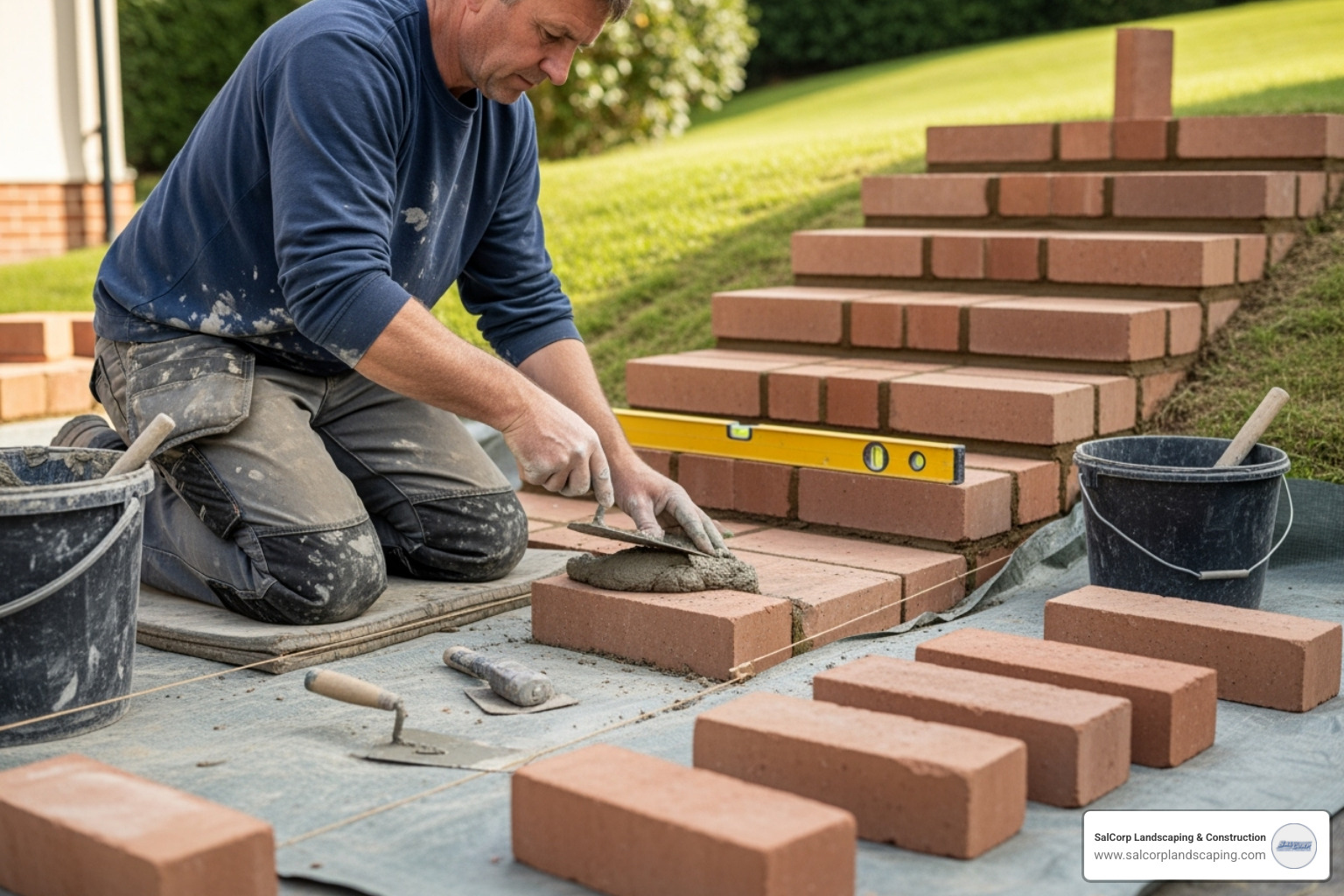
A professional’s toolkit reflects precision. Key tools include the mason’s trowel for spreading mortar, a level to ensure every brick is true, a rubber mallet for gentle adjustments, a jointer tool for clean joints, a mortar mixer for consistency, and a brick saw for custom cuts.
Lasting installation depends on proper mortar preparation. We exclusively use Type M mortar for its 2500 psi compressive strength. This means your steps can handle daily use and New England’s freeze-thaw cycles without failing. We aim for a “peanut butter” texture: smooth enough to spread but firm enough to support the bricks. Pro tip: We work in small batches, as mortar has a limited working time before it stiffens.
Before laying, we thoroughly wet each brick. This prevents the brick from absorbing moisture from the mortar too quickly, which weakens the bond and can cause cracks.
The Step-by-Step Guide to Laying Bricks
The magic begins with the first course. This initial layer must be perfectly level, as it sets the stage for the entire project. We spread a consistent mortar bed and place bricks in a running bond pattern, which distributes weight evenly for maximum strength. Consistent 3/8-inch joints are maintained throughout for a quality look.
Building up the risers and treads requires constant attention. Each brick is checked with a level. This methodical work cannot be rushed. This craftsmanship distinguishes professional Masonry Stairs from amateur attempts that fail over time.
Finishing Touches for a Professional Brick Steps and Stairs Installation
Finishing work separates good from great installation. Once the mortar begins to set, we begin tooling the joints. Using a jointer, we shape each joint into a concave profile. This creates a clean, professional look and, more importantly, helps shed water, protecting your investment.
We clean excess mortar immediately, as dried mortar is difficult to remove later. The final step is patience: proper curing. This isn’t just drying; mortar undergoes hydration to reach full strength. We require a minimum of 5-7 days before any foot traffic. During hot or windy weather, we may mist the new stairs with water to prevent the mortar from drying too quickly, which can cause hairline cracks. This detail ensures your new entrance remains beautiful for decades.
Budgeting Your Project: DIY vs. Professional Costs
When planning your Brick Steps and Stairs Installation, cost is a key consideration. Whether to DIY or hire a professional depends on your budget, time, and comfort with complex masonry.
The following figures are average costs from internet research and are not a quote from SalCorp Landscaping & Construction. Every project is unique; site conditions, design complexity, and material choices will impact the final price.
| Aspect | DIY Installation | Professional Installation |
|---|---|---|
| Material Costs | $4-$15 per square foot | Included in project cost |
| Tool Investment | Purchase or rental fees | Professional-grade equipment included |
| Time Required | 3-7 days (often weekends) | 2-5 days with skilled team |
| Labor | Your sweat equity | Experienced mason expertise |
| Total Investment | Materials + tools + time | $3,000-$15,000+ depending on complexity |
| Peace of Mind | Learning as you go | Guaranteed quality and safety |
For DIY projects, material costs range from $4-$15 per square foot. You’ll also need to buy or rent specialized tools like a trowel, level, mortar mixer, and brick saw, which can add hundreds to your budget. The biggest DIY cost is your time. Building brick stairs can take 3-7 days, and mistakes can be costly to fix.
Professional installation brings decades of experience. While the investment is typically $3,000 to $15,000 or more, you’re paying for expertise that ensures safe, code-compliant stairs built to last through New England winters. Professionals work efficiently, often finishing in 2-5 days. They understand the critical techniques that ensure stairs last for decades, not just a few years.
Don’t forget permit costs. Many towns require permits for structural changes, so check with your local building department before starting.
At SalCorp, we’ve seen many DIY projects that needed complete reconstruction due to foundation or installation issues. While we respect the DIY spirit, this work requires specialized knowledge of frost lines, drainage, and masonry.
For comprehensive outdoor solutions that complement your new brick stairs, explore our Landscaping services. When you’re ready to discuss your project with experienced professionals, visit our Masonry and Concrete Contractors Near Me page to learn more about our approach to quality masonry work.
Ensuring Longevity: Maintenance and Care for Your Brick Stairs
Your Brick Steps and Stairs Installation is a significant investment. With proper care, these stairs can perform flawlessly for decades. Think of maintenance as a small insurance policy that protects your investment and keeps your entrance looking its best.
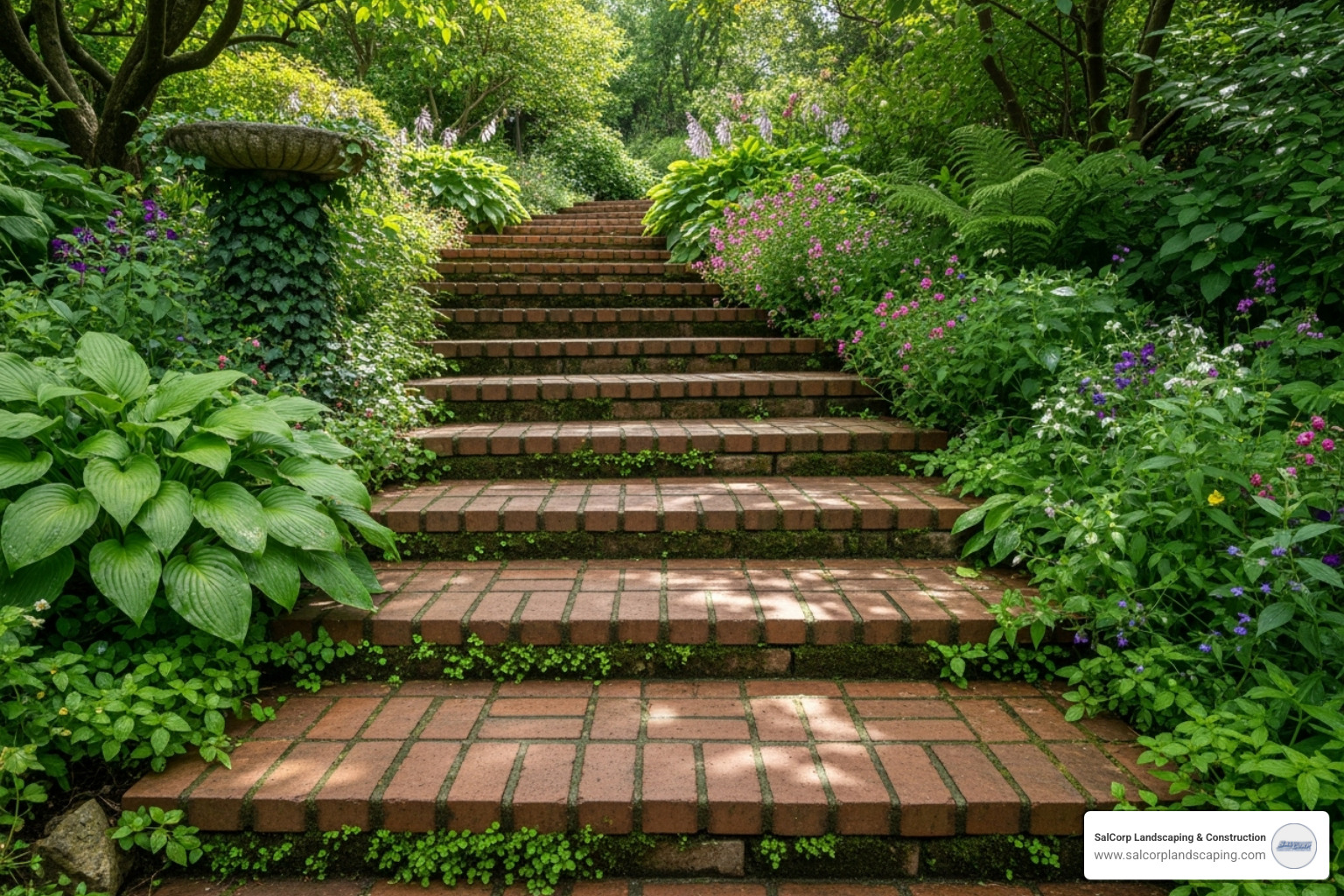
Regular cleaning is fundamental. Sweep away leaves and debris to prevent staining and moss growth. For deeper cleaning, use mild soap and water with a stiff brush. A pressure washer on a low setting can also be used, but high pressure can damage mortar joints.
Sealing your brick stairs every 2-3 years with a quality breathable masonry sealant protects against moisture. This prevents cracking from freeze-thaw cycles during harsh Massachusetts winters. Ensure the sealant is “breathable” to avoid trapping moisture, which can cause damage.
Winter brings challenges in New England. Help your stairs by following smart care practices. Avoid rock salt and de-icers, as these chemicals damage brick and mortar. Instead, use sand for traction and a plastic shovel to prevent chipping.
Annual inspections are simple. Walk around your stairs and look for hairline cracks, loose bricks, or mortar deterioration. Catching these issues early prevents expensive repairs.
If you see cracking or crumbling mortar joints, this is normal wear. The solution is tuckpointing, which involves replacing the damaged mortar. As explained in What is tuckpointing and why is it important?, this process restores structural integrity and makes stairs look nearly new.
A small maintenance effort pays huge dividends in appearance and longevity, adding value and ensuring safety for generations.
Frequently Asked Questions about Brick Steps and Stairs Installation
After two decades of installing brick steps in Massachusetts, I’ve heard every question. Here are answers to the most common ones.
What is the best mortar to use for outdoor brick stairs?
For outdoor brick steps, Type M mortar is the only sensible choice. It’s what the job demands.
Type M mortar delivers 2500 psi compressive strength, which is needed for load-bearing structures like stairs. Your steps must bear constant weight and endure Massachusetts’ brutal freeze-thaw cycles, which destroy weaker materials. The typical mix is 1 part Portland cement, 1/4 part lime, and 3 parts sand. While Type S mortar (1800 psi) is used for some masonry, Type M’s superior strength is non-negotiable for durable exterior stairs. I’ve seen stairs built with weaker mortar crumble in years; this is avoidable by using the right materials.
How long does it take to install brick stairs?
The installation timeline depends on several factors, but it’s more than just the construction days.
A DIY project can take 3 to 7 days of work, often stretched over several weekends, as rushing masonry work leads to problems. Our professional team typically completes construction in 2 to 5 days, depending on complexity.
The critical, often overlooked part is the non-negotiable curing time. Your new stairs need a minimum of 5 to 7 days to cure before use. During this time, the mortar undergoes hydration to gain its full strength. Patience during this phase ensures your stairs will last for decades.
Do I need a permit to build brick stairs?
The permit question is common. My answer is always: check with your local building department first.
Permit requirements vary by town. You’ll likely need one for structural changes or projects that alter your home’s footprint. Some towns require them for any masonry work. After 20 years, I know it’s better to ask upfront. A quick call to your local building department can save you future headaches and clarify requirements.
The permit process also ensures your stairs meet safety compliance standards. Building codes exist for good reason, protecting you and your family. Don’t be intimidated; most building departments are helpful. It’s a small step that provides peace of mind and protects your investment.
Conclusion: Invest in Quality for Lasting Beauty and Safety
Creating beautiful, lasting brick stairs is both an art and a science. From planning precise dimensions to building a foundation below the frost line, every step matters. These details determine if stairs last for decades or fail in years. The foundation is the unsung hero; without a proper concrete footing below the Massachusetts frost line and a compacted gravel base, even the best brickwork will fail.
Using Type M mortar, maintaining consistent 3/8-inch joints, and allowing proper curing time are hallmarks of professional results. Finishing touches like tooled joints and proper curing transform stairs into features that boost curb appeal and value.
While DIY is tempting, the complexity of a proper Brick Steps and Stairs Installation makes professional work the wiser choice. The expertise for foundation work, code compliance, and durability isn’t learned in a weekend. Professional installation brings peace of mind, ensuring your stairs are safe, sound, and built for New England weather.
At SalCorp Landscaping & Construction, we’ve spent over 20 years perfecting our craft in Massachusetts. As an owner-operator, I personally oversee every project, ensuring attention to detail. Our hands-on approach and proprietary equipment guarantee quality from start to finish.
Your new brick stairs are an investment in your property’s beauty, safety, and value. With proper installation and basic maintenance, these stairs will welcome guests for generations.
Ready to transform your entrance with the timeless appeal of brick? Explore our custom Brick Front Steps solutions and find how we can create something beautiful and built to last for your home.
