

Building a retaining wall with breeze blocks: Strong 2025
Your Quick Guide to Building a Retaining Wall with Breeze Blocks
Building a retaining wall with breeze blocks can turn a sloped yard into a functional, beautiful outdoor space. However, success depends on understanding what makes a wall safe and long-lasting, as not all blocks are suitable for holding back soil.
Key principles for a durable retaining wall include using the right blocks, building a solid foundation, ensuring proper drainage, and adding reinforcement when necessary. It’s crucial to use solid, structural concrete blocks, not decorative hollow ones. A wide, compacted foundation is non-negotiable to prevent shifting, while a robust drainage system with gravel and a perforated pipe is vital to relieve water pressure. For walls over 3-4 feet, reinforcement is typically required. Finally, always check local building codes for permits and specific requirements before you start.
This guide will walk you through the entire process. With over two decades of experience in landscaping and hardscaping, I’m Sal Musto, and I’ve overseen countless projects focusing on structural integrity and aesthetic appeal. My expertise in building a retaining wall with breeze blocks ensures this guide is based on proven, professional practices.
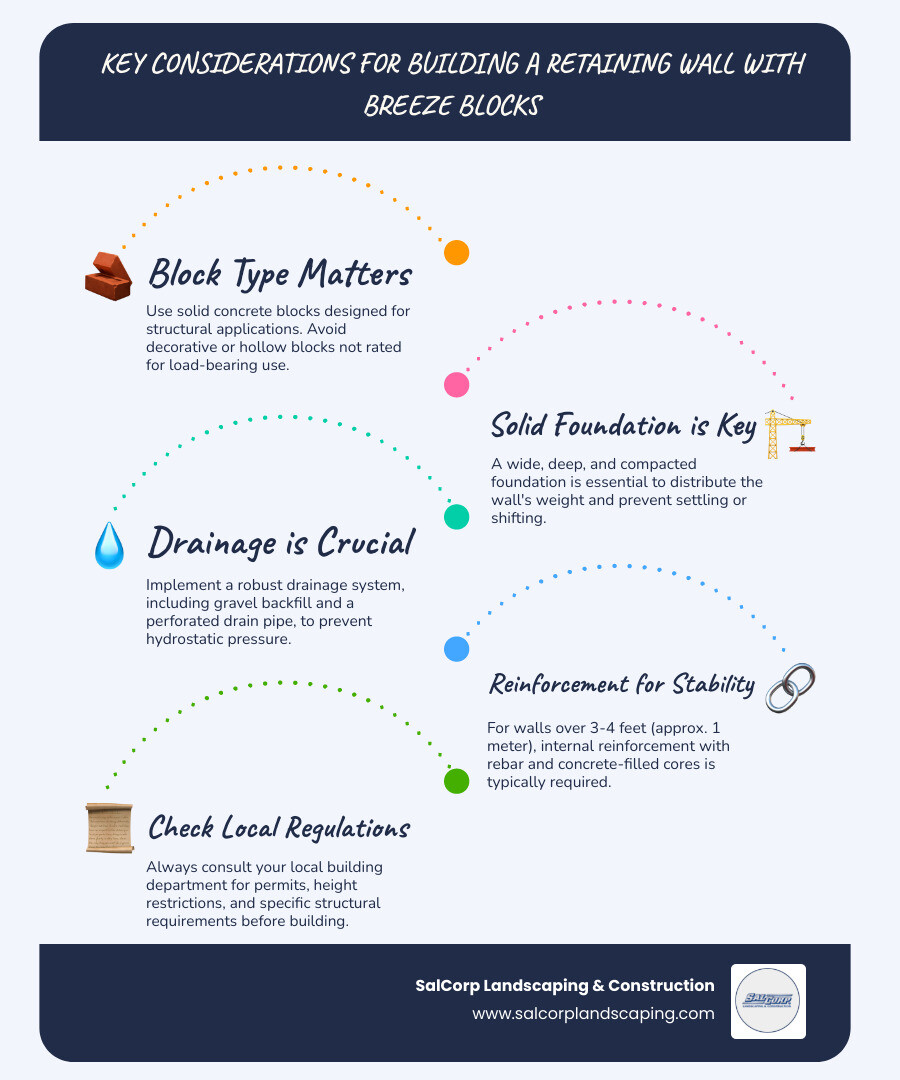
Building a retaining wall with breeze blocks terms to know:
Before You Build: Planning, Tools, and Materials
Proper planning is the bedrock of any successful retaining wall project. Before digging, you need to consider safety, gather the right materials, and understand local rules. Skipping these steps can turn a DIY project into a hazard.
Choosing the Right Blocks: A Critical First Step
When building a retaining wall with breeze blocks, it’s critical to use the correct type. The term “breeze block” often refers to decorative, open-patterned blocks, which are unsuitable for retaining walls as they lack the strength to hold back soil and water pressure.
For a structural retaining wall, you must use solid concrete blocks (also known as concrete masonry units or CMUs) or specialized, interlocking retaining wall blocks. These are engineered to bear heavy loads. While some hollow concrete blocks can be used, their cores must be filled with concrete and reinforced with rebar for adequate strength. Systems like Allan Block or Versa-Lok are excellent DIY-friendly options designed specifically for this purpose. Always choose solid, heavy-duty blocks for retaining earth and save decorative ones for non-structural projects.
For information on building with decorative blocks, see this guide: How to build a breeze block wall.
Essential Tools and Materials for the Job
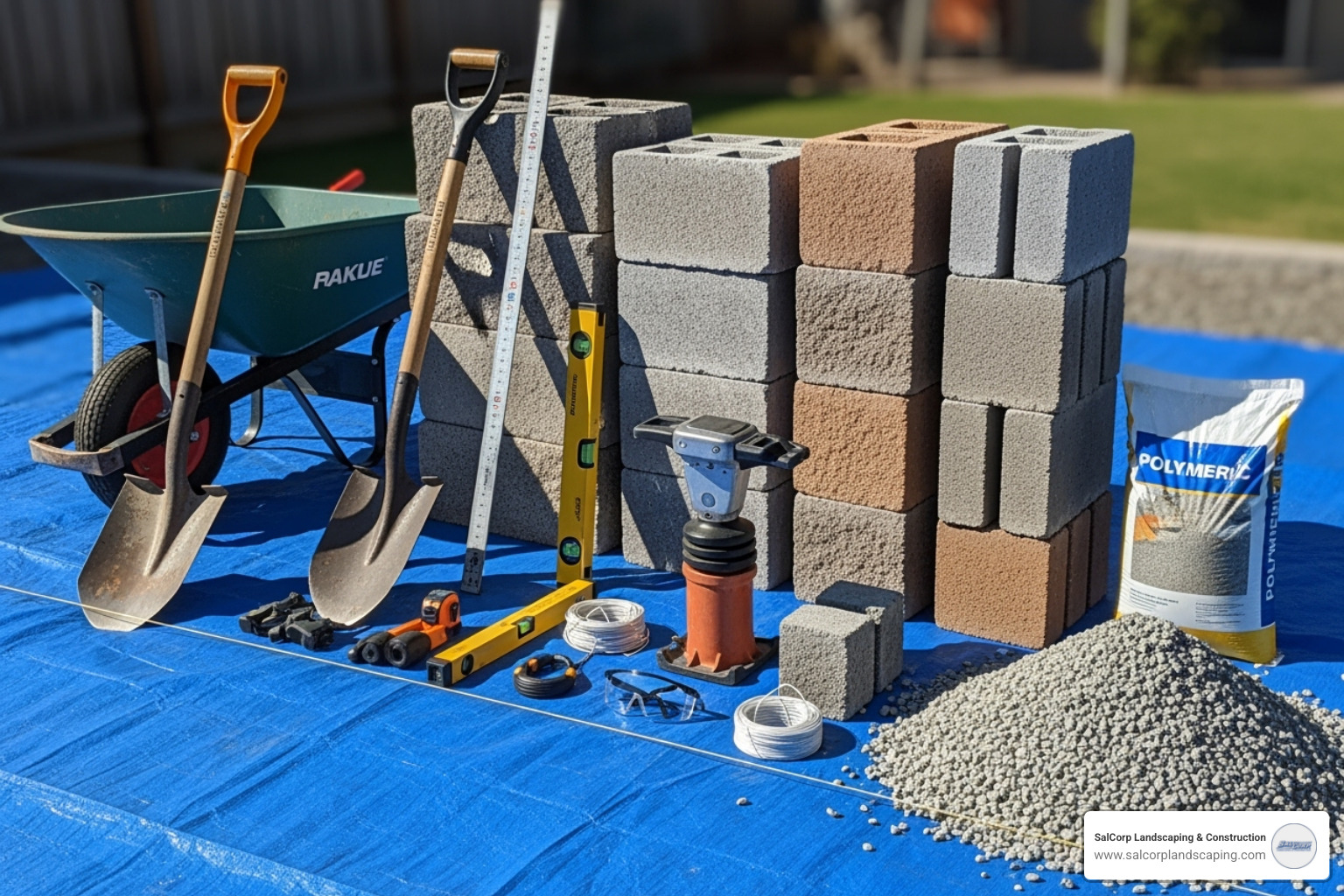
Having the right tools and materials on hand makes building a retaining wall with breeze blocks smoother and safer. Here’s a list of what you’ll need:
- Tools:
- Shovel, Wheelbarrow, Tape measure
- 4-foot carpenter’s level and line level
- String line and line pins
- Hand tamper or plate compactor
- Trowel and rubber mallet
- Safety gear: glasses, gloves, dust mask
- Hammer and chisel
- Hacksaw or grinder (for rebar)
- Mortar mixer (for large projects)
- Materials:
- Solid Concrete Blocks (structural grade)
- All-purpose sand and cement (for mortar)
- Gravel or crushed stone (for drainage)
- Landscape Fabric (Geotextile)
- Perforated Drainage Pipe
- Rebar (for reinforcement)
- Mortar Plasticizer
- Concrete (for footing and core-fill)
Pro tip: Purchase about 10% more blocks than you estimate to account for cuts, breakage, or future repairs. This saves you from last-minute trips to the supply yard!
Checking Local Codes and Calling 811
Before digging, it’s critical to check with local authorities. Building permits and adherence to local codes are essential for safety and longevity. In Massachusetts, for example, walls over 3-4 feet often require a permit and sometimes plans from a qualified engineer, especially if the wall is near a property line or supports a heavy load.
Another non-negotiable step is to call 811 before you dig. This free national service locates underground utilities like gas, water, and electrical lines. Hitting a utility line is dangerous and can lead to expensive repairs. Taking these precautions helps you avoid costly mistakes and hazards. For significant digging, our Excavation Services team can assist.
The Foundation: The Key to a Long-Lasting Wall
The foundation is the most critical component of a retaining wall, providing essential stability. A well-prepared foundation prevents settling, shifting, and ultimate wall failure, so start strong from the ground up.
Digging and Preparing the Trench
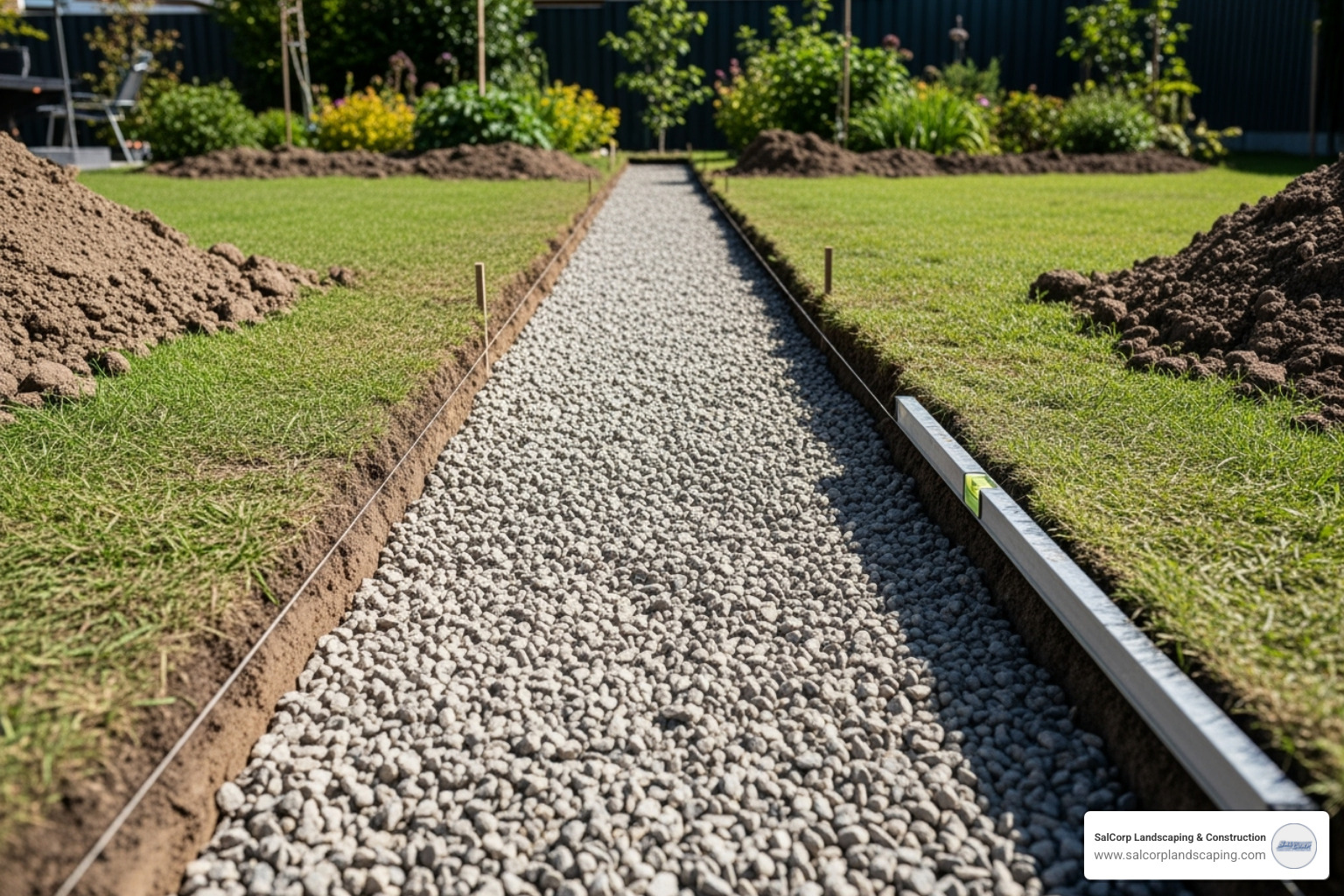
The first physical step in building a retaining wall with breeze blocks is digging the foundation trench. Use stakes and a string line to mark the wall’s location. The trench should be about 4 to 6 inches deep and at least twice the width of your blocks (e.g., a 16-inch wide trench for 8-inch blocks). This width provides a stable footing and distributes the wall’s weight.
Trench depth may need to be greater in areas with frost heave, like Massachusetts, where the footing should extend below the frost line to prevent shifting. After digging, ensure the bottom of the trench is perfectly level, as this is fundamental to the entire wall’s stability. Any imperfections here will be magnified as you build.
For more guidance on sloped areas, see our guide on How to Build a Retaining Wall on a Slope.
Creating a Solid, Level Base
With the trench dug, create a robust, compacted base layer to prevent settling. Add a 3-inch layer of paver base or crushed stone, which compacts well and aids drainage.
Spread the material evenly and compact it thoroughly. A hand tamper works for small walls, but a plate compactor is recommended for larger projects. Lightly wet the base material if it’s dusty for better compaction, running the compactor over the surface until it’s firm.
After compacting, double-check that the base is perfectly level across the entire trench. Make any necessary adjustments by adding or removing material and re-compacting. A perfectly level base is non-negotiable for a strong wall.
Step-by-Step Guide to Building a Retaining Wall with Breeze Blocks
With the foundation ready, it’s time to lay the blocks. This is where your vision comes to life, but patience and precision are key.
Laying the Critical First Course
The first course of blocks is the most important, as it sets the alignment for the entire wall. Take your time to get it right.
Bury the first row of blocks about halfway into the compacted base. This partial burial is crucial for stability, anchoring the wall and preventing it from kicking out at the bottom. For some modular systems, you may need to knock a small flange off the first course blocks so they sit flat.
Start laying blocks at the lowest point of the wall’s run. If using mortar, spread an even bed on the base, then set the first block. Tap it with a rubber mallet until it’s firmly seated and perfectly level from front-to-back and side-to-side. Stretch a stringline between the ends of the trench to guide the height and alignment of the rest of the course. Check each block against the stringline and with your level, making small adjustments as you go until the first course is complete and perfectly level.
Stacking Courses and Adding Reinforcement
With the first course set, you can begin stacking subsequent rows.
For a mortared wall, use a 4:1 sand-to-cement mix, adding water and plasticizer until you reach a consistent, workable texture. Aim for a 3/8-inch (10mm) mortar joint, applying mortar to the top of the previous course and the ends of the blocks.
A crucial structural tip is to stagger the joints in a running bond pattern, offsetting the vertical joints by half a block length. This interlocking pattern distributes weight and resists lateral forces, preventing weak points. When building a retaining wall with breeze blocks, lay hollow blocks on their widest side for maximum stability.
For gravity walls up to about 3-4 feet (1 meter), the wall’s weight may be sufficient. Taller walls, or those in areas with high soil pressure or frost heave, require reinforcement. This typically involves placing vertical rebar in the hollow cores (anchored to the footing) and filling the cores with concrete. Horizontal reinforcement can also be added in the mortar joints. Proper reinforcement is key to a wall’s strength. For complex or tall walls, our Block Wall Builder services can provide a professional, engineered solution.
The Secret to Stability: Proper Drainage
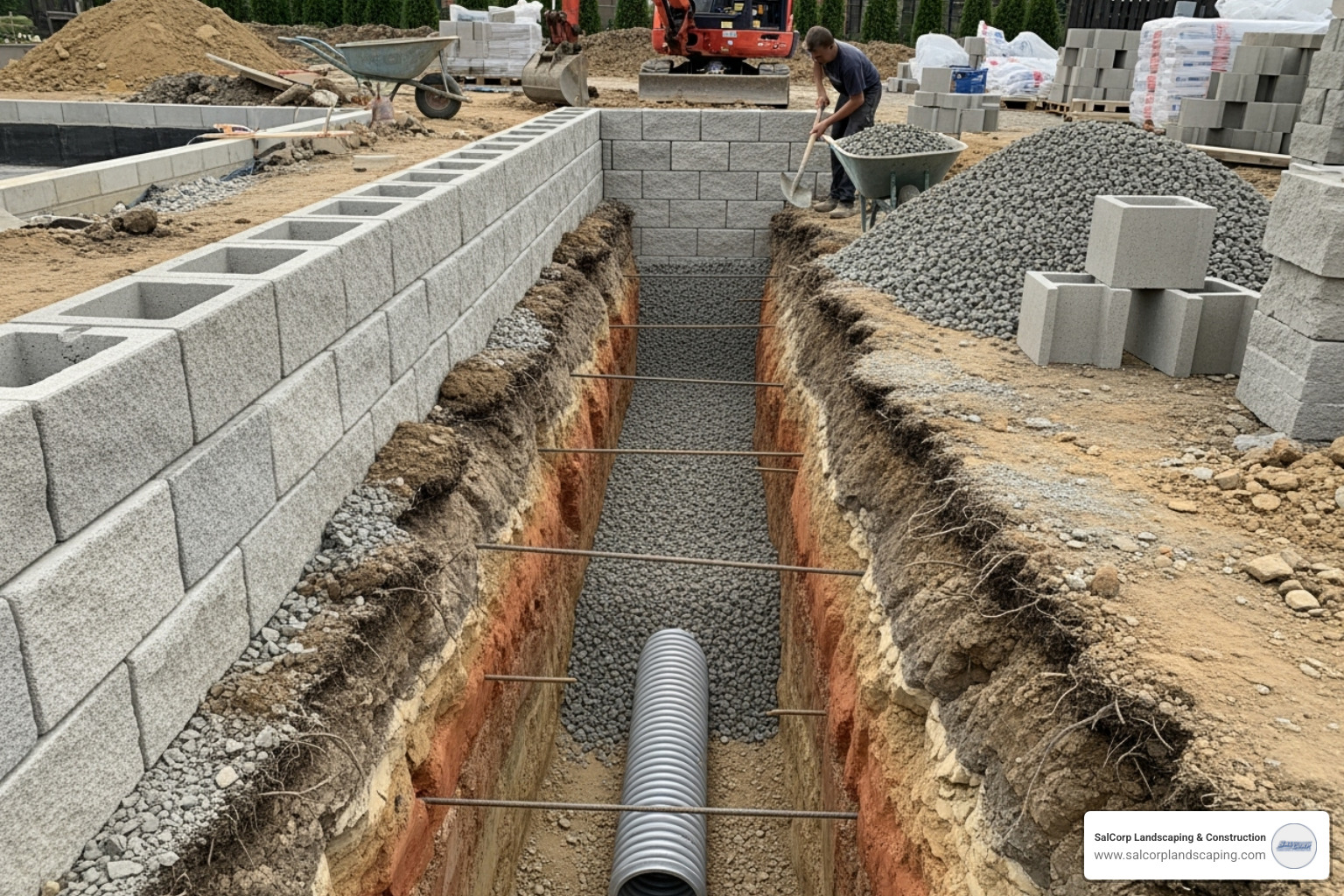
Proper drainage is essential to prevent wall failure. Trapped water creates immense hydrostatic pressure, which can cause a wall to bulge, crack, or collapse. In cold climates, freezing water expands, causing destructive frost heave. A comprehensive drainage system is the secret to a stable, long-lasting wall.
Here’s how to build one:
- Landscape Fabric: Line the excavated area behind the wall with geotextile fabric. This acts as a filter, preventing soil from clogging the gravel backfill. Leave enough extra fabric to fold over the top of the gravel later.
- Perforated Drainage Pipe (French Drain): At the base of the wall, within the gravel layer, install a perforated pipe (French drain). Lay it with the holes facing down and a slight slope (1/8 inch per foot) to carry water away.
- Gravel Backfill: As you build, fill the space behind the wall with 8-12 inches of free-draining gravel. Compact the gravel in 3-4 inch layers to prevent settling.
- Weep Holes (Optional): For mortared walls, consider adding weep holes—small openings in the mortar joints—to provide an additional escape route for water.
This system gives water a clear exit path, protecting your wall from pressure buildup.
Finishing Touches and Common Mistakes
You’ve done the hard work, and your wall is standing tall! Now it’s time to add the finishing touches that improve its appearance and durability.
Capping the Wall and Finishing the Job
The final steps give your wall a polished look and ensure its longevity.
First, install capstones. These special blocks or stones sit on top of the wall, providing a finished appearance and protecting the blocks below from weather. Secure them with a strong concrete adhesive, ensuring they are level and aligned.
Next, backfill the area behind the wall. Fold the excess landscape fabric over the top of the gravel drainage layer. Fill the remaining space with topsoil, compacting it gently in layers. This creates a suitable base for planting.
Finally, allow the wall to cure. Mortar and concrete reach full strength in about 28 days. For the first week, moisten the wall daily to help it cure properly and prevent cracks. Once cured, the area is ready for planting. Our Retaining Wall Landscaping services can help integrate your new wall into a complete outdoor design.
Top Mistakes When Building a Retaining Wall with Breeze Blocks
Knowing the common pitfalls can save you from costly errors when building a retaining wall with breeze blocks. Avoid these top mistakes:
- Using the Wrong Blocks: The biggest mistake is using decorative, hollow breeze blocks. They are not strong enough to retain soil and will fail. Always use solid, structural concrete blocks or engineered retaining wall systems.
- A Weak Foundation: A shallow, narrow, or poorly compacted foundation will cause the wall to sink, lean, or collapse. Ensure the trench is deep and wide enough and the base is fully compacted.
- Forgetting Drainage: Without proper drainage (gravel, perforated pipe), water pressure will build up and push the wall over. This is a non-negotiable step.
- Not Reinforcing Taller Walls: Walls over 3-4 feet require reinforcement like rebar and concrete-filled cores to withstand soil pressure.
- Not Staggering Joints: Failing to offset joints (a running bond pattern) creates weak vertical lines where the wall can crack and fail.
- Bad Mortar Mix: An incorrect mortar mix or inconsistent application results in weak joints that can crumble over time.
- Ignoring Local Rules: Always check with your local building department for permits and height restrictions before you start to avoid fines and rebuilds.
Avoiding these errors is key to a successful project. For more tips, see this guide on How to Build a Stronger Retaining Wall.
Frequently Asked Questions about Breeze Block Retaining Walls
Here are answers to some of the most common questions about building a retaining wall with breeze blocks.
How high can you build a breeze block retaining wall?
For a simple gravity wall built with solid concrete blocks, the recommended maximum height without professional engineering is about 1 meter, or roughly 3 to 4 feet. Taller walls are subject to immense soil and water pressure and require substantial reinforcement, a robust footing, and a design from a qualified engineer to ensure they are safe and stable.
Do you need to fill the holes in hollow concrete blocks for a retaining wall?
Yes, you absolutely need to fill the holes if using standard hollow concrete blocks for a retaining wall. For maximum strength, especially for taller walls or in areas with frost heave, fill the cores with concrete and vertical rebar tied into the foundation. This creates a strong, internal reinforced column. Filling the cores with gravel can add weight for smaller walls but does not provide the same structural strength as concrete and rebar.
How much does it cost to build a breeze block wall?
The cost to build a breeze block wall varies significantly based on location, block type, wall size, site conditions, and whether it’s a DIY or professional project.
Based on general internet data, material costs alone can range from $4 to over $45 per square foot. This wide range reflects differences in block types and regional pricing. This figure does not include tools, delivery, or labor. For a professional installation, total project costs can range from $20 to over $100 per square foot, depending on complexity.
The best way to get an accurate price is to get a specific quote. For a general overview, visit our page on How Much Does a Retaining Wall Cost.
Conclusion: When to DIY and When to Call the Pros
Building a retaining wall with breeze blocks is a rewarding project that adds beauty and function to your landscape. A low, straight wall under 3 feet on stable ground can be a great DIY project, provided you follow the key principles of a solid foundation, proper drainage, and level block laying.
However, it’s crucial to know when to call a professional. For taller walls, walls on a significant slope, or walls supporting critical areas like a driveway, professional expertise is essential. An improperly built wall can lead to property damage or injury.
For over 20 years, SalCorp Landscaping & Construction has helped Massachusetts homeowners with their landscaping and hardscaping needs. As an owner-operated team based in Walpole, we understand local conditions and have the machinery and expertise to ensure your project is beautiful, structurally sound, and built to last. For expert advice on your next hardscaping project, contact a professional retaining wall contractor like us. We’re here to help you build smart and safe.
