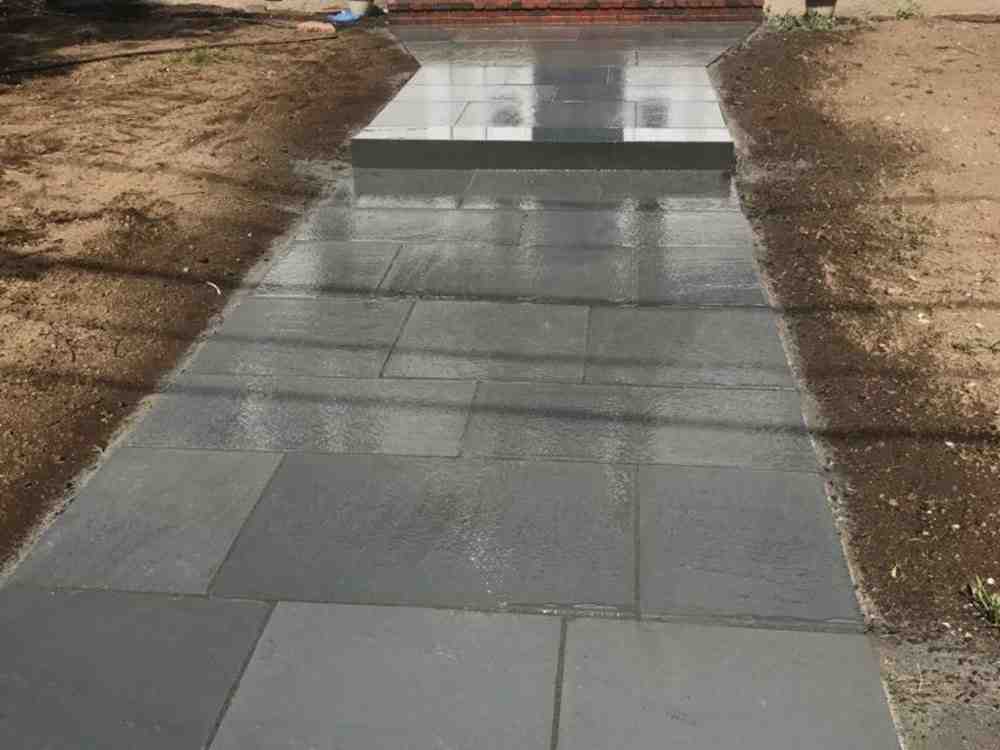
Building Brick Stairs: Easy 2025 Guide
Why Brick Stairs are a Timeless Choice for Your Property
Building brick stairs is a rewarding home improvement project that offers exceptional durability, timeless aesthetic appeal, and can significantly boost your property value. These classic structures aren’t just about function—they’re about creating a welcoming entrance that makes a statement.
Quick Answer for Building Brick Stairs:
- Plan and measure – Calculate rise, run, and number of steps.
- Excavate and prepare – Dig below the frost line (12-48 inches in Massachusetts).
- Pour concrete foundation – Create a stable base with proper drainage.
- Add gravel base – Use 4-6 inches of compacted gravel for stability.
- Mix mortar – Use Type M or Type S for exterior durability.
- Lay bricks – Start with the bottom course, maintaining 3/8-inch joints.
- Finish joints – Tool mortar for a clean look and water runoff.
- Cure properly – Allow 5-7 days before use.
The beauty of brick lies in its versatility. You can create straight, curved, or stepped designs that complement any architectural style, providing the strength to handle heavy foot traffic and harsh weather.
Cost considerations vary. DIY projects typically run $4-$15 per square foot for materials, while professional installation ranges from $3,000-$9,000 or more, depending on complexity.
I’m Sal Musto, and with over two decades of experience at SalCorp Landscaping & Construction, I’ve helped countless Massachusetts homeowners create stunning outdoor spaces. My hands-on approach to building brick stairs ensures every project meets the highest standards of safety, durability, and aesthetic appeal.
Step 1: Planning and Designing Your Perfect Brick Steps
Proper planning is the blueprint for success when building brick stairs. Taking the time to measure correctly and choose the right materials ensures the construction process flows smoothly and the final product lasts for decades.
Choosing Your Style: From Classic to Contemporary
Your brick step design should complement your home’s architecture. Brick is versatile enough for nearly any style.
- Straight stairs are the most straightforward and cost-effective option, creating clean, simple lines.
- Curved stairs add a softer, more welcoming feel but require more skill to execute.
- Steps with landings are ideal for longer runs or steep inclines, offering a resting point and adding architectural interest.
- Wing walls extend from the steps to provide structural support and create a grander entrance, especially on sloped terrain.
You can explore various approaches in our Brick Step Designs to find what best suits your property.
Measuring and Calculating for Safety and Success
Precision in measurement is about safety, not just aesthetics. Inconsistent step heights are a major tripping hazard, and local building codes are in place to prevent this.
- Total rise is the overall vertical distance from the ground to the top landing.
- Total run is the total horizontal distance the staircase will cover.
- Riser height should be around 7 inches for comfort, with an 8-inch maximum in most codes.
- Tread depth should be 11 to 12 inches to allow for secure foot placement.
To calculate the number of steps, divide the total rise by your desired riser height. For a 40.5-inch total rise, dividing by 7 gives you 5.78. Round up to 6 risers, making each riser 6.75 inches high (40.5 ÷ 6), ensuring uniformity.
Always check local building codes in Massachusetts, as they dictate everything from riser height to handrail requirements. For more details, A DIY Guide to Outdoor Stair Construction is a helpful resource.
Selecting the Right Materials for Durability
The materials you choose determine the longevity of your stairs, especially in New England’s harsh freeze-thaw cycles.
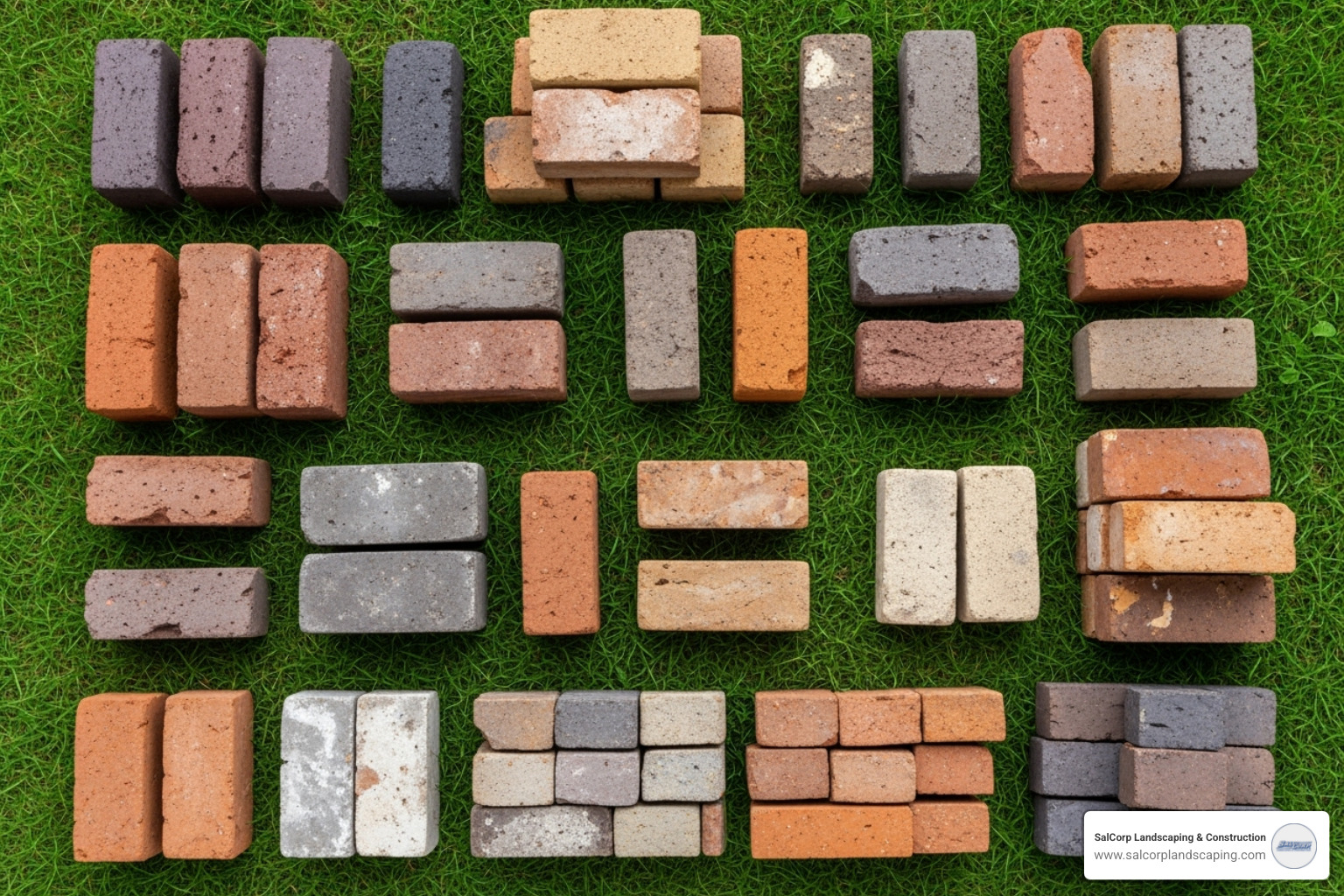
- Brick Selection: Solid clay bricks offer a traditional look, while paver bricks are denser. For Massachusetts, Frost-resistant Class F bricks are essential to prevent cracking from freezing and thawing.
- Mortar Choice: Type M mortar (2500 psi) is ideal for high-strength, load-bearing structures like stairs. Type S mortar (1800 psi) offers excellent bonding and weather resistance.
- Foundation Materials: Use a high-quality concrete mix, steel rebar for tensile strength, and a gravel sub-base for drainage and stability.
At SalCorp Landscaping & Construction, we use only top-tier materials for our Landscaping and Masonry projects, because cutting corners on materials always costs more in the long run.
Step 2: Laying a Rock-Solid Foundation
The strength of your building brick stairs depends entirely on the foundation beneath it. This is especially true in Massachusetts, where the ground shifts with seasonal freezing and thawing. A solid foundation is not the glamorous part of the project, but it is the most important.
Excavation and Site Preparation
First, prepare the site carefully. Use stakes and string to mark the layout of the stairs and foundation. Accuracy here is critical. Next, clear all vegetation and organic material from the area, as decomposing matter can cause the foundation to settle and become unstable. Finally, and most importantly, call 811 to check for utility lines before you dig. This is required by law in Massachusetts and is a crucial safety step.
The Importance of a Concrete Footing
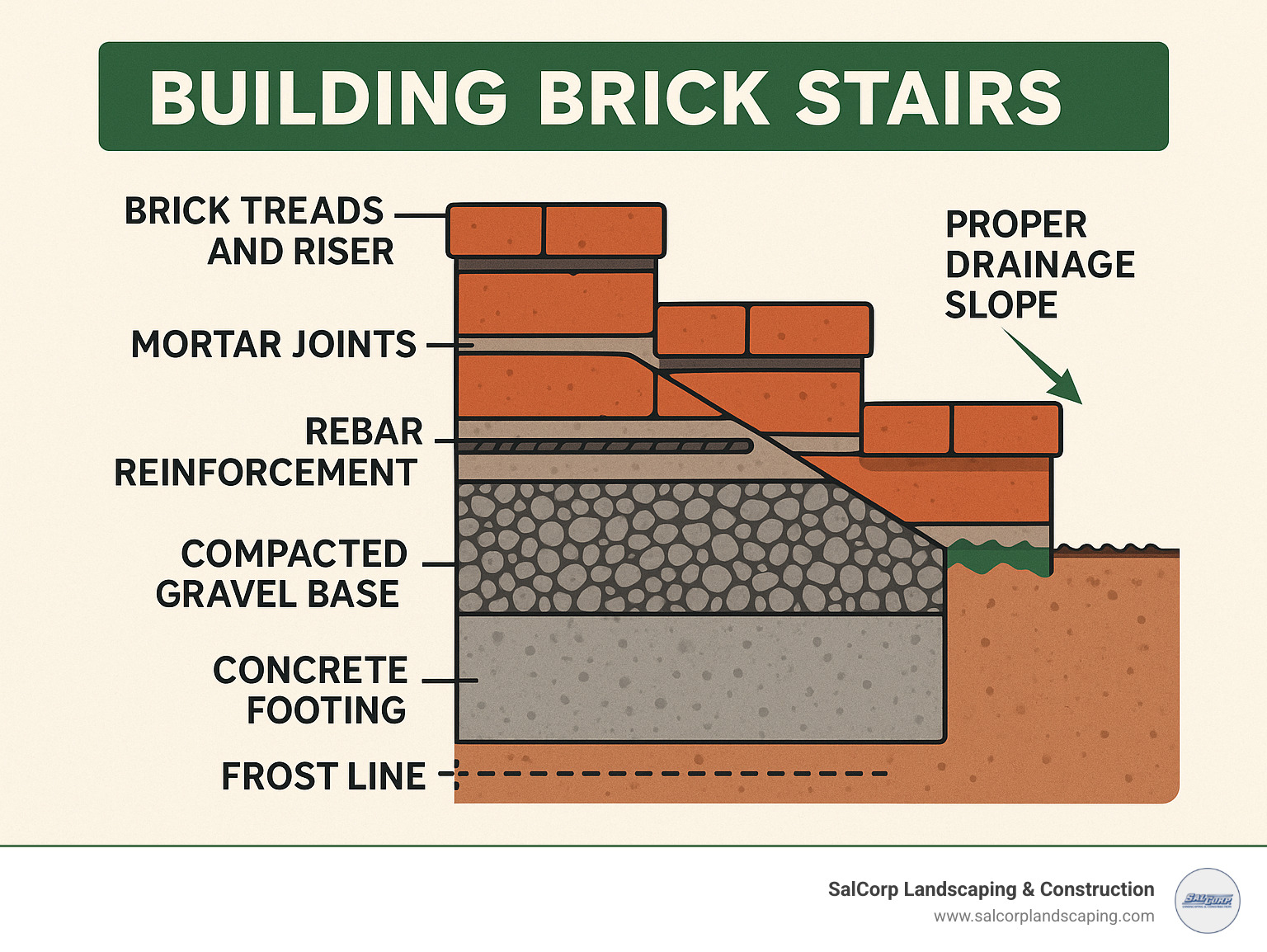
The concrete footing is the backbone of your stairs, distributing their weight to prevent settling. The most critical factor is the frost line depth, which is the depth at which ground moisture freezes. In Massachusetts, this ranges from 12 to 48 inches. The footing must be poured below this line to prevent “frost heave”—the upward force of freezing soil that can lift, shift, and crack your stairs.
After excavating, we pour the concrete into forms, ensuring it is level and has a slight slope for proper drainage away from your home’s foundation. This prevents water from pooling and causing damage. You can explore our foundation approaches for Brick and Concrete Steps.
Adding a Gravel Base and Reinforcement
To further improve stability and drainage, we add a gravel base and steel reinforcement.
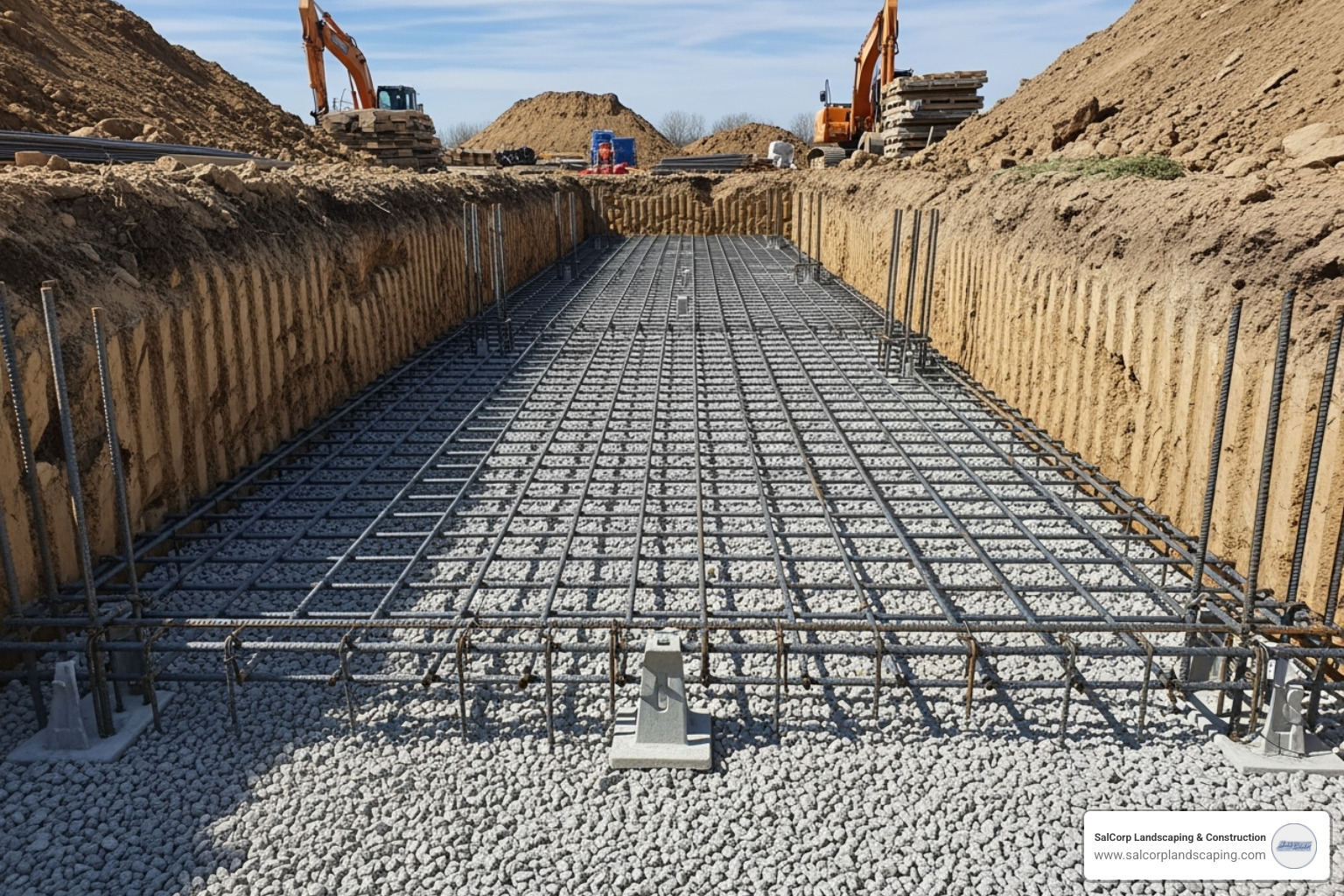
A 4-6 inch layer of compacted gravel is laid in the footing forms. This sub-base provides excellent drainage and a stable platform. We use a plate compactor to create a dense, unyielding surface that prevents future settling.
Before pouring the concrete, we place a rebar grid inside the forms. Concrete is strong under compression but weak under tension. Rebar provides this tensile strength, acting as a skeleton to prevent the footing from cracking under the stress of ground movement or heavy loads. This reinforcement is essential for creating truly durable building brick stairs. For more technical details, resources like Proper Stair Construction for Retaining Walls offer valuable insights.
Step 3: The Complete Guide to Building Brick Stairs
With a solid foundation in place, you can begin the masonry work. This phase of building brick stairs requires precision and patience to transform the concrete base into a beautiful, functional entrance.
Gathering Your Tools and Mixing the Mortar
Having the right tools makes the job much easier. You will need a mason’s trowel, levels, a rubber mallet, a wheelbarrow, a shovel, a jointing tool, a stiff brush, a tape measure, and a string line.
For mortar, the goal is a peanut butter-like consistency—thick enough to hold its shape but pliable enough to spread. For Type M or S mortar, follow the manufacturer’s ratio, typically 1 part cement, 1 part lime, and 6 parts sand. Always mix in small, workable batches, as mortar has a limited working time of about an hour or two.
A Step-by-Step Guide to Laying the Bricks
Laying bricks properly requires a steady hand and a keen eye.
- Wet the bricks lightly before use. This prevents them from absorbing water from the mortar too quickly, which ensures a stronger bond.
- Lay the first course by spreading a half-inch bed of mortar on the footing. Press the first brick in firmly and check that it is level.
- Maintain consistent 3/8-inch mortar joints for both structural integrity and visual appeal.
- Use a level on every brick, both horizontally and vertically. Adjust with a gentle tap from a rubber mallet as needed.
- Stagger joints in a running bond pattern. This classic look distributes weight evenly and adds strength.
- Build up the risers and treads layer by layer, applying mortar to the brick ends (head joints) before placement and checking for level with each course.
For visual guidance, see our guide on How to Build Brick Stairs.
Finishing Touches for a Professional Look
These final steps are crucial for durability and a polished appearance.
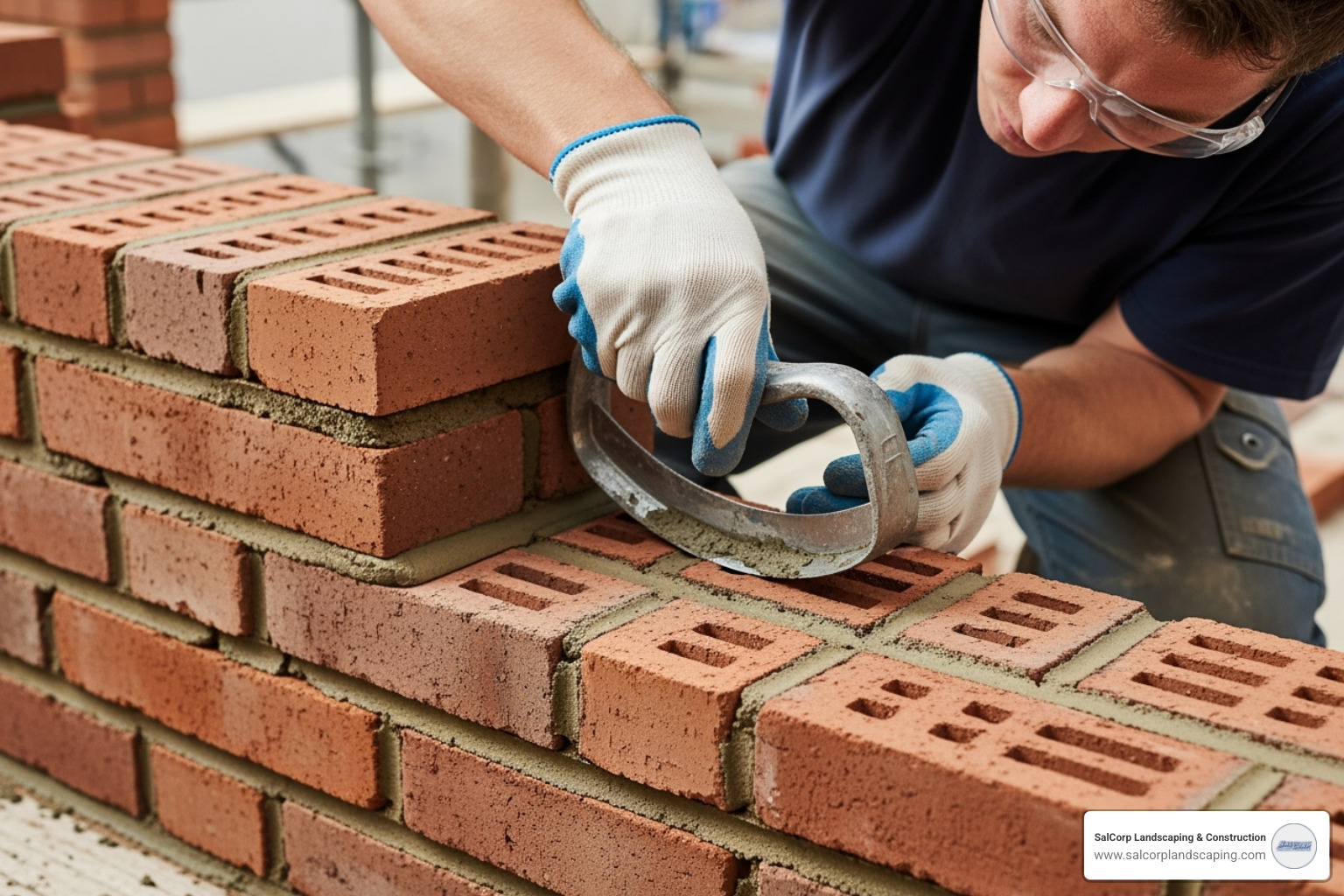
- Tool the joints after the mortar has stiffened slightly. Use a jointing tool to create a smooth, concave profile that sheds water and improves weather resistance.
- Clean excess mortar from the brick faces with a damp sponge or stiff brush before it hardens.
- Allow the stairs to cure for 5-7 days. Mortar gains strength through a chemical reaction that requires time and moisture. Avoid all foot traffic during this period.
- Mist the mortar lightly in warm or dry weather to prevent it from drying too quickly, which can cause cracking.
Step 4: Cost, Maintenance, and When to Call a Pro
Understanding the investment and long-term care will help you decide the best path forward for your building brick stairs project. It’s important to know what you’re getting into, both financially and practically.
DIY vs. Professional Installation: A Cost Breakdown
The decision between a DIY project and hiring a professional involves balancing cost, time, and skill. This is not a simple weekend project.
- DIY Installation: This can be rewarding if you have the time and skill. Material costs typically range from $4-$15 per square foot, based on internet averages. This does not include tool rental or the value of your time. A proper installation can take a dedicated DIYer several weekends.
- Professional Installation: Costs vary widely based on project complexity, but internet averages suggest a range of $3,000 to $9,000 or more. With a professional, you are paying for expertise, efficiency, and peace of mind, knowing the job is done right and to code. Please note: these are average costs based on internet data and not actual costs for SalCorp Landscaping.
The skill level required for building brick stairs is considerable. It involves excavating below the frost line, pouring concrete footings, and ensuring proper drainage—mistakes can lead to costly future repairs.
Step 4: Cost, Maintenance, and When to Call a Pro
Once your building brick stairs are complete, a little ongoing care will maintain their beauty and structural integrity for decades. Proper maintenance is simple and ensures your investment lasts a lifetime.
| Feature | DIY Installation | Professional Installation |
|---|---|---|
| Cost | Materials only: $4-$15 per sq. ft. (average internet pricing) | Total project: $3,000-$9,000+ (average internet pricing) |
| Time | 3-7 days for beginners, weekends only | 2-5 days, weather dependent |
| Skill Required | High – masonry, concrete work, precision measuring | None – full expertise provided |
Please note: These are average costs based on internet data and not actual costs for SalCorp Landscaping.
Disclaimer: Pricing varies significantly based on location, project complexity, and current material costs. Always get multiple quotes for accurate pricing in your area.
Long-Term Care for Your Brick Stairs
- Regular Cleaning: Periodically wash your steps with mild soap and water to remove dirt and grime. A pressure washer on a low setting can be effective, but avoid harsh chemicals.
- Sealing Against Moisture: Apply a quality, breathable masonry sealant every 2-3 years. This creates a waterproof barrier that prevents freeze-thaw damage and efflorescence (white, powdery residue).
- Weather Protection: During winter, never use rock salt or de-icing chemicals, as they can severely damage brick and mortar. Use sand or kitty litter for traction and keep steps clear of snow with a plastic shovel.
- Annual Inspections: Once a year, check for hairline cracks, loose bricks, or deteriorating mortar joints. Catching issues early prevents major repairs. For damaged mortar, a process called tuckpointing is used to replace it. You can learn more about What is tuckpointing and why is it important?.
Frequently Asked Questions about Building Brick Stairs
After two decades in the business, I’ve found that the same crucial questions about building brick stairs come up time and again. Here are the answers to the most common ones.
What do you put under brick steps for a solid base?
A proper foundation is essential and consists of two layers. First, a 4-6 inch compacted gravel sub-base provides drainage and a stable platform. On top of that, a poured concrete footing that extends below your region’s frost line (12-48 inches in Massachusetts) prevents the stairs from shifting and cracking due to freeze-thaw cycles. We often add steel rebar for additional strength.
Can you build brick stairs directly on dirt or soil?
No, you should never build brick stairs directly on dirt. Soil expands, contracts with moisture, and erodes over time. This movement will cause steps built on it to become unstable, uneven, and unsafe. A solid concrete and gravel foundation is non-negotiable for both safety and longevity.
How long do brick steps need to cure before you can walk on them?
You must wait a minimum of five to seven days before using your new stairs. The mortar doesn’t just dry; it undergoes a chemical reaction called hydration to gain its full strength. Rushing this process results in weak joints. In hot or windy weather, it’s helpful to lightly mist the mortar with water to keep it from curing too quickly and cracking.
Conclusion: Enjoy Your Beautiful and Durable New Steps
Building brick stairs is a project that adds significant beauty, functionality, and value to your home. Whether you choose a DIY approach or hire a professional, the key to success is a commitment to quality, starting with a rock-solid foundation and careful attention to detail.
The classic appeal of brick is timeless, and your new steps will improve your home’s curb appeal for generations. While a DIY approach is possible for those with the right skills, the complexity of creating a code-compliant structure often makes professional installation the smarter choice. A professional ensures your steps are not only beautiful but also safe and built to withstand New England’s harsh weather for decades.
For homeowners in Massachusetts looking for expert hardscaping services, SalCorp Landscaping & Construction provides owner-operated expertise to bring your vision to life. Based in Walpole, we’ve been serving communities across the state for over 20 years. We pride ourselves on offering comprehensive outdoor space solutions with our own machinery, ensuring every project – including your new building brick stairs – is completed with the highest standards of craftsmanship and care.