

bulk mulch delivery: 7 Best Picks for Powerful Results 2025
Why Bulk Mulch Delivery Makes Sense for Large Projects
Ever found yourself making multiple trips to the garden center, loading bag after bag of mulch into your trunk? There’s a better way! Bulk mulch delivery brings the landscape materials you need right to your doorstep, saving you time, money, and a whole lot of backache.
Quick Answer: Best Bulk Mulch Delivery Options
- Hardwood Mulch: Best for general landscaping, moisture retention
- Pine Bark/Nuggets: Ideal for acid-loving plants, slow decomposition
- Colored Mulch: Great for aesthetic appeal, available in black, red, brown
- Rubber Mulch: Perfect for playgrounds, lasts up to 12 years
- Minimum Delivery: Typically 3 cubic yards (covers ~300 sq ft at 3 inches)
- Delivery Requirements: Firm ground, 9 ft width, 15 ft height clearance
When you’re planning to refresh your garden beds or create new landscaped areas, one of your first decisions will be whether to go with bagged mulch from the store or bulk mulch delivery. For anything beyond a few small garden beds, bulk delivery is the smart choice.
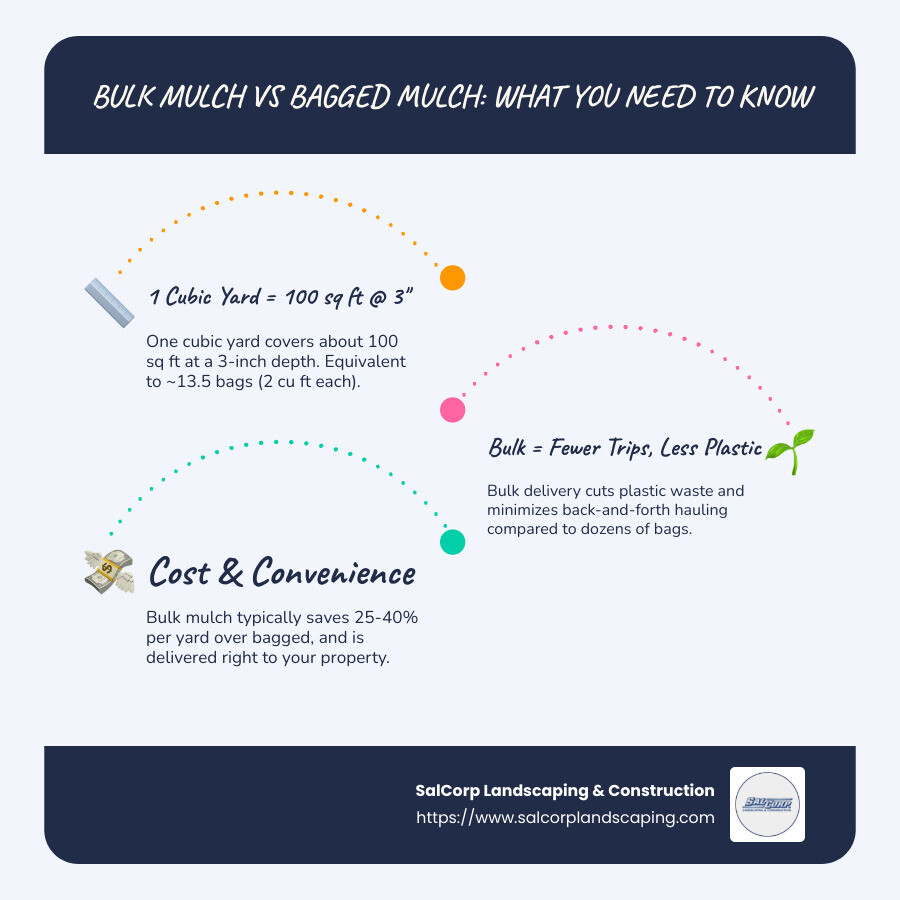
Think about it this way: one cubic yard of bulk mulch covers about 100 square feet at a 3-inch depth. That’s equivalent to lugging home and emptying about 13-14 bags of store-bought mulch (the standard 2 cubic foot bags). Not only does buying in bulk save you money, but you’ll also avoid creating a pile of plastic bags that end up in landfills.
I love helping customers find the right type of mulch for their specific needs. Some gardens thrive with hardwood mulch, while others might benefit from pine bark’s acidity. If you’re looking to make a visual statement, colored mulches create beautiful contrast against your plants. And for playgrounds, specially certified mulch ensures both safety and longevity.
Getting bulk mulch delivery is surprisingly simple, though it does require a bit of planning. Most companies (including ours at SalCorp) have a minimum order requirement—typically 3 cubic yards—and need enough space for delivery trucks to safely drop your mulch. Before scheduling, make sure your driveway or drop spot has firm ground and enough clearance (roughly 9 feet wide by 15 feet high) for the truck.
I’m Sal Musto, owner of SalCorp Landscaping & Construction, and I’ve personally overseen hundreds of bulk mulch delivery projects throughout Massachusetts. There’s nothing quite like seeing how the right mulch can completely transform a property, whether it’s a cozy backyard garden or a sprawling commercial landscape.
Terms related to bulk mulch delivery:
– local mulch delivery
– mulch delivery
Hardwood Bulk Mulch
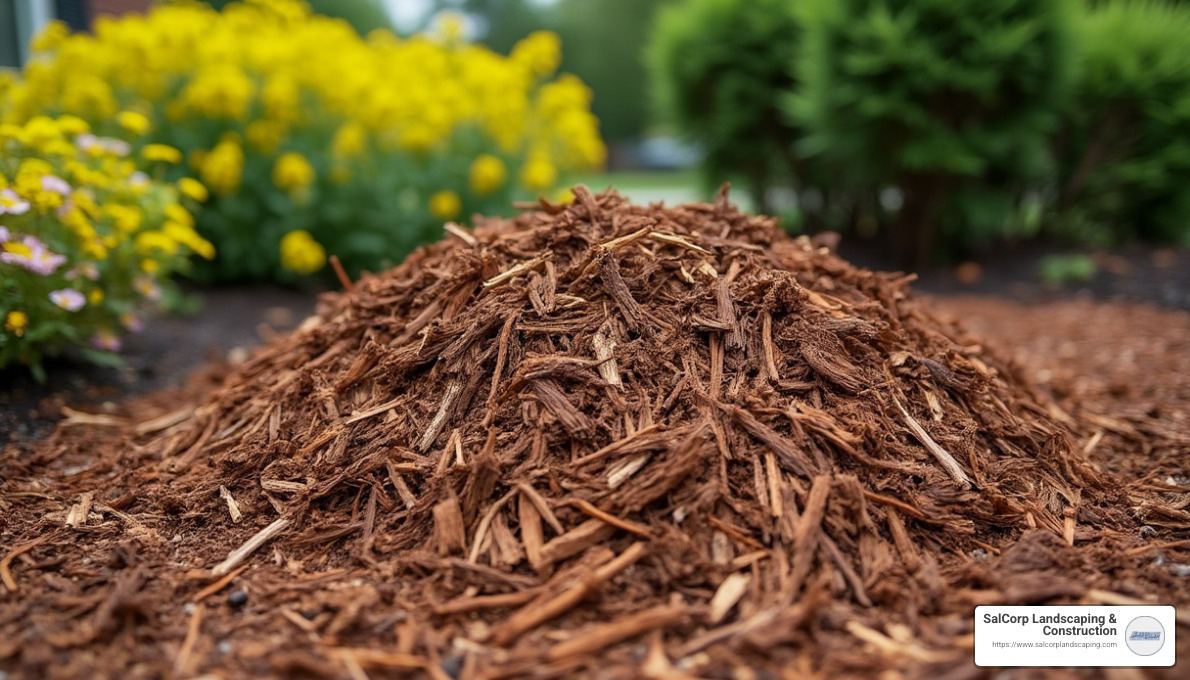
When it comes to landscaping materials that truly deliver, hardwood mulch stands as the undisputed champion. It’s no surprise that it’s our most requested bulk mulch delivery option here at SalCorp. Made from shredded deciduous trees like oak and maple, this natural wonder does double duty – beautifying your landscape while gradually enriching your soil.
The way hardwood mulch is processed makes all the difference in both looks and performance. Double-shredded varieties give you that classic medium-coarse texture that works beautifully in most garden settings. For those seeking a more manicured appearance, triple-shredded hardwood offers a finer, more uniform look that many of our clients prefer around ornamental gardens and front yard displays.
I often tell my clients that hardwood mulch is essentially nature’s slow-release fertilizer. As it gradually breaks down, it releases valuable nutrients into your soil while maintaining that crucial moisture balance around plant roots. This natural process creates healthier plants with less watering on your part – a win-win for both your garden and your water bill.
The natural brown color of hardwood mulch serves as the perfect backdrop for virtually any landscape design. Your flowers and shrubs will truly pop against this neutral canvas. Many of our Massachusetts customers love how it naturally darkens with age, giving gardens that rich, established look that suggests your landscape has been thoughtfully maintained for years.
There’s also something to be said for that fresh, earthy aroma that comes with a new bulk mulch delivery. Beyond simply smelling pleasant, this natural scent attracts beneficial insects like pollinators while typically not drawing problematic pests to your garden beds.
Pros & Cons of Hardwood Bulk Mulch
The advantages of choosing hardwood mulch are substantial. One cubic yard provides excellent coverage, typically handling about 100 square feet when spread at the recommended 2-3 inch depth. At 800-1000 pounds per cubic yard, it’s substantial enough to stay put even during heavy New England rainstorms. The gradual decomposition over 1-2 seasons continually improves your soil structure, and its natural appearance complements virtually any landscape design. For larger areas, it’s also remarkably cost-effective compared to bagged alternatives.
Of course, no material is perfect. Hardwood mulch does require refreshing every 1-2 years as it naturally breaks down. During decomposition, it can temporarily borrow some nitrogen from your soil (easily remedied with light fertilization if needed). Fresher, lighter batches might initially float a bit during heavy downpours before settling in. And if you’re primarily landscaping with acid-loving plants, you might want to consider alternatives like pine bark mulch instead.
For our clients throughout Walpole, Dedham, Norwood and surrounding Massachusetts communities, we’ve consistently found that hardwood mulch performs exceptionally well in our distinctive New England climate. It provides excellent insulation against both our summer heat waves and winter freezes. Its moisture retention properties are particularly valuable during those occasionally dry summer months we experience, helping you maintain a lush landscape with less frequent watering.
Pine Bark & Nugget Mulch
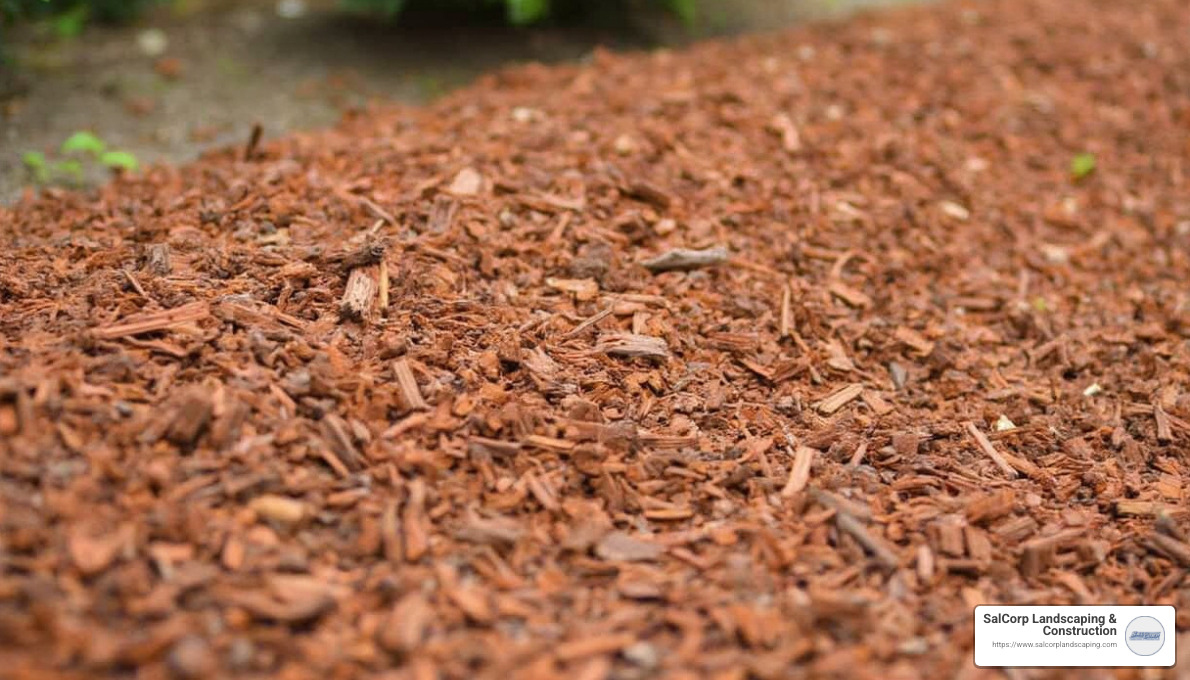
When it comes to distinctive appearance and specialized benefits, pine bark mulch truly stands out in the landscape. Whether you choose the shredded variety or the chunky nuggets, this lightweight option brings unique advantages to your bulk mulch delivery project.
“My clients who prefer a more decorative, uniform look often gravitate toward pine nuggets,” I tell homeowners during consultations. “They create this beautiful textured appearance that works wonderfully in formal garden settings.”
One thing I love about pine bark is how the nuggets naturally interlock with each other. This creates a surprisingly effective erosion barrier on sloped properties—something many of our Wellesley and Newton clients appreciate during those heavy New England downpours we get.
The slow decomposition rate of pine bark makes it incredibly cost-effective over time. While you might need to refresh hardwood mulch annually, pine nuggets often last up to three years before needing replacement. For larger properties, this extended lifespan translates to significant savings and less maintenance.
Perhaps pine bark’s most valuable quality is its natural acidity, typically ranging between 3.5 and 4.5 pH. This makes it the perfect companion for so many acid-loving plants that thrive in Massachusetts landscapes. Your rhododendrons, azaleas, blueberries, hydrangeas, magnolias, and most evergreens will absolutely flourish with pine bark mulch providing their ideal growing environment.
Where Pine Bark Shines in Landscapes
I’ve found pine bark mulch particularly beneficial in several specific garden situations throughout my years working in Massachusetts communities.
Evergreen beds simply love pine bark mulch. The natural acidity mimics the forest floor conditions where these plants evolved, creating a habitat that feels like home to your pines, spruces, and firs.
For rhododendrons and azaleas, pine bark is almost magical in its effects. These showstopping shrubs thrive when their soil stays consistently acidic and evenly moist—precisely what pine bark helps maintain. I’ve seen struggling rhododendrons completely transform within a season after applying the right mulch.
On sloped areas around Brookline and Milton properties, pine bark nuggets provide exceptional erosion control. Their interlocking nature helps them stay in place during those intense summer thunderstorms, protecting your soil from washing away.
For low-maintenance areas like foundation plantings or remote corners of larger properties, pine bark’s slow decomposition rate means less frequent replenishment. This makes it perfect for busy homeowners or vacation properties that don’t receive constant attention.
When delivering pine bark mulch to clients throughout Massachusetts, I usually recommend applying it slightly deeper than hardwood mulch—about 3 to 4 inches rather than the standard 2 to 3. This accounts for some settling that naturally occurs with this lighter material and ensures you’ll get the maximum benefit from your bulk mulch delivery.
For more information about choosing the right mulch for your specific landscape needs, check out our guide to mulch selection.
Dyed & Colored Mulch
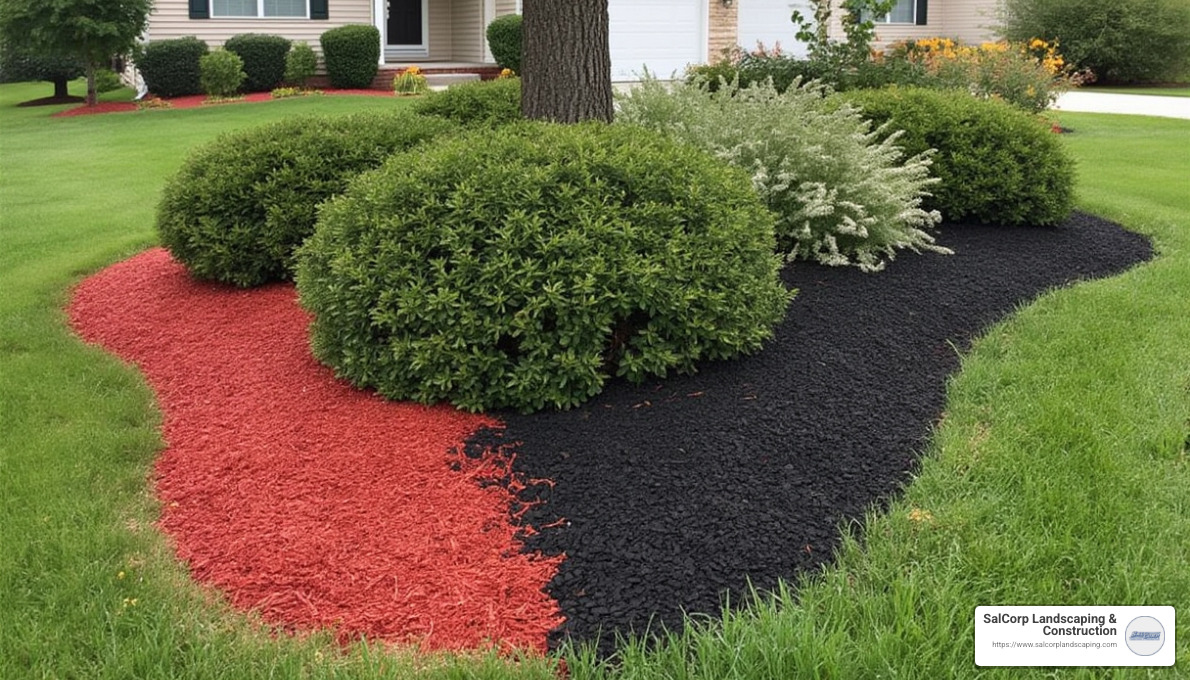
When I visit clients’ homes across Massachusetts, I’m noticing more and more homeowners choosing colored mulch to make their landscapes pop. These eye-catching products start with a standard hardwood base that’s then treated with colorants to create bold, consistent colors that beautifully complement home exteriors and existing landscape features.
At SalCorp, we find our clients typically gravitate toward four main color options. Black mulch creates a stunning backdrop that makes green foliage and colorful blooms truly stand out, perfect for contemporary home styles. Red mulch adds warmth and energy, pairing beautifully with brick homes or reddish hardscaping elements. Brown mulch offers a rich, natural appearance that’s more uniform than untreated hardwood, while gold mulch brings a sunny warmth that brightens partially shaded areas.
“I always tell homeowners that mulch color isn’t just a small detail—it’s actually a major design decision,” says our landscape team. “The right colored mulch can transform your entire property’s look and feel, almost like choosing the perfect paint color for your living room.”
The technology behind colored mulch has improved significantly over the years. Most quality products use iron-oxide based colorants for red tones and carbon-based dyes for black varieties. These are the same pigments found in many everyday products including cosmetics, and they’re engineered to resist fading from UV exposure far better than natural mulches.
While untreated mulch typically weathers to a silvery-gray within months, quality colored mulch maintains its vibrant appearance for 1-2 full seasons before needing a refresh. This extended color retention is a major selling point for our busy homeowners in communities like Boston and Newton who want low-maintenance curb appeal.
Safety & Fade-Resistance of Dyed Products
“Will this harm my dog?” is probably the most common question I hear when discussing colored mulch with clients. I’m always happy to reassure them that quality colored mulches use non-toxic dyes that are safe around plants, pets, and children. At SalCorp, we’re pretty picky about our suppliers, choosing only premium colored mulches with environmentally responsible colorants.
Pet owners can generally rest easy, though I always suggest keeping an eye on curious puppies who might see mulch as a chew toy. The professional-grade colored mulches we deliver are formulated to be pet-friendly when used as directed.
Another concern homeowners often raise is whether the colors will wash away or stain surrounding surfaces. Modern colored mulch products are engineered with minimal leaching, meaning the color stays put rather than running off during our sometimes intense New England rainstorms. This represents a huge improvement over the colored mulches from a decade ago.
The fade resistance of today’s colored mulches is impressive, typically maintaining their vibrant appearance for one full season and sometimes two, depending on how much direct sunlight the area receives. Areas under dense tree cover will maintain their color significantly longer than areas in full sun.
For my clients who prefer the most natural approach possible, I often suggest a middle ground: naturally dark aged hardwood mulch that provides rich color without added dyes. This option offers a similar aesthetic to black mulch but comes by its color naturally through the aging process.
For more specific advice about which mulch color might work best with your home’s exterior and landscape design, check out our detailed guide to choosing the right mulch for your landscape.
Rubber Mulch
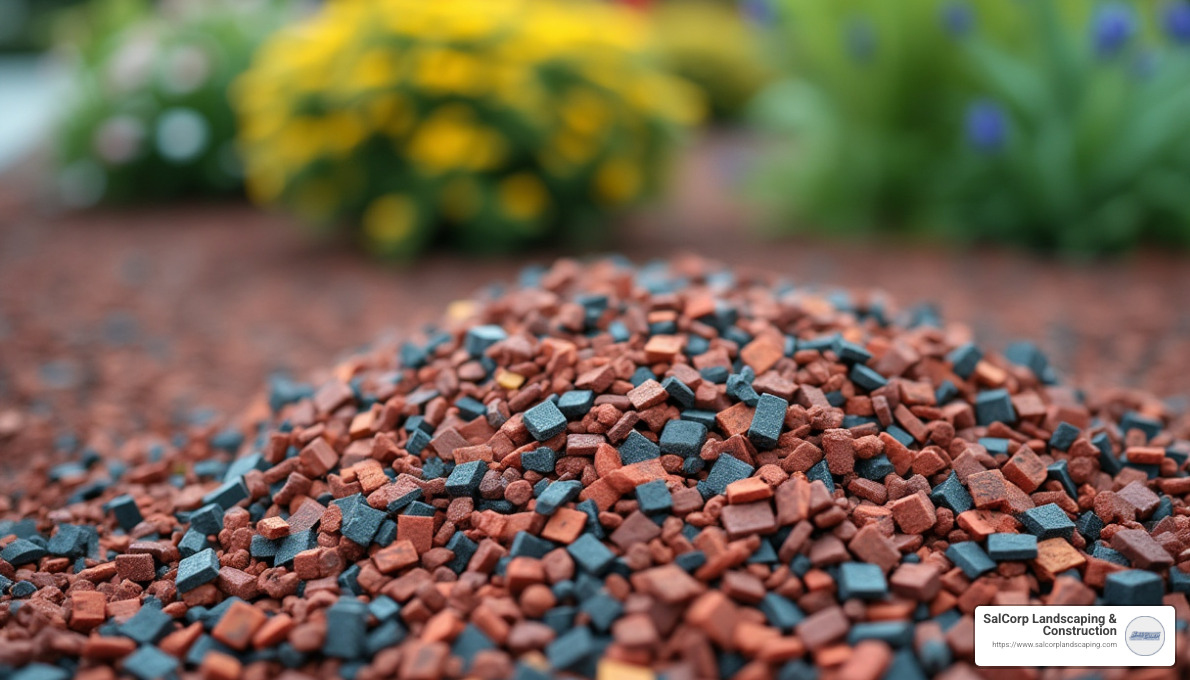
If you’re tired of replacing your mulch every year, rubber mulch might be your new best friend. Unlike its organic cousins, this innovative option is crafted from 100% recycled tires, giving old rubber new life in your landscape while offering remarkable staying power.
“I had a client call me five years after we installed rubber mulch in their play area,” shares Sal Musto, owner of SalCorp. “They wanted to know when they should replace it. I had to laugh—they still had several good years left before even thinking about it!”
The most impressive feature of rubber mulch has to be its incredible color retention. While traditional mulches fade to gray within months, bulk mulch delivery of rubber products provides vibrant color that maintains its appearance for up to 12 years. Yes, you read that right—a decade or more of beautiful color without touching up or refreshing.
For families with children, safety often becomes the deciding factor. Many of our rubber mulch products carry IPEMA (International Play Equipment Manufacturers Association) certification, with impressive fall-height ratings up to 16 feet when installed at a proper 6-inch depth. This makes it an excellent choice for backyard playsets throughout Massachusetts, giving parents peace of mind along with a tidy landscape.
Rubber mulch doesn’t decompose, compact, or float away during those heavy New England rainstorms. It won’t harbor mold or attract insects, and when properly installed with quality landscape fabric underneath, it creates a nearly permanent weed barrier. For busy homeowners in communities like Framingham and Wellesley, this low-maintenance aspect is often worth the higher initial investment.
It’s also worth noting that rubber mulch is surprisingly lightweight—about 600-700 pounds per cubic yard compared to 800-1000 pounds for hardwood mulch. This lighter weight means each cubic yard covers more ground, typically about 120 square feet at a 2-inch depth, making your bulk mulch delivery go further.
Ideal Uses for Rubber
While you could use rubber mulch anywhere, it truly shines in specific settings around your property:
Playgrounds become safer spaces with rubber mulch’s superior fall protection. The material doesn’t splinter, rot, or attract insects, making it ideal for areas where children play. Many of our clients in Natick and Wellesley choose rubber mulch specifically for backyard play sets where safety is the top priority.
High-traffic paths stay neat and tidy year after year with rubber mulch. Unlike wood mulch that breaks down and scatters with frequent foot traffic, rubber stays in place and maintains its appearance. Those walkways between garden beds or alongside your home will remain defined and attractive with minimal maintenance.
Weed-free zones are easier to maintain with rubber mulch’s permanent presence. Areas that are difficult to maintain or spots where you simply never want to see a weed again benefit from rubber mulch’s staying power. When we install it with commercial-grade landscape fabric underneath, the weed suppression is nearly absolute.
When our trucks arrive for your bulk mulch delivery, our team ensures proper site preparation, including the installation of heavy-duty landscape fabric to create a clean barrier between the soil and your new rubber mulch. This extra step maximizes the product’s effectiveness and longevity.
For those concerned about safety aspects of rubber playground surfaces, you can review additional scientific research on playground safety that explores the benefits and considerations of different surfacing options.
Playground & Safety Mulch
Beyond rubber mulch, there’s a whole world of specialized wood-based options designed specifically for keeping kids safe while they play. These engineered wood fiber (EWF) products aren’t just regular mulch – they’re carefully crafted to meet strict safety standards for playgrounds of all types.
When we deliver IPEMA-certified wood chips to playgrounds across Massachusetts, parents and school administrators alike appreciate how these products combine safety with natural aesthetics. The wood is processed to have rounded edges and consistent sizing, dramatically reducing the splinter risk while providing excellent cushioning for inevitable tumbles and falls.
“The playground mulch we install isn’t just about looking nice – it’s engineered to save kids from serious injuries,” explains our commercial installation team. “Engineered wood fiber creates a surface that’s wheelchair-accessible while still providing crucial fall protection. It’s really the perfect middle ground between natural looks and safety performance.”
What makes quality playground mulch stand out is its compliance with rigorous testing standards. Products that meet ASTM F1292 requirements have proven impact absorption properties, while ASTM F1951 compliance ensures accessibility for all children. These mulches come in both natural wood tones and vibrant colors to match any playground design.
Another advantage is how quickly these materials drain after rain – no more puddles or soggy play areas keeping kids indoors. While they resist compaction better than standard mulches, they do require annual replenishment to maintain their protective properties.
For our commercial clients in Boston, Waltham, and Framingham, we provide detailed documentation of all playground mulch specifications. This paperwork helps ensure compliance with local safety codes and satisfies insurance requirements – giving everyone peace of mind.
Meeting Safety Codes with Bulk Mulch Delivery
Safety-rated playground mulch installation comes with its own set of requirements that differ from standard landscaping jobs:
First, the depth matters tremendously. While your garden beds might do fine with 2-3 inches of mulch, playground areas require 9-12 inches minimum, depending on equipment height. This deeper installation often means you’ll need significantly more material than you might expect.
Access can be tricky too. Our bulk mulch delivery trucks need at least 9 feet of width and 15 feet of height clearance to safely reach drop sites. Many playground areas present challenges with tight access points or overhead obstacles we need to steer carefully.
Timing is everything with playground installations. For public spaces, we coordinate our deliveries during off-hours to ensure both safety and minimal disruption. Nobody wants a dump truck backing up during recess!
Unlike decorative mulch that can have some variation in depth, playground safety mulch requires careful leveling throughout the entire play area. Those consistent depths are essential for proper impact protection – a few thin spots could compromise the entire safety system.
For both commercial clients and homeowners with backyard play sets, we recommend scheduling annual inspections and top-ups. New England weather, along with regular use and natural decomposition, affects wood-based playground mulches over time. Maintaining proper depth isn’t just about aesthetics – it’s about keeping kids safe year after year.
Bulk Mulch Delivery 101: Quantity, Cost & Logistics

Getting your bulk mulch delivery right means understanding a few basics about quantity, pricing, and logistics. After helping hundreds of Massachusetts homeowners transform their landscapes, I’ve found that proper planning makes all the difference between a smooth project and a headache.
The landscaping world measures mulch in cubic yards – a unit that might sound intimidating but is actually quite simple. One cubic yard covers roughly 100 square feet when spread at the ideal 3-inch depth. If you’re going with a lighter 2-inch application, that same yard stretches to cover about 162 square feet.
Figuring out how much you need doesn’t require advanced math. Just measure your garden beds’ square footage, decide on your depth (I typically recommend 2-3 inches for most landscapes), then divide by either 100 or 162 depending on your chosen depth. Always round up to the nearest whole yard – having a little extra is better than running short!
Most suppliers, including us at SalCorp, have a minimum order requirement of 3 cubic yards for bulk mulch delivery. This minimum isn’t just about business efficiency – it’s also practical since 3 yards is typically what you’d need for even a modest landscaping project.
When it comes to pricing, bulk mulch delivery costs vary widely based on material type, quantity, and location. Based on internet data (not our specific pricing), expect to pay anywhere from $25 to $150 per cubic yard. Standard hardwood mulch typically falls on the lower end, while specialty options like cedar, colored varieties, or rubber command premium prices.
Delivery fees usually start around $40 for local deliveries, with additional charges based on how far you are from the supplier. Each cubic yard weighs between 800-1000 pounds – that’s nearly half a ton of material that needs careful handling and proper delivery planning.
For specifics about our mulch delivery throughout Massachusetts, check out our mulch delivery information page for complete details.
How Bulk Mulch Delivery is Priced
Understanding what drives the cost of your bulk mulch delivery helps avoid surprises when the bill arrives. Several factors work together to determine your final price.
The base material cost varies dramatically depending on what you choose. Standard hardwood mulch generally costs less than premium options like aromatic cedar, vibrant colored varieties, or specialty playground mulches.
Volume makes a big difference too. Most suppliers (including us) offer better per-yard rates as your order size increases. That 10-yard order for your large property will typically have a lower per-yard cost than a small 3-yard delivery.
Your location matters tremendously. Proximity to the supplier’s yard directly impacts delivery fees, with most companies establishing delivery zones with corresponding fee structures. Living in Dedham might mean a lower delivery fee than a project in Wellesley, simply due to distance.
Timing can affect your bottom line as well. Spring represents peak season for bulk mulch delivery, and prices often reflect this demand. Planning your landscape refresh for early fall might save you money while still giving your garden beds excellent protection before winter.
Need that mulch tomorrow? Same-day or next-day delivery options typically command a premium, while scheduled deliveries with flexible timing often qualify for standard rates.
At SalCorp, we believe in transparent pricing with no hidden fees. When you request a quote, we’ll break down exactly what you’re paying for – from materials to delivery to any applicable seasonal factors.
Preparing for Bulk Mulch Delivery
The day of your bulk mulch delivery will go much smoother with a bit of advance preparation. After making hundreds of deliveries throughout Massachusetts, I’ve seen what works – and what creates headaches.
First, choose your drop location wisely. Firm, level ground is essential – preferably a driveway or other paved surface. Those fully loaded delivery trucks weigh between 15,000 and 33,000 pounds, and soft lawns simply can’t handle that weight without significant damage.
Check for clearance issues before delivery day. Our trucks need about 9 feet of width and 15 feet of height to operate safely. Take a quick walk around your property to spot any low-hanging branches, wires, or other obstacles that might block access.
A simple tarp placed at the drop site makes cleanup much easier and prevents staining on light-colored pavement. This small step saves significant hassle later, especially with dyed mulches that can temporarily discolor concrete or asphalt.
If you won’t be home during delivery, clearly mark your preferred drop spot. A bit of landscape marking paint or a few stakes with bright ribbons eliminates any confusion about where you want your mountain of mulch placed.
Don’t quite need the minimum 3-yard delivery? Consider coordinating with neighbors to split an order. Many of our clients in communities like Dedham, Westwood, and Norwood organize neighborhood deliveries to share costs efficiently. It’s a win-win – you get the mulch you need without paying for more than necessary, and your neighbor gets the same benefit.
“We don’t require customers to be present during delivery,” I often tell clients, “but clear communication about the drop location helps ensure the mulch ends up exactly where you want it.”
Bulk mulch delivery typically means the material will be dumped in a pile at your designated location. While we’re happy to provide spreading services for an additional fee, many homeowners choose to tackle this as a satisfying weekend DIY project.
Seasonal & Eco-Friendly Tips
The timing of your bulk mulch delivery can make all the difference in how effectively it protects and nourishes your landscape. Here in Massachusetts, our seasonal rhythm guides the best mulching schedule for optimal results.
Spring applications (March through May) remain our most popular time for mulching. There’s something deeply satisfying about that fresh layer of mulch that defines garden beds, suppresses emerging weeds, and gives your landscape that well-cared-for appearance as everything begins to bloom.
“Spring mulching is like giving your garden a fresh start,” says Sal Musto. “It’s when we see the most demand for bulk mulch delivery as homeowners prepare for the growing season.”
Fall applications (September through November) are equally beneficial but often overlooked. A fresh layer of mulch before winter provides crucial insulation for plant roots during Massachusetts’ harsh freezes and thaws. Plus, it gives your landscape a polished look through the dormant months when you’re still viewing it from your windows.
For environmentally conscious homeowners, we’re seeing growing interest in sustainable mulch alternatives:
Organic compost blends offer a two-for-one benefit – they function as traditional mulch while actively improving your soil as they decompose. These nutrient-rich options feed your plants throughout the season, creating a healthier ecosystem in your garden beds.
Straw mulch works wonders in vegetable gardens and newly seeded areas. It’s completely renewable, biodegradable, and provides excellent protection for tender seedlings. Many of our clients in communities like Walpole and Norwood use straw for their kitchen gardens.
Seashell mulch brings coastal charm to landscape designs, particularly popular with our clients near Cape Cod. Beyond aesthetics, the calcium from decomposing shells gradually benefits the soil.
Some innovative homeowners even use recycled materials like shredded cardboard as an underlayer beneath decorative mulch – an excellent way to repurpose packaging while suppressing weeds.
For optimal results, we recommend maintaining a 2-3 inch layer of mulch in established beds. After the initial application, annual top-ups of about 1 inch are typically sufficient to maintain this depth while preventing excessive buildup.
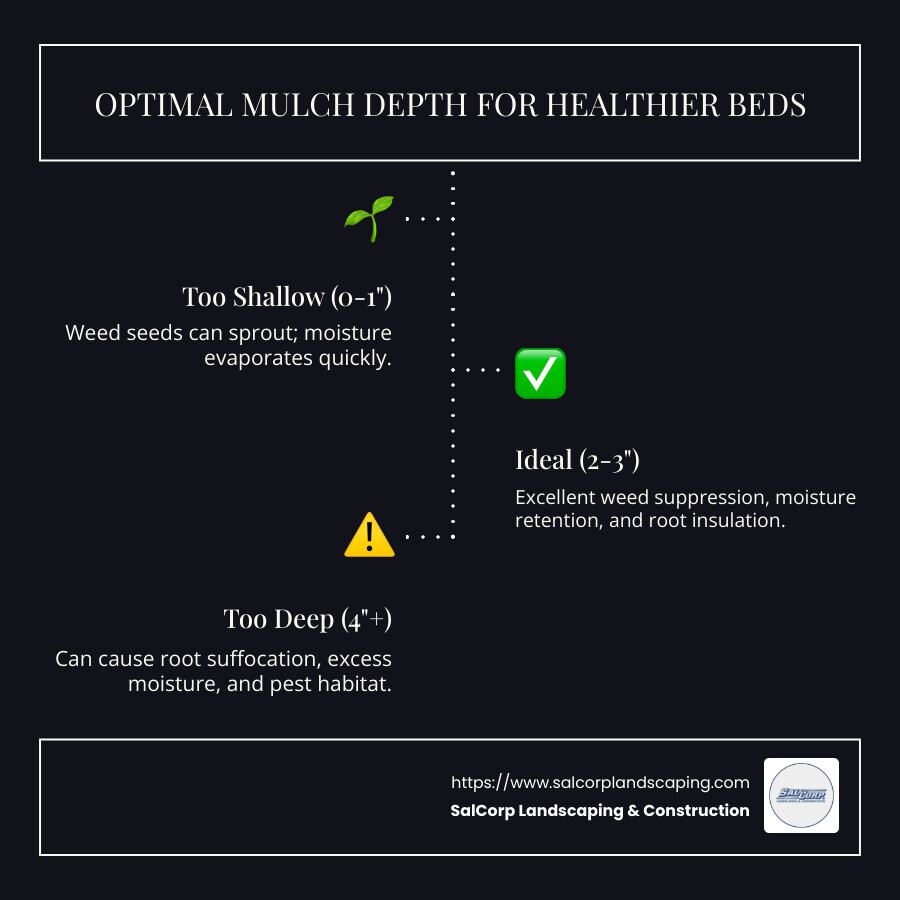
One common mistake we often correct for new homeowners is “volcano mulching” around trees. Piling mulch against tree trunks might seem protective, but it actually promotes bark rot and creates cozy habitats for pests that can damage your trees. Instead, keep mulch 2-3 inches away from tree trunks while extending the mulched area to the tree’s drip line (the outer reach of branches).
“Think of mulch as a blanket, not a turtleneck,” jokes our landscape team when explaining proper tree mulching techniques.
The environmental benefits of proper mulching extend beyond your property lines. By reducing water usage, limiting chemical weed control, and improving soil health, you’re contributing to a healthier ecosystem throughout Massachusetts.
For more information about maintaining your landscape year-round, including seasonal mulch refreshing, visit our guide to the benefits of regular landscape maintenance.
Frequently Asked Questions about Bulk Mulch Delivery
How do I calculate how much mulch I need?
One of the most common questions I hear from homeowners is about calculating mulch quantities. Getting this right saves both money and headaches!
For a standard 3-inch application depth (which works well for most landscape beds), the math is actually pretty straightforward:
First, measure each garden bed’s length and width in feet, then multiply these numbers to get your square footage. Once you have the total square footage of all your planting areas, simply divide by 100. The result gives you the cubic yards needed.
For example, if your garden beds total 500 square feet and you want that ideal 3-inch layer:
500 ÷ 100 = 5 cubic yards
Planning for a thinner 2-inch application? Just divide your square footage by 162 instead.
“I’ve seen countless Saturday afternoon projects derailed when homeowners run short of mulch,” I often tell clients with a smile. “It’s always better to have a little extra than to make that desperate dash for more materials mid-project!”
Here at SalCorp, we’re happy to help with these calculations – just give us the dimensions of your beds, and we’ll make sure your bulk mulch delivery is spot-on for your Massachusetts property.
What is the typical weight of a cubic yard of mulch?
The weight question matters more than you might think, especially when planning where to have your bulk mulch delivery dropped and how you’ll move it around your yard.
Different mulch types vary significantly in weight:
Hardwood mulch is the heavyweight champion at 800-1000 pounds per cubic yard – about the weight of a small grand piano! Pine bark and cedar mulches are considerably lighter at 400-600 pounds per cubic yard. Colored mulches typically match hardwood at 800-1000 pounds, while rubber mulch weighs in at a moderate 600-700 pounds per cubic yard.
If you’re planning to move the mulch yourself, a typical garden wheelbarrow holds about 1/10 of a cubic yard. That means you might be making 30+ trips for a standard 3-yard delivery! For larger properties or if you have mobility concerns, our spreading services can save your back and your weekend.
Are there minimum order requirements for delivery?
Yes, like most landscaping companies, we typically require a minimum order of 3 cubic yards for bulk mulch delivery. This minimum helps keep our delivery operations efficient while providing enough material for most residential projects.
If your project is smaller, don’t worry! You have several practical options:
Team up with neighbors for a shared delivery – this has become increasingly popular in communities like Dedham and Norwood, where neighbors coordinate to split both the material and delivery costs. It’s a great way to meet the neighbors if you’re new to the area!
Store extra mulch for future use by keeping it covered with a tarp in a dry location. Properly stored mulch can remain usable for touch-ups or small projects later in the season.
Consider bagged mulch for very small areas under 100 square feet, though you’ll pay a premium for the convenience.
At SalCorp Landscaping & Construction, while our standard minimum is 3 cubic yards, we understand that special circumstances arise. If you’re just shy of the minimum or have unique needs, give us a call – we pride ourselves on finding solutions for our Massachusetts clients whenever possible.
Conclusion
Choosing the right mulch and planning your bulk mulch delivery carefully sets the foundation for a successful landscaping project. Whether you’re refreshing existing beds or creating new landscape features, quality mulch improves both the appearance and health of your outdoor spaces.
After helping hundreds of Massachusetts homeowners and businesses with their landscaping needs, I’ve seen how the right mulch can transform a property. The perfect mulch doesn’t just look good—it supports plant health, reduces maintenance, and can even save you money in the long run.
When planning your next mulch project, remember to select the mulch type that best matches your specific landscape needs. Hardwood mulch offers excellent all-around performance for most garden beds, while pine bark creates the perfect environment for your acid-loving plants like rhododendrons and azaleas. If curb appeal is your priority, colored mulch options deliver that wow factor that makes your landscape pop. And for specialized areas like playgrounds, safety-rated options provide both protection and aesthetics.
Accurate quantity calculations prevent the frustration of running short mid-project. Most of our clients find that a 2-3 inch depth provides the optimal balance of weed suppression and moisture retention. Don’t forget to measure all your garden areas carefully—those odd-shaped beds along the fence line are easy to underestimate!
Good delivery planning makes all the difference in your mulch project experience. Ensure your driveway or drop spot can accommodate delivery trucks, and remember that timing matters—spring and fall applications give you the most benefit in our Massachusetts climate.
Please note that all pricing information mentioned in this article reflects average costs based on internet data and not actual costs for SalCorp Landscaping & Construction services. Actual prices vary based on mulch type, quantity, delivery location, and seasonal factors.
As an owner-operated business with over 20 years of experience serving Massachusetts communities, SalCorp Landscaping & Construction brings expertise and personalized service to every bulk mulch delivery project. Our comprehensive approach ensures you receive not just quality materials but also expert guidance on selection, application, and maintenance.
For more information about our complete range of landscaping services, visit our landscaping services page.
Ready to transform your landscape with fresh mulch? Contact us today to discuss your project needs and schedule your bulk mulch delivery in Walpole, Boston, Dedham, Westwood, or anywhere in our extensive Massachusetts service area. We’ll help you make the right choices for your unique outdoor space—and we might even share a few insider landscaping tips along the way!
