Business snow removal: 5 Steps to Ultimate Success
Starting Your Own Business Snow Removal Company
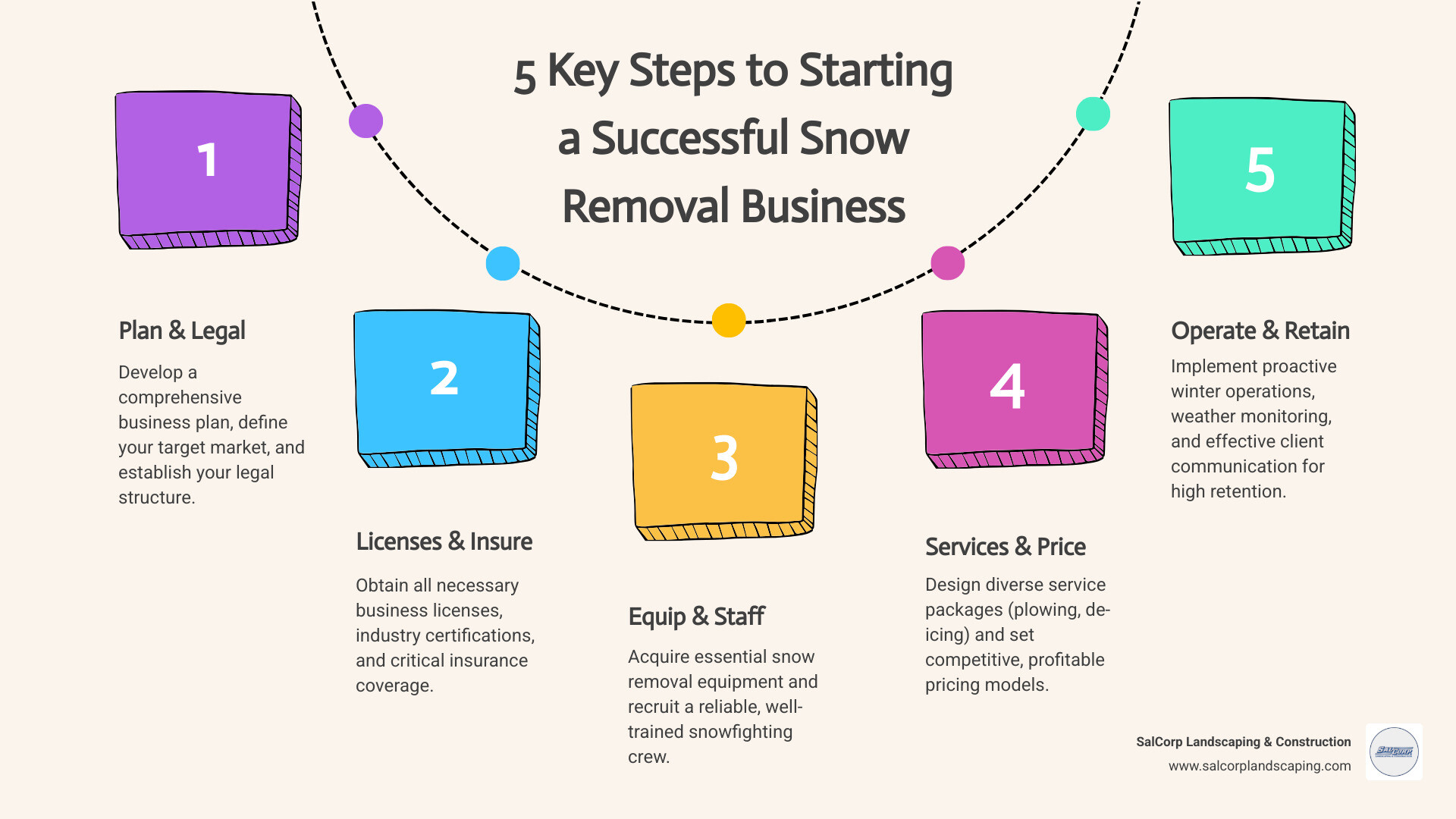
Starting a business snow removal company involves several key steps to ensure success:
- Plan Your Business: Develop a solid business plan, choose a legal structure, and secure proper insurance.
- Acquire Resources: Invest in essential equipment and build a reliable, well-trained team.
- Define Services & Pricing: Create appealing service packages and establish competitive pricing models.
- Manage Operations: Implement effective winter operational strategies and strong client communication.
Winter in many regions means snow, and with it, a critical need for clear, safe commercial properties. For businesses, staying open and accessible is non-negotiable, making reliable snow removal a vital service. This consistent demand creates a powerful opportunity for entrepreneurs looking to start a new venture. If you’re ready to build a successful seasonal business, commercial snow removal could be your next big step.
With over two decades dedicated to outdoor spaces, Sal Musto, owner of SalCorp Landscaping & Construction, is an expert in providing comprehensive business snow removal solutions. His hands-on approach ensures top-tier service and customer satisfaction, making him a trusted guide for navigating this seasonal industry.
Laying the Foundation: Your Business Plan and Legal Structure
Think of starting a business snow removal company like building a house – you need a rock-solid foundation before you can put up the walls. That foundation is your business plan, and trust me, it’s worth getting this right from the start.
Your business plan isn’t just paperwork gathering dust in a drawer. It’s your roadmap to success, outlining everything from your target market to your financial projections. For business snow removal, your target market is surprisingly diverse and exciting. You’ll be serving commercial properties like busy retail plazas where shoppers need safe access, industrial sites that can’t afford to shut down, and retail plazas where every snowy day means potential lost revenue for your clients.
Don’t forget about condominiums and multi-unit residential buildings – these properties often have the most demanding residents (and rightfully so, since they’re paying good money for clear walkways). Each property type brings its own challenges and opportunities, which makes this business both interesting and profitable.
The numbers matter here. Your startup costs need careful calculation – from that first plow truck to insurance premiums and marketing efforts. Financial projections help you understand when you’ll break even and start seeing real profit. It’s not just about dreaming big; it’s about planning smart.
Choosing your legal structure is another crucial decision. An LLC offers protection for your personal assets while keeping things relatively simple, while a sole proprietorship might work if you’re starting small and solo. Each has different implications for taxes and liability, so chatting with a lawyer or accountant early on can save you headaches later. If you’re new to the concept, this short limited liability company article provides a helpful overview of how an LLC works in the United States. For more insight into professional snow management approaches, check out our guide on Snow and Ice Management.
Define Your Service Area
Here’s where strategy meets reality. Defining your service area isn’t about being the biggest – it’s about being the smartest. You want to establish geographic limits that make sense for your team and equipment. If you’re trying to cover too much ground, you’ll spread yourself thin and disappoint clients when response times suffer.
Route density is your secret weapon. The more clients you can pack into a smaller area, the more efficient your operations become. Less driving time means more plowing time, which means happier clients and better profits. It’s like connecting the dots, but with snow plows.
Local competition analysis helps you spot opportunities. Maybe there’s a commercial district that’s underserved, or perhaps existing companies aren’t offering the level of service businesses really want. Your scalability plan should map out how you’ll grow – maybe starting with a few key commercial properties and gradually expanding as your reputation and fleet grow.
Essential Insurance for Your Business Snow Removal Company
Let’s talk about something that might not be exciting but is absolutely critical – insurance. In the snow removal business, you’re not just moving frozen water around; you’re managing risk every single day. One slip-and-fall incident can turn a profitable season into a financial nightmare.
General liability insurance is your first line of defense against claims of bodily injury or property damage. Professional companies often carry substantial coverage – some maintain up to $5M liability coverage because they understand the stakes involved. Commercial auto insurance protects your fleet, which is literally your livelihood on wheels. Your trucks, plows, and equipment represent a significant investment that needs protection.
If you’re hiring employees (and you probably will as you grow), workers’ compensation isn’t optional – it’s the law in states like Massachusetts. This ensures your team is covered if someone gets hurt on the job. These insurance limits might seem expensive upfront, but they’re actually investments in your business’s longevity and your own peace of mind.
Licenses, Certifications, and Legal Compliance
Running a legitimate business snow removal operation means dotting your i’s and crossing your t’s when it comes to legal requirements. Start with your basic business license – this is Business 101, but it’s surprising how many people try to skip this step.
Industry certifications set you apart from the weekend warriors with pickup trucks. SIMA (Snow & Ice Management Association) certifications show clients you’re serious about professional standards. ISO 9001 certification demonstrates that your quality management systems meet international standards, while SN 9001 is specifically designed for snow and ice management companies.
These certifications aren’t just fancy certificates for your wall – they’re proof that you operate with documented processes, regular audits, and a commitment to continuous improvement. Clients notice this level of professionalism, especially larger commercial properties that need reliable service.
Don’t forget about local bylaws and snow disposal regulations. Many areas have strict rules about where you can pile snow and what you can’t do with it. For instance, in Massachusetts, you cannot shovel snow or ice onto the road – it creates hazards and liability issues. Understanding these regulations from day one keeps you out of trouble and builds trust with both clients and local authorities.
Gearing Up: Essential Equipment and Reliable Staff
Alright, now that we’ve got our business blueprint sketched out and our legal ducks in a row, it’s time for the fun part: getting our hands on the machinery that makes the magic happen! Running a business snow removal operation means having the right tools for the job. And believe us, a reliable fleet of powerful equipment is truly your best friend when winter storms hit.
When it comes to managing our fleet, we’ll think carefully about whether to purchase our equipment outright or lease it. Buying means we own the asset for the long run, building equity. Leasing, on the other hand, can offer more flexibility and often has lower upfront costs. No matter how we get our equipment, keeping it in top shape is absolutely vital. Our machines will work hard in tough winter conditions. If a plow breaks down, that means lost time, lost money, and unhappy clients. So, regular checks, preventative maintenance, and quick repairs are a must.
Beyond the plows and trucks, we also need to think about our de-icing materials. The days of just tossing out a plain bag of rock salt are largely behind us. Modern business snow removal uses a range of products. We’ll choose from bulk de-icing salt, treated salt (which works better in colder temperatures and is less harsh on surfaces), and even liquid solutions. For clients who care about the environment, we can offer eco-friendly de-icers. These options are less harmful to plants and often stick better and melt snow more efficiently. Some advanced de-icers can even prevent ice from bonding to surfaces, making it easier to clear snow later.
Building Your Fleet
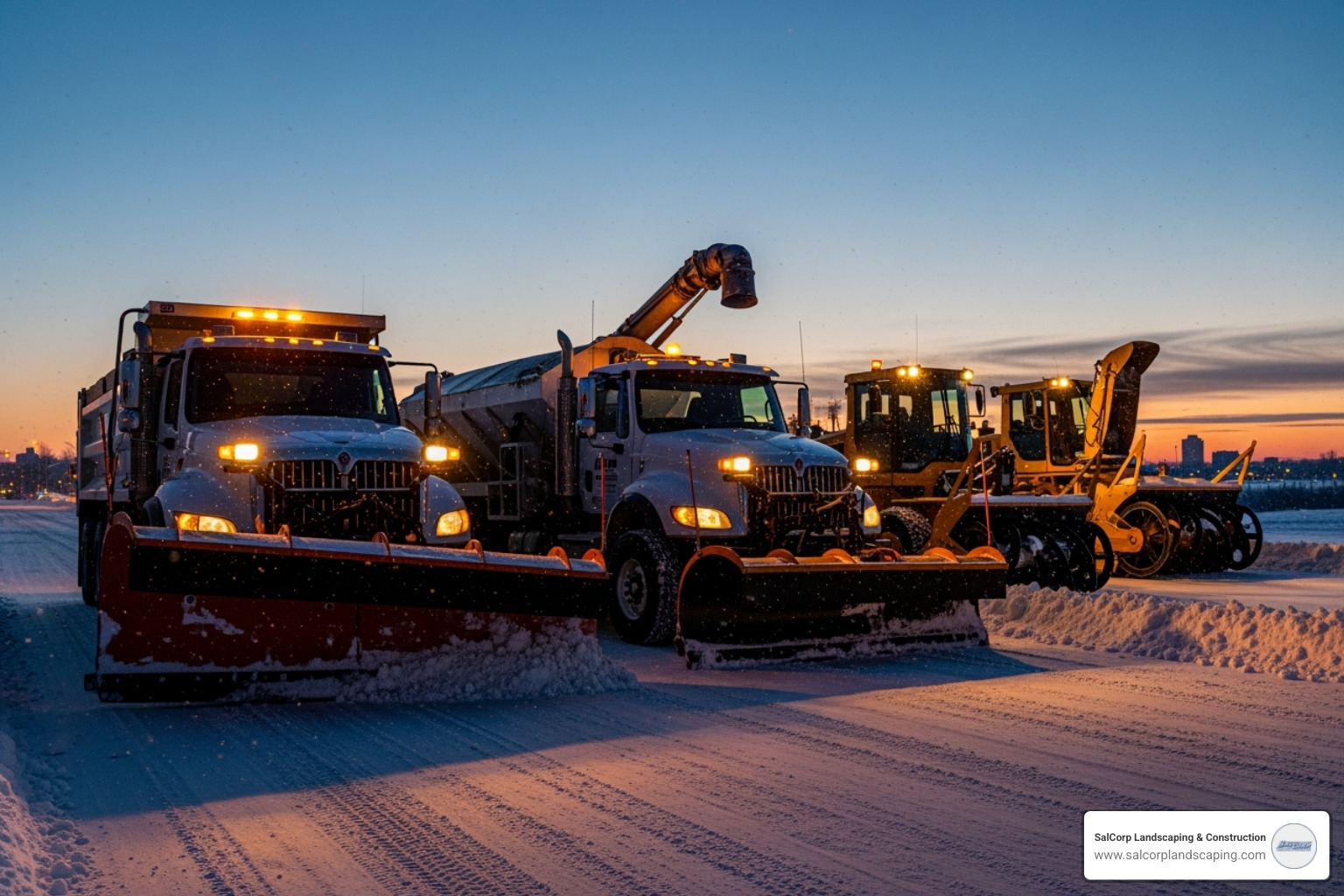
Our fleet is the powerhouse of our business snow removal service. To offer comprehensive help, we’ll need a variety of equipment. This lets us tackle different property sizes and handle all kinds of snow conditions. Here’s a look at the essential equipment we’ll consider for our operations:
- Pickup Trucks with Plows: These are the workhorses. They’re perfect for clearing parking lots, access roads, and driveways. Many successful companies run a large number of these, sometimes 80 or more!
- Skid-Steers and Front-End Loaders: These versatile machines are fantastic for moving large amounts of snow. They can create big snow piles or load snow into hauling trucks. They’re essential for bigger commercial properties and industrial sites.
- Salt Spreaders (or Gritters): These attach to trucks or skid-steers. They’re super important for spreading de-icing agents. This helps prevent ice from forming and ensures surfaces are safe to walk and drive on.
- Snow Blowers: For sidewalks, walkways, and smaller areas where our plows can’t reach, commercial-grade snow blowers are a must-have.
- Shovels: Don’t underestimate the good old shovel! For tricky spots, entryways, and pedestrian paths, manual shoveling is still needed to get every last bit of snow.
- GPS Tracking: Equipping all our vehicles with GPS tracking is a smart move. This lets us keep tabs on our visits and report back to clients. It can even send automated email notifications when we service their property. This brings great transparency and accountability.
Some of the top companies in the industry operate with really big fleets, sometimes over 150 pieces of winter snow clearing and salting equipment. This allows them to respond quickly and efficiently, even during those huge snowstorms.
Hiring Your Snowfighters
Our equipment is only as good as the people operating it. Building a reliable team of dedicated “snowfighters” is absolutely critical to our success. This isn’t just any job; it truly is a calling for those who don’t mind working in the middle of the night or during a blizzard!
Our recruitment efforts will focus on finding experienced operators. These are folks who already know their way around the equipment and understand the demands of winter work. We’ll also need a pool of on-call staff, ready to spring into action whenever the snow starts to fall. Some larger companies might employ over 170 snowfighters, which really shows the scale needed for big operations.
We’ll make sure to have comprehensive training programs. These won’t just cover how to operate the equipment. They’ll also include vital safety protocols. Safety is always our number one priority. We’ll make sure our team is well-versed in the best ways to steer icy conditions, operate heavy machinery safely, and understand how de-icing agents impact the environment. Our supervisory team will bring years of combined snow removal experience, guiding newer team members. We want our snowfighters to be professional, polite, and knowledgeable, always representing our company with pride.
Crafting Your Service Packages and Pricing
Now that we have our team and equipment ready to roll, it’s time to define what makes our business snow removal company stand out in a crowded market. This isn’t just about moving snow from point A to point B – it’s about understanding that every client has unique needs and crafting our offerings to match their specific requirements.
The key to success lies in service customization. We’ll work closely with each commercial property to develop custom snow plowing and maintenance plans that address their particular challenges. Some clients, especially those in high-traffic areas like shopping centers or medical facilities, may require a “zero-tolerance” policy. This means we don’t wait for Mother Nature to finish her work – we’re out there applying de-icing products immediately before and during snow events to ensure continuous safety and accessibility.
Many businesses also need 24/7 availability, particularly for unexpected weather events or properties that operate around the clock. Our operations must be geared for rapid response, because when snow starts falling at 2 AM, our clients can’t wait until morning for service.
For more detailed insights into how we structure our agreements and protect both our business and our clients, you can learn more about Commercial Snow Plowing Contracts.
What to Offer in Your Business Snow Removal Services
A comprehensive business snow removal service goes far beyond the basic plow truck clearing a parking lot. To meet the diverse needs of commercial clients, we need to offer a complete winter maintenance solution.
Snow plowing and clearing forms our core service – this involves systematically clearing parking lots, driveways, and access roads to ensure smooth vehicle flow. This is absolutely critical for businesses like retail plazas, shopping centers, and industrial properties where customer and employee access directly impacts revenue.
De-icing and salting represents another crucial component of our service offering. We’ll apply various de-icing agents – from traditional bulk salt to treated salt that works at lower temperatures, plus liquid solutions for different conditions. This isn’t just about melting snow; it’s about preventing dangerous ice formation and improving traction on paved surfaces, which significantly reduces slip-and-fall risks for our clients.
Sidewalk and walkway maintenance requires a more hands-on approach, using hand shoveling or commercial-grade snow blowers for pedestrian areas, building entrances, and emergency exits. This service is essential not just for the safety of employees, customers, and tenants, but also for compliance with local accessibility bylaws and insurance requirements.
When snow accumulation becomes excessive and starts eating up valuable parking space or creating visibility hazards, snow hauling and relocation becomes necessary. We’ll either haul snow completely off-site or relocate it to designated areas on the property where it won’t interfere with operations. This is particularly important for properties with limited space or strict aesthetic requirements.
Emergency services with 24-hour dispatch capabilities ensure we can respond to urgent and unexpected snow-clearing needs. Some specialized services, like using tools such as “TrucBrush” for safe and effective snow removal from fleet vehicle rooftops, address specific industry challenges – particularly valuable for transportation and logistics companies.
Our goal is to become a one-stop shop for all commercial winter maintenance needs, ensuring business accessibility and safety for everyone who steps foot on our clients’ properties.
Setting Your Prices: Common Models
Determining pricing for business snow removal requires balancing multiple factors while offering flexibility to meet different client preferences. Property size, expected snowfall depth, specific services required, and contract length all influence our pricing strategy.
There are several common pricing models we can offer to accommodate different commercial client needs:
| Pricing Model | Description |
|---|---|
| Seasonal Contracts | Fixed fee for entire winter season regardless of snowfall amount. Provides budget predictability for clients and steady revenue for us. Often includes “zero-tolerance” service with immediate response to any snow event. Popular with clients who prefer all-inclusive, worry-free winter maintenance. |
| Per-Push Contracts | Charge for each individual snow removal visit based on accumulation thresholds (typically 2-4 inches). Pricing varies by property size and services required. Fair for clients in areas with variable snowfall, but requires careful threshold management. |
| Per-Hour Contracts | Charge based on actual time spent on property. Based on internet research, average costs range from $150-$1200 per hour, though these are not actual costs for any specific company. Provides transparency but less predictability for client budgeting. |
Several factors significantly impact our pricing regardless of the model we choose. Property size obviously affects the time and resources required – a small office complex requires far less effort than a sprawling shopping center. Snowfall depth and frequency in our service area influences seasonal contract pricing, while specific service requirements like sidewalk clearing, de-icing applications, or snow relocation add complexity and cost.
Contract length and exclusivity also play important roles. Clients willing to commit to multi-year agreements or exclusive service arrangements often receive more favorable pricing. Property accessibility and complexity matter too – a simple rectangular parking lot costs less to service than a property with multiple levels, tight corners, or numerous obstacles.
The most successful pricing strategies balance competitive rates with sustainable profitability while clearly communicating value to potential clients. The cheapest option isn’t always the best choice for clients who depend on reliable, professional service to keep their businesses running smoothly through winter weather.