

Set up automatic watering system: Smart, Easy 2025
Introduction: Why Automate Your Garden Watering?
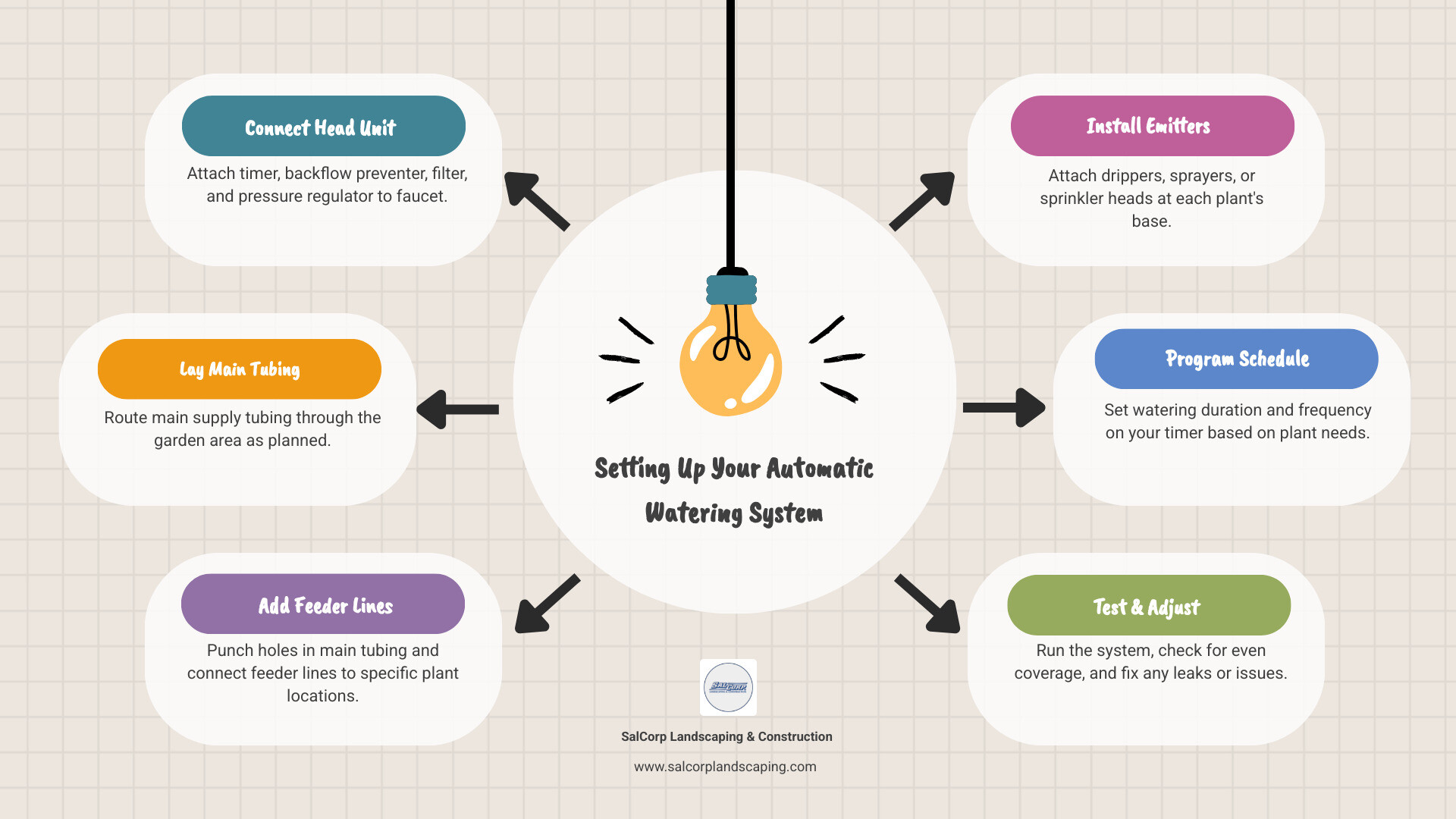
Set up automatic watering system by following these key steps:
- Plan your layout – Measure your garden and identify what you need to water (containers, raised beds, lawns, or borders)
- Connect to water source – Attach a timer, backflow preventer, filter, and pressure regulator to your outdoor faucet
- Install tubing – Lay main supply tubing along your garden path, then add feeder lines to reach each plant
- Add emitters – Attach drippers, sprayers, or sprinkler heads based on your plant types
- Program your timer – Set watering duration (typically 30 minutes) and frequency (daily for containers, weekly for borders)
- Test and adjust – Run the system manually to check coverage and fix any leaks
Hand watering during hot Massachusetts summers is a chore, especially when containers dry out quickly. An automatic watering system solves this by delivering the right amount of water to every plant, even when you’re away.
The benefits are clear: you’ll save time, conserve water, and grow healthier plants. By delivering water directly to the roots, you reduce disease risk and avoid the guesswork of manual watering, ensuring your garden gets the consistent moisture it needs. Most gardens need about an inch of water per week, and an automated system helps you deliver it efficiently.
Setting up an automatic watering system is easier than you think. A basic drip irrigation kit runs around $50 to $100 and can be installed in a few hours without professional plumbing skills. For larger properties or in-ground sprinkler systems, professional installation might be the better route.
I’m Sal Musto, owner of SalCorp Landscaping & Construction, and I’ve helped hundreds of Massachusetts homeowners set up automatic watering systems that save time and keep landscapes thriving. Whether you choose DIY or professional installation, the right setup transforms how you maintain your outdoor spaces.
How to Set Up an Automatic Watering System: A Step-by-Step Guide
Planning Your System and Gathering Components
A little planning saves headaches later. Think of it as a blueprint for your garden.
Start with a simple garden sketch. Mark your faucet location, the areas to be watered (containers, beds, lawn), and any obstacles. This is your roadmap.
Choose your system type. Drip irrigation is best for containers, raised beds, and flowerbeds, as it delivers water directly to the roots, saving water and preventing disease. For lawns, sprinkler systems provide the even coverage needed for larger areas.
Consider your plants’ watering needs. Containers may need daily watering in summer, while borders might only need it weekly. The goal is about an inch of water per week, delivered to the roots.
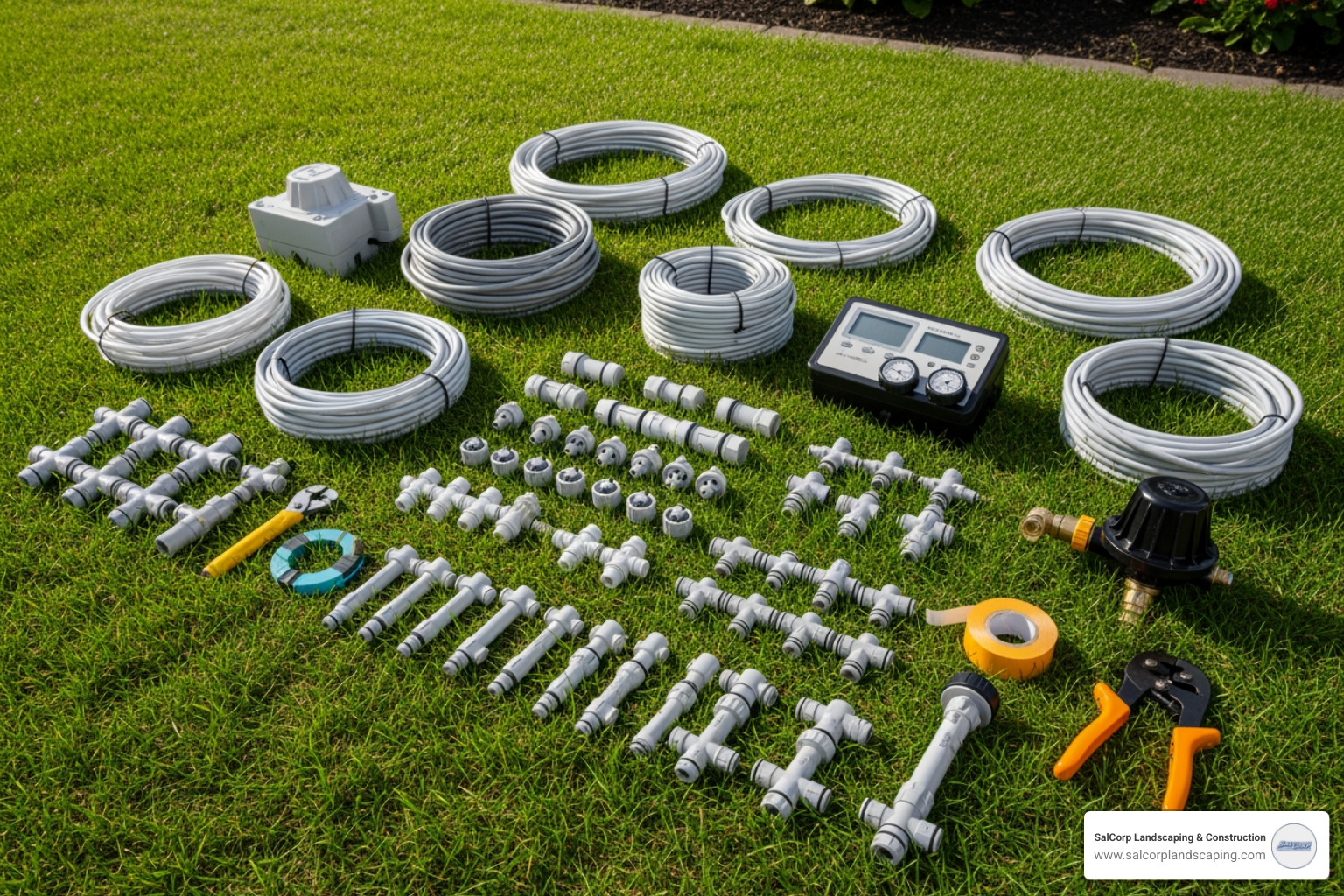
Gather your components. Drip irrigation kits often include most of what you need, except for a timer.
- Water source connection kit: This is crucial and includes a backflow preventer (to protect drinking water), a filter (to stop clogs), and a pressure regulator (to achieve the ideal 25-30 psi for drip systems).
- Timer: This is the system’s brain. Basic battery-operated models are simple, while smart timers offer Wi-Fi control from your phone.
- Tubing: You’ll need 1/2-inch main supply tubing to carry water through the garden (up to 200 feet per zone) and 1/4-inch feeder lines to branch off to individual plants.
- Emitters: These deliver water to your plants. Use drippers for targeted watering, matching the flow rate to your soil (e.g., 0.5 GPH for clay, 2 GPH for sandy soil). Staked bubblers work for larger shrubs, and miniature sprinklers or rotors can cover ground cover and lawns.
For more detailed guidance on planning your garden irrigation, check out our page on installing an irrigation system for your garden.
Step-by-Step Guide to Set Up an Automatic Watering System (Drip Irrigation)
Now that you have your plan and parts, let’s set up automatic watering system. This guide focuses on drip irrigation.
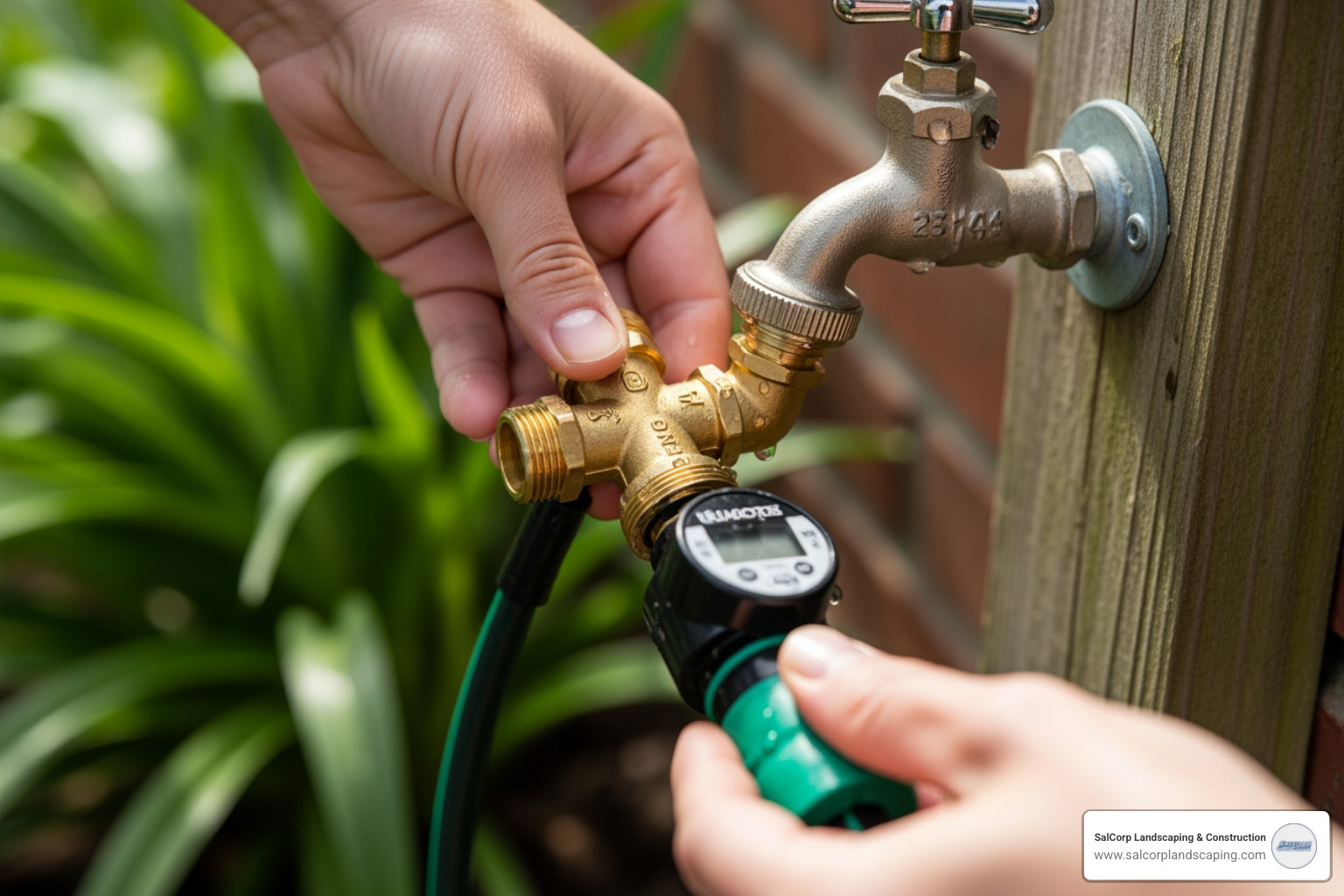
- Connect to your water source. A Y-splitter on your outdoor faucet is a smart move, allowing you to use a regular hose alongside your system. Attach your head unit assembly in this order: timer, backflow preventer, filter, and pressure regulator. Use plumber’s tape on all threaded connections.
- Lay out your main tubing. Following your sketch, run the 1/2-inch tubing. To make it more flexible, leave it in the sun first. You can bury it in a shallow trench or hide it under mulch. Use fittings for branches and corners, and secure the tubing with landscaping pins.
- Attach feeder lines. Use a hole punch on the main line to insert barbed connectors. Run the 1/4-inch micro tubing from the connectors to each plant.
- Install your emitters. Attach emitters to the ends of the feeder lines, positioning them over each plant’s root zone and securing them with stakes.
- Flush the system. Before finishing, clear out debris by removing end caps and running water through the lines for a few minutes. Then, replace the caps. Keep “goof plugs” handy to seal any unused holes.
Setting Schedules and Smart Watering Options
Now it’s time to program your timer and automate your watering.
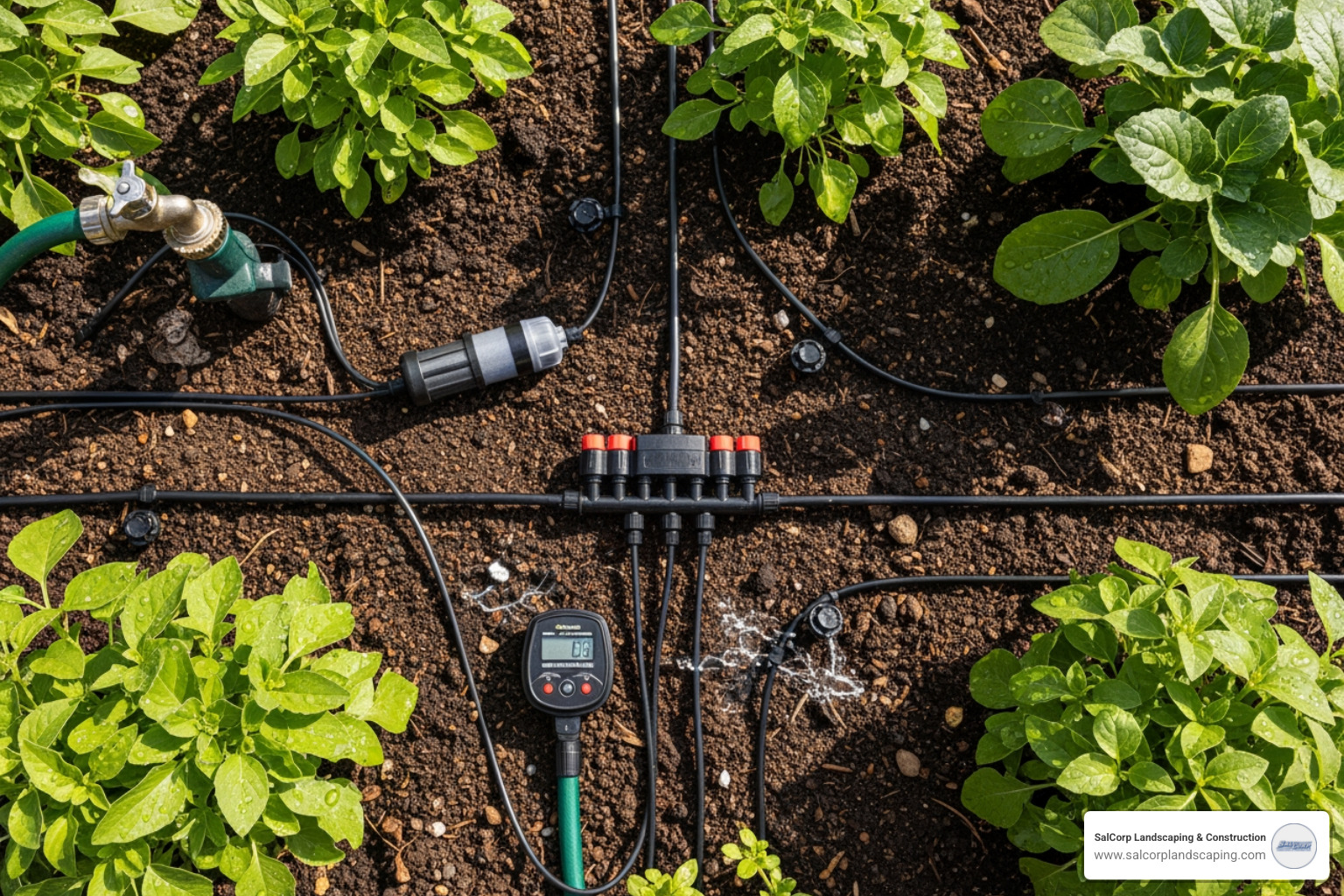
Program your timer for early morning (around 4-5 AM) to minimize evaporation. As a guideline for duration and frequency, water containers daily for 30 minutes and borders weekly for 30 minutes. However, always adjust based on your plants’ needs, soil type, and weather conditions, especially during a Massachusetts heatwave.
Don’t forget seasonal adjustments. Your plants’ water needs will change from spring to fall, so update your timer accordingly.
Smart watering options offer ultimate convenience. Wi-Fi controllers let you manage schedules from your phone. Advanced systems use weather sensors to skip watering when it rains or soil moisture sensors to water only when necessary. For maximum efficiency, use a WaterSense-labelled controller. These are certified to use at least 20% less water than standard models.
Maintenance, Troubleshooting, and Cost to Set Up an Automatic Watering System
An automatic watering system is a great investment that requires simple maintenance to run smoothly.
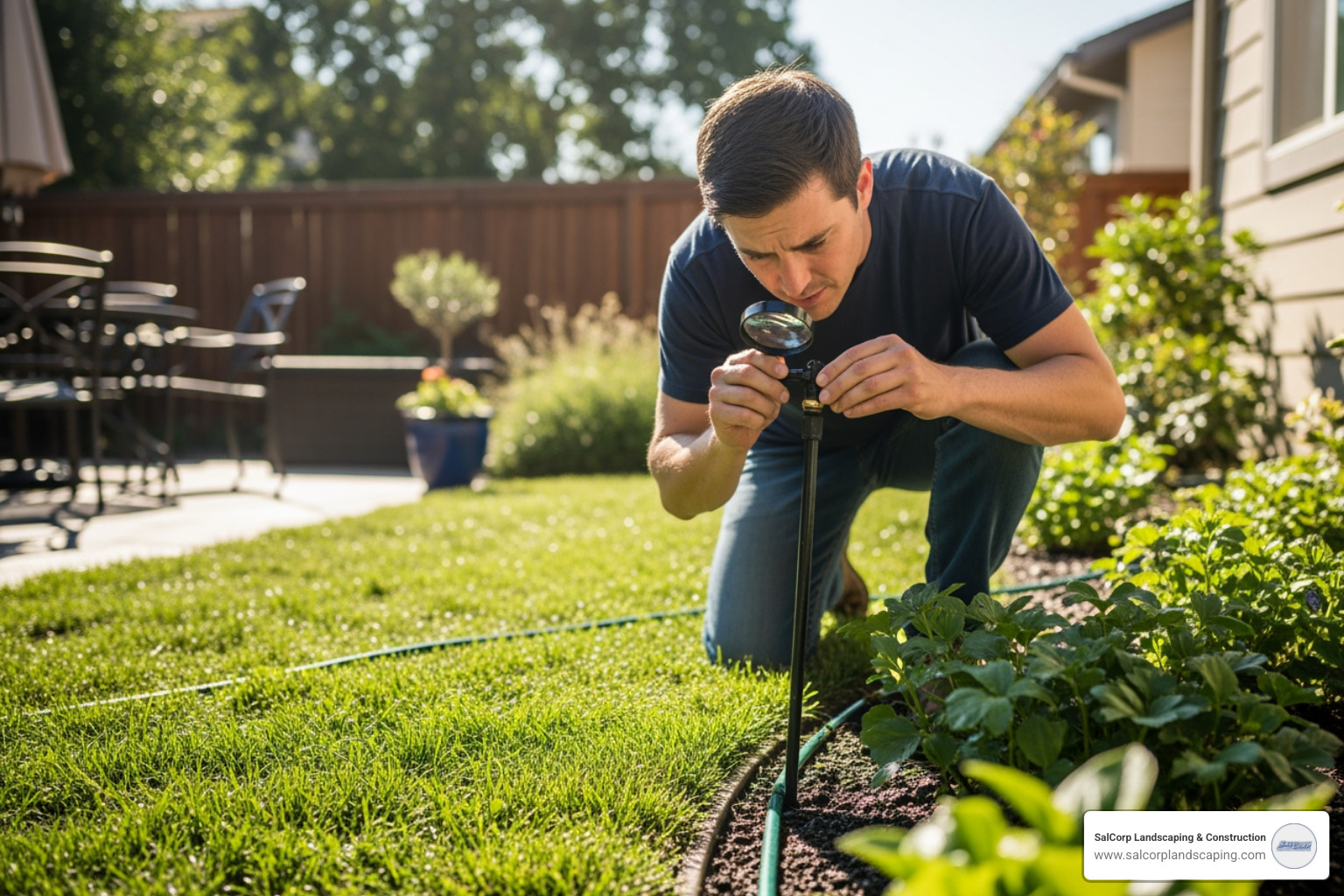
Understanding the costs helps you plan. A DIY drip irrigation system for a small area typically runs between $50 and $200 for a kit and timer. These are average costs based on internet data and not actual costs for SalCorp Landscaping.
Professional installation for larger properties or in-ground systems ranges from $500 to upwards of $5,000 or more. These are average costs based on internet data and not actual costs for SalCorp Landscaping. A pro-installed system delivers superior reliability and efficiency.
Regular maintenance is key. Check your system weekly for leaks or dry spots, clean the filter monthly, and check emitters for clogs. Replace timer batteries every six months.
Winterizing is crucial in Massachusetts. For drip systems, store the head unit indoors and drain all lines. In-ground systems may require professional winterization to prevent freeze damage. For detailed guidance, visit our page on in-ground sprinkler installation.
Most common problems have simple fixes. For leaks, tighten connections and use plumber’s tape. Low pressure is often due to a clogged filter or too many emitters on one line. For added sustainability, connect your system to rain barrels to conserve water.
When to Call a Professional and Final Thoughts
A basic drip system for containers can be a satisfying DIY project. However, for a system that truly thrives, professional expertise often makes all the difference.
When to Call the Pros:
- Complex Layouts: Professional design is best for properties with multiple zones, varied plant needs, or significant elevation changes to ensure optimal water pressure and coverage.
- Large Properties: We have the specialized equipment and experience to handle expansive lawns and whole-property solutions without damaging your existing landscape.
- Time Constraints: If you’re short on time, let our team handle the installation quickly and efficiently.
Professionals also maximize efficiency by factoring in soil type, sun exposure, and microclimates to design a system that conserves water while keeping your landscape vibrant.
What Professional Design Brings to the Table:
At SalCorp Landscaping & Construction, our owner-operated team has over 20 years of experience. Our expert design and quality installation use professional-grade components to ensure reliability and performance. We account for water pressure, flow rates, and terrain to deliver the right amount of water everywhere. For lawns, our in-ground pop-up sprinklers are efficient and discreet. We also design systems for the Massachusetts climate, ensuring they are properly winterized to prevent freeze damage.
Looking Back at What We’ve Accomplished:
An automatic watering system will transform your landscape care. You’ll save time, conserve water, and grow healthier plants with stronger roots. Best of all, you’ll gain peace of mind knowing your garden is thriving, whether you’re home or away. Automating your garden’s watering is an investment in convenience and beauty. Imagine relaxing in your lush yard instead of untangling hoses!
Ready to transform your watering routine and enjoy effortless greenery? Learn more about our professional lawn sprinkler system setup services and let our team help you create the automated system that’s perfect for your property. Your garden—and your weekends—will thank you.
