

Cape Cod Fence Installation: 7 Powerful Tips for Success 2025
Finding the Perfect Fence for Your Cape Cod Property
If you’re looking for Cape Cod fence installation services, here’s what you need to know:
- Popular choices: White vinyl (most common), cedar wood, aluminum, and chain link
- Weather considerations: Salt air resistance, storm durability, and sandy soil stability
- Installation process: Planning, permitting, post-setting (minimum 4ft deep), assembly
- Cost factors: Material type, property size, terrain challenges, and custom features
- Timeline: Most installations take 2-5 days depending on length and complexity
Cape Cod fence installation requires careful consideration of both aesthetics and durability. The classic white picket fence may be synonymous with Cape Cod style, but today’s homeowners have numerous options that balance traditional New England charm with modern performance.
When planning your fence project, you’ll need to account for Cape Cod’s unique environmental challenges. The coastal air carries salt that can accelerate corrosion, sandy soil may require deeper post installation, and seasonal storms demand reinforced construction techniques.
I’m Sal Musto, owner of SalCorp Landscaping & Construction, and I’ve overseen hundreds of Cape Cod fence installation projects across the region, helping homeowners select materials and designs that withstand our coastal conditions while enhancing property aesthetics.
Popular Fence Materials on Cape Cod
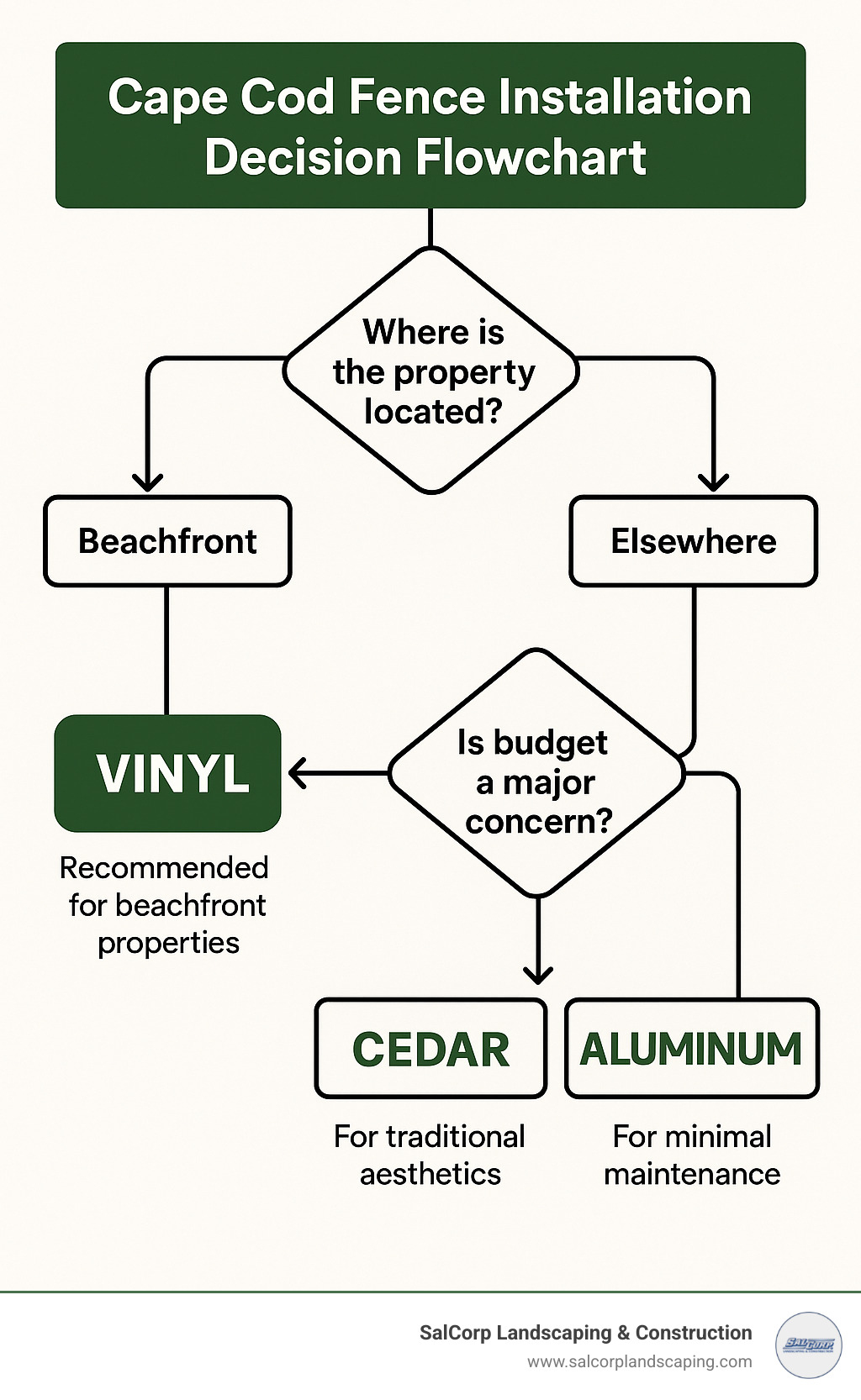
Choosing the right material for your Cape Cod fence installation is perhaps the most important decision you’ll make as a homeowner. The unique coastal environment here demands thoughtful consideration – what works inland might not stand up to our salt air and seasonal storms.
I’ve noticed a significant shift in recent years: vinyl fencing has now overtaken traditional wood as the top choice among Cape Cod homeowners. This change reflects the practical reality of maintaining a fence in our marine climate.
Wood & Vinyl – Cape Cod fence installation classics
Cedar remains the gold standard for wood fencing on Cape Cod. Its natural oils repel insects and resist decay, making it remarkably well-suited to our coastal conditions. There’s something undeniably charming about a weathered cedar fence framing a Cape Cod cottage.
But let’s be honest about the maintenance. Even cedar requires regular attention to maintain its appearance in our coastal environment.
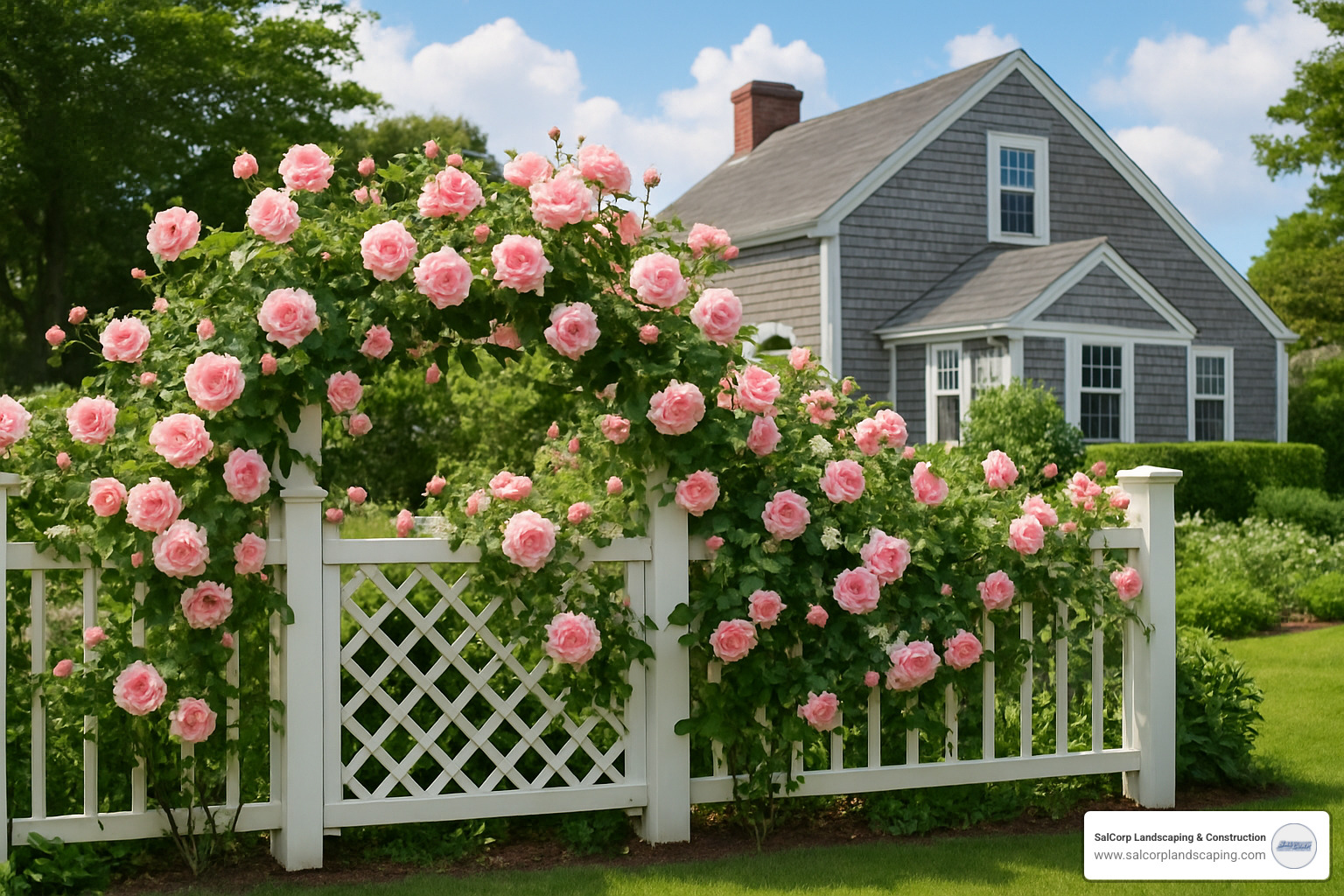
“Vinyl is very popular because a white fence is so New England,” as one fence installer with decades of experience told me. Those crisp white pickets have become almost synonymous with Cape Cod style, offering that traditional look without the ongoing maintenance wood demands.
When exploring vinyl options, you’ll encounter two main varieties:
Hollow vinyl costs less upfront and weighs less, but can become brittle after years of temperature swings between our hot summers and freezing winters.
Solid vinyl (Azek) represents a higher initial investment but accepts paint – meaning you can refresh its appearance indefinitely with periodic repainting, a significant advantage for long-term value.
For properties directly facing the ocean, solid vinyl often proves the wiser investment over time, as Fences abound on Cape Cod in various styles and materials suited to different locations.
Metal & Mesh Options
Properly treated aluminum fencing delivers excellent durability in our salt-laden air. Ornamental aluminum gives you the neat appearance of wrought iron without the rust concerns – perfect for homeowners wanting decorative boundaries with minimal upkeep.
Chain link remains a practical and budget-friendly solution for many Cape Cod properties. Modern versions come with vinyl coatings that resist salt corrosion while providing secure boundaries for children and pets.
Weather & Environment: Building for Cape Cod’s Coast
The unique coastal environment of Cape Cod presents distinct challenges for fence installation that you won’t find in other regions. Understanding these factors is essential for creating a fence that will stand strong against our maritime conditions for decades to come.
When we install fences on Cape Cod properties, we’re creating structures that must withstand salt-laden air, sandy soil conditions, a naturally high water table, and the powerful force of nor’easters that regularly sweep across our peninsula.
Cape Cod fence installation requires specialized knowledge that goes beyond standard practices used inland. At SalCorp, we’ve developed techniques specifically designed for our coastal realities after years of seeing what works—and what fails—in this unique environment.
Salt-Smart Material Tips
Salt air is the invisible enemy of most fencing materials on Cape Cod. This persistent environmental factor silently attacks metal components and degrades untreated wood, often causing premature failure.
For a fence that truly lasts on Cape Cod, we always recommend using stainless steel or hot-dipped galvanized fasteners. Marine-grade hardware for gates and latches might cost more initially, but the difference in longevity is remarkable. When selecting vinyl components, we insist on UV-stable formulations that resist yellowing and brittleness from our intense coastal sun exposure.
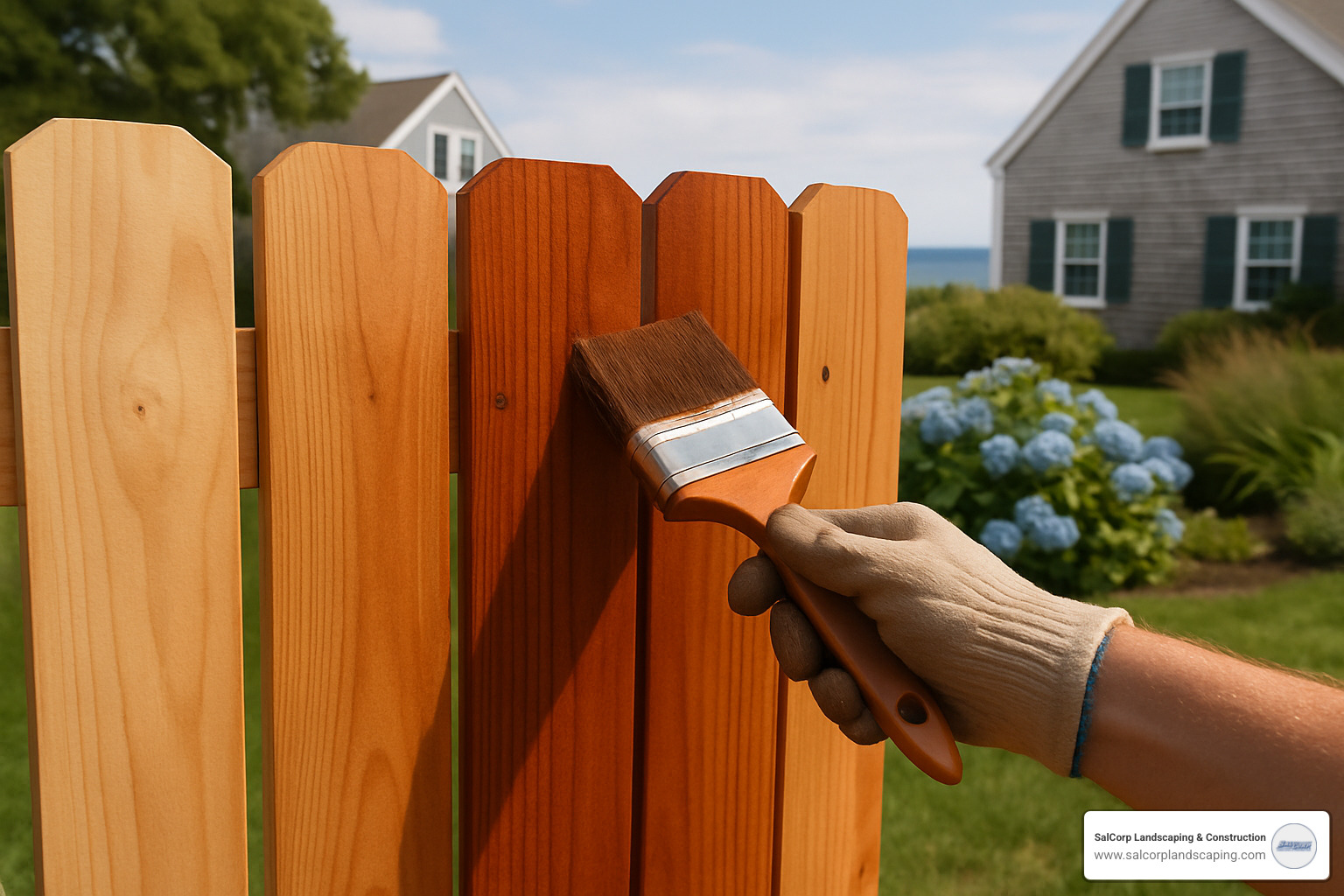
Wood fencing requires special consideration too. Beyond choosing naturally resistant cedar, applying specialized coastal-grade sealants creates a protective barrier against salt spray. This attention to material selection can extend your fence’s lifespan dramatically.
Storm & Erosion Defense
When nor’easters and coastal storms barrel through Cape Cod, improperly installed fences are often among the first casualties. That’s why we approach Cape Cod fence installation with reinforced techniques that stand up to our weather patterns.
While standard practice elsewhere might involve sinking posts just 2-3 feet deep, on Cape Cod we recommend a minimum depth of 4 feet. This extra depth provides crucial stability against high winds and helps prevent post heaving during our freeze-thaw cycles.

For more comprehensive information about hardscaping solutions that stand up to Cape Cod’s unique environmental challenges, you might want to explore our detailed guide on Cape Cod Hardscaping.
Cape Cod fence installation step-by-step
Installing a fence on Cape Cod isn’t quite the same as doing it elsewhere. Our unique coastal environment demands special attention to detail and techniques that ensure your fence will stand strong against salt air, sandy soil, and seasonal storms.
Planning & Permits
Before the first post hole is dug, proper planning makes all the difference in your Cape Cod fence installation project. Start by verifying your exact property boundaries – a step that prevents potentially costly disputes with neighbors down the road. Each town on Cape Cod has its own specific zoning requirements and setback rules that determine how close to property lines you can build.
If your property sits near wetlands or coastal banks, you’ll likely need approval from your local Conservation Commission before proceeding. Similarly, many Cape Cod towns have designated historic districts with strict guidelines on fence styles, heights, and materials to maintain the area’s traditional character.
“The biggest headache I see homeowners face is skipping the permit process,” says Sal Musto of SalCorp Landscaping & Construction. “What seems like a simple project can lead to removal orders and fines if not properly permitted.”
Don’t forget to contact Dig Safe (811) at least 72 hours before breaking ground. This free service marks underground utilities and can prevent dangerous and expensive accidents during installation.
Installation Day
When installation day arrives, the process follows a methodical sequence that professionals have refined over decades of Cape Cod fence installation experience:
The day begins with careful layout and staking, marking the exact fence line and post locations. Next comes the critical post hole digging phase – on Cape Cod, we recommend holes at least 4 feet deep to account for our sandy soil and strong coastal winds.
Once holes are prepared, posts are set with quick-set concrete, with special attention to ensuring each post is perfectly level and plumb. After the concrete sets, crews attach rails and pickets or pre-assembled panels to create the fence line, followed by gate installation with specialized corrosion-resistant hardware.
Pro tip: Always use screws instead of nails for Cape Cod fence installations. The constant expansion and contraction from our temperature fluctuations and coastal humidity will gradually push nails out, while screws maintain their grip for years longer.
Costs, Lifespan & Maintenance in Cape Cod Climate
When budgeting for your Cape Cod fence installation, several factors influence the overall investment. While the average fence panel can last up to 30 years with proper installation and maintenance, actual lifespan varies significantly based on material choice and exposure to elements.
Budget Influencers
The cost of fence installation on Cape Cod isn’t just about materials—it’s about the whole picture. Terrain challenges can make a huge difference, as anyone who’s tried digging through Cape Cod’s rocky soil can tell you! A flat, easily accessible yard will cost significantly less than a sloped property with limited access.
Material selection remains your biggest cost factor. While vinyl typically costs more upfront than wood, it’s like buying quality boots instead of cheap ones—you’ll replace the cheap ones three times before the good ones wear out.
For the budget-conscious, consider off-season timing. Many Cape Cod fence contractors offer better pricing during late fall through early spring when demand is lower. You might save 10-15% simply by planning your project for October instead of June.
Based on internet research, average Cape Cod fence installation costs typically range between $25-$150+ per linear foot depending on materials and complexity. High-end custom installations with premium materials can run three times higher than basic options, especially for oceanfront properties requiring specialized materials.
Want to explore hardscaping options beyond fencing? Check out our Cape Cod Hardscaping page for more inspiration.
Maintenance Cheat-Sheet
For vinyl fencing, a simple annual rinse with mild soap and water keeps it looking fresh by removing salt spray and pollen. After major storms, take a quick walk around to check for any damage or loose components.
Wood fencing requires a bit more attention, especially cedar. Plan to apply a quality sealant or stain every 1-2 years—oceanfront properties may need this even more frequently.
Aluminum fencing needs occasional rinsing to remove salt buildup, which can accelerate corrosion if left unchecked. One often overlooked maintenance tip: touch up any scratches in the powder coating promptly.
For more information about hardscaping services in Barnstable and surrounding areas, visit our Hardscaping Services Barnstable MA page.
Smart Design, Sustainability & Wildlife – Getting More From Your Fence
Your fence can do so much more than simply mark where your property ends. With thoughtful design, it can improve your outdoor living experience while working in harmony with Cape Cod’s natural beauty.
Sustainable Choices
Cape Cod’s delicate ecosystem deserves our respect, which is why at SalCorp, we’re passionate about environmentally responsible Cape Cod fence installation practices.
When selecting cedar for your fence, consider FSC-certified options harvested from responsibly managed forests. This small choice makes a big difference in protecting forest ecosystems while still giving you that classic Cape Cod look.
“We’ve seen a growing interest in recycled content aluminum fencing,” says Sal Musto. “It maintains all the durability benefits while significantly reducing environmental impact – a win-win for homeowners concerned about their carbon footprint.”
For wood protection, we recommend low-VOC stains and sealants that minimize harmful emissions while still providing excellent protection against our harsh coastal elements.
Oceanfront homeowners face unique challenges, which is why environmentally friendly sand fencing has become increasingly popular. These simple structures work with nature rather than against it, helping to build protective dunes naturally.
Wildlife & Garden Harmony
Living on Cape Cod means sharing space with diverse wildlife, from songbirds to the occasional determined woodchuck. Your fence can either create conflicts or foster coexistence.
For properties dealing with burrowing animals, prevention starts below ground. Bury fence mesh at least 10–12 inches deep, and for extra protection against climbers like woodchucks, bend the top portion outward at a 45° angle.
Bird enthusiasts can turn their fencing into wildlife habitat by incorporating birdhouses or feeding stations into fence posts. These thoughtful additions create charm while supporting local bird populations that help control insects naturally.
Common Mistakes to Avoid
After installing hundreds of fences across Cape Cod, we’ve seen how small oversights can lead to big problems down the road.
Perhaps the most costly mistake is ignoring your property’s specific wind exposure. What works perfectly for an inland property can fail dramatically when subjected to Cape Cod’s coastal gusts.
Another common error is installing posts at standard depths of 2-3 feet. In our sandy soil conditions, this simply isn’t sufficient – we recommend a minimum of 4 feet to prevent leaning and failure during storms.
The salt air that gives Cape Cod its refreshing scent also accelerates corrosion. Using standard hardware instead of marine-grade fasteners is a mistake that leads to premature failure and unsightly rust stains.
Frequently Asked Questions about Cape Cod fence installation
Do I need a permit for every fence?
Yes, most Cape Cod towns require permits for fence installation, though specific requirements vary by location. Don’t make the mistake of skipping this crucial step in your planning process!
“I’ve seen homeowners face costly removal orders because they assumed small fence projects didn’t need permits,” shares Sal Musto of SalCorp Landscaping & Construction. “A quick call to your town building department saves headaches later.”
Generally, fences under 6 feet tall need a basic building permit, but additional considerations apply for special properties. Corner lots have visibility requirements to maintain traffic safety, while historic district properties face design review to preserve community character. If you have waterfront property, you’ll likely need Conservation Commission approval, particularly if you’re near wetlands or coastal banks.
What season is best for installation?
While Cape Cod fence installation can happen year-round, timing your project strategically offers advantages in both quality and value.
Spring (April-June) provides ideal soil conditions for post setting, but this peak demand season often means longer wait times and potentially higher pricing. Summer installations (July-August) offer reliable weather but come with similar scheduling challenges during Cape Cod’s busiest season.
Many homeowners find fall (September-November) hits the sweet spot – excellent working conditions with moderating demand as the summer rush subsides. Winter installations (December-March) remain possible when the ground isn’t frozen and often come with better pricing and contractor availability.
How long will my fence really last near the ocean?
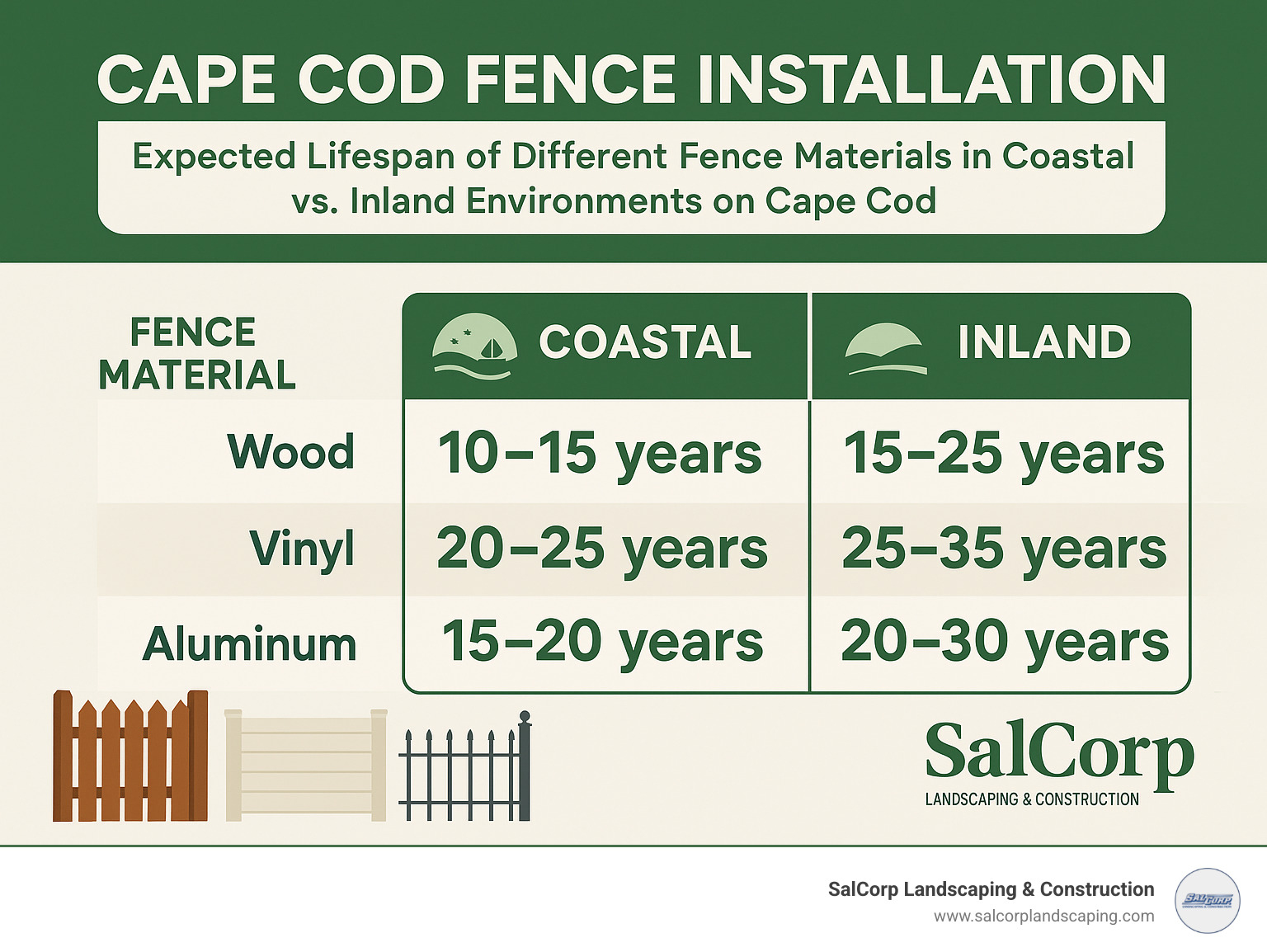
The harsh reality of coastal living is that everything weathers faster near the ocean – and fences are no exception. Your fence’s lifespan depends significantly on three factors: proximity to saltwater, material choice, and your maintenance commitment.
For direct oceanfront properties (within 500 feet of high tide), expect 10-15 years for wood fencing, 20-25 years for vinyl, and 15-20 years for aluminum with proper maintenance. Properties in the near-coastal zone (500-2000 feet from shore) can add 5-10 years to these estimates, while inland Cape Cod locations enjoy standard lifespans, though still shorter than mainland installations due to persistent salt air.
Conclusion
A successful Cape Cod fence installation brings together the timeless charm of New England aesthetics with practical solutions for our challenging coastal environment. Every choice you make—from materials to installation methods—shapes both how your fence looks and how long it will serve you.
Here at SalCorp Landscaping & Construction, we’ve spent over two decades perfecting the art and science of fence installation across Cape Cod. Being owner-operated with our own equipment gives us a unique advantage: we can tailor every aspect of your project to your specific property needs, whether you’re in the sandy soils of Barnstable, the historic districts of Yarmouth, or anywhere else across the communities we serve throughout Massachusetts.
Your fence does far more than simply mark where your property begins and ends. A thoughtfully designed fence improves your home’s curb appeal, creates private outdoor living spaces for your family, and can significantly boost your property’s market value.
The right fence transforms a house into a distinctly Cape Cod home—whether that means the classic white picket fence that’s graced our region for generations, or modern materials engineered to withstand our salt air and seasonal storms.
Ready to bring your Cape Cod fence installation vision to life? We’d love to help you steer the choices ahead. At SalCorp, we pride ourselves on guiding homeowners through material selection, design considerations, and installation techniques that create beautiful, lasting results even in our demanding coastal conditions.
For more information about our comprehensive outdoor solutions that complement your new fence, visit our detailed pages on Cape Cod Hardscaping and Hardscaping Services in Barnstable MA. Let’s create an outdoor space that truly feels like home—one that stands up to Cape Cod’s unique challenges while capturing its timeless coastal charm.
