

Why Standing Water is More Than Just a Nuisance
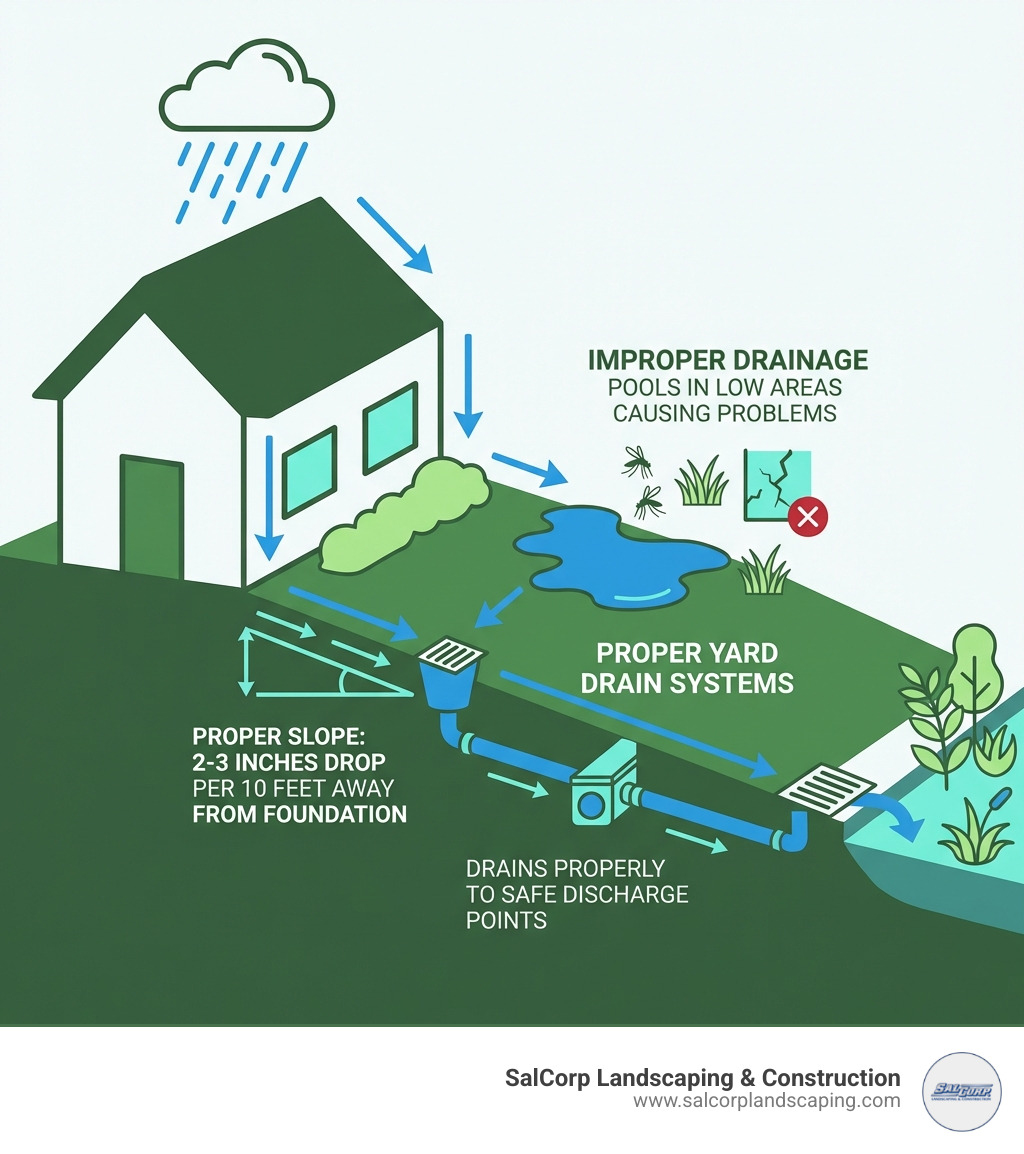
Yard drains are drainage systems installed in your property to collect, redirect, and manage excess water from rain, snowmelt, and runoff. They prevent water from pooling in unwanted areas, protect your home’s foundation, eliminate soggy patches, and reduce flooding risks.
Key things to know about yard drains:
- What they do: Collect standing water and channel it away from your home to safe drainage areas
- Common types: French drains, catch basins, channel drains, and pop-up emitters
- When you need them: Soggy lawn patches, basement puddles, foundation water pooling, or slow drainage
- Proper slope: 2-3 inches of drop every 10 feet away from your foundation
- Cost range: $600-$14,000+ depending on system type and complexity
When rain falls on your Massachusetts property, that water has to go somewhere. If it doesn’t drain properly, you’re looking at more than just muddy shoes and a swampy lawn. Standing water breeds mosquitoes, drowns your grass, causes soil erosion, and worst of all—it can seep into your basement or damage your foundation. Water damage repairs are expensive, often running into thousands of dollars.
The good news? Most drainage problems have straightforward solutions. Whether it’s a simple regrading project, installing a French drain system, or adding catch basins to collect water from problem areas, the right drainage solution can transform your soggy yard into usable outdoor space.
Your soil type, property slope, and the amount of water you’re dealing with all play a role in determining which solution works best. Clay soils common in Massachusetts hold water longer than sandy soils. A property at the bottom of a hill faces different challenges than one on level ground. And if your neighbor’s property drains toward yours, you’ll need to account for that extra water volume.
I’m Sal Musto, owner of SalCorp Landscaping & Construction, and over the past two decades I’ve helped hundreds of Massachusetts homeowners solve their yard drainage problems with everything from simple regrading to complete French drain systems. Let’s walk through everything you need to know to turn your soggy yard into a space you can actually enjoy.
Easy yard drains word list:
Why Yard Drains are Essential for Your Home
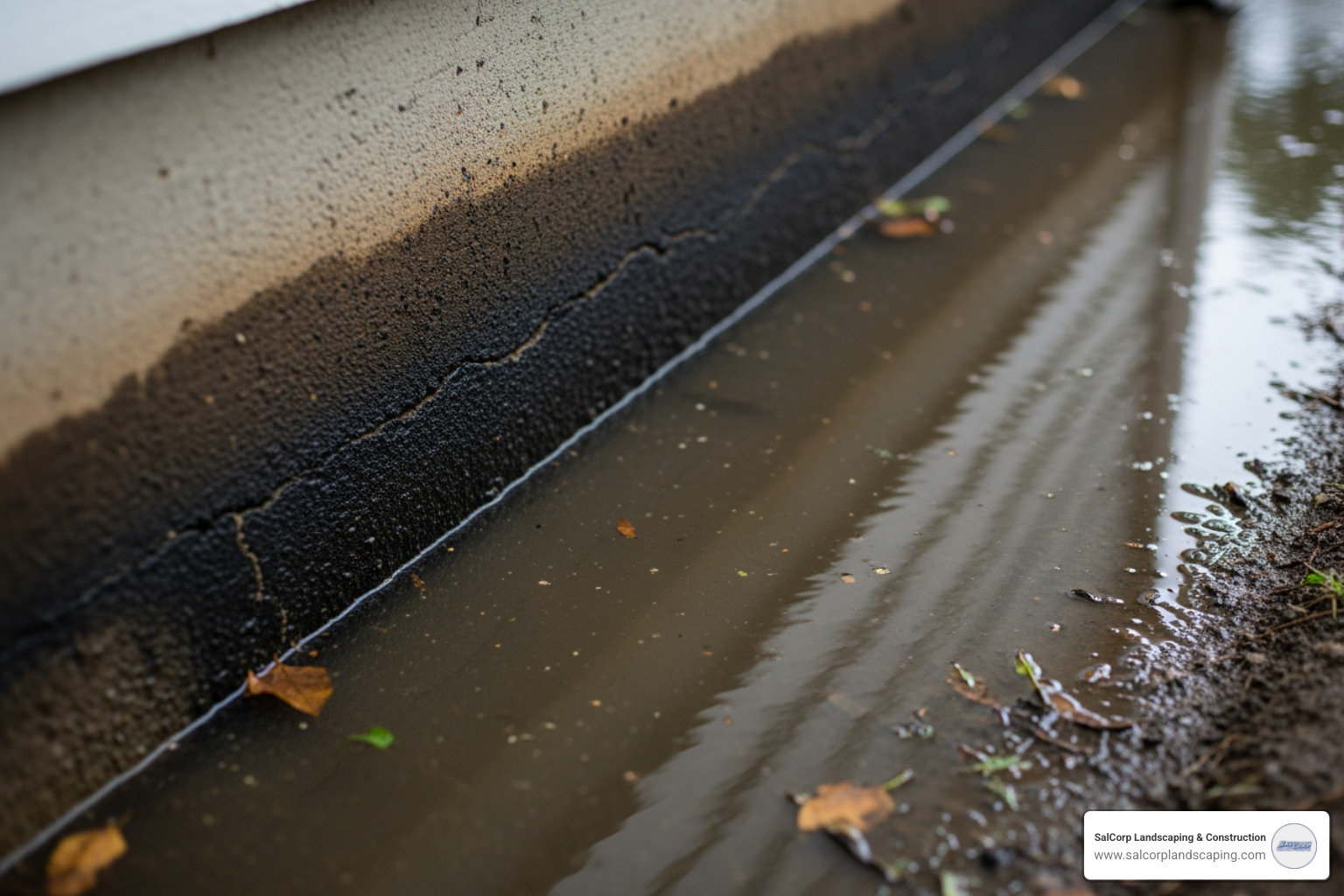
We often think of our yards as just a place for the kids to play or for a summer BBQ, but they also serve as the primary defense system for our home’s structure. A yard drain is essentially a collection point for storm water. Without these systems, we’re at the mercy of the elements.
The most critical reason to invest in yard drains is foundation protection. When water pools against your foundation, it creates hydrostatic pressure. Over time, this pressure can cause cracks in your concrete, leading to leaks and structural instability. If you’ve ever seen a “river” running through your basement after a Nor’easter, you know exactly what we mean.
Beyond the structure of your home, poor drainage causes significant soil erosion. This isn’t just about losing some dirt; it’s about losing the very ground that supports your walkways, patios, and driveway. Furthermore, stagnant water is the ultimate VIP lounge for mosquitoes. These pests breed in standing water, and having improper drainage means you’re essentially hosting a neighborhood mosquito convention right in your backyard.
For more insights on keeping your property dry, check out our guide on outdoor drainage solutions.
Signs You Need Better Yard Drains
How do you know if your yard is crying out for help? Sometimes the signs are as obvious as a pond in the middle of your lawn, but other times they’re a bit more subtle. We recommend keeping an eye out for these red flags:
- Soggy Patches: If your lawn feels like a sponge days after the rain has stopped, you have a drainage issue.
- Basement Puddles: Water in the home usually means water damage, which leads to nasty and expensive repairs. If you see damp spots on basement walls or puddles on the floor, water is likely migrating from your yard toward your foundation.
- Soil Erosion: Small gullies or “trenches” forming in your mulch or soil after a storm indicate that water is moving too fast and in the wrong directions.
- Stagnant Water: Any water that sits for more than 48 hours is a problem. Not only does it kill your grass through root rot, but it also becomes a breeding ground for pests.
- Slow Runoff: If you notice your downspouts are creating deep holes in the ground or water is simply sitting at the base of your gutters, your current system is failing to redirect the flow.
Addressing these yard drainage solutions early can save you from the “Everglades” effect where your yard becomes unusable and infested with bugs.
The Science of Proper Slope and Runoff
Drainage is a game of physics, and gravity is the referee. To keep water away from your home, your land must be graded correctly. According to industry standards, the correct slope away from your home is 2 to 3 inches every 10 feet.
This might not sound like much, but it’s the difference between a dry basement and a flooded one. If your home is situated at the bottom of a hill or on a flat lot with clay-heavy soil (which we see a lot of in towns like Walpole and Medfield), gravity will naturally pull water toward your foundation unless we intervene.
Proper lawn grading involves lowering high areas and filling in lower ones to create a consistent “pitch.” In some cases, we use a landscape rake for minor adjustments, but for significant runoff problems, we might need to move several tons of soil to ensure the water flows toward a designated discharge point, such as a street storm drain or a French drain system.
You can learn more about how to solve yard drainage problems by understanding how contours affect water flow.
Types of Yard Drains and Professional Solutions
When grading alone isn’t enough, we turn to mechanical yard drains. There isn’t a one-size-fits-all solution; the right choice depends on whether the water is on the surface or deep in the soil.
French Drains
A French drain system is a trench filled with filter fabric, gravel, and a perforated pipe. It’s designed to capture subsoil saturation—water that’s hiding beneath the surface making your lawn “mushy.” It directs this water to a safe release point.
Catch Basins
Also known as point drains, these are boxes buried in the ground with a grate on top. They are perfect for low spots where water naturally pools. They “catch” the water and send it through a solid pipe away from the area.
Trench Drains
If you have water flowing across a flat surface like a driveway or patio, a trench drain (a long, narrow grate) is the best way to intercept that flow before it reaches your garage or front door. This is a common part of patio drainage design.
Pop-Up Emitters
These are the “finish line” of your drainage system. A pop-up emitter stays closed to keep out debris and rodents but pops up when water pressure builds, allowing the water to spill out safely onto the curb or a lower part of the property.
Comparison Table: Catch Basins vs. French Drains
| Feature | Catch Basin | French Drain |
|---|---|---|
| Primary Goal | Collect surface water in low spots | Collect subsoil water and “mushy” ground |
| Components | Plastic box, grate, solid pipe | Perforated pipe, gravel, filter fabric |
| Best For | Heavy downpours, gutter runoff | Constant dampness, high water tables |
| Maintenance | Clean out leaves/debris from box | Periodic flushing of the pipe |
Popular Products for Yard Drains
In our two decades of experience, we’ve found that using high-quality components is the only way to ensure a system lasts. Cheap, thin-walled pipes tend to crush under the weight of a lawnmower or shift during our harsh Massachusetts winters.
We often use 4-inch connections for residential systems, as they provide enough volume to handle typical New England storms. Products like the NDS Square Grate or angled drainage grates are excellent for directing sump pump discharge and downspout extensions.
For those looking to keep their systems clear, we always recommend “Say Good-Bye to Clogged Drains Forever.” While some people look at TubShroom for indoor bathroom drains, yard drains require a different level of debris management. External grates must be kept clear of leaf litter and rodent nests to ensure the water actually makes it into the pipe.
DIY vs. Professional Installation
Can you fix your own drainage issues? The answer is: it depends.
If you have a small low spot in your yard, a landscape rake and a few bags of topsoil might do the trick. Simple, shallow yard drains (8-24 inches deep) can often be a budget-friendly DIY project. You can dig the trench, lay the filter fabric, and install the pipe yourself for a few hundred dollars in materials.
However, professional help becomes necessary when:
- Foundations are involved: If water is pooling against your house, you don’t want to guess. A professional knows how to protect the structural integrity of your home.
- Heavy Machinery is Required: Excavating long trenches or moving tons of stone is back-breaking work. We use our own specialized machinery to get the job done quickly and correctly.
- Complexity and Permits: In many Massachusetts towns like Braintree or Brockton, there are strict regulations about where you can discharge water. You cannot simply dump your yard’s water onto your neighbor’s property or into certain municipal systems without a permit.
- Long-term Durability: A DIY system that collapses after one winter isn’t a bargain. We ensure proper bedding, pipe pitch, and soil compaction for a system that lasts decades.
Whether you’re dealing with a soggy lawn or planning a new patio drainage system, knowing when to call the pros can save you a lot of headache.
Estimating the Cost of Drainage Improvements
The cost of improving your yard’s drainage varies wildly based on the scope of the problem. A simple downspout extension might cost a few hundred dollars, while a comprehensive French drain system for a large property could reach into the thousands.
Based on general market data, homeowners can expect to see a wide range of pricing:
- Minor DIY Grading/Drains: $600 – $2,000
- Professional French Drain Installation: $3,000 – $9,000
- Complex Multi-System Drainage Projects: $10,000 – $15,000+
Note: these are average costs based on internet data and not actual costs for Salcorp Landscaping. Every property in Massachusetts is unique, and factors like soil composition (clay vs. sand) and utility locations will impact the final investment.
While the upfront cost might seem significant, the average cost of post-flood recovery can range from $1,300 to over $13,500. Investing in yard drains is essentially an insurance policy for your home’s foundation.
Conclusion: Protecting Your Massachusetts Property
At SalCorp Landscaping & Construction, we understand that a beautiful yard starts with a dry foundation. Based in Walpole, we’ve spent over 20 years mastering the art of hardscaping, landscape design, and effective water management.
As an owner-operated business, we take pride in using our own machinery and expertise to provide comprehensive solutions for our neighbors in Avon, Boston, Canton, Dedham, and across the South Shore. We don’t just “fix” a wet yard; we engineer a solution that protects your home and improves your outdoor living space.
Don’t let another rainy season turn your backyard into a swamp. From Braintree to Wellesley, we are here to help you move from soggy to superb.
Ready to dry out your yard for good? Contact SalCorp Landscaping today for a consultation.
